The face of media is changing. In January 14th's post, I talked about how bloggers are seeking validation as serious journalists.
My youngest brother is a columnist for one of the 25 largest papers in the United States (btw, in case you're wondering, the top three are USA Today, The Wall Street Journal and The New York Times). Because of this, he and I often discuss journalism and journalists.
The industry has many rules under which it operates. A few of the hard and fast ones are: (1) Always get confirmation of a story (which usually means at least two sources); (2) Report both sides of a story; (3) Reporters report; only columnists or editorial editors are permitted to offer opinions.
Most bloggers have not yet embraced any limits on their activities. In fact, they seem to delight in pushing the envelope. In my January 14th post, I quoted the Washington Post's interview with Thomas Kunkel, dean of the University of Maryland's journalism school: "'The Internet today is like the American West in the 1880s. It's wild, it's crazy and everybody's got a gun . . . There are no rules yet.'"
An example of what I'm talking is occurring in San Francisco. KSFO-AM is a conservative talk radio station in that city. It is an affiliate of ABC Radio, which in turn is a division of the Walt Disney Company.
You can imagine what it's like to be a conservative voice in the middle of a liberal city in the middle of a very blue state. According to Wikipedia: the KSFO-AM "early morning schedule since 1997 has included a trio of humorous, hardline, and vitriolic conservatives, Lee Rodgers, Melanie Morgan and Officer Vic." Like many radio personalities, they go for the exaggerated comment, the sound bite that will attract attention.
One blogger took offense. More than that, he decided to take action. In 2005, a blogger who goes by the online name Spocko began recording the show and posting portions of that audio on his website. He encouraged readers to contact the station's advertisers to complain about the content being offered by KSFO.
Among the examples: On October 25, 2006, Lee Rodgers said, "Indonesia is really just another enemy Muslim nation…You keep screwing around with stuff like this, we're going to kill a bunch of you. Millions of you." (Wikipedia)
MediaChannel.org posted an excerpt of Spocko's letter to AT&T:
Thanks to radio hosts from KSFO your brand is being associated with torturing and killing people.
Would your marketing people be happy to hear your commercial ran after Lee Rogers said this about a black man in Lincoln, Nebraska?
“Now you start with the Sear’s Diehard the battery cables connected to his testi*les and you entertain him with that for awhile and then you blow his bleeping head off. ” (Audio link)
You should know the person calling for the execution and torture of the black man in that clip READS THE AT&T commercials on the air. Right now on KSFO Lee Rogers is THE VOICE of AT&T to the SF Bay area. (Audio Link)
It should come as no surprise that AT&T pulled out as an advertiser of KSFO.
Other bloggers and blog readers picked up on Spocko's campaign and began to do the same thing. More advertisers, including Bank of America, Netflix, Visa and MasterCard, also dropped their spots on KSFO. Naturally, this caught the attention of KSFO's owner, ABC Radio.
According to Wikipedia, "On December 22, 2006, Spocko received a 'cease-and-desist' letter from ABC lawyers, insisting that he remove [the] audio clips of KSFO radio hosts [and] claiming that he had violated copyright law. Spocko refused, claiming he was within the legal definitions of the fair use doctrine. On January 2, 2007 his Internet service provider, 1&1 Internet, took down his website."
The blogosphere rallied around Spocko, who quickly found another Internet provider and resumed posting here. According to USA Today, "more than 500 blogs posted the audio clips and asked viewers to forward them to advertisers" in what was described as a "blogswarm."
The Electronic Frontier Foundation, a non-profit advocate of Internet free speech, offered Spocko free representation. In response to ABC Radio's complaints that Spocko was violating its radio hosts' First Amendment right to free speech, Matt Zimmerman spoke for EFF in a January 12 post on their website:
As ABC's lawyers know, the brief audio clips posted on Spocko’s blog are classic examples of protected fair use, the right to use copyrighted materials for purposes of commentary, parody, education, or artistic expression . . . While such radio personalities certainly have a right to air their views, the First Amendment says nothing about a right to advertiser-subsidized speech. Even if advertisers choose to pull their ads because Spocko has a more convincing argument -- even if advertiser revenue dries up completely and shows are cancelled -- it doesn't necessarily follow that anyone's free speech rights have being violated.
The Internet has provided a new voice to millions of ordinary citizens, giving them a chance to fight back against the growing centralization of media. Increasingly today, bloggers act as watchdogs, voicing alternate opinions to the ones expressed in traditional media. I will confess a slight uneasiness over the lack of any rules governing the blogosphere, but I expect this will shake out over time.
Oh, one more thing. Disney has announced the sale of 22 radio stations (including KSFO) to Citadel Broadcasting. The sale is expected to close by the end of this year.
Thursday, January 25, 2007


Wednesday, January 24, 2007
Publication Date and Back Cover Copy
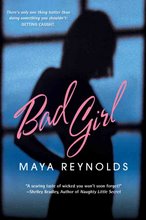
Well, I finally have a publication date for Bad Girl: September, 2007.
And I finally have the back cover copy. Here it is:
Feeling a little naughty? You should.
It was shy social worker Sandy Davis's favorite after-dark hobby, and only vice-spying on neighbors during their most uninhibited moments. Night after night, through each different window, into each anonymous dark bedroom came the stuff of Sandy 's wildest fantasies. Peeping didn't hurt anyone. It was just a game. No one ever had to know. Then one night came a phone call...
"You've been a bad girl."
He calls himself Justice. He has a pastime too. Watching Sandy watch others. He has the pictures to prove it. Now it's his turn to play-by making Sandy pay the price in exchange for holding on to her naughty little secret. As the sensual dance between two strangers begins, so does Sandy 's fear that she's moving closer to the edge of extreme desire-and inescapable danger.
Nice, huh?
I'm so excited.
And I finally have the back cover copy. Here it is:
Feeling a little naughty? You should.
It was shy social worker Sandy Davis's favorite after-dark hobby, and only vice-spying on neighbors during their most uninhibited moments. Night after night, through each different window, into each anonymous dark bedroom came the stuff of Sandy 's wildest fantasies. Peeping didn't hurt anyone. It was just a game. No one ever had to know. Then one night came a phone call...
"You've been a bad girl."
He calls himself Justice. He has a pastime too. Watching Sandy watch others. He has the pictures to prove it. Now it's his turn to play-by making Sandy pay the price in exchange for holding on to her naughty little secret. As the sensual dance between two strangers begins, so does Sandy 's fear that she's moving closer to the edge of extreme desire-and inescapable danger.
Nice, huh?
I'm so excited.
Tuesday, January 23, 2007
Do You Have Manuscript Fatigue?
At 12:16 this morning, I shipped off what I hope were my final edits. Then I fell into bed and slept like the dead for six hours.
Something I don't think I've ever seen addressed by a writer is what I'm going to call "manuscript fatigue." It was a serious problem for me during the editing process.
I began what eventually became my novel Bad Girl in February, 2005. At the time, I was taking an online erotic romance class from Ellora's Cave author, Jan Springer.
As a sidenote, I met some of my closest writer friends in that class: Jeanne Laws, Marie Tuhart and Sherrill Quinn. As the result of that class, a group of 25 of us formed our own support group, which we call the Brazen Hussies. When we took that class, I think only one of our members (besides Jan) was published. In the two years since, at least six of us are either published or under contract, and 22 of us are still members of the Hussies.
In order to participate in the class, I started the story that I called You've Been A Bad Girl--my first erotic romance. Jan and my classmates offered suggestions and, over the course of the next few months, I polished the first chapter. I entered it in the "Just Erotic Romance Reviews" contest where, in July, 2005, Raelene Gorlinsky, the editor of Ellora's Cave, awarded it second prize and asked for a full. I was shocked, delighted and terrified because I only had three chapters done. Between July and August, I finished the 40,000-word novella and shipped it off.
Taking the advice of my published friends, I continued working on my next manuscript and tried not to obsess about that full mss sitting over at EC. After three months, in early November, I emailed EC and asked if they'd reached a decision. I was told they couldn't find the manuscript and to resubmit it. With trepidation, I did. I was beginning to question my decision to seek publication online because, by then, I was actively seeking an agent for my erotic romances.
Six weeks later, I was in discussions with the agent with whom I would sign a contract. By then, I really was regreting my decision to resubmit to EC (An aside: To this day, I've never heard back from them on that mss). My new agent was enthusiastic about You've Been A Bad Girl, and she assured me it would sell. She was right. By July, 2006, we were reviewing a contract from NAL. The publisher wanted to purchase the book for publication in trade paper on the condition I expanded it from 40,000 words to a minimum of 65,000 words.
So, here I was--a year after finishing the novella--rewriting it as a novel.
My new editor at NAL has been a dream. She okayed my proposed outline without a single question and has been encouraging and enthusiastic about the reworked manuscript. Last month, I shipped off what was now being called Bad Girl.
Early this month, I got the manuscript back with edits. Every one of those suggested edits was on target. I was surprised to find half a dozen places where I'd slipped into "telling" instead of "showing." I'm such an advocate of "showing" that I couldn't believe I'd missed those "telling" places. I started the editing process.
That's when I discovered I had manuscript fatigue. After nearly two years, I was tired of this book. I had other characters talking to me, and it was surpisingly difficult to get back into my hero and heroine's POV. I started by going from edit to edit, only reading those pages where my editor had penciled in a correction. In a couple of places, she had asked for an "additional romantic moment." But I found difficulty concentrating on the plot; I had other plots fighting for my attention. Sandy and Zeke were almost strangers to me now.
After weeks of fighting through the first hundred pages--flipping from edit to edit--I went back to the beginning and did what I should have done in the first place. I re-read the entire manuscript. In doing so, I rediscovered the magic that had helped me write the novella to begin with. I really loved Sandy and Zeke. More importantly, I cared about them.
It had taken two weeks to edit the first hundred pages. It took a little over two days to make the changes in the remaining two hundred pages once I was back in Sandy and Zeke's heads. I couldn't believe it. And I learned an important lesson.
You can't shortcut the process. I had avoided reading the entire manuscript again, thinking it would take too much time. As a result, I wasted days and days by trying to write from the outside
--instead of from inside my characters' minds. And it didn't work. I'd been what my mother calls penny wise and pound foolish.
When I got home last night, I curled up on my bed with a cat in my lap and re-read the manuscript one last time. I was thrilled with the final product. The edits made it shine. And, suddenly, I'm enthusiastic to tell Leah's story.
Leah was a minor character in the first draft. My editor liked Sandy and Zeke so much that she encouraged me to expand Leah's role so that I could do a second novel using the characters I'd created in the first--just telling a new story.
When I finished the expansion, I couldn't focus on Leah. I was tired. Last night, for the first time, Leah began speaking to me--telling me about Kadeem. And I can see him in my mind's eye. He looks a lot like the character of Derek Morgan from the televison show Criminal Minds.
I can't wait to start.
Something I don't think I've ever seen addressed by a writer is what I'm going to call "manuscript fatigue." It was a serious problem for me during the editing process.
I began what eventually became my novel Bad Girl in February, 2005. At the time, I was taking an online erotic romance class from Ellora's Cave author, Jan Springer.
As a sidenote, I met some of my closest writer friends in that class: Jeanne Laws, Marie Tuhart and Sherrill Quinn. As the result of that class, a group of 25 of us formed our own support group, which we call the Brazen Hussies. When we took that class, I think only one of our members (besides Jan) was published. In the two years since, at least six of us are either published or under contract, and 22 of us are still members of the Hussies.
In order to participate in the class, I started the story that I called You've Been A Bad Girl--my first erotic romance. Jan and my classmates offered suggestions and, over the course of the next few months, I polished the first chapter. I entered it in the "Just Erotic Romance Reviews" contest where, in July, 2005, Raelene Gorlinsky, the editor of Ellora's Cave, awarded it second prize and asked for a full. I was shocked, delighted and terrified because I only had three chapters done. Between July and August, I finished the 40,000-word novella and shipped it off.
Taking the advice of my published friends, I continued working on my next manuscript and tried not to obsess about that full mss sitting over at EC. After three months, in early November, I emailed EC and asked if they'd reached a decision. I was told they couldn't find the manuscript and to resubmit it. With trepidation, I did. I was beginning to question my decision to seek publication online because, by then, I was actively seeking an agent for my erotic romances.
Six weeks later, I was in discussions with the agent with whom I would sign a contract. By then, I really was regreting my decision to resubmit to EC (An aside: To this day, I've never heard back from them on that mss). My new agent was enthusiastic about You've Been A Bad Girl, and she assured me it would sell. She was right. By July, 2006, we were reviewing a contract from NAL. The publisher wanted to purchase the book for publication in trade paper on the condition I expanded it from 40,000 words to a minimum of 65,000 words.
So, here I was--a year after finishing the novella--rewriting it as a novel.
My new editor at NAL has been a dream. She okayed my proposed outline without a single question and has been encouraging and enthusiastic about the reworked manuscript. Last month, I shipped off what was now being called Bad Girl.
Early this month, I got the manuscript back with edits. Every one of those suggested edits was on target. I was surprised to find half a dozen places where I'd slipped into "telling" instead of "showing." I'm such an advocate of "showing" that I couldn't believe I'd missed those "telling" places. I started the editing process.
That's when I discovered I had manuscript fatigue. After nearly two years, I was tired of this book. I had other characters talking to me, and it was surpisingly difficult to get back into my hero and heroine's POV. I started by going from edit to edit, only reading those pages where my editor had penciled in a correction. In a couple of places, she had asked for an "additional romantic moment." But I found difficulty concentrating on the plot; I had other plots fighting for my attention. Sandy and Zeke were almost strangers to me now.
After weeks of fighting through the first hundred pages--flipping from edit to edit--I went back to the beginning and did what I should have done in the first place. I re-read the entire manuscript. In doing so, I rediscovered the magic that had helped me write the novella to begin with. I really loved Sandy and Zeke. More importantly, I cared about them.
It had taken two weeks to edit the first hundred pages. It took a little over two days to make the changes in the remaining two hundred pages once I was back in Sandy and Zeke's heads. I couldn't believe it. And I learned an important lesson.
You can't shortcut the process. I had avoided reading the entire manuscript again, thinking it would take too much time. As a result, I wasted days and days by trying to write from the outside
--instead of from inside my characters' minds. And it didn't work. I'd been what my mother calls penny wise and pound foolish.
When I got home last night, I curled up on my bed with a cat in my lap and re-read the manuscript one last time. I was thrilled with the final product. The edits made it shine. And, suddenly, I'm enthusiastic to tell Leah's story.
Leah was a minor character in the first draft. My editor liked Sandy and Zeke so much that she encouraged me to expand Leah's role so that I could do a second novel using the characters I'd created in the first--just telling a new story.
When I finished the expansion, I couldn't focus on Leah. I was tired. Last night, for the first time, Leah began speaking to me--telling me about Kadeem. And I can see him in my mind's eye. He looks a lot like the character of Derek Morgan from the televison show Criminal Minds.
I can't wait to start.
Sunday, January 21, 2007
Marketing Your Published Book
Yesterday, my friend Maria and I attended a presentation by a writer talking about ways that authors can market their books. Since the speaker had a background in marketing and advertising, I was very interested in hearing what he had to say.
One thing struck me. He was primarily talking from the point of view of his experience as a non-fiction writer who had published through a small regional press. While there were some things that translated well to fiction writing, there was a lot that didn't.
He explained that, as he was writing his book, he identified what he called a focus study group--twenty-four people around the country who were willing to read his manuscript and comment. After they'd read the entire book, he sent them a questionnaire, asking their opinion (whether they liked it, found it humorous, found it interesting, would recommend it, or would buy it as a gift). He compiled the twenty-one responses and included them in his query presentation. He said the publisher that signed him was bowled over by this focus study.
I found myself thinking, "Okay, that's a critique group. A large critique group, but certainly not a large enough group to constitute a valid study statistically." While I can see that a non-fiction publisher might find this "focus study" interesting, I can't imagine an agent or fiction publisher being moved by twenty-one people who liked a book any more than they are by comments that "everyone who reads my book loves it."
He did not seek representation by an agent and did not seem to think it necessary. While I absolutely agree one can be published without an agent, it's becoming increasingly difficult for a fiction writer to break into the New York print houses without one.
What I did find most interesting were his tips on how to do a booksigning. He offered the following:
1) Make sure you have a contact at the bookstore ahead of time with whom you can check to be sure copies of your book have been ordered.
2) Set your table up near an entrance. Be sure to have a tabletop sign with your book's cover.
3) Make sure you engage the customers walking in.
4) Dress in an interesting--but not weird--manner.
5) Ask a question--any question--to engage the customer. Then LISTEN.
6) DO NOT keep bookmarks or postcards advertising your book on the table. It will allow the customer to say, "I'll take this and think about buying your book" instead of actually purchasing the book.
7) Hold out a book and say, "To whom may I autograph this?" He says invariably the customer will give a name, and you've made the sale.
He said that the national average for books sold per signing is 4.5 books. (Eek!) Using the techniques listed above, he said he averages 3.5 per hour.
His suggestions for a signing are very similar to those offered by Joe Konrath. As I draw closer and closer to publication, I find myself eager for marketing ideas.
One thing struck me. He was primarily talking from the point of view of his experience as a non-fiction writer who had published through a small regional press. While there were some things that translated well to fiction writing, there was a lot that didn't.
He explained that, as he was writing his book, he identified what he called a focus study group--twenty-four people around the country who were willing to read his manuscript and comment. After they'd read the entire book, he sent them a questionnaire, asking their opinion (whether they liked it, found it humorous, found it interesting, would recommend it, or would buy it as a gift). He compiled the twenty-one responses and included them in his query presentation. He said the publisher that signed him was bowled over by this focus study.
I found myself thinking, "Okay, that's a critique group. A large critique group, but certainly not a large enough group to constitute a valid study statistically." While I can see that a non-fiction publisher might find this "focus study" interesting, I can't imagine an agent or fiction publisher being moved by twenty-one people who liked a book any more than they are by comments that "everyone who reads my book loves it."
He did not seek representation by an agent and did not seem to think it necessary. While I absolutely agree one can be published without an agent, it's becoming increasingly difficult for a fiction writer to break into the New York print houses without one.
What I did find most interesting were his tips on how to do a booksigning. He offered the following:
1) Make sure you have a contact at the bookstore ahead of time with whom you can check to be sure copies of your book have been ordered.
2) Set your table up near an entrance. Be sure to have a tabletop sign with your book's cover.
3) Make sure you engage the customers walking in.
4) Dress in an interesting--but not weird--manner.
5) Ask a question--any question--to engage the customer. Then LISTEN.
6) DO NOT keep bookmarks or postcards advertising your book on the table. It will allow the customer to say, "I'll take this and think about buying your book" instead of actually purchasing the book.
7) Hold out a book and say, "To whom may I autograph this?" He says invariably the customer will give a name, and you've made the sale.
He said that the national average for books sold per signing is 4.5 books. (Eek!) Using the techniques listed above, he said he averages 3.5 per hour.
His suggestions for a signing are very similar to those offered by Joe Konrath. As I draw closer and closer to publication, I find myself eager for marketing ideas.
MySpace and News Corporation Sued
On Thursday, CNET reported that families in New York, Pennsylvania, South Carolina and Texas have filed civil suits against MySpace.com and News Corporation. The lawsuits allege "negligence, recklessness, fraud, and negligent misrepresentation on the part of the companies" that resulted in the solicitation and sexual assault of their daughters by adults on the social networking site.
In the South Carolina case, two girls aged 14 and 15 were lured into meeting two adult males who gave them alcohol and drugs before sexually assaulting them. The perpetrators are awaiting trial.
Criminal charges have been filed in all of the cases with the perpetrators sentenced, already imprisoned or awaiting trial.
MySpace.com did not comment for the story beyond an announcement that it plans to release Zephyr, monitoring software intended to help parents oversee their children's activities on the website.
MySpace has taken steps to try to protect minors and has assisted law enforcement in tracking and capturing sexual predators. However, the parents in all these civil suits obviously think more should have been done.
In the South Carolina case, two girls aged 14 and 15 were lured into meeting two adult males who gave them alcohol and drugs before sexually assaulting them. The perpetrators are awaiting trial.
Criminal charges have been filed in all of the cases with the perpetrators sentenced, already imprisoned or awaiting trial.
MySpace.com did not comment for the story beyond an announcement that it plans to release Zephyr, monitoring software intended to help parents oversee their children's activities on the website.
MySpace has taken steps to try to protect minors and has assisted law enforcement in tracking and capturing sexual predators. However, the parents in all these civil suits obviously think more should have been done.
Saturday, January 20, 2007
Writing As Therapy
Okay, I'm venting here. Feel free to go on to the original Saturday post below.
I've mentioned my geriatric cat, Tribble, more than once in this blog. Tribble is now over twenty. I affectionately refer to her as "my little paperweight." She settles in one place and doesn't move.
Last summer we had a really bad experience when she was attacked by a pit bull (see my post of July 7th). Fortunately, I was outside at the time and got to her before the dog could tear her apart. I held her up in one arm (she's tiny and very frail) and ran for my house with the dog jumping and lunging at her the entire way. I got bit in the process (by Tribble, who was insane with fear).
When I confronted the neighbor who owns the dog, he laughed at me, saying "My dog would never hurt anyone. And I'm not paying for your cat's bite."
Said neighbor has been a bit of a problem. He is currently on his third pair of pit bulls (in ten years). He had to put the first pair down after they rampaged the neighborhood when he went off on vacation and left them in the yard, asking a relative to feed them. The second pair was stolen while they were still puppies. This third pair is old enough now that they are beginning to run the neighborhood.
I was angry enough that I sent the neighbor a "demand" letter, warning him that he WOULD pay for my medical bill--even if I had to sue him. I would probably never have gone through with the lawsuit because I don't believe in suing my neighbors--especially over a piddling little sum. However, he responded by sending the police to my door, saying I was harassing him. The police were very nice and actually encouraged me to take him to small claims court, saying he needed to take control of his animals before they hurt a child or killed an animal.
I'm not going to go through all the legal hassles, except to say that the judge was so angry over my neighbor's refusal to take responsibility for his animals that he awarded me $800. I had tacked on punitive damages to my small claim, hoping to encourage the guy to settle. It never occurred to me that I'd actually be awarded them. The neighbor is paying me in monthly installments (this time, he believed me when I sent a letter saying he WOULD pay me or I'd have the county confiscate his boat).
One of the fallouts of the event was that poor little Tribble retreated to my guest bathroom and didn't come out for five months. I had to move her litter box and food dishes in there because she would not come out even to eat.
After waiting months for Tribble to recover from her trauma, I began encouraging her to return to society, moving her food dishes a little bit closer to the door every day (my social work training really does come in handy sometimes).
We've had success--sort of. Tribble has now moved permanently next to my laptop, inches from my typing hands. I guess she feels safest with me. Sometimes, she drifts onto the keyboard itself, and I have to move her in order to reach the keys. She doesn't leave that spot except to use the litter box or eat. She has her own tall glass of water on my desk.
Last night I was so tired I went to bed without turning off my computer. Got up this morning and found Tribble stretched across the keyboard. And my computer was totally screwed up. She had somehow changed all the settings. It took me over an hour to undo all the damage she had done.
When I began writing this post, I was irritable over the lost hour. However, as I type this sentence, I realize that I'm thankful Tribble is still alive and relatively healthy. I'm grateful she is recovering from her fear and has had the courage to come out of the bathroom. And I'm not going to begrudge her my lost hour. We both survived that pit bull attack, and she's back in the world. Sort of. That's good enough for today.
I'm going to a writer's workshop in Denton, Texas today. Hope your weekend is fun.
I've mentioned my geriatric cat, Tribble, more than once in this blog. Tribble is now over twenty. I affectionately refer to her as "my little paperweight." She settles in one place and doesn't move.
Last summer we had a really bad experience when she was attacked by a pit bull (see my post of July 7th). Fortunately, I was outside at the time and got to her before the dog could tear her apart. I held her up in one arm (she's tiny and very frail) and ran for my house with the dog jumping and lunging at her the entire way. I got bit in the process (by Tribble, who was insane with fear).
When I confronted the neighbor who owns the dog, he laughed at me, saying "My dog would never hurt anyone. And I'm not paying for your cat's bite."
Said neighbor has been a bit of a problem. He is currently on his third pair of pit bulls (in ten years). He had to put the first pair down after they rampaged the neighborhood when he went off on vacation and left them in the yard, asking a relative to feed them. The second pair was stolen while they were still puppies. This third pair is old enough now that they are beginning to run the neighborhood.
I was angry enough that I sent the neighbor a "demand" letter, warning him that he WOULD pay for my medical bill--even if I had to sue him. I would probably never have gone through with the lawsuit because I don't believe in suing my neighbors--especially over a piddling little sum. However, he responded by sending the police to my door, saying I was harassing him. The police were very nice and actually encouraged me to take him to small claims court, saying he needed to take control of his animals before they hurt a child or killed an animal.
I'm not going to go through all the legal hassles, except to say that the judge was so angry over my neighbor's refusal to take responsibility for his animals that he awarded me $800. I had tacked on punitive damages to my small claim, hoping to encourage the guy to settle. It never occurred to me that I'd actually be awarded them. The neighbor is paying me in monthly installments (this time, he believed me when I sent a letter saying he WOULD pay me or I'd have the county confiscate his boat).
One of the fallouts of the event was that poor little Tribble retreated to my guest bathroom and didn't come out for five months. I had to move her litter box and food dishes in there because she would not come out even to eat.
After waiting months for Tribble to recover from her trauma, I began encouraging her to return to society, moving her food dishes a little bit closer to the door every day (my social work training really does come in handy sometimes).
We've had success--sort of. Tribble has now moved permanently next to my laptop, inches from my typing hands. I guess she feels safest with me. Sometimes, she drifts onto the keyboard itself, and I have to move her in order to reach the keys. She doesn't leave that spot except to use the litter box or eat. She has her own tall glass of water on my desk.
Last night I was so tired I went to bed without turning off my computer. Got up this morning and found Tribble stretched across the keyboard. And my computer was totally screwed up. She had somehow changed all the settings. It took me over an hour to undo all the damage she had done.
When I began writing this post, I was irritable over the lost hour. However, as I type this sentence, I realize that I'm thankful Tribble is still alive and relatively healthy. I'm grateful she is recovering from her fear and has had the courage to come out of the bathroom. And I'm not going to begrudge her my lost hour. We both survived that pit bull attack, and she's back in the world. Sort of. That's good enough for today.
I'm going to a writer's workshop in Denton, Texas today. Hope your weekend is fun.
HarperCollins Pulls the Plug on ReganBooks
Yesterday's New York Times reported that HarperCollins is going to close down ReganBooks, the eponymous imprint started by Judith Regan, the publisher who struck the book deal with O.J. Simpson.
The publisher also laid off ten employees in the Los Angeles office of ReganBooks. Five senior staff members, including Cal Morgan, editorial director of the imprint will move to the New York office of Harper Collins, while the publicity director, Suzanne Wickham, will remain in Los Angeles, along with her assistant.
Regan was fired on December 15th. The Times reports that books scheduled for publication through August by her now defunct imprint will carry an interim logo. After August, books contracted by ReganBooks will be published by other HarperCollins' imprints. Michael Morrison, the president of HarperMorrow, said about one hundred books will be impacted.
One book contract has been cancelled. This was the book, 7: The Mickey Mantle Novel by Peter Golenbock. The manuscript has drawn criticism because Golenbock created events and dialogue out of whole cloth.
In an interesting move, Judith Regan released a press statement yesterday in which she expressed gratitude to Rupert Murdoch "for the opportunity and to the ReganBooks staff who worked by my side to build a great publishing list." Murdoch's News Corporation owns HarperCollins.
If you're interested in seeing a copy of Fred Goldman's lawsuit against O.J. Simpson plus a copy of Simpson's contract with ReganBooks, go here.
According to the lawsuit, Simpson's attorney, Leonardo Starke, set up the corporation into which HarperCollins paid the $1.1 million dollar advance he was paid for his book If I Did It. Starke is the only director of Lorraine Brooke Associates, Inc. Goldman alleges that Lorraine Brooke Associates is a shell corporation formed for the purpose of helping Simpson "avoid paying creditors like Goldman." The names "Lorraine" and "Brooke" are the middle names of Simpson's two children.
Fred Goldman, of course, won a judgment against Simpson in 1997 in a civil case. Goldman's new lawsuit claims that he has been unable to collect on that judgment because Simpson has sheltered his assets and income.
The contract with ReganBooks describes the book this way:
UNTITLED CONFIDENTIAL PROJECT by O.J. Simpson, being a first person narrative in the voice of O.J. Simpson, which offers a hypothetical account of how Mr. Simpson could theoretically have accomplished the murder of his wife and Ronald Goldman had he, in fact, committed the crime, containing details concerning the events leading up to the crime, what Mr. Simpson's thoughts, feelings and motives would have been, and characters and situations involved that would only be known to Mr. Simpson, and debunking the various flawed theories proposed by L.A. prosecutors and others about the crime, . . .
One last interesting note: Jane Friedman, president and chief executive of HarperCollins, co-signed the contract between ReganBooks and Lorraine Brooke Associates, making it clear that HarperCollins knew EXACTLY what Judith Regan had contracted for with Simpson.
The Times repeats what has been said before in this blog: "ReganBooks moved to Los Angeles from New York last year to satisfy Ms. Regan's desire to integrate book publishing with television and movie projects. The move was also viewed as an effort by Ms. Regan to distance herself from Jane Friedman, president and chief executive of HarperCollins, with whom she had a testy relationship." The assumption is that Regan was referring to Friedman in her inappropriate comments about a "cabal" that was against her (Regan).
The publisher also laid off ten employees in the Los Angeles office of ReganBooks. Five senior staff members, including Cal Morgan, editorial director of the imprint will move to the New York office of Harper Collins, while the publicity director, Suzanne Wickham, will remain in Los Angeles, along with her assistant.
Regan was fired on December 15th. The Times reports that books scheduled for publication through August by her now defunct imprint will carry an interim logo. After August, books contracted by ReganBooks will be published by other HarperCollins' imprints. Michael Morrison, the president of HarperMorrow, said about one hundred books will be impacted.
One book contract has been cancelled. This was the book, 7: The Mickey Mantle Novel by Peter Golenbock. The manuscript has drawn criticism because Golenbock created events and dialogue out of whole cloth.
In an interesting move, Judith Regan released a press statement yesterday in which she expressed gratitude to Rupert Murdoch "for the opportunity and to the ReganBooks staff who worked by my side to build a great publishing list." Murdoch's News Corporation owns HarperCollins.
If you're interested in seeing a copy of Fred Goldman's lawsuit against O.J. Simpson plus a copy of Simpson's contract with ReganBooks, go here.
According to the lawsuit, Simpson's attorney, Leonardo Starke, set up the corporation into which HarperCollins paid the $1.1 million dollar advance he was paid for his book If I Did It. Starke is the only director of Lorraine Brooke Associates, Inc. Goldman alleges that Lorraine Brooke Associates is a shell corporation formed for the purpose of helping Simpson "avoid paying creditors like Goldman." The names "Lorraine" and "Brooke" are the middle names of Simpson's two children.
Fred Goldman, of course, won a judgment against Simpson in 1997 in a civil case. Goldman's new lawsuit claims that he has been unable to collect on that judgment because Simpson has sheltered his assets and income.
The contract with ReganBooks describes the book this way:
UNTITLED CONFIDENTIAL PROJECT by O.J. Simpson, being a first person narrative in the voice of O.J. Simpson, which offers a hypothetical account of how Mr. Simpson could theoretically have accomplished the murder of his wife and Ronald Goldman had he, in fact, committed the crime, containing details concerning the events leading up to the crime, what Mr. Simpson's thoughts, feelings and motives would have been, and characters and situations involved that would only be known to Mr. Simpson, and debunking the various flawed theories proposed by L.A. prosecutors and others about the crime, . . .
One last interesting note: Jane Friedman, president and chief executive of HarperCollins, co-signed the contract between ReganBooks and Lorraine Brooke Associates, making it clear that HarperCollins knew EXACTLY what Judith Regan had contracted for with Simpson.
The Times repeats what has been said before in this blog: "ReganBooks moved to Los Angeles from New York last year to satisfy Ms. Regan's desire to integrate book publishing with television and movie projects. The move was also viewed as an effort by Ms. Regan to distance herself from Jane Friedman, president and chief executive of HarperCollins, with whom she had a testy relationship." The assumption is that Regan was referring to Friedman in her inappropriate comments about a "cabal" that was against her (Regan).
Friday, January 19, 2007
Is There Hope For the Future?
This is a continuation of a posting started on Wednesday. On that day, I reported on a Publishers Weekly item that said YTD bookstore sales were down through November, 2006.
Yesterday, I talked about a trend that began in the '70s toward centralization of the book business. Ownership of publishers--and, to a lesser extent, bookstores--has become concentrated in the hands of a few large corporations.
Interestingly enough, while the publishing industry has moved toward consolidation, the trend in consumer choice has been toward fragmentation.
In the ‘50s, consumers could only choose among three or four television stations. Today there are more than 200 network and cable stations available. New films, which could once only be seen in movie theatres, are now made available on digital downloads within days of release. Primetime television shows are moving in the same direction.
Our entertainment options are multiplying almost faster than we can keep track of them. Cell phones, computers, video games, Mp3 players--all chip away at precious discretionary time. The Internet plays an important role in this proliferation of options with social networking sites, online zines, and downloads of music, books and films.
Chris Anderson explored this subject in his book, The Long Tail: Why the Future of Business is Selling Less of More. Anderson argued that the Internet offers two things: (1) the ability for geographically separated consumers to join together into niches based on common interests, and (2) unlimited “virtual” shelf space available on the Internet to sell products.
While I think Anderson stretches a little too hard to make some of his points, I do agree with his basic theory. More businesses are springing up every day to cater to tiny niche markets. Just take a look at the magazine rack of your local retailer. There are hundreds of new magazines targeted at these niche markets.
A little over a year ago, my post for January 1, 2006 quoted Rachel Pine, author of "Communications Director, Doubledown Media," predicting "Advertisers will once again realize the power of print -- not necessarily huge, mainstream publications, but they will begin to understand, embrace and champion affinity publications as never before."
Affinity publications: read here, niche magazines. According to the American Society of Magazine Editors, more than 21,000 consumer and trade magazines are in circulation--an increase of about 5,000 since 1990. Advertising revenues for magazines reached an all-time high in 2005 of $23 billion, up from $17 billion in 2002. I reported in my post of August 11, 2006 that, while general interest magazines are dying, niche magazines are driving the industry.
Together with the advent of the Internet, there have been other huge technological advances in publishing. The digital publishing process offers an alternative to the traditional printing press. It is now possible to print only a few copies of a single book--what is commonly called print-on-demand or POD. Mp3 players and the newest generation of cell phones are giving us additional mediums through which to enjoy books.
I started this discussion yesterday talking about my concern for the mid-list as the result of increased attention to the publishing bottom line. That focus on profits has led many publishers and discount retailers to concentrate more on best sellers. This makes it harder for newbie writers to get published or for mid-list writers to break out of the mid-list.
I've pointed out three trends: (1) Consolidation of the publishing industry; (2) More consumer choice; and (3) Advances in technology.
So where does this leave the mid-list writer?
I believe the savvy writer will begin to explore new markets and new mediums:
**E-publishing--although slow to take off, e-publishing is gaining credibility. I've said it before, and I'll say it again: all that is needed is a viable and inexpensive e-reading device before this market explodes.
**Audio Books--they are already big business, but the audio version usually follows the release of a hard copy book. It will be interesting to see if the newest technological advances in Mp3 players and devices such as the iPhone will encourage publishers to focus on releasing an audio book without printing hard copies. Downloadable audio books accounted for "9% of audio book sales in 2005 . . . a 50 percent increase over the previous year."
**Podcasting--As I've said, audio books are already big business. Podcasting--digital recordings of a radio broadcast available over the Internet--are also growing in popularity. With very little expense, a writer can make an audio version of his/her manuscript available for downloading on either the Internet or a satellite radio station.
**Regional presses or other niche publishers. If you've done your homework and know your novel's genre, consider identifying the regional presses and niche publishers in your genre. There are excellent small presses available.
**Consider novellas, short stories and flash fiction. In a world in which we do things in short bursts of time, the options for fiction continue to expand to include fiction that can be read (or listened to) quickly and without a great investment of time.
Diversity is the watchword for the future in publishing. Today's writers must stay in touch with the changing market. To fail to do so will limit choices and opportunities.
Yesterday, I talked about a trend that began in the '70s toward centralization of the book business. Ownership of publishers--and, to a lesser extent, bookstores--has become concentrated in the hands of a few large corporations.
Interestingly enough, while the publishing industry has moved toward consolidation, the trend in consumer choice has been toward fragmentation.
In the ‘50s, consumers could only choose among three or four television stations. Today there are more than 200 network and cable stations available. New films, which could once only be seen in movie theatres, are now made available on digital downloads within days of release. Primetime television shows are moving in the same direction.
Our entertainment options are multiplying almost faster than we can keep track of them. Cell phones, computers, video games, Mp3 players--all chip away at precious discretionary time. The Internet plays an important role in this proliferation of options with social networking sites, online zines, and downloads of music, books and films.
Chris Anderson explored this subject in his book, The Long Tail: Why the Future of Business is Selling Less of More. Anderson argued that the Internet offers two things: (1) the ability for geographically separated consumers to join together into niches based on common interests, and (2) unlimited “virtual” shelf space available on the Internet to sell products.
While I think Anderson stretches a little too hard to make some of his points, I do agree with his basic theory. More businesses are springing up every day to cater to tiny niche markets. Just take a look at the magazine rack of your local retailer. There are hundreds of new magazines targeted at these niche markets.
A little over a year ago, my post for January 1, 2006 quoted Rachel Pine, author of "Communications Director, Doubledown Media," predicting "Advertisers will once again realize the power of print -- not necessarily huge, mainstream publications, but they will begin to understand, embrace and champion affinity publications as never before."
Affinity publications: read here, niche magazines. According to the American Society of Magazine Editors, more than 21,000 consumer and trade magazines are in circulation--an increase of about 5,000 since 1990. Advertising revenues for magazines reached an all-time high in 2005 of $23 billion, up from $17 billion in 2002. I reported in my post of August 11, 2006 that, while general interest magazines are dying, niche magazines are driving the industry.
Together with the advent of the Internet, there have been other huge technological advances in publishing. The digital publishing process offers an alternative to the traditional printing press. It is now possible to print only a few copies of a single book--what is commonly called print-on-demand or POD. Mp3 players and the newest generation of cell phones are giving us additional mediums through which to enjoy books.
I started this discussion yesterday talking about my concern for the mid-list as the result of increased attention to the publishing bottom line. That focus on profits has led many publishers and discount retailers to concentrate more on best sellers. This makes it harder for newbie writers to get published or for mid-list writers to break out of the mid-list.
I've pointed out three trends: (1) Consolidation of the publishing industry; (2) More consumer choice; and (3) Advances in technology.
So where does this leave the mid-list writer?
I believe the savvy writer will begin to explore new markets and new mediums:
**E-publishing--although slow to take off, e-publishing is gaining credibility. I've said it before, and I'll say it again: all that is needed is a viable and inexpensive e-reading device before this market explodes.
**Audio Books--they are already big business, but the audio version usually follows the release of a hard copy book. It will be interesting to see if the newest technological advances in Mp3 players and devices such as the iPhone will encourage publishers to focus on releasing an audio book without printing hard copies. Downloadable audio books accounted for "9% of audio book sales in 2005 . . . a 50 percent increase over the previous year."
**Podcasting--As I've said, audio books are already big business. Podcasting--digital recordings of a radio broadcast available over the Internet--are also growing in popularity. With very little expense, a writer can make an audio version of his/her manuscript available for downloading on either the Internet or a satellite radio station.
**Regional presses or other niche publishers. If you've done your homework and know your novel's genre, consider identifying the regional presses and niche publishers in your genre. There are excellent small presses available.
**Consider novellas, short stories and flash fiction. In a world in which we do things in short bursts of time, the options for fiction continue to expand to include fiction that can be read (or listened to) quickly and without a great investment of time.
Diversity is the watchword for the future in publishing. Today's writers must stay in touch with the changing market. To fail to do so will limit choices and opportunities.
Thursday, January 18, 2007
Is The Mid-List In Trouble?
I've been thinking about yesterday's post in which I reported on bookstore sales being down.
What worries me is the mid-list. In order to explain why, I'm going to spend a few minutes talking about history.
For many years, the bookselling business was decentralized, meaning it was dominated by the independent bookstore. Those stores were generally owned and operated by people who loved books and authors. They delighted in discovering new writers and helping to shape the tastes of their customers. The profits they made on the bestsellers helped to finance the cost of stocking the shelves with books by lesser known writers.
Starting in the '70s, the book business became more centralized. Barnes & Noble, Waldenbooks and other chains began popping up in every city and putting huge pressure on the independents. The chain stores offered large discounts on bestsellers, squeezing the independents' margins and driving many of them out of business.
The centralization juggernaut continued to roll throughout the '80s and '90s, with ownership being concentrated in fewer hands. Large corporations began gobbling up smaller chains.
K-Mart bought Waldenbooks and then, Walden's rival, Borders. Meantime, this same centralization trend hit publishers, too. Holtzbrinck acquired Henry Holt & Company (1985), News Corporation acquired Harper and Row (1987), and Viacom acquired Simon and Schuster (1994).
Corporate ownership means accountability. Public entities must answer to shareholders, who expect continued profits and fat dividends. Taking chances can be dangerous when you must report to your shareholders every quarter.
This focus on ever-increasing profits led to publishers and booksellers placing their dollars on the safe bets--proven authors like Stephen King, Nora Roberts or James Patterson--instead of gambling on unknown or less known writers.
The '70s were also a period of huge growth for Wal-Mart, the largest of the big discount stores. Big box stores like Wal-Mart and Target skim the cream off the top by only carrying the best-selling books. Because their margins are so narrow, they have to rely on high volume to provide profits. And, once again, high volume means the top-selling authors. Wal-Mart and Target have a limited amount of space devoted to books. New writers or lesser known mid-list writers get very short shrift from these discount giants.
And in a classic dog-eat-dog scenario, the discount stores put as much pressure on the chain bookstores as the chains had put on the independent bookstores. And the pressure on the independents just keeps growing. Two years ago (September 17, 2005) in one of my very first posts on this blog, I reported that "membership in the American Booksellers Association has dropped from about 3,000 members to about 1,800." Since then, that number has climbed back up to 2,200 according to the ABA website. And that leads me to the following:
In the '90s, the Internet began to shake up the world of publishing and bookselling.
The Internet brought new players to the table. Used bookstores like Powell's or the consortium called Abebooks.com now compete head-on with other booksellers online. In addition, online retailers like Amazon.com are taking a large chunk of the pie.
Adding to the new players, we have more and more electronic publishers springing up on the Internet and selling directly to readers. In the beginning, the e-pubs mainly focused on the erotic romance and sci-fi genres. But e-publishers are now going mainstream. You can buy mysteries, thrillers and even literary fiction online.
I believe the Internet is reversing the centralization trend of the last 35 years, leading to decentralization of the book business. We'll talk about what that means tomorrow.
What worries me is the mid-list. In order to explain why, I'm going to spend a few minutes talking about history.
For many years, the bookselling business was decentralized, meaning it was dominated by the independent bookstore. Those stores were generally owned and operated by people who loved books and authors. They delighted in discovering new writers and helping to shape the tastes of their customers. The profits they made on the bestsellers helped to finance the cost of stocking the shelves with books by lesser known writers.
Starting in the '70s, the book business became more centralized. Barnes & Noble, Waldenbooks and other chains began popping up in every city and putting huge pressure on the independents. The chain stores offered large discounts on bestsellers, squeezing the independents' margins and driving many of them out of business.
The centralization juggernaut continued to roll throughout the '80s and '90s, with ownership being concentrated in fewer hands. Large corporations began gobbling up smaller chains.
K-Mart bought Waldenbooks and then, Walden's rival, Borders. Meantime, this same centralization trend hit publishers, too. Holtzbrinck acquired Henry Holt & Company (1985), News Corporation acquired Harper and Row (1987), and Viacom acquired Simon and Schuster (1994).
Corporate ownership means accountability. Public entities must answer to shareholders, who expect continued profits and fat dividends. Taking chances can be dangerous when you must report to your shareholders every quarter.
This focus on ever-increasing profits led to publishers and booksellers placing their dollars on the safe bets--proven authors like Stephen King, Nora Roberts or James Patterson--instead of gambling on unknown or less known writers.
The '70s were also a period of huge growth for Wal-Mart, the largest of the big discount stores. Big box stores like Wal-Mart and Target skim the cream off the top by only carrying the best-selling books. Because their margins are so narrow, they have to rely on high volume to provide profits. And, once again, high volume means the top-selling authors. Wal-Mart and Target have a limited amount of space devoted to books. New writers or lesser known mid-list writers get very short shrift from these discount giants.
And in a classic dog-eat-dog scenario, the discount stores put as much pressure on the chain bookstores as the chains had put on the independent bookstores. And the pressure on the independents just keeps growing. Two years ago (September 17, 2005) in one of my very first posts on this blog, I reported that "membership in the American Booksellers Association has dropped from about 3,000 members to about 1,800." Since then, that number has climbed back up to 2,200 according to the ABA website. And that leads me to the following:
In the '90s, the Internet began to shake up the world of publishing and bookselling.
The Internet brought new players to the table. Used bookstores like Powell's or the consortium called Abebooks.com now compete head-on with other booksellers online. In addition, online retailers like Amazon.com are taking a large chunk of the pie.
Adding to the new players, we have more and more electronic publishers springing up on the Internet and selling directly to readers. In the beginning, the e-pubs mainly focused on the erotic romance and sci-fi genres. But e-publishers are now going mainstream. You can buy mysteries, thrillers and even literary fiction online.
I believe the Internet is reversing the centralization trend of the last 35 years, leading to decentralization of the book business. We'll talk about what that means tomorrow.
Wednesday, January 17, 2007
November Bookstore Sales Down
There was a small item in today's Publishers' Weekly. It was so small that I almost missed it. I'm repeating it here in its entirety:
The U.S. Census Bureau reported last week that bookstore sales in November dropped 1.7%, to $1.09 billion. For the first 11 months of 2006, bookstore sales were down 1.8%, to $14.16 billion. For the entire retail segment, sales rose 4.9% in November and 6.3% in the year to date.
Let's be clear on what this item says. It does not say that book sales were down. It says that bookstore sales were down 1.8% for the year-to-date while overall retail sales were up 6.3% for the same period.
For argument's sake, let's just say that book sales aren't down. To be fair, let's say they aren't up either. Let's just say that they're flat
--neither up or down for the period in question.
So, if people are still buying books, but bookstore sales are down, where are they buying their books?
Could it be that readers are purchasing their books online? Not from bookstores (which would have shown up in the retail figures), but directly from online publishers or other retailers?
If book sales were flat, the difference isn't a lot in the total scheme of things--only about $250 million dollars. [grin]
But, if book sales were up--commensurate with other retail sales--we could be talking some serious money.
In the last month, Barnes & Noble, Borders and Books-A-Million all reported their holiday sales were disappointing.
So, what's going on? You tell me.
The U.S. Census Bureau reported last week that bookstore sales in November dropped 1.7%, to $1.09 billion. For the first 11 months of 2006, bookstore sales were down 1.8%, to $14.16 billion. For the entire retail segment, sales rose 4.9% in November and 6.3% in the year to date.
Let's be clear on what this item says. It does not say that book sales were down. It says that bookstore sales were down 1.8% for the year-to-date while overall retail sales were up 6.3% for the same period.
For argument's sake, let's just say that book sales aren't down. To be fair, let's say they aren't up either. Let's just say that they're flat
--neither up or down for the period in question.
So, if people are still buying books, but bookstore sales are down, where are they buying their books?
Could it be that readers are purchasing their books online? Not from bookstores (which would have shown up in the retail figures), but directly from online publishers or other retailers?
If book sales were flat, the difference isn't a lot in the total scheme of things--only about $250 million dollars. [grin]
But, if book sales were up--commensurate with other retail sales--we could be talking some serious money.
In the last month, Barnes & Noble, Borders and Books-A-Million all reported their holiday sales were disappointing.
So, what's going on? You tell me.
Tuesday, January 16, 2007
Shakeup at Kensington????
You know how sometimes you see something and JUST KNOW there's a story behind it?
That's what today's Publishers' Lunch left me feeling. My friend Marie Tuhart drew my attention to the "New Year, New Jobs" section. Although they weren't posted all in one group, these job vacancies were listed:
Managing Editor [Full Time]
Kensington Publishing Corp. (New York, NY)
Editorial Assistant [Full Time]
Kensington Publishing Corp. (New York, NY)
Editorial Assistant [Full Time]
Kensington Publishing Corp. (New York, NY)
Wouldn't you just love to be a cricket on the hearth over at Kensington today?
That's what today's Publishers' Lunch left me feeling. My friend Marie Tuhart drew my attention to the "New Year, New Jobs" section. Although they weren't posted all in one group, these job vacancies were listed:
Managing Editor [Full Time]
Kensington Publishing Corp. (New York, NY)
Editorial Assistant [Full Time]
Kensington Publishing Corp. (New York, NY)
Editorial Assistant [Full Time]
Kensington Publishing Corp. (New York, NY)
Wouldn't you just love to be a cricket on the hearth over at Kensington today?
Blessings in Bourbon
Okay, the truth is I hate fruitcakes. Despite the fact that I live sixty miles from one of the most famous fruitcake bakeries in the world (see here), I hate fruitcakes.
I don't think it's only an urban myth that there are only a dozen fruitcakes in the world. I firmly believe it. They are just recycled (read here: regifted) over and over each year. I'd never actually eat one. Use it as a doorstop, maybe, but not eat it.
Imagine my disgust when I received not one, but TWO, fruitcakes for Christmas this year. From the same freaking bakery.
By now, you know that I'm Italian and Irish--a lethal combination. Both sides of my family were incredibly fertile, and I have thirty-two aunts and uncles. Two of my elderly aunts (one from each side of the family) sent me a fruitcake this year. Looking at the name on the box, I immediately realized why: the cakes came from Gethsemani Farms.
Gethsemani: the orchard in which Jesus watched and suffered the night before He was crucified. No wonder my Catholic aunts couldn't resist. A masterful stroke of promotion. The company probably buys the mailing lists from every Catholic church and nursing home in the country.
And, to raise the stakes, elevating their fruitcake above, say, Harry & David's pears (which I would truly have welcomed as a gift), the brochure says that the fruitcakes at Gethsemani Farms are baked by TRAPPIST MONKS. How could a good Christian even think about selecting a gift from Hickory Farms instead?
Anyway, here I was with two flipping fruitcakes. I hesitated to ship them off to one of my friends or relatives. I mean, a fruitcake??? They'd be bound to know it was a re-gift.
Then, I was on the phone with my friend R, who happened to mention that her daughter wanted mom to bake a fruitcake for the holiday season. I leaped to the rescue, bringing her part of my Gethsemani bounty. I shoved the other cake into my refrigerator the week before Christmas, planning to palm it off on some unsuspecting guest . . . maybe a Mormon missionary come to the door to save my soul. Didn't give it another thought since.
Until this weekend. I'm stuck in the house with a serious case of PMS and an ice storm sweeping Texas. My friends say PMS makes them cranky. Not me. It makes me ravenous. Ravenous and locked inside for three days. Not a pretty picture.
I checked the cupboard: popcorn, Ritz crackers, more popcorn (cheddar cheese and carmel, a Christmas gift). The refrigerator yielded cheese, apples, a couple of Harry & David pears (at least one of my relatives has good sense) and, of course, the fruitcake.
I really wanted something sweet so, with trepidation, I opened the fruitcake tin and cut the plastic wrap surrounding the ringed treat.
The minute I tore the wrapping, the strong smell of bourbon assaulted my nose.
Bourbon? I cut a tiny slice of cake.
Oh. My. God. We're not talking fruitcake here, we're talking ambrosia. Ambrosia from the Greek words for "not mortal." Food of the gods.
I'll be the first to admit that alcoholism runs--nay, gallops--in my family. For that reason, I'm not a big drinker. But, of course, this was holy fruitcake made by the Trappist monks at Gethsemani Abbey. That made it all right. Besides, the bourbon was probably just an afterthought.
Did I mention the Abbey/Farm is in Kentucky? As in Kentucky bourbon?
I've been nibbling on this blessed fruitcake all weekend. I haven't even minded that I was trapped inside by the storm, or that I'm working on edits or that I need to get the Passionate Ink membership lists in order. We're talking heaven on earth here.
I went online to check out this Trappist abbey with its heavenly bourbon recipe. Here's what their website says:
Since 1848, when 44 Trappist monks from the Abbey of Melleray in western France made themselves a new home in the hills of central Kentucky, Gethsemani has been a hardworking community. Supporting themselves at first by farming, the monks now depend on their mail-order sales of homemade fruitcake, cheese and bourbon fudge.
Bourbon fudge? Bourbon FUDGE!! For a mere $16.50, you can get a one pound box of fudge while, for $29, you can buy a 2 1/2 pound fruitcake. Did I mention that both are heavily laced with bourbon?
If you want a piece of heaven, go here. I'm telling you, this fruitcake makes Harry & David look like pikers.
Gotta go. I hear a fruitcake calling.
I don't think it's only an urban myth that there are only a dozen fruitcakes in the world. I firmly believe it. They are just recycled (read here: regifted) over and over each year. I'd never actually eat one. Use it as a doorstop, maybe, but not eat it.
Imagine my disgust when I received not one, but TWO, fruitcakes for Christmas this year. From the same freaking bakery.
By now, you know that I'm Italian and Irish--a lethal combination. Both sides of my family were incredibly fertile, and I have thirty-two aunts and uncles. Two of my elderly aunts (one from each side of the family) sent me a fruitcake this year. Looking at the name on the box, I immediately realized why: the cakes came from Gethsemani Farms.
Gethsemani: the orchard in which Jesus watched and suffered the night before He was crucified. No wonder my Catholic aunts couldn't resist. A masterful stroke of promotion. The company probably buys the mailing lists from every Catholic church and nursing home in the country.
And, to raise the stakes, elevating their fruitcake above, say, Harry & David's pears (which I would truly have welcomed as a gift), the brochure says that the fruitcakes at Gethsemani Farms are baked by TRAPPIST MONKS. How could a good Christian even think about selecting a gift from Hickory Farms instead?
Anyway, here I was with two flipping fruitcakes. I hesitated to ship them off to one of my friends or relatives. I mean, a fruitcake??? They'd be bound to know it was a re-gift.
Then, I was on the phone with my friend R, who happened to mention that her daughter wanted mom to bake a fruitcake for the holiday season. I leaped to the rescue, bringing her part of my Gethsemani bounty. I shoved the other cake into my refrigerator the week before Christmas, planning to palm it off on some unsuspecting guest . . . maybe a Mormon missionary come to the door to save my soul. Didn't give it another thought since.
Until this weekend. I'm stuck in the house with a serious case of PMS and an ice storm sweeping Texas. My friends say PMS makes them cranky. Not me. It makes me ravenous. Ravenous and locked inside for three days. Not a pretty picture.
I checked the cupboard: popcorn, Ritz crackers, more popcorn (cheddar cheese and carmel, a Christmas gift). The refrigerator yielded cheese, apples, a couple of Harry & David pears (at least one of my relatives has good sense) and, of course, the fruitcake.
I really wanted something sweet so, with trepidation, I opened the fruitcake tin and cut the plastic wrap surrounding the ringed treat.
The minute I tore the wrapping, the strong smell of bourbon assaulted my nose.
Bourbon? I cut a tiny slice of cake.
Oh. My. God. We're not talking fruitcake here, we're talking ambrosia. Ambrosia from the Greek words for "not mortal." Food of the gods.
I'll be the first to admit that alcoholism runs--nay, gallops--in my family. For that reason, I'm not a big drinker. But, of course, this was holy fruitcake made by the Trappist monks at Gethsemani Abbey. That made it all right. Besides, the bourbon was probably just an afterthought.
Did I mention the Abbey/Farm is in Kentucky? As in Kentucky bourbon?
I've been nibbling on this blessed fruitcake all weekend. I haven't even minded that I was trapped inside by the storm, or that I'm working on edits or that I need to get the Passionate Ink membership lists in order. We're talking heaven on earth here.
I went online to check out this Trappist abbey with its heavenly bourbon recipe. Here's what their website says:
Since 1848, when 44 Trappist monks from the Abbey of Melleray in western France made themselves a new home in the hills of central Kentucky, Gethsemani has been a hardworking community. Supporting themselves at first by farming, the monks now depend on their mail-order sales of homemade fruitcake, cheese and bourbon fudge.
Bourbon fudge? Bourbon FUDGE!! For a mere $16.50, you can get a one pound box of fudge while, for $29, you can buy a 2 1/2 pound fruitcake. Did I mention that both are heavily laced with bourbon?
If you want a piece of heaven, go here. I'm telling you, this fruitcake makes Harry & David look like pikers.
Gotta go. I hear a fruitcake calling.
Monday, January 15, 2007
What Do You Want For Yourself in 2007?
I had an odd email exchange this weekend that started me thinking.
It began on one of the writers' groups to which I belong. We were talking about ethics and censorship when one of the members chimed in that he was unable to write about certain subjects because of his employer. In an offhand remark, I said "That's what pseudonyms are for."
The writer in question didn't answer me on the loop, but chose to respond to me individually offline. We exchanged six or seven emails over the course of this weekend. I was struck by his attitude.
First, a bit of backstory.
My childhood wasn't perfect. Whose is? My parents were very focussed on raising strong, independent children. Their standard response when any of us whined was, "Do you want something to cry about? Because I can give you something to cry about."
If one of us fell down, Mom always said the same thing, "You're not hurt. Get up." She'd wait until we failed to get up to check for broken bones and concussions.
If one of us tattled on the other, two people got punished: the wrongdoer AND the tattletale.
My parents did not raise victims. For that reason, I have very little patience with the victim mentality. If you don't like your job or where you live, get another job or move. If your lover is a jerk, leave. As a social worker, I saw too many people--both children and adults--who were truly victimized to have much sympathy for people who choose to assume a victim persona as an excuse for their own inertia.
Back to my email exchange. The essence of the writer's complaint was that, as an editor for a publisher, he spends all day "writing" and "making writers look good," but doesn't get any recognition as a writer.
I had to restrain myself from saying, "That's right. You don't get recognition as a writer when your title is editor. You'll only get that recognition when you actually write something of your own." Instead, I responded, "While I love and appreciate my editor, she is not writing my material. Nor would she ever claim otherwise."
As we started this new year, I made a list of the things I wanted for myself in 2007. I then took each item and made a list of the steps needed to accomplish that specific goal. I'll keep the list on my desk and periodically check it to make certain I'm headed in the direction I want to go. I may not get there, but it won't be for want of trying.
You can be victimized--attacked, raped, robbed--but no one can MAKE you a victim except yourself. If you want something for yourself, get out there and make it happen. 2007 is a new year, a new chance, a new opportunity. Decide where you want to be on January 1, 2008, and get busy.
It began on one of the writers' groups to which I belong. We were talking about ethics and censorship when one of the members chimed in that he was unable to write about certain subjects because of his employer. In an offhand remark, I said "That's what pseudonyms are for."
The writer in question didn't answer me on the loop, but chose to respond to me individually offline. We exchanged six or seven emails over the course of this weekend. I was struck by his attitude.
First, a bit of backstory.
My childhood wasn't perfect. Whose is? My parents were very focussed on raising strong, independent children. Their standard response when any of us whined was, "Do you want something to cry about? Because I can give you something to cry about."
If one of us fell down, Mom always said the same thing, "You're not hurt. Get up." She'd wait until we failed to get up to check for broken bones and concussions.
If one of us tattled on the other, two people got punished: the wrongdoer AND the tattletale.
My parents did not raise victims. For that reason, I have very little patience with the victim mentality. If you don't like your job or where you live, get another job or move. If your lover is a jerk, leave. As a social worker, I saw too many people--both children and adults--who were truly victimized to have much sympathy for people who choose to assume a victim persona as an excuse for their own inertia.
Back to my email exchange. The essence of the writer's complaint was that, as an editor for a publisher, he spends all day "writing" and "making writers look good," but doesn't get any recognition as a writer.
I had to restrain myself from saying, "That's right. You don't get recognition as a writer when your title is editor. You'll only get that recognition when you actually write something of your own." Instead, I responded, "While I love and appreciate my editor, she is not writing my material. Nor would she ever claim otherwise."
As we started this new year, I made a list of the things I wanted for myself in 2007. I then took each item and made a list of the steps needed to accomplish that specific goal. I'll keep the list on my desk and periodically check it to make certain I'm headed in the direction I want to go. I may not get there, but it won't be for want of trying.
You can be victimized--attacked, raped, robbed--but no one can MAKE you a victim except yourself. If you want something for yourself, get out there and make it happen. 2007 is a new year, a new chance, a new opportunity. Decide where you want to be on January 1, 2008, and get busy.
Sunday, January 14, 2007
Bloggers As Serious Journalists
Today's post comes from yesterday's Washington Post (WP).
Next week, VP Dick Cheney's former chief of staff Scooter Libby goes on trial on charges of perjury and obstruction of justice.
The trial will be notable for something else beside its connection to the Bush White House: "For the first time in a federal court, two of these [100 seats set aside for the media] . . . will be reserved for bloggers.
"After two years of negotiations with judicial officials across the country, the Media Bloggers Association, a nonpartisan group with about 1,000 members working to extend the powers of the press to bloggers, has won credentials to rotate among its members."
According to Wikipedia, "Since 2002, blogs have gained increasing notice and coverage for their role in breaking, shaping, and spinning news stories. The Iraq War saw bloggers taking measured and passionate points of view that go beyond the traditional left-right divide of the political spectrum."
Rathergate, the scandal surrounding 60 Minutes anchor Dan Rather, was largely fueled by bloggers, who were the first to insist that the documents Rather produced to support his story about President Bush's military service were forgeries. Wikipedia says, "Many bloggers view this scandal as the advent of blogs' acceptance by the mass media, both as a source of news and opinion and as means of applying political pressure."
Bloggers continue to seek validation as serious journalists. However, many of them resist the rules by which the industry operates. "'The Internet today is like the American West in the 1880s. It's wild, it's crazy and everybody's got a gun,' said Thomas Kunkel, dean of the University of Maryland's journalism school. "There are no rules yet.'" (WP)
This carefree attitude toward reporting is likely to land many bloggers in legal trouble. "According to the Media Law Resources Center, 69 lawsuits have been brought against bloggers nationwide, including a $1 million suite filed last year against Maine blogger Lance Dutson, who accused his state's tourism department of wasting taxpayer money in a promotional campaign. The advertising agency that developed it sued for libel, defamation and copyright infringement, but ended up dropping the suite (sic) after advocates rallied to Dutson's defense." (WP) See my post of May 14, 2006 for more information on the Dutson affair.
The Post quoted a recent survey by the Pew Center in which bloggers were asked how carefully they pay attention to common journalistic practices like verifying facts and seeking both sides of a story. Forty-two percent of those responding reported that they hardly ever or never verify facts. Forty-one percent report that they don't include links to the original source material. Sixty-one percent indicated they hardly ever or never get permission to post copyrighted material.
As bloggers gain increasing credibility--and audience share--they are bound to face increasing liability. From the responses to the survey, it appears that few, if any, realize the risks they might be incurring.
Next week, VP Dick Cheney's former chief of staff Scooter Libby goes on trial on charges of perjury and obstruction of justice.
The trial will be notable for something else beside its connection to the Bush White House: "For the first time in a federal court, two of these [100 seats set aside for the media] . . . will be reserved for bloggers.
"After two years of negotiations with judicial officials across the country, the Media Bloggers Association, a nonpartisan group with about 1,000 members working to extend the powers of the press to bloggers, has won credentials to rotate among its members."
According to Wikipedia, "Since 2002, blogs have gained increasing notice and coverage for their role in breaking, shaping, and spinning news stories. The Iraq War saw bloggers taking measured and passionate points of view that go beyond the traditional left-right divide of the political spectrum."
Rathergate, the scandal surrounding 60 Minutes anchor Dan Rather, was largely fueled by bloggers, who were the first to insist that the documents Rather produced to support his story about President Bush's military service were forgeries. Wikipedia says, "Many bloggers view this scandal as the advent of blogs' acceptance by the mass media, both as a source of news and opinion and as means of applying political pressure."
Bloggers continue to seek validation as serious journalists. However, many of them resist the rules by which the industry operates. "'The Internet today is like the American West in the 1880s. It's wild, it's crazy and everybody's got a gun,' said Thomas Kunkel, dean of the University of Maryland's journalism school. "There are no rules yet.'" (WP)
This carefree attitude toward reporting is likely to land many bloggers in legal trouble. "According to the Media Law Resources Center, 69 lawsuits have been brought against bloggers nationwide, including a $1 million suite filed last year against Maine blogger Lance Dutson, who accused his state's tourism department of wasting taxpayer money in a promotional campaign. The advertising agency that developed it sued for libel, defamation and copyright infringement, but ended up dropping the suite (sic) after advocates rallied to Dutson's defense." (WP) See my post of May 14, 2006 for more information on the Dutson affair.
The Post quoted a recent survey by the Pew Center in which bloggers were asked how carefully they pay attention to common journalistic practices like verifying facts and seeking both sides of a story. Forty-two percent of those responding reported that they hardly ever or never verify facts. Forty-one percent report that they don't include links to the original source material. Sixty-one percent indicated they hardly ever or never get permission to post copyrighted material.
As bloggers gain increasing credibility--and audience share--they are bound to face increasing liability. From the responses to the survey, it appears that few, if any, realize the risks they might be incurring.
Saturday, January 13, 2007
HarperCollins Embracing Digital Technology
Today's post comes from this morning's Wall Street Journal (WSJ):
Eager to tap into what it thinks will be a growing market for the digitization of books, News Corp.'s HarperCollins Publishers has bought an equity stake in a company that digitizes, electronically warehouses and distributes books via the Web.
HarperCollins has also decided to license its internally developed digital technology for use by rival publishers, giving HarperCollins the ability to influence the digital revolution sweeping the book industry.
HarperCollins (HC) was one of the first publishing houses to fully embrace digital technology.
I first blogged about HarperCollins and its move to create its new "Browse-Inside" initiative on August 24, 2006. The feature, similar to Amazon's "search inside," permits readers to search the HC titles at http://harpercollins.com here. HarperCollins started with their better-known authors, but has plans to expand the service to include all its titles.
The developer of the technology behind Browse-Inside, Libre Digital, also offered the service to all book publishers." Back in August, they announced the LibreDigital Warehouse "that allows publishers to offer their catalogs and titles to online consumers for browsing while maintaining control over the display and access to content." (Publishers Weekly)
At that time, I asked the question: Does this sound like a company poised to take advantage of publishers' mistrust of Google's book scanning program? Craig Miller, the general manager of LibreDigital, freely admitted it. Miller pushed his program, saying his company will give publishers greater control and better quality than Google.
Now HarperCollins has announced it purchased "an equity stake in NewsStand, Inc., a closely held Web concern whose businesses include LibreDigital" (WSJ). The Wall Street Journal talked to Brian Murray, group president of HarperCollins. HC has digitized 12,000 of its own titles and put 2,000 of these online.
Publishers Weekly also addressed this story in their Friday edition:
Through the alliance, HarperCollins and LibreDigital will offer publishers end-to-end digital services in discrete, modular segments, including digital typesetting, production, digital warehousing, Internet distribution and online marketing. Publishers can select a combination of HarperCollins proprietary electronic typesetting and digital workflow tools with LibreDigital's proprietary digitization, digital warehousing, and Internet display and distribution technologies.
I know there are writers who continue to blow off the e-publishing revolution, saying it is going nowhere. I listened to one of those writers recently at a meeting of one of my writers' groups. I think these naysayers are wrong. I'll say it again. The only thing holding the e-publishing back from swamping the industry and changing it forever is the lack of a viable reading device. Following the release of Apple's iPhone, I wonder if that company will be the one to bring a successful reader to market. Sony's new reading device fell short.
Eager to tap into what it thinks will be a growing market for the digitization of books, News Corp.'s HarperCollins Publishers has bought an equity stake in a company that digitizes, electronically warehouses and distributes books via the Web.
HarperCollins has also decided to license its internally developed digital technology for use by rival publishers, giving HarperCollins the ability to influence the digital revolution sweeping the book industry.
HarperCollins (HC) was one of the first publishing houses to fully embrace digital technology.
I first blogged about HarperCollins and its move to create its new "Browse-Inside" initiative on August 24, 2006. The feature, similar to Amazon's "search inside," permits readers to search the HC titles at http://harpercollins.com here. HarperCollins started with their better-known authors, but has plans to expand the service to include all its titles.
The developer of the technology behind Browse-Inside, Libre Digital, also offered the service to all book publishers." Back in August, they announced the LibreDigital Warehouse "that allows publishers to offer their catalogs and titles to online consumers for browsing while maintaining control over the display and access to content." (Publishers Weekly)
At that time, I asked the question: Does this sound like a company poised to take advantage of publishers' mistrust of Google's book scanning program? Craig Miller, the general manager of LibreDigital, freely admitted it. Miller pushed his program, saying his company will give publishers greater control and better quality than Google.
Now HarperCollins has announced it purchased "an equity stake in NewsStand, Inc., a closely held Web concern whose businesses include LibreDigital" (WSJ). The Wall Street Journal talked to Brian Murray, group president of HarperCollins. HC has digitized 12,000 of its own titles and put 2,000 of these online.
Publishers Weekly also addressed this story in their Friday edition:
Through the alliance, HarperCollins and LibreDigital will offer publishers end-to-end digital services in discrete, modular segments, including digital typesetting, production, digital warehousing, Internet distribution and online marketing. Publishers can select a combination of HarperCollins proprietary electronic typesetting and digital workflow tools with LibreDigital's proprietary digitization, digital warehousing, and Internet display and distribution technologies.
I know there are writers who continue to blow off the e-publishing revolution, saying it is going nowhere. I listened to one of those writers recently at a meeting of one of my writers' groups. I think these naysayers are wrong. I'll say it again. The only thing holding the e-publishing back from swamping the industry and changing it forever is the lack of a viable reading device. Following the release of Apple's iPhone, I wonder if that company will be the one to bring a successful reader to market. Sony's new reading device fell short.
Friday, January 12, 2007
Fourth Annual Amber Heat Wave Contest
Tonight, we have news of two opportunities for newbie writers being offered by publishing companies. The first is only for erotic romance writers, but the second is for any genre.
Earlier this week, Sherrill Quinn, my friend and a great writer (see her blog here) did a post on the Fourth Annual Amber Heat Wave Contest. For the fourth year, Amber Quill Press has decided to open its erotic romance imprint up for submissions by writers who have never published with Amber Heat before. Amber Heat does not accept "outside" submissions except during a two-week window each year.
The contest is open to both published and unpublished writers.
The catch is that you only have until Monday night (January 15th) before the window shuts for another year. The good news is that they will accept all sub-genres of erotic romance and varying levels of heat. Story length is between 10,000 and 18,000 words.
If you're interested, you can read the submission guidelines for the contest here.
Earlier this week, Sherrill Quinn, my friend and a great writer (see her blog here) did a post on the Fourth Annual Amber Heat Wave Contest. For the fourth year, Amber Quill Press has decided to open its erotic romance imprint up for submissions by writers who have never published with Amber Heat before. Amber Heat does not accept "outside" submissions except during a two-week window each year.
The contest is open to both published and unpublished writers.
The catch is that you only have until Monday night (January 15th) before the window shuts for another year. The good news is that they will accept all sub-genres of erotic romance and varying levels of heat. Story length is between 10,000 and 18,000 words.
If you're interested, you can read the submission guidelines for the contest here.
Simon and Schuster's Contest on Gather.com
The second contest opportunity comes to us via Miss Snark who reports on the contest here.
This contest is sponsored by social networking site Gather.com in conjunction with publisher Simon & Schuster's Touchstone imprint.
According to the S&S website, starting in spring 2003, Touchstone and its sister imprint, Fireside, began publishing original trade paperbacks and hardcovers as well as reprints. Touchstone publishes fiction and serious non-fiction books. "Under publisher, Mark Gompertz, deputy publisher Chris Lloreda and editor-in-chief Trish Todd, they publish 125 titles per year."
This contest opened January 10 and is open until March 15th for all aspiring novelists. Entrants will submit the three opening chapters of their commercial fiction novels along with a synopsis. Over several months, the entries will be posted online at Gather.com where 15 entries will be selected by the community at large while another five will be picked by an editorial team.
First prize is a $5,000 advance and a contract with Touchstone. Four other prizes of $500 each will also be awarded to the four runner-ups.
Read more details here.
This contest is sponsored by social networking site Gather.com in conjunction with publisher Simon & Schuster's Touchstone imprint.
According to the S&S website, starting in spring 2003, Touchstone and its sister imprint, Fireside, began publishing original trade paperbacks and hardcovers as well as reprints. Touchstone publishes fiction and serious non-fiction books. "Under publisher, Mark Gompertz, deputy publisher Chris Lloreda and editor-in-chief Trish Todd, they publish 125 titles per year."
This contest opened January 10 and is open until March 15th for all aspiring novelists. Entrants will submit the three opening chapters of their commercial fiction novels along with a synopsis. Over several months, the entries will be posted online at Gather.com where 15 entries will be selected by the community at large while another five will be picked by an editorial team.
First prize is a $5,000 advance and a contract with Touchstone. Four other prizes of $500 each will also be awarded to the four runner-ups.
Read more details here.
Wednesday, January 10, 2007
Avalon Publishing To Be Acquired By Perseus
When something big happens in the publishing world, Publishers' Marketplace (PM) issues a special edition in addition to their daily lunch email.
Tonight I received one of those special emails.
Charlie Winton, Chairman and CEO of Avalon Publishing Group, announced "that the company has signed a letter of intent to be acquired by the Perseus Books Group. Terms of the potential transaction were not disclosed." PM notes that Avalon has been up for sale for some time and "is said to have been generating about $32 million annually."
Avalon, which describes itself as "one of the leading independent publishers in the United States," was founded in 1994 and has offices in the San Francisco Bay Area and New York City. The Avalon imprints include Avalon Travel Publishing, Carroll & Graf Publishers, Marlowe & Company, Nation Books, Seal Press, Shoemaker & Hoard, and Thunder’s Mouth Press.
Winton will stay in his current role through a transition and will then stay on as a consultant to Perseus.
Perseus is run by David Steinberger and has its main offices in New York City although they have other locations in Massachusetts, Pennsylvania and Tennessee. Their imprints include Basic Books, Da Capo Press, PublicAffairs, Running Press, Basic Civitas, Counterpoint, and Westview Press.
The interesting thing about this is how it ties into the whole Publishers Group West and the AMS bankruptcy debacle. Charlie Winton was one of the founders of PGW. Almost exactly four years ago--in January of 2002--Winton sold PGW to Advanced Marketing Services for $37.3 million dollars. Two weeks ago, AMS announced they were seeking protection under the bankruptcy law.
In the regular edition of PM earlier today, Michael Cader speculated that "AMS's other major saleable asset is PGW itself--or at least the contracts and assets controlled by PGW--and you don't need 'sources' to tell you that vigorous efforts are underway to see if a sale of PGW, in whole or in part, can be brokered."
I haven't posted about AMS yet because I've been collecting data. It may be another couple of days before I'm prepared to address that situation in a post because it's a little complex, but we'll get to it.
Tonight I received one of those special emails.
Charlie Winton, Chairman and CEO of Avalon Publishing Group, announced "that the company has signed a letter of intent to be acquired by the Perseus Books Group. Terms of the potential transaction were not disclosed." PM notes that Avalon has been up for sale for some time and "is said to have been generating about $32 million annually."
Avalon, which describes itself as "one of the leading independent publishers in the United States," was founded in 1994 and has offices in the San Francisco Bay Area and New York City. The Avalon imprints include Avalon Travel Publishing, Carroll & Graf Publishers, Marlowe & Company, Nation Books, Seal Press, Shoemaker & Hoard, and Thunder’s Mouth Press.
Winton will stay in his current role through a transition and will then stay on as a consultant to Perseus.
Perseus is run by David Steinberger and has its main offices in New York City although they have other locations in Massachusetts, Pennsylvania and Tennessee. Their imprints include Basic Books, Da Capo Press, PublicAffairs, Running Press, Basic Civitas, Counterpoint, and Westview Press.
The interesting thing about this is how it ties into the whole Publishers Group West and the AMS bankruptcy debacle. Charlie Winton was one of the founders of PGW. Almost exactly four years ago--in January of 2002--Winton sold PGW to Advanced Marketing Services for $37.3 million dollars. Two weeks ago, AMS announced they were seeking protection under the bankruptcy law.
In the regular edition of PM earlier today, Michael Cader speculated that "AMS's other major saleable asset is PGW itself--or at least the contracts and assets controlled by PGW--and you don't need 'sources' to tell you that vigorous efforts are underway to see if a sale of PGW, in whole or in part, can be brokered."
I haven't posted about AMS yet because I've been collecting data. It may be another couple of days before I'm prepared to address that situation in a post because it's a little complex, but we'll get to it.
stEVE's New Bite of the Apple
This isn't the post I had originally planned for today, but I'm preempting in favor of breaking news.
You've probably heard by now that Steve Jobs had a big announcement over at Apple Computers today.
First of all, it's no longer "Apple Computers." They officially announced a name change today: to Apple, Inc. According to the Associated Press (AP), this name change is "meant to reflect Apple's transformation from a computer manufacturer to a full-fledged consumer electronics company."
To help launch the new company, Jobs introduced Apple's entry into the mobile phone business with the iPhone, which will be available in June, starting at a price of $499. It's "controlled by touch, plays music, surfs the Internet and runs the Macintosh computer operating system." Jobs believes "it will 'reinvent' wireless communications and 'leapfrog' past the current generation of smart phones. (AP)
According to the New York Times (NYT), "Investors took quickly to the pitch, sending Apple's stock price up to a record close, while shares of established cellphone makers slumped."
The NYT said that "Jobs defended the higher price of the new phone in a market where prices of so-called smartphones--those combining voice calling with Internet functions--are rapidly plunging to $200 and below."
He's clearly counting on high tech lovers to snatch up his new product; he hopes to sell 10 million iPhones by the end of 2008.
While I applaud the arrival of the iPhone, I'm not so sure I'm going to be interested in buying a phone based on Mac technology. Will I be able to sync this new iPhone up with my own non-Mac computer?
I've stuck with my old Palm Pilot for nearly ten years now. Blackberries hold no appeal for me. I'd been hoping that Job's announcement would help me to decide exactly which direction to go in the next iteration of consumer buying.
However, I think I'll stay put. The iPhone's price is bound to come down and--who knows--maybe the next generation of smartphones will have something that calls out to me.
You've probably heard by now that Steve Jobs had a big announcement over at Apple Computers today.
First of all, it's no longer "Apple Computers." They officially announced a name change today: to Apple, Inc. According to the Associated Press (AP), this name change is "meant to reflect Apple's transformation from a computer manufacturer to a full-fledged consumer electronics company."
To help launch the new company, Jobs introduced Apple's entry into the mobile phone business with the iPhone, which will be available in June, starting at a price of $499. It's "controlled by touch, plays music, surfs the Internet and runs the Macintosh computer operating system." Jobs believes "it will 'reinvent' wireless communications and 'leapfrog' past the current generation of smart phones. (AP)
According to the New York Times (NYT), "Investors took quickly to the pitch, sending Apple's stock price up to a record close, while shares of established cellphone makers slumped."
The NYT said that "Jobs defended the higher price of the new phone in a market where prices of so-called smartphones--those combining voice calling with Internet functions--are rapidly plunging to $200 and below."
He's clearly counting on high tech lovers to snatch up his new product; he hopes to sell 10 million iPhones by the end of 2008.
While I applaud the arrival of the iPhone, I'm not so sure I'm going to be interested in buying a phone based on Mac technology. Will I be able to sync this new iPhone up with my own non-Mac computer?
I've stuck with my old Palm Pilot for nearly ten years now. Blackberries hold no appeal for me. I'd been hoping that Job's announcement would help me to decide exactly which direction to go in the next iteration of consumer buying.
However, I think I'll stay put. The iPhone's price is bound to come down and--who knows--maybe the next generation of smartphones will have something that calls out to me.
Tuesday, January 09, 2007
Stephen King Is a Guilty Pleasure in Britain
Two brief items for today's post.
The first comes to us from Great Britain where, last Friday, The Guardian Unlimited reported on a survey that claimed Stephen King is the author most respondents selected when asked to name a guilty read.
"85% of those surveyed admitted to having an author they turn to for sheer gratification, but whom they might not admit to reading in public." King was the most popular choice.
Second place honors went to J.K. Rowling while third place was a tie between John Grisham and Dan Brown. Fourth place was another tie, this time between Danielle Steele and Catherine Cookson.
The survey was commissioned by the Costa Book Awards (formerly the Whitbread Awards). The awards are meant to encourage and promote British writing. The 2006 winners will be announced February 7, 2007.
Meanwhile, the survey results indicate that nearly a third of the British public claims to read every day while 3% said they never read books at all.
The first comes to us from Great Britain where, last Friday, The Guardian Unlimited reported on a survey that claimed Stephen King is the author most respondents selected when asked to name a guilty read.
"85% of those surveyed admitted to having an author they turn to for sheer gratification, but whom they might not admit to reading in public." King was the most popular choice.
Second place honors went to J.K. Rowling while third place was a tie between John Grisham and Dan Brown. Fourth place was another tie, this time between Danielle Steele and Catherine Cookson.
The survey was commissioned by the Costa Book Awards (formerly the Whitbread Awards). The awards are meant to encourage and promote British writing. The 2006 winners will be announced February 7, 2007.
Meanwhile, the survey results indicate that nearly a third of the British public claims to read every day while 3% said they never read books at all.
Justice Returns From Holiday
Friday's Los Angeles Times (LAT) reported that U.S. District Judge Manuel Real issued a court order last Wednesday, freezing O.J. Simpson's assets.
The action came after the family of Ronald Goldman, who was murdered in 1994, filed a lawsuit on December 19, alleging that Simpson was trying to hide his assets to avoid paying a $33.5 million judgment won by the Goldmans in 1997. According to EOnline, the new lawsuit charged Simpson with "fraudulent conveyance--setting up a bogus corporation to funnel the advance he received from publisher Judith Regan" for his manuscript titled "If I Did It," telling how he would have murdered his ex-wife and Goldman--if he had done it.
Court documents indicate that the allegedly shell corporation, Lorraine Brooke Associates, was supposed to have received a $1.1 million advance. The LAT reports "Simpson said the money was used to pay for his Florida house, a trust for his children and to pay bills."
Judge Real set the next hearing for January 24th.
The action came after the family of Ronald Goldman, who was murdered in 1994, filed a lawsuit on December 19, alleging that Simpson was trying to hide his assets to avoid paying a $33.5 million judgment won by the Goldmans in 1997. According to EOnline, the new lawsuit charged Simpson with "fraudulent conveyance--setting up a bogus corporation to funnel the advance he received from publisher Judith Regan" for his manuscript titled "If I Did It," telling how he would have murdered his ex-wife and Goldman--if he had done it.
Court documents indicate that the allegedly shell corporation, Lorraine Brooke Associates, was supposed to have received a $1.1 million advance. The LAT reports "Simpson said the money was used to pay for his Florida house, a trust for his children and to pay bills."
Judge Real set the next hearing for January 24th.
Monday, January 08, 2007
Self-Publishing Versus Traditional Publishing
I seem to be developing a theme here this week: talking about the pitfalls facing beginning writers.
Maybe it's the new year, but we've had an influx of newbies on the writers' groups to which I belong. The thing that caught my attention was their willingness (nay, their EAGERNESS) to jump in and spend thousands of dollars to self-publish their work the minute the manuscripts are complete.
Call me cautious, call me cheap, but that just wasn't an option for me when I started out. Then, as I learned more about publishing, it became even less of an option.
One of the newbies made the throw-away comment yesterday that traditional publishing wasn't all that different from self-publishing. Both kinds of writers had to start from scratch promoting their work so why not shortcut the process and avoid wasting time looking for an agent/publisher by simply self-pubbing?
This post will explain why.
I can list a bunch of reasons, but--in the interest of time--I'm only going to talk about four major ones.
Let's get our terms straight first. In this post, when I say "traditional," I'm talking about print publishing through a traditional royalty-paying press. When I say "self-publishing," I'm talking about any time an author PAYS for the service (whether ahead of the actual printing process or post-print to pay for the finished books). I don't care if the press claims to be "royalty paying." If the author pays a dime prior to receiving a royalty, it's self-publishing.
For the purposes of this discussion, I am leaving out electronic publishing, which is a legitimate and viable industry separate from either of these options.
1) Why go with a traditional publisher? Because of the direction the money flows. In traditional publishing, the money flows FROM the publisher TO the author. In self-publishing, the money flows FROM the author TO the printing press (please note: I deliberately said printing press, not publisher).
In traditional publishing, the publisher's client is the reader who will purchase the finished product. In self-publishing, the printing press' client is the author. That's a HUGE distinction. When the reader is your client, you're concerned about the quality of the writing and the quality of the physical product. If either is sub-standard, the books don't sell, you--the publisher--don't recoup your expenses and your publishing house eventually goes out of business.
When the author is your client, you're concerned only about how the product looks. You don't care if the writing is crap as long as your client--the author--is satisfied with it. Whether the book sells or not doesn't matter to you because you get paid either way. Your business is safe.
2) Remember that newbie's comment to the effect that authors under both business models need to promote their books? While that statement is true, the authors under both models aren't starting out from the same place.
This is because traditional publishers issue catalogs each season with their latest offerings. Those catalogs are essentially the ordering list from which the two biggest markets--bookstores and libraries--make their selections. Both markets trust traditional publishers to vet manuscripts for quality.
Self-pubbed authors start off far behind in this respect. The greed of so-called vanity presses that print any manuscript for which they are paid has poisoned the pool, leaving doubt as to the quality of the finished products. Many bookchains and libraries refuse to consider and/or accept self-pubbed books.
There are a couple of exceptions to this. A bookstore or library will often accommodate a local author. And, in recent months, presses specializing in self-pubbed manuscripts have begun signing agreements with bookstores to carry their books--for a price. Of course, the author must pay for this service.
3) Newbie authors are sometimes unaware that traditional publishers sell stock to bookstores at discount WITH a guarantee that the stores may return any unsold stock for credit. This means that bookstores can gamble on unknown authors--safe in the knowledge that they can return any books that don't sell. This advantage should not be underestimated.
4) Another weapon in the traditional publishers' promotional arsenal is the cooperative advertising allowance. In essence, this is a rebate offered to bookstores of between 1% and 4% of the NET purchases made by the store. These rebates are not offered in cash. Instead, they are used to promote the publisher's books in that store. Co-op money often pays for those tables or stand-alone displays you see at the front of a store. This is both a powerful incentive for bookstores as well as a promotional opportunity for authors. For more information on this subject, see my post of 11/7/06.
It is a mistake to underestimate the promotional advantages traditional publishers offer to their authors, or to underestimate the size of the task a self-pubbed author undertakes when s/he attempts to promote his/her work alone.
A often-repeated estimate is that the average self-published author sells 100 books--mostly to family and friends.
There are NO shortcuts. If your writing is good, you'll attract the attention of an agent or publisher based on its merits. Focus on the writing. Take workshops, join critique groups and keep querying. And don't give up. Don't ever give up.
Maybe it's the new year, but we've had an influx of newbies on the writers' groups to which I belong. The thing that caught my attention was their willingness (nay, their EAGERNESS) to jump in and spend thousands of dollars to self-publish their work the minute the manuscripts are complete.
Call me cautious, call me cheap, but that just wasn't an option for me when I started out. Then, as I learned more about publishing, it became even less of an option.
One of the newbies made the throw-away comment yesterday that traditional publishing wasn't all that different from self-publishing. Both kinds of writers had to start from scratch promoting their work so why not shortcut the process and avoid wasting time looking for an agent/publisher by simply self-pubbing?
This post will explain why.
I can list a bunch of reasons, but--in the interest of time--I'm only going to talk about four major ones.
Let's get our terms straight first. In this post, when I say "traditional," I'm talking about print publishing through a traditional royalty-paying press. When I say "self-publishing," I'm talking about any time an author PAYS for the service (whether ahead of the actual printing process or post-print to pay for the finished books). I don't care if the press claims to be "royalty paying." If the author pays a dime prior to receiving a royalty, it's self-publishing.
For the purposes of this discussion, I am leaving out electronic publishing, which is a legitimate and viable industry separate from either of these options.
1) Why go with a traditional publisher? Because of the direction the money flows. In traditional publishing, the money flows FROM the publisher TO the author. In self-publishing, the money flows FROM the author TO the printing press (please note: I deliberately said printing press, not publisher).
In traditional publishing, the publisher's client is the reader who will purchase the finished product. In self-publishing, the printing press' client is the author. That's a HUGE distinction. When the reader is your client, you're concerned about the quality of the writing and the quality of the physical product. If either is sub-standard, the books don't sell, you--the publisher--don't recoup your expenses and your publishing house eventually goes out of business.
When the author is your client, you're concerned only about how the product looks. You don't care if the writing is crap as long as your client--the author--is satisfied with it. Whether the book sells or not doesn't matter to you because you get paid either way. Your business is safe.
2) Remember that newbie's comment to the effect that authors under both business models need to promote their books? While that statement is true, the authors under both models aren't starting out from the same place.
This is because traditional publishers issue catalogs each season with their latest offerings. Those catalogs are essentially the ordering list from which the two biggest markets--bookstores and libraries--make their selections. Both markets trust traditional publishers to vet manuscripts for quality.
Self-pubbed authors start off far behind in this respect. The greed of so-called vanity presses that print any manuscript for which they are paid has poisoned the pool, leaving doubt as to the quality of the finished products. Many bookchains and libraries refuse to consider and/or accept self-pubbed books.
There are a couple of exceptions to this. A bookstore or library will often accommodate a local author. And, in recent months, presses specializing in self-pubbed manuscripts have begun signing agreements with bookstores to carry their books--for a price. Of course, the author must pay for this service.
3) Newbie authors are sometimes unaware that traditional publishers sell stock to bookstores at discount WITH a guarantee that the stores may return any unsold stock for credit. This means that bookstores can gamble on unknown authors--safe in the knowledge that they can return any books that don't sell. This advantage should not be underestimated.
4) Another weapon in the traditional publishers' promotional arsenal is the cooperative advertising allowance. In essence, this is a rebate offered to bookstores of between 1% and 4% of the NET purchases made by the store. These rebates are not offered in cash. Instead, they are used to promote the publisher's books in that store. Co-op money often pays for those tables or stand-alone displays you see at the front of a store. This is both a powerful incentive for bookstores as well as a promotional opportunity for authors. For more information on this subject, see my post of 11/7/06.
It is a mistake to underestimate the promotional advantages traditional publishers offer to their authors, or to underestimate the size of the task a self-pubbed author undertakes when s/he attempts to promote his/her work alone.
A often-repeated estimate is that the average self-published author sells 100 books--mostly to family and friends.
There are NO shortcuts. If your writing is good, you'll attract the attention of an agent or publisher based on its merits. Focus on the writing. Take workshops, join critique groups and keep querying. And don't give up. Don't ever give up.
Sunday, January 07, 2007
Why Can't A Writer Be More Like A Cat?
When I was eight or nine, I fell in love with movie musicals. I watched them all: Brigadoon, Camelot, Gigi, Oklahoma, The Sound of Music, West Side Story. The fact that I absolutely CANNOT carry a tune never stopped me from singing along. Much to my family's chagrin, I sang broadway hits day in and day out.
My all-time favorite musical film was My Fair Lady and, to this day, I pretty much remember all the lyrics. Since I was a complete tomboy, I had little concern for the beautiful love songs. No, I was more interested in the battle-of-the-sexes anthems. My favorite was Eliza's "Just You Wait" with its bloodthirsty lyrics. But a close second was Higgins' utterly misogynistic "Why Can't a Woman Be More Like a Man?"
Why can't a woman be more like a man?
Men are so decent, such regular chaps.
Ready to help you through any mishaps.
Ready to buck you up whenever you are glum.
Why can't a woman be a chum?
I was reminded of that song this morning. I was on a writers' loop and had just read my third email of the day where newbie writers were singing the praises of what they called "POD presses like PublishAmerica." The naivete of some of the posts made my head hurt.
Then a movement from outside the French doors caught my attention. Dinah (my new black-and-white kitten) was creeping up on a pair of squirrels. While I watched, Bobbin (my two-year-old hunter) joined her. Dinah, who had been moving very aggressively up to that point, took a cue from Bob and relaxed onto her haunches.
Bobbin sat patiently, becoming part of the landscape. Dinah, whom I'm sure had been about to dash forward, displayed a measure of self-control I had not seen in her before by settling down beside him.
And, then, it struck me--Why can't a writer be more like a cat?
Cats are persistent
To impatience, resistant
Complete models of self-control.
Cats will wait
As long as it takes
Why can't a writer be more like a cat?
Every day, I see newbie writers who--after receiving a dozen or so rejection letters--decide the problem is not with their manuscripts but with the agents and publishers who are unable to recognize a potential bestseller when they see one. Impatient to see their work in a tangible form, the newbies rush off to self-publish.
Instead--like Bobbin--they should move cautiously and become a part of the publishing landscape. By this, I mean they should do their research and learn what is involved in being published. Being published is NOT simply holding a book in your hands.
The Rejecter had an interesting post on December 11th, talking about e-books and PODs. She made a statement in her own comment stream that caught my attention:
"At the turn of the 20th century, ALL publishing was indepedent. The reason most famous writers because (sic) published at all was because they owned a printing press or had access to one . . . The process was extremely expensive, but it meant everyone could publish anything. It also meant that a lot of crap was published that never went into reprint . . . At some point along the way, various business people got together to form little business around the presses they owned, providing the writer not only with access to their printer, but also to editorial assistance and thinks (sic) like copyediting so that novels weren't ridden with errors and falling apart at the seams (literally). These companies did a good job, and grew and grew. Eventually they did their job so well that they could afford to start PAYING the AUTHOR instead of the AUTHOR paying THEM for their services. "
Her comments reminded me of the old adage, "Everything old is new again."
I truly believe that publishing is on the verge of what will be a cataclysmic change. The Internet and digital technology are already beginning to offer opportunities for writers to not only self-publish but, more importantly, MARKET their works independently, thereby breaking the total reliance upon traditional publishing companies.
But that day hasn't arrived yet. In my post of September 15th, I described the three obstacles to self-publishing that must be overcome first: (1) Vetting for quality, (2) Establishing a viable marketing system, and (3) Overcoming the negative reputation of self-publishing.
Once these three impediments are removed, IMO, publishing will come full circle: writers will again have the upper hand and be in control of publishing their own works.
Having said all that, it frustrates me to see a newbie (the amateur) deciding that agents and publishers (writing professionals) are all wet and that the newbie's manuscript is ready to be published. I don't know what surprises me more: the sheer arrogance or the appalling innocence (I started to use another word, but changed to "innocence").
From the time I seriously started working on my novel Bad Girl to the time it sold took three years. Three years during which I watched friends and peers selling multiple novellas to e-publishers. More than once, I was tempted to do the same. But I stuck to my plan to find an agent and seek print publishing for a full-length novel. And, eventually, it happened.
Please understand: I'm not speaking to the relative value of print publishing versus electronic publishing here. I'm saying, if you're a professional, you need a CAREER PLAN and then you need to FOLLOW YOUR PLAN. It's a mistake to throw your entire plan out the window just because of a desire for immediate gratification. Repeated rejections should serve to make you reconsider your manuscript's viability--especially if you have the benefit of getting the same feedback from more than one agent. Perhaps, the problem lies not with the agents, but with your writing.
While Bob and Dinah waited patiently, the squirrels searched for nuts in wider and wider circles, eventually bringing them to within several feet of the two stalking cats. I could tell that Dinah--who was fairly bristling with impatience--was ready to make a mad dash, and I opened the French door and called, "Bobbin, want a treat?"
Of course, the squirrels ran away with Dinah in hot, fruitless pursuit. Bobbin gave me a look that said, "I know what you just did," but came inside for a handful of treats, prepared to let bygones be bygones in exchange for a piece of chicken or liver. After all, the squirrels will still be there tomorrow.
Why can't a writer be more like a cat?
My all-time favorite musical film was My Fair Lady and, to this day, I pretty much remember all the lyrics. Since I was a complete tomboy, I had little concern for the beautiful love songs. No, I was more interested in the battle-of-the-sexes anthems. My favorite was Eliza's "Just You Wait" with its bloodthirsty lyrics. But a close second was Higgins' utterly misogynistic "Why Can't a Woman Be More Like a Man?"
Why can't a woman be more like a man?
Men are so decent, such regular chaps.
Ready to help you through any mishaps.
Ready to buck you up whenever you are glum.
Why can't a woman be a chum?
I was reminded of that song this morning. I was on a writers' loop and had just read my third email of the day where newbie writers were singing the praises of what they called "POD presses like PublishAmerica." The naivete of some of the posts made my head hurt.
Then a movement from outside the French doors caught my attention. Dinah (my new black-and-white kitten) was creeping up on a pair of squirrels. While I watched, Bobbin (my two-year-old hunter) joined her. Dinah, who had been moving very aggressively up to that point, took a cue from Bob and relaxed onto her haunches.
Bobbin sat patiently, becoming part of the landscape. Dinah, whom I'm sure had been about to dash forward, displayed a measure of self-control I had not seen in her before by settling down beside him.
And, then, it struck me--Why can't a writer be more like a cat?
Cats are persistent
To impatience, resistant
Complete models of self-control.
Cats will wait
As long as it takes
Why can't a writer be more like a cat?
Every day, I see newbie writers who--after receiving a dozen or so rejection letters--decide the problem is not with their manuscripts but with the agents and publishers who are unable to recognize a potential bestseller when they see one. Impatient to see their work in a tangible form, the newbies rush off to self-publish.
Instead--like Bobbin--they should move cautiously and become a part of the publishing landscape. By this, I mean they should do their research and learn what is involved in being published. Being published is NOT simply holding a book in your hands.
The Rejecter had an interesting post on December 11th, talking about e-books and PODs. She made a statement in her own comment stream that caught my attention:
"At the turn of the 20th century, ALL publishing was indepedent. The reason most famous writers because (sic) published at all was because they owned a printing press or had access to one . . . The process was extremely expensive, but it meant everyone could publish anything. It also meant that a lot of crap was published that never went into reprint . . . At some point along the way, various business people got together to form little business around the presses they owned, providing the writer not only with access to their printer, but also to editorial assistance and thinks (sic) like copyediting so that novels weren't ridden with errors and falling apart at the seams (literally). These companies did a good job, and grew and grew. Eventually they did their job so well that they could afford to start PAYING the AUTHOR instead of the AUTHOR paying THEM for their services. "
Her comments reminded me of the old adage, "Everything old is new again."
I truly believe that publishing is on the verge of what will be a cataclysmic change. The Internet and digital technology are already beginning to offer opportunities for writers to not only self-publish but, more importantly, MARKET their works independently, thereby breaking the total reliance upon traditional publishing companies.
But that day hasn't arrived yet. In my post of September 15th, I described the three obstacles to self-publishing that must be overcome first: (1) Vetting for quality, (2) Establishing a viable marketing system, and (3) Overcoming the negative reputation of self-publishing.
Once these three impediments are removed, IMO, publishing will come full circle: writers will again have the upper hand and be in control of publishing their own works.
Having said all that, it frustrates me to see a newbie (the amateur) deciding that agents and publishers (writing professionals) are all wet and that the newbie's manuscript is ready to be published. I don't know what surprises me more: the sheer arrogance or the appalling innocence (I started to use another word, but changed to "innocence").
From the time I seriously started working on my novel Bad Girl to the time it sold took three years. Three years during which I watched friends and peers selling multiple novellas to e-publishers. More than once, I was tempted to do the same. But I stuck to my plan to find an agent and seek print publishing for a full-length novel. And, eventually, it happened.
Please understand: I'm not speaking to the relative value of print publishing versus electronic publishing here. I'm saying, if you're a professional, you need a CAREER PLAN and then you need to FOLLOW YOUR PLAN. It's a mistake to throw your entire plan out the window just because of a desire for immediate gratification. Repeated rejections should serve to make you reconsider your manuscript's viability--especially if you have the benefit of getting the same feedback from more than one agent. Perhaps, the problem lies not with the agents, but with your writing.
While Bob and Dinah waited patiently, the squirrels searched for nuts in wider and wider circles, eventually bringing them to within several feet of the two stalking cats. I could tell that Dinah--who was fairly bristling with impatience--was ready to make a mad dash, and I opened the French door and called, "Bobbin, want a treat?"
Of course, the squirrels ran away with Dinah in hot, fruitless pursuit. Bobbin gave me a look that said, "I know what you just did," but came inside for a handful of treats, prepared to let bygones be bygones in exchange for a piece of chicken or liver. After all, the squirrels will still be there tomorrow.
Why can't a writer be more like a cat?
Saturday, January 06, 2007
Thanks to Catherine Spangler
It happened again.
I belong to a number of writers' groups. Periodically, newbie writers post excerpts of their work or their query letters and request a critique from the general membership.
I try to do at least one critique a week. It's a delicate balance when you critique someone you don't know online. You need to be kind while at the same time pointing out the problems. Most of the time, I do it offline rather than in the group. Recently, however, I did several online critiques--just because we had a bunch of newbie writers whom I thought might be helped by reading the comments.
Usually, I get an email online or offline from the writer thanking me for my time and trouble. Occasionally a writer will say "thank you" and then ask a question. Every once in a while, I encounter the odd duck: a writer who thought my comments were an invitation to send her entire manuscript for critique, another writer who sent a second chapter to be critiqued without bothering to say "thank you" first, and a writer who became enraged because I pointed out problems with his manuscript.
Last night, it happened again. A writer whom I recently critiqued sent a revised query letter and (without bothering to say thank you) asked for more feedback.
The letter was a mess: rambling, filled with grammatical errors, cliches and incomplete sentences. After a couple of tries at fixing it, I decided the writer would be better helped by honesty. In the kindest possible way, I told him I thought he was not yet ready to query. I pointed out the issues and suggested that his manuscript probably had the same problems his query letter had. I suggested he consider joining a critique group or taking a workshop to help address the issues. I said I thought his plot was promising and that he didn't want to burn his chances with agents or editors by sending a poorly edited novel.
In less than an hour, I got back what I can only describe as a very snotty email, telling me he was not going to spend "ten years" doing what I suggested. Included was ANOTHER revision, which he apparently had run through some computer editing program. The results were not substantially better.
Reading his email, I decided there was nothing left for me to say. I sent a final email that basically said: "I don't have a dog in this fight. I was only trying to be helpful. Good luck in your endeavors."
Of course, the incident left a bad taste. No one likes having her outstretched hand bitten. Then, as I was getting ready for bed, I remembered the first time a more experienced writer read MY beginning manuscript.
I've explained before on this blog that one of the errors I made when starting out was to not seek a critique group until after I'd finished that first manuscript. My reasoning was I needed to know I could actually finish a full-length manuscript. However, that mistake ended up costing me time. I could have been learning at the same time I was writing the manuscript. These days, I recommend that writers find critique partners (CPs) early on in their writing process. Good CPs will help you identify your bad writing habits--before they become too deeply ingrained.
I was fortunate. Before I found CPs, three different published writers gave generously of their time to read and critique my earliest novel. They were kind, but blunt. Published writer Catherine Spangler was the first. She read my opening chapter and cut it to shreds (in the kindest possible way).
I can still remember walking away from our Saturday morning meeting. My head was reeling. I'd been so sure she would tell me my chapter was fabulous, ready to be published. Instead I had pages bleeding red ink.
In my social work training, I learned the stages of grief: disbelief, anger, bargaining, depression and acceptance. I walked out of our meeting in complete disbelief. The anger started on the drive home ("the nerve of her"). Bargaining ("If I write more words every day, I won't need her lousy critique"). By that night, I was so depressed I couldn't even write. It took nearly a week for me to go back and read her red-lined comments. But I did. And she was right. With the benefit of hindsight, I could see all the backstory. And my opening WAS flat. I'd finally arrived at acceptance.
I wrote Catherine a "thank you" note, and I made the changes she suggested. It was a painful lesson, but an important one. Looking back, she'd given me several gifts:
I belong to a number of writers' groups. Periodically, newbie writers post excerpts of their work or their query letters and request a critique from the general membership.
I try to do at least one critique a week. It's a delicate balance when you critique someone you don't know online. You need to be kind while at the same time pointing out the problems. Most of the time, I do it offline rather than in the group. Recently, however, I did several online critiques--just because we had a bunch of newbie writers whom I thought might be helped by reading the comments.
Usually, I get an email online or offline from the writer thanking me for my time and trouble. Occasionally a writer will say "thank you" and then ask a question. Every once in a while, I encounter the odd duck: a writer who thought my comments were an invitation to send her entire manuscript for critique, another writer who sent a second chapter to be critiqued without bothering to say "thank you" first, and a writer who became enraged because I pointed out problems with his manuscript.
Last night, it happened again. A writer whom I recently critiqued sent a revised query letter and (without bothering to say thank you) asked for more feedback.
The letter was a mess: rambling, filled with grammatical errors, cliches and incomplete sentences. After a couple of tries at fixing it, I decided the writer would be better helped by honesty. In the kindest possible way, I told him I thought he was not yet ready to query. I pointed out the issues and suggested that his manuscript probably had the same problems his query letter had. I suggested he consider joining a critique group or taking a workshop to help address the issues. I said I thought his plot was promising and that he didn't want to burn his chances with agents or editors by sending a poorly edited novel.
In less than an hour, I got back what I can only describe as a very snotty email, telling me he was not going to spend "ten years" doing what I suggested. Included was ANOTHER revision, which he apparently had run through some computer editing program. The results were not substantially better.
Reading his email, I decided there was nothing left for me to say. I sent a final email that basically said: "I don't have a dog in this fight. I was only trying to be helpful. Good luck in your endeavors."
Of course, the incident left a bad taste. No one likes having her outstretched hand bitten. Then, as I was getting ready for bed, I remembered the first time a more experienced writer read MY beginning manuscript.
I've explained before on this blog that one of the errors I made when starting out was to not seek a critique group until after I'd finished that first manuscript. My reasoning was I needed to know I could actually finish a full-length manuscript. However, that mistake ended up costing me time. I could have been learning at the same time I was writing the manuscript. These days, I recommend that writers find critique partners (CPs) early on in their writing process. Good CPs will help you identify your bad writing habits--before they become too deeply ingrained.
I was fortunate. Before I found CPs, three different published writers gave generously of their time to read and critique my earliest novel. They were kind, but blunt. Published writer Catherine Spangler was the first. She read my opening chapter and cut it to shreds (in the kindest possible way).
I can still remember walking away from our Saturday morning meeting. My head was reeling. I'd been so sure she would tell me my chapter was fabulous, ready to be published. Instead I had pages bleeding red ink.
In my social work training, I learned the stages of grief: disbelief, anger, bargaining, depression and acceptance. I walked out of our meeting in complete disbelief. The anger started on the drive home ("the nerve of her"). Bargaining ("If I write more words every day, I won't need her lousy critique"). By that night, I was so depressed I couldn't even write. It took nearly a week for me to go back and read her red-lined comments. But I did. And she was right. With the benefit of hindsight, I could see all the backstory. And my opening WAS flat. I'd finally arrived at acceptance.
I wrote Catherine a "thank you" note, and I made the changes she suggested. It was a painful lesson, but an important one. Looking back, she'd given me several gifts:
- She helped me identify serious problems in my novel
- She helped me develop a tougher hide (needed when querying)
- She taught me generosity (she offered her time and wisdom for free)
- She gave me a role model for being an author in the future
I don't know whether my young friend has the maturity to step outside himself and be objective. I hope so. If not, I predict he'll rack up a dozen rejections before deciding to self-publish. He'll buy 50 or 100 copies of his novel, which will end up mouldering in his attic or garage along with his dreams of being a writer.
If he truly has the fire to write, perhaps when he gets over his anger, he'll think about what I said and go through his own version of the stages of grief.
I hope so.
Friday, January 05, 2007
A Year Later, Another Look At Audible.com
Back on February 3, 2006, I did a post titled "New Technologies Coming Together," in which I blogged about Random House's strategic alliance with Audible, Inc. to establish "the first-ever imprint to produce spoken word content specifically suited for digital distribution." (RH press release).
At that time, I said, "It's not about abandoning the printed format as much as it is about providing a wider array of choices in the delivery of content to clients."
Yesterday's New York Times (NYT) had an article that said "downloadable audiobooks have taken off, driven by the explosive popularity of the iPod."
"According to the Audio Publishers Association, downloads have grown sharply, rising to 9 percent of audio book sales in 2005 . . . a 50 percent increase over the previous year." The article focussed on Audible.com, giving it credit for pioneering the downloadable audio book nine years ago. The company has a membership model like that of Netflix, and its membership has grown 54% over the past year.
Publishers love the model because it saves them so much money. Without a physical product, they save on production, packaging, distribution and warehousing.
At present, the decision to make an audio version of a book is largely based on the popularity of the hardcover version. Audiobook publishers don't spend a lot on promotion; they rely on the "print version's publicity, marketing and advertising." I suspect this dynamic will change as publishers begin to depend on the audiobooks more and more to protect their bottom line. Why build your distribution model on an expensive and time-consuming delivery mechanism like print, when you can bring a manuscript to market more quickly, efficiently and INEXPENSIVELY with a downloadable audiobook model? As the iPod (or the generic Mp3 players) infiltrate our society, the downloadable audiobook market is guaranteed to grow exponentially.
One of the things I found most intriguing about the article was the comment that seven of the top ten download-only sellers on Audible.com are in the erotica genre.
I have said multiple times that one of the reasons why erotic romance e-books have become so popular is because many readers prefer to download the books in the privacy of their homes rather than carry the novels up to a cash register in a bricks-and-mortar store. The NYT puts it this way: "Such titles can be procured online discreetly and can be listened to discreetly as well. 'One of the things that makes erotica sell better for us than other places is that when you're on the subway listening to your iPod, no one knows'" according to the publisher of Audible.
Like Mark Cuban says, it's about giving consumers their entertainment "how they want it, when they want it, where they want it."
This decentralization of choice is picking up speed. Authors need to pay attention to the trend. Stop thinking of books as only print or e-books. They can be bought or rented as a audiotape or as an audio download. Be sure to pay attention to your rights when negotiating contracts. Like e-books, downloadable audiobooks are cheaper to produce. Make sure the royalties for your e-book rights and audio rights reflect the publisher's savings.
Above all, be open to creative ways of getting your books into the market.
Read the NYT article here.
At that time, I said, "It's not about abandoning the printed format as much as it is about providing a wider array of choices in the delivery of content to clients."
Yesterday's New York Times (NYT) had an article that said "downloadable audiobooks have taken off, driven by the explosive popularity of the iPod."
"According to the Audio Publishers Association, downloads have grown sharply, rising to 9 percent of audio book sales in 2005 . . . a 50 percent increase over the previous year." The article focussed on Audible.com, giving it credit for pioneering the downloadable audio book nine years ago. The company has a membership model like that of Netflix, and its membership has grown 54% over the past year.
Publishers love the model because it saves them so much money. Without a physical product, they save on production, packaging, distribution and warehousing.
At present, the decision to make an audio version of a book is largely based on the popularity of the hardcover version. Audiobook publishers don't spend a lot on promotion; they rely on the "print version's publicity, marketing and advertising." I suspect this dynamic will change as publishers begin to depend on the audiobooks more and more to protect their bottom line. Why build your distribution model on an expensive and time-consuming delivery mechanism like print, when you can bring a manuscript to market more quickly, efficiently and INEXPENSIVELY with a downloadable audiobook model? As the iPod (or the generic Mp3 players) infiltrate our society, the downloadable audiobook market is guaranteed to grow exponentially.
One of the things I found most intriguing about the article was the comment that seven of the top ten download-only sellers on Audible.com are in the erotica genre.
I have said multiple times that one of the reasons why erotic romance e-books have become so popular is because many readers prefer to download the books in the privacy of their homes rather than carry the novels up to a cash register in a bricks-and-mortar store. The NYT puts it this way: "Such titles can be procured online discreetly and can be listened to discreetly as well. 'One of the things that makes erotica sell better for us than other places is that when you're on the subway listening to your iPod, no one knows'" according to the publisher of Audible.
Like Mark Cuban says, it's about giving consumers their entertainment "how they want it, when they want it, where they want it."
This decentralization of choice is picking up speed. Authors need to pay attention to the trend. Stop thinking of books as only print or e-books. They can be bought or rented as a audiotape or as an audio download. Be sure to pay attention to your rights when negotiating contracts. Like e-books, downloadable audiobooks are cheaper to produce. Make sure the royalties for your e-book rights and audio rights reflect the publisher's savings.
Above all, be open to creative ways of getting your books into the market.
Read the NYT article here.
Thursday, January 04, 2007
O.J.'s Book Revisited
Just when you thought it was safe to call your morning juice o.j. again, O.J. Simpson is back in the news.
The December 28th issue of Time reports that "O.J. gets certain rights returned 12 months after the original publication date--which means he should be in a position to resell his book before next Christmas."
Time says that several European publishers want to print the book. O.J.'s representatives have already asked News Corp. (owner of Regan Books, the publisher) to surrender the rights sooner than the contract states in order to exploit all the recent publicity.
Meanwhile, Fred Goldman--the father of Ron Goldman--has filed a suit to collect the original advance paid to O.J. You'll recall that Goldman won a civil lawsuit against Simpson in 1997 for 33.5 million dollars. However, he has been unable to collect on his judgment. ABC News believes that the current lawsuit "would likely be based on the legal premise of 'fraudulent transfer,' which in this case would contend that News Corp. executives knowingly conspired to assist Simpson in subverting a civil judgment."
In addition, Goldman is demanding that News Corp. turn over all the rights to If I Did It to him in order to prevent re-release of the book.
On another front of the same story, a December 18th story in the Wall Street Journal (WSJ) reported that Judith Regan (the woman behind ReganBooks, which published the Simpson book) has hired Hollywood attorney Bert Fields to sue her former employer, News Corp. Rupert Murdoch's company fired Regan on December 15th "shortly before the News Corp. holiday party."
The WSJ said: "Ms. Regan's dismissal notice was issued by Jane Friedman, the CEO of HarperCollins Worldwide. News Corp. Chairman Rupert Murdoch, a longtime supporter of Ms. Regan, was informed of the firing in advance, according to a person close to the situation."
It had long been known that Regan and Friedman did not get along. Outside the Beltway reported on December 16th that Regan "often clashed with her more temperate peers and is widely believed to have had tense relations with Friedman. Last year, Regan moved her offices to Los Angeles, further distancing herself from corporate officials in New York."
According to MSNBC.com, The reason given for the firing by Andrew Butcher, News Corp.'s spokesman, was anti-Jewish comments made by Regan during a telephone conversation with HarperCollins' lawyer Mark Jackson, "who took notes."
"Regan got frustrated by what she believed was HarperCollins' lack of support, and lashed out. She complained that Jackson, Friedman, HarperCollins Executive Editor David Hirshey and longtime literary agent Esther Newberg were a 'Jewish cabal,' Butcher said." (MSNBC.com)
Of course, Fields, Regan's new attorney, denies that Regan made any anti-Semitic remarks. In a January 1st story in the New York Times (NYT), he was quoted saying, "'My present thought is that we would sue not just for breach of contract but for libel . . . They issued false and defamatory statements about Judith. This has been terribly destructive to her career, and I think the damages could be huge'.”
"Legal scholars and prominent litigators said that proving libel is extremely difficult, but it opens the door to a public airing of the litigants’ private affairs. 'Libel is a very, very high mountain of proof to climb, and you can get destroyed in the process,' said Pierce O’Donnell, a leading litigator who successfully sued Paramount in the 1980s." (NYT)
So, if you were hoping you'd heard the last of If I Did It and Judith Regan, I'm afraid your hope was premature. With at least two lawsuits pending and the possibility that the book will be re-released, we're likely to hear a lot more in 2007.
The December 28th issue of Time reports that "O.J. gets certain rights returned 12 months after the original publication date--which means he should be in a position to resell his book before next Christmas."
Time says that several European publishers want to print the book. O.J.'s representatives have already asked News Corp. (owner of Regan Books, the publisher) to surrender the rights sooner than the contract states in order to exploit all the recent publicity.
Meanwhile, Fred Goldman--the father of Ron Goldman--has filed a suit to collect the original advance paid to O.J. You'll recall that Goldman won a civil lawsuit against Simpson in 1997 for 33.5 million dollars. However, he has been unable to collect on his judgment. ABC News believes that the current lawsuit "would likely be based on the legal premise of 'fraudulent transfer,' which in this case would contend that News Corp. executives knowingly conspired to assist Simpson in subverting a civil judgment."
In addition, Goldman is demanding that News Corp. turn over all the rights to If I Did It to him in order to prevent re-release of the book.
On another front of the same story, a December 18th story in the Wall Street Journal (WSJ) reported that Judith Regan (the woman behind ReganBooks, which published the Simpson book) has hired Hollywood attorney Bert Fields to sue her former employer, News Corp. Rupert Murdoch's company fired Regan on December 15th "shortly before the News Corp. holiday party."
The WSJ said: "Ms. Regan's dismissal notice was issued by Jane Friedman, the CEO of HarperCollins Worldwide. News Corp. Chairman Rupert Murdoch, a longtime supporter of Ms. Regan, was informed of the firing in advance, according to a person close to the situation."
It had long been known that Regan and Friedman did not get along. Outside the Beltway reported on December 16th that Regan "often clashed with her more temperate peers and is widely believed to have had tense relations with Friedman. Last year, Regan moved her offices to Los Angeles, further distancing herself from corporate officials in New York."
According to MSNBC.com, The reason given for the firing by Andrew Butcher, News Corp.'s spokesman, was anti-Jewish comments made by Regan during a telephone conversation with HarperCollins' lawyer Mark Jackson, "who took notes."
"Regan got frustrated by what she believed was HarperCollins' lack of support, and lashed out. She complained that Jackson, Friedman, HarperCollins Executive Editor David Hirshey and longtime literary agent Esther Newberg were a 'Jewish cabal,' Butcher said." (MSNBC.com)
Of course, Fields, Regan's new attorney, denies that Regan made any anti-Semitic remarks. In a January 1st story in the New York Times (NYT), he was quoted saying, "'My present thought is that we would sue not just for breach of contract but for libel . . . They issued false and defamatory statements about Judith. This has been terribly destructive to her career, and I think the damages could be huge'.”
"Legal scholars and prominent litigators said that proving libel is extremely difficult, but it opens the door to a public airing of the litigants’ private affairs. 'Libel is a very, very high mountain of proof to climb, and you can get destroyed in the process,' said Pierce O’Donnell, a leading litigator who successfully sued Paramount in the 1980s." (NYT)
So, if you were hoping you'd heard the last of If I Did It and Judith Regan, I'm afraid your hope was premature. With at least two lawsuits pending and the possibility that the book will be re-released, we're likely to hear a lot more in 2007.
Wednesday, January 03, 2007
The Attraction of the Erotic Novel
Yesterday, I wrote about an article in the New York Times on the "graying of naughty." I promised to tie that article together with the recent interest in erotic romances.
Let me say from the outset that I have had a love/hate relationship with romance novels.
Like many woman, I began by reading Harlequin romances in my very early teens. I was looking for something to help me navigate the perilous terrain of male/female relationships. Anticipating my first boyfriend, I wanted help in understanding men and romance.
It was probably another six or eight years--after I'd accumulated a bit of romantic experience--before I began to find those romance novels formulaic and unrealistic. I became bored by the virginal heroines, and I eventually abandoned the genre altogether, choosing to read mysteries or thrillers instead.
By the time I approached thirty, my view of those innocent heroines had grown much more negative. I was concerned that romances encouraged passivity in women since the heroines always waited to be rescued by the hero. Romance novels promoted the belief that no woman could be complete without a man. In addition, I was appalled by bodice-busting rape plotlines in which the virginal heroine was taken forcibly by the hero. When my friends talked of their favorite romance writers, I sneered with contemptuous superiority or--worse yet--pontificated on my feminist manifesto.
A few years ago, stuck in a hotel overnight on business, I drifted down to the newstand, looking for a diverting read. My choices were extremely limited, and I picked up an historical romance. The publisher was Brava, the author was Robin Schone and the book was The Lady's Tutor.
I stayed up the entire night, reading that novel. The next day, lack of sleep made me a bleary-eyed participant in meetings. I had discovered the erotic romance.
When I analyze why that book made such an impact on me, I can point to three reasons: First, Robin Schone's genius in her choice of setting: the novel is set in the Victorian Age. The contrast between the very stuffy mores of the era and the sensual detail of Elizabeth Petre's sexual awakening makes the love scenes much more dramatic and erotic. It also raises the stakes for Elizabeth if she is caught having an affair.
Second, Elizabeth is no simpering, passive virgin waiting for Prince Charming. She is a woman who's been married for many years and who has two sons. Because she believes her husband has a mistress, she sets out, determined to learn how to lure him back to her bed. Her approach is extremely pragmatic. What Elizabeth wants is a disposable lover; one who can teach her the sexual arts and whom she can then discard. While not a contemporary heroine, Elizabeth is experiencing real life problems that a contemporary woman can appreciate. It's her solution that is the stuff of feminine fantasies.
The third reason I was so interested in the novel was Ramiel, Elizabeth's lover. Ramiel is the bastard son of an English noblewoman and an Arab sheik. He is disreputable, not fully accepted by English society. On the surface, he is the typical macho male. However, he is also extremely vulnerable. And it was that vulnerability that captured me. Ramiel has as much--if not more--to lose in his relationship with Elizabeth. He's not the cardboard hero I remembered from my earlier forays into romance reading.
I also appreciated the blunt language of the book. I am a straight-forward person. All the euphemisms of romance novels annoy me. The frank vocabulary of The Lady's Tutor held its own appeal.
And this brings me to the point of this post: the tie-in with the Times article. I talked yesterday about how Viagra, cosmetic surgery and people living longer are all contributing to an acceptance of older role models in porn movies. Our population is aging and, at the same time, our values are shifting. Not our values of goodness, honesty or fairness, but our values of what constitutes "attractive" and "vibrant."
I spent a little time at the U.S. Census Bureau's website this morning. You can find it here. Once you figure out how to navigate the site, it contains all sorts of valuable information.
I focused on the 2005 data estimates and found several things that surprised me. It's axiomatic that females outnumber males in our population, but did you know that this is not the case at every age? In fact, according to the 2005 data, males outnumbered females at every age level until 45 to 49. At that age, the numbers of men and women are precisely equal: each constitutes 7.7% of the total population.
After age 49, however, men start dropping like flies. By the time they reach 85 and older, women (1.7%) outnumber men (.9%) by almost 2:1. PUBLIC SERVICE ANNOUNCEMENT FOR MEN: this is the reason why you need to get in the habit of going for regular physical exams and dental appointments.
In terms of the total population, according to the 2005 estimates, 28% of the total U.S. population is 19 and under, 43% of the population is between the ages of 20 and 49, and the percentage of the population over age 50 is 29%. That means that almost 30% of the U.S. is now over the age of 50. No wonder we're more willing to look at older role models for sex.
And what comes with age? Experience, confidence and, in many (although not all) cases, a willingness to relax and be playful. Think about it. Aren't you much more sexually adventurous now than you were at age twenty? Aren't you more confident and willing to say what you like in bed?
I believe this is precisely why women (and increasingly, men) are drawn to erotic romances. Young people are sexually active sooner these days. And the population in general can expect to be sexually active longer: we are living longer and we now have medications like Viagra to enhance performance.
The heroines of erotic romances are rarely passive creatures. They are more likely to be arranging the rescue of the hero than to be sitting around waiting to be rescued.
Let's not kid ourselves. Romance novels, like porn movies, are about fantasies. Remember: three-fourths of the population are older than nineteen. While a teenager may fantasize about her first lover, it grows less and less likely that a thirty-five-year-old woman is going to spend a lot of time fantasizing about losing her virginity. Her fantasies are much more likely to be about an adult relationship, one which includes sex. Sometimes it's hot, passionate sex. And sometimes it's gentle, loving sex. I personally like novels that include both kinds and, therefore, try to include both types of scenes in my books.
I've been reading blogs where writers speculate that the interest in erotic romance is dying out. What I think is happening is that erotic sex scenes are filtering into other types of novels in the same way that the chick lit attitude is so pervasive in other genres. While you see fewer and fewer books labeled purely as chick lit, you can find that spunky voice everywhere--in paranormals, mysteries and contemporary romances. I think the same thing is happening with erotic romance.
Publishers are already demanding more of their erotic romance writers. It's not enough to simply write hot sex scenes any more--unless you're interested in moving toward pure erotica. Erotic romances these days have to have fresh and compelling plots. Something that hasn't been done over and over already.
I personally welcome the trend, if for no other reason than I'm tired of the raised eyebrows when I say that I write erotic romance. It's time the genre grew up. I have.
Let me say from the outset that I have had a love/hate relationship with romance novels.
Like many woman, I began by reading Harlequin romances in my very early teens. I was looking for something to help me navigate the perilous terrain of male/female relationships. Anticipating my first boyfriend, I wanted help in understanding men and romance.
It was probably another six or eight years--after I'd accumulated a bit of romantic experience--before I began to find those romance novels formulaic and unrealistic. I became bored by the virginal heroines, and I eventually abandoned the genre altogether, choosing to read mysteries or thrillers instead.
By the time I approached thirty, my view of those innocent heroines had grown much more negative. I was concerned that romances encouraged passivity in women since the heroines always waited to be rescued by the hero. Romance novels promoted the belief that no woman could be complete without a man. In addition, I was appalled by bodice-busting rape plotlines in which the virginal heroine was taken forcibly by the hero. When my friends talked of their favorite romance writers, I sneered with contemptuous superiority or--worse yet--pontificated on my feminist manifesto.
A few years ago, stuck in a hotel overnight on business, I drifted down to the newstand, looking for a diverting read. My choices were extremely limited, and I picked up an historical romance. The publisher was Brava, the author was Robin Schone and the book was The Lady's Tutor.
I stayed up the entire night, reading that novel. The next day, lack of sleep made me a bleary-eyed participant in meetings. I had discovered the erotic romance.
When I analyze why that book made such an impact on me, I can point to three reasons: First, Robin Schone's genius in her choice of setting: the novel is set in the Victorian Age. The contrast between the very stuffy mores of the era and the sensual detail of Elizabeth Petre's sexual awakening makes the love scenes much more dramatic and erotic. It also raises the stakes for Elizabeth if she is caught having an affair.
Second, Elizabeth is no simpering, passive virgin waiting for Prince Charming. She is a woman who's been married for many years and who has two sons. Because she believes her husband has a mistress, she sets out, determined to learn how to lure him back to her bed. Her approach is extremely pragmatic. What Elizabeth wants is a disposable lover; one who can teach her the sexual arts and whom she can then discard. While not a contemporary heroine, Elizabeth is experiencing real life problems that a contemporary woman can appreciate. It's her solution that is the stuff of feminine fantasies.
The third reason I was so interested in the novel was Ramiel, Elizabeth's lover. Ramiel is the bastard son of an English noblewoman and an Arab sheik. He is disreputable, not fully accepted by English society. On the surface, he is the typical macho male. However, he is also extremely vulnerable. And it was that vulnerability that captured me. Ramiel has as much--if not more--to lose in his relationship with Elizabeth. He's not the cardboard hero I remembered from my earlier forays into romance reading.
I also appreciated the blunt language of the book. I am a straight-forward person. All the euphemisms of romance novels annoy me. The frank vocabulary of The Lady's Tutor held its own appeal.
And this brings me to the point of this post: the tie-in with the Times article. I talked yesterday about how Viagra, cosmetic surgery and people living longer are all contributing to an acceptance of older role models in porn movies. Our population is aging and, at the same time, our values are shifting. Not our values of goodness, honesty or fairness, but our values of what constitutes "attractive" and "vibrant."
I spent a little time at the U.S. Census Bureau's website this morning. You can find it here. Once you figure out how to navigate the site, it contains all sorts of valuable information.
I focused on the 2005 data estimates and found several things that surprised me. It's axiomatic that females outnumber males in our population, but did you know that this is not the case at every age? In fact, according to the 2005 data, males outnumbered females at every age level until 45 to 49. At that age, the numbers of men and women are precisely equal: each constitutes 7.7% of the total population.
After age 49, however, men start dropping like flies. By the time they reach 85 and older, women (1.7%) outnumber men (.9%) by almost 2:1. PUBLIC SERVICE ANNOUNCEMENT FOR MEN: this is the reason why you need to get in the habit of going for regular physical exams and dental appointments.
In terms of the total population, according to the 2005 estimates, 28% of the total U.S. population is 19 and under, 43% of the population is between the ages of 20 and 49, and the percentage of the population over age 50 is 29%. That means that almost 30% of the U.S. is now over the age of 50. No wonder we're more willing to look at older role models for sex.
And what comes with age? Experience, confidence and, in many (although not all) cases, a willingness to relax and be playful. Think about it. Aren't you much more sexually adventurous now than you were at age twenty? Aren't you more confident and willing to say what you like in bed?
I believe this is precisely why women (and increasingly, men) are drawn to erotic romances. Young people are sexually active sooner these days. And the population in general can expect to be sexually active longer: we are living longer and we now have medications like Viagra to enhance performance.
The heroines of erotic romances are rarely passive creatures. They are more likely to be arranging the rescue of the hero than to be sitting around waiting to be rescued.
Let's not kid ourselves. Romance novels, like porn movies, are about fantasies. Remember: three-fourths of the population are older than nineteen. While a teenager may fantasize about her first lover, it grows less and less likely that a thirty-five-year-old woman is going to spend a lot of time fantasizing about losing her virginity. Her fantasies are much more likely to be about an adult relationship, one which includes sex. Sometimes it's hot, passionate sex. And sometimes it's gentle, loving sex. I personally like novels that include both kinds and, therefore, try to include both types of scenes in my books.
I've been reading blogs where writers speculate that the interest in erotic romance is dying out. What I think is happening is that erotic sex scenes are filtering into other types of novels in the same way that the chick lit attitude is so pervasive in other genres. While you see fewer and fewer books labeled purely as chick lit, you can find that spunky voice everywhere--in paranormals, mysteries and contemporary romances. I think the same thing is happening with erotic romance.
Publishers are already demanding more of their erotic romance writers. It's not enough to simply write hot sex scenes any more--unless you're interested in moving toward pure erotica. Erotic romances these days have to have fresh and compelling plots. Something that hasn't been done over and over already.
I personally welcome the trend, if for no other reason than I'm tired of the raised eyebrows when I say that I write erotic romance. It's time the genre grew up. I have.
Tuesday, January 02, 2007
The Graying of Naughty
I love reading the New York Times online. One of my favorite features is the box on the bottom of the right-hand side of the screen titled "Most Popular." That box includes the ten most read articles on any particular day. I always check it to make certain that I haven't missed anything.
Sunday morning, #8 was "The Graying of Naughty." You can find it here.
The article talks about the increasing popularity of women (and men) of a certain age in porn movies. I'd missed it in my reading of the Times because I rarely go to the Fashion page.
The story details the new career of a woman who calls herself De'Bella in the skin flicks. While she's an attractive 50-year-old, she is clearly 50-years-old. And she is one of the women starring in a whole new generation of dirty movies.
I found the story interesting for two reasons. On the surface, it's easy to brush this off as an example of what the skin flick's director, Urbano Martin, describes as a niche film. “'I shoot specialty films,' he explains during a break in filming, adding that he has been in the business for 17 years. 'Fat women, old women, hairy girls — all kinds. We feed the niche'.”
However, I suspect this trend is more than just one sliver of the kinky industry. As the Baby Boom generation has aged, they have impacted the way society looks at each stage of life. Now, that they are between fifty and sixty-two years old, the Boomers are also affecting the way society looks at old age. With the appearance of drugs like Viagra, the growing acceptance of cosmetic surgery and the emphasis on good health, it's probably natural that porn films are featuring older actors and actresses.
There's another factor that enters into this equation. One of the most prevalent fantasies of young men is the one I'll call "Mrs. Robinson." Many young men fantasize about older women--whether it be their seventh grade teacher or the mother of their best friend. The Times says, this fantasy is increasingly "fueled . . . by pop culture’s embrace of the sexy 40-something women of 'Desperate Housewives' and 'Stacy’s Mom,' the 2003 hit song about a teenager’s mother who 'has got it going on'.”
I suspect the trend is also fueled by the unavailability of the older woman sex object (making it a safe and non-threatening fantasy) and the warmth that older women often project. When a young man is facing the scornful expression of a girl his own age, it can be a relief to see the friendly smile of the older woman. His fantasy naturally incorporates the accessibility and the sexual confidence of his very own Mrs. Robinson.
In recent years, there have been multiple high-profile cases of female teachers being prosecuted for seducing school-age boys. Do you really believe these relationships only began occurring in the last decade? Of course not. They've been going on for years, but have been winked at and covered up as a part of a boy's rite of passage. What's different today is that our society is finally recognizing the older woman/very young man pairing for what it is: exploitation of an insecure boy and his sexual fantasies. However, the very fact that the Mrs. Robinson fantasy exists is another reason why I suspect these new porn films are so popular.
I write romance. My family and friends have been frankly taken aback by my interest in writing erotic romances. It began, of course, with my interest in reading such novels. Tomorrow I'll talk about the growing popularity of erotic romance novels, and how I see that trend connected to this "graying of naughty" trend.
Sunday morning, #8 was "The Graying of Naughty." You can find it here.
The article talks about the increasing popularity of women (and men) of a certain age in porn movies. I'd missed it in my reading of the Times because I rarely go to the Fashion page.
The story details the new career of a woman who calls herself De'Bella in the skin flicks. While she's an attractive 50-year-old, she is clearly 50-years-old. And she is one of the women starring in a whole new generation of dirty movies.
I found the story interesting for two reasons. On the surface, it's easy to brush this off as an example of what the skin flick's director, Urbano Martin, describes as a niche film. “'I shoot specialty films,' he explains during a break in filming, adding that he has been in the business for 17 years. 'Fat women, old women, hairy girls — all kinds. We feed the niche'.”
However, I suspect this trend is more than just one sliver of the kinky industry. As the Baby Boom generation has aged, they have impacted the way society looks at each stage of life. Now, that they are between fifty and sixty-two years old, the Boomers are also affecting the way society looks at old age. With the appearance of drugs like Viagra, the growing acceptance of cosmetic surgery and the emphasis on good health, it's probably natural that porn films are featuring older actors and actresses.
There's another factor that enters into this equation. One of the most prevalent fantasies of young men is the one I'll call "Mrs. Robinson." Many young men fantasize about older women--whether it be their seventh grade teacher or the mother of their best friend. The Times says, this fantasy is increasingly "fueled . . . by pop culture’s embrace of the sexy 40-something women of 'Desperate Housewives' and 'Stacy’s Mom,' the 2003 hit song about a teenager’s mother who 'has got it going on'.”
I suspect the trend is also fueled by the unavailability of the older woman sex object (making it a safe and non-threatening fantasy) and the warmth that older women often project. When a young man is facing the scornful expression of a girl his own age, it can be a relief to see the friendly smile of the older woman. His fantasy naturally incorporates the accessibility and the sexual confidence of his very own Mrs. Robinson.
In recent years, there have been multiple high-profile cases of female teachers being prosecuted for seducing school-age boys. Do you really believe these relationships only began occurring in the last decade? Of course not. They've been going on for years, but have been winked at and covered up as a part of a boy's rite of passage. What's different today is that our society is finally recognizing the older woman/very young man pairing for what it is: exploitation of an insecure boy and his sexual fantasies. However, the very fact that the Mrs. Robinson fantasy exists is another reason why I suspect these new porn films are so popular.
I write romance. My family and friends have been frankly taken aback by my interest in writing erotic romances. It began, of course, with my interest in reading such novels. Tomorrow I'll talk about the growing popularity of erotic romance novels, and how I see that trend connected to this "graying of naughty" trend.
Monday, January 01, 2007
The Zeitgeist of 2006
As we leave 2006 behind, I want to take one last look at the year--because it may help to reveal where we are headed in 2007.
When I returned from my blogging vacation, I mentioned that there were several times I was tempted to post during my sabbatical. One of those times was on December 20, when the Washington Post did an article on the most popular search terms entered into Google during 2006.
The top term was "Bebo," a popular online social networking site in Great Britain, similar to "MySpace," which was the second most popular term.
While YouTube didn't make the list, one of its competitors, Metacafe, did. Another popular term was "Radioblog," a tool used for streaming audio on a website.
According to Google's VP of engineering, the company releases an annual "zeitgeist" of search terms at the end of each year. Zeitgeist is a German word, combining two other words: "zeit" or time and"geist" or spirit. In other words, zeitgeist is "the spirit of the time."
Google says the person we were most interested in googling in 2006 was Paris Hilton, followed by Orlando Bloom.
Other popular terms were "cancer," "podcasting," "Hurricane Katrina" and "bankruptcy." I have to confess to feeling a little creepy when I read those. While I didn't google "Bebo" or "Metacafe," I did actually google three out of four of those last terms in 2006.
The article said, "One larger trend . . . is that this year's Google searches reflect more of an international audience -- the eighth-fastest-growing search term this year was "rebelde," the name of a popular Spanish-language soap opera and a Mexican pop band. "
While we're talking about the year past, let's not forget to look at the words of the year. Last December, I reported that the New Oxford American Dictionary had chosen "podcast" as its word of the year for 2005.
This year, the NOAD chose "carbon neutral" as its word of the year for 2006. According to their website: "Being carbon neutral involves calculating your total climate-damaging carbon emissions, reducing them where possible, and then balancing your remaining emissions, often by purchasing a carbon offset: paying to plant new trees or investing in 'green' technologies such as solar and wind power." The selection of that term reflects the growing interest in global warming and the green movement.
Over at Merriam-Webster, they had selected "integrity" as their word of the year in 2005. I wasn't moved enough by their choice to blog on it last December. However, in 2006, following an online survey, the people at M-W selected "truthiness" as their 2006 word of the year.
You'll probably recognize the word, which was coined by comedian Stephen Colbert. Truthiness is the "truth that comes from the gut, not books."
CNN.com reports, "'We're at a point where what constitutes truth is a question on a lot of people's minds, and truth has become up for grabs,' said Merriam-Webster president John Morse. 'Truthiness is a playful way for us to think about a very important issue'."
It will be interesting to see what 2007 has to bring us.
Happy New Year.
When I returned from my blogging vacation, I mentioned that there were several times I was tempted to post during my sabbatical. One of those times was on December 20, when the Washington Post did an article on the most popular search terms entered into Google during 2006.
The top term was "Bebo," a popular online social networking site in Great Britain, similar to "MySpace," which was the second most popular term.
While YouTube didn't make the list, one of its competitors, Metacafe, did. Another popular term was "Radioblog," a tool used for streaming audio on a website.
According to Google's VP of engineering, the company releases an annual "zeitgeist" of search terms at the end of each year. Zeitgeist is a German word, combining two other words: "zeit" or time and"geist" or spirit. In other words, zeitgeist is "the spirit of the time."
Google says the person we were most interested in googling in 2006 was Paris Hilton, followed by Orlando Bloom.
Other popular terms were "cancer," "podcasting," "Hurricane Katrina" and "bankruptcy." I have to confess to feeling a little creepy when I read those. While I didn't google "Bebo" or "Metacafe," I did actually google three out of four of those last terms in 2006.
The article said, "One larger trend . . . is that this year's Google searches reflect more of an international audience -- the eighth-fastest-growing search term this year was "rebelde," the name of a popular Spanish-language soap opera and a Mexican pop band. "
While we're talking about the year past, let's not forget to look at the words of the year. Last December, I reported that the New Oxford American Dictionary had chosen "podcast" as its word of the year for 2005.
This year, the NOAD chose "carbon neutral" as its word of the year for 2006. According to their website: "Being carbon neutral involves calculating your total climate-damaging carbon emissions, reducing them where possible, and then balancing your remaining emissions, often by purchasing a carbon offset: paying to plant new trees or investing in 'green' technologies such as solar and wind power." The selection of that term reflects the growing interest in global warming and the green movement.
Over at Merriam-Webster, they had selected "integrity" as their word of the year in 2005. I wasn't moved enough by their choice to blog on it last December. However, in 2006, following an online survey, the people at M-W selected "truthiness" as their 2006 word of the year.
You'll probably recognize the word, which was coined by comedian Stephen Colbert. Truthiness is the "truth that comes from the gut, not books."
CNN.com reports, "'We're at a point where what constitutes truth is a question on a lot of people's minds, and truth has become up for grabs,' said Merriam-Webster president John Morse. 'Truthiness is a playful way for us to think about a very important issue'."
It will be interesting to see what 2007 has to bring us.
Happy New Year.
Happy New Year, Redux
I'm a pretty early riser; I'm generally up and about by 5:30, no matter what the day of the week. This morning, however, I had a mission: to prepare my annual nosh of black-eyed peas.
As I've said multiple times, I grew up in an Italian/Irish family. While the Irish may have their own New Year's traditions (and I suspect they involve consuming large amounts of alcohol), I only remember my Italian father's way of ringing in the New Year.
Daddy insisted that each of us eat an anchovy for luck. I used to tell him that I'd rather take my chances on bad luck than eat one of those nasty little silvery, salty fish. It did no good. He wasn't satisified until each of his loved ones had at least tasted an anchovy.
When I moved to Texas, it was with relief that I learned people here believe luck comes with a serving of black-eyed peas. When I asked about the origin of the tradition, I was told two different things: First, that black-eyed peas are used to feed cattle and, hence, signify the eater's humility before the Lord. Second, that the tradition dates back to the Civil War when the southern soldiers were forced to eat the cattle feed to stay alive.
At any rate, I have embraced the tradition. Black-eyed peas are ALWAYS the first thing I taste in the New Year. Yesterday, I put two cups of the lentils in a large pot of water to soak overnight. This morning, I got up and chopped up an onion and the rest of the Christmas ham, which I've been saving, put them in the pot with the peas and some spices and set it to simmering. By 8:30 this morning, my New Year's good luck will be ready.
And, wherever I visit today, I know I will be greeted by family and friends with an offer of a small dish of black-eyed peas along with a New Year's hug.
No matter what tradition or belief you embrace, I wish you the best of luck during the coming 365 days.
As I've said multiple times, I grew up in an Italian/Irish family. While the Irish may have their own New Year's traditions (and I suspect they involve consuming large amounts of alcohol), I only remember my Italian father's way of ringing in the New Year.
Daddy insisted that each of us eat an anchovy for luck. I used to tell him that I'd rather take my chances on bad luck than eat one of those nasty little silvery, salty fish. It did no good. He wasn't satisified until each of his loved ones had at least tasted an anchovy.
When I moved to Texas, it was with relief that I learned people here believe luck comes with a serving of black-eyed peas. When I asked about the origin of the tradition, I was told two different things: First, that black-eyed peas are used to feed cattle and, hence, signify the eater's humility before the Lord. Second, that the tradition dates back to the Civil War when the southern soldiers were forced to eat the cattle feed to stay alive.
At any rate, I have embraced the tradition. Black-eyed peas are ALWAYS the first thing I taste in the New Year. Yesterday, I put two cups of the lentils in a large pot of water to soak overnight. This morning, I got up and chopped up an onion and the rest of the Christmas ham, which I've been saving, put them in the pot with the peas and some spices and set it to simmering. By 8:30 this morning, my New Year's good luck will be ready.
And, wherever I visit today, I know I will be greeted by family and friends with an offer of a small dish of black-eyed peas along with a New Year's hug.
No matter what tradition or belief you embrace, I wish you the best of luck during the coming 365 days.
Subscribe to:
Posts (Atom)