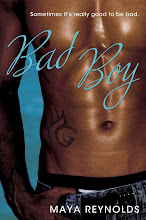
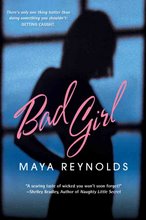
Sorry for being "missing in action." I'm getting ready for the release of BAD BOY. I'll catch up on posts tonight or tomorrow morning early.
Regards,
Maya
Friday, April 03, 2009


Wednesday, April 01, 2009
More Thoughts On Google
Yesterday I posted here about two agents with very different attitudes toward the Google settlement and whether it is a positive move for authors. I promised to offer my view today.
I've been posting about Google Book Search for almost four years and--for most of that time--pointing out the benefits it would offer writers. Back in 2005, I said this:
In February, 2007, Jeffrey Toobin, a legal analyst for CNN and The New Yorker, wrote a long article here about Google's quest for the universal library. Remember, this was almost two years ago . . . long before the actual announcement of the settlement. Here's a quote from Toobin's article:
Writers have traditionally had a very small window in which to sell books before they were removed from the shelves of retailers. After that, an authors' only hope for attracting new readers was through remainder sales or used book sales. And, remember, authors don't earn royalties on used book sales and very little, if any, on remainder sales.
Google's initiative offered authors and publishers an opportunity to breathe new life into out-of-print books. Leave it to the Authors Guild--with its usual retro stance on anything innovative
--to decide to sue Google.
Great move, guys. I haven't seen business acumen like that since GM decided to kill the electric car. And how'd that work out for them?
Sure, in the short term, Google will pay authors for the right to list their books on the search engine, and the publishing industry will sell books that might otherwise never have earned another penny in sales.
But those idiots who sued Google have helped to build a tall wall protecting the search engine from its competitors. It's unlikely that any contender will be able to scale that wall now that they will not only have to pay the cost of scanning books but also have to pay publishers a licensing fee.
IMHO, the public is not served by Amazon and Google's monolithic control over large parts of the publishing industry.
I've been posting about Google Book Search for almost four years and--for most of that time--pointing out the benefits it would offer writers. Back in 2005, I said this:
Now, just think for a minute. Let's say you're a writer who wrote the definitive book on how to cook pork. However, your book has been out of print for years. Then comes next summer, when consumers are avoiding beef (because of high cholesterol and mad cow) and avoiding chicken (because of the avian flu) in favor of the other white meat. A Google search of "pork recipes" turns up your book along with four lines of text with mention of a great recipe. In addition, a link sends the searcher to the only cookbook store that still carries copies of your book. Would you be glad or mad?About two weeks after I wrote that, Kevin Maney, the technology columnist for USA Today said here:
Publishers and authors had better get on this bandwagon, because the drive toward putting books online is not going away. Yahoo and Microsoft have jumped into book scanning. The book industry needs to get out in front of this and be a part of it — and benefit from it.I cheered for Google Book Search until October 24, 2007 when I quoted a line from an article in the New York Times:
Libraries that agree to work with Google must agree to a set of terms, which include making the material unavailable to other commercial search services.Even though I understood Google's desire to block its largest competitor--Microsoft--I was seriously disturbed by this contract clause. I didn't like Google's obviously anti-competitive effort.
In February, 2007, Jeffrey Toobin, a legal analyst for CNN and The New Yorker, wrote a long article here about Google's quest for the universal library. Remember, this was almost two years ago . . . long before the actual announcement of the settlement. Here's a quote from Toobin's article:
. . . a settlement that serves the parties’ interests does not necessarily benefit the public. “It’s clearly in both sides’ interest to settle,” Lawrence Lessig, a professor at Stanford Law School, said . . . Google wants to be able to get this done, and get permission to resume scanning copyrighted material at all the libraries. For the publishers, if Google gives them anything at all, it creates a practical precedent, if not a legal precedent, that no one has the right to scan this material without their consent. That’s a win for them. The problem is that even though a settlement would be good for Google and good for the publishers, it would be bad for everyone else.”Google was happy to settle. By settling, they got to go back to scanning books and, at the same time, created a precedent that will help prevent competitors from muscling into their territory.
"If Google says to the publishers, ‘We’ll pay,’ that means that everyone else who wants to get into this business will have to say, ‘We’ll pay,’ ” Lessig said. “The publishers will get more than the law entitles them to, because Google needs to get this case behind it. And the settlement will create a huge barrier for any new entrants in this field.”So, now, any future competitor to Google Book Search will not only have to take on the enormous expense of scanning the world's books, but also agree to pay the publishers for a listing in what amounts to a giant card catalog. A giant card catalog that benefits those publishers (and their authors) by drawing attention to their books . . . even those books that are long out of print.
Writers have traditionally had a very small window in which to sell books before they were removed from the shelves of retailers. After that, an authors' only hope for attracting new readers was through remainder sales or used book sales. And, remember, authors don't earn royalties on used book sales and very little, if any, on remainder sales.
Google's initiative offered authors and publishers an opportunity to breathe new life into out-of-print books. Leave it to the Authors Guild--with its usual retro stance on anything innovative
--to decide to sue Google.
Great move, guys. I haven't seen business acumen like that since GM decided to kill the electric car. And how'd that work out for them?
Sure, in the short term, Google will pay authors for the right to list their books on the search engine, and the publishing industry will sell books that might otherwise never have earned another penny in sales.
But those idiots who sued Google have helped to build a tall wall protecting the search engine from its competitors. It's unlikely that any contender will be able to scale that wall now that they will not only have to pay the cost of scanning books but also have to pay publishers a licensing fee.
IMHO, the public is not served by Amazon and Google's monolithic control over large parts of the publishing industry.
Tuesday, March 31, 2009
Agents Differ On Google Settlement
While I'm on the subject of my favorite agent bloggers, there was another kerfuffle (don't you just love that word?) in the blogosphere yesterday.
Janet Reid, Agent Extraordinaire from FinePrint Literary Management, took on fellow agent Lynn Chu of Writers Representatives.
Chu's position is that Google and its book settlement is a ripoff for authors. Her opinion can be found here on the op/ed page of Saturday's Wall Street Journal.
Janet's opinion differs and is more in line with that of the Author's Guild. Her counterargument can be found here.
I actually have a third opinion, and I'll talk about that in tomorrow's post. I'm in training today on yet another computer application and need to scoot to arrive for a freaking 8:00 AM kickoff. While I'm usually up by 5:30 AM, I NEVER go anywhere before 9:00, and this is messing with my circadian rhythms something fierce.
Janet Reid, Agent Extraordinaire from FinePrint Literary Management, took on fellow agent Lynn Chu of Writers Representatives.
Chu's position is that Google and its book settlement is a ripoff for authors. Her opinion can be found here on the op/ed page of Saturday's Wall Street Journal.
Janet's opinion differs and is more in line with that of the Author's Guild. Her counterargument can be found here.
I actually have a third opinion, and I'll talk about that in tomorrow's post. I'm in training today on yet another computer application and need to scoot to arrive for a freaking 8:00 AM kickoff. While I'm usually up by 5:30 AM, I NEVER go anywhere before 9:00, and this is messing with my circadian rhythms something fierce.
Jonathan Lyons Is Back
One of my favorite bloggers, agent Jonathan Lyons, is back after a winter hiatus to attend to his new infant son.
He had an interesting--and hopeful--post on Thursday in which he pointed out that the trend in his queries has turned.
I'll let him tell you about it himself here.
He had an interesting--and hopeful--post on Thursday in which he pointed out that the trend in his queries has turned.
I'll let him tell you about it himself here.
Monday, March 30, 2009
Scribd Under Attack
On March 20, I did an article on Scribd, a document-sharing website with more than 50 million monthly users. Anyone can post a document to the site and, according to Wikipedia, Scribd is "the world's largest library of user-generated documents."
In my post here, I quoted the Washington Post from March 17 here:
Tech Crunch's Jason Kincaid pointed out here:
In my post here, I quoted the Washington Post from March 17 here:
Scribd has announced that it has partnered with a number of major publishers, including Random House, Simon & Schuster, Workman Publishing Co., Berrett-Koehler, Thomas Nelson, and Manning Publications, to legally offer some of their content to Scribd's community free of charge.Today the blogosphere was full of stories about published authors railing against Scribd for posting their works without permission. The UK's Guardian had an article here titled "JK Rowling Leads Fight Against Free Book Site Scribd." The article said Rowling was "shocked" to find her books available for free download on the website:
Neil Blair, Rowling's lawyer, said the Harry Potter downloads were "unauthorised and unlawful" and that the website had been asked to take them down. "We are aware of this and we've asked them to take them off," he said. "They are quite helpful and they act immediately, but they won't police it themselves."The UK's Times Online here said:
Mindful of copyright concerns, Tammy Nam, a spokeswoman for the San Francisco Scribd, says that it operates a “notice and takedown system”, where it removes books if their publishers demand it. She said: “If we get a request we usually respond in 24 hours.”That policy keeps Scribd in compliance with the DMCA (Digital Millennium Copyright Act). Signed into law in the U.S. on October 28, 1998, the DMCA limits the liability of online service providers if immediately block access to any copyrighted material once notified by the copyright holder or his agent.
Tech Crunch's Jason Kincaid pointed out here:
Rowling and her representatives are concerned that Scribd is not proactively searching its database for pirated content . . . Scribd says that it has an automated system that can prevent content that has previously been marked as pirated from being uploaded again, but . . . I have a hard time believing the system is working very well.I agree with Jason. Scribd is a great idea that can help publishers promote authors and books. However, after this kerfuffle, the onus is on them to prove they are good citizens of the publishing world, taking an active role in avoiding copyright infringement rather than standing by passively and allowing well-known books to be posted to their site.
Saturday, March 28, 2009
Two Great Things
This will be a short post--about two things that made me happy today:
1) Harriet Klausner, the online reviewer, gave Bad Boy a five-star review!! That's a nice way to start any day.
2) I found a wonderful website for people who like words: FreeRice. The site claims that it donates ten grains of rice through the UN Hunger Program for every right answer you give. Go here. I had a ball playing.
No post on Sunday. See you Monday.
1) Harriet Klausner, the online reviewer, gave Bad Boy a five-star review!! That's a nice way to start any day.
2) I found a wonderful website for people who like words: FreeRice. The site claims that it donates ten grains of rice through the UN Hunger Program for every right answer you give. Go here. I had a ball playing.
No post on Sunday. See you Monday.
Friday, March 27, 2009
Amazon Bullying UK Publishers Again
Publishers Lunch had a story on Thursday about the UK branch of Amazon:
Amazon continued to emulate Wal-Mart. On July 24, 2008, The Bookseller reported on Audible.com (which Amazon had announced they would be acquiring seven months earlier):
Amazon.co.uk is offering publishers participating in its Advantage scheme an "early payment" option of 15 days, in exchange for an extra 2% on top of the current discount given by publishers.Book Brunch, a UK blog, broke the story:
The catch is that publishers who do not offer the extra discount will see their payments made on Amazon's "standard terms"--effectively 60 days. This means a publisher who sells a book through Amazon in April would not be paid until the end of June. Under the revised terms, a publisher would be paid on 15th May--a full 45 days earlier . . .
Amazon has aroused reactions ranging from fury to stoicism with its latest move over terms for its consignment-based Advantage programme. One senior trade figure condemned the demands as "utterly outrageous" and "thuggery". . .This isn't the first time Amazon has flexed its muscle against British publishers. Exactly a year ago today, the Scottish Sunday Herald reported:
The changes will be effective from 1 April, and members are required to make their choice known to Amazon by that date. The email outlining the new terms arrived this week, giving publishers just days to reply.
A MAJOR battle has erupted between Amazon and the UK's biggest publisher in the most public fallout yet between the powerful online retailer and the book world.At the same time Amazon was pushing on British publishers overseas, they were giving a hard time to small American publishers. The Wall Street Journal reported on March 28, 2008:
Amazon has removed several key Hachette Livre UK titles from sale on its British website in an effort to pressurise the publisher to give it a greater percentage of its profits, according to Hachette's group chief executive.
Amazon.com Inc., flexing its muscles as a major book retailer, notified publishers who print books on demand that they will have to use its on-demand printing facilities if they want their books directly sold on Amazon's Web site.On May 16th last year I quoted an excerpt from Mike Shatzkin's speech at the London Book Fair:
About three weeks ago, Amazon declared a new policy that they would no longer ship as Amazon-sold product books printed on demand by another supplier . . . The legality of this approach is not yet clear, but many of the marketplace implications certainly are. Amazon has a commanding position among online book purchasers and they can use that as leverage to compel publishers to conform to their desires . . . This latest policy is a shot across Ingram’s bow -- at the very least; maybe it is a missile into the wheelhouse -- but it is also a sober reminder to publishers that their now second-largest vendor has a whip hand and will use it.On June 8th last year, I likened Amazon's heavy-handed techniques to the "same tactics that Wal-Mart used to gain its position of hegemony in retailing."
Amazon continued to emulate Wal-Mart. On July 24, 2008, The Bookseller reported on Audible.com (which Amazon had announced they would be acquiring seven months earlier):
Audible UK is standing by its business model and the level of discounts it demands, despite a number of audiobook publishers claiming they have been embroiled in long-term negotiations with the download specialist over unfavourable terms.Last year I quoted Tim O'Reilly's blog:
Certain publishers have argued that they accepted the high initial discounts Audible demanded as covering costs during the early stages of Audible's existence, and while the proportion of revenue from downloads was relatively small. But, as the medium grows in popularity, firms are increasingly calling for the business to rethink its remuneration structure.
As Amazon's market power increases, it needs to be mindful of whether its moves, even those that may be good for the company in the short term, are ultimately destructive of the ecosystem on which they depend. I believe that they are heading in that direction, and if they succeed with some of their initiatives, they will wake up one day to discover that they've sown the seeds of their own destruction, just as Microsoft did in the 1990s."A year later and Amazon is still not listening.
Thursday, March 26, 2009
No More NY Stock Exchange for Borders????
From today's Publishers Lunch:
With Borders set to declare fourth-quarter results next week, expectations are grim: more multi-million dollar losses, store closures, payroll slashings and, with shares currently trading at 64 cents per share, potential de-listing from the NYSE. Shareholders will hear more about the company's strategy, including plans for a reverse stock split to satisfy NYSE conditions, next Wednesday when CEO Ron Marshall hosts a conference call with analysts and investors.
B&N Execs Won't Be Getting Raises
Publishers Weekly reported yesterday:
The top executives at Barnes & Noble will not receive an increase in their base salaries for the current fiscal year ending January 2010. The freeze was made at the recommendation of management and approved by the compensation committee of the board of directors. The execs will still be entitled to collect bonuses if performance targets are hit.
Random House Year End Results
From Wednesday's Publishers Lunch:
Bertelsmann reported annual results this morning in Germany, with sales at Random House falling 6.3 percent for the year, to 1.721 billion euros, as EBIT [Earnings Before Interest & Tax] fell even more, down 21 percent at 137 million euros. (After the first six months of the year, Random had been down almost 8 percent in sales and nearly 30 percent in EBIT.) . . . those sales are the lowest recorded in the past seven years (during which the company has made multiple acquisitions) . . .
Wednesday, March 25, 2009
From Duplicity to Genre Fiction
I spent most of this weekend analyzing a contract for my day job, but I slipped off for a couple of hours on Sunday afternoon to see Duplicity with a girlfriend.
I had really been looking forward to the film. Duplicity stars Julia Roberts as Claire Stenwick, a former CIA agent, opposite Clive Owen as Ray Koval, an ex-MI6 agent. The movie opens with their first encounter in Dubai five years earlier where the pair met, and where Claire seduced, drugged and ripped off Ray.
Fast forward to today when the two ex-agents are now corporate spies working for rival "cream and lotion" makers. Tom Wilkinson plays the head of Burkett & Randle while Paul Giamatti is the CEO of Equikrom. Both Wilkinson and Giamatti have a splendid time playing over-the-top roles as enemies trying to steal each other's corporate secrets.
Are Claire and Ray partners, enemies or double agents? Even when working together, neither one can trust the other.
The story is byzantine and intelligent, the pace is fast, and the dialogue is snappy. My favorite lines from Ray are when Claire is pretending not to know him or to remember their passionate night together in Dubai. She tells him he must have her confused with someone else He responds:
What's up with that?
As we left the theatre, I said to Ro, "That film had everything to make it work, but it felt cold, sterile."
She responded, "Yeah, Julia Roberts didn't have the slightest hint of vulnerability."
And I realized she was right. Not only did Julia's performance lack warmth, I just didn't care about her character. The film offered no insight into what made Claire tick, or why we should bother with her. She slept with Ray the first time simply as the most expedient way to achieve her goal. She constantly games him, like in the scene where she waves her panties at him, demanding to know who he's been sleeping with. Another time, she walks past him in Rome, intending for him to see her and follow.
Claire is a cipher--a message written in secret code.
And without some clue as to who she was and why she did the things she did, the rest was just glitz. Beautiful hero and heroine, great secondary performances, terrific dialogue and a wonderful plot, but no emotional connection.
In the forty-eight hours since we left that theatre, I've spent a fair amount of time thinking about my reaction to Claire and how that reaction impacted my whole attitude toward the film. And, because I also spend a lot of time thinking about writing, it was natural for me to conflate the two.
Readers of this blog have heard me say in the past that I believe the purpose of all genre fiction is to evoke emotion in the reader. What differentiates one genre from another is the specific emotion the reader expects to experience in that novel. Horror fiction evokes terror, mysteries evoke curiosity, thrillers evoke excitement and romance evokes a warm, sexy feeling.
I think one of the classic errors newbie writers make is focussing too much attention on details like events or descriptions to the detriment of the story's emotional landscape.
It's not necessary for readers to identify with the main characters in a novel, but it is necessary that they care what happens to those characters.
In Duplicity, Claire held both Ray and the audience at arms' length. We never got close to her. In the same way a novel without an emotional heart loses me, this film lost me. I found myself comparing it to the remake of The Thomas Crown Affair with Pierce Brosnan and Renee Russo. It had the same sort of plot: two very bright, very competitive individuals crossing swords intellectually and sexually. But what a difference. The fast pace and delicious dialogue are just the frosting on a sizzling romance between two strong people who reveal themselves to each other and to the audience.
You don't necessarily have to "like" the main characters, but you have to feel you know, and perhaps understand, them. Hannibal Lecter and Anton Chigurh both scared the hell out of me, but they were true to their codes. While I didn't understand those codes or their unfailing adherence to them, I had a sneaking admiration for both men for having a set of rules by which they operated--regardless of the consequences. I cared about what happened next.
My advice to writers: spend less time working on clever metaphors and intricate plots and more time creating your characters and helping readers understand what makes those characters tick. You won't regret it.
I had really been looking forward to the film. Duplicity stars Julia Roberts as Claire Stenwick, a former CIA agent, opposite Clive Owen as Ray Koval, an ex-MI6 agent. The movie opens with their first encounter in Dubai five years earlier where the pair met, and where Claire seduced, drugged and ripped off Ray.
Fast forward to today when the two ex-agents are now corporate spies working for rival "cream and lotion" makers. Tom Wilkinson plays the head of Burkett & Randle while Paul Giamatti is the CEO of Equikrom. Both Wilkinson and Giamatti have a splendid time playing over-the-top roles as enemies trying to steal each other's corporate secrets.
Are Claire and Ray partners, enemies or double agents? Even when working together, neither one can trust the other.
The story is byzantine and intelligent, the pace is fast, and the dialogue is snappy. My favorite lines from Ray are when Claire is pretending not to know him or to remember their passionate night together in Dubai. She tells him he must have her confused with someone else He responds:
I mean, I'm not great on names. I should be. I try. Faces, I'm definitely better. Faces, I'm like a B, B-. Where I'm good, where I really excel: people I've slept with. That's been a traditional area of strength for me.So we've got everything to make a terrific film and there I was, every twenty minutes checking the time.
What's up with that?
As we left the theatre, I said to Ro, "That film had everything to make it work, but it felt cold, sterile."
She responded, "Yeah, Julia Roberts didn't have the slightest hint of vulnerability."
And I realized she was right. Not only did Julia's performance lack warmth, I just didn't care about her character. The film offered no insight into what made Claire tick, or why we should bother with her. She slept with Ray the first time simply as the most expedient way to achieve her goal. She constantly games him, like in the scene where she waves her panties at him, demanding to know who he's been sleeping with. Another time, she walks past him in Rome, intending for him to see her and follow.
Claire is a cipher--a message written in secret code.
And without some clue as to who she was and why she did the things she did, the rest was just glitz. Beautiful hero and heroine, great secondary performances, terrific dialogue and a wonderful plot, but no emotional connection.
In the forty-eight hours since we left that theatre, I've spent a fair amount of time thinking about my reaction to Claire and how that reaction impacted my whole attitude toward the film. And, because I also spend a lot of time thinking about writing, it was natural for me to conflate the two.
Readers of this blog have heard me say in the past that I believe the purpose of all genre fiction is to evoke emotion in the reader. What differentiates one genre from another is the specific emotion the reader expects to experience in that novel. Horror fiction evokes terror, mysteries evoke curiosity, thrillers evoke excitement and romance evokes a warm, sexy feeling.
I think one of the classic errors newbie writers make is focussing too much attention on details like events or descriptions to the detriment of the story's emotional landscape.
It's not necessary for readers to identify with the main characters in a novel, but it is necessary that they care what happens to those characters.
In Duplicity, Claire held both Ray and the audience at arms' length. We never got close to her. In the same way a novel without an emotional heart loses me, this film lost me. I found myself comparing it to the remake of The Thomas Crown Affair with Pierce Brosnan and Renee Russo. It had the same sort of plot: two very bright, very competitive individuals crossing swords intellectually and sexually. But what a difference. The fast pace and delicious dialogue are just the frosting on a sizzling romance between two strong people who reveal themselves to each other and to the audience.
You don't necessarily have to "like" the main characters, but you have to feel you know, and perhaps understand, them. Hannibal Lecter and Anton Chigurh both scared the hell out of me, but they were true to their codes. While I didn't understand those codes or their unfailing adherence to them, I had a sneaking admiration for both men for having a set of rules by which they operated--regardless of the consequences. I cared about what happened next.
My advice to writers: spend less time working on clever metaphors and intricate plots and more time creating your characters and helping readers understand what makes those characters tick. You won't regret it.
Tuesday, March 24, 2009
Self-Doubt and the Writer
Mitch Wallace sent me several "writerly" questions. Today I thought I'd tackle: "What do you do when self-doubt sets in?"
Mitch is right. Self-doubt can be absolutely crippling. But as I thought about his question, I realized that the kind of self-doubt I experienced when I began writing is very different from that crippling kind I encountered when I began to share my work with strangers. And that self-doubt is different still from the stuff I experience today.
Like many writers, I started out being encouraged by teachers and my parents. I was fortunate enough to have some early success in selling short stories. Looking back, I now realize I had enough enthusiasm and desire to carry me through writing a short work. However, I lacked the skills, discipline or stamina to write a full-length novel.
For more than a decade, I followed a pattern: I'd have a great idea for a hook, start writing and run out of steam somewhere between 10K and 15K words. The unfinished manuscript would eventually go into a box under my bed where it would reside until the next great idea hit and a new manuscript joined it.
In early 2003, I decided to get serious. I planted my butt in the chair and began writing. A hundred thousand words later, I had a manuscript.
I'm going to stop here for a moment to describe a model for the learning process that I find useful. It breaks learning into four stages of consciousness. At the point when I finished that first manuscript, I was unconsciously incompetent. I was so green, I didn't even even recognize my incompetence.
The writer's job is a lonely one. We sit in front of a desk or table and pour our hearts into a manuscript. While I was writing that first novel, I didn't seek any feedback. But it wasn't so much self-doubt as it was shyness. I was embarrassed to share the fruits of my labor with anyone.
Eventually, I worked up the courage to share that first novel with my family and friends. Because they loved me, they raved about it. Encouraged, I queried my first editor.
When the rejection arrived, I was stunned. The Tor editor had written a very nice note across the top of the letter, telling me to query her again with my next novel. But I couldn't believe she didn't want THAT manuscript. I began querying agents. And querying. And querying. That's when the really crippling self-doubts set in.
I'd been so sure my novel would be immediately published that I was lost and confused. But I was also determined. Activity helped . . . a lot.
A new strategy was called for. I began joining writers' groups and seeking critiques from published writers. I've told the story here before about Catherine Spangler's critique of my first chapter. In the kindest possible way, she told me everything that was wrong with those ten pages.
I was devastated. And angry. It took a week before I could face the red ink on that chapter again. But in re-reading the pages, I saw that Cathy was right. And I buried my anger and self-doubt in more activity. This time, I sought critique partners through Sisters-in-Crime online and in local writers' groups in Dallas.
I'd moved to the next stage of learning. Now I was consciously incompetent. Although I didn't yet know what to do about it, I knew I had deficits. And I could find people to help improve my skill level. My new critique partners gently pointed out the flaws in my manuscript.
A year later, I'd ditched that first manuscript and begun incorporating all that I'd learned into a new one. Along with my second novel, as an exercise for a writing class, I'd written a novella. I entered them both into five contests where I won first place in two and second place in two. A judge in the erotic romance category of the fifth contest told me she was offended by my erotic novella. {grin} I decided I'd found my genre.
Those contest wins raised my confidence level. I was now in the third stage of learning: Conscious competence. I queried agents again and signed with Jacky Sach of BookEnds. Tracy Bernstein, an editor at NAL, asked me to expand the novella into a novel, which eventually became Bad Girl.
I'm still in that third stage of learning about writing. I still have to think about the things I've learned and work on breaking bad habits (I am the Queen of Backstory, you know). I'm not yet at the fourth stage, which is unconscious competence, where what you've learned has become second nature to you. But my self-doubt has morphed, too. These days my insecurities surround the business side of publishing . . . and my experiments in another genre. The self-doubt is no longer as sharp or as frightening as it once was. I know I can handle it.
And--as you can tell from this blog--I'm still dealing with my self-doubts through activity. I spend a fair amount of time learning about publishing and writing about it here.
I'm sure other writers have their own mechanisms for dealing with self-doubt. I'd be happy for them to chime in with what works for them.
Hope this helped, Mitch.
Mitch is right. Self-doubt can be absolutely crippling. But as I thought about his question, I realized that the kind of self-doubt I experienced when I began writing is very different from that crippling kind I encountered when I began to share my work with strangers. And that self-doubt is different still from the stuff I experience today.
Like many writers, I started out being encouraged by teachers and my parents. I was fortunate enough to have some early success in selling short stories. Looking back, I now realize I had enough enthusiasm and desire to carry me through writing a short work. However, I lacked the skills, discipline or stamina to write a full-length novel.
For more than a decade, I followed a pattern: I'd have a great idea for a hook, start writing and run out of steam somewhere between 10K and 15K words. The unfinished manuscript would eventually go into a box under my bed where it would reside until the next great idea hit and a new manuscript joined it.
In early 2003, I decided to get serious. I planted my butt in the chair and began writing. A hundred thousand words later, I had a manuscript.
I'm going to stop here for a moment to describe a model for the learning process that I find useful. It breaks learning into four stages of consciousness. At the point when I finished that first manuscript, I was unconsciously incompetent. I was so green, I didn't even even recognize my incompetence.
The writer's job is a lonely one. We sit in front of a desk or table and pour our hearts into a manuscript. While I was writing that first novel, I didn't seek any feedback. But it wasn't so much self-doubt as it was shyness. I was embarrassed to share the fruits of my labor with anyone.
Eventually, I worked up the courage to share that first novel with my family and friends. Because they loved me, they raved about it. Encouraged, I queried my first editor.
When the rejection arrived, I was stunned. The Tor editor had written a very nice note across the top of the letter, telling me to query her again with my next novel. But I couldn't believe she didn't want THAT manuscript. I began querying agents. And querying. And querying. That's when the really crippling self-doubts set in.
I'd been so sure my novel would be immediately published that I was lost and confused. But I was also determined. Activity helped . . . a lot.
A new strategy was called for. I began joining writers' groups and seeking critiques from published writers. I've told the story here before about Catherine Spangler's critique of my first chapter. In the kindest possible way, she told me everything that was wrong with those ten pages.
I was devastated. And angry. It took a week before I could face the red ink on that chapter again. But in re-reading the pages, I saw that Cathy was right. And I buried my anger and self-doubt in more activity. This time, I sought critique partners through Sisters-in-Crime online and in local writers' groups in Dallas.
I'd moved to the next stage of learning. Now I was consciously incompetent. Although I didn't yet know what to do about it, I knew I had deficits. And I could find people to help improve my skill level. My new critique partners gently pointed out the flaws in my manuscript.
A year later, I'd ditched that first manuscript and begun incorporating all that I'd learned into a new one. Along with my second novel, as an exercise for a writing class, I'd written a novella. I entered them both into five contests where I won first place in two and second place in two. A judge in the erotic romance category of the fifth contest told me she was offended by my erotic novella. {grin} I decided I'd found my genre.
Those contest wins raised my confidence level. I was now in the third stage of learning: Conscious competence. I queried agents again and signed with Jacky Sach of BookEnds. Tracy Bernstein, an editor at NAL, asked me to expand the novella into a novel, which eventually became Bad Girl.
I'm still in that third stage of learning about writing. I still have to think about the things I've learned and work on breaking bad habits (I am the Queen of Backstory, you know). I'm not yet at the fourth stage, which is unconscious competence, where what you've learned has become second nature to you. But my self-doubt has morphed, too. These days my insecurities surround the business side of publishing . . . and my experiments in another genre. The self-doubt is no longer as sharp or as frightening as it once was. I know I can handle it.
And--as you can tell from this blog--I'm still dealing with my self-doubts through activity. I spend a fair amount of time learning about publishing and writing about it here.
I'm sure other writers have their own mechanisms for dealing with self-doubt. I'd be happy for them to chime in with what works for them.
Hope this helped, Mitch.
Monday, March 23, 2009
B&N Announces Fourth Quarter Results
On Thursday, Barnes & Noble held their Fourth Quarter earnings conference call.
According to the rules for reprinting excerpts from the Seeking Alpha transcripts, I’m limited to 400 words. Below are the 400 words I chose:
According to the rules for reprinting excerpts from the Seeking Alpha transcripts, I’m limited to 400 words. Below are the 400 words I chose:
“. . . for the fourth quarter and full year ended January 31, 2009 . . . full year consolidated sales decreased 3% compared to last year’s 4.6% increase. Sales at Barnes & Noble stores were . . . down 2.7% over a year ago.To read the entire transcript, please go here to Seeking Alpha.
"Comparable stores sales declined 7.3% for the quarter . . . Store traffic was down throughout the quarter . . .
"For the full year comparable sales at Barnes & Noble stores declined 5.4% . . . Sales at BarnesAndNoble.com were . . . a 1.3% comparable decline compared to last year’s 13.4% increase.
". . . Controlling and cutting expenses where appropriate was a priority for 2008 and also for 2009 . . . What is noteworthy is how our entire store organization maintained and controlled store expenses, particularly store payroll.
". . . we ended the year with $280 million in cash and no debt.
"We plan on opening about 15 Barnes & Noble stores this year and closing approximately 10 stores. [Note: Eleven of those 15 new stores are relocations, leaving no net gain in stores].
". . . The year 2008 was by far the most challenging retail environment we’ve ever experienced. In fact, it was the first year in which our comparable store sales declined every quarter.
". . . the company’s continued focus on improving the efficiency of our supply chain allowed us to reduce inventory levels by 11% and improve inventory turns to the highest levels in our history.
"We . . . plan to return to the business of offering customers digital content inclusive of eBooks, newspapers and magazines. We have a large number of assets in place to enable us to sell digital content, our ecommerce platform is solid . . . We operate a world class in-house service center and our recent acquisition of Fictionwise has enhanced our ability to conduct digital transactions.
". . . we understand investors are anxious to hear more specifics about our plans in this arena and we do have a wide range of initiatives in development but due to the highly strategic nature of this fast evolving market, we will announce each of them as they launch.
". . . as electronic book devices and mobile platforms emerge, it’s . . . opening a new door for us, enabling us to sell lots of content that we’re not even currently offering . . . we think that this is a whole new exciting area for us and the range of content that we can sell is actually much large (sic) than that we’re currently offering within the four walls of the store or for our website.
". . . we attempted to . . . reduce the inventory where the sales were . . . most declining so obviously music is declining significantly and inventory came down there."
Saturday, March 21, 2009
The Phases of Writing
I've been doing this blog since 2005. You'd think by now there wouldn't be a writing subject I hadn't touched upon.
However, this morning in answering a question on a writing loop, I realized I've never addressed the issue of the phases of writing a novel.
First, a disclaimer. This post is obviously based on my writing process. Other writers may have completely different experiences.
As I began to think about the subject, I realized my connection to a manuscript roughly follows the pattern of some of my real-life relationships.
The Honeymoon Phase: This is always how it is when I start a manuscript. I'm in love with the idea of the novel, with the characters, and with the story. I want to write 24/7. I get up early to write, I write during my lunch hour, I rush home from work to write, and I wake up in the middle of the night to write. If I'm lucky, this burst of creativity carries me through the first third of the novel (somewhere between 25K to 30K words). It also helps to establish the voices of the main characters so that they start to help direct the action.
Ennui: Lots of writers are familiar with this phase of a manuscript. It's often called the "sagging middle." It's a particular bête noire for pantsers like me . . . people who do not plot novels out beforehand, but who approach a novel organically, allowing it to grow in a non-linear fashion as the individual responses of the characters dictate.
I always know how my novel will start and how it will end but, as my characters develop, their unique personalities help to mold the plot. The problem comes when that initial bubble of creativity bursts, and I find myself saying, "Okay, what happens now?"
For me, the middle of the novel always involves experimentation. Keeping in mind the classic structure of Western novels (the three-act format) I try different paths, exploring where each will lead me as I head toward the climax.
When it works, it's magical. The characters learn and grow and the tension builds. When it doesn't work, it's like slogging through a bog of mud with a heavy backpack weighing me down.
In Bad Boy, the cross-cultural nature of the relationship between Leah Reece and Quin Perez has each introducing the other to their very different worlds. I decided to experiment with turning the stereotype of the possessive Hispanic male on its ear, giving Leah a moment when she acts very possessively of Quin. He allows it to pass without comment. Later when he responds negatively to a grab-ass friend of Leah's, she doesn't like it and lets him know in no uncertain terms. Quin calls her on the double standard. That interaction between the two is an important step in their developing relationship.
When I started to write that scene, mutual jealousy was the farthest thing from my mind. However, as the couple interacted with a crowd at a party, the incident simply evolved.
The rough part of experimentation is when nothing seems to go right. I write for hours and then, the next day, end up moving all that output into a "overflow" folder because it just doesn't work.
Another problem with sagging middles is when I write myself into a corner. Or when I think I've "lost" a character's voice. Or when I just can't stand these characters one more minute. I call it manuscript fatigue.
Invariably, somewhere between 33K and 65K words, I have to put the manuscript aside and take a break for a few days. Walking away gives me the distance to look at the manuscript with fresh eyes. But it's hard to do. I'm stuck in the middle . . . caught between wanting to write and knowing I need to stay away from that work-in-progress.
I'm not much of a shopper, but while I'm trying to stay away from my manuscript, I usually call my BFF and ask if she wants to go shopping. She almost always responds the same way: "Who are you, and what did you do with Maya?"
After five days or so, I go back. I ALWAYS start by re-reading the entire manuscript. By doing so, I fall back in love with my characters and regain their voices.
Almost every time I have written myself into a corner, it began two or three chapters before I stalled. During my re-read, I can usually spot that moment immediately. Time and distance permit me to be objective.
The Dash to the Finish: The last thirty thousand words present a different challenge for me. I'm getting close enough to smell the finish of the manuscript. I'll soon write "the end" on the story.
Inevitably, I begin to procrastinate. I avoid writing on my W-I-P. I avoid even thinking about it.
It took me a long time to figure out the cause of this problem.
I'm back in love with my hero and heroine and don't want their story to end.
Silly, isn't it? I am generally pretty goal-oriented and pragmatic. This emotional reaction completely surprised me, but it happens every time. Once I identified the problem, I was able to come up with a solution.
When I near the end of any manuscript, I start something new. For a month or so, I work on both the last third of my W-I-P and the first third of another. Initially, I don't want to leave my nearly finished novel to mess with the new one, but--before long--I become anxious to concentrate all my attention on the new one and am, therefore, willing to wrap up the old one.
I know it sounds goofy, but it works. I satisfy my emotional needs and trick my own brain into success.
The whole point of this lengthy post is to encourage you to identify the phases of your writing and, more importantly, to recognize the barriers your brain or your process erect in your path.
Once you identify the obstructions, you can begin to overcome them.
Good luck!
Taking the day off tomorrow to play in the dirt and go see the film Duplicity. See you on Monday.
However, this morning in answering a question on a writing loop, I realized I've never addressed the issue of the phases of writing a novel.
First, a disclaimer. This post is obviously based on my writing process. Other writers may have completely different experiences.
As I began to think about the subject, I realized my connection to a manuscript roughly follows the pattern of some of my real-life relationships.
The Honeymoon Phase: This is always how it is when I start a manuscript. I'm in love with the idea of the novel, with the characters, and with the story. I want to write 24/7. I get up early to write, I write during my lunch hour, I rush home from work to write, and I wake up in the middle of the night to write. If I'm lucky, this burst of creativity carries me through the first third of the novel (somewhere between 25K to 30K words). It also helps to establish the voices of the main characters so that they start to help direct the action.
Ennui: Lots of writers are familiar with this phase of a manuscript. It's often called the "sagging middle." It's a particular bête noire for pantsers like me . . . people who do not plot novels out beforehand, but who approach a novel organically, allowing it to grow in a non-linear fashion as the individual responses of the characters dictate.
I always know how my novel will start and how it will end but, as my characters develop, their unique personalities help to mold the plot. The problem comes when that initial bubble of creativity bursts, and I find myself saying, "Okay, what happens now?"
For me, the middle of the novel always involves experimentation. Keeping in mind the classic structure of Western novels (the three-act format) I try different paths, exploring where each will lead me as I head toward the climax.
When it works, it's magical. The characters learn and grow and the tension builds. When it doesn't work, it's like slogging through a bog of mud with a heavy backpack weighing me down.
In Bad Boy, the cross-cultural nature of the relationship between Leah Reece and Quin Perez has each introducing the other to their very different worlds. I decided to experiment with turning the stereotype of the possessive Hispanic male on its ear, giving Leah a moment when she acts very possessively of Quin. He allows it to pass without comment. Later when he responds negatively to a grab-ass friend of Leah's, she doesn't like it and lets him know in no uncertain terms. Quin calls her on the double standard. That interaction between the two is an important step in their developing relationship.
When I started to write that scene, mutual jealousy was the farthest thing from my mind. However, as the couple interacted with a crowd at a party, the incident simply evolved.
The rough part of experimentation is when nothing seems to go right. I write for hours and then, the next day, end up moving all that output into a "overflow" folder because it just doesn't work.
Another problem with sagging middles is when I write myself into a corner. Or when I think I've "lost" a character's voice. Or when I just can't stand these characters one more minute. I call it manuscript fatigue.
Invariably, somewhere between 33K and 65K words, I have to put the manuscript aside and take a break for a few days. Walking away gives me the distance to look at the manuscript with fresh eyes. But it's hard to do. I'm stuck in the middle . . . caught between wanting to write and knowing I need to stay away from that work-in-progress.
I'm not much of a shopper, but while I'm trying to stay away from my manuscript, I usually call my BFF and ask if she wants to go shopping. She almost always responds the same way: "Who are you, and what did you do with Maya?"
After five days or so, I go back. I ALWAYS start by re-reading the entire manuscript. By doing so, I fall back in love with my characters and regain their voices.
Almost every time I have written myself into a corner, it began two or three chapters before I stalled. During my re-read, I can usually spot that moment immediately. Time and distance permit me to be objective.
The Dash to the Finish: The last thirty thousand words present a different challenge for me. I'm getting close enough to smell the finish of the manuscript. I'll soon write "the end" on the story.
Inevitably, I begin to procrastinate. I avoid writing on my W-I-P. I avoid even thinking about it.
It took me a long time to figure out the cause of this problem.
I'm back in love with my hero and heroine and don't want their story to end.
Silly, isn't it? I am generally pretty goal-oriented and pragmatic. This emotional reaction completely surprised me, but it happens every time. Once I identified the problem, I was able to come up with a solution.
When I near the end of any manuscript, I start something new. For a month or so, I work on both the last third of my W-I-P and the first third of another. Initially, I don't want to leave my nearly finished novel to mess with the new one, but--before long--I become anxious to concentrate all my attention on the new one and am, therefore, willing to wrap up the old one.
I know it sounds goofy, but it works. I satisfy my emotional needs and trick my own brain into success.
The whole point of this lengthy post is to encourage you to identify the phases of your writing and, more importantly, to recognize the barriers your brain or your process erect in your path.
Once you identify the obstructions, you can begin to overcome them.
Good luck!
Taking the day off tomorrow to play in the dirt and go see the film Duplicity. See you on Monday.
Friday, March 20, 2009
Do You Know Scribd?
Tuesday's Washington Post had an article titled "Major Book Publishers Start Turning to Scribd."
Scribd is a document-sharing website with more than 50 million monthly users. Anyone can post a document to the site and, according to Wikipedia, Scribd is "the world's largest library of user-generated documents."
The company started in March, 2007 on a shoestring. In 2007, a group of investors put together a $3.7 million package. This past December, Charles River Ventures together with the original group of investors provided another $9 million in funding. Scribd hired Bebo's ex-chief operating officer as its president.
Tuesday's article reported:
Scribd is a document-sharing website with more than 50 million monthly users. Anyone can post a document to the site and, according to Wikipedia, Scribd is "the world's largest library of user-generated documents."
The company started in March, 2007 on a shoestring. In 2007, a group of investors put together a $3.7 million package. This past December, Charles River Ventures together with the original group of investors provided another $9 million in funding. Scribd hired Bebo's ex-chief operating officer as its president.
Tuesday's article reported:
Online document sharing site Scribd has announced that it has partnered with a number of major publishers, including Random House, Simon & Schuster, Workman Publishing Co., Berrett-Koehler, Thomas Nelson, and Manning Publications, to legally offer some of their content to Scribd's community free of charge. Publishers have begun to add an array of content to Scribd's library, including full-length novels as well as briefer teaser excerpts.Scribd's website describes its services this way:
With Scribd's iPaper document reader, anyone can easily upload and immediately share their original works on Scribd.com or any other website. iPaper transforms PDF, Word, PowerPoint and many other file formats into an elegant web display. Your work can be shared with Scribd's community of passionate readers, and because every word of your document is indexed for search engine optimization, your screenplay, novel or even sheet music and recipes also can be discovered by the world.Check out the Scribd site here.
Thursday, March 19, 2009
Warning: Rant Ahead
It happened again.
A writer went off on a rant on one of the loops I belong to.
You know the kind of tirade I'm talking about. It's usually the same one or two people who periodically go off on the subject: Writers complaining about the short shrift agents give to query letters. I'm paraphrasing here, but I've heard the same complaint often enough that I've got it down pat.
"I'll bet there are great works of fiction being tossed aside because the agents refuse to spend enough time on them. It's just not fair."
News flash: Life isn't fair. I'm sure if we could speak to Natasha Richardson or her family right now, they'd agree.
Why, therefore, do we expect publishing to be different from the rest of life?
And while you're throwing rocks at agents, let's look at life from their side of the street. Kristin Nelson estimated she got 30,000 queries last year. That means she had to read 600 queries every week to get the eight clients she signed last year.
Yeah, I'm gonna bet agents run through those query letters pretty darn fast. Otherwise, they'll drown in those suckers.
You want to get an agent's attention? You have to give him something that grabs his attention. Don't blame him. It's the price of admission. If you don't like the rules, find another game.
You want to know who I have sympathy for? I mean . . . besides Natasha Richardson's twelve and thirteen-year-old sons and her husband?
A writer I know is waiting for a response from a well-known publisher. They told her they LOVED her protagonist, LOVED her writing style, LOVED the quirky plot line and LOVED her fabulous sense of humor. They want to publish the book, but they're worried that the plot line (corporate greed) is "too 2006."
Think about getting a rejection for THAT reason. You're being told you did everything right, but the timing is off.
Damn straight, life is unfair.
And, yes, I'm fully aware there's luck involved in getting published. There's luck involved everywhere and every place in life. It's luck that keeps one person alive and kills another when some idiot throws rocks at cars on the freeway.
Every one of us has been disappointed at some time in our lives. But sometimes life balances out. We get lucky in some other area. That's why we have sayings like "Unlucky at cards, lucky at love.
But it's how you handle what luck throws at you that matters.
You can take a look at what you're doing and try to do something different in case the problem is with you and not with the evil empire that seeks to toss you aside for whatever reason YOU attribute to them (their impatience, their greed, an inability to recognize your genius . . . whatever).
Or you can decide that the game is rigged and move on to a different game. Self-publishing, anyone?
Or, you can accept it and continue to plug away. Thomas Jefferson said: "I'm a great believer in luck, and I find the harder I work, the more I have of it."
Or you can continue to whine.
Do I whine sometimes? Of course, I do. I whine to the people who love me until I hear myself and realize I'm doing it . . . or until they point it out to me.
Because, after a while, whining gets reaallly old.
A writer went off on a rant on one of the loops I belong to.
You know the kind of tirade I'm talking about. It's usually the same one or two people who periodically go off on the subject: Writers complaining about the short shrift agents give to query letters. I'm paraphrasing here, but I've heard the same complaint often enough that I've got it down pat.
"I'll bet there are great works of fiction being tossed aside because the agents refuse to spend enough time on them. It's just not fair."
News flash: Life isn't fair. I'm sure if we could speak to Natasha Richardson or her family right now, they'd agree.
Why, therefore, do we expect publishing to be different from the rest of life?
And while you're throwing rocks at agents, let's look at life from their side of the street. Kristin Nelson estimated she got 30,000 queries last year. That means she had to read 600 queries every week to get the eight clients she signed last year.
Yeah, I'm gonna bet agents run through those query letters pretty darn fast. Otherwise, they'll drown in those suckers.
You want to get an agent's attention? You have to give him something that grabs his attention. Don't blame him. It's the price of admission. If you don't like the rules, find another game.
You want to know who I have sympathy for? I mean . . . besides Natasha Richardson's twelve and thirteen-year-old sons and her husband?
A writer I know is waiting for a response from a well-known publisher. They told her they LOVED her protagonist, LOVED her writing style, LOVED the quirky plot line and LOVED her fabulous sense of humor. They want to publish the book, but they're worried that the plot line (corporate greed) is "too 2006."
Think about getting a rejection for THAT reason. You're being told you did everything right, but the timing is off.
Damn straight, life is unfair.
And, yes, I'm fully aware there's luck involved in getting published. There's luck involved everywhere and every place in life. It's luck that keeps one person alive and kills another when some idiot throws rocks at cars on the freeway.
Every one of us has been disappointed at some time in our lives. But sometimes life balances out. We get lucky in some other area. That's why we have sayings like "Unlucky at cards, lucky at love.
But it's how you handle what luck throws at you that matters.
You can take a look at what you're doing and try to do something different in case the problem is with you and not with the evil empire that seeks to toss you aside for whatever reason YOU attribute to them (their impatience, their greed, an inability to recognize your genius . . . whatever).
Or you can decide that the game is rigged and move on to a different game. Self-publishing, anyone?
Or, you can accept it and continue to plug away. Thomas Jefferson said: "I'm a great believer in luck, and I find the harder I work, the more I have of it."
Or you can continue to whine.
Do I whine sometimes? Of course, I do. I whine to the people who love me until I hear myself and realize I'm doing it . . . or until they point it out to me.
Because, after a while, whining gets reaallly old.
Wednesday, March 18, 2009
The Counting Crows Go Off-Label
Tech Crunch had an interesting tidbit this morning:
The Counting Crows have ended their eighteen-year label relationship with Geffen Records (now part of Universal Music Group) . . . The band joins Radiohead, Nine Inch Nails and others who’s explored releasing music outside of the normal label/distributor world, and more are sure to follow. Labels are pushing all of their artists to sign 360 music deals.About.com defines a 360 music deal this way:
360 deals are contracts that allow a record label to receive a percentage of the earnings from ALL of a band's activities instead of just record sales. Under 360 deals, also called "multiple rights deals," record labels may get a percentage of things that were previously off limits to them, like: Concert revenue, mrchandise sales, endorsement deals and ringtones . . . In essence, the label will function as a pseudo-manager and look after the artist's entire career rather than only focusing on selling records.The New York Times did a lengthy article on these deals in November, 2007. Here's an excerpt:
Like many innovations, these deals were born of desperation; after experiencing the financial havoc unleashed by years of slipping CD sales, music companies started viewing the ancillary income from artists as a potential new source of cash . . .This morning, Cory Doctorow had this tweet:
In return for that bigger share, labels might give artists more money up front and in many cases touring subsidies that otherwise would not be offered. More important, perhaps, artists might be allowed more time to develop the chops needed to build a long career. And the label’s ability to crossmarket . . . merchandise might make for a bigger overall pie.
Not everyone is sold on the concept. Many talent managers view 360s as a thinly veiled money grab and are skeptical that the labels . . . will deliver on their promises of patience.
Labels can demand musicians hand over (c) for a deal: "artist's copyright" ends up "label's copyright," so stronger (c) makes artists weakerRead The Times article here and the Tech Crunch post here.
Tuesday, March 17, 2009
Clowns to the Left of Me; Jokers to the Right
There's been a lot going on in the publishing world over the last few days.
What I find most interesting is the increasing sense of urgency, the feeling that some action must be taken.
If you read Len Vlahos' presentation to the American Bookseller's Association here, you saw his recommendation to his Board of Directors:
Can you blame publishers for feeling jumpy? I don't. They're at the heart of a pincer movement with dying newspapers on one side and exuberant e-book publishers on the other.
It's scary watching what feels like the death knell of the newspaper industry. The closing of the venerable Rocky Mountain News after nearly eighty years of existence was sad to watch--despite the fact that it was inevitable. Two-newspaper-towns are already almost extinct. I learned this seventeen years ago when The Dallas Times Herald shut down, leaving The Dallas Morning News the victor. [Note: As I'm editing this post, the Seattle Post-Intelligencer has announced it is shutting down its physical paper operation.]
In 1920, there were over 550 cities with two dailies; now there are only a handful.
Earlier this month, the New York Times quoted a source from Fitch Ratings, which analyzes the newspaper industry, saying, “In 2009 and 2010, all the two-newspaper markets will become one-newspaper markets, and you will start to see one-newspaper markets become no-newspaper markets.”
Meanwhile, it has to be galling to traditional publishers when a infant industry like e-publishing keeps getting all the press. Especially when the stats served up last week by Publishers Lunch are taken into account:
Advocates of traditional publishing snipe at fans of e-books, who in turn lash out at these masters of the universe. Each side is convinced the other is wrong. The truth is everywhere you look, you see disappointment and disillusionment--whether because things are changing too fast or because they're not changing fast enough.
Saturday afternoon the South by Southwest Conference (SXSW) hosted a panel titled "New Think for Old Publishers." According to Kassia Krozser of Booksquare, about 300 people attended. It was an ugly scene. In a blunt post on Sunday, she described it this way:
But not for all of us.
I can think of three exceptions of which I've personally heard:
What I find most interesting is the increasing sense of urgency, the feeling that some action must be taken.
If you read Len Vlahos' presentation to the American Bookseller's Association here, you saw his recommendation to his Board of Directors:
". . . we now find ourselves at a critical moment. We can either build on the knowledge base that we have established and use the collective power of our trade association to facilitate the sale of digital content through our member stores, or we can cede this business to other channels . . .I don't think there can be any question that the present state of the economy is playing into the high anxiety that seems to pervade all quarters of the publishing industry.
So how urgent is this issue? With a sputtering economy, with an unsettled supply chain, do we really need to worry about this right now?
The answer is yes."
Can you blame publishers for feeling jumpy? I don't. They're at the heart of a pincer movement with dying newspapers on one side and exuberant e-book publishers on the other.
It's scary watching what feels like the death knell of the newspaper industry. The closing of the venerable Rocky Mountain News after nearly eighty years of existence was sad to watch--despite the fact that it was inevitable. Two-newspaper-towns are already almost extinct. I learned this seventeen years ago when The Dallas Times Herald shut down, leaving The Dallas Morning News the victor. [Note: As I'm editing this post, the Seattle Post-Intelligencer has announced it is shutting down its physical paper operation.]
In 1920, there were over 550 cities with two dailies; now there are only a handful.
Earlier this month, the New York Times quoted a source from Fitch Ratings, which analyzes the newspaper industry, saying, “In 2009 and 2010, all the two-newspaper markets will become one-newspaper markets, and you will start to see one-newspaper markets become no-newspaper markets.”
Meanwhile, it has to be galling to traditional publishers when a infant industry like e-publishing keeps getting all the press. Especially when the stats served up last week by Publishers Lunch are taken into account:
At the same time, think of the proponents of e-books. For over twenty years, they've been telling themselves, "Next year will be our breakout year. That's the time e-books will come into their own." That next year never seems to come.Based on our rough estimate of Hachette Book Group's total US sales for the year, . . . even with the exponential growth, ebooks comprised less than 0.75 percent of sales. [This] conforms with Penguin USA's recent declaration [that] ebook sales . . . has yet to comprise one percent of revenue . . .
Advocates of traditional publishing snipe at fans of e-books, who in turn lash out at these masters of the universe. Each side is convinced the other is wrong. The truth is everywhere you look, you see disappointment and disillusionment--whether because things are changing too fast or because they're not changing fast enough.
Saturday afternoon the South by Southwest Conference (SXSW) hosted a panel titled "New Think for Old Publishers." According to Kassia Krozser of Booksquare, about 300 people attended. It was an ugly scene. In a blunt post on Sunday, she described it this way:
Let me be clear. Absolutely clear. Not one word spoken in that session, either from the panelists or from the audience, was new or innovative. The panel, well, we’ve all heard job descriptions before [Note: go here to see a description of the panelists]. The audience? That was one very long line of people saying the same things we’ve been saying to the publishing industry for ten years. And yet the publishing people treated our comments as if they were items to be added to a list.It's ironic that at the same time the SXSW panel (including Clay Shirky) was taking heat, all over the Internet people were urging each other to read Shirky's terrific post on "Newspapers and Thinking the Unthinkable" here. I'm going to quote Shirky again today:
That is what real revolutions are like. The old stuff gets broken faster than the new stuff is put in its place. The importance of any given experiment isn’t apparent at the moment it appears; big changes stall, small changes spread. Even the revolutionaries can’t predict what will happen.Readers of this blog know that I am a HUGE fan of Mike Shatzkin. I think the man is simply brilliant. Even so, he said something on Friday that stopped me in my tracks. In reviewing Len Vlahos' presentation to the ABA, Shatzkin said:
“the book business ain’t the music book.” And the subtitle is “anything you think you learned about media consumption through the iPod doesn’t necessarily apply to the Kindle.”He expanded on this point:
There is almost no benefit to carrying every book you’ve ever read around with you in your pocket.Obviously, for most of us, Mike is absolutely right.
But not for all of us.
I can think of three exceptions of which I've personally heard:
- A young writer serving in Iraq. His wife planned to send him a Kindle last Christmas loaded with all his favorite books
- A physician who moved up to Alaska, planning to work there for three years. Before leaving, he loaded his e-reader with copies of the books he loved most
- An elderly friend whose daughter hopes her move to a nursing home will be made easier by the fact that she'll have a Sony Reader containing copies of the books she holds most dear
Of course, I recognize these examples are both anecdotal evidence and a very small sampling. But this gets to the point I wanted to make.
Advances in technology are allowing readers to customize the way they access books and periodicals to fit their own lifestyles.
Take me as an example. I'm still buying p-books (physical books). But, after dithering over which e-reader to buy, I decided instead to go with a smart phone. That way, I don't have to carry another piece of equipment, but can still read wherever I am.
As a reader, when I buy a book, I want to have access to the p-book, the e-book and the audiobook so that I can "read" that book in the car, standing on line at the DMV or in bed at night.
There is no way in hell I am going to pay three times for the same book. I'd probably be willing to pay extra for having the book available in all mediums, but I'm not going to pay two or three times the current cost. I can't afford it for one and, more importantly, the very idea offends me. {Shrug}
The publishing world at present is centralized. We talk of the "Big Six" publishers.
However, the world of readers is very diverse . . . and decentralized.
Technology now makes it possible for the reader to devise the experience that's right for him/her. For people like me who want to read all the time, we want the broadest possible experience. That's not true for everyone. For some readers, a personalized experience may mean p-books only. For others, it may mean e-books.
Instead of arguing over which medium will succeed, the publishing industry needs to focus on meeting their readers' needs.
To paraphrase Shirky, the rest will shake out over time.
Monday, March 16, 2009
Clay Shirky Has a Gotta-Read Post
Clay Shirky is a a professor at NYU's graduate program and a consultant on Internet technologies. He also has a blog and a Twitter account.
On Friday, he had a terrific blog post titled "Newspapers and Thinking the Unthinkable." Every single person involved in the publishing industry should read this post, cut it out and tape it above his/her desk. Although Shirky is talking about newspapers, his words have a much wider impact:
I'll talk about this and Mike Shatzkin's post some more tomorrow.
On Friday, he had a terrific blog post titled "Newspapers and Thinking the Unthinkable." Every single person involved in the publishing industry should read this post, cut it out and tape it above his/her desk. Although Shirky is talking about newspapers, his words have a much wider impact:
That is what real revolutions are like. The old stuff gets broken faster than the new stuff is put in its place. The importance of any given experiment isn’t apparent at the moment it appears; big changes stall, small changes spread. Even the revolutionaries can’t predict what will happen.Perhaps the most pithy line of Shirky's post is this:
And so it is today. When someone demands to know how we are going to replace newspapers, they are really demanding to be told that we are not living through a revolution. They are demanding to be told that old systems won’t break before new systems are in place. They are demanding to be told that ancient social bargains aren’t in peril, that core institutions will be spared, that new methods of spreading information will improve previous practice rather than upending it. They are demanding to be lied to.
There are fewer and fewer people who can convincingly tell such a lie.
“You’re gonna miss us when we’re gone!” has never been much of a business model.Go here to read Shirky's post. It's long, but well worth it.
I'll talk about this and Mike Shatzkin's post some more tomorrow.
The ABA Seeks a Direction
At the March Board of Directors meeting for the American Booksellers Asssociation (ABA), Len Vlahos, the ABA's Chief Program Officer, made a presentation. The presentation was titled "Opportunities in the Digital Arena for Independent Bookstores: An Action Plan for the American Booksellers Association," and is now available on the ABA website.
Vlahos started out by discussing the book industry's history with digital content. He then moves into talking about the music industry's experience with Napster.
As an aside, Mike Shatzkin had a post on Friday in which he argues that the parallels being drawn between the music industry and the publishing industry are not viable.
Vlahos finishes his historical summary by saying:
Go here to read Mike Shatzkin's post for Friday.
Vlahos started out by discussing the book industry's history with digital content. He then moves into talking about the music industry's experience with Napster.
As an aside, Mike Shatzkin had a post on Friday in which he argues that the parallels being drawn between the music industry and the publishing industry are not viable.
Vlahos finishes his historical summary by saying:
Given all of this, we now find ourselves at a critical moment. We can either build on the knowledge base that we have established and use the collective power of our trade association to facilitate the sale of digital content through our member stores, or we can cede this business to other channels.Vlahos answers his own question this way:
New technologies start slow, finding their way through R&D trial and errors, consumer education, and the building of a manufacturing base and necessary infrastructure . . . new technologies need time to mature and grow. Many such technologies -- maybe even most of them -- ultimately fail. Consider telephone pagers and eight-track cassettes. These were stepping stone technologies. But these technologies failed in their execution, not their concept. People wanted mobile communication and portable music. It took cell phones and the WalkMan to get the concept right. When an increase in utility meets a decrease in production cost, the line curves sharply up, and adoption explodes.Vlahos then offers a list of recommendations. Go here to read what he is suggesting the ABA do.
E-books, it would seem, have arrived at that bend in the road.
Go here to read Mike Shatzkin's post for Friday.
Subscribe to:
Posts (Atom)