Just when you thought it was safe to call your morning juice o.j. again, O.J. Simpson is back in the news.
The December 28th issue of Time reports that "O.J. gets certain rights returned 12 months after the original publication date--which means he should be in a position to resell his book before next Christmas."
Time says that several European publishers want to print the book. O.J.'s representatives have already asked News Corp. (owner of Regan Books, the publisher) to surrender the rights sooner than the contract states in order to exploit all the recent publicity.
Meanwhile, Fred Goldman--the father of Ron Goldman--has filed a suit to collect the original advance paid to O.J. You'll recall that Goldman won a civil lawsuit against Simpson in 1997 for 33.5 million dollars. However, he has been unable to collect on his judgment. ABC News believes that the current lawsuit "would likely be based on the legal premise of 'fraudulent transfer,' which in this case would contend that News Corp. executives knowingly conspired to assist Simpson in subverting a civil judgment."
In addition, Goldman is demanding that News Corp. turn over all the rights to If I Did It to him in order to prevent re-release of the book.
On another front of the same story, a December 18th story in the Wall Street Journal (WSJ) reported that Judith Regan (the woman behind ReganBooks, which published the Simpson book) has hired Hollywood attorney Bert Fields to sue her former employer, News Corp. Rupert Murdoch's company fired Regan on December 15th "shortly before the News Corp. holiday party."
The WSJ said: "Ms. Regan's dismissal notice was issued by Jane Friedman, the CEO of HarperCollins Worldwide. News Corp. Chairman Rupert Murdoch, a longtime supporter of Ms. Regan, was informed of the firing in advance, according to a person close to the situation."
It had long been known that Regan and Friedman did not get along. Outside the Beltway reported on December 16th that Regan "often clashed with her more temperate peers and is widely believed to have had tense relations with Friedman. Last year, Regan moved her offices to Los Angeles, further distancing herself from corporate officials in New York."
According to MSNBC.com, The reason given for the firing by Andrew Butcher, News Corp.'s spokesman, was anti-Jewish comments made by Regan during a telephone conversation with HarperCollins' lawyer Mark Jackson, "who took notes."
"Regan got frustrated by what she believed was HarperCollins' lack of support, and lashed out. She complained that Jackson, Friedman, HarperCollins Executive Editor David Hirshey and longtime literary agent Esther Newberg were a 'Jewish cabal,' Butcher said." (MSNBC.com)
Of course, Fields, Regan's new attorney, denies that Regan made any anti-Semitic remarks. In a January 1st story in the New York Times (NYT), he was quoted saying, "'My present thought is that we would sue not just for breach of contract but for libel . . . They issued false and defamatory statements about Judith. This has been terribly destructive to her career, and I think the damages could be huge'.”
"Legal scholars and prominent litigators said that proving libel is extremely difficult, but it opens the door to a public airing of the litigants’ private affairs. 'Libel is a very, very high mountain of proof to climb, and you can get destroyed in the process,' said Pierce O’Donnell, a leading litigator who successfully sued Paramount in the 1980s." (NYT)
So, if you were hoping you'd heard the last of If I Did It and Judith Regan, I'm afraid your hope was premature. With at least two lawsuits pending and the possibility that the book will be re-released, we're likely to hear a lot more in 2007.
Thursday, January 04, 2007


Wednesday, January 03, 2007
The Attraction of the Erotic Novel
Yesterday, I wrote about an article in the New York Times on the "graying of naughty." I promised to tie that article together with the recent interest in erotic romances.
Let me say from the outset that I have had a love/hate relationship with romance novels.
Like many woman, I began by reading Harlequin romances in my very early teens. I was looking for something to help me navigate the perilous terrain of male/female relationships. Anticipating my first boyfriend, I wanted help in understanding men and romance.
It was probably another six or eight years--after I'd accumulated a bit of romantic experience--before I began to find those romance novels formulaic and unrealistic. I became bored by the virginal heroines, and I eventually abandoned the genre altogether, choosing to read mysteries or thrillers instead.
By the time I approached thirty, my view of those innocent heroines had grown much more negative. I was concerned that romances encouraged passivity in women since the heroines always waited to be rescued by the hero. Romance novels promoted the belief that no woman could be complete without a man. In addition, I was appalled by bodice-busting rape plotlines in which the virginal heroine was taken forcibly by the hero. When my friends talked of their favorite romance writers, I sneered with contemptuous superiority or--worse yet--pontificated on my feminist manifesto.
A few years ago, stuck in a hotel overnight on business, I drifted down to the newstand, looking for a diverting read. My choices were extremely limited, and I picked up an historical romance. The publisher was Brava, the author was Robin Schone and the book was The Lady's Tutor.
I stayed up the entire night, reading that novel. The next day, lack of sleep made me a bleary-eyed participant in meetings. I had discovered the erotic romance.
When I analyze why that book made such an impact on me, I can point to three reasons: First, Robin Schone's genius in her choice of setting: the novel is set in the Victorian Age. The contrast between the very stuffy mores of the era and the sensual detail of Elizabeth Petre's sexual awakening makes the love scenes much more dramatic and erotic. It also raises the stakes for Elizabeth if she is caught having an affair.
Second, Elizabeth is no simpering, passive virgin waiting for Prince Charming. She is a woman who's been married for many years and who has two sons. Because she believes her husband has a mistress, she sets out, determined to learn how to lure him back to her bed. Her approach is extremely pragmatic. What Elizabeth wants is a disposable lover; one who can teach her the sexual arts and whom she can then discard. While not a contemporary heroine, Elizabeth is experiencing real life problems that a contemporary woman can appreciate. It's her solution that is the stuff of feminine fantasies.
The third reason I was so interested in the novel was Ramiel, Elizabeth's lover. Ramiel is the bastard son of an English noblewoman and an Arab sheik. He is disreputable, not fully accepted by English society. On the surface, he is the typical macho male. However, he is also extremely vulnerable. And it was that vulnerability that captured me. Ramiel has as much--if not more--to lose in his relationship with Elizabeth. He's not the cardboard hero I remembered from my earlier forays into romance reading.
I also appreciated the blunt language of the book. I am a straight-forward person. All the euphemisms of romance novels annoy me. The frank vocabulary of The Lady's Tutor held its own appeal.
And this brings me to the point of this post: the tie-in with the Times article. I talked yesterday about how Viagra, cosmetic surgery and people living longer are all contributing to an acceptance of older role models in porn movies. Our population is aging and, at the same time, our values are shifting. Not our values of goodness, honesty or fairness, but our values of what constitutes "attractive" and "vibrant."
I spent a little time at the U.S. Census Bureau's website this morning. You can find it here. Once you figure out how to navigate the site, it contains all sorts of valuable information.
I focused on the 2005 data estimates and found several things that surprised me. It's axiomatic that females outnumber males in our population, but did you know that this is not the case at every age? In fact, according to the 2005 data, males outnumbered females at every age level until 45 to 49. At that age, the numbers of men and women are precisely equal: each constitutes 7.7% of the total population.
After age 49, however, men start dropping like flies. By the time they reach 85 and older, women (1.7%) outnumber men (.9%) by almost 2:1. PUBLIC SERVICE ANNOUNCEMENT FOR MEN: this is the reason why you need to get in the habit of going for regular physical exams and dental appointments.
In terms of the total population, according to the 2005 estimates, 28% of the total U.S. population is 19 and under, 43% of the population is between the ages of 20 and 49, and the percentage of the population over age 50 is 29%. That means that almost 30% of the U.S. is now over the age of 50. No wonder we're more willing to look at older role models for sex.
And what comes with age? Experience, confidence and, in many (although not all) cases, a willingness to relax and be playful. Think about it. Aren't you much more sexually adventurous now than you were at age twenty? Aren't you more confident and willing to say what you like in bed?
I believe this is precisely why women (and increasingly, men) are drawn to erotic romances. Young people are sexually active sooner these days. And the population in general can expect to be sexually active longer: we are living longer and we now have medications like Viagra to enhance performance.
The heroines of erotic romances are rarely passive creatures. They are more likely to be arranging the rescue of the hero than to be sitting around waiting to be rescued.
Let's not kid ourselves. Romance novels, like porn movies, are about fantasies. Remember: three-fourths of the population are older than nineteen. While a teenager may fantasize about her first lover, it grows less and less likely that a thirty-five-year-old woman is going to spend a lot of time fantasizing about losing her virginity. Her fantasies are much more likely to be about an adult relationship, one which includes sex. Sometimes it's hot, passionate sex. And sometimes it's gentle, loving sex. I personally like novels that include both kinds and, therefore, try to include both types of scenes in my books.
I've been reading blogs where writers speculate that the interest in erotic romance is dying out. What I think is happening is that erotic sex scenes are filtering into other types of novels in the same way that the chick lit attitude is so pervasive in other genres. While you see fewer and fewer books labeled purely as chick lit, you can find that spunky voice everywhere--in paranormals, mysteries and contemporary romances. I think the same thing is happening with erotic romance.
Publishers are already demanding more of their erotic romance writers. It's not enough to simply write hot sex scenes any more--unless you're interested in moving toward pure erotica. Erotic romances these days have to have fresh and compelling plots. Something that hasn't been done over and over already.
I personally welcome the trend, if for no other reason than I'm tired of the raised eyebrows when I say that I write erotic romance. It's time the genre grew up. I have.
Let me say from the outset that I have had a love/hate relationship with romance novels.
Like many woman, I began by reading Harlequin romances in my very early teens. I was looking for something to help me navigate the perilous terrain of male/female relationships. Anticipating my first boyfriend, I wanted help in understanding men and romance.
It was probably another six or eight years--after I'd accumulated a bit of romantic experience--before I began to find those romance novels formulaic and unrealistic. I became bored by the virginal heroines, and I eventually abandoned the genre altogether, choosing to read mysteries or thrillers instead.
By the time I approached thirty, my view of those innocent heroines had grown much more negative. I was concerned that romances encouraged passivity in women since the heroines always waited to be rescued by the hero. Romance novels promoted the belief that no woman could be complete without a man. In addition, I was appalled by bodice-busting rape plotlines in which the virginal heroine was taken forcibly by the hero. When my friends talked of their favorite romance writers, I sneered with contemptuous superiority or--worse yet--pontificated on my feminist manifesto.
A few years ago, stuck in a hotel overnight on business, I drifted down to the newstand, looking for a diverting read. My choices were extremely limited, and I picked up an historical romance. The publisher was Brava, the author was Robin Schone and the book was The Lady's Tutor.
I stayed up the entire night, reading that novel. The next day, lack of sleep made me a bleary-eyed participant in meetings. I had discovered the erotic romance.
When I analyze why that book made such an impact on me, I can point to three reasons: First, Robin Schone's genius in her choice of setting: the novel is set in the Victorian Age. The contrast between the very stuffy mores of the era and the sensual detail of Elizabeth Petre's sexual awakening makes the love scenes much more dramatic and erotic. It also raises the stakes for Elizabeth if she is caught having an affair.
Second, Elizabeth is no simpering, passive virgin waiting for Prince Charming. She is a woman who's been married for many years and who has two sons. Because she believes her husband has a mistress, she sets out, determined to learn how to lure him back to her bed. Her approach is extremely pragmatic. What Elizabeth wants is a disposable lover; one who can teach her the sexual arts and whom she can then discard. While not a contemporary heroine, Elizabeth is experiencing real life problems that a contemporary woman can appreciate. It's her solution that is the stuff of feminine fantasies.
The third reason I was so interested in the novel was Ramiel, Elizabeth's lover. Ramiel is the bastard son of an English noblewoman and an Arab sheik. He is disreputable, not fully accepted by English society. On the surface, he is the typical macho male. However, he is also extremely vulnerable. And it was that vulnerability that captured me. Ramiel has as much--if not more--to lose in his relationship with Elizabeth. He's not the cardboard hero I remembered from my earlier forays into romance reading.
I also appreciated the blunt language of the book. I am a straight-forward person. All the euphemisms of romance novels annoy me. The frank vocabulary of The Lady's Tutor held its own appeal.
And this brings me to the point of this post: the tie-in with the Times article. I talked yesterday about how Viagra, cosmetic surgery and people living longer are all contributing to an acceptance of older role models in porn movies. Our population is aging and, at the same time, our values are shifting. Not our values of goodness, honesty or fairness, but our values of what constitutes "attractive" and "vibrant."
I spent a little time at the U.S. Census Bureau's website this morning. You can find it here. Once you figure out how to navigate the site, it contains all sorts of valuable information.
I focused on the 2005 data estimates and found several things that surprised me. It's axiomatic that females outnumber males in our population, but did you know that this is not the case at every age? In fact, according to the 2005 data, males outnumbered females at every age level until 45 to 49. At that age, the numbers of men and women are precisely equal: each constitutes 7.7% of the total population.
After age 49, however, men start dropping like flies. By the time they reach 85 and older, women (1.7%) outnumber men (.9%) by almost 2:1. PUBLIC SERVICE ANNOUNCEMENT FOR MEN: this is the reason why you need to get in the habit of going for regular physical exams and dental appointments.
In terms of the total population, according to the 2005 estimates, 28% of the total U.S. population is 19 and under, 43% of the population is between the ages of 20 and 49, and the percentage of the population over age 50 is 29%. That means that almost 30% of the U.S. is now over the age of 50. No wonder we're more willing to look at older role models for sex.
And what comes with age? Experience, confidence and, in many (although not all) cases, a willingness to relax and be playful. Think about it. Aren't you much more sexually adventurous now than you were at age twenty? Aren't you more confident and willing to say what you like in bed?
I believe this is precisely why women (and increasingly, men) are drawn to erotic romances. Young people are sexually active sooner these days. And the population in general can expect to be sexually active longer: we are living longer and we now have medications like Viagra to enhance performance.
The heroines of erotic romances are rarely passive creatures. They are more likely to be arranging the rescue of the hero than to be sitting around waiting to be rescued.
Let's not kid ourselves. Romance novels, like porn movies, are about fantasies. Remember: three-fourths of the population are older than nineteen. While a teenager may fantasize about her first lover, it grows less and less likely that a thirty-five-year-old woman is going to spend a lot of time fantasizing about losing her virginity. Her fantasies are much more likely to be about an adult relationship, one which includes sex. Sometimes it's hot, passionate sex. And sometimes it's gentle, loving sex. I personally like novels that include both kinds and, therefore, try to include both types of scenes in my books.
I've been reading blogs where writers speculate that the interest in erotic romance is dying out. What I think is happening is that erotic sex scenes are filtering into other types of novels in the same way that the chick lit attitude is so pervasive in other genres. While you see fewer and fewer books labeled purely as chick lit, you can find that spunky voice everywhere--in paranormals, mysteries and contemporary romances. I think the same thing is happening with erotic romance.
Publishers are already demanding more of their erotic romance writers. It's not enough to simply write hot sex scenes any more--unless you're interested in moving toward pure erotica. Erotic romances these days have to have fresh and compelling plots. Something that hasn't been done over and over already.
I personally welcome the trend, if for no other reason than I'm tired of the raised eyebrows when I say that I write erotic romance. It's time the genre grew up. I have.
Tuesday, January 02, 2007
The Graying of Naughty
I love reading the New York Times online. One of my favorite features is the box on the bottom of the right-hand side of the screen titled "Most Popular." That box includes the ten most read articles on any particular day. I always check it to make certain that I haven't missed anything.
Sunday morning, #8 was "The Graying of Naughty." You can find it here.
The article talks about the increasing popularity of women (and men) of a certain age in porn movies. I'd missed it in my reading of the Times because I rarely go to the Fashion page.
The story details the new career of a woman who calls herself De'Bella in the skin flicks. While she's an attractive 50-year-old, she is clearly 50-years-old. And she is one of the women starring in a whole new generation of dirty movies.
I found the story interesting for two reasons. On the surface, it's easy to brush this off as an example of what the skin flick's director, Urbano Martin, describes as a niche film. “'I shoot specialty films,' he explains during a break in filming, adding that he has been in the business for 17 years. 'Fat women, old women, hairy girls — all kinds. We feed the niche'.”
However, I suspect this trend is more than just one sliver of the kinky industry. As the Baby Boom generation has aged, they have impacted the way society looks at each stage of life. Now, that they are between fifty and sixty-two years old, the Boomers are also affecting the way society looks at old age. With the appearance of drugs like Viagra, the growing acceptance of cosmetic surgery and the emphasis on good health, it's probably natural that porn films are featuring older actors and actresses.
There's another factor that enters into this equation. One of the most prevalent fantasies of young men is the one I'll call "Mrs. Robinson." Many young men fantasize about older women--whether it be their seventh grade teacher or the mother of their best friend. The Times says, this fantasy is increasingly "fueled . . . by pop culture’s embrace of the sexy 40-something women of 'Desperate Housewives' and 'Stacy’s Mom,' the 2003 hit song about a teenager’s mother who 'has got it going on'.”
I suspect the trend is also fueled by the unavailability of the older woman sex object (making it a safe and non-threatening fantasy) and the warmth that older women often project. When a young man is facing the scornful expression of a girl his own age, it can be a relief to see the friendly smile of the older woman. His fantasy naturally incorporates the accessibility and the sexual confidence of his very own Mrs. Robinson.
In recent years, there have been multiple high-profile cases of female teachers being prosecuted for seducing school-age boys. Do you really believe these relationships only began occurring in the last decade? Of course not. They've been going on for years, but have been winked at and covered up as a part of a boy's rite of passage. What's different today is that our society is finally recognizing the older woman/very young man pairing for what it is: exploitation of an insecure boy and his sexual fantasies. However, the very fact that the Mrs. Robinson fantasy exists is another reason why I suspect these new porn films are so popular.
I write romance. My family and friends have been frankly taken aback by my interest in writing erotic romances. It began, of course, with my interest in reading such novels. Tomorrow I'll talk about the growing popularity of erotic romance novels, and how I see that trend connected to this "graying of naughty" trend.
Sunday morning, #8 was "The Graying of Naughty." You can find it here.
The article talks about the increasing popularity of women (and men) of a certain age in porn movies. I'd missed it in my reading of the Times because I rarely go to the Fashion page.
The story details the new career of a woman who calls herself De'Bella in the skin flicks. While she's an attractive 50-year-old, she is clearly 50-years-old. And she is one of the women starring in a whole new generation of dirty movies.
I found the story interesting for two reasons. On the surface, it's easy to brush this off as an example of what the skin flick's director, Urbano Martin, describes as a niche film. “'I shoot specialty films,' he explains during a break in filming, adding that he has been in the business for 17 years. 'Fat women, old women, hairy girls — all kinds. We feed the niche'.”
However, I suspect this trend is more than just one sliver of the kinky industry. As the Baby Boom generation has aged, they have impacted the way society looks at each stage of life. Now, that they are between fifty and sixty-two years old, the Boomers are also affecting the way society looks at old age. With the appearance of drugs like Viagra, the growing acceptance of cosmetic surgery and the emphasis on good health, it's probably natural that porn films are featuring older actors and actresses.
There's another factor that enters into this equation. One of the most prevalent fantasies of young men is the one I'll call "Mrs. Robinson." Many young men fantasize about older women--whether it be their seventh grade teacher or the mother of their best friend. The Times says, this fantasy is increasingly "fueled . . . by pop culture’s embrace of the sexy 40-something women of 'Desperate Housewives' and 'Stacy’s Mom,' the 2003 hit song about a teenager’s mother who 'has got it going on'.”
I suspect the trend is also fueled by the unavailability of the older woman sex object (making it a safe and non-threatening fantasy) and the warmth that older women often project. When a young man is facing the scornful expression of a girl his own age, it can be a relief to see the friendly smile of the older woman. His fantasy naturally incorporates the accessibility and the sexual confidence of his very own Mrs. Robinson.
In recent years, there have been multiple high-profile cases of female teachers being prosecuted for seducing school-age boys. Do you really believe these relationships only began occurring in the last decade? Of course not. They've been going on for years, but have been winked at and covered up as a part of a boy's rite of passage. What's different today is that our society is finally recognizing the older woman/very young man pairing for what it is: exploitation of an insecure boy and his sexual fantasies. However, the very fact that the Mrs. Robinson fantasy exists is another reason why I suspect these new porn films are so popular.
I write romance. My family and friends have been frankly taken aback by my interest in writing erotic romances. It began, of course, with my interest in reading such novels. Tomorrow I'll talk about the growing popularity of erotic romance novels, and how I see that trend connected to this "graying of naughty" trend.
Monday, January 01, 2007
The Zeitgeist of 2006
As we leave 2006 behind, I want to take one last look at the year--because it may help to reveal where we are headed in 2007.
When I returned from my blogging vacation, I mentioned that there were several times I was tempted to post during my sabbatical. One of those times was on December 20, when the Washington Post did an article on the most popular search terms entered into Google during 2006.
The top term was "Bebo," a popular online social networking site in Great Britain, similar to "MySpace," which was the second most popular term.
While YouTube didn't make the list, one of its competitors, Metacafe, did. Another popular term was "Radioblog," a tool used for streaming audio on a website.
According to Google's VP of engineering, the company releases an annual "zeitgeist" of search terms at the end of each year. Zeitgeist is a German word, combining two other words: "zeit" or time and"geist" or spirit. In other words, zeitgeist is "the spirit of the time."
Google says the person we were most interested in googling in 2006 was Paris Hilton, followed by Orlando Bloom.
Other popular terms were "cancer," "podcasting," "Hurricane Katrina" and "bankruptcy." I have to confess to feeling a little creepy when I read those. While I didn't google "Bebo" or "Metacafe," I did actually google three out of four of those last terms in 2006.
The article said, "One larger trend . . . is that this year's Google searches reflect more of an international audience -- the eighth-fastest-growing search term this year was "rebelde," the name of a popular Spanish-language soap opera and a Mexican pop band. "
While we're talking about the year past, let's not forget to look at the words of the year. Last December, I reported that the New Oxford American Dictionary had chosen "podcast" as its word of the year for 2005.
This year, the NOAD chose "carbon neutral" as its word of the year for 2006. According to their website: "Being carbon neutral involves calculating your total climate-damaging carbon emissions, reducing them where possible, and then balancing your remaining emissions, often by purchasing a carbon offset: paying to plant new trees or investing in 'green' technologies such as solar and wind power." The selection of that term reflects the growing interest in global warming and the green movement.
Over at Merriam-Webster, they had selected "integrity" as their word of the year in 2005. I wasn't moved enough by their choice to blog on it last December. However, in 2006, following an online survey, the people at M-W selected "truthiness" as their 2006 word of the year.
You'll probably recognize the word, which was coined by comedian Stephen Colbert. Truthiness is the "truth that comes from the gut, not books."
CNN.com reports, "'We're at a point where what constitutes truth is a question on a lot of people's minds, and truth has become up for grabs,' said Merriam-Webster president John Morse. 'Truthiness is a playful way for us to think about a very important issue'."
It will be interesting to see what 2007 has to bring us.
Happy New Year.
When I returned from my blogging vacation, I mentioned that there were several times I was tempted to post during my sabbatical. One of those times was on December 20, when the Washington Post did an article on the most popular search terms entered into Google during 2006.
The top term was "Bebo," a popular online social networking site in Great Britain, similar to "MySpace," which was the second most popular term.
While YouTube didn't make the list, one of its competitors, Metacafe, did. Another popular term was "Radioblog," a tool used for streaming audio on a website.
According to Google's VP of engineering, the company releases an annual "zeitgeist" of search terms at the end of each year. Zeitgeist is a German word, combining two other words: "zeit" or time and"geist" or spirit. In other words, zeitgeist is "the spirit of the time."
Google says the person we were most interested in googling in 2006 was Paris Hilton, followed by Orlando Bloom.
Other popular terms were "cancer," "podcasting," "Hurricane Katrina" and "bankruptcy." I have to confess to feeling a little creepy when I read those. While I didn't google "Bebo" or "Metacafe," I did actually google three out of four of those last terms in 2006.
The article said, "One larger trend . . . is that this year's Google searches reflect more of an international audience -- the eighth-fastest-growing search term this year was "rebelde," the name of a popular Spanish-language soap opera and a Mexican pop band. "
While we're talking about the year past, let's not forget to look at the words of the year. Last December, I reported that the New Oxford American Dictionary had chosen "podcast" as its word of the year for 2005.
This year, the NOAD chose "carbon neutral" as its word of the year for 2006. According to their website: "Being carbon neutral involves calculating your total climate-damaging carbon emissions, reducing them where possible, and then balancing your remaining emissions, often by purchasing a carbon offset: paying to plant new trees or investing in 'green' technologies such as solar and wind power." The selection of that term reflects the growing interest in global warming and the green movement.
Over at Merriam-Webster, they had selected "integrity" as their word of the year in 2005. I wasn't moved enough by their choice to blog on it last December. However, in 2006, following an online survey, the people at M-W selected "truthiness" as their 2006 word of the year.
You'll probably recognize the word, which was coined by comedian Stephen Colbert. Truthiness is the "truth that comes from the gut, not books."
CNN.com reports, "'We're at a point where what constitutes truth is a question on a lot of people's minds, and truth has become up for grabs,' said Merriam-Webster president John Morse. 'Truthiness is a playful way for us to think about a very important issue'."
It will be interesting to see what 2007 has to bring us.
Happy New Year.
Happy New Year, Redux
I'm a pretty early riser; I'm generally up and about by 5:30, no matter what the day of the week. This morning, however, I had a mission: to prepare my annual nosh of black-eyed peas.
As I've said multiple times, I grew up in an Italian/Irish family. While the Irish may have their own New Year's traditions (and I suspect they involve consuming large amounts of alcohol), I only remember my Italian father's way of ringing in the New Year.
Daddy insisted that each of us eat an anchovy for luck. I used to tell him that I'd rather take my chances on bad luck than eat one of those nasty little silvery, salty fish. It did no good. He wasn't satisified until each of his loved ones had at least tasted an anchovy.
When I moved to Texas, it was with relief that I learned people here believe luck comes with a serving of black-eyed peas. When I asked about the origin of the tradition, I was told two different things: First, that black-eyed peas are used to feed cattle and, hence, signify the eater's humility before the Lord. Second, that the tradition dates back to the Civil War when the southern soldiers were forced to eat the cattle feed to stay alive.
At any rate, I have embraced the tradition. Black-eyed peas are ALWAYS the first thing I taste in the New Year. Yesterday, I put two cups of the lentils in a large pot of water to soak overnight. This morning, I got up and chopped up an onion and the rest of the Christmas ham, which I've been saving, put them in the pot with the peas and some spices and set it to simmering. By 8:30 this morning, my New Year's good luck will be ready.
And, wherever I visit today, I know I will be greeted by family and friends with an offer of a small dish of black-eyed peas along with a New Year's hug.
No matter what tradition or belief you embrace, I wish you the best of luck during the coming 365 days.
As I've said multiple times, I grew up in an Italian/Irish family. While the Irish may have their own New Year's traditions (and I suspect they involve consuming large amounts of alcohol), I only remember my Italian father's way of ringing in the New Year.
Daddy insisted that each of us eat an anchovy for luck. I used to tell him that I'd rather take my chances on bad luck than eat one of those nasty little silvery, salty fish. It did no good. He wasn't satisified until each of his loved ones had at least tasted an anchovy.
When I moved to Texas, it was with relief that I learned people here believe luck comes with a serving of black-eyed peas. When I asked about the origin of the tradition, I was told two different things: First, that black-eyed peas are used to feed cattle and, hence, signify the eater's humility before the Lord. Second, that the tradition dates back to the Civil War when the southern soldiers were forced to eat the cattle feed to stay alive.
At any rate, I have embraced the tradition. Black-eyed peas are ALWAYS the first thing I taste in the New Year. Yesterday, I put two cups of the lentils in a large pot of water to soak overnight. This morning, I got up and chopped up an onion and the rest of the Christmas ham, which I've been saving, put them in the pot with the peas and some spices and set it to simmering. By 8:30 this morning, my New Year's good luck will be ready.
And, wherever I visit today, I know I will be greeted by family and friends with an offer of a small dish of black-eyed peas along with a New Year's hug.
No matter what tradition or belief you embrace, I wish you the best of luck during the coming 365 days.
Sunday, December 31, 2006
Happy New Year
On this last day of 2006, I wish all of you happiness, success and good health in the New Year.
While I cherish many quotes from Mark Twain, my favorite is appropriate for starting a new year:
Dance as though no one is watching you.
Love as though you have never been hurt.
Sing as though no one can hear you.
Live as though heaven is on earth.
Best wishes,
Maya
While I cherish many quotes from Mark Twain, my favorite is appropriate for starting a new year:
Dance as though no one is watching you.
Love as though you have never been hurt.
Sing as though no one can hear you.
Live as though heaven is on earth.
Best wishes,
Maya
Saturday, December 30, 2006
Saying Goodbye to 2006 and Its Scandals
J.T. LeRoy, James Frey, Nasdijj, Ben Domenech, Kaavya Viswanathan, O.J. Simpson.
Remember those names? Each of those writers was associated with a literary scandal in the year 2006. In fact, 2006 experienced one literary scandal after another. As a writer and a person who likes to seek order in chaos, I found myself wondering if these six had more in common than writing and scandal.
If you do a "search" on this blog or on Wikipedia for the following names, you'll find detailed accounts of the scandals. Below is a thumbnail sketch of each:
J.T. Leroy is the pseudonym of writer Laura Albert. Since 1999, Albert has published four books under the name Leroy. She claimed to be a victim of child abuse, a former prostitute who had once been homeless. She also claimed to be HIV positive and transgendered. Her boyfriend's half sister pretended to be J.T. Leroy in public, but beginning in the fall of 2005, rumors surfaced that Leroy was a fictional invention by Albert. It's probably no coincidence that Leroy's first novel, Sarah, was the story of a 12-year-old boy whose ambition in life was to become a girl lot lizard, or truck stop prostitute. Leroy's phony bio certainly boosted her credibility to write such a novel.
James Frey is the writer who wrote the "memoir" A Million Little Pieces, supposedly chronicling his experiences as a drug and alcohol addict. The book, which was first published in 2003 by Doubleday, became a best-seller after Oprah named it one of her bookclub picks in the fall of 2005. Then The Smoking Gun revealed that Frey had fabricated the more lurid portions of his "memoir," including his arrest and incarceration. In a dramatic television moment, Oprah confronted Frey on air, demanding the truth. He acknowledged that he had greatly exaggerated certain parts of the book.
Nasdijj was the pseudonym of Timothy Barrus who claimed to be a Navajo writer. Between 2000 and 2004, he published three books that he claimed were non-fiction, describing his life as a Native American, including his childhood with abusive parents and his past as a migrant worker. The title of his last book was Geronimo's Bones: A Memoir of My Brother and Me. In January of this year, the LA Weekly wrote an expose revealing that Nasdijj was really Barrus, who had formerly written gay sado-maschism fiction.
Ben Domenech is a 25-year-old conservative blogger who co-founded the blog RedState. In March, 2006, Washington-
Post.com hired him to write a blog for them. However, he was forced to resign less than a week later when allegations of his plagiarism during college surfaced. His college newspaper uncovered an article which had been plagiarized from a book by humorist P.J. O'Rourke as well as movie reviews taken from Salon.com.
Kaavya Viswanathan is a 19-year-old Harvard student who received a $500,000 advance from publisher Little, Brown (division of Random House) in a two-book deal. Her first novel, How Opal Mehta Got Kissed, Got Wild and Got a Life, was published in April, 2006. A sharp-eyed fan quickly contacted author Megan McCafferty to point out that large portions of the novel appeared to be taken from two of McCafferty's books. Little, Brown was forced to recall the book while Kaavya made weak excuses, saying she "internalized Ms. McCafferty's words. I am a huge fan of her work and can honestly say that any phrasing similarities between her works and mine were completely unintentional and unconscious."
O.J. Simpson was scheduled in November, 2006 to release a non-fiction book titled If I Did It about the murders of his ex-wife and her friend. The public outcry over the book and the television special promoting it was so great that News Corporation cancelled both. Subsequently, Judith Regan, the publisher, was fired by News Corporation.
In looking at the six scandals, we have three writers who faked either their own past or their "memoirs." We have another two who were plagiarists and, finally, we have a man who was willing to capitalize on his ex-wife's death, a death that the public blames on him.
I believe the one thing that connects all six stories is the willingness of the writers involved to lie, cheat or exploit in order to make money--in other words, their greed.
When I was a small child, my mother assured me that, if I lied, those lies would always catch up with me. Any short-term benefit I derived from lying would be quickly followed by major consequences. I accepted Mom at her word and have never regretted it. All writers need to take that advice to heart.
Let's hope that 2007 will see fewer cases of scandal and unethical behavior on the part of writers.
Remember those names? Each of those writers was associated with a literary scandal in the year 2006. In fact, 2006 experienced one literary scandal after another. As a writer and a person who likes to seek order in chaos, I found myself wondering if these six had more in common than writing and scandal.
If you do a "search" on this blog or on Wikipedia for the following names, you'll find detailed accounts of the scandals. Below is a thumbnail sketch of each:
J.T. Leroy is the pseudonym of writer Laura Albert. Since 1999, Albert has published four books under the name Leroy. She claimed to be a victim of child abuse, a former prostitute who had once been homeless. She also claimed to be HIV positive and transgendered. Her boyfriend's half sister pretended to be J.T. Leroy in public, but beginning in the fall of 2005, rumors surfaced that Leroy was a fictional invention by Albert. It's probably no coincidence that Leroy's first novel, Sarah, was the story of a 12-year-old boy whose ambition in life was to become a girl lot lizard, or truck stop prostitute. Leroy's phony bio certainly boosted her credibility to write such a novel.
James Frey is the writer who wrote the "memoir" A Million Little Pieces, supposedly chronicling his experiences as a drug and alcohol addict. The book, which was first published in 2003 by Doubleday, became a best-seller after Oprah named it one of her bookclub picks in the fall of 2005. Then The Smoking Gun revealed that Frey had fabricated the more lurid portions of his "memoir," including his arrest and incarceration. In a dramatic television moment, Oprah confronted Frey on air, demanding the truth. He acknowledged that he had greatly exaggerated certain parts of the book.
Nasdijj was the pseudonym of Timothy Barrus who claimed to be a Navajo writer. Between 2000 and 2004, he published three books that he claimed were non-fiction, describing his life as a Native American, including his childhood with abusive parents and his past as a migrant worker. The title of his last book was Geronimo's Bones: A Memoir of My Brother and Me. In January of this year, the LA Weekly wrote an expose revealing that Nasdijj was really Barrus, who had formerly written gay sado-maschism fiction.
Ben Domenech is a 25-year-old conservative blogger who co-founded the blog RedState. In March, 2006, Washington-
Post.com hired him to write a blog for them. However, he was forced to resign less than a week later when allegations of his plagiarism during college surfaced. His college newspaper uncovered an article which had been plagiarized from a book by humorist P.J. O'Rourke as well as movie reviews taken from Salon.com.
Kaavya Viswanathan is a 19-year-old Harvard student who received a $500,000 advance from publisher Little, Brown (division of Random House) in a two-book deal. Her first novel, How Opal Mehta Got Kissed, Got Wild and Got a Life, was published in April, 2006. A sharp-eyed fan quickly contacted author Megan McCafferty to point out that large portions of the novel appeared to be taken from two of McCafferty's books. Little, Brown was forced to recall the book while Kaavya made weak excuses, saying she "internalized Ms. McCafferty's words. I am a huge fan of her work and can honestly say that any phrasing similarities between her works and mine were completely unintentional and unconscious."
O.J. Simpson was scheduled in November, 2006 to release a non-fiction book titled If I Did It about the murders of his ex-wife and her friend. The public outcry over the book and the television special promoting it was so great that News Corporation cancelled both. Subsequently, Judith Regan, the publisher, was fired by News Corporation.
In looking at the six scandals, we have three writers who faked either their own past or their "memoirs." We have another two who were plagiarists and, finally, we have a man who was willing to capitalize on his ex-wife's death, a death that the public blames on him.
I believe the one thing that connects all six stories is the willingness of the writers involved to lie, cheat or exploit in order to make money--in other words, their greed.
When I was a small child, my mother assured me that, if I lied, those lies would always catch up with me. Any short-term benefit I derived from lying would be quickly followed by major consequences. I accepted Mom at her word and have never regretted it. All writers need to take that advice to heart.
Let's hope that 2007 will see fewer cases of scandal and unethical behavior on the part of writers.
Friday, December 29, 2006
Be Specific!!
I mentioned yesterday that Miss Snark has been critiquing query hooks on her blog here. In reading those hooks, I noticed a trend. Since I was on vacation from blogging, I promptly forgot about it. However, I was reminded of that trend again today while I was critiquing a writer's query letter.
Newbie writers hear agents and editors talk about winning manuscripts that include lots of action. Some writers respond by developing a list of "action events," which they then catalogue in their query letter. Instead of a coherent, compelling narrative, they end up enumerating a bunch of unconnected events.
The query I read today included an unplanned pregnancy, a major theft, murder, kidnapping, drug running, a natural disaster and a miracle. These were listed in no particular order and without a comprehensive narrative to connect them. The characters were also listed with no real explanation of their goals or motivations.
The writer was obviously hard-working and very sincere in her desire for feedback. In responding to her request for a critique, I tried to weave the most important events together while focusing on the main conflict and introducing the lead characters' goals.
When you are writing a query letter, be sure to give the specifics of your plot. Rachel Vater addressed this in her blog of December 19th here:
Vagueness is the kiss of death. This one [submitted query letter] is about a a woman who was labeled a prodigy at age 7. She's now an adult. (What kind of prodigy, you may ask? So did I. Sadly, I don't see an answer.) Apparently it's going to be her destiny to change the world. How, you might ask? So did I. Sadly, that's not covered in the query or synopsis either. So why should I care about whether she can change the world or not when the writer doesn't specify what's wrong with the world and in what way she's going to change it? Well... I can't, because I just don't know what this story is about since the writer doesn't reveal this information.
Avoid adjectives and adverbs and focus on the nouns and verbs. Remember the credo of the newspaper industry: Who, what, when, where and why. For example:
Who: Sally Straight
What: She takes advantage of a tsunami to fake her death
When: December, 2004
Where: Visiting Thailand with her husband on business
Why: Her husband is abusive, and she wants to get away. He suspects the truth and tries to track her down to force her to return to him.
Before an agent can represent a manuscript s/he HAS to know your plot. Instead of describing the manuscript as thrilling or suspenseful, EXPLAIN what the story is about. You don't have to give away the ending, but you DO have to give the conflict and describe the main characters' goals and motivations.
Start by describing the essence of your story in one page (250 words). Once you have that, try to boil it down to 100 words and then 50 words. I went with the 100-word hook, but not before I figured out what a 50-word hook would be. The value of writing a 50-word hook is that it forces you to identify the main conflict and the hero/heroine's goal.
Remember: You're probably not going to get more than eight seconds of an agent or editor's time. These people are busy. They start reading and, the moment they can't tell what is going on, they put the letter down. If you can't write a coherent query letter, why should they believe you can write a coherent novel?
When writing a query, read it, read it and read it again. Get other writers to critique it. One hint to finding if you've done your job is to hand the query to a fellow writer to read and then ask him to describe the plot (not the genre or tone) to you. If he can't do it, you aren't finished yet.
Don't give up. Just keep at it. If you're determined enough, you'll learn; I promise.
Keep on writing.
Newbie writers hear agents and editors talk about winning manuscripts that include lots of action. Some writers respond by developing a list of "action events," which they then catalogue in their query letter. Instead of a coherent, compelling narrative, they end up enumerating a bunch of unconnected events.
The query I read today included an unplanned pregnancy, a major theft, murder, kidnapping, drug running, a natural disaster and a miracle. These were listed in no particular order and without a comprehensive narrative to connect them. The characters were also listed with no real explanation of their goals or motivations.
The writer was obviously hard-working and very sincere in her desire for feedback. In responding to her request for a critique, I tried to weave the most important events together while focusing on the main conflict and introducing the lead characters' goals.
When you are writing a query letter, be sure to give the specifics of your plot. Rachel Vater addressed this in her blog of December 19th here:
Vagueness is the kiss of death. This one [submitted query letter] is about a a woman who was labeled a prodigy at age 7. She's now an adult. (What kind of prodigy, you may ask? So did I. Sadly, I don't see an answer.) Apparently it's going to be her destiny to change the world. How, you might ask? So did I. Sadly, that's not covered in the query or synopsis either. So why should I care about whether she can change the world or not when the writer doesn't specify what's wrong with the world and in what way she's going to change it? Well... I can't, because I just don't know what this story is about since the writer doesn't reveal this information.
Avoid adjectives and adverbs and focus on the nouns and verbs. Remember the credo of the newspaper industry: Who, what, when, where and why. For example:
Who: Sally Straight
What: She takes advantage of a tsunami to fake her death
When: December, 2004
Where: Visiting Thailand with her husband on business
Why: Her husband is abusive, and she wants to get away. He suspects the truth and tries to track her down to force her to return to him.
Before an agent can represent a manuscript s/he HAS to know your plot. Instead of describing the manuscript as thrilling or suspenseful, EXPLAIN what the story is about. You don't have to give away the ending, but you DO have to give the conflict and describe the main characters' goals and motivations.
Start by describing the essence of your story in one page (250 words). Once you have that, try to boil it down to 100 words and then 50 words. I went with the 100-word hook, but not before I figured out what a 50-word hook would be. The value of writing a 50-word hook is that it forces you to identify the main conflict and the hero/heroine's goal.
Remember: You're probably not going to get more than eight seconds of an agent or editor's time. These people are busy. They start reading and, the moment they can't tell what is going on, they put the letter down. If you can't write a coherent query letter, why should they believe you can write a coherent novel?
When writing a query, read it, read it and read it again. Get other writers to critique it. One hint to finding if you've done your job is to hand the query to a fellow writer to read and then ask him to describe the plot (not the genre or tone) to you. If he can't do it, you aren't finished yet.
Don't give up. Just keep at it. If you're determined enough, you'll learn; I promise.
Keep on writing.
Thursday, December 28, 2006
A Writer's Resolution
I'm back! And, boy, did I miss you all. Two or three times in the last three weeks, I read an article or heard a news piece and wanted to run into my study and write about it. Twice I actually powered up my computer before I caught myself.
It was really interesting. Blogging has become so much a part of my life that I actually had symptoms of withdrawal.
So, what's been going on? With the help of my wonderful critique partners, I managed to get my manuscript off to Tracy, my editor
--three days late, but turned in. I was so sick of that manuscript by the time I turned it in, I figured I wouldn't write for the rest of the month. But, the funny thing was, I immediately sat down and started work on the sequel.
Hope your holidays were wonderful. Except for writing, I was pretty much a slug. Read the new Greg Iles thriller and am currently re-reading an old Lee Child thriller. I did manage to gather up a huge stack of books and take them back to the used bookstore for credit. I now have over $1,000 in credit! Told a friend I was leaving her my credit in my will.
One of the times I wanted to blog was after reading Kristen Nelson's post of December 14th. She gave a bunch of statistics about her literary agency. The one that blew me away was this:
20,800 (Estimated number of queries read and responded to in 2006)
54 (Number of full manuscripts requested and read)
8 (Number of new clients taken on this year)
Another way of saying this is that (with two week's vacation a year), she reads 416 queries a week or 59 queries a day (every day of the week) in order to find one client about every six weeks. Think about it. She had to read nearly 21,000 queries in order to find eight new clients. And then we hear writers complaining because they had to send out several dozen query letters to find an agent.
Kind of puts the whole thing into perspective, doesn't it? That means that Kristen reads 99.9% of all queries she receives without ever making an offer of representation.
If you're a writer making your New Year's resolutions this week, resolve to come up with a plot line (or twist) that is truly unique, really different, not the same old/same old in the coming year. If you don't know what I'm talking about, get yourself over to
Miss Snark this week. She's busy reading some 600 plus query hooks. I got bored after reading about thirty of them. Everything seemed so familiar, so been there, done that.
I've got a glimmer of a plot line that I think is different--whether I can pull it off is something else entirely. We'll have to see.
Be back tomorrow.
It was really interesting. Blogging has become so much a part of my life that I actually had symptoms of withdrawal.
So, what's been going on? With the help of my wonderful critique partners, I managed to get my manuscript off to Tracy, my editor
--three days late, but turned in. I was so sick of that manuscript by the time I turned it in, I figured I wouldn't write for the rest of the month. But, the funny thing was, I immediately sat down and started work on the sequel.
Hope your holidays were wonderful. Except for writing, I was pretty much a slug. Read the new Greg Iles thriller and am currently re-reading an old Lee Child thriller. I did manage to gather up a huge stack of books and take them back to the used bookstore for credit. I now have over $1,000 in credit! Told a friend I was leaving her my credit in my will.
One of the times I wanted to blog was after reading Kristen Nelson's post of December 14th. She gave a bunch of statistics about her literary agency. The one that blew me away was this:
20,800 (Estimated number of queries read and responded to in 2006)
54 (Number of full manuscripts requested and read)
8 (Number of new clients taken on this year)
Another way of saying this is that (with two week's vacation a year), she reads 416 queries a week or 59 queries a day (every day of the week) in order to find one client about every six weeks. Think about it. She had to read nearly 21,000 queries in order to find eight new clients. And then we hear writers complaining because they had to send out several dozen query letters to find an agent.
Kind of puts the whole thing into perspective, doesn't it? That means that Kristen reads 99.9% of all queries she receives without ever making an offer of representation.
If you're a writer making your New Year's resolutions this week, resolve to come up with a plot line (or twist) that is truly unique, really different, not the same old/same old in the coming year. If you don't know what I'm talking about, get yourself over to
Miss Snark this week. She's busy reading some 600 plus query hooks. I got bored after reading about thirty of them. Everything seemed so familiar, so been there, done that.
I've got a glimmer of a plot line that I think is different--whether I can pull it off is something else entirely. We'll have to see.
Be back tomorrow.
Saturday, December 09, 2006
Truth In Advertising

Update: My neighbor emailed me this photo about four days ago, telling me he'd caught my cat with his camera.
My large black cat, Bobbin, often chases the smaller kitten, Dinah, under the fence into the next yard. Bobbin, being so large, cannot follow her through the space. I've often watched Bob looking under the fence at Dinah--safe on the other side or seen Dinah peeking back through the fence to see where Bob was.
Since his family frequently photographs my cats, I absolutely believed my neighbor's story. However, after I posted this photo, his wife emailed me to say he was pulling my leg.
Sorry. I'm going back on vacation now until December 28. I need it.
Since his family frequently photographs my cats, I absolutely believed my neighbor's story. However, after I posted this photo, his wife emailed me to say he was pulling my leg.
Sorry. I'm going back on vacation now until December 28. I need it.
Friday, December 08, 2006
Going On Vacation
My manuscript for Bad Girl is due to my editor by next Friday. I'm feeling under the gun, and the upcoming holidays aren't helping my anxiety level.
I've blogged every day since I came back on February 21 when my last vacation ended, so it's time for another break. This will be my last post for the next three weeks. I'll plan to be back on December 28.
In the meantime, feel free to browse among my archives. There are a total of 545 posts to choose from.
Happy Holidays to you and yours.
Warm regards,
Maya
I've blogged every day since I came back on February 21 when my last vacation ended, so it's time for another break. This will be my last post for the next three weeks. I'll plan to be back on December 28.
In the meantime, feel free to browse among my archives. There are a total of 545 posts to choose from.
Happy Holidays to you and yours.
Warm regards,
Maya
Thursday, December 07, 2006
iUniverse Expands Its Universe
Back on November 2, I did a post titled "Not All Publishers Are Created Equal." In it, while talking about self-publishing, I said:
There is no marketing system for self-pubbed books. The vast majority sell less than 100 copies. Yes, you can list them on e-Bay or Amazon, but you still need a mechanism to drive traffic to your book.
Well, the November 29th edition of The Book Standard reports:
Indigo Books & Music, the Canadian retail book chain, will now feature books by self-published Canadian authors. Through an agreement with iUniverse, the U.S.-based self-publishing company, Indigo will prominently feature some books for 60 days, “longer if the book keeps selling,” the company said . . . They will be featured in Indigo Books & Music, Coles and Chapters stores.
In order to qualify to be "featured," a writer must purchase iUniverse's Premier Plus package and be given the iUniverse "Publisher’s Choice label," which the company describes as meeting qualities of a professionally published book and meet key cover design standards. In other words, the writer forks over $1,200 for this Premier Plus package.
Understand, the writer STILL has to pay for the copies to place in the bookstores. I'm willing to bet there's a minimum number of copies iUniverse demands the writer pay for.
iUniverse already has a similar deal with Barnes and Noble in the U.S. I should mention that B&N bought a 49% stake in iUniverse back in 1999 so that deal is a case of one arm scratching the other.
Still, these arrangements give iUniverse a significant boost in its marketing efforts to writers seeking publication. AND it does drive traffic toward the writer's book. It will be interesting to see whether that Publisher's Choice label does indicate a vetting of books for quality in writing or whether it only refers to book where the author paid the extra $1,200 for an attractively packaged book.
There is no marketing system for self-pubbed books. The vast majority sell less than 100 copies. Yes, you can list them on e-Bay or Amazon, but you still need a mechanism to drive traffic to your book.
Well, the November 29th edition of The Book Standard reports:
Indigo Books & Music, the Canadian retail book chain, will now feature books by self-published Canadian authors. Through an agreement with iUniverse, the U.S.-based self-publishing company, Indigo will prominently feature some books for 60 days, “longer if the book keeps selling,” the company said . . . They will be featured in Indigo Books & Music, Coles and Chapters stores.
In order to qualify to be "featured," a writer must purchase iUniverse's Premier Plus package and be given the iUniverse "Publisher’s Choice label," which the company describes as meeting qualities of a professionally published book and meet key cover design standards. In other words, the writer forks over $1,200 for this Premier Plus package.
Understand, the writer STILL has to pay for the copies to place in the bookstores. I'm willing to bet there's a minimum number of copies iUniverse demands the writer pay for.
iUniverse already has a similar deal with Barnes and Noble in the U.S. I should mention that B&N bought a 49% stake in iUniverse back in 1999 so that deal is a case of one arm scratching the other.
Still, these arrangements give iUniverse a significant boost in its marketing efforts to writers seeking publication. AND it does drive traffic toward the writer's book. It will be interesting to see whether that Publisher's Choice label does indicate a vetting of books for quality in writing or whether it only refers to book where the author paid the extra $1,200 for an attractively packaged book.
Wednesday, December 06, 2006
Another Copyright Lawsuit
On November 29th, Jay Leno, NBC Studios and a group of other comedians, including Rita Rudner, joined together to sue comedy teacher Judy Brown to stop her from publishing books containing jokes by well-known comedians.
The federal lawsuit, which was filed in U.S. District Court in Los Angeles, named Brown and three of her publishers--Andrews McMeel Publishing, Sterling Publishing Co. and Rowman & Littlefield, Inc.--for copyright infringement. According to the Los Angeles Times, the suit said that "Brown and her publishers have turned out approximately 19 'joke books' over the past decade that contain 'substantial amounts of published comedic material that is wholly original with [the] plaintiffs.'"
USA Today quoted the lawsuit: Brown's "books credit the comedians who wrote the jokes, which only serves to make the copyright violations more egregious: The books sell precisely because they include jokes by famous comedians . . . Ms. Brown has even sent representatives to comedy clubs to record comedians' routines, so she can then copy the jokes into her books and profit from the original comedic works of others."
Section 107 of the U.S. Copyright Act is very clear: "Acknowledging the source of the copyrighted material does not substitute for obtaining permission."
According to CBC Arts, Ms. Brown has "even written a Comedy Thesaurus, which arranges more than 3,000 jokes by subject."
The attorney for the plaintiffs, Theodore Boutrous, Jr., says that the plaintiffs contacted Brown and one of the three publishers also named in the suit to ask that they stop infringing on the comedians' work. He said that no one responded to the requests.
Numerous news agencies attempted to contact the defendants, but were unable to obtain a comment.
USA Today quoted Boutrous: "We think there's a very important principle at stake: protecting intellectual property of the comedians . . . These jokes are products of a very careful choice of words."
The federal lawsuit, which was filed in U.S. District Court in Los Angeles, named Brown and three of her publishers--Andrews McMeel Publishing, Sterling Publishing Co. and Rowman & Littlefield, Inc.--for copyright infringement. According to the Los Angeles Times, the suit said that "Brown and her publishers have turned out approximately 19 'joke books' over the past decade that contain 'substantial amounts of published comedic material that is wholly original with [the] plaintiffs.'"
USA Today quoted the lawsuit: Brown's "books credit the comedians who wrote the jokes, which only serves to make the copyright violations more egregious: The books sell precisely because they include jokes by famous comedians . . . Ms. Brown has even sent representatives to comedy clubs to record comedians' routines, so she can then copy the jokes into her books and profit from the original comedic works of others."
Section 107 of the U.S. Copyright Act is very clear: "Acknowledging the source of the copyrighted material does not substitute for obtaining permission."
According to CBC Arts, Ms. Brown has "even written a Comedy Thesaurus, which arranges more than 3,000 jokes by subject."
The attorney for the plaintiffs, Theodore Boutrous, Jr., says that the plaintiffs contacted Brown and one of the three publishers also named in the suit to ask that they stop infringing on the comedians' work. He said that no one responded to the requests.
Numerous news agencies attempted to contact the defendants, but were unable to obtain a comment.
USA Today quoted Boutrous: "We think there's a very important principle at stake: protecting intellectual property of the comedians . . . These jokes are products of a very careful choice of words."
Monday, December 04, 2006
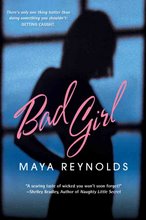
The Cover Art for "Bad Girl"

I've been blogging for over a year, but have never posted a photo to this site.
It seems fitting somehow that the first photo I post should be the cover art for my upcoming novel.
I don't have the release date yet and the back cover blurb is still in flux, but I have cover art.
Over the years, I've published a ton of short stories, but this is my first full-length novel. You could say I'm excited. In fact, you could say I'm ecstatic.
Martha Ivery Sentenced
Almost exactly a year ago, on December 8, 2005, I did a post titled "Anatomy of a Writing Scam." In that column, I reported that Martha Ivery had admitted scamming hundreds of writers out of almost $700,000.
Ivery defrauded wannabe writers from May, 1995 through September, 2002 by pretending first to be a publisher and, later, to be a literary agent named Kelly O'Donnell.
Martha/Kelly ran ads on the Internet and in Writer's Digest magazine soliciting clients. When wannabe writers approached the Kelly O'Donnell Literary Agency, they were charged a fee for representation. Then the prospective authors were advised that their manuscripts needed editing and, of course, there would be an editing fee. There were additional fees for illustration, marketing and copies of the unpublished manuscript. Eventually, the writers would be referred to the Press-Tige Publishing Company, Martha's operation.
Martha/Kelly had a variety of excuses for the fact that the book remained unpublished years after the fees had been paid. These included: lost manuscripts, printing problems, computer viruses and production backlogs. According to Newsday.com, "in one case, Ivery claimed] that . . . a manuscript had been aboard one of the planes hijacked in the Sept. 11 attacks . . ."
The Writer Beware website here said that, from 1998 to 2003, they received "scores of complaints" about Martha/Kelly. Writer Beware also said that "a criminal investigation into Ivery's activities was launched by the FBI in 2001."
This week, Victoria Strauss and Ann Crispin of Writer Beware both reported that Martha Ivery has finally been sentenced. On November 29, 2006, in a Federal courtroom in upstate New York, a judge sentenced Ivery to 65 months in Federal prison, plus 3 years' probation. She was also ordered to pay $728,248 in restitution to 231 victims--something that is not likely to ever happen.
On December 5, 2005, Ivery had pleaded guilty to a 17-count indictment: 15 felony counts of mail fraud charges for amounts ranging from $1,665 to $10,025. Additionally, she had one count of credit card fraud and one count of lying during her bankruptcy filing.
This is the end of a long, ugly scam by a woman who showed no compassion for her victims nor awareness of her wickedness until she was brought into a Federal courtroom. There she suddenly professed to have found religion.
What's that old saw about there not being any atheists in foxholes?
I applaud the sentence and the people who brought Ivery to justice. I hope she serves every day of her 65 months in jail because it is very unlikely that she will ever reimburse any of those people she defrauded.
Ivery defrauded wannabe writers from May, 1995 through September, 2002 by pretending first to be a publisher and, later, to be a literary agent named Kelly O'Donnell.
Martha/Kelly ran ads on the Internet and in Writer's Digest magazine soliciting clients. When wannabe writers approached the Kelly O'Donnell Literary Agency, they were charged a fee for representation. Then the prospective authors were advised that their manuscripts needed editing and, of course, there would be an editing fee. There were additional fees for illustration, marketing and copies of the unpublished manuscript. Eventually, the writers would be referred to the Press-Tige Publishing Company, Martha's operation.
Martha/Kelly had a variety of excuses for the fact that the book remained unpublished years after the fees had been paid. These included: lost manuscripts, printing problems, computer viruses and production backlogs. According to Newsday.com, "in one case, Ivery claimed] that . . . a manuscript had been aboard one of the planes hijacked in the Sept. 11 attacks . . ."
The Writer Beware website here said that, from 1998 to 2003, they received "scores of complaints" about Martha/Kelly. Writer Beware also said that "a criminal investigation into Ivery's activities was launched by the FBI in 2001."
This week, Victoria Strauss and Ann Crispin of Writer Beware both reported that Martha Ivery has finally been sentenced. On November 29, 2006, in a Federal courtroom in upstate New York, a judge sentenced Ivery to 65 months in Federal prison, plus 3 years' probation. She was also ordered to pay $728,248 in restitution to 231 victims--something that is not likely to ever happen.
On December 5, 2005, Ivery had pleaded guilty to a 17-count indictment: 15 felony counts of mail fraud charges for amounts ranging from $1,665 to $10,025. Additionally, she had one count of credit card fraud and one count of lying during her bankruptcy filing.
This is the end of a long, ugly scam by a woman who showed no compassion for her victims nor awareness of her wickedness until she was brought into a Federal courtroom. There she suddenly professed to have found religion.
What's that old saw about there not being any atheists in foxholes?
I applaud the sentence and the people who brought Ivery to justice. I hope she serves every day of her 65 months in jail because it is very unlikely that she will ever reimburse any of those people she defrauded.
Sunday, December 03, 2006
A New Look
I woke up this morning in a mood to change SOMETHING. Since I don't have enough time to paint the outside of the house or the energy to redecorate the inside of the house, I opted to redesign my blog.
In doing so, I lost all of the links in the column to the right (neglected to save them first). I replaced them by memory. If you see that I've forgotten a link, please email me so that I can add it back. Thanks.
Hope you like the new design. Because it was dark outside when I was doing the heavy hauling, I chose a brighter, lighter look.
In doing so, I lost all of the links in the column to the right (neglected to save them first). I replaced them by memory. If you see that I've forgotten a link, please email me so that I can add it back. Thanks.
Hope you like the new design. Because it was dark outside when I was doing the heavy hauling, I chose a brighter, lighter look.
Addendum to Second Life Series
I wrote yesterday's post--the fifth in the series on Second Life--almost a week ago, but posted it last night.
Bobbin and Dinah, two of my three cats, woke me early this morning having an argument. I got up to mediate and decided to stay up. I made a cup of hot tea and sat down to cruise my favorite Internet sites. Almost immediately, I came across an article posted yesterday at CNET News. The article, titled "Who Governs Virtual Worlds," was a report on the fourth annual symposium taking place this weekend at the New York Law School on the "State of Play." The conference was described as "an academic gathering where professors from a slew of top universities come to talk about the intellectual, legal and social issues around virtual worlds."
According to Greg Lastowka, one of the attendees and an assistant professor of law at Rutgers, "The virtual-world governance landscape boils down to two categories: internal and external views of governance . . . Internal governance . . . is that which takes place between players and publishers. External governance is more akin to how any organization handles disputes over bylaws or rules."
The article continues, reiterating the issues we've covered this week:
Perhaps the biggest question is whether the trade in virtual goods--weapons, armor, clothing, buildings and the like, all of which have real-world financial value--is taxable . . . But beyond taxation are plenty of legal issues, which the experts addressed at the event . . . One of the first question was what game designers can do to stop players from defrauding each other.
If you want to read the article yourself, go to here .
Bobbin and Dinah, two of my three cats, woke me early this morning having an argument. I got up to mediate and decided to stay up. I made a cup of hot tea and sat down to cruise my favorite Internet sites. Almost immediately, I came across an article posted yesterday at CNET News. The article, titled "Who Governs Virtual Worlds," was a report on the fourth annual symposium taking place this weekend at the New York Law School on the "State of Play." The conference was described as "an academic gathering where professors from a slew of top universities come to talk about the intellectual, legal and social issues around virtual worlds."
According to Greg Lastowka, one of the attendees and an assistant professor of law at Rutgers, "The virtual-world governance landscape boils down to two categories: internal and external views of governance . . . Internal governance . . . is that which takes place between players and publishers. External governance is more akin to how any organization handles disputes over bylaws or rules."
The article continues, reiterating the issues we've covered this week:
Perhaps the biggest question is whether the trade in virtual goods--weapons, armor, clothing, buildings and the like, all of which have real-world financial value--is taxable . . . But beyond taxation are plenty of legal issues, which the experts addressed at the event . . . One of the first question was what game designers can do to stop players from defrauding each other.
If you want to read the article yourself, go to here .
Saturday, December 02, 2006
Crown Publishing Contest
Random House has a contest listed on their Crown Publishing site. Enter to win a consultation with a New York literary agent.
The link is here.
Thanks to Samantha Storm for providing the link.
The link is here.
Thanks to Samantha Storm for providing the link.
Second Life (Part V)
This is the last in a five-part series on social networks and their increasing impact on the business world. In order to explore some of the issues, I've focused on Second Life, a MMOG created by Linden Lab of San Francisco. Of course, Second Life is not the only MMOG, nor is it even the largest.
The Boston Globe interviewed analyst Bruce Sterling Woodcock in June, 2006. At that time, he estimated that "about 12 million people pay monthly subscription fees" to MMOGs. One game, World of Warcraft, dominates about half that market with 6.5 million players, including more than 3 million Chinese. (Money.com)
In this post, I'd like to take a look forward at the future of these MMOGs.
Second Life led the way in allowing user-created content. Back on November 14, 2003, five months after it debuted on the Internet, SL surprised the gaming community with an announcement:
Second Life will allow "users to retain the intellectual property rights for anything they create within the game. If users build a house, create a character, program a cool script, or write an adventure, those graphics/concepts/programs will belong to the user and not the service provider--even if they are used for personal profit later on.
The announcement, made today at New York Law School's 'State of Play' conference, is a marked departure from the end-user license agreements of most MMOGs. Most of today's games retain whole ownership and openly combat users attempting to profit in real-world dollars from the service." (GameSpy.com)
Although, at that time, SL's decision flew in the face of the accepted principles of the gaming industry, it proved to be inspired. Since then, Second Life has thrived. Its success has led other MMOGs to follow the same route in permitting players to buy and sell objects from the game in the real world.
This has created a whole new set of issues. Money.com reported on July 28, 2006 that "In China . . . hordes of 'gold farmers' earn a living by selling the fruits of their WoW [World of Warcraft] labors to time-strapped players in the United States. Industrywide, the out-of-game MMOG economy has grown to $200 million--from zero just a few years ago . . . In other words, the Metaverse is finally open for business."
And the world is taking notice.
The U.S. Congress certainly has.
The thriving economy created by Second Life has caught the eye of several Congressmen. SL residents are earning income and making profits in the virtual world that can translate into dollars in the real world. Should these be taxed? And, if so, what implications will this have for the casual gamer? Or the international gamer?
On October 15th, the Reuters bureau in Second Life (Yes, Reuters has set up a news bureau inside SL) reported:
Booming virtual economies in online worlds such as Second Life and World of Warcraft have drawn the attention of a U.S. congressional committee, which is investigating how virtual assets and incomes should be taxed.
“Right now we’re at the preliminary stages of looking at the issue and what kind of public policy questions virtual economies raise — taxes, barter exchanges, property and wealth,” said Dan Miller, senior economist for the Joint Economic Committee. “You could argue that to a certain degree the law has fallen (behind) because you can have a virtual asset and virtual capital gains, but there’s no mechanism by which you’re taxed on this
stuff,” he said.
Virtual land owners inside SL already pay a monthly land use fee to Linden Lab, which might be likened to property taxes. The cost for purchasing a sim (65,536 meters of land) is US$1,675 while the user fee is US$295 per month to maintain that property.
As I've already explained, real world corporations are taking social networks like Second Life seriously. Dell, Nissan and others are setting up locations in the virtual world in order to market to the residents. Those corporations are going to deduct their business expenses involved in operating in the virtual world. The minute they raise that issue, taxation of income earned and capital gains is sure to follow.
This is not a simple issue. If Congress wants to tax income in the virtual world, virtual employers will have to issue Wage and Tax Statements (W-2 forms). To tax capital gains, a system would have to be set up to provide an annual valuation for a resident's assets in the virtual world.
At the same time, virtual marketing is a trend that anyone with goods or services to sell should be paying attention to. Imagine setting up a storefront in cyberspace to market your goods.
What's next for the future of MMOGs? Philip Rosedale of Second Life made a prediction back in 2003 at the State of Play conference:
"Longer term, I think interface technologies that allow really interacting with others and touching the world you are immersed in, will bring BIG changes in the way we experience these things. The various technologies that can rapidly acquire facial expressions from an inexpensive camera are probably a nearer term example of that future. Imagine how much easier and fun it would be to communicate in a world where, just for example, something as simple as the movement of your character's eyebrows could follow those of your own!"
In the short term, insuring law and order, preventing copyright infringement and policing fraud are sure to be issues MMOG executives will have to address in their virtual worlds.
Last week, I listened to a NPR broadcast in which MMOG executives discussed the difficulties of monitoring players determined to exploit their systems. The gold farmers of China were mentioned as were the people who use automated computer programs to play and earn money/rewards. One anonymous player admitted he had fifty computers running in his apartment, earning him money/rewards 24/7--even while he was busy at work during the day in real life.
One MMOG executive described how his company is trying to trap players who "cheat" the system. They began emailing players whom they suspected of using computer programs. When the system indicated the player was online, the MMOG would send photos of various colors and demand that the "player" identify those colors. Since computers have difficulty with this task, this strategy worked for a while. However, now players are having their computers page them when the MMOG makes contact. The computer responds, "Hold on a minute. I'm on the phone" while paging the player. The player immediately logs on--sometimes from a remote location--and answers the MMOG's questions.
As you can see, this amounts to another game-within-the-game where MMOGs try to stay ahead of their users. There will always be a new ploy, a new hacker or a new scam artist.
I hope you've found this subject as interesting as I did. I look forward to seeing how virtual reality and real life collide in the future.
The Boston Globe interviewed analyst Bruce Sterling Woodcock in June, 2006. At that time, he estimated that "about 12 million people pay monthly subscription fees" to MMOGs. One game, World of Warcraft, dominates about half that market with 6.5 million players, including more than 3 million Chinese. (Money.com)
In this post, I'd like to take a look forward at the future of these MMOGs.
Second Life led the way in allowing user-created content. Back on November 14, 2003, five months after it debuted on the Internet, SL surprised the gaming community with an announcement:
Second Life will allow "users to retain the intellectual property rights for anything they create within the game. If users build a house, create a character, program a cool script, or write an adventure, those graphics/concepts/programs will belong to the user and not the service provider--even if they are used for personal profit later on.
The announcement, made today at New York Law School's 'State of Play' conference, is a marked departure from the end-user license agreements of most MMOGs. Most of today's games retain whole ownership and openly combat users attempting to profit in real-world dollars from the service." (GameSpy.com)
Although, at that time, SL's decision flew in the face of the accepted principles of the gaming industry, it proved to be inspired. Since then, Second Life has thrived. Its success has led other MMOGs to follow the same route in permitting players to buy and sell objects from the game in the real world.
This has created a whole new set of issues. Money.com reported on July 28, 2006 that "In China . . . hordes of 'gold farmers' earn a living by selling the fruits of their WoW [World of Warcraft] labors to time-strapped players in the United States. Industrywide, the out-of-game MMOG economy has grown to $200 million--from zero just a few years ago . . . In other words, the Metaverse is finally open for business."
And the world is taking notice.
The U.S. Congress certainly has.
The thriving economy created by Second Life has caught the eye of several Congressmen. SL residents are earning income and making profits in the virtual world that can translate into dollars in the real world. Should these be taxed? And, if so, what implications will this have for the casual gamer? Or the international gamer?
On October 15th, the Reuters bureau in Second Life (Yes, Reuters has set up a news bureau inside SL) reported:
Booming virtual economies in online worlds such as Second Life and World of Warcraft have drawn the attention of a U.S. congressional committee, which is investigating how virtual assets and incomes should be taxed.
“Right now we’re at the preliminary stages of looking at the issue and what kind of public policy questions virtual economies raise — taxes, barter exchanges, property and wealth,” said Dan Miller, senior economist for the Joint Economic Committee. “You could argue that to a certain degree the law has fallen (behind) because you can have a virtual asset and virtual capital gains, but there’s no mechanism by which you’re taxed on this
stuff,” he said.
Virtual land owners inside SL already pay a monthly land use fee to Linden Lab, which might be likened to property taxes. The cost for purchasing a sim (65,536 meters of land) is US$1,675 while the user fee is US$295 per month to maintain that property.
As I've already explained, real world corporations are taking social networks like Second Life seriously. Dell, Nissan and others are setting up locations in the virtual world in order to market to the residents. Those corporations are going to deduct their business expenses involved in operating in the virtual world. The minute they raise that issue, taxation of income earned and capital gains is sure to follow.
This is not a simple issue. If Congress wants to tax income in the virtual world, virtual employers will have to issue Wage and Tax Statements (W-2 forms). To tax capital gains, a system would have to be set up to provide an annual valuation for a resident's assets in the virtual world.
At the same time, virtual marketing is a trend that anyone with goods or services to sell should be paying attention to. Imagine setting up a storefront in cyberspace to market your goods.
What's next for the future of MMOGs? Philip Rosedale of Second Life made a prediction back in 2003 at the State of Play conference:
"Longer term, I think interface technologies that allow really interacting with others and touching the world you are immersed in, will bring BIG changes in the way we experience these things. The various technologies that can rapidly acquire facial expressions from an inexpensive camera are probably a nearer term example of that future. Imagine how much easier and fun it would be to communicate in a world where, just for example, something as simple as the movement of your character's eyebrows could follow those of your own!"
In the short term, insuring law and order, preventing copyright infringement and policing fraud are sure to be issues MMOG executives will have to address in their virtual worlds.
Last week, I listened to a NPR broadcast in which MMOG executives discussed the difficulties of monitoring players determined to exploit their systems. The gold farmers of China were mentioned as were the people who use automated computer programs to play and earn money/rewards. One anonymous player admitted he had fifty computers running in his apartment, earning him money/rewards 24/7--even while he was busy at work during the day in real life.
One MMOG executive described how his company is trying to trap players who "cheat" the system. They began emailing players whom they suspected of using computer programs. When the system indicated the player was online, the MMOG would send photos of various colors and demand that the "player" identify those colors. Since computers have difficulty with this task, this strategy worked for a while. However, now players are having their computers page them when the MMOG makes contact. The computer responds, "Hold on a minute. I'm on the phone" while paging the player. The player immediately logs on--sometimes from a remote location--and answers the MMOG's questions.
As you can see, this amounts to another game-within-the-game where MMOGs try to stay ahead of their users. There will always be a new ploy, a new hacker or a new scam artist.
I hope you've found this subject as interesting as I did. I look forward to seeing how virtual reality and real life collide in the future.
Friday, December 01, 2006
Second Life (Part IV)
This is the fourth in a five-part series on social networking sites. To examine some of the issues confronting these sites, we've concentrated our attention on Second Life, the virtual reality world created by Linden Lab of San Francisco. In this post, we'll examine some hot button topics that are drawing the attention of non-gamers in the real world.
I'd like to pick up where we left off last: talking about problems being caused in the virtual world by con artists, scammers and hackers. The November 21st issue of BusinessWeek Online discussed this in an article titled "The Dark Side of Second Life." It said:
It would seem the virtual world is facing a very real-world problem: crime. As more people have joined the global virtual community . . . residents are grappling with how to secure property ownership and ensure public well-being. The difficulty of that task was underscored Nov. 19 when a worm attack called "grey goo" forced Second Life to close down for a short time. The worm installed spinning objects in the virtual world that slowed the servers as users tried to interact with them.
Many are now demanding an official system of law and order. "People are clamoring for a solution, they want a solution now," says Josh Eikenberry, a virtual architect who designs homes and buildings for avatars under the name Lordfly Digeridoo. "But what is the solution? . . ."
Every society struggles with how best to protect property. It's especially tricky in a place such as Second Life, where goods are defined by lines of software code. Many citizens make a real-life living selling goods such as clothes and homes for avatars . . .
Philip Rosedale, founder and CEO of Second Life, has been very reluctant to aggressively police his virtual world. That reluctance combined with Second Life's affinity for open source software recently created the biggest crisis SL has faced to date.
From its inception in 2003, Second Life embraced the concept of open source software. As a reminder of what open source is, let's turn to a quote from my December 4, 2005 blog:
Adam L. Penenberg, an assistant professor at New York University . . . explains: "The philosophy behind open-source software is simple. Instead of zealously protecting source code--the blood and guts of any computer program--open source encourages any programmer to tear apart the code and build it back up again. The theory is that this collaborative process encourages innovation and decreases bugs by increasing the number of people with a stake in the project."
To this end, Second Life sanctioned the efforts of a group of residents to reverse engineer the system's software in order to identify vulnerabilities that could be exploited by hackers. The group called themselves libsecondlife. As a part of their efforts, they developed a debugging tool that they called Copybot. The tool was created in order to permit the import/export of files or the backup of material.
Now, remember, Second Life is dedicated to the concept of open source--meaning they make their software code available to programmers in order to further creativity and constant improvements. Copybot was available to programmers to review. Someone outside of the libsecondlife group took the program and made alterations to it to permit people to copy objects within Second Life.
On November 15, Yahoo News described what happened next:
Copybot first surfaced in Second Life on Tuesday in a store owned by someone whose first name was Prim . . . The shopkeeper was selling the tool, which is downloaded and used within the Second Life client, and then started offering it for free.
Once the tool was discovered, and word got out, hundreds of residents started forming discussion groups and headed to Prim's store . . . One resident told Prim, "If this was real life, I'd walk over to you and poke you in your eye."
SL's economy--like most others based on supply and demand--depends heavily on scarcity value. Scarcity value means that an object's price increases according to its relative scarcity. In other words, a low supply increases both the demand and the price.
Suddenly, all over Second Life, copies were being made of proprietary objects, items which were copyrighted the moment the maker put them in a fixed form.
Designers and shopkeepers throughout SL were outraged. They demanded that SL, which had put this train on the track, derail it before the entire economy failed.
True to his hands off philosophy, Philip Rosedale was reluctant to play the role of deus ex machina, solving the problem for Second Life. An official SL blog was released on 11/13/06, saying:
Copying does not always mean theft. There can be legitimate uses for copying, just as there are on the web . . . Merely copying something doesn’t mean that a copyright violation has occurred. The law discusses ‘fair use’, for example, as one type of copying that is not a violation. If you DO think someone has copied something you made and is violating your copyright by profiting from the copying then you do have the option of using the DMCA [Digital Millennium Copyright Act] process to file a complaint. It’s a difficult process, but it is one that we’re willing to help enable because we agree that copying is a disincentive to creation.
I think the SL post was both touchingly naive and inaccurate (it referred to being able to copyright an idea. Readers of this blog know that ideas cannot be copyrighted). Moreover, residents with large investments in Second Life were not mollified by the suggestion that they take their claims into the real world to sue for copyright infringement. The SL post did little to calm their outrage. Yahoo News reported:
Scores of Second Life shop owners on Wednesday closed their stores in protest against Linden Lab, and threatened the creator of the online fantasy world with a class-action suit, saying the company was responsible for the release of an in-world tool that could be used to copy their virtual wares.
Second Life's execs realized that their laissez-faire approach was not going to work. On November 14th, they released a statement that included the following:
Second Life needs features to provide more information about assets and the results of copying them. Unfortunately, these are not yet in place. Until they are, the use of CopyBot or any other external application to make unauthorized duplicates within Second Life will be treated as a violation of Section 4.2 of the Second Life Terms of Service and may result in your account(s) being banned from Second Life. If you feel that someone has used CopyBot to make an infringing copy of your content, please file an abuse report. Note that this is completely separate from any copyright infringement claim you may wish to pursue via the DMCA.
A week later, on November 22, a SL journalist reported in New World Notes:
And though my reader poll overwhelmingly criticizes Linden Lab's handling of the CopyBot crisis (nearly 50% call it "Poor", while just under 13% describe it as "Good") it seems the company's ultimate response--explicitly making misuse of CopyBot a violation of Second Life's Terms of Service--has mitigated most of the outrage.
In our conclusion to this series, we'll talk more about these virtual world issues impacting the real world. The U.S. Congress is talking about studying Second Life and its counterparts.
I'd like to pick up where we left off last: talking about problems being caused in the virtual world by con artists, scammers and hackers. The November 21st issue of BusinessWeek Online discussed this in an article titled "The Dark Side of Second Life." It said:
It would seem the virtual world is facing a very real-world problem: crime. As more people have joined the global virtual community . . . residents are grappling with how to secure property ownership and ensure public well-being. The difficulty of that task was underscored Nov. 19 when a worm attack called "grey goo" forced Second Life to close down for a short time. The worm installed spinning objects in the virtual world that slowed the servers as users tried to interact with them.
Many are now demanding an official system of law and order. "People are clamoring for a solution, they want a solution now," says Josh Eikenberry, a virtual architect who designs homes and buildings for avatars under the name Lordfly Digeridoo. "But what is the solution? . . ."
Every society struggles with how best to protect property. It's especially tricky in a place such as Second Life, where goods are defined by lines of software code. Many citizens make a real-life living selling goods such as clothes and homes for avatars . . .
Philip Rosedale, founder and CEO of Second Life, has been very reluctant to aggressively police his virtual world. That reluctance combined with Second Life's affinity for open source software recently created the biggest crisis SL has faced to date.
From its inception in 2003, Second Life embraced the concept of open source software. As a reminder of what open source is, let's turn to a quote from my December 4, 2005 blog:
Adam L. Penenberg, an assistant professor at New York University . . . explains: "The philosophy behind open-source software is simple. Instead of zealously protecting source code--the blood and guts of any computer program--open source encourages any programmer to tear apart the code and build it back up again. The theory is that this collaborative process encourages innovation and decreases bugs by increasing the number of people with a stake in the project."
To this end, Second Life sanctioned the efforts of a group of residents to reverse engineer the system's software in order to identify vulnerabilities that could be exploited by hackers. The group called themselves libsecondlife. As a part of their efforts, they developed a debugging tool that they called Copybot. The tool was created in order to permit the import/export of files or the backup of material.
Now, remember, Second Life is dedicated to the concept of open source--meaning they make their software code available to programmers in order to further creativity and constant improvements. Copybot was available to programmers to review. Someone outside of the libsecondlife group took the program and made alterations to it to permit people to copy objects within Second Life.
On November 15, Yahoo News described what happened next:
Copybot first surfaced in Second Life on Tuesday in a store owned by someone whose first name was Prim . . . The shopkeeper was selling the tool, which is downloaded and used within the Second Life client, and then started offering it for free.
Once the tool was discovered, and word got out, hundreds of residents started forming discussion groups and headed to Prim's store . . . One resident told Prim, "If this was real life, I'd walk over to you and poke you in your eye."
SL's economy--like most others based on supply and demand--depends heavily on scarcity value. Scarcity value means that an object's price increases according to its relative scarcity. In other words, a low supply increases both the demand and the price.
Suddenly, all over Second Life, copies were being made of proprietary objects, items which were copyrighted the moment the maker put them in a fixed form.
Designers and shopkeepers throughout SL were outraged. They demanded that SL, which had put this train on the track, derail it before the entire economy failed.
True to his hands off philosophy, Philip Rosedale was reluctant to play the role of deus ex machina, solving the problem for Second Life. An official SL blog was released on 11/13/06, saying:
Copying does not always mean theft. There can be legitimate uses for copying, just as there are on the web . . . Merely copying something doesn’t mean that a copyright violation has occurred. The law discusses ‘fair use’, for example, as one type of copying that is not a violation. If you DO think someone has copied something you made and is violating your copyright by profiting from the copying then you do have the option of using the DMCA [Digital Millennium Copyright Act] process to file a complaint. It’s a difficult process, but it is one that we’re willing to help enable because we agree that copying is a disincentive to creation.
I think the SL post was both touchingly naive and inaccurate (it referred to being able to copyright an idea. Readers of this blog know that ideas cannot be copyrighted). Moreover, residents with large investments in Second Life were not mollified by the suggestion that they take their claims into the real world to sue for copyright infringement. The SL post did little to calm their outrage. Yahoo News reported:
Scores of Second Life shop owners on Wednesday closed their stores in protest against Linden Lab, and threatened the creator of the online fantasy world with a class-action suit, saying the company was responsible for the release of an in-world tool that could be used to copy their virtual wares.
Second Life's execs realized that their laissez-faire approach was not going to work. On November 14th, they released a statement that included the following:
Second Life needs features to provide more information about assets and the results of copying them. Unfortunately, these are not yet in place. Until they are, the use of CopyBot or any other external application to make unauthorized duplicates within Second Life will be treated as a violation of Section 4.2 of the Second Life Terms of Service and may result in your account(s) being banned from Second Life. If you feel that someone has used CopyBot to make an infringing copy of your content, please file an abuse report. Note that this is completely separate from any copyright infringement claim you may wish to pursue via the DMCA.
A week later, on November 22, a SL journalist reported in New World Notes:
And though my reader poll overwhelmingly criticizes Linden Lab's handling of the CopyBot crisis (nearly 50% call it "Poor", while just under 13% describe it as "Good") it seems the company's ultimate response--explicitly making misuse of CopyBot a violation of Second Life's Terms of Service--has mitigated most of the outrage.
In our conclusion to this series, we'll talk more about these virtual world issues impacting the real world. The U.S. Congress is talking about studying Second Life and its counterparts.
Subscribe to:
Posts (Atom)