Thursday, May 01, 2008
Technical Difficulties
On Wednesday afternoon, I accidentally posted one half of the blog for Thursday. It was some hours before I noticed it. The full post now appears below. Sorry.


How NOT To Do A Panel Discussion
NOTE TO SELF: Do not pull a Jonathan Franzen.
Yesterday's "Media Mob" in the New York Observer reported that writer Jonathan Franzen (author of The Corrections) spoke at Harvard on Monday. His fellow speaker was James Wood, a fellow writer at The New Yorker and a critic of Franzen.
Before discussing that Harvard face-off, let's take a walk through the annals of 2001's worst literary faux pas.
You may remember Franzen won the National Book Award for Fiction that year for The Corrections, his third book.
Mr. Franzen also made the news for dissing Oprah's Book Club. After The Corrections was chosen to be an Oprah "pick," he expressed ambivalence about the selection.
The 10/29/01 edition of Publishers Weekly reported:
Oprah suffered from no such ambivalence. The New York Times reported:
You'd a-thunk Mr. Franzen would have emerged from that baptism with a more sophisticated understanding of the paths and pitfalls of speaking in public.
You'd a-thunk.
On Monday at Harvard, Mr. Franzen dissed Michiko Kakutani, saying "the stupidest person in New York City is currently the lead reviewer of fiction for the New York Times.”
Apparently Mr. Franzen is still holding a grudge over Ms. Kakutani's 2006 review of his memoir, The Discomfort Zone, in the New York Times. You can read that review here. Among the things she said:
In October, about six weeks after that review, the Times took a second pass at the memoir here. Daniel Mendelsohn said:
It appears that, nearly eighteen months after that book review, nothing much has changed for Mr. Franzen.
Yesterday's "Media Mob" in the New York Observer reported that writer Jonathan Franzen (author of The Corrections) spoke at Harvard on Monday. His fellow speaker was James Wood, a fellow writer at The New Yorker and a critic of Franzen.
Before discussing that Harvard face-off, let's take a walk through the annals of 2001's worst literary faux pas.
You may remember Franzen won the National Book Award for Fiction that year for The Corrections, his third book.
Mr. Franzen also made the news for dissing Oprah's Book Club. After The Corrections was chosen to be an Oprah "pick," he expressed ambivalence about the selection.
The 10/29/01 edition of Publishers Weekly reported:
The Corrections author admitted to the Oregonian that he had originally considered declining Oprah's offer . . . He also was quoted in the Oregonian as saying that he and FSG [his publisher] feel the selection "does as much for her as it does for us" and insinuated that Oprah might not help sales that much. "Well, it was already on the bestseller list and the reviews were pretty much all in," Franzen told the newspaper. (He did conclude that the selection "means a lot more money for me and my publisher.")
Oprah suffered from no such ambivalence. The New York Times reported:
. . . this week Mr. Franzen earned an even rarer distinction as the first author to be formally uninvited to appear on her television show.
Ms. Winfrey's decision stemmed from occasional public comments by Mr. Franzen that she felt disparaged her literary selections as middlebrow or unsophisticated. Her reaction quickly became the talk of the literary world because of Mr. Franzen's status as its author-of-the-moment. Yesterday, he apologized, suggesting some of his comments were taken out of context . . .
After learning of his statements, Ms. Winfrey reconsidered her selection. In a statement to Publishers Weekly that appeared in an e-mail newsletter Monday night, Ms. Winfrey said: ''Jonathan Franzen will not be on the Oprah Winfrey show because he is seemingly uncomfortable and conflicted about being chosen as a book club selection. It is never my intention to make anyone uncomfortable or cause anyone conflict.''
You'd a-thunk Mr. Franzen would have emerged from that baptism with a more sophisticated understanding of the paths and pitfalls of speaking in public.
You'd a-thunk.
On Monday at Harvard, Mr. Franzen dissed Michiko Kakutani, saying "the stupidest person in New York City is currently the lead reviewer of fiction for the New York Times.”
Apparently Mr. Franzen is still holding a grudge over Ms. Kakutani's 2006 review of his memoir, The Discomfort Zone, in the New York Times. You can read that review here. Among the things she said:
In his new memoir, “The Discomfort Zone,” Mr. Franzen turns his unforgiving eye on himself and succeeds in giving us an odious self-portrait of the artist as a young jackass: petulant, pompous, obsessive, selfish and overwhelmingly self-absorbed . . . While some readers will want to give Mr. Franzen points for being so revealing about himself, there is something oddly preening about his self-inventory of sins, as though he actually reveled in being so disagreeable.
In October, about six weeks after that review, the Times took a second pass at the memoir here. Daniel Mendelsohn said:
Like the hero of some Greek play, Jonathan Franzen — apparently motivated, as so many tragic characters are, by an excessively lofty sense of himself — caused his moment of greatest triumph to disintegrate into public humiliation. The triumph, of course, was his National Book Award-winning novel, “The Corrections”. . . The public humiliation (of course) was the fracas that ensued after Franzen expressed disdain for Oprah Winfrey’s choice of his novel for her book club . . .
Unlike Oedipus or Hippolytus, however, Franzen seems to have learned nothing from his fall.
It appears that, nearly eighteen months after that book review, nothing much has changed for Mr. Franzen.
Wednesday, April 30, 2008
A Tempest Or The Whole Pot of Tea?
The Bookseller.com, a UK website, had an interesting article on Friday.
They say that HarperCollins US and Simon & Schuster US are refusing to sell e-book rights to UK publishers.
The article implies that all major U.S. publishers had started with the same attitude, but that the others have since moderated their stance. Only HarperCollins US and Simon & Schuster US are continuing to demand the e-book rights.
I shook my head at one sentence. Another major publisher's spokesperson said: ". . . it makes absolute sense that the e-book can be bought at the same time and place and, in Penguin's case, at the same price."
I don't think she was saying that the two should be bundled together and sold for one price. I think she was saying that the e-book should cost the same as the physical book.
Most of the major publishers have been scrambling over the past two years to get their digital warehouses up and running. I am sure the expense involved was enormous. However, to think that they could pass their start-up costs along to the reader is an insane notion.
E-books SHOULD NOT cost the same as physical books. The expense involved in digitizing and uploading an e-book is much less than that of printing, distributing, warehousing and handling returns on physical books.
I'm very glad the major publishers are recognizing the importance of e-books. Now if they'd just realize that they cannot cling to their old pricing models, we'd be on the path to real progress.
Michael Cader of Publishers Marketplace is one of my publishing industry gods. I read his daily newsletter like a fundamentalist reads the Bible--with the fervor of a true believer and a belief in its inerrancy.
I disagreed with part of his Friday comment on this story, however. He considered this a tizzy in which "otherwise sensible executives continue to find new ways to go to war over miniscule and/or non-existent revenue streams."
Any lawyer knows that "precedent" is a powerful concept. I have no doubt that publishers are looking ahead to a day when e-books are more prevalent. They are trying to lock in their control over that segment of the industry now.
I take a contrarian view. When books can be published digitally online, the major publishers' control of the industry will become obsolete. As I have said numerous times in the past, when they no longer own the means to production, the major publishers will need to bring something else to the table beside an arrogant attitude. Otherwise, their readers will migrate to e-publishers who set more reasonable prices. AND, more importantly, their authors will seek out e-publishers who are more willing to share the profits.
Cader did redeem himself when he said:
Read the entire Bookseller.com article here.
They say that HarperCollins US and Simon & Schuster US are refusing to sell e-book rights to UK publishers.
UK publishers confirmed that acquiring e-book rights was key to their publishing plans. Little, Brown c.e.o. Ursula Mackenzie said: "Virtually all UK publishers, as far as I'm aware, feel it is essential that e-book rights are included with volume rights--otherwise we could find ourselves in the position in a few years' time of spending money promoting a book in the UK, but anyone seeing our advertising but wanting to download it would download a US edition with a different cover, and we wouldn't get any commercial benefit despite having paid for the promotion that caused the sale. It just wouldn't make sense."
The article implies that all major U.S. publishers had started with the same attitude, but that the others have since moderated their stance. Only HarperCollins US and Simon & Schuster US are continuing to demand the e-book rights.
I shook my head at one sentence. Another major publisher's spokesperson said: ". . . it makes absolute sense that the e-book can be bought at the same time and place and, in Penguin's case, at the same price."
I don't think she was saying that the two should be bundled together and sold for one price. I think she was saying that the e-book should cost the same as the physical book.
Most of the major publishers have been scrambling over the past two years to get their digital warehouses up and running. I am sure the expense involved was enormous. However, to think that they could pass their start-up costs along to the reader is an insane notion.
E-books SHOULD NOT cost the same as physical books. The expense involved in digitizing and uploading an e-book is much less than that of printing, distributing, warehousing and handling returns on physical books.
I'm very glad the major publishers are recognizing the importance of e-books. Now if they'd just realize that they cannot cling to their old pricing models, we'd be on the path to real progress.
Michael Cader of Publishers Marketplace is one of my publishing industry gods. I read his daily newsletter like a fundamentalist reads the Bible--with the fervor of a true believer and a belief in its inerrancy.
I disagreed with part of his Friday comment on this story, however. He considered this a tizzy in which "otherwise sensible executives continue to find new ways to go to war over miniscule and/or non-existent revenue streams."
Any lawyer knows that "precedent" is a powerful concept. I have no doubt that publishers are looking ahead to a day when e-books are more prevalent. They are trying to lock in their control over that segment of the industry now.
I take a contrarian view. When books can be published digitally online, the major publishers' control of the industry will become obsolete. As I have said numerous times in the past, when they no longer own the means to production, the major publishers will need to bring something else to the table beside an arrogant attitude. Otherwise, their readers will migrate to e-publishers who set more reasonable prices. AND, more importantly, their authors will seek out e-publishers who are more willing to share the profits.
Cader did redeem himself when he said:
This dispute joins the already-in-progress line of nonsense reasoning in the UK where publishers are explaining to authors and their agents that they've invested way too much money on electronic initiatives with no clear ROI [return on investment] in sight and therefore are compelled to chisel authors on their soon-to-be tiny ebook royalties (even though the actual cost of converting a print file to ebook format and placing it with ebook retailers is negligible.
Read the entire Bookseller.com article here.
Doing An Online Workshop
When I first got serious about writing a couple of years ago, I focussed all my efforts on the writing.
After finishing my first manuscript, I sent it off to the one editor I thought would be most interested in it.
Several rejections later, I decided it might be helpful to learn something about the publishing industry :)
I quickly realized my biggest mistake was in waiting too long to seek that information. Since then, I've encouraged newbie writers to start early and be persistent in learning about the industry. That's one of the reasons why this blog is primarily devoted to publishing and the forces that impact it.
For the last year or so, I've been doing workshops on the things I learned along my journey to getting published. I'll be doing another of those workshops online for RWA's Outreach International starting next week. The class will be two weeks long.
You don't have to be a member of RWA to participate if you'd like to join me.
DATE: May 5 – May 16, 2008
COST: $10 Outreach Member/Others $20
Deadline to receive application and payment: May 2, 2008
If you're interested, go here to read more and register.
After finishing my first manuscript, I sent it off to the one editor I thought would be most interested in it.
Several rejections later, I decided it might be helpful to learn something about the publishing industry :)
I quickly realized my biggest mistake was in waiting too long to seek that information. Since then, I've encouraged newbie writers to start early and be persistent in learning about the industry. That's one of the reasons why this blog is primarily devoted to publishing and the forces that impact it.
For the last year or so, I've been doing workshops on the things I learned along my journey to getting published. I'll be doing another of those workshops online for RWA's Outreach International starting next week. The class will be two weeks long.
You don't have to be a member of RWA to participate if you'd like to join me.
DATE: May 5 – May 16, 2008
COST: $10 Outreach Member/Others $20
Deadline to receive application and payment: May 2, 2008
If you're interested, go here to read more and register.
Tuesday, April 29, 2008
Publishers Gouging Students
Over the last three years, I've written several posts about the textbook scam in this country.
On Friday, the New York Times addressed the issue again. An op-ed piece on Friday here said:
In recent years, Americans became aware that they pay far more for drugs that pharmaceutical companies sell cheaply overseas.
However, as I said last August, few Americans realize that this same dynamic occurs in the sale of textbooks. On October 21, 2003, the New York Times reported that, "Just like prescription drugs, textbooks cost far less overseas than they do in the United States. The publishing industry defends its pricing policies, saying that foreign sales would be impossible if book prices were not pegged to local market conditions."
The same textbooks used in the U.S. sell for half price or less in England.
According to the US PIRG (Public Interest Research Group), American students spend an average of $900 a year on textbooks. Textbook prices have increased at four times the rate of inflation since 1994 and continue to rise.
I reported last August that, in May of last year, the federal Advisory Committee on Student Financial Assistance (ACSFA) suggested reforms that needed to stop the gouging of students by textbook publishers. You can read those recommendations here.
If you're interested in hearing the academic's point of view, see my post for August 27, 2007 here.
Publishers could not get away with these practices without the implicit consent of universities and professors.
On Friday, the New York Times addressed the issue again. An op-ed piece on Friday here said:
College students and their families are rightly outraged about the bankrupting costs of textbooks that hvae nearly tripled since the 1980s, mainly because of marginally useful CD-ROMs and other supplements. A bill pending in Congress would require publishers to sell "unbundled" versions of the books--minus the pricey add-ons. Even more important, it would require publishers to reveal book prices in marketing material so that professors could choose less-expensive titles.
In recent years, Americans became aware that they pay far more for drugs that pharmaceutical companies sell cheaply overseas.
However, as I said last August, few Americans realize that this same dynamic occurs in the sale of textbooks. On October 21, 2003, the New York Times reported that, "Just like prescription drugs, textbooks cost far less overseas than they do in the United States. The publishing industry defends its pricing policies, saying that foreign sales would be impossible if book prices were not pegged to local market conditions."
The same textbooks used in the U.S. sell for half price or less in England.
According to the US PIRG (Public Interest Research Group), American students spend an average of $900 a year on textbooks. Textbook prices have increased at four times the rate of inflation since 1994 and continue to rise.
I reported last August that, in May of last year, the federal Advisory Committee on Student Financial Assistance (ACSFA) suggested reforms that needed to stop the gouging of students by textbook publishers. You can read those recommendations here.
If you're interested in hearing the academic's point of view, see my post for August 27, 2007 here.
Publishers could not get away with these practices without the implicit consent of universities and professors.
My Kingdom For An Earring
I hate to waste time. I keep my curly hair short so that, after my morning shower, it can dry on my head without my having to use a dryer. I don't carry a handbag because I dislike having to lug one everywhere. And I have one favorite pair of earrings--heavy gold shrimp hoops--that I pretty much wear every day.
Unfortunately, I also live with a kleptomanic--a three-year-old cat named Bob--who loves shiny things. A common sight in my house is Bob rushing down the hallway with something in his mouth: the top of a pen, a button or--one memorable day--my computer's jump drive.
For that reason, whenever I take off my gold hoops, I put them high on a bookshelf to keep from tempting my furry roommate.
Last Monday night, I came home from the university so tired that even my ears hurt. I sat down at my laptop, took off my earrings and dropped them on the desk beside me. Bob hopped up to give my nose a lick (something he picked up from my border collie) and settled down next to me. I forgot all about the earrings.
The next morning, when I went looking for them, of course, they were gone. I found one on the floor in the front hall, but the other seemed to have disappeared into thin air.
All my threats, entreaties and offers of bribes fell on deaf ears. Bob acted as though I had suddenly lapsed into speaking Swahili. He refused to negotiate or even to name a ransom. All our conversations ended the same way; with him narrowing his eyes and staring at me, unmoved by my pleas.
I searched all his regular hidey holes: under my bed, in his expandable cat tunnel, even in the space under the back of the guest room nightstand. I found all kinds of stuff I'd been missing. A nail clipper, a Cross pen, a pair of tweezers. But no earring.
I tried various substitutes last week. A pair of enameled earrings I'd bought overseas, delicate loveknots and silver chandeliers. None felt right. I despaired of ever seeing my gold hoop again.
To illustrate how desperate I was, when my mother offered to say a prayer to St. Anthony, the patron saint of lost things, I thanked her.
Then, yesterday morning, I woke up to find the hoop on the pillow beside me. I couldn't believe it.
Of course, also on the pillow was a furry mouse, a plastic snake, the border collie's ratty old chew toy and half a dozen other cat treasures.
Despite that, I prefer to believe that St. Anthony and my felonious feline had a little chat overnight and that Bob saw the error of his ways.
Unfortunately, I also live with a kleptomanic--a three-year-old cat named Bob--who loves shiny things. A common sight in my house is Bob rushing down the hallway with something in his mouth: the top of a pen, a button or--one memorable day--my computer's jump drive.
For that reason, whenever I take off my gold hoops, I put them high on a bookshelf to keep from tempting my furry roommate.
Last Monday night, I came home from the university so tired that even my ears hurt. I sat down at my laptop, took off my earrings and dropped them on the desk beside me. Bob hopped up to give my nose a lick (something he picked up from my border collie) and settled down next to me. I forgot all about the earrings.
The next morning, when I went looking for them, of course, they were gone. I found one on the floor in the front hall, but the other seemed to have disappeared into thin air.
All my threats, entreaties and offers of bribes fell on deaf ears. Bob acted as though I had suddenly lapsed into speaking Swahili. He refused to negotiate or even to name a ransom. All our conversations ended the same way; with him narrowing his eyes and staring at me, unmoved by my pleas.
I searched all his regular hidey holes: under my bed, in his expandable cat tunnel, even in the space under the back of the guest room nightstand. I found all kinds of stuff I'd been missing. A nail clipper, a Cross pen, a pair of tweezers. But no earring.
I tried various substitutes last week. A pair of enameled earrings I'd bought overseas, delicate loveknots and silver chandeliers. None felt right. I despaired of ever seeing my gold hoop again.
To illustrate how desperate I was, when my mother offered to say a prayer to St. Anthony, the patron saint of lost things, I thanked her.
Then, yesterday morning, I woke up to find the hoop on the pillow beside me. I couldn't believe it.
Of course, also on the pillow was a furry mouse, a plastic snake, the border collie's ratty old chew toy and half a dozen other cat treasures.
Despite that, I prefer to believe that St. Anthony and my felonious feline had a little chat overnight and that Bob saw the error of his ways.
Monday, April 28, 2008
New Urban Fantasy
Several times in the last year, people have suggested I pick up Ilona Andrews' debut novel, Magic Bites, an urban fantasy.
I never got around to it. In recent years, my available reading time has shrunk dramatically. Blogging, writing and promoting have all taken a chunk of my discretionary hours.
Then I heard recently that Andrews' second book, Magic Burns, had hit the New York Times best-seller list. It reminded me to pick up the first novel in the series. I finished it in two days.
The world-building is some of the most intricate I've ever seen. Andrews writes of a future Atlanta--a city devastated by the war between magic and technology. After centuries in which man's technology dominated Earth, magic is fighting back. When tech is up, everything works as it should: electricity, cars, telephones, modern weapons. However, when a wave of magic hits, all technology fails and weird creatures run free. Then the magic fluctuation subsides, spells fail and technology works again.
Andrews' protagonist is a mercenary named Kate Daniels. Kate trained to become a member of the Order of Merciful Aid, the knights who protect the earth from harpies in trees, stymphalian birds, rampaging zombies and other magical monsters. Unfortunately, she had a smart mouth and a serious problem with obeying authority. Recognizing the Order wasn't for her, she became a mercenary working free lance.
In Magic Bites, Kate learns her guardian has been murdered. Determined to avenge him, she agrees to work with the Order to get access to the evidence surrounding his death. Over the course of the book, she encounters the Beast Lord, who rules the shape-shifting population of Atlanta, and has run-ins with the local vampires, who call themselves "The People."
I liked this book a lot. Newbie writers should pay attention to the way she jumps right into the novel without a lot of explanation. She trusts her readers to catch up along the way.
I actually would have preferred a bit more explanation. Two examples: Andrews keeps referring to Kate's father, but never in a way that made me feel I understood him or their relationship. And some vampires become vehicles for other vampires, allowing the pilots to "navigate" and see through the eyes of those creatures. I was left with questions.
I've picked up a number of urban fantasies over the past couple of years. There have been a lot of them that I put down without finishing.
One of my pet peeves are annoying kick-ass heroines. I get tired of protagonists who are just too smart and too powerful. They come across like caricatures of male heroes. Andrews came VERY close to crossing a line with me. Sometimes Kate seemed just too unnecessarily smart-mouthed. But I stuck it out. Andrews was doing such a great job with the world-building and the plot arc that I was willing to give her some rope. I'm glad I did. Kate redeemed herself with her insecurities and her moments of near despair.
This IS an urban fantasy. While there are romantic elements, it is not a romance.
It is the most creative and interesting debut I've seen since Patricia Briggs. If you like urban fantasies, give Andrews a try.
I never got around to it. In recent years, my available reading time has shrunk dramatically. Blogging, writing and promoting have all taken a chunk of my discretionary hours.
Then I heard recently that Andrews' second book, Magic Burns, had hit the New York Times best-seller list. It reminded me to pick up the first novel in the series. I finished it in two days.
The world-building is some of the most intricate I've ever seen. Andrews writes of a future Atlanta--a city devastated by the war between magic and technology. After centuries in which man's technology dominated Earth, magic is fighting back. When tech is up, everything works as it should: electricity, cars, telephones, modern weapons. However, when a wave of magic hits, all technology fails and weird creatures run free. Then the magic fluctuation subsides, spells fail and technology works again.
Andrews' protagonist is a mercenary named Kate Daniels. Kate trained to become a member of the Order of Merciful Aid, the knights who protect the earth from harpies in trees, stymphalian birds, rampaging zombies and other magical monsters. Unfortunately, she had a smart mouth and a serious problem with obeying authority. Recognizing the Order wasn't for her, she became a mercenary working free lance.
In Magic Bites, Kate learns her guardian has been murdered. Determined to avenge him, she agrees to work with the Order to get access to the evidence surrounding his death. Over the course of the book, she encounters the Beast Lord, who rules the shape-shifting population of Atlanta, and has run-ins with the local vampires, who call themselves "The People."
I liked this book a lot. Newbie writers should pay attention to the way she jumps right into the novel without a lot of explanation. She trusts her readers to catch up along the way.
I actually would have preferred a bit more explanation. Two examples: Andrews keeps referring to Kate's father, but never in a way that made me feel I understood him or their relationship. And some vampires become vehicles for other vampires, allowing the pilots to "navigate" and see through the eyes of those creatures. I was left with questions.
I've picked up a number of urban fantasies over the past couple of years. There have been a lot of them that I put down without finishing.
One of my pet peeves are annoying kick-ass heroines. I get tired of protagonists who are just too smart and too powerful. They come across like caricatures of male heroes. Andrews came VERY close to crossing a line with me. Sometimes Kate seemed just too unnecessarily smart-mouthed. But I stuck it out. Andrews was doing such a great job with the world-building and the plot arc that I was willing to give her some rope. I'm glad I did. Kate redeemed herself with her insecurities and her moments of near despair.
This IS an urban fantasy. While there are romantic elements, it is not a romance.
It is the most creative and interesting debut I've seen since Patricia Briggs. If you like urban fantasies, give Andrews a try.
Sunday, April 27, 2008
Revisiting Chris Anderson
Here's a reprint of a post from June, 2007.
On Saturday, I watched Chris Anderson's speech at Book Expo America on Publishers Marketplace TV.
Regular readers of this blog will remember Chris Anderson. I did a three-part blog on Anderson's book The Long Tail last July, starting here and have mentioned him multiple times since.
Anderson was named one of Time's 100 most influential people earlier this spring. He has been the editor-in-chief of Wired magazine since 2001. He is in the middle of writing an upcoming book from Hyperion titled Free, which he hopes to finish by July, 2008. He came to BEA to talk about the book in which he explores the relationship of the Web and free content.
Anderson started by saying the Web is "the world's greatest word-of-mouth amplifier." The cost of distributing information on the Web is "almost free." The underlying technology of the Web has made it possible to have almost-free business models and revenue models built off advertising. Anderson says the philosophy of the Web started with the "open source" and cyber libertarianism movements--notions of openness tied to the concept of free. He points out that the lowering of barriers to entry on the Web results in an increase of the number of people on the Web.
The moderator asked Anderson how he saw this counter culture philosophy playing out in publishing.
Anderson said the philosophy of the web believes there is another economy beside the monetary one. He believes there is more to the world and to our lives and to culture than is just marketed through commercial forms. Accordingly, he says the Web understands the value of amateurs and the contributions they make for free. The Web understands that regular people can do extraordinary things by sharing their talents and skills for free.
As a magazine publisher, Anderson believes that "if the marginal cost of offering something close to zero, then the price should be zero." Price should follow cost. Wired is a great example. Since it costs virtually nothing to post information online, the website is free.
Similarly, radio, magazine and newspaper content is given away for virtually nothing because they make their revenues off advertising. Books are an exception to this. Books charge readers a price. However, he points out that it would be possible to offer a physical book supported by advertising. A book can cost $19.95 for an advertising-free copy or nothing for a copy that includes advertising.
Also, e-books cost close to zero to re-produce and could be offered for close to zero. You could also offer a page view model online that runs advertising alongside content for free. Or you could offer a downloadable book that is locked to all but specific readers.
As an example, Anderson retained the audio rights for his forthcoming book. He plans to provide code inside the physical book that will be available to people who purchase a copy. The code will allow those purchasers to assess the audio book online for free.
The moderator said, "Community is a big word right now. Is there a way to build community?"
Anderson responded, "It's a way to build audience. I want the maximum readership; I want to maximize my reach. The best way is to make something free. I want to define an audience. Meanwhile, my partners want to maximize their revenue."
Anderson established a blog, which I have added to the links on the right of my blog's page under "Other Helpful Links." It is http://www.longtail.com. He used his blog to turn audience into community.
When the ARCs of The Long Tail came out, Anderson offered one for free to any blogger who would provide an online review. He had 340 bloggers respond and those 340 reviews helped the viral word-of-mouth for his book.
Readers of this blog will remember that I was very enthusiastic about The Long Tail. I've frequently quoted it and am looking forward to seeing how the industry responds to the concepts Anderson is now presenting.
Saturday, April 26, 2008
Print Publishing Vs. Electronic Publishing
It's the weekend. I'm off writing so here's an edited post from August 11, 2007.
It started with a question from a reader named Katie. Her email to me read in part:
I talked about this a little in November, but am happy to revisit the subject. For the purposes of this post, I'm going to focus on large New York publishers rather than regional presses, university presses or other small publishing houses. And when I refer to an e-publisher, I'm talking about the better-known names.
First, let me say that I don't think this necessarily has to be a case of "either/or." Increasingly, there are writers who are comfortable moving back and forth between the two mediums of print and electronic publishing. Off the top of my head I can think of MaryJanice Davidson, Angela Knight, Sylvia Day and Shelley Bradley.
And, as Katie said, we are seeing relationships being developed between print and e-publishers so an author's books can be seen in both mediums. Simon & Schuster has formed a relationship with Ellora's Cave, and Kensington has done the same thing with Samhain.
Let me run through the major differences between the two mediums first.
New York Print Publisher: You're more likely to get an advance, and your books will be sold to the two biggest markets: bookstores and libraries. As a new author, your royalty percentage will be on the low end (6% to 8%), and it can take a long time to see your book in print (usually about a year although it can sometimes take longer).
This is a huge investment for the publisher, and they're going to want to see a return on that investment. Your sell-through percentage is critical (Sell-through is the percentage of copies sold versus the percentage of copies that were distributed. Example: 12K copies were printed and 10K copies were sold to retailers and libraries. After returns, 4K copies were actually sold. Four thousand copies versus the 10K distributed would be a sell-through percentage of 40%).
The last I heard, the average advance for a first book was $5,000. I'd welcome hearing from anyone who has more up-to-date information than that. Of course, you have to earn back your advance before your royalty payments start (that's why it's called an advance).
Online publisher: The chief advantages that all online publishers have over print publishers are that they can publish a virtual book with very little investment and with a great deal of speed. For these reasons, online publishers rarely pay advances, but their royalty percentages are much higher (from 33% to 50%).
Before you get excited about the higher royalty percentage, remember that making money depends upon how many books are sold. Therefore, the size of your target audience is critical. This is where those bookstore and library sales can tilt the balance. Even if we assume the prices of the print book and of the e-book are the same (not likely), seven percent of 3,500 books sold is a better deal than 35% of 500 books sold.
The critical issue in how much you'll make is how big an audience the e-publisher attracts.
Common wisdom has it that print houses are much more selective than on-line publishers in the quality of work they accept. I think this is less true of the biggest on-line publishers. What I do think is true is that on-line houses are much more comfortable taking risks in the type of work they contract for. Print publishers are much slower to respond to trends. M/m erotic romance is huge at the on-line houses right now, but is not as common in print.
Common wisdom once had it that an indicator of quality writing and career advancement was being able to start out at a lesser known e-publisher and move up to the better known e-publishers or over to print. The danger was that some writers got too comfortable with the lowered bar for quality at the smaller e-publishers and developed sloppy habits (head hopping, squishy characterizations, over-used plots). But the same thing could be said about formula print novelists. Writers simply need to be committed to constant improvement of their craft.
Katie, IMHO, the decision of which direction to take comes down to a few questions:
1) How well do you tolerate long waits? It can be tougher to get an agent than to get published. Can you persevere for what might be a long time, continuing to write while sending your manuscript out to multiple agents?
2) How well do you tolerate rejection? Can you continue to send your manuscript out and stay positive despite receiving multiple rejections?
3) How important is it to you to hold a physical book in your hands? Will you be satisfied with an e-book?
My book will be released September 4--two years after I finished writing it. Half of my friends opted to go the e-book route, and they've been published for more than a year. And not just published. Multi-published by multiple e-publishers. I'd be lying if I said I didn't second guess my decision half a dozen times over that first year. But I opted for the longer road.
Only you can answer these questions for you. Good luck.
It started with a question from a reader named Katie. Her email to me read in part:
I've been trying, unsuccessfully, to evaluate the differences between getting published by a major publisher compared to a smaller house or (especially) an e-publisher. I know that the future will include more ebooks, and Samhain has some sort of contract with one of the big houses (which one escapes me at the moment), so those who are writing for them might get to ride the beginning crest of the wave... but I'm having trouble bring all the tidbits of information together in such a way that I can discover whether I'd be happier submitting to Samhaim or another epublisher, or to hold out for an agent to help me get to a major publisher.
I talked about this a little in November, but am happy to revisit the subject. For the purposes of this post, I'm going to focus on large New York publishers rather than regional presses, university presses or other small publishing houses. And when I refer to an e-publisher, I'm talking about the better-known names.
First, let me say that I don't think this necessarily has to be a case of "either/or." Increasingly, there are writers who are comfortable moving back and forth between the two mediums of print and electronic publishing. Off the top of my head I can think of MaryJanice Davidson, Angela Knight, Sylvia Day and Shelley Bradley.
And, as Katie said, we are seeing relationships being developed between print and e-publishers so an author's books can be seen in both mediums. Simon & Schuster has formed a relationship with Ellora's Cave, and Kensington has done the same thing with Samhain.
Let me run through the major differences between the two mediums first.
New York Print Publisher: You're more likely to get an advance, and your books will be sold to the two biggest markets: bookstores and libraries. As a new author, your royalty percentage will be on the low end (6% to 8%), and it can take a long time to see your book in print (usually about a year although it can sometimes take longer).
This is a huge investment for the publisher, and they're going to want to see a return on that investment. Your sell-through percentage is critical (Sell-through is the percentage of copies sold versus the percentage of copies that were distributed. Example: 12K copies were printed and 10K copies were sold to retailers and libraries. After returns, 4K copies were actually sold. Four thousand copies versus the 10K distributed would be a sell-through percentage of 40%).
The last I heard, the average advance for a first book was $5,000. I'd welcome hearing from anyone who has more up-to-date information than that. Of course, you have to earn back your advance before your royalty payments start (that's why it's called an advance).
Online publisher: The chief advantages that all online publishers have over print publishers are that they can publish a virtual book with very little investment and with a great deal of speed. For these reasons, online publishers rarely pay advances, but their royalty percentages are much higher (from 33% to 50%).
Before you get excited about the higher royalty percentage, remember that making money depends upon how many books are sold. Therefore, the size of your target audience is critical. This is where those bookstore and library sales can tilt the balance. Even if we assume the prices of the print book and of the e-book are the same (not likely), seven percent of 3,500 books sold is a better deal than 35% of 500 books sold.
The critical issue in how much you'll make is how big an audience the e-publisher attracts.
Common wisdom has it that print houses are much more selective than on-line publishers in the quality of work they accept. I think this is less true of the biggest on-line publishers. What I do think is true is that on-line houses are much more comfortable taking risks in the type of work they contract for. Print publishers are much slower to respond to trends. M/m erotic romance is huge at the on-line houses right now, but is not as common in print.
Common wisdom once had it that an indicator of quality writing and career advancement was being able to start out at a lesser known e-publisher and move up to the better known e-publishers or over to print. The danger was that some writers got too comfortable with the lowered bar for quality at the smaller e-publishers and developed sloppy habits (head hopping, squishy characterizations, over-used plots). But the same thing could be said about formula print novelists. Writers simply need to be committed to constant improvement of their craft.
Katie, IMHO, the decision of which direction to take comes down to a few questions:
1) How well do you tolerate long waits? It can be tougher to get an agent than to get published. Can you persevere for what might be a long time, continuing to write while sending your manuscript out to multiple agents?
2) How well do you tolerate rejection? Can you continue to send your manuscript out and stay positive despite receiving multiple rejections?
3) How important is it to you to hold a physical book in your hands? Will you be satisfied with an e-book?
My book will be released September 4--two years after I finished writing it. Half of my friends opted to go the e-book route, and they've been published for more than a year. And not just published. Multi-published by multiple e-publishers. I'd be lying if I said I didn't second guess my decision half a dozen times over that first year. But I opted for the longer road.
Only you can answer these questions for you. Good luck.
Friday, April 25, 2008
Open Letter To Google
Hey, Google, I just wanted to compliment your chief strategist, whomever s/he may be.
I am agog . . . or perhaps a-google . . . with admiration for the way you've been playing your cards lately.
I've been writing about your company for nearly three years, but my interest and admiration climbed to a new zenith recently.
On October 30, 2007, the Wall Street Journal reported:
On December 27th, I posted this prediction from media pundit Thomas Ordahl:
All those rumors you'd been fueling prior to the auction scared the #1 and #2 telecom carriers into making record bids in order to bolster the Internet services they offer on mobile phones.
I reported in March that Verizon Wireless, the #2 carrier, had agreed to pay more than $9 billion for the largest pieces of the spectrum. AT&T Inc., the #1 carrier, agreed to pay more than $6 billion for their pieces of the spectrum.
Meanwhile--after panicking everyone--you never made a bid beyond that minimum demanded by the FCC to get a seat at the table . . . and the FCC's agreement to leave a part of the spectrum open. You got what you needed--airwave access--and forced the two biggest carriers into a bidding war without participating in that bidding war yourself.
Very, very nicely played.
Now you're about to do the same thing to the publishing industry that you just did to the telecom industry. Please note, I said "to do the same thing to the publishing industry" rather than use the less polite terminology that sprang to my mind. My mother would be scandalized by such graphic language.
Long-time readers of this blog will remember that, shortly after you announced your Google Print Library program in 2005, the Authors Guild, the Association of American Publishers (AAP) and five major New York publishers sued Google for copyright infringement.
I lost respect for the Authors Guild in general and for Pat Schroeder, the president of the AAP, in particular because they hadn't even bothered to do sufficient research to understand the issues before mouthing off in public. If they had done a minimum of research, they would have realized that the Google Print program had two components. What was originally called Google Print is now called Google Book Partners. What was originally called Google Print Library is now called Google Book Search.
Pat Schroeder repeatedly confused and mixed elements of the two programs in her public statements. If little ole me could sort out the details while sitting in my house in north Texas, why couldn't the prez of the Association of American Publishers do the same thing before knee-jerking a response?
Rather than traverse territory I've been over again and again ad nauseum, I'm going to direct readers to an article here that appeared in the 11/8/05 edition of USA Today, which did an excellent job of explaining the issues.
Yesterday, the latest edition of The New Yorker came out. It contained a lengthy article by Jeffrey Toobin that picked up where the USA Today article left off.
To cut to the chase, that 9/20/05 lawsuit against Google has been winding its way through the legal system for nearly three years. Toobin said:
The likelihood that any company will be able to afford to pay scanning costs as well as pay publishers a licensing fee is very slim.
Additionally, what isn't often talked about is that the libraries that are cooperating with Google in their Book Search program are agreeing to a devil's pact of sorts. In my blog of October 30, 2007, I said:
Very well played, Google.
And, because I'm feeling pissy right now (sorry, Mom) let me point out that this is exactly the same thing Amazon is doing to online retail.
Google and Amazon are setting themselves up to be the only players in their respective games and the publishing industry--God love 'em--is helping them to do it.
Maybe Google and Amazon deserve to dominate the industry. The people who are running it right now are obviously too short-sighted to handle the job.
You can read the entire New Yorker article here.
I am agog . . . or perhaps a-google . . . with admiration for the way you've been playing your cards lately.
I've been writing about your company for nearly three years, but my interest and admiration climbed to a new zenith recently.
On October 30, 2007, the Wall Street Journal reported:
In recent months Google has approached several U.S. and foreign handset manufacturers about the idea of building phones tailored to Google software . . .A few days later, the the Los Angeles Times also ran a story, saying there had been rumors circulating about an upcoming Google phone, and Google had acknowledged it planned to bid in the January, 2008 FCC auctions for a piece of the wireless spectrum.
On December 27th, I posted this prediction from media pundit Thomas Ordahl:
Google stirs up telecom. Google has been rattling its saber about the January spectrum auction, to the tune of at least $4.6 billion. . . Whatever the auction's outcome, Google's participation will shake up what has become a very staid game.I gotta say, Google, you played your cards beautifully. In exchange for putting up that minimum bid of $4.6 billion (I'll admit that b gave me pause, but you were way ahead of me), you got agreement from the FCC to keep certain sections of the airwave spectrum free for anyone to have access.
All those rumors you'd been fueling prior to the auction scared the #1 and #2 telecom carriers into making record bids in order to bolster the Internet services they offer on mobile phones.
I reported in March that Verizon Wireless, the #2 carrier, had agreed to pay more than $9 billion for the largest pieces of the spectrum. AT&T Inc., the #1 carrier, agreed to pay more than $6 billion for their pieces of the spectrum.
Meanwhile--after panicking everyone--you never made a bid beyond that minimum demanded by the FCC to get a seat at the table . . . and the FCC's agreement to leave a part of the spectrum open. You got what you needed--airwave access--and forced the two biggest carriers into a bidding war without participating in that bidding war yourself.
Very, very nicely played.
Now you're about to do the same thing to the publishing industry that you just did to the telecom industry. Please note, I said "to do the same thing to the publishing industry" rather than use the less polite terminology that sprang to my mind. My mother would be scandalized by such graphic language.
Long-time readers of this blog will remember that, shortly after you announced your Google Print Library program in 2005, the Authors Guild, the Association of American Publishers (AAP) and five major New York publishers sued Google for copyright infringement.
I lost respect for the Authors Guild in general and for Pat Schroeder, the president of the AAP, in particular because they hadn't even bothered to do sufficient research to understand the issues before mouthing off in public. If they had done a minimum of research, they would have realized that the Google Print program had two components. What was originally called Google Print is now called Google Book Partners. What was originally called Google Print Library is now called Google Book Search.
Pat Schroeder repeatedly confused and mixed elements of the two programs in her public statements. If little ole me could sort out the details while sitting in my house in north Texas, why couldn't the prez of the Association of American Publishers do the same thing before knee-jerking a response?
Rather than traverse territory I've been over again and again ad nauseum, I'm going to direct readers to an article here that appeared in the 11/8/05 edition of USA Today, which did an excellent job of explaining the issues.
Yesterday, the latest edition of The New Yorker came out. It contained a lengthy article by Jeffrey Toobin that picked up where the USA Today article left off.
To cut to the chase, that 9/20/05 lawsuit against Google has been winding its way through the legal system for nearly three years. Toobin said:
However, most people involved in the dispute believe that a settlement is likely. “The suits that have been filed are a business negotiation that happens to be going on in the courts . . .What Lessig is pointing out is that this suit against Google will have long-term consequences on the publishing industry. Google is happy to settle--just like they were happy to pay the FCC that minimum bid. By settling, Google gets to go back to scanning books and, at the same time, creates a precedent that will help prevent new competitors from springing up.
But a settlement that serves the parties’ interests does not necessarily benefit the public. “It’s clearly in both sides’ interest to settle,” Lawrence Lessig, a professor at Stanford Law School, said . . . Google wants to be able to get this done, and get permission to resume scanning copyrighted material at all the libraries. For the publishers, if Google gives them anything at all, it creates a practical precedent, if not a legal precedent, that no one has the right to scan this material without their consent. That’s a win for them. The problem is that even though a settlement would be good for Google and good for the publishers, it would be bad for everyone else.”
“If Google says to the publishers, ‘We’ll pay,’ that means that everyone else who wants to get into this business will have to say, ‘We’ll pay,’ ” Lessig said. “The publishers will get more than the law entitles them to, because Google needs to get this case behind it. And the settlement will create a huge barrier for any new entrants in this field.”So, now, any future competitor to Google Book Search will not only have to take on the enormous expense of scanning the world's books, but also agree to pay the publishers for a listing in a giant card catalog. A giant card catalog that does nothing but benefit those same publishers (and their authors) by drawing attention to their books.
The likelihood that any company will be able to afford to pay scanning costs as well as pay publishers a licensing fee is very slim.
Additionally, what isn't often talked about is that the libraries that are cooperating with Google in their Book Search program are agreeing to a devil's pact of sorts. In my blog of October 30, 2007, I said:
Google is, first and foremost, a commercial venture. While it is scanning books for free, it does so in order to increase the value of its own search engine.In other words, Google has taken advantage of the publishers' lack of foresight . . . and of the Authors Guild and Pat Schroeder's narrow-mindedness . . . and of libraries' limited resources . . . in order to insure Google will be the ONLY player in the Book Search game.
In exchange for providing free digital copies to libraries, it demands that those institutions not open their doors to Google's competitors in the search engine business.
While I understand Google's position from a business standpoint, it dulls the sheen on their company motto: "Don't be evil." It's also a reminder that no matter how friendly the huckster at the door is, we need to always read the small print in the contract he offers.
Very well played, Google.
And, because I'm feeling pissy right now (sorry, Mom) let me point out that this is exactly the same thing Amazon is doing to online retail.
Google and Amazon are setting themselves up to be the only players in their respective games and the publishing industry--God love 'em--is helping them to do it.
Maybe Google and Amazon deserve to dominate the industry. The people who are running it right now are obviously too short-sighted to handle the job.
You can read the entire New Yorker article here.
Thursday, April 24, 2008
More News From Thomas Nelson
As I explained in yesterday’s blog, I got up early Tuesday morning to watch the videos of Mike Hyatt’s presentation to his bookselling partners at the recent Thomas Nelson Open House.
When I’d finished watching the videos, I wrote Mike an email, asking for permission to quote him heavily in yesterday’s blog. I got back an auto-reply, saying he was in meetings all day and to contact his assistant.
I picked up the phone and called his assistant in Nashville, but didn’t reach her either. I left a message and then followed up with an email. I did later receive an email, granting the permission.
Yesterday’s Tennessean answered the question of what kind of meetings Mike was involved in:
Mike’s blog for Wednesday addressed the layoff here:
Both Wednesday’s Publishers Lunch and Publishers Weekly also addressed the layoff. PW said:
Yesterday, friend of this blog Stephen Parrish and I had a discussion in the comment thread about Nelson’s decision to cut their number of titles from 700 to 350. Stephen made the comment, “That only works if you know which new titles to cut, i.e., the losers. And if you know they're going to be losers, why have you been publishing them in the first place?”
I responded, “In bad times, companies become less likely to take chances. It is probable that Nelson will be inclined to publish the ‘known’ quantities--the best-selling writers rather than ‘unknowns’ like newbie authors who have not yet built an audience.”
The most current Tennessean reports:
Mike's blog acknowledged the pain of overseeing a layoff. These experiences are painful for all concerned and never pleasant.
At the same time, my years in the corporate world taught me that it is far better to acknowledge reality and deal with it on your timetable than to take refuge in denial until reality knocks you upside the head.
When I’d finished watching the videos, I wrote Mike an email, asking for permission to quote him heavily in yesterday’s blog. I got back an auto-reply, saying he was in meetings all day and to contact his assistant.
I picked up the phone and called his assistant in Nashville, but didn’t reach her either. I left a message and then followed up with an email. I did later receive an email, granting the permission.
Yesterday’s Tennessean answered the question of what kind of meetings Mike was involved in:
Religious publisher Thomas Nelson Inc. on Tuesday gave layoff notices to about 60 of its employees, a move official attributed to an earlier decision to reduce the number of titles that the company publishes by half.
The cuts represent less than 10 percent of the Nashville-based company’s work force of more than 600 people, a spokeswoman said. She added that more than 10 percent of the positions being cut were at the vice-president level or above.
Mike’s blog for Wednesday addressed the layoff here:
Albeit difficult, we believe these changes will put us in a better position to deliver on our promise to inspire the world with inspiring products. With a 50% cut in our new title output and a slight reduction in our workforce, we believe we will be able to allocate even more resources to each title. This is our goal.
Both Wednesday’s Publishers Lunch and Publishers Weekly also addressed the layoff. PW said:
Hyatt explained that the layoffs were a result of Nelson’s recently announced plans to reduce title output by 50% in order to focus its resources on fewer, better-selling books. “When you do that, it doesn’t require the same infrastructure,” he said. “Each title, whether big or small, requires about the same level of effort.”
Yesterday, friend of this blog Stephen Parrish and I had a discussion in the comment thread about Nelson’s decision to cut their number of titles from 700 to 350. Stephen made the comment, “That only works if you know which new titles to cut, i.e., the losers. And if you know they're going to be losers, why have you been publishing them in the first place?”
I responded, “In bad times, companies become less likely to take chances. It is probable that Nelson will be inclined to publish the ‘known’ quantities--the best-selling writers rather than ‘unknowns’ like newbie authors who have not yet built an audience.”
The most current Tennessean reports:
Publishers of Christian and general interest books are reducing their number of titles as sales are being more concentrated in fewer, best-selling books, industry observers said . . . “If you trim your output, you don’t need as many editors and sales reps and production people,” said Al Greco, a marketing professor with Fordham University in New York.
Mike's blog acknowledged the pain of overseeing a layoff. These experiences are painful for all concerned and never pleasant.
At the same time, my years in the corporate world taught me that it is far better to acknowledge reality and deal with it on your timetable than to take refuge in denial until reality knocks you upside the head.
Wednesday, April 23, 2008
A Look Into The Future of Publishing
Last Thursday, I reported here on Michael Hyatt, president and CEO of Thomas Nelson, and his decision to pull out of the Christian trade show circuit. Instead he and his staff decided to re-divert the resources they had been devoting to attending trade shows to another purpose.
Nelson, the world's largest Christian publisher, invited its top 100 accounts to something they called Open House. From April 10 to 12th, those accounts were treated to an all-expense-paid series of seminars and events at Nashville's Music City Sheraton.
Yesterday's Publishers Weekly had a story in their "Trends" section on Nelson's first Open House. The article reported that 240 retailers attended that program.
Hyatt's 45-minute presentation to the group is available on YouTube in five parts. I watched it at 6:00 this morning here. It's a masterful combination of Hyatt's personal testimony of faith, a motivational speech about Christian retailing in today's market and a look at where Thomas Nelson is headed.
Among the things he said:
Take a look at Hyatt's presentation. It's a skillful blend of inspiration, hard facts, motivation and a look at the future of publishing.
Nelson, the world's largest Christian publisher, invited its top 100 accounts to something they called Open House. From April 10 to 12th, those accounts were treated to an all-expense-paid series of seminars and events at Nashville's Music City Sheraton.
Yesterday's Publishers Weekly had a story in their "Trends" section on Nelson's first Open House. The article reported that 240 retailers attended that program.
At Open House, many attendees expressed surprise at the low-key, no-sell approach. There were no exhibits, no sales appointments and no product presentations, aside from a few five- to seven-minute video clips sprinkled throughout the seminars. Though most of the sessions and events showcased Nelson authors like John Maxwell, Max Lucado and Donald Miller, there were also presenters who are not on the publisher’s roster.
Hyatt's 45-minute presentation to the group is available on YouTube in five parts. I watched it at 6:00 this morning here. It's a masterful combination of Hyatt's personal testimony of faith, a motivational speech about Christian retailing in today's market and a look at where Thomas Nelson is headed.
Among the things he said:
. . .the economy is forcing everyone to make tough, but good decisions . . . in a recession, you're forced to prioritize . . . we realized for example in our fiscal year just ended March 31st . . . we did over 700 new titles last year . . . a small drop in an ocean of over 250,000 new titles introduced into the U.S. every year . . . We don't need more books, we need better books.
We found that . . . 23% of our new titles last year drove 90% of our revenue . . . So we've made the decision to cut our new title introduction in half . . . We can do that with hardly sacrificing any revenue and increasing the focus on the books we continue to do . . .
In a recession you're forced to allocate resources, and it's a good thing . . . Another thing we did, we took the Pareto Principle, 80/20 principle, and we also applied it to our accounts, and we found that overall over the whole company less than 4% of our accounts were driving 90% of the revenue . . . And yet we spend a lot of our time servicing the smaller accounts . . . We'd better be giving our best time and our best resources to people . . . that represent the majority of our business. And that's really what this weekend has been all about.
It's also forcing us to make tough decisions about our marketing activities. We don't need fancier marketing. We don't need glitzier marketing. I don't even think we need more marketing. What we need is marketing that drives sell-through. Period. And that's how we're evaluating everything that we do today.
Take a look at Hyatt's presentation. It's a skillful blend of inspiration, hard facts, motivation and a look at the future of publishing.
Tuesday, April 22, 2008
February Sales Numbers Are Out
From yesterday's Publishers Weekly:
Despite lots of industry talk about a challenging economic environment, bookstore sales are off to a strong start. According to the U.S. Census Bureau, sales in February jumped 11.3%, to $1.13 billion, bringing the two-month total to $3.40 billion, a 6.7% increase over the comparable period in 2007. Total retail sales were up 7.3% in February and ahead 5.9% for the two months.
The Fifty Greatest Crime Writers
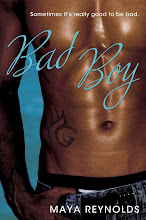
For the next month or so, my posting will probably be somewhat erratic while I focus on finishing Bad Boy. There will be a post for every day; I'm just not sure when each one will be posted.
As an example, I am posting my Tuesday morning post here on Monday afternoon at 1:10 PM.
The London Times took on the thankless task of naming The Fifty Greatest Crime Writers. While I don't necessarily agree with the order, they did include most of the names I would have listed.
Here's their list:
1. Patricia Highsmith
2. Georges Simenon
3. Agatha Christie
4. Raymond Chandler
5. Elmore Leonard
6. Arthur Conan Doyle
7. Ed McBain
8. James M. Cain
9. Ian Rankin
10. James Lee Burke
11. Dennis Lehane
12. P.D. James
13. Dashiell Hammett
14. Jim Thompson
15. Sjowall and Wahloo
16. John Dickson Carr
17. Cornell Woolrich
18. Ruth Rendell
19. Ross Macdonald
20. James Ellroy
21. Charles Willeford
22. Dorothy Sayers
23. John Harvey
24. Wilkie Collins
25. Francis Iles
26. Manuel Vasquez Montalban
27. Karin Fossum
28. Val McDermid
29. Edgar Allan Poe
30. Derek Raymond
31. George Pelecanos
32. Margery Allingham
33. Minette Walters
34. Carl Hiaasen
35. Walter Mosley
36. Reginald Hill
37. Michael Dibdin
38. Patricia Cornwell
39. Scott Turow
40. Dick Francis
41. Edmund Crispin
42. Alexander McCall Smith
43. Andrea Camilleri
44. Harlan Coben
45. Donna Leon
46. Josephine Tey
47. Colin Dexter
48. Nicholas Blake
49. Henning Mankell
50. Sara Paretsky
The list is heavily weighted toward Western writers. While I was glad to see Scandinavian and Italian entries, I've got to believe there are Eastern and Far Eastern writers of crime fiction out there, too.
Two Americans I would like to have seen on the list are Lawrence Block and Michael Connelly. While I'm a huge fan of Harlan Coben and would expect to see him on a future list, I'm not sure I would have put him on this one now. Same for Alexander McCall Smith.
The Times has links to each of the names on the list on their Times Online website here, explaining their rationale in making their choices. The thumbnail sketches are wonderful. Read at least one or two, and I promise you'll read more.
As an example, I am posting my Tuesday morning post here on Monday afternoon at 1:10 PM.
The London Times took on the thankless task of naming The Fifty Greatest Crime Writers. While I don't necessarily agree with the order, they did include most of the names I would have listed.
Here's their list:
1. Patricia Highsmith
2. Georges Simenon
3. Agatha Christie
4. Raymond Chandler
5. Elmore Leonard
6. Arthur Conan Doyle
7. Ed McBain
8. James M. Cain
9. Ian Rankin
10. James Lee Burke
11. Dennis Lehane
12. P.D. James
13. Dashiell Hammett
14. Jim Thompson
15. Sjowall and Wahloo
16. John Dickson Carr
17. Cornell Woolrich
18. Ruth Rendell
19. Ross Macdonald
20. James Ellroy
21. Charles Willeford
22. Dorothy Sayers
23. John Harvey
24. Wilkie Collins
25. Francis Iles
26. Manuel Vasquez Montalban
27. Karin Fossum
28. Val McDermid
29. Edgar Allan Poe
30. Derek Raymond
31. George Pelecanos
32. Margery Allingham
33. Minette Walters
34. Carl Hiaasen
35. Walter Mosley
36. Reginald Hill
37. Michael Dibdin
38. Patricia Cornwell
39. Scott Turow
40. Dick Francis
41. Edmund Crispin
42. Alexander McCall Smith
43. Andrea Camilleri
44. Harlan Coben
45. Donna Leon
46. Josephine Tey
47. Colin Dexter
48. Nicholas Blake
49. Henning Mankell
50. Sara Paretsky
The list is heavily weighted toward Western writers. While I was glad to see Scandinavian and Italian entries, I've got to believe there are Eastern and Far Eastern writers of crime fiction out there, too.
Two Americans I would like to have seen on the list are Lawrence Block and Michael Connelly. While I'm a huge fan of Harlan Coben and would expect to see him on a future list, I'm not sure I would have put him on this one now. Same for Alexander McCall Smith.
The Times has links to each of the names on the list on their Times Online website here, explaining their rationale in making their choices. The thumbnail sketches are wonderful. Read at least one or two, and I promise you'll read more.
Monday, April 21, 2008
The Other Shoe Falls For Cassie Edwards
On Friday, the Associated Press reported that Signet Books, an imprint of Penguin Group (USA), released a statement saying:
The story began in January with a post on the Smart Bitches blog here. Kate, a friend of the SBWLTB, noticed oddly pedantic language in one of popular romance writer Cassie Edwards' books. She googled a discordant sentence and discovered it came from a 2005 article on black-footed ferrets in Defenders of Wildlife magazine.
That single post cascaded into an avalanche of fact-checking around Edwards' books. Before long, the Associated Press and the New York Times had picked up the story. A pattern emerged of wholesale copying of passages by Edwards from non-fiction sources in her historical romances.
Edwards herself told a reporter she didn't know she was supposed to credit her sources. The romance community responded negatively to this statement when it became obvious that Edwards, who has more than 100 books published, had been blatantly plagiarizing other writers' work for years. This was not just a case of failure to credit; it was out-and-out copying.
Signet Books initially claimed Edwards was covered under the "fair use" provision of the U.S. Copyright law, but then announced they would undertake a full investigation of the matter.
RWA National's president gave a fairly wishy-washy statement on the matter.
Now that the Signet investigation is complete, it appears they've decided Edwards DID plagiarize and have cut their ties to her.
Will RWA respond in like fashion?
Thanks to the Dear Author website which posted on the latest on Saturday here.
"Signet has conducted an extensive review of all its Cassie Edwards novels and due to irreconcilable editorial differences, Ms. Edwards and Signet have mutually agreed to part ways . . . Cassie Edwards novels will no longer be published with Signet Books. All rights to Ms. Edwards' previously published Signet books have reverted to the author."
The story began in January with a post on the Smart Bitches blog here. Kate, a friend of the SBWLTB, noticed oddly pedantic language in one of popular romance writer Cassie Edwards' books. She googled a discordant sentence and discovered it came from a 2005 article on black-footed ferrets in Defenders of Wildlife magazine.
That single post cascaded into an avalanche of fact-checking around Edwards' books. Before long, the Associated Press and the New York Times had picked up the story. A pattern emerged of wholesale copying of passages by Edwards from non-fiction sources in her historical romances.
Edwards herself told a reporter she didn't know she was supposed to credit her sources. The romance community responded negatively to this statement when it became obvious that Edwards, who has more than 100 books published, had been blatantly plagiarizing other writers' work for years. This was not just a case of failure to credit; it was out-and-out copying.
Signet Books initially claimed Edwards was covered under the "fair use" provision of the U.S. Copyright law, but then announced they would undertake a full investigation of the matter.
RWA National's president gave a fairly wishy-washy statement on the matter.
Now that the Signet investigation is complete, it appears they've decided Edwards DID plagiarize and have cut their ties to her.
Will RWA respond in like fashion?
Thanks to the Dear Author website which posted on the latest on Saturday here.
Sunday, April 20, 2008
Revisiting The Used Book Controversy
Here's an edited post from 4/2/07:
Well, it happened again. I torqued a reader of a blog by a comment I made to her post.
It all started with Nathan Bransford's post for Wednesday,
March 28, titled "You Tell Me: Brick and Mortar or Plastic and Silicon." Nathan asked for predictions for the future of bookstores.
One enthusiastic reader talked about her recent venture into the rare book business. She ended her post by saying: "So you other writers, save some start-up bread, quit the day job, and open a used bookstore already. You won't regret it."
Here is a portion of my response:
While I appreciate your joy in your used bookstore, understand that the proliferation of secondhand bookstores is viewed with dread by most writers, who fear such operations are cutting into their revenue. Writers are, of course, only paid on the sales of NEW books. The writers' fear seems to be that the purchase of a used book *may* prevent the purchase of a new book.
I think the flip side of that is that used books are often the place that writers can pick up new readers. A reader who is unwilling to risk $25 on a new book may very well be willing to spend $12 for that same book. And, if the bookseller deals in rare books as you do, that sale is unlikely to take dollars away from anyone but your own competition.
Everyone is balancing on a thin wire. Publishers worry about the cash flow problems created by the "returns" system and about answering to their corporate parents. Bookstores worry about the thin margins created when big box stores or internet operations deeply discount the best-sellers. New writers worry that both publishers and bookstores will be unwilling to give them a chance since best-selling authors are less risky investments.
I actually think that, as bricks-and-mortar chains like B&N and Borders seek new ways of boosting revenue, they might look into selling used books alongside the new books. In my opinion, that is a better move than selling unvetted self-published books, which Borders appears to be considering.
The rare book dealer was apparently so outraged by my comment that she didn't read it carefully. Here are portions of her response to me:
"Maya, do you think that authors view used and rare bookstores as competition for THEIR profit? Really? I've never heard that. Not once. Not anywhere.
"I hazard to contradict you and say that real writers don't think that. At all. Ask any published author if they'd rather see their used or remaindered books destroyed rather than turning on a new reader. Because that is the real choice here: garbage or new reader . . .
"That said, the used and rare bookstores I know ALL promote real authors exclusively. We frigging HAND-SELL their books, giving those authors new readers on a silver (albeit dented and somewhat dog-eared) platter . . .
"Just out of curiousity, do you view thrift stores as bottom feeders on the apparel industry? Or aluminum recyclers as sycophants on the beverage industry? How about used cars? Is that wrong too, is it hurting the auto industry irreparably?
"I just don't get your beef at all. Why aim a shot at used bookstores and not at every single person who lists their already-read books online and resells them? Those people aren't a stablizing force in their communities as I am . . ."
The rare book dealer, was obviously so incensed by my comment that she neither read it carefully nor understood it. Of course, the fact that she had never heard of such an argument before has no bearing at all on the subject.
I've been so busy this past week that I missed following up on this post. Nathan jumped in to assure her that this really WAS a serious issue.
I posted a very late response:
As Nathan says, this IS an issue. Important enough that the Book Industry Study Group did a huge study on it about 18 months ago. Their findings indicated that, in 2004, about one out of every twelve books sold is a used book. They projected that, within five years, the number is expected to be one out of eleven.
The Associated Press said in 9/05 that "this is a troubling trend when sales of new works are essentially flat; [and] authors and publishers receive no royalties from used buys."
Nathan is exactly right. Readers once had to drive from one used bookstore to another to find a book because inventories weren't computerized. Nowadays, buying a used book takes seconds on the Internet.
This kind of debate is what happens as technology changes the dynamics of an entire industry. If you doubt me, just take a look at the upheaval in the recording industry. IMHO, until now, music executives seem to be trying to hold back the tide instead of figuring out how to adapt to a changing landscape.
The Internet is revolutionizing publishing. The industry needs to make changes. In addition to issues like the growth of used book sales, publishing MUST address the practice of permitting retailers to return unsold books for credit. This is adversely affecting publishers' cash flow and is hurting new novelists' chances for getting published. If publishers and bookstores don't adapt by creating a system fair to everyone at all levels of the food chain, they risk seeing their profits cut even more and their business shifting to the virtual world even more rapidly as writers seek other venues in which to share their work.
Saturday, April 19, 2008
When Self-Publishing Is a Viable Alternative
In line with my new policy for weekends when I'm facing a deadline, I'm running old posts you may not have seen. This post first ran on 6/20/06.
Several times a week, I get emails from newbie writers seeking information or commenting on posts.
I received two emails today on the same subject, prompting this blog. Both talked about self-publishing. One complained about something I'd said on the Internet, which she'd interpreted as a condemnation of all self-publishing. The other just asked for advice while he readied his proposal to be submitted to a subsidy press.
Let me address the complaint. Far from being opposed to self-publishing, I actually look forward to the day when it makes more financial sense for writers to self-publish than to go through a traditional publisher. However, that day has not yet come.
The reason that day has not yet arrived is NOT due to a lack of technology. The technology exists today to print books economically. It is called POD (print-on-demand). This digital printing process makes it possible to print as few as one or two books or as many as thousands in a single print run.
The problem is not in the printing. The problem comes up after the printing: in the marketing/selling of the book.
Yes, we have Amazon and e-Bay through which writers can sell their books. You can also create your own website. However, without major buzz, it is unlikely that people will flock to these sites in search of your book. More importantly, when you self-publish, you will not have access to the venues through which most new releases find homes: Libraries and retail outlets like Barnes & Noble or Wal-Mart.
There are tons of vanity presses out there offering to print and market your books. They are scams. They will overcharge for the printing and not deliver on the marketing. Sure, they might display your book for a week in a small bookstore thousands of miles from your home (for which you will pay the bookstore dearly). That's not marketing.
Having said all that, let me also say that I can think of five reasons for a writer to go the self-published route. The first three are dictated by the personal needs of the writer; the other two are legitimate professional reasons:
1) Impatience: A writer who is so anxious to hold a bound volume of his/her work that s/he cannot bear to go through the laborious process of seeking representation by an agent or submitting to traditional publishers. The writer is willing to pay to be able to say, "I'm published."
2) Artistic Control: A writer who is unwilling to surrender editorial control of his/her work or who refuses to accept feedback on possible changes. This frequently--although not always--involves a 200K-word manuscript that cries out for editing while the writer steadfastly refuses to consider pruning a single word.
3) Sentiment: A writer who has produced a work that is not intended for commercial consumption. An example might be a family history, which the writer wishes to share with her loved ones.
4) Niche Market: The writer has produced a work on a subject that is not commercially viable for a traditional publisher. There is a market for this work, but it is very limited in size or scope. This frequently involves academic works in some arcane subject.
Note: In the two years since I wrote this post, I've expanded my definition of this item. If a non-fiction writer has a ready-made market for his/her work, self-publishing may make a lot of sense. The Internet and social networking has created an environment where a writer can connect with people who share his/her interests. It is possible that the writer would be better served to self-publish and then promote that book to these groups with which s/he is already connected. He could end up keeping a larger percentage of the profits than he would if he went through the normal publishing channels.
5) Cross-Genre: The writer has produced a work that traditional publishers simply do not know how to market. This is usually a work that crosses multiple genres, making it a new genre.
All of the above are legitimate reasons to seek self-publishing. The common thread running through the list is that--in the vast majority of cases--most of these books will not likely be of interest to a traditional publisher.
Most of these books (with the exception of the niche market) is unlikely to return a profit either. In the case of the impatient writer or the writer unwilling to relinquish artistic control, the writers are trying to circumvent the traditional process through self-publishing rather than concentrating on making their books commercially viable.
In the case of the sentimental work, the writer's intent was never to return a profit. Therefore, self-publishing makes perfect sense. However, the writer would be better served to find a printing operation as opposed to a setup that advertises itself as a subsidy press or publisher. These self-professed "publishers" will charge far more for the same services than an ordinary printer would.
In the case of the niche book or the cross-genre novel, the writers know ahead of time that they face an uphill battle. While there is a market for their works, the entire effort of marketing the books will rest on the writers' shoulders. If the niche writer is well connected to his market, he may make a profit through a lot of sweat equity (self-promotion and selling out of his car trunk).
The cross-genre writer is an interesting character. I am thinking here of Jaid Black and M.J. Rose. Both women were writing in the new cross genre of erotic romance before anyone had a term for erotic romance. They both opted for self-publishing. Jaid Black founded her own publishing house, Ellora's Cave, while M.J. Rose (who had extensive experience in marketing) set about to develop her own publicity campaign. Both women have been very successful in creating a genre and in forcing traditional publishing to accept and acknowledge that new genre.
Caveat: Most writers who believe they have created a new genre are simply so lacking in focus that their manuscripts are all over the map--this is very different from creating a new and distinct genre.
So, you see, I am not opposed to self-publishing. I just believe that the writer must know exactly which of the five reasons apply to him/her. AND, s/he must be prepared to lose money if she chooses to go that route.
Friday, April 18, 2008
Remember The iPetition
Don't forget to go here and sign the petition against Amazon's new policy.
And do something for publishing. Ask your family and friends to sign the petition, too.
It's free. You don't have to pay a penny.
And do something for publishing. Ask your family and friends to sign the petition, too.
It's free. You don't have to pay a penny.
O'Reilly Says "Publishers Beware"
There is a major thunderstorm advancing on Dallas. I'm going to do my post and then curl up in bed with the new Jim Butcher urban fantasy, Small Favor.
Two weeks ago when it became clear that Amazon really was going to push their proprietary POD publishing press BookSurge down the throats of the small publishers and e-publishers, I wrote Tim O'Reilly of O'Reilly Media, asking him to intervene.
Regular readers of this blog know that I have enormous respect for Tim O'Reilly. My first post about him was in November, 2005, here, and it was followed by several more posts over the last few years.
In case you didn't know it, O'Reilly is credited with coining the term "Web 2.0." He has been involved in many of the major trends on the Internet, including the open source and free software movements.
I didn't just pull Tim's name out of a hat when I wrote him that email. I had a good reason for thinking he might be the right person to address Amazon.com's latest move.
In September, 1997, Amazon.com submitted a patent application for what later became known as Amazon's One-Click technology. Two years later, in September, 1999, Amazon was awarded U.S. Patent #5,960,411.
One month later, Amazon filed suit against Barnes and Noble, arguing that www.BN.com had copied the one-click technology.
On January 5, 2000, Tim wrote Jeff Bezos of Amazon a private email, urging him not to keep filing for patents on technology that was originally open source. He later made his letter to Bezos public on his website. It included the following:
When Bezos responded on January 27, his email made it clear he had no intention of changing course.
In February, 2000, Amazon was awarded a patent for its affiliate program, the technology that permitted it to link to other websites, "affiliates," who were paid a commission for linking to Amazon.com.
That second patent in six months created a backlash against Amazon on the Internet. On February 28, Tim O'Reilly wrote an open letter here on his site to Jeff Bezos. O'Reilly invited readers to join him in urging Amazon to "clarify your intentions with regard to software patents, and avoid any attempts to limit the further development of internet commerce on the basis of the patents you have already been awarded."
Over 10,000 signatures were collected before O'Reilly shut down the letter.
Jeff Bezos did respond with his own open letter here. Bezos' letter included this:
Tim and Jeff Bezos ended up going together to Washington, D.C. to lobby the Congress for patent reform.
So, no, I didn't just pull Tim's name out of a hat.
This morning when I opened my Publishers Lunch email, I was thrilled to find the following:
Go here to read Tim's post titled "Publishers Beware: Amazon Has You In Their Sights."
Two weeks ago when it became clear that Amazon really was going to push their proprietary POD publishing press BookSurge down the throats of the small publishers and e-publishers, I wrote Tim O'Reilly of O'Reilly Media, asking him to intervene.
Regular readers of this blog know that I have enormous respect for Tim O'Reilly. My first post about him was in November, 2005, here, and it was followed by several more posts over the last few years.
In case you didn't know it, O'Reilly is credited with coining the term "Web 2.0." He has been involved in many of the major trends on the Internet, including the open source and free software movements.
I didn't just pull Tim's name out of a hat when I wrote him that email. I had a good reason for thinking he might be the right person to address Amazon.com's latest move.
In September, 1997, Amazon.com submitted a patent application for what later became known as Amazon's One-Click technology. Two years later, in September, 1999, Amazon was awarded U.S. Patent #5,960,411.
One month later, Amazon filed suit against Barnes and Noble, arguing that www.BN.com had copied the one-click technology.
On January 5, 2000, Tim wrote Jeff Bezos of Amazon a private email, urging him not to keep filing for patents on technology that was originally open source. He later made his letter to Bezos public on his website. It included the following:
"I think that you are reaping a harvest of ill-will with the technical community. While I know you are setting your sights on a wider consumer audience, the serious technical community represents the core of your early adopters and many of your best customers, especially in the book market . . . And I can tell you that those customers are solidly against software patents."
When Bezos responded on January 27, his email made it clear he had no intention of changing course.
In February, 2000, Amazon was awarded a patent for its affiliate program, the technology that permitted it to link to other websites, "affiliates," who were paid a commission for linking to Amazon.com.
That second patent in six months created a backlash against Amazon on the Internet. On February 28, Tim O'Reilly wrote an open letter here on his site to Jeff Bezos. O'Reilly invited readers to join him in urging Amazon to "clarify your intentions with regard to software patents, and avoid any attempts to limit the further development of internet commerce on the basis of the patents you have already been awarded."
Over 10,000 signatures were collected before O'Reilly shut down the letter.
Jeff Bezos did respond with his own open letter here. Bezos' letter included this:
". . . the more I thought about it, the more important I came to realize this issue is. I now believe it's possible that the current rules governing business method and software patents could end up harming all of us -- including Amazon.com and its many shareholders, the folks to whom I have a strong responsibility, not only ethical, but legal and fiduciary as well."
Tim and Jeff Bezos ended up going together to Washington, D.C. to lobby the Congress for patent reform.
So, no, I didn't just pull Tim's name out of a hat.
This morning when I opened my Publishers Lunch email, I was thrilled to find the following:
One persistent topic at the London Book Fair was Amazon's aggression towards publishers selling books directly from their own web sites at modest discounts. In a blog post, Tim O'Reilly expresses his own larger concern: "As Amazon's market power increases, it needs to be mindful of whether its moves, even those that may be good for the company in the short term, are ultimately destructive of the ecosystem on which they depend. I believe that they are heading in that direction, and if they succeed with some of their initiatives, they will wake up one day to discover that they've sown the seeds of their own destruction, just as Microsoft did in the 1990s."
Go here to read Tim's post titled "Publishers Beware: Amazon Has You In Their Sights."
Thursday, April 17, 2008
Change Can Be A Good Thing
Exactly six months ago, on October 17, 2007, I posted the following:
This week, Hyatt's name has been on the lips of everyone in the publishing world.
On Tuesday, Thomas Nelson issued a press release here, stating:
Instead of attending trade shows, Thomas Nelson hosted its first "Open House" event at Nashville's Music City Sheraton. The publisher invited its top 100 Christian retail accounts to attend a two-day conference.
The press release continued:
Once again, Hyatt has taken a critical look at the way the industry runs and recognized that way did not further his company's goals.
In answering questions about why Thomas Nelson was taking this step, Hyatt made the following statements:
In speaking to Publishers Weekly about the ICRS show, Hyatt said: "It’s just not the best way to meet with customers—there’s too much noise and competition, and fewer retailers all the time.”
Hyatt also spoke of the BEA to Publishers Weekly: “My guess is that 95% of the people walking around are other publishers, authors and agents. As one of my colleagues said, we’re all getting dressed up for each other. So I don’t think it really helps us build our profile in the general market."
What we've begun to see are publishers experimenting with new models and looking critically at the shibboleths of the publishing industry.
Good for them.
Thirteen years ago, I became head of operations for a non-profit organization providing public mental health services. There were more than two hundred staff in my reporting line. I assumed the job at at time of consolidation in the industry and was told before my hire that I'd have to face laying off a sizeable part of the staff as well as closing services I believed were important to our vulnerable clients.
I had worked my way up to that job over five years and knew the company pretty well. I was confident there were things that could be done to address our deficit without a bloodbath.
When I first reviewed the financials, I was appalled by the amount of overtime being expended. When I asked why we were running up so much overtime, I was told it was because we had so many vacancies. Managers said, because they were unable to fill the vacancies, their people had to work overtime.
I drilled down to the individual numbers by staff and came up with a hypothesis for what was going on. After calling my managers together, I announced that henceforth no overtime would be permitted unless cleared by me personally. Managers warned me, since we ran 24/7, I'd be answering calls day and night. I handed out my pager number and said, "Have at it." For two or three days, I took calls almost every hour through the day and night as the system tested me.
Managers quickly learned that a call to me at 3:00 AM to announce a staff had called in sick for 7:00 AM was followed the next day by a visit from me to review staffing patterns. Within days, it became apparent that managers were deliberately not filling their vacancies in order to earn overtime for their staff, thereby increasing their incomes.
Bottom line: It was a form of self-help to address the problem of low salaries at our organization. As with most things, what had begun with good intentions had morphed into wholesale greed on the part of a few insiders. When managers were no longer permitted to abuse the system (and our fragile financial status), vacancies magically began to be filled . . . fast. The hundreds of thousands of dollars we were spending on overtime were now available to balance our budget. With the immediate financial pressure relieved, we could address the underlying issues that led to the problem in the first place.
We sat down together and reviewed both salaries and coverage (number of staff on a shift). We made equity adjustments and took a serious look at our ratio of staff to clients. When we were finished, we were back in the black without a major layoff or a reduction in services to the people we served who depended upon us.
Challenging the status quo and forcing everyone to look critically at how (and why) they do things is exactly what the publishing industry needs to do . . . fast.
Way to go, Michael Hyatt!!
Most of the big publishing houses are now digitizing their stock and taking what I would describe as baby steps toward changing their business models. I can think of only one CEO who is really thinking outside of the box: Michael Hyatt of Thomas Nelson Publishing, the world's largest Christian publisher. Read my post on how he "cannibalized" his publishing house here.
This week, Hyatt's name has been on the lips of everyone in the publishing world.
On Tuesday, Thomas Nelson issued a press release here, stating:
Thomas Nelson announced today that it will not be participating in Book Expo America (BEA) 2008 and the International Christian Retail Show (ICRS) 2008. “We have been discussing this move for some time,” said President & CEO, Michael S. Hyatt. “But the current economic downturn is forcing us to re-evaluate the expenditure of every marketing dollar. We are committed to doing our best to support our products and distributors with marketing expenditures that result in greater sales. And we have determined that, for Thomas Nelson, these trade shows provide very little return on a very significant investment.”
Instead of attending trade shows, Thomas Nelson hosted its first "Open House" event at Nashville's Music City Sheraton. The publisher invited its top 100 Christian retail accounts to attend a two-day conference.
The press release continued:
Thomas Nelson intends to make Open House an annual event for its key Christian retail accounts. “The top 100 Christian retail accounts generate more than 80% of our revenue in this channel,” noted Hyatt. “Therefore, we must be intentional and strategic in how we connect with Christian retail accounts. Open House provides us with a better way to invest in our future and theirs.”
Once again, Hyatt has taken a critical look at the way the industry runs and recognized that way did not further his company's goals.
In answering questions about why Thomas Nelson was taking this step, Hyatt made the following statements:
These trade shows do not provide a return that justifies the investment—at least not for us. We believe there are better ways to connect with our key customers in a way that is more meaningful to them and to us. Our recent Open House event is a testimony to this.
We are the only publisher in America who has hosted its own conference for the sole purpose of making the best Christian retailers better. We paid all of their expenses. We tried to give without expecting anything in return. We had no show room. We didn’t ask for orders. We simply tried to inspire and educate, believing that if we invested in these retailers it would be good for them, good for the channel, and good for us.
We attend numerous international shows. We will evaluate these on a case-by-case basis. We will continue to attend them, so long as they enable us to connect meaningfully with our customers in the most economical way possible. Currently, we plan to continue participating in both the London Book Fair and Frankfurt.
Our decision pertains only to trade shows. CBE [Christian Book Expo] is a consumer show. It offers a unique opportunity to Christian publishers because it is designed to raise the visibility of Christian authors and products among consumers. This is of huge value to us and something we are seeking to do with all of our marketing initiatives.
In speaking to Publishers Weekly about the ICRS show, Hyatt said: "It’s just not the best way to meet with customers—there’s too much noise and competition, and fewer retailers all the time.”
Hyatt also spoke of the BEA to Publishers Weekly: “My guess is that 95% of the people walking around are other publishers, authors and agents. As one of my colleagues said, we’re all getting dressed up for each other. So I don’t think it really helps us build our profile in the general market."
What we've begun to see are publishers experimenting with new models and looking critically at the shibboleths of the publishing industry.
Good for them.
Thirteen years ago, I became head of operations for a non-profit organization providing public mental health services. There were more than two hundred staff in my reporting line. I assumed the job at at time of consolidation in the industry and was told before my hire that I'd have to face laying off a sizeable part of the staff as well as closing services I believed were important to our vulnerable clients.
I had worked my way up to that job over five years and knew the company pretty well. I was confident there were things that could be done to address our deficit without a bloodbath.
When I first reviewed the financials, I was appalled by the amount of overtime being expended. When I asked why we were running up so much overtime, I was told it was because we had so many vacancies. Managers said, because they were unable to fill the vacancies, their people had to work overtime.
I drilled down to the individual numbers by staff and came up with a hypothesis for what was going on. After calling my managers together, I announced that henceforth no overtime would be permitted unless cleared by me personally. Managers warned me, since we ran 24/7, I'd be answering calls day and night. I handed out my pager number and said, "Have at it." For two or three days, I took calls almost every hour through the day and night as the system tested me.
Managers quickly learned that a call to me at 3:00 AM to announce a staff had called in sick for 7:00 AM was followed the next day by a visit from me to review staffing patterns. Within days, it became apparent that managers were deliberately not filling their vacancies in order to earn overtime for their staff, thereby increasing their incomes.
Bottom line: It was a form of self-help to address the problem of low salaries at our organization. As with most things, what had begun with good intentions had morphed into wholesale greed on the part of a few insiders. When managers were no longer permitted to abuse the system (and our fragile financial status), vacancies magically began to be filled . . . fast. The hundreds of thousands of dollars we were spending on overtime were now available to balance our budget. With the immediate financial pressure relieved, we could address the underlying issues that led to the problem in the first place.
We sat down together and reviewed both salaries and coverage (number of staff on a shift). We made equity adjustments and took a serious look at our ratio of staff to clients. When we were finished, we were back in the black without a major layoff or a reduction in services to the people we served who depended upon us.
Challenging the status quo and forcing everyone to look critically at how (and why) they do things is exactly what the publishing industry needs to do . . . fast.
Way to go, Michael Hyatt!!
Subscribe to:
Posts (Atom)