My good friend, David Roth, sent me these. He's recovering from a recent stroke, and I'm always glad to hear from him.
You've probably seen the game before, but no matter how often I see it, I still grin.
Take any word from the dictionary, alter it by adding, subtracting or changing one letter, and supply a new definition. Here are this year's winners. Read them carefully. Each is an artificial word with only one letter altered from a real word.
1. Intaxication: Euphoria at getting a tax refund, which lasts until you realize it was your money to start with.
2. Reintarnation: Coming back to life as a hillbilly.
3. Bozone (n.): The substance surrounding stupid people, that stops bright ideas from penetrating. The Bozone layer, unfortunately, shows little sign of breaking down in the near future.
4. Cashtration (n.): The act of buying a house, which renders the subject financially impotent for an indefinite period of time.
5. Giraffiti: Vandalism spray-painted very, very high.
6. Sarchasm: The gulf between the author of sarcastic wit and the person who doesn't get it.
7. Inoculatte: To take coffee intravenously when you are running late.
8. Hipatitis: Terminal coolness.
9. Osteopornosis: A degenerate disease. (This one got extra credit.)
10. Karmageddon: It's like, when everybody is sending off all these really bad vibes, right? And then like, the Earth explodes and it's like, a serious bummer.
11. Decafalon (n.): The grueling event of getting through the day consuming only things that are good for you.
12. Glibido: All talk and no action
13. Dopeler Effect: The tendency of stupid ideas to seem smarter when they come at you rapidly.
14. Arachnoleptic Fit (n.): The frantic dance performed just after you've accidentally walked through a spider web
15. Beelzebug (n.): Satan in the form of a mosquito, that gets into your bedroom at three in the morning and cannot be cast out
16. Caterpallor (n.): The color you turn after finding half a worm in the fruit you're eating.
And, the pick of the lot...
17. Ignoranus: A person who's both stupid and an asshole.
Note: When I received this in an email from David, it included verbiage that it was a contest being jointly run by the Washington Post and MENSA. When a Google search of the Washington Post didn't turn up anything about a contest, I emailed both the Post and MENSA, advising I had posted it and asking if it was legitimate.
I never heard back from the Post, but today got a very nice email from Catherine Barney, the Marketing Director of MENSA, saying they have received a lot of inquiries from people wanting to enter. She thanked me for my question and said she'd be happy to have MENSA's name divorced from the matter because of all the unwanted mail.
Sunday, August 03, 2008


Saturday, August 02, 2008
Goodbye, Book Business; Hello, Reader Business
Michael Cader--who created Publishers Marketplace--is one of the half dozen gurus whose opinions on publishing I trust. Whenever the industry gets together for conferences, he's often sought as a speaker. He's the reason I subscribe to Publishers Marketplace here.
I just finished reading Friday's PM in which Cader addressed the issue of a dying breed: the professional book reviewer. I wasn't as interested in the state of book reviewing as I was in Cader's thumbnail description of the industry at large. Below is an excerpt of his comments:
Cader is describing what I have been calling the fragmentation of the publishing industry.
The "old" mindset of publishing had information traveling from the top down with publishers (and the media conglomerates that owned them) telling readers what to read and dictating choice by selecting which authors to publish. Since they were the only game in town, their decisions were all that mattered.
The "new" paradigm is about the niche communities that spring up and flourish in the virtual world.
I know when I go looking for a new author to read, I don't seek out professional reviews. I go to the websites of readers and writers I trust and see what they're reading.
That same dynamic is being repeated over and over across the Internet. Information is now traveling "bottom up" rather than in the old "top down" model.
Is this new paradigm chaotic and messy and disorganized? Of course it is. But there are players who intuitively understand and are working it. Look at Amazon's feature "Customers Who Bought This Book Also Bought." They've created social networking sites inside the larger Amazon website so that readers can talk to each other.
In May, 2007, a study titled "The Credibility Divide: Reader Trust of Online Newspapers and Blogs" was presented at the International Communication Association in San Francisco. The researchers compared the credibility of three different online news sources: an online newspaper, the blog of a newspaper journalist and the blog of a citizen journalist. All reported the exact same story.
The results were reported in the study's abstract:
The suggestion was made that individuals might be seen as more credible than the institutional newspaper or the newspaper's journalists who "seem to be part of the institutional collective."
The study also reminded us of the results of a previous study that has been in the news recently: "readers are less likely to pay attention to information that they do not believe . . . That suggests that credibility is one key [to] reaching readers, particularly in the ever-growing competitive online media environment."
Whatever the dynamic, it's clear that "old" media is going to need to change its approach to appeal to readers of the "new" media.
It's a whole 'nuther world out there, kiddies.
I just finished reading Friday's PM in which Cader addressed the issue of a dying breed: the professional book reviewer. I wasn't as interested in the state of book reviewing as I was in Cader's thumbnail description of the industry at large. Below is an excerpt of his comments:
. . . publishers traditionally put most of their efforts into finding and working with influencers who can "move the needle" in a big way . . . But our culture presents a haystack of thousands of little needles now. There's no either/or choice or judgment to make, because publishers have no say in the process (aside from trying to participate or not). It's all part of the larger shift that the industry is just beginning to reckon with in all kinds of ways that go way behind [Note by mar: beyond?] review/blog/zine questions.
It's the transition from a business in which the essence of publishing is dealing with a small set of intermediaries, gatekeepers and big-needle movers (buyers for stores and wholesalers; media bookers and book review editors) to dealing with consumers and fans (and a far larger set on online community intermediaries), and their organizations and platforms, driven by passion and fully subjective opinion and recommendation.
In other words, it's the change from "the book business" (in which you tell) to the "reader business" (in which you listen and ask and respond).
Cader is describing what I have been calling the fragmentation of the publishing industry.
The "old" mindset of publishing had information traveling from the top down with publishers (and the media conglomerates that owned them) telling readers what to read and dictating choice by selecting which authors to publish. Since they were the only game in town, their decisions were all that mattered.
The "new" paradigm is about the niche communities that spring up and flourish in the virtual world.
I know when I go looking for a new author to read, I don't seek out professional reviews. I go to the websites of readers and writers I trust and see what they're reading.
That same dynamic is being repeated over and over across the Internet. Information is now traveling "bottom up" rather than in the old "top down" model.
Is this new paradigm chaotic and messy and disorganized? Of course it is. But there are players who intuitively understand and are working it. Look at Amazon's feature "Customers Who Bought This Book Also Bought." They've created social networking sites inside the larger Amazon website so that readers can talk to each other.
In May, 2007, a study titled "The Credibility Divide: Reader Trust of Online Newspapers and Blogs" was presented at the International Communication Association in San Francisco. The researchers compared the credibility of three different online news sources: an online newspaper, the blog of a newspaper journalist and the blog of a citizen journalist. All reported the exact same story.
The results were reported in the study's abstract:
Results showed that media use, dependency [on that medium], and political interest were not significant predictors of credibility, but the nonjournalist blog (the citizen journalist) was found significantly more credible than the other 2 mediums. The significance might be explained by the nonjournalist’s blog unattachment to an institution.When the study participants were asked to judge the credibility of the three different online news sources, 38% reported they found the citizen blogger to be the most credible. This compared to the 34% who found the online newspaper to be the most credible and the 28% who found the online journalist to be the most credible.
The suggestion was made that individuals might be seen as more credible than the institutional newspaper or the newspaper's journalists who "seem to be part of the institutional collective."
The study also reminded us of the results of a previous study that has been in the news recently: "readers are less likely to pay attention to information that they do not believe . . . That suggests that credibility is one key [to] reaching readers, particularly in the ever-growing competitive online media environment."
Whatever the dynamic, it's clear that "old" media is going to need to change its approach to appeal to readers of the "new" media.
It's a whole 'nuther world out there, kiddies.
Friday, August 01, 2008
What Was That About Absolute Power Again?
Yesterday I talked about a shifting of power in the publishing industry. I had two different writers email me offline to contest what they saw as my saying the power was moving from the publishing houses to the bookstores.
I had to grin. It's pretty embarrassing for a writer to realize that her message was less than clear.
What I was *trying* to say was that I see the balance of power shifting away from the traditional print publisher. Frankly, I think there will be numerous beneficiaries of this shift: authors, bookstores and other distributors of content.
I've been writing for more than a year about what I see as a blurring of traditional roles in publishing. The following is is from my post of April 28, 2007 here:
This morning's news included a report from Publishers Weekly that Amazon has agreed to buy AbeBooks, the online website for used books:
Writers are the only part of the equation that remains fixed.
Yesterday when I started this subject, I promised to talk about the dark horses in the race. I've mentioned one of them already: Amazon.
As I've said in multiple posts before, Amazon.com has positioned itself to own a piece of all parts of the chain leading to the consumer.
Manufacturer => Wholesaler => Retailer => Consumer
There is no telling how far Amazon will go. Frankly, I think some of it will depend on whether we have a Republican administration or a Democratic administration come November. Democrats are so much more willing to yell "Antitrust" in a crowded theatre.
The other dark horses are also Internet giants. I've talked about Google again and again. As they attempt to copy all the books in the world, they've quietly ensured no one will follow in their footsteps. Google requires all libraries that join the Google Book Search project sign an agreement promising not to make their books available for copying to other search engines.
On the surface, Google is just trying to guarantee their search engine will retain its hegemony in the market. However, I can't help but remember Lord Acton's famous pronouncement:
Of the five major Internet companies: Amazon, eBay, Google, Microsoft and Yahoo, the other one I am most interested in following is eBay. To find out why, read my blog from ten months ago here.
Since I seem to have devolved into cliches, I'll leave you with one more: Time will tell. {grin}
I had to grin. It's pretty embarrassing for a writer to realize that her message was less than clear.
What I was *trying* to say was that I see the balance of power shifting away from the traditional print publisher. Frankly, I think there will be numerous beneficiaries of this shift: authors, bookstores and other distributors of content.
I've been writing for more than a year about what I see as a blurring of traditional roles in publishing. The following is is from my post of April 28, 2007 here:
So how DOES a publishing house justify its existence in a digitized world?I feel even more certain today that this will be the case than I did fifteen months ago. Publishers are now trying to sell their books directly to readers via websites. More and more authors are seeking to self-publish. And online distributors like Amazon are seeking new roles.
The answer could be in the marketing and distribution chain. While anyone may be able to produce an e-book, the failure of most self-published books is evidence that merely having a book is not enough . . . What I suspect is going to happen is that the lines between publisher, distributor, bookstore and author are going to start blurring. Unusual contracts among the different parties are likely to emerge.
This morning's news included a report from Publishers Weekly that Amazon has agreed to buy AbeBooks, the online website for used books:
The purchase, which is expected to close in the fourth quarter, will strengthen Amazon's already dominate position in the used book field. Terms weren't disclosed.Bottom line: there are new ways to publish books, there are new ways to sell books, but it still takes a writer to write a book.
Writers are the only part of the equation that remains fixed.
Yesterday when I started this subject, I promised to talk about the dark horses in the race. I've mentioned one of them already: Amazon.
As I've said in multiple posts before, Amazon.com has positioned itself to own a piece of all parts of the chain leading to the consumer.
Manufacturer => Wholesaler => Retailer => Consumer
There is no telling how far Amazon will go. Frankly, I think some of it will depend on whether we have a Republican administration or a Democratic administration come November. Democrats are so much more willing to yell "Antitrust" in a crowded theatre.
The other dark horses are also Internet giants. I've talked about Google again and again. As they attempt to copy all the books in the world, they've quietly ensured no one will follow in their footsteps. Google requires all libraries that join the Google Book Search project sign an agreement promising not to make their books available for copying to other search engines.
On the surface, Google is just trying to guarantee their search engine will retain its hegemony in the market. However, I can't help but remember Lord Acton's famous pronouncement:
If there is any presumption, it is . . . against the holders of power . . . Power tends to corrupt, and absolute power corrupts absolutely. Great men are almost always bad men."What I can't decide is whether what's true for men is also true for companies. Are great companies almost always bad companies? Amazon has already been a deep disappointment to me. Now I'm wondering what will happen to Google's already-tarnished motto: "Do no evil."
Of the five major Internet companies: Amazon, eBay, Google, Microsoft and Yahoo, the other one I am most interested in following is eBay. To find out why, read my blog from ten months ago here.
Since I seem to have devolved into cliches, I'll leave you with one more: Time will tell. {grin}
Oh, The Joys of Summer
The other day I talked about water and children being one of the joys of summer.
Right now I'm enjoying (beautiful word "enjoy"--in joy) another of those benefits of summer.
I cut up fresh fruit this morning and put it in a large bowl in the refrigerator for lunch. Apples, red grapes, bananas, blackberries, mandarin orange slices, and pineapple. I just took a break from my manuscript, and I'm sitting here eating the fruits of all that labor.
In joy.
Thursday, July 31, 2008
A Shifting of the Balance of Power
On a writers' loop to which I belong, we were predicting the direction publishing will take in the next few years. This is what I said:
New technology always shakes up an industry, and publishing is no different. We've seen a lot of change in recent years, but I believe we are on the verge of an even greater sea change.
The act of physically producing a book was once the sticking point preventing authors' entry into the game. Publishers dominated because they were the owners of the means of production. That is no longer true. Producing a physical book or an e-book is far cheaper and easier to do today.
However, once you have that book--as the self-pubbed among us can testify--the real challenge becomes the marketing of the book. With thousands and thousands of more titles available on the market, drawing attention to a single one is a substantial task.
This is, of course, only my opinion, but I believe this new challenge will result in that sticking point to the game moving further down the line from the production of books to the marketing of books. I suspect in less than three years, authors are going to find themselves at the center of a battle with booksellers on one side and traditional publishers on the other--each struggling to survive.
Acting as a publisher is nothing new to the large bookchains. Crossing that line into publishing already happened for them. They have been publishing public domain books for years. If you walk into a B&N, you'll see aisles of books that were published by B&N.
What will be different is when the bookchains start seeking to obtain rights to copyrighted material to publish. Borders has already announced they are going to begin publishing copyrighted books that will be available exclusively in their stores.
It doesn't take a rocket scientist to see that this flattens the process and cuts out one of the middlemen (the traditional publisher).
What I am unclear about is whether bookchains will employ in-house talent seekers to locate authors or whether they will rely on the agent system. Of course, if they're smart, they'll seek to contact the up-and-coming authors whom their staff identify as being on the verge of breaking out from the pack. Bookstore clerks are probably more in tune with the current market than anyone else. By offering those writers a bigger cut of the pie than a traditional publisher does and by promising prominent display in the store and on their website, the bookchain could entice those writers to leave their current publisher at the end of their contract.
At the same time, all of the major publishers are building digital warehouses. The publishing houses' goal is to sell books from their own websites. Their challenge is twofold. They understand the first challenge: most readers do not shop by publisher; they shop by looking for their favorite author, by browsing new material in their favorite genre or by just wandering around a bookstore.
The second challenge for traditional publishers is much more subtle: to realize that the world has changed and they are going to have to be much more flexible in negotiating with writers. While their bully boy approach [I'm thinking here of S&S] will work in the short term because the balance of power is still in the process of shifting; in the long term, it will work against them because they will have created an adversarial relationship with the very people who provide their product.
Let me repeat what I said earlier, in a world in which much more material is being dumped on the market, the challenge will be to make individual material stand out.
My interest in remaining with a publisher is going to depend on two things: how much are they going to support my marketing efforts and how willing are they to negotiate royalty rates?
Tomorrow we'll talk about the dark horses in this race for power.
Wednesday, July 30, 2008
A Savior For Newspapers?
Monday's New York Times had an article about the future of newspapers that caught my attention. My younger brother is a sports columnist for one of the top 25 newspapers in the country. He was in town over the weekend, and we talked about the precarious situation of newspapers.
A company called Verve Wireless believes the secret to the newspaper's survival may be the 95 million mobile phone users who subscribe to the Internet:
Read the whole article here.
A company called Verve Wireless believes the secret to the newspaper's survival may be the 95 million mobile phone users who subscribe to the Internet:
Verve Wireless believes it can save the dying local newspaper by making it mobile. It offers publishers the technology to create Web sites for cellphones. The company, based in Encinitas, Calif., already provides mobile versions of 4,000 newspapers from 140 publishers . . . The Associated Press, its biggest customer, is betting that Verve has the solution to the nagging problem of dwindling print readership. It led a $3 million round of financing in Verve, a rare investment for the news organization.In exchange for a cut of the newspaper's ad revenue, Verve builds a mobile website on which users can access their local news.
Publishers can upload local ads to their cellphone sites using Verve’s software or have Verve place national ad campaigns on their sites. Verve can deliver a particular ad to, say, people age 21 to 30 who live downtown and have searched for articles about the bar scene. Philadelphia Magazine, for example, sent readers of its Verve-developed Web site a text message offering $4 grapefruit cocktails and half-price appetizers at a local bar.
Read the whole article here.
Tuesday, July 29, 2008
Is Reading On The Web Really Reading?
Sunday's New York Times had an interesting article on a subject that my friends and I regularly debate: "just what it means to read in the digital age."
Children are clearly spending more time on the Internet. In a study of 2,032 representative 8- to 18-year-olds, the Kaiser Family Foundation found that nearly half used the Internet on a typical day in 2004, up from just under a quarter in 1999. The average time these children spent online on a typical day rose to one hour and 41 minutes in 2004, from 46 minutes in 1999.The issue that the article struggles with is whether the type of reading kids do on the Internet IS reading. As might be expected, literacy experts are divided on the subject. The most frequent complaints seem to be that reading on the Internet is impacting our "sustained, focused, linear attention."
The question of how to value different kinds of reading is complicated because people read for many reasons.
Literacy specialists are just beginning to investigate how reading on the Internet affects reading skills . . . The only kind of reading that related to higher academic performance was frequent novel reading, which predicted better grades in English class and higher overall grade point averages.Even proponents of book-reading agree that the Internet can make reading easier for persons with disabilities like dyslexia.
Some literacy experts say that reading itself should be redefined. Interpreting videos or pictures, they say, may be as important a skill as analyzing a novel or a poem.After reading the debate, I found that I agreed with this quote:
“Kids are using sound and images so they have a world of ideas to put together that aren’t necessarily language oriented,” said Donna E. Alvermann, a professor of language and literacy education at the University of Georgia. “Books aren’t out of the picture, but they’re only one way of experiencing information in the world today.”
Even those who are most concerned about the preservation of books acknowledge that children need a range of reading experiences. “Some of it is the informal reading they get in e-mails or on Web sites,” said Gay Ivey, a professor at James Madison University who focuses on adolescent literacy. “I think they need it all.”Read the entire article here.
Monday, July 28, 2008
Some Sobering Statistics
A member of a writing group to which I belong directed us to a post by Bluenana last year in which she drew attention to a series of statistics from the June, 2007 Index to Harper's Magazine.
The ones that I found most interesting were these tracked by Nielsen BookScan:
See Bluenana's post here.
The ones that I found most interesting were these tracked by Nielsen BookScan:
Minimum number of different books sold in the U.S. in 2006: 1,446,000Or, to put it another way:
Number of those that sold fewer than 99 copies: 1,123,000
Number that sold more than 100,000: 483
Out of the 1,446,000 books released in 2006, 78% sold less than 99 copies while 22% sold more than 99 copies. Of that 22%, less than 1% sold more than 100,000 copies.Sobering statistics. I'd like to know how many of that 78% were self-published books.
See Bluenana's post here.
Sunday, July 27, 2008
Ah, The Joys Of Summer!!
See what happens when a moose mother and her twin calves come across a backyard sprinkler here.
Water and kids. The definition of joy everywhere.
Water and kids. The definition of joy everywhere.
The Joy of Networking
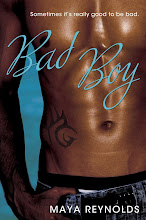
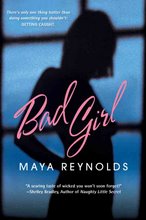
As my regular readers know, I'm working on Bad Boy, the sequel to my debut novel, Bad Girl. It is perhaps not so much a sequel as the second in the series, although it features characters from the first book.
This time my heroine is Leah Reece, the owner of a popular e-zine called Heat. Leah is Anglo and her hero, Quin, is Hispanic. Quin has a previous conviction for assault and works for the shady owner of an underground sex club.
I got the idea for the novel from two disparate events: seeing Viggo Mortensen's very hot, tattoed body in Eastern Promises and the discovery of an underground sex club called the Cherry Pit in a suburb of Dallas. That suburb has been trying to close the club down without success for months. See this USA Today story here.
I speak some Spanish--enough to get by--but it is mostly a mixture of my childhood Italian and mandatory high school classes. I am far from being able to conjugate in the local vernacular.
Fortunately I have friends. Among them is Maria Zannini. I wrote about Maria's debut book for Samhain, Touch of Fire, here two months ago. The cover is one of the most beautiful I can remember seeing.

Maria and I had lunch on Thursday, and I quizzed her on the Spanish slang for body parts and extracurricular activities. She was able to give me one or two, but was unsure of others. Then she reminded me that she'd recently introduced me to someone online who might be able to help.
Red Garnier writes for some of the biggest e-publishers online: Ellora's Cave, Samhain, Loose Id and Liquid Silver. Her most recent book, Color My Heart, was released by Samhain last month.

Maria introduced us because Red recently signed a contract with NAL, my publisher, and is working with Tracy Bernstein, my editor. I gave Red a call a couple of weekends ago, and we had a nice chat.
She speaks fluent Spanish.
I emailed her yesterday afternoon, asking for help. Within minutes, I had a detailed email giving me everything I needed.
I'm telling this story as a reminder that you can never network too much. I've been so fortunate in my life because of the good friends I've made. Some of them go all the way back to my childhood. Family and friends are always there for me. I treasure them.
Please check out Red and Maria's websites. Maria's is here and Red's is here.
Thank you, girlfriends!!!
Saturday, July 26, 2008
Random House's Turn
Last Saturday here, I told readers that Simon & Schuster was sending a letter to its authors, raising e-book royalty rates to 15%, but changing the terms of the contract. The Authors Guild was the first to bring up the issue here. They had previously forced S&S to back down during a rights grab in May, 2007. This year, S&S appears to be using a "honey" approach in its efforts to capture flies.
Now it's the Random House Group in the news. TheBookSeller.com had an article on Friday with writers complaining about changes to the contract of RH:
I've said it many times before, and I will continue harping on it: Writers need to pay attention to their contracts--whether or not they have an agent. Writers OWN their careers and MUST understand what a contract is obligating them to.
Now it's the Random House Group in the news. TheBookSeller.com had an article on Friday with writers complaining about changes to the contract of RH:
The controversy hinges on the definition of "out of print" in the digital environment, with one agent saying RHG was "trying to power through enormous changes to the contractual precedent". . .In response, Random House issued a statement, which said in part:
Society of Authors deputy general secretary Kate Pool said her major concern with RHG's new boilerplate was an out-of-print clause allowing rights reversion only if the publisher cannot supply a physical or electronic copy of a book within a month, or if there have been no royalty earnings for a year. The author body plans to raise the issue with RHG.
Pool said: ". . . this is a way that publishers can sit on rights for years on end."
"When we acquire a new title, we commit to the author to do the very best job we can to publish and sell their book. Understandably, we believe we should have the right to continue to sell that book for as long as there is a viable market for it and responsibly take advantage of all new digital technologies.Authors who have first been published by e-publishing houses know the big e-book publishers offer rates around 33% to 35%. The New York houses have a standard paperback rate around 7.5%. They are trying to hold e-books at or near that rate WHILE trying to prevent reversion of rights to the author.
"We continue to work closely with the author and agent community to implement terms that are fair, but also reflect the fast-changing nature of the modern publishing industry."
I've said it many times before, and I will continue harping on it: Writers need to pay attention to their contracts--whether or not they have an agent. Writers OWN their careers and MUST understand what a contract is obligating them to.
Friday, July 25, 2008
Simon & Schuster Sues Two Rappers
Newsday.com reports on an Associated Press story released yesterday saying that Simon & Schuster is suing two rappers (Foxy Brown and Lil' Kim) for not delivering on advances they were paid:
Simon & Schuster Inc. says Brown was paid $75,000 in 2005 to turn in an autobiography called "Broken Silence" by February 2006 while Lil' Kim was paid $40,000 in 2003 for a novel that was due June 2004.The article points out that after their deals were cut, both women went to prison. Lil' Kim, whose real name is Kimberly Jones, was imprisoned for ten months back in 2005/06 after lying to authorities about a shooting. MTV.com reported on this:
Kim was convicted on three counts of perjury and one count of conspiracy in March 2005 in connection with the trial of the 2001 shooting incident outside New York's Hot 97 radio stationFoxy Brown, whose real name is Inga Marchand, served eight months in prison in 2007/08 for attacking two manicurists in 2004. The New York Daily News reported:
Brown was sentenced to three years' probation in October 2006. But a judge packed her off to jail when she decided the long-nailed, short-fused star wasn't taking her probation seriously after she hit a woman in the face with a cell phone and threw a pot of hair glue at a worker in a Queens store.I keep saying it over and over. When you sign a contract (and take the money), you are obligated to fulfill the terms.
I'm Shocked . . . Just Shocked
Thursday's The BookSeller.com had an article in which audiobook publishers are complaining about the unfavorable terms being demanded of them by Audible.com:
Looks like it didn't take long for Audible to buy into the Amazon philosophy of doing business with its publishing partners.
Read the whole story here.
Certain publishers have argued that they accepted the high initial discounts Audible demanded as covering costs during the early stages of Audible's existence, and while the proportion of revenue from downloads was relatively small. But, as the medium grows in popularity, firms are increasingly calling for the business to rethink its remuneration structure.In January, Amazon announced it was buying Audible.com.
Looks like it didn't take long for Audible to buy into the Amazon philosophy of doing business with its publishing partners.
Read the whole story here.
Thursday, July 24, 2008
Free Templates Of All Kinds
On Wednesday, Newsday reported the release of "Web-based templates for all kinds of documents:"
More than 300 are found at Google.com in the Google Docs Template Gallery, launched last week and covering everything from project management schedules and travel expense reports to gas mileage calculators. The templates are accessible from any computer and require no fee or special software, just a Google password.Go here to take a look at some of the templates available for use.
Among the most-used templates so far are those for resumes, cover letters, a 2008 monthly calendar, a service invoice and budget planners, according to Google.
Wednesday, July 23, 2008
Flying Blind
Tuesday's Galleycat pointed me toward a Slate article from last Thursday titled "Blind Reading."
The title refers to a publisher's practice of selling a book to retailers without revealing the author, the subject or what to expect. This is called selling "blind." It isn't a common practice:
It will probably come as no surprise to you that this practice is most frequently associated with the Oprah's Book Club:
Read the entire story here.
The title refers to a publisher's practice of selling a book to retailers without revealing the author, the subject or what to expect. This is called selling "blind." It isn't a common practice:
Publishers rarely try to sell a book blind, and when they do, it comes with a promise that the title will make a big splash. Sales reps might keep the details of a blockbuster hidden to make sure no juicy bits are leaked to the press ahead of publication.
It will probably come as no surprise to you that this practice is most frequently associated with the Oprah's Book Club:
Whenever a selection is made, that book's publisher is notified ahead of time, but the information is embargoed until Oprah makes her official announcement. Until then, the publisher can try to sell the title blind.You might wonder why bookstores would agree to such a deal. The article claims that booksellers want to be sure of being able to get its order filled early on a potential best-seller where having the book available first can be critical to sales.
Read the entire story here.
Tuesday, July 22, 2008
More On E-Book Royalty Rates
Just a quick post to complete what I started over the weekend with my post about Simon & Schuster's latest move.
If you read my post on Saturday, you'll have seen that Simon & Schuster is apparently sending a letter to its writers, seeking to modify their contracts to establish the standard royalty for e-books at 15% of "the catalog retail price."
This is actually huge because you have a New York publisher moving its royalty rate for e-books from the industry standard paperback royalty of 7.5% of the list price to the high end of the industry standard for adult fiction hardcover books of 10% to 15%--without any provision for discounting the book.
Do I think S&S is doing this out of the goodness of their hearts?
Hell, no.
I've been saying for over a year that New York was going to have to get used to the idea that they could not expect to offer authors the same royalty rates for e-books as they did for physical books.
First of all, their level of expense in producing and releasing an e-book is nowhere near the level of expense of producing, warehousing and shipping a physical book. Second, e-publishers have been offering royalty rates of 33% to 50% since e-books first appeared.
A couple of weeks ago, I spoke in St. Louis to the RWA there. I made the comment that New York was going to have to raise its rates for e-book royalties. One of the published authors in the audience was very aggressive in arguing against this. Although her reasoning seemed muddled ("New York still has huge expenses"), I simply reiterated this was my opinion.
Her comment reminded me of my recent discussion with an employee who was demanding a 42% raise. When I asked what the logic was for making this request, I was told that she "simply can't live on the $32,000 she is presently making."
Both women (the St. Louis dissenter and the disaffected employee) were forgetting two things: (1) Businesses generally (not always) pay according to the value received, not according to the expenses the provider of services (employee) is encountering and (2) Prevailing market rates have an enormous impact on prices and salaries.
Now, less than a month after my St. Louis visit, here comes S&S offering to double its e-book rights. That says a couple of things to me. First, that their authors are complaining about the e-book royalty rates being offered. And, second, that S&S is probably looking for another advantage and using this raise in rates to secure it.
I'd LOVE to see a copy of the letter S&S is sending its authors. The fact that the Authors Guild warns writers that this modification to their contracts may "grant the publisher rights that you've otherwise retained" causes me to suspect there is something else going on here.
Also the Authors Guild says this modification "may affect your ability to obtain a reversion of rights."
THAT sounds like the newest variation of a familiar song. The Internet offers a virtual bookshelf where books need never go out of print in the traditional sense in which we think of "out of print." I'd wager that S&S is arguing that this higher royalty rate and the virtual bookshelf should allow them to retain the right to the work in question indefinitely.
I'd be VERY cautious about signing that clause without a revenue-based threshold (i.e. an annual level of sales they must make) to justify my leaving my work with that publisher.
Stay tuned. I'm sure this is not the end of the discussion.
Monday, July 21, 2008
Update on Authors Guild V. Google, Inc.
All the talk over the weekend about the Authors Guild reminded me to check up on the status of the lawsuit the Author Guild brought against Google on September 20, 2005 for copyright infringement over Google's plan to scan library books.
Rather than traverse familiar ground again, let me refer anyone needing background information to my blog of April 25 here. In that post, I quote Jeffrey Toobin saying:
Rather than traverse familiar ground again, let me refer anyone needing background information to my blog of April 25 here. In that post, I quote Jeffrey Toobin saying:
. . . most people involved in the dispute believe that a settlement is likely. “The suits that have been filed are a business negotiation that happens to be going on in the courts . . .
I checked Justia this morning to see what the current status of the lawsuit is.
On January 29, 2008, an amended order was submitted to the New York Southern District Court. Here are the details of the order signed by Judge John E. Sprizzo:
- All conferences previously scheduled were adjourned
- Expert Witness List due by 11/24/2008
- Discovery due by 1/20/2009
- Motions due by 4/16/2009
So, the negotiations continue to drag on at a snail's pace.
Stay tuned . . .
Sunday, July 20, 2008
The Antidote
We interrupt our regular programming for this slice-of-Maya.
Everyone has issues.
By the time we reach adulthood, the childhood bumps and bruises to our psyches (our functional selves) leave us with our own customized set of baggage, which we tote around until we decide to open the boxes and examine that stuff we so carefully packed away.
I've dealt with a lot of my baggage. However, two issues remain. The one I've been dealing with over the past few months has been a tendency to feel trapped when circumstances arise which are beyond my control.
As some of you know from reading this blog, I've had a lot on my plate over the past couple of months. One of the reasons I quit my job was an impulsive response to a growing feeling of being caged. Of course, the threat of serious health issues did not improve upon that sense of being trapped.
While the employment issue is not yet completely resolved, I can see the light at the end of the tunnel. However, despite several pieces of good news health-wise, my usual coping skills have suffered. I've continually awakened to a feeling that my back was to the wall.
Sunday morning, I awoke before dawn. I didn't turn on the lights, just moved in the darkness to my computer to begin writing.
I felt stifled and unable to express myself.
Without stopping to think what I was doing or why, I pulled on my jeans and a tank top, headed out to my car and began driving south.
At 5:00 in the morning on a weekend, there isn't much traffic on the highways heading out of Dallas. I rolled the windows down and cranked up an oldie station on the radio. I'm ashamed to admit I exceeded the speed limit by nearly twenty miles. At least that's what the cop who pulled me over thirty minutes later said.
I talked him out of giving me a ticket--that's the fourth time in a row over the last two years I've pulled off that feat.
Something funny happened. I don't know if it was the speed, the distance or just confirmation that I can talk my way out of most problems, but as I drove home, I realized I'd left that sense of being trapped back on the highway somewhere.
I was now a LONG way from Dallas. I pulled over at a truckstop, had a hearty breakfast and then meandered home, feeling better than I've felt in weeks. I watched the sun rise in the east with a sense of well-being. I returned home, sat at my computer and wrote like a maniac all day.
At the end of this day, I have a sense of accomplishment and--more importantly--a confidence that's been missing for the past eight weeks.
The breaking of the sun over the horizon is my grateful heart dawning upon a blessed world. ~Adabella Radici
Another Online Workshop
Forgot to mention. I'm doing another online workshop this week. It will be VERY fast (five days) and is meant to give writers all the information they need to get them started in the publishing industry.
Here's the class plan:
Monday: Overview of the industry. A quick historical perspective. What you need to know about genres. How your personality plays into your approach to getting published.
Tuesday: Publishers. Who the major players are and how they think.
Wednesday: Agents. What they do, and how to go about getting one.
Thursday: Booksellers. Why Borders and Barnes & Noble are having such problems. What's going on over at Amazon.
Friday: A look at the major trends. How to increase your odds of getting published.
If you'd like to join us, register today here. Don't be scared off by all the pink if you're male or by the references to romance if you don't write romance. This is a macro class geared for an overview of publishing.
Come play with me [grin].
Saturday, July 19, 2008
Simon & Schuster Tries Again
In May of 2007, the Authors Guild issued a press release that said:
That press release started a brouhaha until the Authors Guild posted the following on their site on May 31st:
On Thursday, the Authors Guild sent out an advisory to its members warning them about a letter Simon and Schuster [S&S] is sending to authors. Apparently S&S is seeking to modify their contracts to establish the standard royalty for e-books at 15% of "the catalog retail price."
The Authors Guild posted the advisory on their website here:
Simon & Schuster [S&S], one of the largest book publishers in the U.S., has altered its standard contract with authors in an effort to retain control of books even after they have gone out of print. Until now, Simon & Schuster, like all other major trade publishers, has followed the traditional practice in which rights to a work revert to the author if the book falls out of print or if its sales are low.
The new contract would allow Simon & Schuster to consider a book in print, and under its exclusive control, so long as it’s available in any form, including through its own in-house database -- even if no copies are available to be ordered by traditional bookstores.
That press release started a brouhaha until the Authors Guild posted the following on their site on May 31st:
Simon and Schuster executives apologized for any early miscommunication on this issue, and appreciated the opportunity to clarify their position.What a difference a year makes!
They informed us that S&S is investing a lot of resources in its digital publishing initiative . . . Their goal is to keep books in print more effectively and to market frontlist and backlist titles more vibrantly.
They have confirmed for us that they are agreeable to negotiating with agents a revenue-based threshold to determine the in-print status of a book.
On Thursday, the Authors Guild sent out an advisory to its members warning them about a letter Simon and Schuster [S&S] is sending to authors. Apparently S&S is seeking to modify their contracts to establish the standard royalty for e-books at 15% of "the catalog retail price."
The Authors Guild posted the advisory on their website here:
1) Discuss the amendment with your agent or attorney, if you have one.We'll talk about this more in tomorrow's post.
2) Depending on your existing contract with Simon & Schuster, the amendment may grant the publisher rights that you've otherwise retained.
3) Be aware that the amendment may affect your ability to obtain a reversion of rights.
Subscribe to:
Posts (Atom)