Monday, March 02, 2009

New Urban Fantasy From Patricia Briggs

As I said last week, I read two urban fantasies recently. This is the review of the second one.

About eighteen months ago, I wrote a dual review of Patricia Briggs' Moon Called and Blood Bound here. These were the first two books in the Mercy Thompson series.

A year after that first post, I did a review of Briggs' third book Iron Kissed. While some romance readers did not like the book, I thought it was fabulous. Briggs addressed a sensitive subject and handled it masterfully.

Mercy is a thirty-something skinwalker who lives in Washington state. Here's my description from the first review:

A skinwalker is the Native American version of a shapeshifter. Mercy's mother had a brief fling with an itinerant Native American, who died in a car accident before Mercy was born. When Mom reached into the crib to pick up her baby and found a coyote pup instead, she knew she had a problem. Fortunately, a relative was able to direct her to the leader of the werewolf nation so Mercy was dropped off to be raised among shifters. Only the head werewolf's dominance prevented the wolves from killing the coyote, their natural enemy.

Mercy has no clan of her own. When the vampires came to America, they killed off all the skinwalkers because the Native America shapeshifters were immune to vampire magic. Mercy is forced to navigate alone among all the other species of magical beings: werewolves, vampires and the fae.

Briggs does a terrific job of characterizing Mercy, who is clever, a kick-ass heroine and vulnerable--all at once.

Now the fourth book Bone Crossed has been released, and I am happy to say I believe the series just continues to get better. Instead of resting on her laurels, Briggs continues to deepen the characterizations of Mercy and her friends.

WARNING: SPOILERS FOR PREVIOUS BOOK (IRON KISSED) IN THE FOLLOWING:

In Bone Crossed, Mercy is healing from the brutal rape she endured in Iron Kissed. She is helped by her growing closeness to her werewolf suitor, Adam.

As the book opens, she learns that Marsilia, the local Vampire Queen, now knows that Mercy was responsible for the death of one of Marsilia's favorites. A pair of crossed swords appears on the door of Mercy's garage as a sign to all vampires that a traitor is within. Rather than going directly after Mercy, Marsilia begins to hurt the people Mercy cares about.

Mercy decides the better part of valor is to make herself scarce. She accepts an invitation to visit Spokane, where one of her college friends is living in a haunted house and has asked for her help. Unfortunately, Mercy is not in Spokane for twelve hours before she attracts the attention of the local vampire leader, one known by the nickname "The Monster." Between the malignant ghost who is hurting her friend's young son and The Monster, Spokane is not a happy place.

I read the book overnight. I found both the action and the development of the characters to be first-rate. I can highly recommend both the book and this series. One of my favorite things about it is that Mercy is not just a kick-ass heroine; she comes across as a real person with real issues and real responses.

If you're wanting to read an urban fantasy, you can't go wrong with Patricia Briggs' Mercy Thompson series.

Sunday, March 01, 2009

Rest in Peace, Paul Harvey

As a child, I grew up watching my father listen to Paul Harvey on the radio. Even before I paid any attention to the words Harvey spoke, I was impressed by the power he held to make my melancholy parent smile.

Daddy came home for lunch every day, turned on the radio and waited for Paul Harvey while he ate (and had a maintenance shot of whiskey). I would emerge from wherever I was and sit quietly, to watch with awe the magic Harvey's unmistakeable voice and quirky sense of humor worked on my unpredictable parent.

When the show ended, Daddy would get up, kiss Mom goodbye, kiss me next and return to work.

I learned to love Harvey's rich, fulsome voice and to anticipate the daily pauses before he finished sentences. "And now . . . the rest of the story."

My mother was a voracious reader who taught me early the power of the written word. Before that, however, it was Paul Harvey who showed me the power of the spoken word. I observed with wonderment the impact his short fables and pointed editorials had on my father.

As I grew older, I became uncomfortable with the obvious devices intended to evoke emotional responses and with the mixing of commercial content with editorial content. Newly sophisticated, I fell out of the daily Paul Harvey habit.

For the last twenty years, the only times I've heard Harvey have been when I've crossed the country by car. During those long stretches between urban areas, I scan radio stations for something other than weather reports and farm futures. Two seconds was all it ever took for me to recognize his Oklahoma accent and deliberate delivery style.

Nevertheless, I grieved when I heard of his death yesterday. I had not planned to post today, but remembering Harvey and my father prompted this post.

Harvey once said, "When I was a child, I ran away to join the radio."

The world will be a poorer place without Paul Harvey.

May he rest in peace.

Saturday, February 28, 2009

The Wisdom and Optimism of Warren Buffett

Warren Buffett posted his annual letter to the shareholders of Berkshire Hathaway this morning.

In case you don't know Buffett or his company, he is an enormously successful investor whom Forbes called the richest person in the world in the middle of last year. He has been associated with Berkshire Hathaway for 44 years.

Berkshire is a holding company, investing primarily in insurance and utility companies, although it holds more than 8% of Coca Cola, 13% of American Express, and 18% of the Washington Post. According to Wikipedia, Berkshire's "Class A shares sold for $96,600 as of December 31, 2008, making them the highest-priced shares on the New York Stock Exchange."

The New York Times alerted me to Buffett's letter, which I found here on the company's website.

Early in the letter to his shareholders, Buffett says:
By the fourth quarter, the credit crisis, coupled with tumbling home and stock prices, had produced a paralyzing fear that engulfed the country. A freefall in business activity ensued, accelerating at a pace that I have never before witnessed. The U.S.--and much of the world--became trapped in a vicious negative-feedback cycle. Fear led to business contraction, and that in turn led to even greater fear.
He then offers this optimistic viewpoint:
Amid this bad news, however, never forget that our country has faced far worse travails in the past. In the 20th century alone, we've dealt with two great wars (one of which we initially appeared to be losing); a dozen or so panics and recessions; virulent inflation that led to a 21 1/2% prime rate in 1980; and the Great Depression of the 1930s, when unemployment ranged between 15% and 25% for many years. America has had no shortage of challenges.

Without fail, however, we've overcome them . . . America's best days lie ahead.
Buffett's sense of humor never fails to tickle me. In talking about Berkshire's acquisition of PacifiCorp in 2006, he says:
. . . when we purchased PacifiCorp in 2006, we moved aggressively to expand wind generation. Wind capacity was then 33 megawatts. It's now 794, with more coming. (Arriving at PacifiCorp, we found "wind" of a different sort: The company had 98 committees that met frequently. Now there are 28. Meanwhile we generate and deliver considerably more electricity, doing so with 2% fewer employees.
At this point, I'd like to play with Buffett's words. In talking about the investments Berkshire Hathaway holds, he made statements that I couldn't help but apply to the publishing industry. Below I am going to list the statements, replacing some of his words with my own (shown in bolded text):

The music industry fiasco should have served as a canary-in-the-coal-mine warning for the publishing industry. But publishers and author trade groups learned exactly nothing from the DRM debacle. Instead, in an eerie rerun of that disaster, the same mistakes were repeated.

By yearend 2008, the half dozen or so publishers and bookstore chains that had been the major players in this business had . . . fallen into big trouble.

The type of fallacy involved in projecting costs from a universe of traditional print publishing onto a deceptively-similar universe in which electronic books are produced pops up all over New York. "Back-tested" models of many kinds are susceptible to this sort of error. Nevertheless they are frequently touted by traditional print publishers as guides to future action.

While I modified Mr. Buffett's sentences mostly for my amusement, I'm dead serious about the need for the publishing industry, including authors, to reexamine itself and rethink some of their hard-and-fast stances on copyright and DRM.

Power is shifting from publisher to reader. Readers will control the future of the industry. Authors stand to gain in that shifting of power . . . if they can accommodate a concomitant shift in attitude.

I share Mr. Buffett's optimism for the world and for publishing. But then happily-ever-after endings are my stock-in-trade.

I'll be back on Monday. I'm taking tomorrow off.

Amazon Blinked

Yesterday Amazon backed down on the text-to-speech feature on their Kindle 2.

Here is their press release:
Kindle 2’s experimental text-to-speech feature is legal: no copy is made, no derivative work is created, and no performance is being given. Furthermore, we ourselves are a major participant in the professionally narrated audiobooks business through our subsidiaries Audible and Brilliance. We believe text-to-speech will introduce new customers to the convenience of listening to books and thereby grow the professionally narrated audiobooks business.

Nevertheless, we strongly believe many rightsholders will be more comfortable with the text-to-speech feature if they are in the driver’s seat.

Therefore, we are modifying our systems so that rightsholders can decide on a title by title basis whether they want text-to-speech enabled or disabled for any particular title. We have already begun to work on the technical changes required to give authors and publishers that choice. With this new level of control, publishers and authors will be able to decide for themselves whether it is in their commercial interests to leave text-to-speech enabled. We believe many will decide that it is.

Customers tell us that with Kindle, they read more, and buy more books. We are passionate about bringing the benefits of modern technology to long-form reading.
I'm not going to rehash the stance I took two weeks ago. If you want to read my opinion, go here.

A Closer Look at Harlequin's Success

I reported yesterday on Harlequin's great fourth quarter results.

In a world in which publishing house after publishing house has reported dismal financial results, this is not a sudden upswing in readers wanting romance novels. If so, why aren't all the other publishing houses that feature romance not doing equally as well?

Nor is this good news an accident.

Harlequin is doing well because they took proactive steps to reinvent themselves.

Less than five years ago, Harlequin was on a downward slide. In reporting the full year 2004 results on February 23, 2005, the Torstar (Harlequin's parent company) CEO said, "For the year as a whole, our results were mixed with record profits in our newspaper group and disappointing results in book publishing. For 2005, our goals are . . . to invest in Harlequin's future growth while maintaining current levels of profitability in book publishing."

The foundation of Harlequin's empire--their famous book clubs--had begun to crumble. The book clubs' results are reported under the North American Direct-to-Consumer heading. For 2004, revenues in that Direct-to-Consumer category were down $12.6 million. Harlequin acknowledged fewer books were being sold.

And this made sense in view of the shifting romance landscape. Two trends were emerging: a growing interest in hotter romances and an increasing willingness to download romances online.

Why would readers subscribe to a Harlequin book club in which they could expect to receive four to six unknown novels every month in the mail when--instead--they could go online and select what they wanted to read when they wanted to read it at a fraction of the price Harlequin charged?

But Harlequin had already begun acting to re-position itself in the market. The company dropped unprofitable lines and opened new lines (erotic romance among them).

Among their other initiatives:

1) Harlequin jumped into e-books in a big way in 2005.

2) In mid-2005, Harlequin announced an exclusive marketing and content licensing agreement with Audible.com. According to that press release, "Under the agreement, Audible will be Harlequin's exclusive partner for digitally distributed audiobook publishing of its romance and women's fiction genres."

3) In November, 2005, they announced they would make many of their "novels available as downloadable eBooks on library websites through Overdrive."

4) In December, 2005, they begin producing two lines of manga in the States: one for teens and the other for readers in their early 20's. They'd been producing manga in Japan for years.

5) In August, 2006, Harlequin announced the launch of "four digital entertainment ventures": Harlequin Mini eBooks, Harlequin Mini Round Robin eBooks, the eBook Boutique on eHarlequin.com, and www.writeharlequin.com, "a platform for gathering reader-generated content."

They established an ebook website at eHarlequin.com, they began to play with shorter length ebooks (minis), and they began inviting would-be writers to create original content.

eHarlequin was an immediate hit.

It would be hard to overestimate the importance of this. Most readers pay no attention to the publisher that releases the books they read . . . unless given a reason to do so. As an example, starting in 2000, I hunted down every book produced by Kensington Brava, an independent publisher's imprint for erotic romance. Kensington was the only print publisher I could find producing erotic romance at that time. They gave me a reason to pay attention to the publishing house.

Harlequin gave romance readers reasons to visit their eHarlequin website. They held contests and offered help to would-be romance writers. They made their site a place readers wanted to visit.

6) In October, 2006, Publishers Weekly reported that Torstar had announced a restructuring of Harlequin to eliminate about forty jobs or 4% of their worldwide workforce.

PW also reported that "For the first half of 2006, operating profit was down 47% on a 6% decline in sales." That stat suggested that the company was incurring LARGE expenses as they continued to reinvent themselves.

7) In March, 2007, talking about fiscal year 2006, Torstar finally publicly acknowledged the truth: " . . . shipping disruptions, in conjunction with the long-term decline in the customer base and higher product costs contributed to the year over year decline in earnings. Improved sales through the Internet channel partially
offset this decline." They openly admitted their former business model wasn't working, but that their online efforts were beginning to bear fruit.

8) In April, 2007, I reported that Harlequin had signed with a British company, ICUE, to offer "the capability to transfer books into mobile phone-friendly content."

The UK publishing director for Harlequin Mills & Boon Ltd. said ". . . it's women who like reading on phones, and romantic fiction that's rising to the top."

9) In September, 2007, Harlequin issued a press release, announcing that "they have become the first major publisher to make their complete front-list catalog available in the eBook format. Harlequin releases more [than] 120 titles per month, and their complete list can be found at http://www.harlequinebooks.com."

10) In July, 2008, Harlequin distributed a press release to announce the launch of their "Enriched Edition eBooks." The enriched edition refers to e-books that are enriched by the addition of interactive buttons that provide hyperlinks to web sites that contact more information about the material in the e-book.

It's taken more than four years, but Harlequin's proactive moves are now paying off.

They took a hard look at their operations and made the necessary changes to ensure their survival.

[Shrug] It remains to be seen whether the rest of the industry will take similar steps.

Friday, February 27, 2009

Change in Leadership at the AAP

The Association of American Publishers (AAP) has named a new president and CEO effective May 1.

Publishers Lunch reports that Tom Allen, a six-term congressman from Maine will take over from Pat Schroeder, who has been running AAP since 1997.

Harlequin Reports a Strong Quarter

From yesterday's Publishers Lunch:
"Harlequin recorded a strong fourth quarter, with sales of $126 million (CA)[Canadian] up over 18 percent from a year ago, and EBITDA [Earnings Before Interest, Taxes, Depreciation and amortization] of $18.4 million up more than 30 percent. Good results were made even stronger by the decline of the Canadian dollar against the US dollar, and they say that 'Harlequin's revenues, to date, have not been significantly affected by the global, and in particular, U.S. economic situation' . . ."
In the press release, Torstar (Harlequin's parent company) reported:
North America Direct-To-Consumer [the famous book clubs] operating profits were down $0.6 million in 2008. The traditional direct-to-consumer business continued to face the challenge of a declining customer base which was reflected in the lower revenues.
Torstar's CEO and President Robert Prichard had this to say about Harlequin:
“Harlequin finished the year strongly with another good
quarter that drove earnings for the year up 11 percent. This is the third year in a row of business growth for Harlequin which is making important gains in both print and digital products. We are very pleased with Harlequin’s performance and prospects."
Tomorrow I'll do a post analyzing Harlequin's success in the midst of otherwise dismal publishing news.

Amazon's Dominance of e-Books Ending?

Regular readers of this blog know how much I respect Mike Shatzkin, a publishing consultant. I have frequently quoted his speeches to groups such as Book Expo America, the London and Frankfurt Book Fairs, and the Book Industry Study Group.

Yesterday morning Mike posted an essay titled "Amazon’s Competitive Advantages: Will They Extend to an eBook World?"

Mike's assessment?

No, Amazon will lose its competitive edge in the electronic publishing world.

He says, "Amazon’s twin advantages in the physical book market are its huge customer base and its mastery of logistics."

After going on to explain why Amazon dominates the p-book market, he offers this zinger, ". . . we are probably at or near the high-water mark for Amazon’s dominance of ebook sales."

Mike then went on to give the five reasons why he thinks Amazon will soon topple from its dominant place at the top of ebook sales. Two of his reasons (the introduction of more e-readers and smartphones overtaking cell phones in the marketplace) are easy to accept.

The reason I found most interesting was this:
There will be increasing recognition that “retailing” . . . the file doesn’t entitle a vendor to nearly the same margin that “retailing” a physical product does. The days of retailers getting a pbook-like discount for ebook transactions are not going to last much longer.
Again, this goes back to the subject I've been talking about here for some time.

The foundation on which the publishing industry rested was its ownership of the means of production. That foundation is shifting. Publishers and retailers will have to adjust their thinking to accommodate the change.

Go here to read Mike's entire article.

Thursday, February 26, 2009

Applauding Booksquare

Take a look at Booksquare's Monday post.

She does a great job of talking to publishers:
Once upon a time, you had the power to decide pricing in the marketplace. Now it’s the customer, and the customer has all the power . . .

In the digital marketplace, books have to remain competitive with other media. It’s not so much your opinion of the value of your product that matters; it’s all about how the customer values your product. And, lordy, if you think they’re fired up by ebooks that cross the $10 threshold, you are not talking to real people who live real lives and buy stuff with real money.
[Sound of Maya applauding]

Kassia points out what I've said before: Publishers need to reinvent their pricing model based on the new market.

Forget what it used to cost you to produce a physical book AND an ebook. What does it ACTUALLY cost you today to produce an ebook . . . without producing the p-book? That's the point from which you need to start.

Yes, you are going to continue to produce p-books, but begin thinking of ebooks as its own line of business. Start preparing NOW for initial print runs to shrink and to use POD technology to fill in after that initial run is exhausted. Let your readers decide whether they will fork over the additional money for a p-book or whether they want that cheaper ebook.

I was enormously entertained by one of the comments to Kassia's post where an anonymous onlooker talked about being stunned that a publisher would say "it only costs $2.50-$3.50 less to produce an ebook." The commenter said, "By that reasoning shouldn’t paperbacks cost $21 or so?"

Go here to read Kassia's post and be sure to read the comments, too.

Interview With a Best-Selling Author

I've been reading Robert B. Parker's Spenser novels my entire adult life. Since he has written thirty-six Spenser novels over the last thirty-six years, his writing history is actually longer than my entire adult life.

By now the Spenser novels are like pasta y fagioli soup to me. For those of you not fortunate enough to be Italian, pasta y fagioli is macaroni and bean soup. It's my #1 comfort food. Lots of carbs. Carbs boost serotonin levels. Believe me, after a bowl of pasta and Great Northern bean soup, you can't help but feel better.

The Spenser novels are pasta y fagioli soup for my soul. Are they formulaic? Yes. Is Parker phoning them in? Yes. BUT . . . for these uncertain times, Spenser is a moral touchstone. He's a Boston private investigator who hates authority (something he and I share in common), who flouts rules, but who has a very strict personal code. Spenser's world is black and white, good and bad, and he's always on the side of the angels (bedraggled though their wings may be).

AND, Parker is one of the masters of dialogue. Reading the dialogue in one of his novels is the equivalent of taking a writer's class on the subject.

I say all this because Monday's Wall Street Journal (WSJ) offered me a rare treat. My favorite WSJ columnist (Jeffrey A. Trachtenberg) interviewing Robert B. Parker.

The most interesting exchange of the interview for me was this one, which only reinforced my belief that Parker was not expending vast amounts of effort on the newer novels:
WSJ: You'll publish three books this year. What's your daily schedule like?

Mr. Parker: I write five days a week unless there is something I have to do instead. I normally write seven to 10 pages a day, which means I generally finish a new book every three months. It comes easily, and I don't revise because I don't get better by writing a new draft. Indeed, I sometimes get worse. When you reread, you never like it as well, which means I won't like the second draft either. So I don't do it… If I were single and childless, I'd probably write fewer books and venture off to more exotic fields. But I'm content. It's not a grind.
Read the entire interview here.

Wednesday, February 25, 2009

Do You Tweet?

I've been tweeting for a while on Twitter.

Come join me here.

What NOT to Say In a Query

Several agents recently addressed what NOT to say in a query so consider this post a PSA for newbies.

Janet Reid's blog introduced me to Rachelle Gardner's blog. Rachelle's sense of humor makes me think she would be a fun person to know.

Rachelle offered what the query letter said and then offered her own comment in parentheses. My favorite was this one:
"I realize you require information about my platform and credentials, but Jesus’ disciples did not have impressive resumes, degrees, or extensive evangelical experience... my credential is that I am a disciple of Christ."

(True, but the disciples could get an endorsement from Jesus…in his own handwriting. Bring me one of those and we’ll talk.)
To read the rest of Rachelle's post on the subject, go here.

Nathan Bransford recently referenced one of his blogs here in which he also addressed the subject of what NOT to say. I am amazed that anyone would actually be dumb enough to include this in a query:
- Any rejection letters or references to rejection letters or quotes from rejection letters no matter how positive the person was when they were rejecting you
Nathan also included a link to Jennifer Jackson's post on the same subject here. My favorite of Jennifer's comments was this one:
* Certain kinds of email address names are really not appropriate for professional correspondence. (But sometimes they make me laugh. Or cry. And, no, they don't determine whether I ask for pages. I just notice some of the really outlandish ones when I'm drafting replies.)
Jennifer is kinder than I am. When I am interviewing applicants for a position, I weed out anyone who expects me to respond to email addresses like DrunkEveryWeekend@anycarrier.com or LovesSex@anycarrier.com. Non-professional email addresses suggest a dangerous lack of judgment, which in turn disqualifies the candidate in my eyes.

While I'm at it, I'll confess another email bias: I get irritated with email addresses like TonyandMaria@married.com.

I'm as big a believer in togetherness as anyone, but the (sub)merged identities of two people with a single email address gives me the creeps. I jump to what I will admit is an unfair conclusion: that someone is overly controlling or someone derives a sense of identity from being part of a pair.

At any rate, read the recommendations of all three agents. There's a lot of wisdom in those posts.

Tuesday, February 24, 2009

An Urban Fantasy Sampler

Being home from work has permitted me the luxury of reading for pleasure. In the last week I've read two books that I really enjoyed and wanted to share. I'll do one today and the other later in the week.

I'm a huge urban fantasy fan so most of my "for fun" reading is in that genre.

Mean Streets (released by Roc on January 6th) is a compilation of four novellas by some of the hottest UF writers around: Jim Butcher, Simon R. Green, Kat Richardson and Thomas E. Sniegoski. Since I'd read all four of them before, I was happy to purchase the book. It was like a belated Valentine's Day sampler.

I've been a Jim Butcher fan since September, 2006 when I purchased all his available books at once after reading my first one. His protagonist is a wizard named Harry Dresden--hence, the "Dresden Files" television series (now cancelled).

Dresden is a professional wizard who lives in the basement of a boarding house in Chicago. He has a thirty-pound cat named Mister, a huge grey temple dog named Mouse, and a talking skull named Bob (Actually Bob is a spirit that inhabits the skull in Dresden's lab much the way a hermit crab moves into an unoccupied shell).
In a novella called The Warrior, Dresden is trying to protect his friend Michael, a former Knight of the Cross, and Michael's magical blade Amoracchius, which Michael has entrusted to the wizard's care.

Simon R. Green is a well-known British sci-fi and fantasy writer with at least six series to his name as well as stand alone books, and short stories. Although I'd sampled his works in the past, it wasn't until he created his Nightside series in 2003 that I became a diehard fan.

John Taylor is a private investigator who specializes in finding lost things. He lives in the Nightside, the secret heart of London. Neither Heaven nor Hell holds sway in the Nightside, but denizens from both places are free to wander about . . . along with ancient gods, and creatures from fantasy and other worlds. "Sin is always in season in the Nightside."
In the novella titled The Difference a Day Makes, John Taylor is approached by a woman who seems to have misplaced both her memory and her devoted husband. Using a photo and his special "gift," Taylor locates the husband in the badlands. He enlists the help of his friend Dead Boy (don't ask) and Dead Boy's futuristic car to travel to the badlands and reunite wife with husband.

I discovered Kat Richardson last summer when Barnes & Noble did a stand alone display of her first two books, Greywalker and Poltergeist. A few months later, her third book Underground was released.

Harper Blaine is a Seattle private investigator who died for two minutes when she was attacked by a criminal. When she awoke in the hospital, she discovered she had become a Greywalker. She can now see The Grey, the otherworld between ours and the next. And unfortunately the creatures in the Grey can see her, too.
In The Third Death of the Little Clay Dog, Harper receives a commission through an attorney executing a will to take a small clay figurine of a dog to Mexico and, on the night of the Day of the Dead, place it on the grave of a man and stay throughout the night. The $30,000 fee convinces her to go.

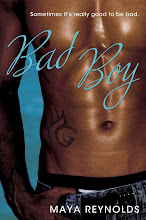
Thomas E. Sniegoski has previously written Young Adult and comic books. Last summer I read his debut adult novel, A Kiss Before the Apocalypse. His second in the Remy Chandler series, Dancing on the Head of a Pin, will be released on the same day as my Bad Boy, April 7th (coincidentally, my birthday).

Remy Chandler, Boston private investigator, is the earthly form of the angel Remiel, who--weary of Heaven and fond of mortals--has thrown off his angelic trappings to live among humans.
In Noah's Orphans, Remy is brought by another angel to the place where Noah (yes, he of the Ark) was recently murdered. While investigating the murder, Remy realizes Noah was obsessed with trying to learn if a species barred from his Ark had managed to survive the Flood (yes, THE Flood).

If you're interested in finding a new UF author, Mean Streets is a great way to sample the work of some of the best out there.

Monday, February 23, 2009

Whither Newspapers?

Thanks to Teleread for pointing me toward an op/ed in today's Wall Street Journal (WSJ) that addresses the ailing newspaper industry.

The WSJ riffs on that platitude of the Information Age, "Information wants to be free," when it says:
. . . "Information also wants to be expensive." The right information in today's complex economy and society can make a huge difference in our professional and personal lives. Not having this information can also make a big difference, especially if someone else does have it. And for valuable information, online is a great new way for it to be valued.

It's past time for news companies to regain the courage to ask readers whether what they produce is worth paying for online.
The Wall Street Journal has over a million paid subscribers (along with 20 million free readers) and the op/ed's author, L. Gordon Crovitz, argues that the challenge for papers today is to determine what content readers will value enough to pay for it online.

I have a brother who is a popular newspaper sports columnist. We've spent lots of hours over the past few years discussing the future of newspapers. For years, I subscribed to BOTH the Dallas Morning News and the Dallas Times Herald (which went defunct in December, 1991). In November, 2005, I cancelled my subscription to the Morning News because I got tired of their editorial bias slipping into straight news stories.

Nowadays, I scan newspapers from around the world online. And I stop by Newseum here to check on their top ten front pages around the U.S.

In the same way that I hope New York publishers figure out how to operate successfully in a digital world, I hope newspapers can work out a model that will make them successful in today's electronic environment.

Go here to read the WSJ editorial.

The Alamo: February 23 - March 6, 1836

One hundred and seventy-three years ago today, a battle began in Texas.

It's almost unfair to call it a battle. The estimates are that the Mexican army had 2,400 soldiers and the Texans had somewhere around 200 men. Yet those 200 Texans held off Santa Anna's superior force for thirteen days.

I'm not a historian, but each year I note the day the Battle of the Alamo began. Click below to understand why. If the video does not appear, please click on the link here to get it.


Now let the children gather 'round to hear my song of praise
Honoring the heroes of early Texas days.

'Twas back in 1836 at a mission in San Antone
It's the story of some Texans who fought and died alone.

Santa Anna's thousands were enough to make 'em flinch,
But one hundred and eighty Texans, they didn't give an inch.

For 13 days, those thousands attacked and were repeled.
A hundred and eighty Texans fired back and held.

But then at last the enemy, using cannon shell,
Burst through the mission's crumbling walls and turned it into hell.

Jim Bowie on his sick bed, Crockett at the door,
They fought till they were lying dead on the stone cold floor.

From the gutted chapel rose a cry, conceived in death and pain.
"Remember the Alamo," they cried, "so we won't have died in vain."

In a place called San Jacinto just thirty days from then,
Santa Anna, he was whipped by Houston and his men.

Those Texans of the Alamo gave up their lives to bring
Liberty to Texas and the sound of freedom's ring.

A hundred and eighty dead men, but there's no call for tears
For they will be remembered for a million Texas years.
Outnumbered twelve to one, all chose to stay and fight.

One Hundred and Seventy Three Years and Counting . . .

Saturday, February 21, 2009

Taking Steps Into The Digital Future

Publishers Weekly did an article titled "Taking Steps Into The Digital Future" on Monday.

The article focuses on teenagers:
It's no secret that teens live online--Twittering, blogging, posting videos on YouTube and downloading from iTunes--or that most teens (80%, according to a national survey last fall) have cellphones. Together that adds up to a sizable potential market for mobile phone and Web-based e-books. Google and Amazon have no intention of ceding that business to developers of iPhone apps like Stanza. Earlier this month, they announced that they will provide e-content for mobile phones. Google will release 1.5 million public domain titles; Amazon will adapt books already in the Kindle format.
PW likened the "e-frontier" to "publishing's new Wild West," and I was pleased to see that comment followed by a quote from Penguin, my own publisher. Don Weisberg, head of the Penguin Young Readers Group said: “We're very gung-ho on e-books . . . We as publishers have to be ready for it all. However anybody wants to consume a book—on your computer, on an e-book reader or a printed book—we're going to be there.”

On Sunday, I made this suggestion:
What if New York created a virtual book club in which the readers and the writer read the book online together? I am a huge fan of Tom Friedman. I would pay a premium to read one of his books with him answering questions from readers as I read along.
Maja Thomas, SVP of Hachette Digital and Audio, talked about the attractions of reading as a social activity for teens: “There are good things to be said about the book as a solitary pleasure . . . But with an e-book you can highlight and share a line instantly--e-mail it, Twitter it. It becomes a communal activity.”

Thanks to Dear Author for the link to the article.

I'm taking Sunday off. I'll be back on Monday morning.

Friday, February 20, 2009

More Major Cuts At Borders Corporate Level

From today's Shelf Awareness:
Borders Group has made another round of major cuts, laying off 136 people in corporate positions, most of which are in the headquarters office in Ann Arbor, Mich. The cuts follow the firing of 16 v-p's and directors earlier this month (Shelf Awareness, February 3, 2009) and 274 corporate jobs last June. Altogether the corporate cuts represent about 30% of Borders's corporate staff as of last May . . .

Yesterday's cuts were made in a variety of departments, from marketing and human resources to field management and corporate sales, and in a variety of levels, from entry level to middle management.

An Interview With Four Editors

Yesterday's Publishers Lunch directed me to a Poets & Writers interview with four editors. I'd encourage all writers to read it.

Here was an interesting question and answer:
When you look at the industry, what are the biggest problems we face right now?

CHINSKI: I think they're all so obvious. Returns. Blogs.

GARGAGLIANO: And just finding readers.

CHINSKI: The end of cultural authority. That's something we talk about a lot at FSG [Farrar, Straus and Giroux]. Reviews don't have the same impact that they used to. The one thing that really horrifies me and that seems to have happened within the last few years is that you can get a first novel on the cover of the New York Times Book Review, a long review in The New Yorker, a big profile somewhere, and it still doesn't translate into sales. Whereas six years ago, or some mythical time not that long ago, that was the battle—to get all that attention—and if you got it, you didn't necessarily have a best-seller, but you knew that you would cross a certain threshold. Whereas now you can get all of that and still not see the sales.

I think that phenomenon is about the loss of cultural authority. There's just so much information out there now that people don't know who to listen to, except their friends, to figure out what to read. And that's the question we wrestle with the most.

I think publishers have to communicate more directly with readers—that's the big barrier we're all trying to figure out. How much to use our websites to sell directly and talk to our readers directly?
Read the entire interview here.

Empty Bowls To Feed The Hungry

I'm posting to my blog earlier than usual today because I've got plans.

The North Texas Food Bank is "a non-profit hunger relief organization that distributes donated, purchased and prepared foods through a network of feeding programs in thirteen North Texas counties." NTFB is a member of America's Second Harvest program

Every year NTFB holds fund-raising luncheons in both Dallas and Fort Worth. Area artists and pottery makers donate hundreds of hand-thrown bowls. Local restaurants donate prepared food. Willing donors pay $35 for an empty bowl and the food that will fill it.

Today will be the tenth annual Empty Bowls luncheon, which will be held in the Meyerson Symphony Center in downtown Dallas. While I've made donations for years, I have never attended the actual lunch. I've invited my good friend Linda to go with me, and so we're having an OUTING.

Two posts will follow this one today.

See you tomorrow.

Thursday, February 19, 2009

Surviving With Wolves

Almost a year ago--on March 1, 2008--I wrote about yet another writer's hoax. You may remember it. I'm going to cheat here and steal from some of my earlier posts.

Last February, Misha Defonseca, a seventy-one-year-old Belgian woman, admitted that her 1997 book, Misha: A Memoire of the Holocaust Years, was a fabrication.

In her "memoir," Defonseca claimed she'd escaped into a forest at age six to avoid the Nazis who'd seized her Jewish parents. She described living with wolves as she crossed Europe over the next four years.

The book became a best-seller in Europe and was turned into a French film, Survivre avec les loups (Surviving With Wolves), which was released in November of 2007.

In my post I explained that the book came about after Defonseca and her husband moved to Massachusetts and Jane Daniel, a publisher who operated out of her house, heard the improbable tale and decided it would make a great book. Daniel roped in her own next-door neighbor, a retired French professor named Vera Lee, to work with Defonseca who preferred to dictate the story in French.

According to the Boston Globe:
The book was published - with a glowing blurb from Nobel laureate Elie Wiesel, author of the Holocaust memoir "Night" - with Lee's name on the copyright page, not on the cover. Lee sued Daniel in 1998, claiming her rights as coauthor had been violated. Defonseca also sued, alleging that Daniel had broken her promise to publicize the book and had hidden profits in offshore corporate accounts.
As I explained in my first post, that 2001 jury found for the plaintiffs, giving Defonseca $7.5 million in damages and giving Lee another $3.3 million. The judge trebled those damages to $9.9 million for Lee and $22.4 million for Defonseca. The rights to the book went to Defonseca.
Since the judgment, Daniel [told The Boston Globe] she has lost most of her assets, spent a night in jail on a judge's order, and is about to lose her house, a bed-and-breakfast inn overlooking Gloucester Harbor.
Although admitting that she neglected to adequately fact-check the book she'd published, following the court judgment, Daniel embarked on a one-woman crusade to prove Defonseca was a fraud. In August of 2007, she established a blog here dedicated to tracking down information about her former author client.

Sharon Sergeant, a genealogist, saw the blog and began researching the meager facts Daniel had on Defonseca's past. With the help of Belgian journalist Marc Metdapenningen of Le Soir newspaper, Sergeant turned up the information that proved Defonseca was lying. Defonseca was not Jewish. Her real name was Monique De Wael and she'd been baptized Catholic. Her parents were resistance fighters executed by the Nazis. She was raised by her grandfather and uncle.

When confronted with the facts, Defonseca admitted the truth last February leading to my first blog post on the subject here.

In April, 2008, Publishers Weekly reported that Jane Daniel was seeking to overturn the court's judgment on the basis that the book was a fraud.

Today's Publishers Lunch had the following tidbit:
Jane Daniel, who both published Misha Defonseca's fake Holocaust survival story of living with wolves and then lost a huge court verdict for allegedly hiding royalties and failing to promote the book properly (called "reprehensible by the judge) seeks exoneration in the final court--her own small press book, Bestseller! The $33 Million Verdict. The 20-year Hoax. The Truth Behind the Headlines.
I immediately started by checking Jane Daniel's blog, which led me here to this copy of a court complaint. Jane claims this complaint was filed with the Massachusetts Superior Court, but I have not been able to confirm that, and the copy shown does not bear the stamp of the court or a filing date.

For a link to Jane's book on Amazon released four months ago, go here.