While exchanging emails with one of my critique partners yesterday afternoon, it occurred to me that we were discussing something I'd never addressed on this blog before: character change/growth.
When I first began writing, I concentrated on telling the story. For me, that meant focussing on external events. Only gradually did I realize that the internal journey was as important as the external one.
Now when I structure a novel, I try to pay as much attention to my characters' internal goals as I do their external goals. For a book to make sense, the writer must know what happened to motivate the protagonist and the antagonist to action. However, for a book to be truly compelling, the writer must show how those external events change the protagonist and antagonist.
As an example, think of the movie Star Wars. Let's look at two of the main characters, Luke Skywalker and Han Solo.
Luke starts out as Princess Leia's champion; his goal is to save Leia from Darth Vader's clutches. The external action is non-stop. Luke and his companions tumble from adventure to adventure. Along the way, Luke trains to be a Jedi knight like his father before him. Viewers watch Yoda scold Luke for his impatience and urge him to slow down and listen to "The Force" inside of him. Yoda's doubt that this young man will ever become a Jedi is obvious.
At the culmination of the film's action, it falls to Luke to save the day by destroying the Death Star. In that moment when Luke abandons his instrumentation panel to trust his fate and that of the Rebel Alliance to The Force, the viewer knows he will become a Jedi.
Han Solo is first seen as the consummate swashbuckler. His external goal is to earn enough money to pay off his debt to Jabba the Hut. When he earns his reward for Leia's safe return, he prepares to leave. Luke begs him to stay and help the Rebel Alliance. Han refuses, shaking his head at Luke's idealism. It's a sad moment for the viewer when Han leaves the action.
Then at a critical juncture when all the Alliance's hopes (and Luke's life) are at risk of being destroyed, Han appears to save his friend. He's learned that the value of friendship is more important to him than money. In that moment, Han's internal and external goals coincide.
As I said at the outset, external action can make for a good story. But think of Star Wars without Luke and Han's growth arcs. It just wouldn't be as compelling.
Focus time on your characters' internal goals and motivations. Give them a growth arc. Let your reader see how the protagonist (and perhaps the antagonist) is changed by the events of the novel.
I found this hard to do the first time. It is becoming almost second nature now. And I'm convinced it's worth the time and trouble. When you begin to focus on internal growth, inconsistencies in your characters' behavior just pop out at you.
Re-read your manuscript with an eye to what is going on with your characters internally. You'll find places to add their thoughts as to why they did something or the conflict they're having in making a decision. It's the beginning of writing in deep POV.
Good luck.
Saturday, February 24, 2007


Friday, February 23, 2007
Copyediting, Spring and the Long Path Home
To quote Dickens, "It was the best of times; it was the worst of times."
North Texas in the spring is the most wonderful of places. Yesterday--even though we could still have an ice storm at any moment--it felt like spring. When the birds are nesting, they sing in a different way, and when I stepped out on my patio in the morning, they were in full chorus. The hyacinth bulbs around my front entrance are coming up with an optimism I find touching.
But it's also a hard time. Tribble, my more-than-twenty-year-old cat, has begun her final journey, and I'm determined to make the experience as easy for her as possible. I've known for some weeks that she has diabetes, but made the decision not to address the disease with twice-daily insulin injections. She hates going to the vet, and she hates being medicated. I cannot see putting her through what she won't be able to understand and will regard as torture. Fortunately, Tim, my wonderful vet, shares my feelings. We both regard death as the last great healer.
Because the weather has been so nice, I've been putting my two younger cats, Bob and Dinah, out every morning so that they wouldn't wart Tribble all day. Tribble greets me each night, sitting on top of my closed laptop, the first place she knows I'll go.
Last night when I got home, Tribble wasn't waiting for me. She didn't come when I called. My heart sank. I checked all her favorite hiding spots--under my bed, on the windowseat in the bay window, in the laundry basket--but couldn't find her anywhere. I let the two younger cats back into the house in the hope they would go to her. Neither did.
I searched and called for her for nearly an hour without success. Recently Tribble has been drinking out of a tall slurpy glass (so she doesn't have to bend her arthritic knees). She had polished off about eight ounces of water during the day (the symptom that clued me in to her diabetes in the first place), but her food stood untouched.
During the search, I checked my front porch, thinking perhaps she had slipped out of the house when I wasn't looking.
Tribble wasn't outside, but there were two things that should have filled me with joy: My copyedits from NAL and the next installment on my book advance.
I curled up on my bed with the copyedits, trying to ignore my worry over Tribble.
The edits were very interesting. I want to share the things I learned:
1) Don't set your format to hyphenate. Recently Nathan Bransford had said this in his blog, and I was surprised to see that comment. But my copyeditor had removed all of the automatic hyphens from my manuscript.
2) I have always used three asterisks (* * *) to indicate a change of scene. My copyeditor removed all of these and left the blank space in their place.
3) I had always heard that a writer indicates italics by underlining. In recent years, I've heard that digital printing has changed this and that a writer now simply goes ahead and uses italics, which I did. My copyeditor underlined all the italicized places and wrote "ital" in the margins.
4) The copyeditor had checked for copyrights and trademarks. She changed my generic "bubble wrap" to "Bubble Wrap" to reflect the trademark of the Sealed Air Company. She corrected my misuse of a Zane Gray title, "The Riders of the Purple Sage" to read "Riders of the Purple Sage."
5) The copyeditor left me a note on EVERY non-punctuation change with a little "AU: okay to change?" in red pencil. I was instructed to use a different colored PENCIL to indicate my agreement or disagreement.
Tracy, my editor, had told me the copyeditor had a light touch. She certainly did. I was able to run through the first hundred pages in about thirty minutes. I'd told my friends I might not be able to hang out this weekend because I needed to get the copyedits back by March 1. At this rate, getting them done will be a breeze.
By the time I'd finished my hundred pages, my anxiety over Tribble was pretty high. I was debating whether to call a friend to come over and help me search for a body. In a last ditch effort, I got a flashlight and went from room to room searching.
My study has three seven-foot tall double deep bookcases. I took the flashlight and searched behind each grouping of books. On the second case, Tribble peered up at me from behind a row of hardbacks by Dennis Lehane. I was so relieved, I almost cried. I didn't disturb her; just returned to my laptop to start this post.
Now that she'd been discovered, she came out, jumped on my knee to help her reach my desk and sat next to the laptop. I offered her a fresh can of her favorite catfood flavor. She wouldn't eat. I offered her my secret weapon: lamb-flavored Gerber's baby food. Cats LOVE lamb-flavored Gerber's. She wouldn't touch it. I finally brought her a dish of kitten kibble--a major no-no for a geriatric cat because of the high levels of protein. But would you deny an eighty-five-year-old woman a cigarette because of the fear that it would shorten her life? Me either. Tribble ate the whole dish.
Tribble is curled up beside me right now. A few minutes ago, she began purring. I have to believe this is the right thing to do--although holding my breath when I come home every day will be tough.
I'm grateful for the twenty plus years we've had together. My charge now is to offer my little calico Manx a dignified, peaceful ending.
North Texas in the spring is the most wonderful of places. Yesterday--even though we could still have an ice storm at any moment--it felt like spring. When the birds are nesting, they sing in a different way, and when I stepped out on my patio in the morning, they were in full chorus. The hyacinth bulbs around my front entrance are coming up with an optimism I find touching.
But it's also a hard time. Tribble, my more-than-twenty-year-old cat, has begun her final journey, and I'm determined to make the experience as easy for her as possible. I've known for some weeks that she has diabetes, but made the decision not to address the disease with twice-daily insulin injections. She hates going to the vet, and she hates being medicated. I cannot see putting her through what she won't be able to understand and will regard as torture. Fortunately, Tim, my wonderful vet, shares my feelings. We both regard death as the last great healer.
Because the weather has been so nice, I've been putting my two younger cats, Bob and Dinah, out every morning so that they wouldn't wart Tribble all day. Tribble greets me each night, sitting on top of my closed laptop, the first place she knows I'll go.
Last night when I got home, Tribble wasn't waiting for me. She didn't come when I called. My heart sank. I checked all her favorite hiding spots--under my bed, on the windowseat in the bay window, in the laundry basket--but couldn't find her anywhere. I let the two younger cats back into the house in the hope they would go to her. Neither did.
I searched and called for her for nearly an hour without success. Recently Tribble has been drinking out of a tall slurpy glass (so she doesn't have to bend her arthritic knees). She had polished off about eight ounces of water during the day (the symptom that clued me in to her diabetes in the first place), but her food stood untouched.
During the search, I checked my front porch, thinking perhaps she had slipped out of the house when I wasn't looking.
Tribble wasn't outside, but there were two things that should have filled me with joy: My copyedits from NAL and the next installment on my book advance.
I curled up on my bed with the copyedits, trying to ignore my worry over Tribble.
The edits were very interesting. I want to share the things I learned:
1) Don't set your format to hyphenate. Recently Nathan Bransford had said this in his blog, and I was surprised to see that comment. But my copyeditor had removed all of the automatic hyphens from my manuscript.
2) I have always used three asterisks (* * *) to indicate a change of scene. My copyeditor removed all of these and left the blank space in their place.
3) I had always heard that a writer indicates italics by underlining. In recent years, I've heard that digital printing has changed this and that a writer now simply goes ahead and uses italics, which I did. My copyeditor underlined all the italicized places and wrote "ital" in the margins.
4) The copyeditor had checked for copyrights and trademarks. She changed my generic "bubble wrap" to "Bubble Wrap" to reflect the trademark of the Sealed Air Company. She corrected my misuse of a Zane Gray title, "The Riders of the Purple Sage" to read "Riders of the Purple Sage."
5) The copyeditor left me a note on EVERY non-punctuation change with a little "AU: okay to change?" in red pencil. I was instructed to use a different colored PENCIL to indicate my agreement or disagreement.
Tracy, my editor, had told me the copyeditor had a light touch. She certainly did. I was able to run through the first hundred pages in about thirty minutes. I'd told my friends I might not be able to hang out this weekend because I needed to get the copyedits back by March 1. At this rate, getting them done will be a breeze.
By the time I'd finished my hundred pages, my anxiety over Tribble was pretty high. I was debating whether to call a friend to come over and help me search for a body. In a last ditch effort, I got a flashlight and went from room to room searching.
My study has three seven-foot tall double deep bookcases. I took the flashlight and searched behind each grouping of books. On the second case, Tribble peered up at me from behind a row of hardbacks by Dennis Lehane. I was so relieved, I almost cried. I didn't disturb her; just returned to my laptop to start this post.
Now that she'd been discovered, she came out, jumped on my knee to help her reach my desk and sat next to the laptop. I offered her a fresh can of her favorite catfood flavor. She wouldn't eat. I offered her my secret weapon: lamb-flavored Gerber's baby food. Cats LOVE lamb-flavored Gerber's. She wouldn't touch it. I finally brought her a dish of kitten kibble--a major no-no for a geriatric cat because of the high levels of protein. But would you deny an eighty-five-year-old woman a cigarette because of the fear that it would shorten her life? Me either. Tribble ate the whole dish.
Tribble is curled up beside me right now. A few minutes ago, she began purring. I have to believe this is the right thing to do--although holding my breath when I come home every day will be tough.
I'm grateful for the twenty plus years we've had together. My charge now is to offer my little calico Manx a dignified, peaceful ending.
Thursday, February 22, 2007
Lessons I'm Learning
I've recently begun reading the blog by agent Nathan Bransford. You can find it here. He said something that caught my attention on Monday:
So now I'm reading the urban fantasy novel A KISS OF SHADOWS by Laurell K. Hamilton, the first in her Meredith Gentry series, and guess what -- another New York Times bestseller with incredible writing!! Not only does Hamilton craft an awesome alternate world, she is a seriously gifted writer. She is one of the best writers I've ever seen at describing people, her pacing is amazing, I can't stop turning the pages. This isn't a "guilty pleasure" read, this is just good writing.
It reminded me of something. Back in 1995, I picked up a book by Laurell K. Hamilton titled Guilty Pleasures. I was fascinated by the alternate reality she had created for her Anita Blake character. Her writing was imaginative and filled with vitality. I went looking for more books by her and discovered two novels: another Blake novel, The Laughing Corpse, and something called The Nightseer.
The Laughing Corpse was as good as Guilty Pleasures had been, but Nightseer was godawful. I didn't get beyond the first ten pages. I checked the copyright dates on both books and realized that the Anita Blake books were written AFTER Nightseer.
I no longer read the Anita Blake novels. LKH lost me four books back when she began substituting sex scenes for plot. I'm an erotic romance writer, but I still require a plot in order to enjoy a book.
I'm not sure why LKH started the Merry Gentry series, but it is as fresh as the original Blake stories were. I continue to look forward to buying the Gentry books.
I say all this because it demonstrates a couple of things I have come to believe about writing:
First, even if your early efforts are dreck--not worth reading--if you remain dedicated to your craft, you can improve.
Second, simply because a series is profitable, doesn't mean it should be continued. The last Anita Blake book I really enjoyed was the ninth in the series, Obsidian Butterfly , released in 2000. The four books since have made me wince.
Interestingly enough, 2000 was the same year LKH released Kiss of Shadows, the first of the new series starring Merry Gentry. Perhaps she poured all that imagination and vitality into the new series and didn't have anything left for Anita Blake.
I find it fascinating that the two lessons I describe above apply to opposite ends of the writing continuum. The first lesson applies to newbies while the second applies to successful writers with a long-time series.
I guess learning never ends.
So now I'm reading the urban fantasy novel A KISS OF SHADOWS by Laurell K. Hamilton, the first in her Meredith Gentry series, and guess what -- another New York Times bestseller with incredible writing!! Not only does Hamilton craft an awesome alternate world, she is a seriously gifted writer. She is one of the best writers I've ever seen at describing people, her pacing is amazing, I can't stop turning the pages. This isn't a "guilty pleasure" read, this is just good writing.
It reminded me of something. Back in 1995, I picked up a book by Laurell K. Hamilton titled Guilty Pleasures. I was fascinated by the alternate reality she had created for her Anita Blake character. Her writing was imaginative and filled with vitality. I went looking for more books by her and discovered two novels: another Blake novel, The Laughing Corpse, and something called The Nightseer.
The Laughing Corpse was as good as Guilty Pleasures had been, but Nightseer was godawful. I didn't get beyond the first ten pages. I checked the copyright dates on both books and realized that the Anita Blake books were written AFTER Nightseer.
I no longer read the Anita Blake novels. LKH lost me four books back when she began substituting sex scenes for plot. I'm an erotic romance writer, but I still require a plot in order to enjoy a book.
I'm not sure why LKH started the Merry Gentry series, but it is as fresh as the original Blake stories were. I continue to look forward to buying the Gentry books.
I say all this because it demonstrates a couple of things I have come to believe about writing:
First, even if your early efforts are dreck--not worth reading--if you remain dedicated to your craft, you can improve.
Second, simply because a series is profitable, doesn't mean it should be continued. The last Anita Blake book I really enjoyed was the ninth in the series, Obsidian Butterfly , released in 2000. The four books since have made me wince.
Interestingly enough, 2000 was the same year LKH released Kiss of Shadows, the first of the new series starring Merry Gentry. Perhaps she poured all that imagination and vitality into the new series and didn't have anything left for Anita Blake.
I find it fascinating that the two lessons I describe above apply to opposite ends of the writing continuum. The first lesson applies to newbies while the second applies to successful writers with a long-time series.
I guess learning never ends.
Wednesday, February 21, 2007
A Snarkling Seeks Answers
Miss Snark had a thought-provoking post on Tuesday here.
A snarkling wrote in to ask when one should give up. When should a writer decide he cannot write and is, in fact, wasting time by continuing to try?
Miss Snark gave a very generous and kind response, pointing out that publication does not have to be the only goal of a writer, that the very act of writing offers other valuable rewards.
Most of the snarklings were "whelmed" by what they saw as an uncharacteristic reply, far from the usual snarkiness. Those who've read MS' column from its inception nearly two years ago were less surprised by her kindness.
While admiring Miss Snark's graceful response, I had a different reaction. I heard the writer saying that he had run out of ideas, out of options. He was disheartened, dispirited and grieving.
I spent a decade as a manager in the public sector. For ten years, I managed teams ranging from a dozen workers to more than 300 people.
As a manager, I spent my days seeking to inspire the best possible performance out of staff. During my tenure, I was also forced to instigate a fair number of terminations of employees. It was a point of pride with me that, although my company was notorious for backing down when threatened by legal action, none of my terminations was ever overturned.
I had a formula that I followed when counseling individuals whose performance was questionable. I'm going to share my five steps with you and explain the parallels I see to the snarkling's cry for help:
1) Does the person understand her job description? Does she know what is expected of her?
2) If she understands her job description, does she know HOW to do the job? Does she have the necessary skills?
3) If she knows what's expected of her and she knows how to do the job, are there external obstacles preventing her from being successful?
4) If the employee knew what was expected and how to do the job and did not indicate there were any obstacles, I began to look at the person herself and at internal obstacles. Did she have a negative or arrogant attitude? Did she display self-defeating behaviors? Could I do anything to help her overcome personality issues preventing her success?
5) Only when I had gone through all of the four previous steps would I initiate a termination. Since I outlined the five steps we'd be taking at the beginning of my sessions with the staff member and was very open about where we were in the process, a termination NEVER came as a surprise. I was committed to reclaiming under-performing staff members and succeeded more often than I failed.
Let's pretend for a moment that the writer who contacted Miss Snark is someone we're counseling, using my five-step method. Let's see where it leads us:
1) Does the person understand his job description? Does he know what's expected of a writer, of an agent and of an editor? Or does he believe that, once he finishes his first draft, he'll drop it in the mail and expect that an agent or editor will proof the manuscript and correct all his errors? Does he expect someone else to turn his 175K-word opus into a 100K-word professional work?
2) If he understands his job description, does he have the skills to do the job? Can he construct a viable sentence? Does he understand grammar? Does he have a solid vocabulary, or is he constantly using words inappropriately? Does he understand a hook and pacing and characterizations?
3) Are there external obstacles preventing his success? Is he marketing his novel as a sci-fi fantasy thriller with romantic elements instead of as an urban fantasy? Is his query letter a laundry list of events? Is he using a shotgun approach instead of targeting the appropriate editors and agents?
4) Does he have self-defeating behaviors? Does he ignore critique advice and feedback from other writers? Is he convinced that the agents are wrong about breaking his 220K-word manuscript into two separate manuscripts? Is his need to control every aspect of production (cover, blurb, manuscript) so strong that he cannot accept an editor's advice? Does he personalize professional feedback?
5) You can see how any of the above can sidetrack a writer from the path to traditional publishing. I am particularly concerned when I encounter a writer stuck in Step #4. I've done tons of critiques with writers who think I'm being too hard on them or their manuscript. Invariably, they respond, "Well, no one else has said that to me." At that point, I mentally shrug and say out loud, "And I could very well be wrong. I'm not infallible, you know. You asked for my opinion, and I'm being as honest as I can."
It's a lot easier to say to someone, "Wonderful manuscript. You're ready to begin querying." It's tough to say, "I think you've got some work to do yet."
Learning to suck it up and overcome the internal obstacles that prevent success is one of the hardest lessons an aspiring writer faces. If she can't take that final leap to becoming a professional, she may be forever stuck in that rut of #4--nearly there, but not quite ready to cross over into a new profession.
Just one writer's opinion . . .
A snarkling wrote in to ask when one should give up. When should a writer decide he cannot write and is, in fact, wasting time by continuing to try?
Miss Snark gave a very generous and kind response, pointing out that publication does not have to be the only goal of a writer, that the very act of writing offers other valuable rewards.
Most of the snarklings were "whelmed" by what they saw as an uncharacteristic reply, far from the usual snarkiness. Those who've read MS' column from its inception nearly two years ago were less surprised by her kindness.
While admiring Miss Snark's graceful response, I had a different reaction. I heard the writer saying that he had run out of ideas, out of options. He was disheartened, dispirited and grieving.
I spent a decade as a manager in the public sector. For ten years, I managed teams ranging from a dozen workers to more than 300 people.
As a manager, I spent my days seeking to inspire the best possible performance out of staff. During my tenure, I was also forced to instigate a fair number of terminations of employees. It was a point of pride with me that, although my company was notorious for backing down when threatened by legal action, none of my terminations was ever overturned.
I had a formula that I followed when counseling individuals whose performance was questionable. I'm going to share my five steps with you and explain the parallels I see to the snarkling's cry for help:
1) Does the person understand her job description? Does she know what is expected of her?
2) If she understands her job description, does she know HOW to do the job? Does she have the necessary skills?
3) If she knows what's expected of her and she knows how to do the job, are there external obstacles preventing her from being successful?
4) If the employee knew what was expected and how to do the job and did not indicate there were any obstacles, I began to look at the person herself and at internal obstacles. Did she have a negative or arrogant attitude? Did she display self-defeating behaviors? Could I do anything to help her overcome personality issues preventing her success?
5) Only when I had gone through all of the four previous steps would I initiate a termination. Since I outlined the five steps we'd be taking at the beginning of my sessions with the staff member and was very open about where we were in the process, a termination NEVER came as a surprise. I was committed to reclaiming under-performing staff members and succeeded more often than I failed.
Let's pretend for a moment that the writer who contacted Miss Snark is someone we're counseling, using my five-step method. Let's see where it leads us:
1) Does the person understand his job description? Does he know what's expected of a writer, of an agent and of an editor? Or does he believe that, once he finishes his first draft, he'll drop it in the mail and expect that an agent or editor will proof the manuscript and correct all his errors? Does he expect someone else to turn his 175K-word opus into a 100K-word professional work?
2) If he understands his job description, does he have the skills to do the job? Can he construct a viable sentence? Does he understand grammar? Does he have a solid vocabulary, or is he constantly using words inappropriately? Does he understand a hook and pacing and characterizations?
3) Are there external obstacles preventing his success? Is he marketing his novel as a sci-fi fantasy thriller with romantic elements instead of as an urban fantasy? Is his query letter a laundry list of events? Is he using a shotgun approach instead of targeting the appropriate editors and agents?
4) Does he have self-defeating behaviors? Does he ignore critique advice and feedback from other writers? Is he convinced that the agents are wrong about breaking his 220K-word manuscript into two separate manuscripts? Is his need to control every aspect of production (cover, blurb, manuscript) so strong that he cannot accept an editor's advice? Does he personalize professional feedback?
5) You can see how any of the above can sidetrack a writer from the path to traditional publishing. I am particularly concerned when I encounter a writer stuck in Step #4. I've done tons of critiques with writers who think I'm being too hard on them or their manuscript. Invariably, they respond, "Well, no one else has said that to me." At that point, I mentally shrug and say out loud, "And I could very well be wrong. I'm not infallible, you know. You asked for my opinion, and I'm being as honest as I can."
It's a lot easier to say to someone, "Wonderful manuscript. You're ready to begin querying." It's tough to say, "I think you've got some work to do yet."
Learning to suck it up and overcome the internal obstacles that prevent success is one of the hardest lessons an aspiring writer faces. If she can't take that final leap to becoming a professional, she may be forever stuck in that rut of #4--nearly there, but not quite ready to cross over into a new profession.
Just one writer's opinion . . .
Tuesday, February 20, 2007
Defining Censorship
Okay, it was inevitable. After 616 posts, I was bound to tick off someone.
And I'm probably going to tick off more people with this post.
I'm postponing my blogging plans for tonight to address the individual, who identified him/herself only as SafeLibraries.org, when s/he posted the comment to my blog of Saturday titled "Controversy Over An Award."
In that blog, I wrote about the uproar over the Newbery Medal winner for 2007. A number of librarians are refusing to order the book because the author--herself a librarian--used the word "scrotum" in a book intended for children.
I would have considered the entire affair silly if I didn't find it so sad. The scrotum is both a part of the human body and a perfectly legitimate word. I'm unclear as to how its use/knowledge could harm a child. Actually, I find it pretty amazing (and one of God's many miracles) how the scrotum serves as the cooling system for the testes, preventing sperm from overheating and becoming sterile.
When we begin to fear a legitimate anatomical word simply because it's part of the reproductive system, we are--in effect--placing a value judgment on scientific knowledge, and we're in trouble.
Oh, wait, some states/schools/administrations are already placing value judgments on scientific knowledge. Things like global warming and evolution. We ARE in trouble.
While I have had a policy of not permitting anonymous comments on my blog, I'm going to leave the post on Saturday's blog in place. However, I am not going to permit the poster to hide behind an organizational name that implies an army of support. I'm going to refer to him/her as S.L.
S.L. started out innocuously by stating, "I did not think the inclusion of that word [scrotum] and nothing more is a big deal."
Then, s/he gets down to the real reason for posting, which completely belies the earlier comment: "Keeping sexually inappropriate books away from children is NOT censorship."
S.L., I beg to differ. The last time I checked the definitions for "censorship" and "censor" (about ten minutes ago), that's EXACTLY the definition: "to supervise public morals; hence, any supervisor of public morals; person who tells people how to behave. A person whose task is to examine literature, motion pictures, etc. and to remove or prohibit anything considered unsuitable."
I doubt anyone would argue that children should be protected from inappropriate material. I do find it interesting that S.L. is totally focussed on "sexually inappropriate" material. I would include violent, racist, sexist and hate-mongering among the inappropriate materials that concern me.
In addition, I'm concerned about a bigger question: How a community at large decides what IS inappropriate material. In China, anything that the state deems inappropriate is banned. The Adventures of Huckleberry Finn was once banned in this country because of Huck's character (or lack thereof). Catcher in the Rye was once banned for use of the word "hell." Some Americans even objected to The Diary of Anne Frank.
I mention these books because once you start censoring, it's difficult to know when and where to stop. How do you draw the line? And, more importantly, who do you trust to draw that line? I keep remembering that old adage about power corrupting.
I am not in favor of censorship. I AM in favor of parents supervising their children and the books, movies and games used to entertain those children.
I am in favor of free speech--including the right of S.L. to espouse whatever position s/he chooses. I spent a few minutes--a very few minutes--reviewing the stuff on S.L.'s website. Frankly, it felt like the lurid, wild-eyed newspapers that decorate the checkout line in my grocery store. (Note to S.L.: There's nothing wrong with a little white space on a website. It's restful for the eyes. And using a larger font and color does not lend weight to your arguments).
I am second to none in my respect and admiration for librarians. I once considered entering that profession myself. The challenges librarians face in a fast-moving digital world are enormous. Fortunately, the vast majority of them recognize that it is not their job to decide what constitutes "morality" in a community.
And, when in doubt, they (and us) can always refer back to that flexible document known as the U.S. Constitution with its 45 little words known as the First Amendment.
P.S. While I do not plan for this blog to become a political forum, in the interests of full disclosure, I want to point out that I consider myself a moderate Republican. A moderate Republican who, since I had the benefit of observing George W. Bush's performance as governor of Texas, did not vote for him for president either time.
And I'm probably going to tick off more people with this post.
I'm postponing my blogging plans for tonight to address the individual, who identified him/herself only as SafeLibraries.org, when s/he posted the comment to my blog of Saturday titled "Controversy Over An Award."
In that blog, I wrote about the uproar over the Newbery Medal winner for 2007. A number of librarians are refusing to order the book because the author--herself a librarian--used the word "scrotum" in a book intended for children.
I would have considered the entire affair silly if I didn't find it so sad. The scrotum is both a part of the human body and a perfectly legitimate word. I'm unclear as to how its use/knowledge could harm a child. Actually, I find it pretty amazing (and one of God's many miracles) how the scrotum serves as the cooling system for the testes, preventing sperm from overheating and becoming sterile.
When we begin to fear a legitimate anatomical word simply because it's part of the reproductive system, we are--in effect--placing a value judgment on scientific knowledge, and we're in trouble.
Oh, wait, some states/schools/administrations are already placing value judgments on scientific knowledge. Things like global warming and evolution. We ARE in trouble.
While I have had a policy of not permitting anonymous comments on my blog, I'm going to leave the post on Saturday's blog in place. However, I am not going to permit the poster to hide behind an organizational name that implies an army of support. I'm going to refer to him/her as S.L.
S.L. started out innocuously by stating, "I did not think the inclusion of that word [scrotum] and nothing more is a big deal."
Then, s/he gets down to the real reason for posting, which completely belies the earlier comment: "Keeping sexually inappropriate books away from children is NOT censorship."
S.L., I beg to differ. The last time I checked the definitions for "censorship" and "censor" (about ten minutes ago), that's EXACTLY the definition: "to supervise public morals; hence, any supervisor of public morals; person who tells people how to behave. A person whose task is to examine literature, motion pictures, etc. and to remove or prohibit anything considered unsuitable."
I doubt anyone would argue that children should be protected from inappropriate material. I do find it interesting that S.L. is totally focussed on "sexually inappropriate" material. I would include violent, racist, sexist and hate-mongering among the inappropriate materials that concern me.
In addition, I'm concerned about a bigger question: How a community at large decides what IS inappropriate material. In China, anything that the state deems inappropriate is banned. The Adventures of Huckleberry Finn was once banned in this country because of Huck's character (or lack thereof). Catcher in the Rye was once banned for use of the word "hell." Some Americans even objected to The Diary of Anne Frank.
I mention these books because once you start censoring, it's difficult to know when and where to stop. How do you draw the line? And, more importantly, who do you trust to draw that line? I keep remembering that old adage about power corrupting.
I am not in favor of censorship. I AM in favor of parents supervising their children and the books, movies and games used to entertain those children.
I am in favor of free speech--including the right of S.L. to espouse whatever position s/he chooses. I spent a few minutes--a very few minutes--reviewing the stuff on S.L.'s website. Frankly, it felt like the lurid, wild-eyed newspapers that decorate the checkout line in my grocery store. (Note to S.L.: There's nothing wrong with a little white space on a website. It's restful for the eyes. And using a larger font and color does not lend weight to your arguments).
I am second to none in my respect and admiration for librarians. I once considered entering that profession myself. The challenges librarians face in a fast-moving digital world are enormous. Fortunately, the vast majority of them recognize that it is not their job to decide what constitutes "morality" in a community.
And, when in doubt, they (and us) can always refer back to that flexible document known as the U.S. Constitution with its 45 little words known as the First Amendment.
P.S. While I do not plan for this blog to become a political forum, in the interests of full disclosure, I want to point out that I consider myself a moderate Republican. A moderate Republican who, since I had the benefit of observing George W. Bush's performance as governor of Texas, did not vote for him for president either time.
Monday, February 19, 2007
Great Marketing Ploy or Writer Suicide???
Okay, by now, you know my first full-length novel is due out this September. I've chronicled a lot of the journey here on this blog.
There have been ups and downs along the way. Everything hasn't been sunshine, lollipops and puppy dogs. However, from the moment I set out to be published, I approached it as a business. I knew that I would need to be willing to accept editorial advice that I might not agree with.
Fortunately, I have been extraordinarily lucky. Both Jacky, my agent, and Tracy, my editor, give terrific advice. I trust their judgment and have been willing to go along with their suggestions.
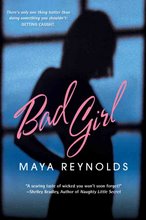
The only real disagreement I have had was on the title of my book. I originally named it You've Been a Bad Girl. The NAL staff wanted to rename it Bad Girl. I went along with it. Tracy sensed I wasn't happy and said, "I want you to like the choice." I was absolutely honest when I said, "You all have way more experience than I have. I'm willing to trust your judgment even if it's not the title I would have picked."
Having said all that, I just read a story that made my jaw drop. A writer named James Bernard Frost has his debut novel coming out on February 21 (St. Martin's Press). Frost wasn't happy with the cover. He was so unhappy that St. Martin's did a redesign. Frost still wasn't happy. That's when he came up with the idea of hiring an artist to do a black-and-white vinyl sticker that could be slapped on top of the St. Martin's cover.
Additionally, he decided to self-publish an addendum that added back everything the St. Martin's Press editors cut out.
You can go here to order Frost's sticker cover and addendum, or just to see the original cover and Frost's vinyl cover (that you are free to color in any way you like).
I'd love to know what St. Martin's thinks about all this. Of course, you could look at it like free publicity for their book. Then, again, you might choose to look at it like writer suicide.
There have been ups and downs along the way. Everything hasn't been sunshine, lollipops and puppy dogs. However, from the moment I set out to be published, I approached it as a business. I knew that I would need to be willing to accept editorial advice that I might not agree with.
Fortunately, I have been extraordinarily lucky. Both Jacky, my agent, and Tracy, my editor, give terrific advice. I trust their judgment and have been willing to go along with their suggestions.
The only real disagreement I have had was on the title of my book. I originally named it You've Been a Bad Girl. The NAL staff wanted to rename it Bad Girl. I went along with it. Tracy sensed I wasn't happy and said, "I want you to like the choice." I was absolutely honest when I said, "You all have way more experience than I have. I'm willing to trust your judgment even if it's not the title I would have picked."
Having said all that, I just read a story that made my jaw drop. A writer named James Bernard Frost has his debut novel coming out on February 21 (St. Martin's Press). Frost wasn't happy with the cover. He was so unhappy that St. Martin's did a redesign. Frost still wasn't happy. That's when he came up with the idea of hiring an artist to do a black-and-white vinyl sticker that could be slapped on top of the St. Martin's cover.
Additionally, he decided to self-publish an addendum that added back everything the St. Martin's Press editors cut out.
You can go here to order Frost's sticker cover and addendum, or just to see the original cover and Frost's vinyl cover (that you are free to color in any way you like).
I'd love to know what St. Martin's thinks about all this. Of course, you could look at it like free publicity for their book. Then, again, you might choose to look at it like writer suicide.
Sunday, February 18, 2007
Additional Info From Writer Beware
Most writers who are paying any attention at all know who Ann Crispin and Victoria Stauss are.
For those of you who have somehow missed learning about them, they are the writers behind the popular website Writer Beware here. That website is famous for publicizing the scams of the writing world.
Both Ann and Victoria also have individual websites or blogs. I have a link to Ann's blog in the column to the right of my blog. You can also go here.
Ann had two posts worth reading this week:
The first, posted on February 11, talked about a writer who recently received a "cease-and-desist" letter from Publish-America's lawyer for publicly calling PA a scam. I laughed out loud at this line from Ann's post: "Like all scammers, PA regards the prospect of going to court with much the same enthusiasm as Dracula encountering a crucifix."
The second post, dated Valentine's Day, lists thirteen publishers to avoid, along with the abusive practices they employ.
Thanks to Ann and Victoria for their efforts on behalf of writers everywhere.
For those of you who have somehow missed learning about them, they are the writers behind the popular website Writer Beware here. That website is famous for publicizing the scams of the writing world.
Both Ann and Victoria also have individual websites or blogs. I have a link to Ann's blog in the column to the right of my blog. You can also go here.
Ann had two posts worth reading this week:
The first, posted on February 11, talked about a writer who recently received a "cease-and-desist" letter from Publish-America's lawyer for publicly calling PA a scam. I laughed out loud at this line from Ann's post: "Like all scammers, PA regards the prospect of going to court with much the same enthusiasm as Dracula encountering a crucifix."
The second post, dated Valentine's Day, lists thirteen publishers to avoid, along with the abusive practices they employ.
Thanks to Ann and Victoria for their efforts on behalf of writers everywhere.
Saturday, February 17, 2007
Controversy Over An Award
Apologies for posting so late, but I was having problems with Blogger yesterday. I wrote my Saturday post, but could not--for the life of me--publish it. After a dozen tries over several hours, I gave up and decided to come back again later when Blogger was feeling more cooperative.
As some of you have probably already heard, the Newbery and Caldecott medal winners for 2007 were announced last month on January 22nd.
For those of you not familiar with children's literature, the Newbery and Caldecott medals are considered the most prestigious awards for children's lit in the U.S. The medals are given by the Association for Library Service to Children, a division of the American Library Association. The Newbery Medal is awarded to the writer of the most outstanding American book for children in a given year, while the Caldecott Medal is awarded to the artist of the most outstanding American picture book for children in a given year. The Newbery has been awarded since 1922 and the Caldecott since 1937.
This year's winners were Susan Patron, author of The Higher Power of Lucky and David Wiesner, illustrator of Flotsam.
The Newbery Medal Committee chair described The Higher Power of Lucky this way in the press release: "Lucky is a perfectly nuanced blend of adventure, survival (emotional and physical) and hilarious character study . . . as well as a blueprint for a self-examined life."
Lucky is the story of a ten-year-old girl who has already known a lot of abandonment in her short lifetime; her mother died and her father walked out. In a remarkable show of generosity, her father's first wife moved from France to the dusty, godforsaken California town named Hard Pan, where Lucky Trimble lives, to care for the child. When her guardian becomes homesick for France, Lucky, an "aspiring scientist" according to the L.A. Public Library's press release, decides to run away.
In the month since the book was awarded the Medal, controversy has grown on the Internet over the author's use of the word "scrotum" in naming that specific part of the male body. Children's Bookshelf, a newsletter from Publishers Weekly, reported on the growing uproar in its 2/15 issue:
Many of the objections have been voiced on LM_Net, a listserv open to school library media specialists and those involved with that field. One of the first to raise concerns over Patron's word choice was Dana Nilsson, a teacher/librarian at Sunnyside Elementary in Durango, Colorado . . . "Part of my job is to introduce students to quality, age-appropriate literature. I would not be doing my job if I booktalked or recommended this book to young audiences . . . Because of that one word, I would not be able to read that book aloud. There are so many other options that the author could have used instead."
Other options like what, I ask? "Balls," "testicles," or "privates"? Isn't it better to use the scientific name than to use a nickname or euphemism?
I'm being facetious, I know. I'm sure Ms. Nilsson would prefer that the subject matter of the sac containing the male testes not be included in a children's book at all. I just don't agree with her.
I think that we do children an enormous disservice in our attempts to protect them from the world at large. I can still remember being eight years old and asking my mother what the word "rape" meant.
My mother, who was a devoted Catholic and sheltered herself, wasn't about to enter into a discussion of rape with me. She directed me to our dictionary. I can still remember that exact definition: "Rape: The unlawful carnal knowledge of a woman without her consent."
No better off than when I'd started, I looked up "carnal" and "consent" before abandoning the effort. Then I did what any child seeking information does. I took my question to the streets; specifically, to the school bus where I was told that rape was "rough sex" and "the killing of a woman" by a couple of older kids who rode to school with me. It was some years before I was able to put the word into proper context.
I never forgot the experience, which left me feeling there were things that I could not talk to my mother about. That was the start of a deep chasm between us where the subjects we could not discuss kept us apart.
Nowadays, when I'm asked a question about a word by nieces or godchildren, I first try to find out where they heard the word, and then what they think it might mean. When my godchild at the age of six asked me about "good sex," I asked her where she'd heard it and what she thought it was. She said, "At school" and "You know." And I responded, "I know what I think it is, but I'd like to know what you think it is." She replied, "K-I-S-S-I-N-G." I smiled and said, "Yes, good sex includes kissing." That ended the conversation, and she went away happy.
Every writer knows that words are tools. Tools we use to convey information, opinion and feelings. My personal belief is that words alone are not evil. The way in which men and women use them may be evil, but the words themselves are simply a form of communication. When I hear a white person use the "N" word in a scornful manner, for instance, I make decisions about his level of education, sophistication and prejudice. I make different assumptions when I hear a black teenager using the word as a form of affection for a friend.
Before I could decide to boycott (another word for "censor" in this case) a children's book--particularly one that had been awarded a prestigious prize by a group charged with judging books--I would have to be convinced that the word was used in a manner that would be harmful to the child. Not simply that it would make ME feel uncomfortable to read that word aloud.
Using the proper words for the parts of the human body does not automatically harm a child. Behaving as though his body is something to be ashamed of, rather than the miraculous God-given gift it is, might be.
As some of you have probably already heard, the Newbery and Caldecott medal winners for 2007 were announced last month on January 22nd.
For those of you not familiar with children's literature, the Newbery and Caldecott medals are considered the most prestigious awards for children's lit in the U.S. The medals are given by the Association for Library Service to Children, a division of the American Library Association. The Newbery Medal is awarded to the writer of the most outstanding American book for children in a given year, while the Caldecott Medal is awarded to the artist of the most outstanding American picture book for children in a given year. The Newbery has been awarded since 1922 and the Caldecott since 1937.
This year's winners were Susan Patron, author of The Higher Power of Lucky and David Wiesner, illustrator of Flotsam.
The Newbery Medal Committee chair described The Higher Power of Lucky this way in the press release: "Lucky is a perfectly nuanced blend of adventure, survival (emotional and physical) and hilarious character study . . . as well as a blueprint for a self-examined life."
Lucky is the story of a ten-year-old girl who has already known a lot of abandonment in her short lifetime; her mother died and her father walked out. In a remarkable show of generosity, her father's first wife moved from France to the dusty, godforsaken California town named Hard Pan, where Lucky Trimble lives, to care for the child. When her guardian becomes homesick for France, Lucky, an "aspiring scientist" according to the L.A. Public Library's press release, decides to run away.
In the month since the book was awarded the Medal, controversy has grown on the Internet over the author's use of the word "scrotum" in naming that specific part of the male body. Children's Bookshelf, a newsletter from Publishers Weekly, reported on the growing uproar in its 2/15 issue:
Many of the objections have been voiced on LM_Net, a listserv open to school library media specialists and those involved with that field. One of the first to raise concerns over Patron's word choice was Dana Nilsson, a teacher/librarian at Sunnyside Elementary in Durango, Colorado . . . "Part of my job is to introduce students to quality, age-appropriate literature. I would not be doing my job if I booktalked or recommended this book to young audiences . . . Because of that one word, I would not be able to read that book aloud. There are so many other options that the author could have used instead."
Other options like what, I ask? "Balls," "testicles," or "privates"? Isn't it better to use the scientific name than to use a nickname or euphemism?
I'm being facetious, I know. I'm sure Ms. Nilsson would prefer that the subject matter of the sac containing the male testes not be included in a children's book at all. I just don't agree with her.
I think that we do children an enormous disservice in our attempts to protect them from the world at large. I can still remember being eight years old and asking my mother what the word "rape" meant.
My mother, who was a devoted Catholic and sheltered herself, wasn't about to enter into a discussion of rape with me. She directed me to our dictionary. I can still remember that exact definition: "Rape: The unlawful carnal knowledge of a woman without her consent."
No better off than when I'd started, I looked up "carnal" and "consent" before abandoning the effort. Then I did what any child seeking information does. I took my question to the streets; specifically, to the school bus where I was told that rape was "rough sex" and "the killing of a woman" by a couple of older kids who rode to school with me. It was some years before I was able to put the word into proper context.
I never forgot the experience, which left me feeling there were things that I could not talk to my mother about. That was the start of a deep chasm between us where the subjects we could not discuss kept us apart.
Nowadays, when I'm asked a question about a word by nieces or godchildren, I first try to find out where they heard the word, and then what they think it might mean. When my godchild at the age of six asked me about "good sex," I asked her where she'd heard it and what she thought it was. She said, "At school" and "You know." And I responded, "I know what I think it is, but I'd like to know what you think it is." She replied, "K-I-S-S-I-N-G." I smiled and said, "Yes, good sex includes kissing." That ended the conversation, and she went away happy.
Every writer knows that words are tools. Tools we use to convey information, opinion and feelings. My personal belief is that words alone are not evil. The way in which men and women use them may be evil, but the words themselves are simply a form of communication. When I hear a white person use the "N" word in a scornful manner, for instance, I make decisions about his level of education, sophistication and prejudice. I make different assumptions when I hear a black teenager using the word as a form of affection for a friend.
Before I could decide to boycott (another word for "censor" in this case) a children's book--particularly one that had been awarded a prestigious prize by a group charged with judging books--I would have to be convinced that the word was used in a manner that would be harmful to the child. Not simply that it would make ME feel uncomfortable to read that word aloud.
Using the proper words for the parts of the human body does not automatically harm a child. Behaving as though his body is something to be ashamed of, rather than the miraculous God-given gift it is, might be.
Friday, February 16, 2007
BookEnds, e-Publishing and MySpace.com
I love it when serendipity works in my favor.
Two days ago, I recommended that writers who are thinking of going the self-published route should consider instead going the electronic publishing route.
Well--lo and behold--yesterday, my very own literary agency addressed e-publishing.
For those of you who don't know, my agent is one of the founders of BookEnds Literary Agency. Today, Jessica Faust, the other founder, wrote a blog on e-publishing that is worth a read here.
And, before I forget, BookEnds was also named the #3 best writers' resource by Preditors and Editors here. Miss Snark was named #1, another vote I heartily endorse. Four of the top ten can be found in the right column of my blog.
There was another development yesterday in a story I first reported about on January 21st. At that time, I explained that families in New York, Pennsylvania, South Carolina and Texas have filed civil suits against MySpace.com and News Corporation. All these families claim that their daughters were sexually assaulted by adults that the girls met through the negligence of MySpace.com.
The first of those cases came to trial this week. MediaPost Publications reported that MySpace "scored its first major victory in a civil lawsuit, when a federal judge in Texas tossed a case brought by the family of a teen, 'Julie Doe,' who alleged she was sexually abused by someone she met on the site."
The judge said that MySpace was not responsible for the crimes committed by a member and indicated that the parents should have exercised greater control of their underage daughter's online activities.
Of course, this is not the end of MySpace's legal woes. They still face lawsuits in other states where judges might not view these cases in the same way.
Two days ago, I recommended that writers who are thinking of going the self-published route should consider instead going the electronic publishing route.
Well--lo and behold--yesterday, my very own literary agency addressed e-publishing.
For those of you who don't know, my agent is one of the founders of BookEnds Literary Agency. Today, Jessica Faust, the other founder, wrote a blog on e-publishing that is worth a read here.
And, before I forget, BookEnds was also named the #3 best writers' resource by Preditors and Editors here. Miss Snark was named #1, another vote I heartily endorse. Four of the top ten can be found in the right column of my blog.
There was another development yesterday in a story I first reported about on January 21st. At that time, I explained that families in New York, Pennsylvania, South Carolina and Texas have filed civil suits against MySpace.com and News Corporation. All these families claim that their daughters were sexually assaulted by adults that the girls met through the negligence of MySpace.com.
The first of those cases came to trial this week. MediaPost Publications reported that MySpace "scored its first major victory in a civil lawsuit, when a federal judge in Texas tossed a case brought by the family of a teen, 'Julie Doe,' who alleged she was sexually abused by someone she met on the site."
The judge said that MySpace was not responsible for the crimes committed by a member and indicated that the parents should have exercised greater control of their underage daughter's online activities.
Of course, this is not the end of MySpace's legal woes. They still face lawsuits in other states where judges might not view these cases in the same way.
Thursday, February 15, 2007
What Does Being Published Mean to You?
We've talked about this before, but it keeps coming up so I'm going to address it tonight.
I keep seeing posts on loops where newbie writers insist that self-publishing makes sense because (1) they don't want to give up all their rights and control and (2) because finding an agent and traditional publishing take too long.
I'm not sure where the "giving up all their rights" comes from. Maybe it will help if you think of signing a contract with a publisher like renting a house. The owner (you) still owns the house (copyright). You are merely leasing the right to the house (manuscript) to a renter (publisher) for a specified period of time at a specified rate. When the lease (contract) expires, use of your house is returned to you. During the period of the lease (contract), you can't sell the house (right to publish) to someone else.
As for giving up control, yes, depending on what you agreed to in your contract, you do lose the right to control everything. Even famous authors don't usually control the title, cover and blurb. So, if you don't want anyone editing your 200K-word sci-fi novel, maybe you should self-publish. Then again, maybe you shouldn't. [grin]
As for the process taking too long, I think that's all relative. Would you expect to have a baby in less than nine months? Would you expect to earn a pilot's license overnight? It takes time to learn a craft and to learn the industry.
If shortcuts are what you want, go the electronic publishing route. There are tons of well-respected e-publishers out there, and you can be published in as little as three months. It's fast, AND you get paid. It makes way more sense than PAYING someone to publish your work.
I'd suggest you take some time and think about what it is you want. There are lots of good options out there that don't include giving up your hard-earned cash.
I keep seeing posts on loops where newbie writers insist that self-publishing makes sense because (1) they don't want to give up all their rights and control and (2) because finding an agent and traditional publishing take too long.
I'm not sure where the "giving up all their rights" comes from. Maybe it will help if you think of signing a contract with a publisher like renting a house. The owner (you) still owns the house (copyright). You are merely leasing the right to the house (manuscript) to a renter (publisher) for a specified period of time at a specified rate. When the lease (contract) expires, use of your house is returned to you. During the period of the lease (contract), you can't sell the house (right to publish) to someone else.
As for giving up control, yes, depending on what you agreed to in your contract, you do lose the right to control everything. Even famous authors don't usually control the title, cover and blurb. So, if you don't want anyone editing your 200K-word sci-fi novel, maybe you should self-publish. Then again, maybe you shouldn't. [grin]
As for the process taking too long, I think that's all relative. Would you expect to have a baby in less than nine months? Would you expect to earn a pilot's license overnight? It takes time to learn a craft and to learn the industry.
If shortcuts are what you want, go the electronic publishing route. There are tons of well-respected e-publishers out there, and you can be published in as little as three months. It's fast, AND you get paid. It makes way more sense than PAYING someone to publish your work.
I'd suggest you take some time and think about what it is you want. There are lots of good options out there that don't include giving up your hard-earned cash.
Wednesday, February 14, 2007
To Sleep, Perchance to Trigger the Machine
Consider this a public service announcement for women.
I went for my annual physical this afternoon.
There are certainly advantages to having a physician who is associated with a medical school. You have access to the latest in medical science as well as the latest in medical technology. I now have "my file" through which all my university physicians communicate with me and with each other. Think of us as one big family all focussed on "my" health. My internist knows my gynecologist who knows my dermatologist who knows my ENT doc. They call themselves "my" team.
It's annoying as hell. I keep getting little emails and messages from them asking how I'm feeling, if I'm taking my vitamins and reminders to get my flu shot.
To be honest, I liked it better when they sent a postcard that simply said "your mammogram was fine" or "call us next year for another pap smear."
But now, of course, we have HIPAA--the Health Insurance Portability and Accountability Act--to protect our privacy. No more of that signing up on a list when you arrive at the doctor's office. Someone else might see your name. No more postcards; we can't have the mailman knowing you have healthy breasts.
When my internist asked me if I had any complaints, I told her I've been feeling unusually fatigued lately.
Until the last year, I've never had any problems with sleeping. I fall asleep in less than ten minutes (usually five) and sleep for exactly six hours. If I fall asleep at ten, I wake up at four. If I fall asleep at eleven, I wake up at five. If I fall asleep at midnight (my usual bedtime), I wake up at six.
While my sleeping patterns experienced some disruption last year, my six-hour pattern reasserted itself during the last three months--with one difference. I've been unusually tired during the day lately. At first, I attributed it to stress; after all, I was trying to get my manuscript off to my editor, and I was filled with anxiety.
To compensate for the tiredness, I began forcing myself to sleep seven and eight hours at night.
It didn't help. So I adjusted my eating habits to avoid caffeine or sugar that might have a boomerang effect on me later in the day. Nothing seemed to make a difference, and I made an appointment with my internist.
I like my internist very much. She's an attractive young African-American woman who listened to me carefully. She asked a LOT of questions. Then she told me that women's symptom of heart disease are very different from men's symptoms. Women's symptoms--an overwhelming fatigue, dizziness and nausea--are often chalked up to stress and ignored by mostly male physicians accustomed to the male symptoms of tightness in the chest, arm pain, and shortness of breath.
I told her that I'd had a couple of spells of dizziness two years ago that had been chalked up to "benign positional vertigo."
She did a complete physical, a urine test, blood tests, and an EKG. She scheduled me for an electrocardiogram and a stress test. But, what really took me aback was that she enrolled me in a sleep study. She wants me to go to this place where they'll monitor me overnight to insure that my breathing patterns remain normal during sleep.
Gee whiz. Just what I've always wanted. To drive to a study room at ten P.M. so a bunch of post docs and graduate students can watch me sleep.
I'll let you know what happens.
I went for my annual physical this afternoon.
There are certainly advantages to having a physician who is associated with a medical school. You have access to the latest in medical science as well as the latest in medical technology. I now have "my file" through which all my university physicians communicate with me and with each other. Think of us as one big family all focussed on "my" health. My internist knows my gynecologist who knows my dermatologist who knows my ENT doc. They call themselves "my" team.
It's annoying as hell. I keep getting little emails and messages from them asking how I'm feeling, if I'm taking my vitamins and reminders to get my flu shot.
To be honest, I liked it better when they sent a postcard that simply said "your mammogram was fine" or "call us next year for another pap smear."
But now, of course, we have HIPAA--the Health Insurance Portability and Accountability Act--to protect our privacy. No more of that signing up on a list when you arrive at the doctor's office. Someone else might see your name. No more postcards; we can't have the mailman knowing you have healthy breasts.
When my internist asked me if I had any complaints, I told her I've been feeling unusually fatigued lately.
Until the last year, I've never had any problems with sleeping. I fall asleep in less than ten minutes (usually five) and sleep for exactly six hours. If I fall asleep at ten, I wake up at four. If I fall asleep at eleven, I wake up at five. If I fall asleep at midnight (my usual bedtime), I wake up at six.
While my sleeping patterns experienced some disruption last year, my six-hour pattern reasserted itself during the last three months--with one difference. I've been unusually tired during the day lately. At first, I attributed it to stress; after all, I was trying to get my manuscript off to my editor, and I was filled with anxiety.
To compensate for the tiredness, I began forcing myself to sleep seven and eight hours at night.
It didn't help. So I adjusted my eating habits to avoid caffeine or sugar that might have a boomerang effect on me later in the day. Nothing seemed to make a difference, and I made an appointment with my internist.
I like my internist very much. She's an attractive young African-American woman who listened to me carefully. She asked a LOT of questions. Then she told me that women's symptom of heart disease are very different from men's symptoms. Women's symptoms--an overwhelming fatigue, dizziness and nausea--are often chalked up to stress and ignored by mostly male physicians accustomed to the male symptoms of tightness in the chest, arm pain, and shortness of breath.
I told her that I'd had a couple of spells of dizziness two years ago that had been chalked up to "benign positional vertigo."
She did a complete physical, a urine test, blood tests, and an EKG. She scheduled me for an electrocardiogram and a stress test. But, what really took me aback was that she enrolled me in a sleep study. She wants me to go to this place where they'll monitor me overnight to insure that my breathing patterns remain normal during sleep.
Gee whiz. Just what I've always wanted. To drive to a study room at ten P.M. so a bunch of post docs and graduate students can watch me sleep.
I'll let you know what happens.
Tuesday, February 13, 2007
The Piracy Debate Heats Up
The Wall Street Journal (WSJ) and the Los Angeles Times (LAT) had a pair of "companion" stories on Monday. We'll start with the WSJ first.
In a story titled "Media Firms Say Google Benefited From Film Piracy," the WSJ reported:
A group of media companies has accused Internet giant Google Inc. of benefiting from the sale of pirated movies and providing business support to two Web sites suspected of offering access to illegal film downloads . . . The allegations are an embarrassment for Google, which assured the companies on Friday it would take measures to prevent a recurrence of the episode.
You'll recall that Google purchased the social networking site YouTube on October 9th (see my posts of 10/7, 10/9 and 10/10 for more information).
Media companies had been complaining even before the deal was struck that the unauthorized download of music, movies and other copyrighted content was costing them billions. In the four months since the purchase of YouTube, those talks have taken place directly with Google.
Now the media companies claim that Google "deliberately directed traffic to Web sites that were engaged in fostering piracy."
The companies making these accusations include five of the seven biggest media conglomerates: Disney, GE, News Corp, Viacom and Time Warner. As proof of their claims, they offered sworn statements that Google sold ads to two sites that "allegedly helped users [to] illegally access copyrighted material."
The operators of those two sites said that Google provided them with a list of keywords to drive traffic to those sites and offered them credit to buy advertising on Google's search engine.
Google now says it will take steps to help prevent future piracy of copyrighted material.
In the related story, the LAT reports that YouTube's rival MySpace is planning to announce a video-filtering program designed to automatically remove copyrighted material from the popular social networking website.
The LAT states "The move is significant because it illustrates that media companies--including music labels and television programmers--want to be compensated for use of their material, and they appear to be gaining leverage in their negotiations."
In a story titled "Media Firms Say Google Benefited From Film Piracy," the WSJ reported:
A group of media companies has accused Internet giant Google Inc. of benefiting from the sale of pirated movies and providing business support to two Web sites suspected of offering access to illegal film downloads . . . The allegations are an embarrassment for Google, which assured the companies on Friday it would take measures to prevent a recurrence of the episode.
You'll recall that Google purchased the social networking site YouTube on October 9th (see my posts of 10/7, 10/9 and 10/10 for more information).
Media companies had been complaining even before the deal was struck that the unauthorized download of music, movies and other copyrighted content was costing them billions. In the four months since the purchase of YouTube, those talks have taken place directly with Google.
Now the media companies claim that Google "deliberately directed traffic to Web sites that were engaged in fostering piracy."
The companies making these accusations include five of the seven biggest media conglomerates: Disney, GE, News Corp, Viacom and Time Warner. As proof of their claims, they offered sworn statements that Google sold ads to two sites that "allegedly helped users [to] illegally access copyrighted material."
The operators of those two sites said that Google provided them with a list of keywords to drive traffic to those sites and offered them credit to buy advertising on Google's search engine.
Google now says it will take steps to help prevent future piracy of copyrighted material.
In the related story, the LAT reports that YouTube's rival MySpace is planning to announce a video-filtering program designed to automatically remove copyrighted material from the popular social networking website.
The LAT states "The move is significant because it illustrates that media companies--including music labels and television programmers--want to be compensated for use of their material, and they appear to be gaining leverage in their negotiations."
Monday, February 12, 2007
Turf Battle in Publishing, Part II
In yesterday's post, I talked about the growing dispute between US and UK publishing houses over the exclusive rights to publish in what had formerly been an Open Market: continental Europe.
Authors, booksellers and distributors have complained that this turf battle is hurting them while resolving nothing.
In a June, 2006 article, Deutsche Welle, a German broadcaster, quoted the owner of Books in Berlin, an independent German bookstore that specializes in English-language titles, saying that, when he has to choose, he usually orders the US edition because they're cheaper. "He estimates that his stock is comprised of 60 percent US editions, and 40 percent UK editions. Most booksellers in Germany similarly carry a mixture of British and American editions."
A serious concern to these booksellers is the increasing competition they face from the Internet. With more and more readers turning to the Internet, bookstores must be able to compete price-wise.
The June 14, 2006 edition of the New York Times reported that "Sales of British-published English-language editions in continental Europe represent about $300 million in annual revenue" while a Simon & Schuster representative estimated "U.S. publishers sold about $250 million in books in continental Europe a year, about 2 percent of their sales."
With the consolidation of the publishing business, many houses are now owned by mega-corporations. Seven conglomerates now own ninety percent of all media, which frequently includes both a UK and a US publishing house under one umbrella. Therefore, each conglomerate is forced to negotiate the needs of its divisions in both countries.
Best-selling author James Patterson took matters into his own hands when he asked his publisher, Little, Brown and Company (owned by Hachette Book Group USA) to give the UK exclusive rights to his books in Europe and to give the US exclusive rights in the Far East and Asia.
Perhaps prompted by that decision, Hachette Book Group made the decision "to grant exclusive European rights to its U.K. subsidiary in instances where it owns world rights" (Publishers Weekly, 2/6/07).
You might recall I reported yesterday that Tim Hely Hutchinson of Hachette Livre UK argued for the UK's position during the panel at Book Expo America 2006. According to David Young, Hutchinson's counterpart at Hachette Book Group USA, the two reached the decision together. "This means books will not have to travel unnecessarily far," Young said (Publishers Weekly).
The news of the decision was not universally applauded. According to Publishers Lunch, Karl Heinz Petzler, managing director of Lisma, the Lisbon distributor, wrote an angry letter to the corporation. "Petzler declares the decision "only shows that the people inside your group who made this decision . . . do not really care about their customers, but also do not care about their authors, who will lose sales."
Michael Cader of Publishers Lunch quoted an unnamed source who indicated that the decision could be a "public relations disaster for Hachette."
Stay tuned for more . . .
Authors, booksellers and distributors have complained that this turf battle is hurting them while resolving nothing.
In a June, 2006 article, Deutsche Welle, a German broadcaster, quoted the owner of Books in Berlin, an independent German bookstore that specializes in English-language titles, saying that, when he has to choose, he usually orders the US edition because they're cheaper. "He estimates that his stock is comprised of 60 percent US editions, and 40 percent UK editions. Most booksellers in Germany similarly carry a mixture of British and American editions."
A serious concern to these booksellers is the increasing competition they face from the Internet. With more and more readers turning to the Internet, bookstores must be able to compete price-wise.
The June 14, 2006 edition of the New York Times reported that "Sales of British-published English-language editions in continental Europe represent about $300 million in annual revenue" while a Simon & Schuster representative estimated "U.S. publishers sold about $250 million in books in continental Europe a year, about 2 percent of their sales."
With the consolidation of the publishing business, many houses are now owned by mega-corporations. Seven conglomerates now own ninety percent of all media, which frequently includes both a UK and a US publishing house under one umbrella. Therefore, each conglomerate is forced to negotiate the needs of its divisions in both countries.
Best-selling author James Patterson took matters into his own hands when he asked his publisher, Little, Brown and Company (owned by Hachette Book Group USA) to give the UK exclusive rights to his books in Europe and to give the US exclusive rights in the Far East and Asia.
Perhaps prompted by that decision, Hachette Book Group made the decision "to grant exclusive European rights to its U.K. subsidiary in instances where it owns world rights" (Publishers Weekly, 2/6/07).
You might recall I reported yesterday that Tim Hely Hutchinson of Hachette Livre UK argued for the UK's position during the panel at Book Expo America 2006. According to David Young, Hutchinson's counterpart at Hachette Book Group USA, the two reached the decision together. "This means books will not have to travel unnecessarily far," Young said (Publishers Weekly).
The news of the decision was not universally applauded. According to Publishers Lunch, Karl Heinz Petzler, managing director of Lisma, the Lisbon distributor, wrote an angry letter to the corporation. "Petzler declares the decision "only shows that the people inside your group who made this decision . . . do not really care about their customers, but also do not care about their authors, who will lose sales."
Michael Cader of Publishers Lunch quoted an unnamed source who indicated that the decision could be a "public relations disaster for Hachette."
Stay tuned for more . . .
Sunday, February 11, 2007
Turf Battle In Publishing, Part I
Okay, I'm ready to settle in and talk about author rights. This will probably be a two-day post.
When an American writer signs a contract, s/he typically gives his/her publisher either exclusive American rights, North American rights or world rights. Exclusive American rights means no other publisher can publish that manuscript in the U.S. during the contract period. Exclusive North American rights means no other publisher can publish that manuscript in the U.S. or Canada (Mexico is not included) during the contract period. Exclusive world rights means no other publisher can publish that manuscript during the contract period. World rights can also be broken down into English Language rights or All Language rights.
Traditionally, U.S. and British publishing houses have retained exclusive rights to their own territory, but have competed for the Open Market--the rest of the world where either (or both--there are also non-exclusive rights) could buy English Language rights. As an example, when J.K. Rowling, the British writer, signed a contract for the Harry Potter books, Bloomsbury was her British publisher and Scholastic was her U.S. publisher.
On books originally published in Britain, that publisher gets exclusive rights in Europe. However, on books originally published in the U.S., American publishers consider Europe part of the Open Market. Naturally, UK publishers object.
When the European Union was established in 1992, Britain began to argue that--since Britain was a part of the EU--all of continental Europe should now be off-limits to U.S. publishers in the same way that Britain is. Naturally, American publishing houses disagreed. During the 2006 Book Expo America in Washington, D.C., there was a panel on May 19th that discussed the issue. Here's the panel description from the BEA brochure:
Many American publishers are claiming as Open Market countries that have traditionally been exclusive to British publishers. Meanwhile, as they fight what they see as the American encroachment, British publishers are trying to make the European Union (among other places) their exclusive territory. What used to be a rote issue has now become a complicated imbroglio with "territories" that vary from house to house and from deal to deal--all of which directly affects the sale of rights on both sides of the Atlantic.
The AAR Contracts Committee has invited major publishing executives from the US and the UK, American and British literary agents, and international sales experts to this BEA panel. Both sides of the Atlantic will explain their positions and the ramifications so everyone involved can have a much better sense of how to navigate this new quagmire.
Tim Hely Hutchinson of Hachette Livre UK argued for the UK position while Carolyn Reidy of Simon & Schuster took the opposite view, charging that the British were engaged in a "land grab in continental Europe."
Michael Cader, editor of Publishers Lunch, reported in his May 19th edition that the real issue is that British books cost too much and customers with access to the Internet now know it. He said: "The internet resists artificial territorial barriers that support economic inequalities . . . and protectionism imposed on physical stores will only increase the market share of online sellers -- yet another thing causing UK book retailers woe."
In June of last year, the New York Times reported that five European booksellers and distributors jumped into the fray by "sending an open letter to publishers in Britain and the United States opposing the latest British push."
The booksellers and distributors came from Amsterdam, Barcelona, Copenhagen, Lisbon and Paris, and they argued against protectionism and for cultural diversity.
"Citing the importance of consumer choice, the threat of increased Internet sales and concern that without competition British publishers will simply raise prices, the booksellers "urge all publishers involved to strongly reject any effort to restrict competition in the market."
This argument has suddenly heated up again. Earlier this month, one international publishing house announced its own compromise decision. I'll talk about that tomorrow.
When an American writer signs a contract, s/he typically gives his/her publisher either exclusive American rights, North American rights or world rights. Exclusive American rights means no other publisher can publish that manuscript in the U.S. during the contract period. Exclusive North American rights means no other publisher can publish that manuscript in the U.S. or Canada (Mexico is not included) during the contract period. Exclusive world rights means no other publisher can publish that manuscript during the contract period. World rights can also be broken down into English Language rights or All Language rights.
Traditionally, U.S. and British publishing houses have retained exclusive rights to their own territory, but have competed for the Open Market--the rest of the world where either (or both--there are also non-exclusive rights) could buy English Language rights. As an example, when J.K. Rowling, the British writer, signed a contract for the Harry Potter books, Bloomsbury was her British publisher and Scholastic was her U.S. publisher.
On books originally published in Britain, that publisher gets exclusive rights in Europe. However, on books originally published in the U.S., American publishers consider Europe part of the Open Market. Naturally, UK publishers object.
When the European Union was established in 1992, Britain began to argue that--since Britain was a part of the EU--all of continental Europe should now be off-limits to U.S. publishers in the same way that Britain is. Naturally, American publishing houses disagreed. During the 2006 Book Expo America in Washington, D.C., there was a panel on May 19th that discussed the issue. Here's the panel description from the BEA brochure:
Many American publishers are claiming as Open Market countries that have traditionally been exclusive to British publishers. Meanwhile, as they fight what they see as the American encroachment, British publishers are trying to make the European Union (among other places) their exclusive territory. What used to be a rote issue has now become a complicated imbroglio with "territories" that vary from house to house and from deal to deal--all of which directly affects the sale of rights on both sides of the Atlantic.
The AAR Contracts Committee has invited major publishing executives from the US and the UK, American and British literary agents, and international sales experts to this BEA panel. Both sides of the Atlantic will explain their positions and the ramifications so everyone involved can have a much better sense of how to navigate this new quagmire.
Tim Hely Hutchinson of Hachette Livre UK argued for the UK position while Carolyn Reidy of Simon & Schuster took the opposite view, charging that the British were engaged in a "land grab in continental Europe."
Michael Cader, editor of Publishers Lunch, reported in his May 19th edition that the real issue is that British books cost too much and customers with access to the Internet now know it. He said: "The internet resists artificial territorial barriers that support economic inequalities . . . and protectionism imposed on physical stores will only increase the market share of online sellers -- yet another thing causing UK book retailers woe."
In June of last year, the New York Times reported that five European booksellers and distributors jumped into the fray by "sending an open letter to publishers in Britain and the United States opposing the latest British push."
The booksellers and distributors came from Amsterdam, Barcelona, Copenhagen, Lisbon and Paris, and they argued against protectionism and for cultural diversity.
"Citing the importance of consumer choice, the threat of increased Internet sales and concern that without competition British publishers will simply raise prices, the booksellers "urge all publishers involved to strongly reject any effort to restrict competition in the market."
This argument has suddenly heated up again. Earlier this month, one international publishing house announced its own compromise decision. I'll talk about that tomorrow.
Another Version of Dracula
I'm a huge fan of Dracula movies, especially the more modern versions that reflect the sensuous nature of the story.
John Badham's 1979 film starring Frank Langella was the first adaptation I'd seen that focussed more on the romance than the horror. However, my favorite is Francis Ford Coppola's 1992 version starring Gary Oldman. I was in graduate school at the time, working deep nights in the emergency room at Parkland Memorial Hospital in Dallas. I can still remember talking with the nurse and unit secretary about how sexy I thought Oldman was in that film.
I say all this because PBS is getting ready to launch yet another version of Dracula tonight on Masterpiece Theatre. Here's a bit from the blurb:
Seized with a powerful thirst, the Lord of the Undead stirs from his bed of Transylvanian dirt... Marc Warren (Band of Brothers) joins the ranks of the great screen Draculas with a performance as demonic as Bela Lugosi's (1931), as urbane as Christopher Lee's (1958), and as ominously sensual as Gary Oldman's (1992).
Guess what I'll be doing tonight?
John Badham's 1979 film starring Frank Langella was the first adaptation I'd seen that focussed more on the romance than the horror. However, my favorite is Francis Ford Coppola's 1992 version starring Gary Oldman. I was in graduate school at the time, working deep nights in the emergency room at Parkland Memorial Hospital in Dallas. I can still remember talking with the nurse and unit secretary about how sexy I thought Oldman was in that film.
I say all this because PBS is getting ready to launch yet another version of Dracula tonight on Masterpiece Theatre. Here's a bit from the blurb:
Seized with a powerful thirst, the Lord of the Undead stirs from his bed of Transylvanian dirt... Marc Warren (Band of Brothers) joins the ranks of the great screen Draculas with a performance as demonic as Bela Lugosi's (1931), as urbane as Christopher Lee's (1958), and as ominously sensual as Gary Oldman's (1992).
Guess what I'll be doing tonight?
Saturday, February 10, 2007
A Tiny Matter
The "check engine" light recently came on in my car.
My "check engine" light and I have a long history, none of it good. At least three times in the last few years, the light has come on, and I've raced to a mechanic. Each time, I've been told there was nothing wrong with the car; the problem was with the light itself. Of course, I regarded this most recent instance as another "Cry Wolf" situation. The car was running fine, so I ignored it.
I took the car in for its annual inspection this week. Of course, it failed. The inspector told me the problem was with my emissions system, and that was probably why the warning light had come on. He told me to take it to a repair shop and, after the repairs, he would retest it for free.
I took the car--a Ford Explorer--to an outlet of a national repair chain. They told me it would be $750 to repair my catalytic converter and, by the way, I needed a new muffler, too.
The car is running great, and this assessment just didn't feel *right* to me. I paid for the computer checkup and left.
There's a small repair shop off the main street in my town. I've noticed it often, but have never gone there. The thing that caught my attention is that the shop is pristine--clean, painted, well landscaped. On impulse, I stopped in. The shop is run by two brothers, Luis and Efraim.
I told them I'd been told I needed a muffler. Efraim shook his head. "I don't think so." He said something in Spanish that I couldn't follow to his brother. He got his device to check the car's computer, ran the diagnostics and grinned at me.
He opened the hood and pointed to a hose at the back of my engine. "There's your problem," he said. He checked, but didn't have a hose the right side in inventory. "Can you wait a few minutes?" he asked before running down the block to get the new hose. It was a tiny thing, about eight inches long and less than a half inch in diameter.
Luis installed the hose, and the "check engine" light went out. Luis told me to drive the car on the highway for at least fifty miles before I take it back for inspection again.
I thanked him profusely (he could have charged me for a muffler after all) and asked what I owed. He refused to take any money from me, saying "Come back the next time you need work done on the car."
I certainly will, and I'll bake them something tomorrow, too.
Nice people are a blessing never to be taken for granted.
My "check engine" light and I have a long history, none of it good. At least three times in the last few years, the light has come on, and I've raced to a mechanic. Each time, I've been told there was nothing wrong with the car; the problem was with the light itself. Of course, I regarded this most recent instance as another "Cry Wolf" situation. The car was running fine, so I ignored it.
I took the car in for its annual inspection this week. Of course, it failed. The inspector told me the problem was with my emissions system, and that was probably why the warning light had come on. He told me to take it to a repair shop and, after the repairs, he would retest it for free.
I took the car--a Ford Explorer--to an outlet of a national repair chain. They told me it would be $750 to repair my catalytic converter and, by the way, I needed a new muffler, too.
The car is running great, and this assessment just didn't feel *right* to me. I paid for the computer checkup and left.
There's a small repair shop off the main street in my town. I've noticed it often, but have never gone there. The thing that caught my attention is that the shop is pristine--clean, painted, well landscaped. On impulse, I stopped in. The shop is run by two brothers, Luis and Efraim.
I told them I'd been told I needed a muffler. Efraim shook his head. "I don't think so." He said something in Spanish that I couldn't follow to his brother. He got his device to check the car's computer, ran the diagnostics and grinned at me.
He opened the hood and pointed to a hose at the back of my engine. "There's your problem," he said. He checked, but didn't have a hose the right side in inventory. "Can you wait a few minutes?" he asked before running down the block to get the new hose. It was a tiny thing, about eight inches long and less than a half inch in diameter.
Luis installed the hose, and the "check engine" light went out. Luis told me to drive the car on the highway for at least fifty miles before I take it back for inspection again.
I thanked him profusely (he could have charged me for a muffler after all) and asked what I owed. He refused to take any money from me, saying "Come back the next time you need work done on the car."
I certainly will, and I'll bake them something tomorrow, too.
Nice people are a blessing never to be taken for granted.
The Revitalization of Playboy?
I'm late with today's post because I went to the symphony last night.
Going to an orchestra concert is one of my guilty pleasures, a sort of acoustical yoga. You know the way yoga makes you feel? All relaxed and loose? In ninety minutes, the Symphony always turns me into a warm puddle of relaxation. I came home and tumbled into bed.
My friend M and I have known each other for a long time, and we've had season tickets to the Dallas Symphony for almost twenty years. In 1989, the DSO built an expensive new concert hall, and the cost of a subscription trebled. We didn't want to give up our seats (on the floor, keyboard side on the aisle) so we found half a dozen friends interested in one or two concerts a year, but not an entire subscription. The group of us now share the subscription. It's worked out beautifully, and I look forward to the three concerts M and I attend between October and February each year.
Having said all that, it's time to look at yesterday's publishing news.
The Wall Street Journal (WSJ) had an article on Friday titled "Playboy Archives Go Digital; That Means Its Articles, Too." One line from the article sums up the story: "Today, Playboy, in an attempt to get back in step with the present, is unveiling plans to make its entire text and photo archives available digitally."
Playboy's founder, Hugh Hefner--now 80 years old--is trying to revive the franchise. He's quoted in the article saying, "Something remarkable has happened to the Playboy [Note from MR: I originally typed Playbody; talk about a Freudian slip] brand in the past few years . . . It is hot again. We have a hit TV show; we just opened up the Playboy Club casino in Vegas, and the brand is very hot in clothing . . . It all connects to the future, and the retro-cool phenomenon."
Whatever. In order to capitalize on what he sees as new interest in his creation, Hefner is developing a six-disc DVD compilation of all 636 issues of the magazine, with one disc for each decade of the publication's history. The first two discs will be available in another eight months and each one will retail for $100. The discs are viewed on a computer and are accompanied by a 200-page book.
Hefner hopes the series will become a $600 collector's item and revive interest in his monthly magazine. At the height of its popularity in 1972, Playboy had a circulation of about seven million. Since 1990, however, its circulation has been pretty steady at about three million.
Playboy executives believe that, by exactly duplicating the magazine's 115,880 pages, including ads, they will be protected from any allegations of copyright infringement from the writers and artists who contributed content to Playboy. Apparently their plan is NOT to reimburse their contributors. This remains to be seen.
The president of a trade union for freelance writers is skeptical. He's quoted in the article saying, "Even if this does fall within the Supreme Court's parameters of allowed reproduction, we'd still want to take a look at this whole issue of remuneration for writers if the publisher is taking commercial advantage."
Playboy also plans to build a web-based archive inside the company that its editors can use to find specific stories and articles printed in the last 54 years. The WSJ made no mention of bringing this Internet tool public. Obviously, if they did, they would be moving into another medium, which would invoke the need to pay for digital rights.
Look for the compilation to make its debut around October.
Going to an orchestra concert is one of my guilty pleasures, a sort of acoustical yoga. You know the way yoga makes you feel? All relaxed and loose? In ninety minutes, the Symphony always turns me into a warm puddle of relaxation. I came home and tumbled into bed.
My friend M and I have known each other for a long time, and we've had season tickets to the Dallas Symphony for almost twenty years. In 1989, the DSO built an expensive new concert hall, and the cost of a subscription trebled. We didn't want to give up our seats (on the floor, keyboard side on the aisle) so we found half a dozen friends interested in one or two concerts a year, but not an entire subscription. The group of us now share the subscription. It's worked out beautifully, and I look forward to the three concerts M and I attend between October and February each year.
Having said all that, it's time to look at yesterday's publishing news.
The Wall Street Journal (WSJ) had an article on Friday titled "Playboy Archives Go Digital; That Means Its Articles, Too." One line from the article sums up the story: "Today, Playboy, in an attempt to get back in step with the present, is unveiling plans to make its entire text and photo archives available digitally."
Playboy's founder, Hugh Hefner--now 80 years old--is trying to revive the franchise. He's quoted in the article saying, "Something remarkable has happened to the Playboy [Note from MR: I originally typed Playbody; talk about a Freudian slip] brand in the past few years . . . It is hot again. We have a hit TV show; we just opened up the Playboy Club casino in Vegas, and the brand is very hot in clothing . . . It all connects to the future, and the retro-cool phenomenon."
Whatever. In order to capitalize on what he sees as new interest in his creation, Hefner is developing a six-disc DVD compilation of all 636 issues of the magazine, with one disc for each decade of the publication's history. The first two discs will be available in another eight months and each one will retail for $100. The discs are viewed on a computer and are accompanied by a 200-page book.
Hefner hopes the series will become a $600 collector's item and revive interest in his monthly magazine. At the height of its popularity in 1972, Playboy had a circulation of about seven million. Since 1990, however, its circulation has been pretty steady at about three million.
Playboy executives believe that, by exactly duplicating the magazine's 115,880 pages, including ads, they will be protected from any allegations of copyright infringement from the writers and artists who contributed content to Playboy. Apparently their plan is NOT to reimburse their contributors. This remains to be seen.
The president of a trade union for freelance writers is skeptical. He's quoted in the article saying, "Even if this does fall within the Supreme Court's parameters of allowed reproduction, we'd still want to take a look at this whole issue of remuneration for writers if the publisher is taking commercial advantage."
Playboy also plans to build a web-based archive inside the company that its editors can use to find specific stories and articles printed in the last 54 years. The WSJ made no mention of bringing this Internet tool public. Obviously, if they did, they would be moving into another medium, which would invoke the need to pay for digital rights.
Look for the compilation to make its debut around October.
Friday, February 09, 2007
APA Book Sales in 2006
I'm working on a post on book rights, but it's going to take more time than I have today. Look for it over the weekend.
Today, I'm quoting from the Thursday edition of Shelf Awareness:
Net book sales in 2006 fell 0.2% to $10,027.9 billion from $10,044.2 billion, as reported by 82 publishers to the Association of American Publishers. Net sales for December dropped 0.6% to $1,396.4 million.
The big gainers for the year were: e-books (with admittedly small numbers compared to other categories), up 24.1%; adult paperbacks, up 8.5%; university press paperbacks, up 4.7%; and adult mass markets, up 4.6%.
The big losers were: children's/YA hardcovers (read the lack of Harry Potter), down 29%; audiobooks, down 11.7%; and religious books, down 10.2%.
The uptick for e-books didn't surprise me. That's been a trend for several years. The double digit increase is likely to slow down as the overall total grows.
I'll admit I WAS surprised by the figures for audiobooks and religious books.
I'm wondering if the audiobook number reflects a change as more people are downloading audiofeed to their computers. Without knowing if the audiobooks figure includes downloadable audio, it's hard to tell. I reported in my post of January 5th that "downloads have grown sharply, rising to 9 percent of audio book sales in 2005." I'll try to find out more.
I have no clue as to why religious books are down. I thought that market was strong.
Today, I'm quoting from the Thursday edition of Shelf Awareness:
Net book sales in 2006 fell 0.2% to $10,027.9 billion from $10,044.2 billion, as reported by 82 publishers to the Association of American Publishers. Net sales for December dropped 0.6% to $1,396.4 million.
The big gainers for the year were: e-books (with admittedly small numbers compared to other categories), up 24.1%; adult paperbacks, up 8.5%; university press paperbacks, up 4.7%; and adult mass markets, up 4.6%.
The big losers were: children's/YA hardcovers (read the lack of Harry Potter), down 29%; audiobooks, down 11.7%; and religious books, down 10.2%.
The uptick for e-books didn't surprise me. That's been a trend for several years. The double digit increase is likely to slow down as the overall total grows.
I'll admit I WAS surprised by the figures for audiobooks and religious books.
I'm wondering if the audiobook number reflects a change as more people are downloading audiofeed to their computers. Without knowing if the audiobooks figure includes downloadable audio, it's hard to tell. I reported in my post of January 5th that "downloads have grown sharply, rising to 9 percent of audio book sales in 2005." I'll try to find out more.
I have no clue as to why religious books are down. I thought that market was strong.
Thursday, February 08, 2007
The Future of Bookstores
Yesterday's L.A. Times had a lengthy story by David Streitfeld titled "Bookshops' Latest Sad Plot Twist." The focus was on the increasingly tough world bricks-and-mortar bookstores face today.
According to Streitfeld, "The casualties are nationwide . . . Rising rents and competition from the chains have imperiled independents for years, but San Francisco used to think it was immune. Cody's and other Bay Area stores helped spark the Beat movement, encouraged the counterculture, fueled the initial protests against the Vietnam War. In a region that sees itself as smart and civilized, bookshops were things to be cherished. No longer, apparently."
The author contends that the Internet has brought about a shift in buying habits among the public. "Ordering from Amazon.com . . . has become the generic term for book buying."
We're talked about this here before. Customers have a large array of options today: they can buy a book from a new or used bookstore or from a big box store or even, on impulse, from a supermarket or drug store. They can go online and buy one new or used from Amazon.com, AbeBooks.com or Barnes & Noble.
So, what's the answer? Praveen Madan recently purchased a bookstore in the hippie neighborhood of Haight-Ashbury in San Francisco. He says what needs to happen is that someone must create the store for the 21st century. "He's full of plans for improving the Booksmith's website, tying the store more firmly to the Haight-Ashbury community, doing more events--making it both ineascapable and irresistible for those who live in the neighborhood."
If someone doesn't find the answer, the bookstore will go the way of the milkbox outside your front door or the old theaters playing even older films or those foot-long cell phones.
According to Streitfeld, "The casualties are nationwide . . . Rising rents and competition from the chains have imperiled independents for years, but San Francisco used to think it was immune. Cody's and other Bay Area stores helped spark the Beat movement, encouraged the counterculture, fueled the initial protests against the Vietnam War. In a region that sees itself as smart and civilized, bookshops were things to be cherished. No longer, apparently."
The author contends that the Internet has brought about a shift in buying habits among the public. "Ordering from Amazon.com . . . has become the generic term for book buying."
We're talked about this here before. Customers have a large array of options today: they can buy a book from a new or used bookstore or from a big box store or even, on impulse, from a supermarket or drug store. They can go online and buy one new or used from Amazon.com, AbeBooks.com or Barnes & Noble.
So, what's the answer? Praveen Madan recently purchased a bookstore in the hippie neighborhood of Haight-Ashbury in San Francisco. He says what needs to happen is that someone must create the store for the 21st century. "He's full of plans for improving the Booksmith's website, tying the store more firmly to the Haight-Ashbury community, doing more events--making it both ineascapable and irresistible for those who live in the neighborhood."
If someone doesn't find the answer, the bookstore will go the way of the milkbox outside your front door or the old theaters playing even older films or those foot-long cell phones.
Wednesday, February 07, 2007
Wal-Mart's Double-Header News Day
Wal-Mart had two big stories in the news Tuesday, but one overshadowed the other. And the one that got the most air play wasn't the one Wal-Mart wanted to see dominating the news.
On Tuesday, an appeals court upheld a San Francisco U.S. District judge's 2004 decision to permit a class action lawsuit against Wal-Mart Stores, Inc. to go to trial. The Associated Press (AP) estimated that the lawsuit could involve "as many as 1.5 million former and current female employees" who may have been discriminated against in pay and promotions.
In a 2-1 decision, the court said that the plaintiff's case presented "significant proof of a corporate policy of discrimination . . . [that] support/s plaintiff's contention that female employees nationwide were subject to a common pattern and practice of discrimination." (AP)
For its part, Wal-Mart claimed that, since the chain's 3,400 stores operated independently, a class action lawsuit should not be permitted in this case. Instead, Wal-Mart wanted to try each of the cases separately.
In its decision, the appeals court said, "Although size of this class action is large, mere size does not render a case unmanageable."
Wal-Mart plans to ask the court to hear the case again, which will probably put the case on hold for months.
In their second news scoop for the day, Wal-Mart launched an online movie download store.
According to the Associated Press (AP), the new store will sell "digital versions of about 3,000 films and television episodes from all the major studios and some TV networks, including Fox Broadcasting." However, Wal-Mart will not offer content from TV network stations like ABC, CBS or NBC. They do say they hope to offer the network shows soon.
Wal-Mart is using its size and clout to sell the new download service cheaper than other downloads. They are selling films from $12.88 to $19.88 and selling the TV episodes they do carry for $1.96. They will also sell older film titles starting at $7.50.
Wal-Mart is currently renting films online. And the films purchased cannot be burned onto a DVD although the company promises to offer that option soon.
The sales giant is getting into downloading while the industry is still in its infancy. Most consumers still want to watch films and TV on their television sets, not on a computer screen. However, Adams Media Research predicts that Internet downloading will continue to grow.
The AP reports that, "The biggest impact of Wal-Mart's entry into the digital download business may be that it now frees studios to cut deals with other online services . . . 'Now the studios are free to pursue it as aggressively as they can without worries about what Wal-Mart is going to think.'" Wal-Mart is responsible for about 40% of all sales of DVDs, giving it enormous clout with studios, who have not wanted to risk their relationship by angering the company.
Keep an eye out for Wal-Mart. The retailer has a history of spotting trends--or creating them.
On Tuesday, an appeals court upheld a San Francisco U.S. District judge's 2004 decision to permit a class action lawsuit against Wal-Mart Stores, Inc. to go to trial. The Associated Press (AP) estimated that the lawsuit could involve "as many as 1.5 million former and current female employees" who may have been discriminated against in pay and promotions.
In a 2-1 decision, the court said that the plaintiff's case presented "significant proof of a corporate policy of discrimination . . . [that] support/s plaintiff's contention that female employees nationwide were subject to a common pattern and practice of discrimination." (AP)
For its part, Wal-Mart claimed that, since the chain's 3,400 stores operated independently, a class action lawsuit should not be permitted in this case. Instead, Wal-Mart wanted to try each of the cases separately.
In its decision, the appeals court said, "Although size of this class action is large, mere size does not render a case unmanageable."
Wal-Mart plans to ask the court to hear the case again, which will probably put the case on hold for months.
In their second news scoop for the day, Wal-Mart launched an online movie download store.
According to the Associated Press (AP), the new store will sell "digital versions of about 3,000 films and television episodes from all the major studios and some TV networks, including Fox Broadcasting." However, Wal-Mart will not offer content from TV network stations like ABC, CBS or NBC. They do say they hope to offer the network shows soon.
Wal-Mart is using its size and clout to sell the new download service cheaper than other downloads. They are selling films from $12.88 to $19.88 and selling the TV episodes they do carry for $1.96. They will also sell older film titles starting at $7.50.
Wal-Mart is currently renting films online. And the films purchased cannot be burned onto a DVD although the company promises to offer that option soon.
The sales giant is getting into downloading while the industry is still in its infancy. Most consumers still want to watch films and TV on their television sets, not on a computer screen. However, Adams Media Research predicts that Internet downloading will continue to grow.
The AP reports that, "The biggest impact of Wal-Mart's entry into the digital download business may be that it now frees studios to cut deals with other online services . . . 'Now the studios are free to pursue it as aggressively as they can without worries about what Wal-Mart is going to think.'" Wal-Mart is responsible for about 40% of all sales of DVDs, giving it enormous clout with studios, who have not wanted to risk their relationship by angering the company.
Keep an eye out for Wal-Mart. The retailer has a history of spotting trends--or creating them.
Tuesday, February 06, 2007
The Novelist Takes on the Filmmaker
A drama began in a Los Angeles courtroom on Friday with the opening statements in a lawsuit, a lawsuit that pits a best-selling novelist against the production company that brought one of his books to the big screen.
The novelist--Clive Cussler--claims that the production company--Crusader Entertainment--destroyed his hope of ever getting another film deal because of the terrible adaption they did of his novel Sahara.
For their part--Crusader Entertainment--owned by billionaire Phil Anschutz, claims that Cussler lied about the number of books he sold in order to lure them into a two-book $20 million deal.
Crusader says that Cussler told them his books sales were approximately 100 million when the real number was under 50 million. Cussler's attorney says the 100 million figure included remaindered and used books. Today's Publishers Lunch remarked sarcastically, "Not to mention library checkouts."
Both parties have filed cross lawsuits in what promises to be a contentious trial, one that emphasizes the huge chasm between novelists and filmmakers. On December 8th, LATimes.com (LAT) did a lengthy story on the problems plaguing the making of the film, which featured Cussler's adventurous hero, Dirk Pitt.
The Times says that Phil Anschutz "not only agreed to pay $10 million per book for rights to the . . . adventure novels, he gave author Clive Cussler extraordinary creative control over Sahara . . . Cussler had final say over the director and lead actors . . . as well as wide discretion over the script . . . By ceding so much authority to a novelist, Anschutz broke a fundamental rule in the film business: Keep the author out of the screenwriting process."
According to Anschutz, Cussler used his veto power to turn down multiple versions of the script, demanding that the production company use the script Cussler himself had written.
Here is a list of the script doctors Crusader Entertainment hired to try to satisfy Cussler's creative vision along with some of their previous credits:
Thomas D. Donnelly & Joshua Oppenheimer (A Sound of Thunder)
David S. Ward (The Sting and Sleepless in Seattle)
James V. Hart (Hook and Francis Ford Coppola's Dracula)
Josh Friedman (War of the Worlds and The Black Dahlia)
Breck Eisner (oldest son of Michael Eisner)
Thomas D. Donnelly & Joshua Oppenheimer (Yes, they were rehired)
Douglas Cook and David Weisberg (The Rock and Double Jeopardy)
John Richards (Nurse Betty)
"In all, Anschutz's firm spent about $4 million on writers, many of whom produced scripts that Cussler deemed inferior." (LAT)
Filming finally started in November, 2003 in London. Cussler "blasted Sahara during a national tour to promote a new Pitt novel. He predicted that the film would be a 'disaster' and warned Pitt fans that the screenplay was 'awful.'" (LAT)
When Sahara opened, it earned $69 million in total U.S. box office receipts. According to Variety, the film lost approximately $60 million. Anschutz estimates his losses at about $105 million.
I'll keep you posted on how the trial goes.
The novelist--Clive Cussler--claims that the production company--Crusader Entertainment--destroyed his hope of ever getting another film deal because of the terrible adaption they did of his novel Sahara.
For their part--Crusader Entertainment--owned by billionaire Phil Anschutz, claims that Cussler lied about the number of books he sold in order to lure them into a two-book $20 million deal.
Crusader says that Cussler told them his books sales were approximately 100 million when the real number was under 50 million. Cussler's attorney says the 100 million figure included remaindered and used books. Today's Publishers Lunch remarked sarcastically, "Not to mention library checkouts."
Both parties have filed cross lawsuits in what promises to be a contentious trial, one that emphasizes the huge chasm between novelists and filmmakers. On December 8th, LATimes.com (LAT) did a lengthy story on the problems plaguing the making of the film, which featured Cussler's adventurous hero, Dirk Pitt.
The Times says that Phil Anschutz "not only agreed to pay $10 million per book for rights to the . . . adventure novels, he gave author Clive Cussler extraordinary creative control over Sahara . . . Cussler had final say over the director and lead actors . . . as well as wide discretion over the script . . . By ceding so much authority to a novelist, Anschutz broke a fundamental rule in the film business: Keep the author out of the screenwriting process."
According to Anschutz, Cussler used his veto power to turn down multiple versions of the script, demanding that the production company use the script Cussler himself had written.
Here is a list of the script doctors Crusader Entertainment hired to try to satisfy Cussler's creative vision along with some of their previous credits:
Thomas D. Donnelly & Joshua Oppenheimer (A Sound of Thunder)
David S. Ward (The Sting and Sleepless in Seattle)
James V. Hart (Hook and Francis Ford Coppola's Dracula)
Josh Friedman (War of the Worlds and The Black Dahlia)
Breck Eisner (oldest son of Michael Eisner)
Thomas D. Donnelly & Joshua Oppenheimer (Yes, they were rehired)
Douglas Cook and David Weisberg (The Rock and Double Jeopardy)
John Richards (Nurse Betty)
"In all, Anschutz's firm spent about $4 million on writers, many of whom produced scripts that Cussler deemed inferior." (LAT)
Filming finally started in November, 2003 in London. Cussler "blasted Sahara during a national tour to promote a new Pitt novel. He predicted that the film would be a 'disaster' and warned Pitt fans that the screenplay was 'awful.'" (LAT)
When Sahara opened, it earned $69 million in total U.S. box office receipts. According to Variety, the film lost approximately $60 million. Anschutz estimates his losses at about $105 million.
I'll keep you posted on how the trial goes.
Monday, February 05, 2007
Worrisome Contract Clauses
I'm still catching up on the blogs and websites I routinely read each week, but which I missed while my laptop was out of commission.
Today, I read several days worth of Pub Rants by Kristin Nelson. She had a very interesting two-part post on Tuesday and Friday in which she talked about the various clauses that writers need to watch out for in publishers' contracts.
Every contract has a section titled "Author's Warranty," in which the writer asserts that s/he wrote the manuscript in question, that s/he owns the rights free and clear, and that there was no plagiarism involved.
Kristin says recently a sentence has been popping up under the Warranty section. It is often overlooked by writers not familiar with contract language. Kristin describes it here:
“Subject to the terms above, the Author agrees that in no event will the Author publish or authorize publication of any other book-length work of which the Author is credited under his/her own name as an author, contributor or collaborator until six months after the publication of the book under this agreement.”
In essence, the publisher is blocking the writer from publishing another novel for a lengthy period AFTER publication of the manuscript in question.
This is known as a non-compete clause, but it can put a crimp into an author's career by preventing him/her from releasing another book for a period of time.
I am frequently asked whether I think authors need agents. My answer is always a resounding, "Yes." My attorney took a look at my publisher's contract and told me she was glad I had an agent because the language in the contract was so specific to the publishing field that she would be afraid to give me advice.
If you are offered a contract by a publisher, be sure to have a professional vet it for you. If you don't have an agent, find a lawyer who is familiar with the publishing industry.
Kristin's blog can be found here.
Today, I read several days worth of Pub Rants by Kristin Nelson. She had a very interesting two-part post on Tuesday and Friday in which she talked about the various clauses that writers need to watch out for in publishers' contracts.
Every contract has a section titled "Author's Warranty," in which the writer asserts that s/he wrote the manuscript in question, that s/he owns the rights free and clear, and that there was no plagiarism involved.
Kristin says recently a sentence has been popping up under the Warranty section. It is often overlooked by writers not familiar with contract language. Kristin describes it here:
“Subject to the terms above, the Author agrees that in no event will the Author publish or authorize publication of any other book-length work of which the Author is credited under his/her own name as an author, contributor or collaborator until six months after the publication of the book under this agreement.”
In essence, the publisher is blocking the writer from publishing another novel for a lengthy period AFTER publication of the manuscript in question.
This is known as a non-compete clause, but it can put a crimp into an author's career by preventing him/her from releasing another book for a period of time.
I am frequently asked whether I think authors need agents. My answer is always a resounding, "Yes." My attorney took a look at my publisher's contract and told me she was glad I had an agent because the language in the contract was so specific to the publishing field that she would be afraid to give me advice.
If you are offered a contract by a publisher, be sure to have a professional vet it for you. If you don't have an agent, find a lawyer who is familiar with the publishing industry.
Kristin's blog can be found here.
Sunday, February 04, 2007
The Value of Conflict
Today I'd like to discuss conflict.
My dictionary defines conflict as the collision of interests or ideas. More than that, however, conflict is the fuel that powers a novel.
By now, you realize that, as a writer, you must make certain all your characters have clearly identified goals and motivations. Conflict occurs when these various interests clash.
You are likely to have both internal and external conflicts. Internal conflicts happen when a character struggles against his own conscience or judgment. External conflicts happen when the character clashes with other characters or with obstacles in his path.
Usually the more conflict, the more exciting the story. Think about the opening minutes of the film, Raiders of the Lost Ark. Indiana Jones' immediate goal is to obtain a statue of a golden idol. Each impediment he meets is a form of conflict. In less than five minutes, he encounters booby traps, a rolling boulder, and a screaming horde of natives intent on killing him. The viewer barely has time to recover from one incident when another occurs.
A common error among newbie romance writers is to mistake arguments between the hero and heroine as conflict. Screaming, throwing things and slamming doors does not constitute conflict. For there to be a real conflict between characters, there must be a clash of either goals or belief systems. Noise does not equal conflict.
I was in a critique group once with a writer who could not understand why her manuscripts kept getting rejected. No matter how often her CPs told her that her stories lacked conflict, she refused to accept the critiques. She would repeatedly say, "There's conflict on every page."
Unfortunately, there wasn't. There were arguments based on misunderstandings and bad temper, but no REAL conflict. Even introduction of internal conflict--fear of intimacy, unwillingness to trust because of past pain, reluctance to be disloyal to a friend by becoming involved with his ex--would have made a difference. However, she refused to listen. I don't know if she ever sold a manuscript.
Having an antagonist whose interests are directly opposed to your protagonist's can create a large conflict that will run the course of the manuscript. However, short-term conflicts can help with pacing. Remember Indiana Jones? You can use that model to speed up your pacing. Keep throwing obstacles in the path of your protagonist. As s/he resolves one, throw another out there. Doing so will keep your reader involved and keep the plot moving along.
Have fun!
My dictionary defines conflict as the collision of interests or ideas. More than that, however, conflict is the fuel that powers a novel.
By now, you realize that, as a writer, you must make certain all your characters have clearly identified goals and motivations. Conflict occurs when these various interests clash.
You are likely to have both internal and external conflicts. Internal conflicts happen when a character struggles against his own conscience or judgment. External conflicts happen when the character clashes with other characters or with obstacles in his path.
Usually the more conflict, the more exciting the story. Think about the opening minutes of the film, Raiders of the Lost Ark. Indiana Jones' immediate goal is to obtain a statue of a golden idol. Each impediment he meets is a form of conflict. In less than five minutes, he encounters booby traps, a rolling boulder, and a screaming horde of natives intent on killing him. The viewer barely has time to recover from one incident when another occurs.
A common error among newbie romance writers is to mistake arguments between the hero and heroine as conflict. Screaming, throwing things and slamming doors does not constitute conflict. For there to be a real conflict between characters, there must be a clash of either goals or belief systems. Noise does not equal conflict.
I was in a critique group once with a writer who could not understand why her manuscripts kept getting rejected. No matter how often her CPs told her that her stories lacked conflict, she refused to accept the critiques. She would repeatedly say, "There's conflict on every page."
Unfortunately, there wasn't. There were arguments based on misunderstandings and bad temper, but no REAL conflict. Even introduction of internal conflict--fear of intimacy, unwillingness to trust because of past pain, reluctance to be disloyal to a friend by becoming involved with his ex--would have made a difference. However, she refused to listen. I don't know if she ever sold a manuscript.
Having an antagonist whose interests are directly opposed to your protagonist's can create a large conflict that will run the course of the manuscript. However, short-term conflicts can help with pacing. Remember Indiana Jones? You can use that model to speed up your pacing. Keep throwing obstacles in the path of your protagonist. As s/he resolves one, throw another out there. Doing so will keep your reader involved and keep the plot moving along.
Have fun!
Friday, February 02, 2007
To Edit Or Not to Edit
For the last twelve hours, I've been enjoying myself with my repaired laptop by cruising the Internet. I've dropped in on the half dozen writers' loops I belong to and caught up on the discussions. Something jumped out at me that warranted mention.
A newbie member of a loop posted an excerpt of his work. It was riddled with errors. A more experienced writer suggested he needed to pay attention to his spelling, punctuation and grammar. The newbie responded with an airy, "I don't worry about that stuff. That's for my editor to take care of."
I could just imagine the more experienced writers shaking their heads at his naivete. Why? Because things like grammar DO matter.
Agents and editors look for good writing. A manuscript filled with errors will annoy and distract them from the writing.
How can you claim to be a writer when you are ignoring the basics of the craft? It's like going on an interview with a torn shirt, uncut hair and a dirty face. Sure, you may be charming enough to convince someone to hire you. But the odds are stacked against you.
Gone are the days--if they ever existed--where hordes of editing minions sit around waiting to pore over your manuscript and fix your every mistake. Unless you're already a proven commodity in the publishing industry, you need to put your best foot forward in writing in the same way you would during an interview anywhere else.
NOTE: Please check the list of Agents and Editors to the right. I've added two new agent links: Nathan Bransford and Lori Perkins. Be sure to check them out.
A newbie member of a loop posted an excerpt of his work. It was riddled with errors. A more experienced writer suggested he needed to pay attention to his spelling, punctuation and grammar. The newbie responded with an airy, "I don't worry about that stuff. That's for my editor to take care of."
I could just imagine the more experienced writers shaking their heads at his naivete. Why? Because things like grammar DO matter.
Agents and editors look for good writing. A manuscript filled with errors will annoy and distract them from the writing.
How can you claim to be a writer when you are ignoring the basics of the craft? It's like going on an interview with a torn shirt, uncut hair and a dirty face. Sure, you may be charming enough to convince someone to hire you. But the odds are stacked against you.
Gone are the days--if they ever existed--where hordes of editing minions sit around waiting to pore over your manuscript and fix your every mistake. Unless you're already a proven commodity in the publishing industry, you need to put your best foot forward in writing in the same way you would during an interview anywhere else.
NOTE: Please check the list of Agents and Editors to the right. I've added two new agent links: Nathan Bransford and Lori Perkins. Be sure to check them out.
She's Back! She's Back!!
I'm so excited. After a week of frustration and high anxiety, my laptop is safely home. She's back to her old self.
My friend J had promised to take me shopping this weekend for a new laptop. I'd agreed to go, but my heart wasn't in it. My little laptop had held on through my rewrites and edits, and it waited to give up the ghost until my editor accepted the complete manuscript. J knows me really well. When I explained all that, he simply said, "And, after the machine made such a valiant effort, you can't just abandon it." Like I said, he knows me really well.
Anyway, this is a celebratory post. I'll be back later.
My friend J had promised to take me shopping this weekend for a new laptop. I'd agreed to go, but my heart wasn't in it. My little laptop had held on through my rewrites and edits, and it waited to give up the ghost until my editor accepted the complete manuscript. J knows me really well. When I explained all that, he simply said, "And, after the machine made such a valiant effort, you can't just abandon it." Like I said, he knows me really well.
Anyway, this is a celebratory post. I'll be back later.
A Look At Romance
I'm still without my laptop. I was suffering serious withdrawal Wednesday night and got a day pass for the laptop from the computer hospital. I took it home overnight, thinking familiar surroundings might help it to feel better. It was really sad. Poor little thing is no longer overheating, but it was moving very slowly and processing sluggishly. I kept it company overnight, but returned it to the hospital in the morning.
Since I'm not cruising the Internet this week, I'm grateful to friends for bringing stories to my attention. Marie Tuhart pointed me in the direction of the new Harlequin Romance Report.
For the last few years, Harlequin has been publishing an annual survey of attitudes about love and romance in Canada and the U.S. The new report is available for download on the Harlequin site.
This year's survey polled more than 3,000 men and women in Canada and the United States. Below are some highlights copied directly from the Romance Report 2007:
**The vast majority of men (92%) and women (94%) consider themselves at least somewhat romantic
**Almost two-thirds of men (64%) wish there was more romance in their lives. However, women are even more likely than men to yearn for more romance (72%)
**More than a quarter of U.S. adults (27%) consider enjoying the independence of being single to be important. As one would expect, single adults are more likely than their married counterparts to tout the importance of enjoying single life (43% single/never married vs. 8% married).
**More than one in ten men (16%) and women (16%) have broken up with someone by e-mail, text message or instant message.
**Almost two in three men (63%) and women (64%) have posted a profile at an online dating site.
**More than half of men (55%) have sent a sexually explicit e-mail, text message or instant message to someone. Women weren't that far off, with 47% having done the same.
**About one in three men (36%) and women (33%) have had cyber-sex (e.g. a sexually explicit conversation or video/photo exchange) with their significant other.
Just some food for thought.
Since I'm not cruising the Internet this week, I'm grateful to friends for bringing stories to my attention. Marie Tuhart pointed me in the direction of the new Harlequin Romance Report.
For the last few years, Harlequin has been publishing an annual survey of attitudes about love and romance in Canada and the U.S. The new report is available for download on the Harlequin site.
This year's survey polled more than 3,000 men and women in Canada and the United States. Below are some highlights copied directly from the Romance Report 2007:
**The vast majority of men (92%) and women (94%) consider themselves at least somewhat romantic
**Almost two-thirds of men (64%) wish there was more romance in their lives. However, women are even more likely than men to yearn for more romance (72%)
**More than a quarter of U.S. adults (27%) consider enjoying the independence of being single to be important. As one would expect, single adults are more likely than their married counterparts to tout the importance of enjoying single life (43% single/never married vs. 8% married).
**More than one in ten men (16%) and women (16%) have broken up with someone by e-mail, text message or instant message.
**Almost two in three men (63%) and women (64%) have posted a profile at an online dating site.
**More than half of men (55%) have sent a sexually explicit e-mail, text message or instant message to someone. Women weren't that far off, with 47% having done the same.
**About one in three men (36%) and women (33%) have had cyber-sex (e.g. a sexually explicit conversation or video/photo exchange) with their significant other.
Just some food for thought.
Thursday, February 01, 2007
Goodbye, Sweet Molly
I lost a friend yesterday. Even though we'd never met, and she wouldn't have recognized my name, her death left me mourning her as I would the passing of a friend.
Her name was Molly Ivins and, for the last thirty-five years, she'd been a liberal political columnist, journalist and author. Her favorite beat was the state of Texas which, according to the New York Times, she'd called "reactionary, cantankerous and hilarious,' . . . its Legislature was 'reporter heaven.' When the Legislature is set to convene, she warned her readers, 'every village is about to lose its idiot'.”
Although Molly was born in California, she grew up in Texas and rarely strayed far from the state for very long. She spent a brief time in the North earning her reporter's credentials but, when she was twenty-six, she came back to Texas to help jumpstart the civil rights movement here. Last fall, she commented in an interview that the state wasn't noticeably grateful for her return. She was hired to be the managing editor of the Texas Observer, the closest thing to an alternative paper this state has. There she developed her folksy brand of political commentary, which was at turns caustic and loving. She's the one who first dubbed George W. Bush "shrub" and "Dubya."
Molly went after the corrupt Texas Legislature (she called it "The Lege") with a vengeance and built quite a following for her straightforward, devastating wit. In 1976, she was lured away from Texas by the New York Times. She scared the hell out of their editors who couldn't decide what to do with her. They finally shipped her off to be their Rocky Mountain Bureau Chief (she claimed there were no other NYT employees out there in Colorado) and, in 1982, she was fired for calling an annual chicken kill by a N.M. community a "gang pluck."
Not deterred, Molly returned to Texas to go to work for the Dallas Times Herald. That's where I discovered her columns. I was still trying to adapt to life in Texas, and reading her columns helped give me some perspective about the state and its people. I eventually came to realize that, yes, Dallas can be pretentious, but it is also the biggest small town in the world, with all of the advantages of a world class city as well as the advantages of a small town. The people are warm and good-hearted in addition to being very proud and conservative.
Today's New York Times reported that, in order to lure her back to Texas, the Times Herald "promised to let her write whatever she wanted. When she declared of a congressman, 'If his I.Q. slips any lower, we’ll have to water him twice a day,' many readers were appalled, and several advertisers boycotted the paper. In her defense, her editors rented billboards that read: 'Molly Ivins Can’t Say That, Can She?' The slogan became the title of the first of her six books."
Molly died yesterday at age sixty-two of the breast cancer she had been fighting since 1999. Her death came only four months after that of former Texas governor Ann Richards and marks the passing of yet another great old Texas broad. Both Molly and Ann were women who began their public lives in a era when women were still mostly housewives, teachers and nurses. They lived to see enormous change in our culture and to help influence that change.
Today is a little gloomier because it is the beginning of a world without Molly Ivins. Raise a glass in toast to her tonight.
Her name was Molly Ivins and, for the last thirty-five years, she'd been a liberal political columnist, journalist and author. Her favorite beat was the state of Texas which, according to the New York Times, she'd called "reactionary, cantankerous and hilarious,' . . . its Legislature was 'reporter heaven.' When the Legislature is set to convene, she warned her readers, 'every village is about to lose its idiot'.”
Although Molly was born in California, she grew up in Texas and rarely strayed far from the state for very long. She spent a brief time in the North earning her reporter's credentials but, when she was twenty-six, she came back to Texas to help jumpstart the civil rights movement here. Last fall, she commented in an interview that the state wasn't noticeably grateful for her return. She was hired to be the managing editor of the Texas Observer, the closest thing to an alternative paper this state has. There she developed her folksy brand of political commentary, which was at turns caustic and loving. She's the one who first dubbed George W. Bush "shrub" and "Dubya."
Molly went after the corrupt Texas Legislature (she called it "The Lege") with a vengeance and built quite a following for her straightforward, devastating wit. In 1976, she was lured away from Texas by the New York Times. She scared the hell out of their editors who couldn't decide what to do with her. They finally shipped her off to be their Rocky Mountain Bureau Chief (she claimed there were no other NYT employees out there in Colorado) and, in 1982, she was fired for calling an annual chicken kill by a N.M. community a "gang pluck."
Not deterred, Molly returned to Texas to go to work for the Dallas Times Herald. That's where I discovered her columns. I was still trying to adapt to life in Texas, and reading her columns helped give me some perspective about the state and its people. I eventually came to realize that, yes, Dallas can be pretentious, but it is also the biggest small town in the world, with all of the advantages of a world class city as well as the advantages of a small town. The people are warm and good-hearted in addition to being very proud and conservative.
Today's New York Times reported that, in order to lure her back to Texas, the Times Herald "promised to let her write whatever she wanted. When she declared of a congressman, 'If his I.Q. slips any lower, we’ll have to water him twice a day,' many readers were appalled, and several advertisers boycotted the paper. In her defense, her editors rented billboards that read: 'Molly Ivins Can’t Say That, Can She?' The slogan became the title of the first of her six books."
Molly died yesterday at age sixty-two of the breast cancer she had been fighting since 1999. Her death came only four months after that of former Texas governor Ann Richards and marks the passing of yet another great old Texas broad. Both Molly and Ann were women who began their public lives in a era when women were still mostly housewives, teachers and nurses. They lived to see enormous change in our culture and to help influence that change.
Today is a little gloomier because it is the beginning of a world without Molly Ivins. Raise a glass in toast to her tonight.
Wednesday, January 31, 2007
The Frankenstein School of Writing
This will be a very quick post. I'm having computer problems. Apparently a second fan has gone out inside my laptop (I replaced the large fan about six weeks ago). The laptop is in the computer hospital, and I'm suffering withdrawal symptoms, looking for friendly computers to use.
I've been doing critiques over the last week, trying to pay back all those kind people who did quick critiques for me on Bad Girl.
One thing I noticed that was consistent across all four critiques I've just done is what I call "animated body parts."
By animated body parts, I mean sentences which seem to separate those body parts from the character, giving them free will. By now almost everyone is familiar with the rule that you should not describe eyes as traveling, wandering, raking, whatever. If you want to imply that someone scrutinized a character, please don't say, "His eyes searched her, looking for . . ." It's kind of creepy in addition to being poor sentence construction. Instead, say "His searching gaze looked for . . ."
What surprised me, however, is the number of times I read sentences giving independent life to body parts like feet or hands in sentences like "His feet crossed the room." What about the rest of his body????
I know in my own writing this kind of thing happens when I'm trying to avoid reusing pronouns like "he" and "she" over and over. However, it gives rise to the Frankenstein school of writing. You become Dr. Frankenstein, giving life to body parts.
Hopefully, I'll pick up my repaired laptop today and be back in business this evening. Wish me well.
I've been doing critiques over the last week, trying to pay back all those kind people who did quick critiques for me on Bad Girl.
One thing I noticed that was consistent across all four critiques I've just done is what I call "animated body parts."
By animated body parts, I mean sentences which seem to separate those body parts from the character, giving them free will. By now almost everyone is familiar with the rule that you should not describe eyes as traveling, wandering, raking, whatever. If you want to imply that someone scrutinized a character, please don't say, "His eyes searched her, looking for . . ." It's kind of creepy in addition to being poor sentence construction. Instead, say "His searching gaze looked for . . ."
What surprised me, however, is the number of times I read sentences giving independent life to body parts like feet or hands in sentences like "His feet crossed the room." What about the rest of his body????
I know in my own writing this kind of thing happens when I'm trying to avoid reusing pronouns like "he" and "she" over and over. However, it gives rise to the Frankenstein school of writing. You become Dr. Frankenstein, giving life to body parts.
Hopefully, I'll pick up my repaired laptop today and be back in business this evening. Wish me well.
Tuesday, January 30, 2007
Fox Raises the Ante for Copyright Infringement
On January 18th, Twentieth Century Fox subpoenaed YouTube in order to discover the identity of a user who posted pirated copies of the television shows "24" and "The Simpsons" on the popular video-sharing website.
According to the subpoena, the user--who goes by the name "ECOtotal"--uploaded the "24" season premiere prior to its network broadcast and also uploaded a dozen episodes of "The Simpsons." The same episodes were also uploaded on another video-sharing site, LiveDigital. Fox subpoenaed LiveDigital, too.
I've referred to the Digital Millennium Copyright Act (DMCA) before on this blog, but this a good time to bring it up again. The DMCA was passed by the U.S. Senate in October, 1998, and was intended to expand the penalties for copyright infringement on the Internet. According to Wikipedia, the new law went beyond copyright protection by criminalizing production of techology intended to circumvent copyright protection.
Title II of the DMCA, "the Online Copyright Infringement Liability Limitation Act ('OCILLA') creates a safe harbor for online service providers . . . against copyright liability if they adhere to and qualify for certain prescribed safe harbor guidelines and promptly block access to allegedly infringing material (or remove such material from their systems) if they receive a notification claiming infringement from a copyright holder or the copyright holder's agent." (Wikipedia) In other words, as long as your ISP takes down material after receiving a notice that the copyright holder has not granted permission for the post, the ISP is safe from liability.
The Wall Street Journal reported: "This isn't the first time the Twentieth Century Fox has had a piracy issue involving YouTube; a young user was identified in a case in which a Family Guy episode was posted on YouTube ahead of its premiere. However, in this recent case, Fox noted in the subpoena it has been unable to discover through its own investigation the identity of the subscriber."
In the meantime, Google, the new owner of YouTube, has its own plans for the video-sharing website. Friday's USA Today had a story in which it reported that Google has now added videos from YouTube into the Google search index.
"By including YouTube videos in Google's video search, "It will dramatically increase vido viewing on the Web . . . People will start finding lots of videos they never even knew existed." (USA Today)
The story quoted an analyst saying, "Most of us search for text and websites now, but eventually, we'll be getting to video, and Google is making sure they become the go-to place for video."
In the past, Google has been very responsive to copyright owners who complain about their material being used unlawfully on the Internet. They even have self-service tools to permit copyright holders to remove material themselves.
However, Google is trying a new strategy with these video clips. They are encouraging copyright holders to recognize the promotional value of their clips being played on YouTube. The "copyright holders could instead profit from their wider exposure by posting ads and making money off their huge viewership on YouTube." (USA Today)
In case you haven't recognized it, the argument is the same one Google is using in talks with authors and publishers who object to Google Search's wholesale copying of books.
It will be interesting to see if the video owners respond differently than the print publishers and writers.
According to the subpoena, the user--who goes by the name "ECOtotal"--uploaded the "24" season premiere prior to its network broadcast and also uploaded a dozen episodes of "The Simpsons." The same episodes were also uploaded on another video-sharing site, LiveDigital. Fox subpoenaed LiveDigital, too.
I've referred to the Digital Millennium Copyright Act (DMCA) before on this blog, but this a good time to bring it up again. The DMCA was passed by the U.S. Senate in October, 1998, and was intended to expand the penalties for copyright infringement on the Internet. According to Wikipedia, the new law went beyond copyright protection by criminalizing production of techology intended to circumvent copyright protection.
Title II of the DMCA, "the Online Copyright Infringement Liability Limitation Act ('OCILLA') creates a safe harbor for online service providers . . . against copyright liability if they adhere to and qualify for certain prescribed safe harbor guidelines and promptly block access to allegedly infringing material (or remove such material from their systems) if they receive a notification claiming infringement from a copyright holder or the copyright holder's agent." (Wikipedia) In other words, as long as your ISP takes down material after receiving a notice that the copyright holder has not granted permission for the post, the ISP is safe from liability.
The Wall Street Journal reported: "This isn't the first time the Twentieth Century Fox has had a piracy issue involving YouTube; a young user was identified in a case in which a Family Guy episode was posted on YouTube ahead of its premiere. However, in this recent case, Fox noted in the subpoena it has been unable to discover through its own investigation the identity of the subscriber."
In the meantime, Google, the new owner of YouTube, has its own plans for the video-sharing website. Friday's USA Today had a story in which it reported that Google has now added videos from YouTube into the Google search index.
"By including YouTube videos in Google's video search, "It will dramatically increase vido viewing on the Web . . . People will start finding lots of videos they never even knew existed." (USA Today)
The story quoted an analyst saying, "Most of us search for text and websites now, but eventually, we'll be getting to video, and Google is making sure they become the go-to place for video."
In the past, Google has been very responsive to copyright owners who complain about their material being used unlawfully on the Internet. They even have self-service tools to permit copyright holders to remove material themselves.
However, Google is trying a new strategy with these video clips. They are encouraging copyright holders to recognize the promotional value of their clips being played on YouTube. The "copyright holders could instead profit from their wider exposure by posting ads and making money off their huge viewership on YouTube." (USA Today)
In case you haven't recognized it, the argument is the same one Google is using in talks with authors and publishers who object to Google Search's wholesale copying of books.
It will be interesting to see if the video owners respond differently than the print publishers and writers.
Monday, January 29, 2007
My Paean to Studio 60
Okay, I just have to say this. I'm one of the few, the proud, the only people who love NBC's "Studio 60 on the Sunset Strip."
I was sitting here working on tonight's blog while watching the program. I laughed so hard at the end of tonight's show that Tribble (my 20-plus-year-old cat) left my study in a huff.
In case you weren't watching tonight's episode, there's a deadly viper loose in the old theater where the SNL-like show films. The director doesn't want anyone to know so he agreed to bring in a ferret to go into the pipes after the viper. Now the ferret is lost, and the distraught director has given the go-ahead to bring in a coyote to go after the ferret. The question remains as to who or what is going to go in after the coyote.
Meanwhile, the show's executive producer is locked out on the theater's roof with the female network head. Of course, he's terrified of snakes, and she's pregnant. Wanna bet where the viper is going to make an appearance next week?
I was sitting here working on tonight's blog while watching the program. I laughed so hard at the end of tonight's show that Tribble (my 20-plus-year-old cat) left my study in a huff.
In case you weren't watching tonight's episode, there's a deadly viper loose in the old theater where the SNL-like show films. The director doesn't want anyone to know so he agreed to bring in a ferret to go into the pipes after the viper. Now the ferret is lost, and the distraught director has given the go-ahead to bring in a coyote to go after the ferret. The question remains as to who or what is going to go in after the coyote.
Meanwhile, the show's executive producer is locked out on the theater's roof with the female network head. Of course, he's terrified of snakes, and she's pregnant. Wanna bet where the viper is going to make an appearance next week?
Are You Adventure-Prone?
As part of my continuing education as a writer, I try to read at least one author's biography or autobiography a quarter. In the fall, I read a biography of Agatha Christie. This month, I've been reading a memoir by John Howard Griffin.
You may not recognize Griffin's name, but I'll bet you've heard of his 1961 book, Black Like Me. A white journalist born in Dallas, Griffin darkened his skin and spent six weeks traveling through the American segregated south, passing as a black man. His critically acclaimed non-fiction book discussed race relations and social justice in America.
Griffin wrote other books. The one I'm reading now is called Scattered Shadows. He fought in World War II and sustained a head injury that left him blind for a ten-year period from 1947 to 1957. Scattered Shadows is his memoir of that time.
Although I'm not yet finished with the book, I can strongly recommend it. I was particularly moved by his prologue, which is titled "Adventure-Prone." I'm going to quote a short passage that will give you a sense of the whole:
The greatest background education for a writer--and too often the most neglected--is experience. By this I do not mean a wild dashing about from place to place or having love affair after love affair. I mean the ability to make experience out of everything that happens to you.
Experience for the writer is in many ways an attitude of mind. It is the ability to feel adventure in the smallest things in life, a walk in the rain if you like. It is this sense of adventure which many young writers lack, and yet I am sure it can be developed . . . There are few other vocations that list such a high percentage of those who are adventure-prone. Almost all writers--from Dante to Moliere to Hemingway--are capable of tremendous intellectual adventure. They give the impression of living grandly, even when isolated in a lonely room over a work desk. We think of them as people to whom things happen.
An adventure-prone person is not simply someone assaulted by a set of adventurous circumstances. Rather, he or she is one who perceives the possibility for adventure where others do not. It appears to be a matter of conditioning, a conscious technique that can be acquired.
In the past, my family and friends have frequently complained that I can turn a simple event into a big deal, implying that I'm prone to exaggeration. My feelings have often been wounded because they didn't get as excited by what had happened as I did.
I've decided that, henceforth, I will not be deterred by my loved ones' editorials of my "adventures." I will embrace this trait as my simply being adventure-prone.
I grant you permission to do the same.
You may not recognize Griffin's name, but I'll bet you've heard of his 1961 book, Black Like Me. A white journalist born in Dallas, Griffin darkened his skin and spent six weeks traveling through the American segregated south, passing as a black man. His critically acclaimed non-fiction book discussed race relations and social justice in America.
Griffin wrote other books. The one I'm reading now is called Scattered Shadows. He fought in World War II and sustained a head injury that left him blind for a ten-year period from 1947 to 1957. Scattered Shadows is his memoir of that time.
Although I'm not yet finished with the book, I can strongly recommend it. I was particularly moved by his prologue, which is titled "Adventure-Prone." I'm going to quote a short passage that will give you a sense of the whole:
The greatest background education for a writer--and too often the most neglected--is experience. By this I do not mean a wild dashing about from place to place or having love affair after love affair. I mean the ability to make experience out of everything that happens to you.
Experience for the writer is in many ways an attitude of mind. It is the ability to feel adventure in the smallest things in life, a walk in the rain if you like. It is this sense of adventure which many young writers lack, and yet I am sure it can be developed . . . There are few other vocations that list such a high percentage of those who are adventure-prone. Almost all writers--from Dante to Moliere to Hemingway--are capable of tremendous intellectual adventure. They give the impression of living grandly, even when isolated in a lonely room over a work desk. We think of them as people to whom things happen.
An adventure-prone person is not simply someone assaulted by a set of adventurous circumstances. Rather, he or she is one who perceives the possibility for adventure where others do not. It appears to be a matter of conditioning, a conscious technique that can be acquired.
In the past, my family and friends have frequently complained that I can turn a simple event into a big deal, implying that I'm prone to exaggeration. My feelings have often been wounded because they didn't get as excited by what had happened as I did.
I've decided that, henceforth, I will not be deterred by my loved ones' editorials of my "adventures." I will embrace this trait as my simply being adventure-prone.
I grant you permission to do the same.
Sunday, January 28, 2007
Prepare For The Storm
First bit of news today. My friend Samantha Storm's new novella is out at New Concepts Publishing. Murder, Mayhem and Mistletoe just got a four-angel review from Fallen Angels' Reviews:
"Murder, Mayhem and Mistletoe" by Samantha Storm is a fascinating story that I thought was a breath of fresh air. The characters in this tale were surprisingly well detailed and full of charisma for such a short story. The antics of some of the party guests had me laughing out loud as I pictured them in their drunken party state, and the mystery surrounding the boss’s death added just the right amount of anticipation to the story. 4 Angels. Reviewed by: Tammy
Read the rest of the review here.
Join the hilarious sexy romp and find out who 'did it', or who's doing who!
And check out Samantha's other books at her website here.
"Murder, Mayhem and Mistletoe" by Samantha Storm is a fascinating story that I thought was a breath of fresh air. The characters in this tale were surprisingly well detailed and full of charisma for such a short story. The antics of some of the party guests had me laughing out loud as I pictured them in their drunken party state, and the mystery surrounding the boss’s death added just the right amount of anticipation to the story. 4 Angels. Reviewed by: Tammy
Read the rest of the review here.
Join the hilarious sexy romp and find out who 'did it', or who's doing who!
And check out Samantha's other books at her website here.
Wind and Tornado
Saturday was a strange day: it started out oddly, but ended on a lovely note.
Friday night at midnight, I was working at my laptop when I suddenly realized there was a commotion outside. I opened my front door to find dozens of cars lining both sides of the street. A young man was getting out of a SUV in front of my house. I called out to him to ask what was going on. He said that there was a party down the block, and did I mind if he parked on the edge of my property. I told him that was fine, as long as they kept the commotion down to a dull roar. I came back inside and didn't think anything more of it.
The party went on until 3:00 AM, I'm told. There were over forty cars parked on the street, and some seventy people at the party. I never noticed anything again, but the police were called and came out three times. The last time, they shut the party down. At least some of the party-goers must have thought I was the one to call them since apparently I was the only neighbor who had spoken to them.
My next door neighbor called me this afternoon to ask if I realized that someone had beaten in my mailbox. I hadn't heard or noticed it (when I'm working at my computer, I'm really out of it). My neighbor K, looking out for me as he always does, confronted the people who gave the party and demanded that they replace the box (the wooden post was fine). The party hosts obeyed, and I now have a shiny new mailbox complete with street numbers.
I had an early dinner with friends this evening. We discussed the Academy Award nominations, which led to someone demanding that we each name our three favorite movies. My friends mocked my choices:
Inherit the Wind (1960) with Spencer Tracy, a fictionalized version of the Scopes Monkey Trial
The Lion in Winter (1968) with Peter O'Toole and Katharine Hepburn, the story of Henry II and his queen, Eleanor of Aquitaine, and their three sons
Aliens (1986) with Sigourney Weaver, the sci-fi sequel to Alien
I have seen each of these movies at least twenty times and own copies of all of them.
On the way home around 8:30 PM, I remembered that PBS was supposed to re-run a special I've talked about before on this blog (See March 28, 2006). The special was Sweet Tornado: Margo Jones and the American Theatre.
Margo Jones was the stage director who launched the regional theater movement in the U.S. I know her as the person who rescued the play Inherit the Wind after it had been turned down by eight Broadway producers. The play had been written to protest McCarthyism and the dangers of trying to silence free speech and thought.
When no one else would stage the play, Margo Jones staged it in Dallas, the buckle of the Bible Belt; home of "tapeworms, ignorance, and bigotry" according to its critics. The play was a critical success and subsequently went on to be a Broadway hit and the film I mentioned earlier. Spencer Tracy was nominated for a Best Actor Academy Award.
I switched on PBS the minute I arrived home and found they were broadcasting the movie Inherit the Wind before airing Sweet Tornado. I sat down on the floor in the den, mesmerized.
I still shiver at a line from the play: An idea is a greater monument than a cathedral, and the advance of man's knowledge is a greater miracle than all the sticks turned to snakes or the parting of the waters.
Afterward, I watched Sweet Tornado, which is based on the letters written by Jones and playwright Tennessee Williams. His words about Jones form her epitaph:
She had the quickest sympathies and the warmest affection of anyone I've ever known in my life . . . she had true gallantry of spirit and enormous courage.
What a lovely way to be remembered.
Friday night at midnight, I was working at my laptop when I suddenly realized there was a commotion outside. I opened my front door to find dozens of cars lining both sides of the street. A young man was getting out of a SUV in front of my house. I called out to him to ask what was going on. He said that there was a party down the block, and did I mind if he parked on the edge of my property. I told him that was fine, as long as they kept the commotion down to a dull roar. I came back inside and didn't think anything more of it.
The party went on until 3:00 AM, I'm told. There were over forty cars parked on the street, and some seventy people at the party. I never noticed anything again, but the police were called and came out three times. The last time, they shut the party down. At least some of the party-goers must have thought I was the one to call them since apparently I was the only neighbor who had spoken to them.
My next door neighbor called me this afternoon to ask if I realized that someone had beaten in my mailbox. I hadn't heard or noticed it (when I'm working at my computer, I'm really out of it). My neighbor K, looking out for me as he always does, confronted the people who gave the party and demanded that they replace the box (the wooden post was fine). The party hosts obeyed, and I now have a shiny new mailbox complete with street numbers.
I had an early dinner with friends this evening. We discussed the Academy Award nominations, which led to someone demanding that we each name our three favorite movies. My friends mocked my choices:
Inherit the Wind (1960) with Spencer Tracy, a fictionalized version of the Scopes Monkey Trial
The Lion in Winter (1968) with Peter O'Toole and Katharine Hepburn, the story of Henry II and his queen, Eleanor of Aquitaine, and their three sons
Aliens (1986) with Sigourney Weaver, the sci-fi sequel to Alien
I have seen each of these movies at least twenty times and own copies of all of them.
On the way home around 8:30 PM, I remembered that PBS was supposed to re-run a special I've talked about before on this blog (See March 28, 2006). The special was Sweet Tornado: Margo Jones and the American Theatre.
Margo Jones was the stage director who launched the regional theater movement in the U.S. I know her as the person who rescued the play Inherit the Wind after it had been turned down by eight Broadway producers. The play had been written to protest McCarthyism and the dangers of trying to silence free speech and thought.
When no one else would stage the play, Margo Jones staged it in Dallas, the buckle of the Bible Belt; home of "tapeworms, ignorance, and bigotry" according to its critics. The play was a critical success and subsequently went on to be a Broadway hit and the film I mentioned earlier. Spencer Tracy was nominated for a Best Actor Academy Award.
I switched on PBS the minute I arrived home and found they were broadcasting the movie Inherit the Wind before airing Sweet Tornado. I sat down on the floor in the den, mesmerized.
I still shiver at a line from the play: An idea is a greater monument than a cathedral, and the advance of man's knowledge is a greater miracle than all the sticks turned to snakes or the parting of the waters.
Afterward, I watched Sweet Tornado, which is based on the letters written by Jones and playwright Tennessee Williams. His words about Jones form her epitaph:
She had the quickest sympathies and the warmest affection of anyone I've ever known in my life . . . she had true gallantry of spirit and enormous courage.
What a lovely way to be remembered.
Saturday, January 27, 2007
For Marie
It's been a long week, and I'm feeling a little blue. A good friend's father is back in the hospital--again. This is the latest in a series of health scares, emergency rooms and in-patient stays. Of long days waiting for the results of tests, and of fast food meals while running to or from the hospital.
As I was thinking about my friend, it occurred to me that I've never seen her face. You see, we met online in a writing class almost exactly two years ago. She lives in California, and I live in Texas. But we've developed a strong bond that I cherish.
That particular online class was just magic. When it ended, no one wanted to walk away. Twenty-five of us decided to form our own online support group. Using Yahoo groups, we became The Brazen Hussies. It would be many months before I recognized that moment for the blessing it was.
From that small beginning, some warm and deep friendships have developed. We "talk" to each other on line (both in the group and individually) nearly every day. And I've actually talked on the phone to one or two of them as well.
Writing is a lonely business. Of necessity, it's done by yourself--even when you have a writing partner. When you surface from your manuscript, it helps to have someone with whom you can talk about the day's work.
Over the last two years, I've come to rely on my writing friends for support, encouragement, advice, and sometimes just an ear to listen. I've celebrated their successes and mourned their momentary setbacks with them, and they have offered the same gifts to me.
I've talked in this blog about the need to find critique partners and the need to find professional groups. It's also very important to find writer friends. People with whom you can share your fears, your hopes and your rejection letters. People who will understand. My loved ones try to understand, but they just can't. Even the brother who is a columnist doesn't really understand.
On this day when my friend Marie is once again struggling to care for her father, I send love and thanks and prayers her way. Take care, my friend.
As I was thinking about my friend, it occurred to me that I've never seen her face. You see, we met online in a writing class almost exactly two years ago. She lives in California, and I live in Texas. But we've developed a strong bond that I cherish.
That particular online class was just magic. When it ended, no one wanted to walk away. Twenty-five of us decided to form our own online support group. Using Yahoo groups, we became The Brazen Hussies. It would be many months before I recognized that moment for the blessing it was.
From that small beginning, some warm and deep friendships have developed. We "talk" to each other on line (both in the group and individually) nearly every day. And I've actually talked on the phone to one or two of them as well.
Writing is a lonely business. Of necessity, it's done by yourself--even when you have a writing partner. When you surface from your manuscript, it helps to have someone with whom you can talk about the day's work.
Over the last two years, I've come to rely on my writing friends for support, encouragement, advice, and sometimes just an ear to listen. I've celebrated their successes and mourned their momentary setbacks with them, and they have offered the same gifts to me.
I've talked in this blog about the need to find critique partners and the need to find professional groups. It's also very important to find writer friends. People with whom you can share your fears, your hopes and your rejection letters. People who will understand. My loved ones try to understand, but they just can't. Even the brother who is a columnist doesn't really understand.
On this day when my friend Marie is once again struggling to care for her father, I send love and thanks and prayers her way. Take care, my friend.
Friday, January 26, 2007
What About David Versus The Blogger?
Serendipity's a wonderful thing. I wrote a post yesterday about the impact activist bloggers are having on the media. In that post, I indicated some uneasiness with the lack of controls governing the blogosphere.
Even so, it was hard to get too worked up over Spocko's campaign against the crude and offensive material being broadcast by KSFO-AM out of San Francisco. In that confrontation, Spocko was clearly the underdog hero pitted against Disney's ABC Radio. The corporation's legal team demanded that Spocko cease-and-desist his diatribes against KSFO, proclaiming their client's right to free speech while ignoring the blogger's First Amendment right to free speech. When it's David against Goliath, it's pretty easy to champion the resourceful little guy.
But here's where serendipity enters the picture. This morning's Dallas Morning News had another story about an activist blogger; this time, pitting himself against a small company.
The News reported on a chocolatier based in Plano, Texas, and the anonymous blogger who posted a series of ten blogs, complaining that the chocolates the company produced are not worth the cost.
The chocolatier, Noka Chocolate, has only five employees and a 1,400 square foot space in a strip shopping mall. Its owners are a young Canadian couple who set up operations in their one-bedroom apartment three years ago. They produce very exclusive, top-of-the-line chocolates sold in Neiman Marcus. "The chocolates – which were given to VIP guests at the Bellagio Hotel and Casino in December and served at NBC Universal's pre-Emmy party in August – are clearly some of the most expensive in the world."
Just two pieces of Noka's truffles in a specially designed box cost $45.
Beginning on December 9th, an anonymous blogger, who calls himself Scott and who operates out of a blog called DallasFood.org, began a series of blogs in which he criticized the company for its prices and process. The negative posts attracted an audience and at least one of Noka's regular clients cancelled an order as a result.
"'It's a cautionary tale to a certain extent,' said Robert Cox, president of the Media Bloggers Association, based in New Rochelle, N.Y. 'Any company who's reading about this could find themselves in Noka's position. ... Getting negative blog buzz, it could be a disaster.'"
Scott refused to identify himself, to give his age, or to speak by phone with the reporter doing the story.
I have a serious problem with this. Because of his refusal to answer questions, there is no way to tell if Scott has some kind of private agenda. Is he a competitor of Noka? Does he have a grudge against either Noah Houghton or his wife Katrina Merrem? Ten posts attacking one little company seems like overkill to me. This young couple has been working for three years to build their business when suddenly--out of nowhere--comes some ANONYMOUS person slamming their product, their company and their future.
This is precisely why I expressed uneasiness at the close of my post yesterday. When the case involves a small, independent blogger and a large corporation behaving badly, you can feel sympathy/empathy for the blogger. However, when the case involves a struggling young business, it's suddenly much easier to see the danger posed by a blogger taking potshots from behind a screen of anonymity.
There is no greater advocate of free speech, or of privacy rights, than me. But my freedom to speak should not permit me to harm another without some form of due process.
Up until now, everyone has been focussed on First Amendment rights to free speech. Perhaps any argument on this subject should also include Sixth Amendment rights. Remember the Sixth Amendment? It provides for the accused to have the right to confront the witnesses against him.
In 1998, the U.S. Congress passed the DMCA (Digital Millennium Copyright Act). Over the coming year, that act is likely to come under scrutiny as the publishing industry's pending lawsuits against Google come to trial. I, for one, hope that those lawsuits will provide an opportunity to review the DMCA. That law allows a person to contact an ISP to demand the removal of posted copyrighted material. IMHO, the law should be expanded so that when someone hiding behind anonymity posts potentially harmful material on the Internet, the alleged victim should be able to demand that either the material be removed or the poster identify himself as the author so any hidden agendas be identified.
Wikipedia was forced to change its operating protocol to identify anyone posting a new entry for precisely this reason.
That's just one woman's opinion.
Even so, it was hard to get too worked up over Spocko's campaign against the crude and offensive material being broadcast by KSFO-AM out of San Francisco. In that confrontation, Spocko was clearly the underdog hero pitted against Disney's ABC Radio. The corporation's legal team demanded that Spocko cease-and-desist his diatribes against KSFO, proclaiming their client's right to free speech while ignoring the blogger's First Amendment right to free speech. When it's David against Goliath, it's pretty easy to champion the resourceful little guy.
But here's where serendipity enters the picture. This morning's Dallas Morning News had another story about an activist blogger; this time, pitting himself against a small company.
The News reported on a chocolatier based in Plano, Texas, and the anonymous blogger who posted a series of ten blogs, complaining that the chocolates the company produced are not worth the cost.
The chocolatier, Noka Chocolate, has only five employees and a 1,400 square foot space in a strip shopping mall. Its owners are a young Canadian couple who set up operations in their one-bedroom apartment three years ago. They produce very exclusive, top-of-the-line chocolates sold in Neiman Marcus. "The chocolates – which were given to VIP guests at the Bellagio Hotel and Casino in December and served at NBC Universal's pre-Emmy party in August – are clearly some of the most expensive in the world."
Just two pieces of Noka's truffles in a specially designed box cost $45.
Beginning on December 9th, an anonymous blogger, who calls himself Scott and who operates out of a blog called DallasFood.org, began a series of blogs in which he criticized the company for its prices and process. The negative posts attracted an audience and at least one of Noka's regular clients cancelled an order as a result.
"'It's a cautionary tale to a certain extent,' said Robert Cox, president of the Media Bloggers Association, based in New Rochelle, N.Y. 'Any company who's reading about this could find themselves in Noka's position. ... Getting negative blog buzz, it could be a disaster.'"
Scott refused to identify himself, to give his age, or to speak by phone with the reporter doing the story.
I have a serious problem with this. Because of his refusal to answer questions, there is no way to tell if Scott has some kind of private agenda. Is he a competitor of Noka? Does he have a grudge against either Noah Houghton or his wife Katrina Merrem? Ten posts attacking one little company seems like overkill to me. This young couple has been working for three years to build their business when suddenly--out of nowhere--comes some ANONYMOUS person slamming their product, their company and their future.
This is precisely why I expressed uneasiness at the close of my post yesterday. When the case involves a small, independent blogger and a large corporation behaving badly, you can feel sympathy/empathy for the blogger. However, when the case involves a struggling young business, it's suddenly much easier to see the danger posed by a blogger taking potshots from behind a screen of anonymity.
There is no greater advocate of free speech, or of privacy rights, than me. But my freedom to speak should not permit me to harm another without some form of due process.
Up until now, everyone has been focussed on First Amendment rights to free speech. Perhaps any argument on this subject should also include Sixth Amendment rights. Remember the Sixth Amendment? It provides for the accused to have the right to confront the witnesses against him.
In 1998, the U.S. Congress passed the DMCA (Digital Millennium Copyright Act). Over the coming year, that act is likely to come under scrutiny as the publishing industry's pending lawsuits against Google come to trial. I, for one, hope that those lawsuits will provide an opportunity to review the DMCA. That law allows a person to contact an ISP to demand the removal of posted copyrighted material. IMHO, the law should be expanded so that when someone hiding behind anonymity posts potentially harmful material on the Internet, the alleged victim should be able to demand that either the material be removed or the poster identify himself as the author so any hidden agendas be identified.
Wikipedia was forced to change its operating protocol to identify anyone posting a new entry for precisely this reason.
That's just one woman's opinion.
Subscribe to:
Posts (Atom)