Monday, November 01, 2010

NaNoWriMo and Harlequin

November is the month that the NaNoWriMo gets underway each year.

If you're not familiar with it, NaNoWriMo stands for National Novel Writing Month. The idea is for writers to start and complete a 50,000-word novel in one month. The goal for participants is to simply write the novel, not try to do any editing or researching.

This is the 12th year for NaNoWriMo. And Harlequin is getting into the game. Beginning today, Harlequin is hosting "So You Think You Can Write Week." Here's how they explain it:
We are hungry to find talented new writers for Harlequin Books. Through podcasts, blogs, and discussions with our expert editors and current authors, we’re going to help you understand the appeal of the romance genre. And there’s a special daily challenge with feedback that will give some great insights into crafting the perfect story. So for the next week, come by to hone your skills and get started on the path to publication. So you think you can write? Here’s your chance to show us!
For five days, Harlequin will host all kinds of activities on their site. You can follow along on Facebook or Twitter with the hashtag #SYTYCW.

If you've ever thought you could write a Harlequin novel, now your chance to prove it.

Go here to see the tentative calendar for Harlequin's SYTYCW week.

And go here to read about or join NaNoWriMo.

What have you got to lose? Start writing.

Saturday, October 30, 2010

SIXTY MINUTES to Profile Zenyatta

For over three months now, I've been nattering on about the fabulous filly Zenyatta.

Sixty Minutes is going to do a profile on Zenyatta Sunday night prior to her trying next weekend for her 20th win in 20 races.

Here are some of my posts on Zenyatta:

Next stop: The Breeders' Cup--the 2010 World Series of American Thoroughbreds--will be run on November 6 at Churchill Downs. Zenyatta is already the only mare to ever win the Breeders' Cup. November 6th will give her the chance to become the second horse in the race's history to win it twice.

Here's the Sixty Minutes preview.

Friday, October 29, 2010

The Vampire in Literature and Film

About twice a week, I close my office door at noon and eat my lunch while listening to KERA's Think program. KERA is the National Public Radio (NPR) affiliate in Dallas, and you can listen to it live here. Think is locally produced, and its daily podcast is here.

Yesterday's show was titled "Vampires in Pop Culture." Host Krys Boyd's guests were Rechelle Christie, a gothic literature specialist from the University of Texas at Arlington, and Rick Worland, a film professor from Southern Methodist University.

Krys set the hour up by saying she wanted to explore:
What is the meaning of vampire stories and why are they so popular right now? ... What makes vampire literature and films such enduring favorites and how do they reflect the deepest fears and desires of the eras in which they are conceived and consumed?
The two guests quickly established that Bram Stoker's Dracula, published in 1897, is the quintessential text for all later vampire novels while F.W. Murnau's 1922 German horror film Nosferatu did the same for films. Worland explains that Nosferatu was an unauthorized version of Bram Stoker's Dracula. Murnau did not even ask Stoker's widow for permission to film her husband's novel; he simply used the word "nosferatu" instead of "vampire," changed the characters' names, and relocated the story to Germany.

I was interested to learn that the character of Dracula helped Victorian England to express both its fear about disease (the contamination of syphilis) and its anxiety over its political fortunes ("reverse colonization" and the sense of invasion).

Krys asked when the character of the vampire began being portrayed as a tortured individual, powerless to control his urges, rather than a horrific monster. Rechelle Christie believes the vampire became more sympathetic as our society became "more accepting of otherness." She believes the idea of the vampire became a metaphor for "difference" in today's world.

Worland agreed and pointed to a moment of pathos in Béla Lugosi's film portrayal of Dracula when the character says: "To die, to be truly dead, that must be glorious."

Krys asked about the more modern portrayals of vampires, which could be dated from Anne Rice's 1976 novel, Interview With the Vampire. That novel was not made into a film until 1994. Christie pointed out that the character of Louis (Brad Pitt in the film) displays the human side of his nature and begins the trend toward more sympathetic vampires.

Worland indicated that the "family" created by Lestat, Louis and their "young" daughter Claudia is a great example of the fictional mirroring reality since American society was also experimenting with alternative family structures at the time.

Krys opened the line up to callers, and one asked about the rivalry between vampires and werewolves. Both guests indicated this was a metaphor for class issues. The vampires represent royalty and the supernatural while the werewolves represent the common man and humans.

The interview repeatedly returned to the subject of the gothic novel as an expression of social anxiety. Christie indicated that the gothic is a cultural text that emerges during times of social change.

A listener emailed, asking how Bram Stoker's Dracula reflected England's loss of colonial power. He wondered whether the novel was an anti-immigration allegory.

Christie reminded listeners that Dracula was published nine years after Jack the Ripper began his killing spree in Whitechapel, a Jewish slum in London. At the time (1888), England was struggling with a "changing cultural landscape" as waves of immigrants entered the country. She pointed to the metaphor of race, ethnicity and blood in which races intermingled and mixed their blood. Worland added that the basis of the novel was, "You become the thing you fear the most."

During the last ten minutes of the interview, the discussion returned to feelings and how these novels can allow us to express parts of ourselves that we keep hidden from others. When we identify with a killer, it is an uncomfortable identification. A caller suggested that the story lines address society's shifting moral compass, and Krys replied that the message might be, "Don't get so comfortable on the moral high ground."

Christie said that the gothic genre plays with the concepts of good and evil and allows us to fantasize.

I was reminded of a post I did two years ago following a NPR Fresh Air interview with Alan Ball, the creator of the True Blood series on HBO. My favorite part of the interview was when Ball described the series as a metaphor for the terrors of intimacy. He said he saw the program as being about breaking that wall that keeps us separate and safe from a savage and dangerous world.

You can read that post here.

Thursday, October 28, 2010

Penguin UK Exploring New Digital Frontiers

Today's post comes to us courtesy of the UK's Telegraph which, on Tuesday, ran a story titled "Penguin to Launch a Social Network for Bookworms."

Penguin Digital founded the content website Spinebreakers three years ago as a place "where teenagers write about books and authors."

Anna Rafferty, the managing director of Penguin Digital, said teenagers cannot use the website "to communicate, which is why I want to transform the site into the first social network dedicated to books within the next six months."

In addition to reworking the Spinebreakers website, Penguin Digital is exploring other digital frontiers. Last month, Penguin Digital launched Stephen Fry's autobiography, The Fry Chronicles, both as a hardcover and as an "interactive ebook" along with an iPhone app called "myFry." The app enables:
... users to read sections of The Fry Chronicles in any order using a colour-coded index ... “This non-linear structure allows you to create your own personal narrative,” promises the app ... myFry’s unique visual index encourages users to discover and interact with Stephen’s story in new and unexpected ways.”
A little over a year ago, on September 17, 2009, I said:
Today reading is primarily a solitary experience, even for those people in book clubs who join together after the fact to discuss a book they've read ...

In the very near future, people will be able to read a digital book in a social networking environment. They'll be able to comment on the material being read in real time ...

Think about a thousand teenagers reading the next Twilight in a virtual reading room with the author available to talk about the characters and plot.
Good for you, Penguin!!

Go here to read the entire Telegraph article.

Wednesday, October 27, 2010

Texas & N.C. Going After Amazon

Two states' disputes with Amazon.com made the news this week.

On Saturday, the Dallas Morning News (DMN) reported here:
Texas has sent Amazon .com Inc. a $269 million bill for uncollected sales taxes on purchases made by state residents from the Seattle-based Internet superstore over a four-year period ...

The uncollected sales taxes are from December 2005 to December 2009 and include interest and penalties.
The DMN took credit for the investigation that led to this bill being sent to Amazon. The newspaper asked why Amazon wasn't collecting sales taxes in the state despite operating a distribution center in Irving, Texas. The Texas comptroller agreed and started an investigation into "Amazon's taxing status" in May of 2008.

Amazon's response is that "the assessment is without merit."

Bookstores have long claimed that Amazon has an unfair advantage when it comes to state sales taxes. Bookstores are forced to collect these taxes while Internet companies use strategies to avoid paying taxes.

BookWeb.org had an article about this subject in late December here:
In its Saturday, December 19, editorial, "The Web gets a pass: Online shoppers should pay the same sales tax, the Pittsburgh Post-Gazette noted, "While legislators tried to plug a deficit that came with the dour economy, $300 million in sales taxes on Internet purchases go uncollected annually," according to the state Department of Revenue" ....

"The Internet is everywhere -- that is the whole point. It is its own nexus. To heap absurdity upon absurdity, a retail Internet company can have warehouses in a state if it is owned by a subsidiary, which is what Amazon.com does in Pennsylvania."
And that is exactly Amazon's defense in the Texas case. According to the DMN:
Amazon contended the distribution center [in Irving, Texas] was owned by one of its subsidiaries called Amazon.com KYDC LLC, which is located at the same address as its corporate headquarters in Seattle.
The DMN indicates that Amazon has other distribution centers in the states of Arizona, Indiana, Nevada, Pennsylvania and Virginia. In these tough fiscal times, those states might also find it useful to send a tax bill to Amazon.

Yesterday Publishers Weekly reported here:
... Amazon won a round regarding North Carolina, where ... [a] federal judge ruled against North Carolina’s request for Amazon customer data, stating that the request is unconstitutional, violating First Amendment rights.
North Carolina has been trying to collect data on the customers who made purchases via Amazon in order that the state could begin to collect sales tax. U.S. District Judge Marsha J. Pechman in Seattle ruled that information already collected on customers in North Carolina should be destroyed.

Two weeks ago, the Seattle Times reported here:
Amazon has no offices or warehouses in North Carolina, so state lawmakers last year decided the company's relationships with local marketing affiliates amounted to a physical presence. Amazon responded by severing ties with its North Carolina affiliates, a move it also made in Rhode Island and Colorado.
Stay tuned to see how these two cases turn out ...

Tuesday, October 26, 2010

A New Color Nook?

Pay attention to the news today.

Last Thursday, CNET News reported here that they'd talked to a source who indicated Barnes & Noble would "unveil a new Android-based full-color touch-screen e-reader" today. The source claimed that the Nook Color would retail for $249.

On Friday Digital Trends announced here that "Engadget reports that “nookcolor.com” was purchased by Barnes & Noble in March." Digital Trends also indicated that "Though it’s running Android, the Nook Color won’t have all of the features of a full tablet like the iPad, but it will be half the price."

On Sunday, CNET News had a story here reporting that "a second tipster has alerted us to an image on Barnes & Noble's Web site that appears on a product page for the Nook Color Screen Film Kit, an accessory." The film is a protective cover for the glass screen on the Nook Color. The mock-up, which you can see on CNET News confirms the earlier source's story regarding a touchscreen device.

An Android device suggests an agreement between B&N and Google.

Stay tuned. The Nook "event" is scheduled for this afternoon.

Monday, October 25, 2010

Both Sherlock and I Are Back

I'm back from a wonderful couple of days in Tucson. The Seguaro chapter of RWA was very welcoming, and my talk was well received. I got to meet a writer I've corresponded with online for some five years as well as see a writer friend who moved to Tucson. After the chapter meeting, Sherrill Quinn and Suzanne Moore took me up into the mountains around the city. The views were spectacular. I think of myself as being well-versed in plant life, but I saw species of cacti I never knew existed.

I came home to the first episode of the new BBC production, Sherlock. It's a contemporary reworking of the Arthur Conan Doyle stories. The Daily News described it this way:
Moffatt and Gatis [the show's adapters] have said they loved the original stories, and fans can expect to see the new adventures highlighting details, places, idiosyncrasies, plot elements, phrases from the original stories, but with 21st-century twists. For example, in tonight’s first episode, “A Study in Pink,” watch for the clue “Rache,” which was pivotal in the first Holmes story, “A Study in Scarlet,” published in 1887.
While the plot lines use details from the original stories, they are not slavish duplicates. Here's the description for tonight's episode from the Daily News:
A wave of suicides grips London, but Sherlock suspects the victims are not, as the police believe, voluntarily swallowing poison capsules. “We’ve got ourselves a serial killer,” he declares. “I love those!” With his newfound friend and flat mate, John Watson, he seizes on the minute details of the most recent victim, a lady dressed entirely in pink, to reveal a mastermind with the perfect cover—and a diabolical motive. But can Sherlock escape becoming the next “suicide”?
Benedict Cumberbatch does a fabulous job of portraying a young (34-year-old) Holmes who is constantly borrowing Dr. Watson's cell phone in order to send text messages that will allow him to stay anonymous. Cumberbatch has the lean, hawkish look that we've come to expect for Holmes. He's also mastered the arrogant attitude, but possesses a more engaging sense of humor than Conan Doyle's "consulting detective" did.

When one of the police evidence technicians calls Holmes a "psychopath," he responds with disdain that he's a "higher functioning sociopath" and advises the tech to read the literature on the difference.

John Watson (Martin Freeman) is a much more fully-fleshed out character than the bumbling sidekick in the stories. He blogs about Holmes' adventures instead of writing them in a journal.

Here's the trailer:


The BBC originally filmed three episodes of Sherlock. After watching tonight's episode, I'm hoping for many more.

Friday, October 22, 2010

Nielsen Survey on Connected Devices

I'm leaving today for Tucson where I'll be speaking at the Saguaro Romance Writers Chapter of the RWA on Saturday. Returning home Sunday and be back online Monday.

The Nielsen Company just issued their fourth State of the Media survey titled The Increasingly Connected Consumer: Connected Devices:
[They] recently surveyed more than 5,000 consumers who already own a tablet computer, eReader, netbook, media/games player, or smartphone to get a better sense of who is using these devices and how they are using them.
They began by identifying which connected devices the survey respondents owned. The survey indicates that, "Connected devices figures represent household penetration."

Not surprisingly, 25% of the respondents owned a smartphone. For the record Wikipedia defines a smartphone as:
... a mobile phone that offers more advanced computing ability and connectivity than a contemporary basic feature phone ... we can consider a smartphone as a Personal Pocket Computer (PPC) with mobile phone functions ...

The breakdown of the respondents' connected devices:

  • Smartphone 25%
  • Portable game players 21%
  • Portable media players 16%
  • Netbooks 8%
  • eBook readers 6%
  • Tablet computers 4%

Many of the respondents own multiple connected devices with the tablet owners having the highest average number of devices at six.

The survey spent a lot of time looking at Apple's iPad. The iPad stats I found most interesting were those related to the type of content that the iPad users in the survey are accessing. News tops the list as the most accessed content at 44% with music following closely behind at 41%. I was encouraged that the iPad users put book content in third place at 39%. TV shows (33%) and movies (32%) were practically tied for fourth place.

Equally interesting was the amount of time the respondents say they spend on average in a weekday session reading books on their iPads:

  • Less than 15 minutes per session: 22%
  • Between 16 and 30 minutes per session: 32%
  • Between 31 and 60 minutes per session: 24%
  • One to two hours per session: 16%
  • More than two hours per session: 7%

Nielsen also addressed the issue of paying for content versus downloading free (public domain) content.

Games came in at #1 as the top content purchased with 62% of iPad owners in the survey indicating they had purchased a game. I was pleased to see books at #2 with 54% of iPad users indicating they had purchased a book for the device. Music was in third place with 50%.

Nielson described their methology for the survey:

The Connected Devices Playbook surveyed more than 5,000 connected device owners who completed an online, self-administered survey in August 2010. The study tracked 54 different devices.

Go here to see the release information from Nielsen.

Go here to see a summary of the study's results.

Thursday, October 21, 2010

Amazon, B&N and Dorchester Acting Badly

I got rear-ended on my way home from work last night. Pulled over only to see the other driver take off like a bat out of hell, weaving and dodging through traffic like a running back moving down the field. I gave chase while dialing 9-1-1 where I got a busy message. My goal was modest--get a license number to give the police--but I gave it up when I realized how dangerously she was driving.

The sheriff's department took 40 minutes to get to me. The deputy was very kind but dismissive. He handed me a card with my case number on it saying, "You do know that this is going to go on your driving record, right?"

When I protested, he said, "An accident is an accident whether you're at fault or the victim."

[Sigh]

Then I came home to read a blog post that depressed me even more.

In August, I did a couple of posts about the troubles Dorchester Publishing was experiencing. Rumors had been circulating for months that their writers weren't getting paid in a timely manner. Then, Dorchester sold both the frontlist and backlist titles of some of their top authors to Avon, a division of HarperCollins. That author list included titles by Christine Feehan, Marjorie Liu, Nina Bangs and Lynsay Sands.

In mid-July Dorchester was disinvited from attending the 2010 RWA Conference because of their failure to meet contractual obligations to their authors.

Finally, on August 9, they announced that, effective immediately, they were moving away from a mass market paperback format to a totally digital format with selective print-on-demand.

Ten days later they terminated Leah Hultenschmidt and Don D’Auria--two of their three editors--leaving only Chris Keeslar.

The Internet has given a voice to the feelings of the Dorchester authors: bewilderment, anger, fear, dwindling hope.

My last blog on the situation was here.

Last night, reading the post on the Smart Bitches/Trashy Books blog made me feel sick, even worse than the woman who hit-and-ran had made me feel: Dorchester Reverts Rights But Continues to Sell Digital Books.

Two authors described the experience of seeing Dorchester still selling their books even after the rights had reverted.

My first reaction was disbelief that such a thing could happen. Author Jana DeLeon described how her agent Kristin Nelson had contacted Dorchester three times since September 23rd, demanding the e-books be taken down. Dorchester has responded that they will do so, but nothing has happened to date.

Leslie Langtry, another Dorchester author and Kristin Nelson client, has a story that is equally depressing. After her rights reverted, her book Guns Will Keep Us Together was offered as a free download for the Kindle:
[They] offered it free for three weeks, despite my agent’s repeated attempts to get it taken down. GUNS debuted as the #2 free download for a while and stayed in the top ten for about a week and a half ... GUNS debuted in the top ten on the Paid kindle bestseller list and stayed in the top 50 for a while. All of my books are still being sold by Dorchester on Amazon ...

I’ve had my rights since mid-September and to this day, Dorchester is still selling my books and profiting from them. I truly believe I won’t even see a royalty check from this.
What really ticks me off is that Amazon and B&N aren't responding either.

I just checked. Here's the Amazon listing.

Here's the B&N one.

I'm going to tweet about this. If Dorchester won't respond, maybe enough Internet outrage will force Amazon and B&N to do so.

Go here to read the whole story.

[Grrrr]

Wednesday, October 20, 2010

Burning Out of Control

Yesterday's The Millions blog had an excellent essay by children's author Gail Gauthier titled "Burned."

After publishing eight children's books through Putnam (including an American Library Association Notable), she was "let go."

Gail is remarkably honest about the mistakes she made. Among these were:

1) Publishing without an agent

2) Writing a book on spec, without her publisher's buy-in

I'd strongly recommend writers reading this post here.

The post also indirectly answered a question another writer asked me yesterday. She was trying to understand why an author would choose to self-publish. She complained that she knew several writers who had been traditionally published who then chose to self-publish because they wanted more "control." She could not understand that response.

When you are published by one of the Big Six, you make an implicit bargain to allow your publisher to okay your proposals for future books.. It can be incredibly frustrating to have a book in mind, but have your editor want to make major changes to your vision or to turn down your proposal altogether.

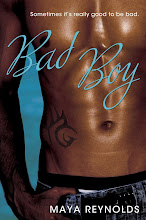
When I was writing my second book BAD BOY, my editor and I simply were not speaking the same language, and both of us were frustrated. She had the good sense to call my agent, who promptly called me. I explained that I did not understand what the editor was asking for. Jacky acted as interpreter, finding examples of what my editor was saying.

I mentioned my concern that I wasn't sure I could write the book my editor wanted. Jacky laughed and said, "You write the book YOU want. If Penguin doesn't like it, my job is to find a publisher who does."

Her easy confidence got me over what seemed to be an insurmountable hump, and I was able to finish the book without further problems.

I know several writers who, after writing four or five books, complained that the JOB of writing had destroyed their JOY in writing. One stopped writing altogether; the other is self-publishing.

Control can mean different things to different people.

Tuesday, October 19, 2010

Such a Small World

Publishers Marketplace directed me to PR Web yesterday to read this announcement:
Samhain Publishing announced today that Heather Osborn has been named as Editorial Director, reporting to Christina Brashear, effective November 1, 2010.
My first thought was "it's a small world."

Let's go back to May 11, 2008. Here's an excerpt from my post for that day:
Back in the late '90s, Tina Engler was a single mom with two daughters living in Tampa, Florida and trying to get a contract for her romance novels. Unfortunately, she couldn't find a traditional publisher to buy her work because it was so explicit. Traditional publishers were convinced that women would not want to read such detailed sexual descriptions.

After beating her head against dozens of agents' and publishers' doors, Tina decided to publish her own work. In 2000, she started a website called Ellora's Cave and began publishing e-books under the pseudonym Jaid Black.

Tina did no advertising in the beginning. News of her site spread by word of mouth. Soon she had other authors wanting to join her ...

According to an article in Crescent Blues, "In 2003, the company grossed over $1.2 million and paid over $500,000 in royalties."
Among the employees Tina Engler hired to work at Ellora's Cave were these three women: Angela James, a proofer; Heather Osborn, an editor; and Christina Brashear, who began as an editor but worked her way up to become EC's Chief Operating Officer.

Christina Brashear went on to found Samhain Publishing where her title is Publisher. She hired Angela James as her Executive Editor. Angela is now the Executive Editor for Carina Press, Harlequin's digital-first imprint.

Heather Osborn left EC and became the acquiring editor for Tor, a sci-fi and fantasy imprint owned by Macmillan. And now Heather will go to work for Christina as Samhain's Editorial Director.

A small world indeed. One in which four talented women started out from the same place and went on to become successful in the hard knocks world of publishing.

Monday, October 18, 2010

Bookstore Sales Down

On Friday I reported here on e-book sales for August.

Friday's Publisher's Weekly had an article on bookstore sales:
Bookstore sales fell by their largest rate of 2010 in August, declining 6.5%, to $2.29 billion, according to preliminary estimates released this morning by the U.S. Census Bureau.
According to PW, August should have been a strong month for sales because of back-to-school college textbooks.

For the eight months ending August, 2010, bookstore sales were down 2% compared to a rise of 6.1% in overall retail sales for the same period.

Go here to read Publishers Weekly.

This reminder comes in a note from Shelf Awareness:
Note: under Census Bureau definitions, bookstore sales are of new books and do not include "electronic home shopping, mail-order, or direct sale" or used book sales.

Saturday, October 16, 2010

Grinning Death Down

I'm reprinting an old post this morning because I had an email from the granddaughter of the deceased, who is also the daughter of the man who prompted my post.

I enjoyed re-reading David Cully's work so much, I'm sharing it again. From June 30, 2006:

I read this item in the comments over at Miss Snark today. It made me laugh out loud. I did a little research and thought I'd share the story with you today.

This is an actual death notice that appeared in the Raleigh, North Carolina News & Observer (N&O) one year ago on July 2, 2005. I'll tell you more about it after you read the notice.

"On June 3, 2005 at 10:45 p.m. in Memphis, Tenn., Dorothy Gibson Cully, 86, died peacefully, while in the loving care of her two favorite children, Barbara and David. All of her breath leaked out. The mother of four children, grandmother to 11, great-grandmother to nine, devoted wife for 56 years to the late Ralph Chester Cully and a true friend to many, Dot had been active as a volunteer in the Catholic Church and other community charities for much of the past 25 years.

"She was born the second child of six in 1919 as Frances Dorothy Gibson, daughter to Kathleen Heard Gibson and Calvin Hooper Gibson, an inventor best known as the first person since the Middle Ages to calculate the arcane lead-to-gold formula. Unable to actually prove this complex theory scientifically, and frustrated by the cruel conspiracy of the so-called "scientific community" working against his efforts, he ultimately stuck his head in a heated gas oven with a golden delicious apple propped in his mouth. Miraculously, the apple was saved for the evening dessert. Calvin was not.

"Native Marylanders and longtime Baltimore, Kent Island and Ocean City residents, Ralph and Dot later resided in Lakeland, Fla., and Virginia Beach, Va.. Several years after Ralph's death, Dot moved to Raleigh in 2001, where she lived with her son David.

"At the time of her death, Dot was visiting her daughter Carol in Memphis. Carol and her husband, Ron, away from home attending a "very important conference" at a posh Florida resort, rushed home 10 days later after learning of the death. Dot's other children, dutifully at their mother's side helping with the normal last-minute arrangements -- hospice notification, funeral parlor notice, revising the will, etc. -- happily picked up the considerable slack of the absent former heiress.

"Dot is warmly remembered as a generous, spiritually strong, resourceful, tolerant and smart woman, who was always ready to help and never judged others or their shortcomings. Dot always found time to knit sweaters, sew quilts and send written notes to the family children, all while working a full-time job, volunteering as Girl Scout leader and donating considerable time to local charities and the neighborhood Catholic Church.

"Dot graduated from Eastern High School at 15, worked in Baltimore full time from 1934 to 1979, beginning as a factory worker at Cross & Blackwell and retiring after 30 years as property manager and controller for a Baltimore conglomerate, Housing Engineering Company, all while raising four children, two of who are fairly normal.

"An Irishwoman proud of and curious about her heritage, she was a voracious reader of historical novels, particularly those about the glories and trials of Ireland. Dot also loved to travel, her favorite destination being Eire's auld sod, where she dreamed of the magic, mystery and legend of the Emerald Isle.

"Dot Cully is survived by her sisters, Ginny Torrico in Virginia, Marian Lee in Florida and Eileen Adams in Baltimore; her brother, Russell Gibson of Fallston, Md.; her children, Barbara Frost of Ocean City, Md., Carol Meroney of Memphis, Tenn., David Cully of Raleigh, N.C. and Stephen Cully of Baltimore, Md. Contributions to the Wake County (N.C.) Hospice Services are welcomed. Opinions about the details of this obit are not, since Mom would have liked it this way."

This death notice created a sensation in Raleigh. Most people recognized the dark humor being expressed by David Cully, the 60-year-old son of the deceased. However, some readers assumed there was a rift in the family and complained to the News & Observer for publicizing it.

There was so much fuss over the story that the N&O's Public Editor, Ted Vaden, did a column on the death notice a week later on July 10th. He explained that it was a "paid" notice, similar to a classified advertisement. When he contacted David Cully, the son assured him that "the Cully family harmony was fine."

Vaden also quoted the N&O's obituary manager saying he "regretted that the notice had not been edited before publication because it may have not met the paper's standards for taste, decency and appropriateness."

The story didn't die there though. Two weeks after the notice was published, the Chicago Tribune ran a column on Mr. Cully's tribute to his mother.

I've mentioned more than once that I am the result of a marriage between an Irish woman and an Italian man. That--plus the Catholic Church's attitude toward birth control--meant that I spent a fair amount of my childhood either at baptisms or wakes. Although the family did not approve of children at funerals, we were always a part of the wake held in the days before the actual burial.

These events were the only times that both sides of my extended family came together, and I was endlessly amused by the wary way in which they eyed each other.

The fact that we were talking and eating and drinking with an open coffin in our midst was treated as so commonplace that I never feared death. Everyone knew that Uncle Paddy (or Uncle Vito, as the case might be) would have felt left out had he not been a part of his own wake.

The aunts always made an effort to keep liquor out of these events, and the uncles always managed to get around that prohibition. More than once, I was recruited to play whiskey runner and carry a small bottle past the aunts into the wake in a pocket of my dress.

I remember those events with fondness. It was sometimes hard to tell if the tears that fell were from sorrow or laughter. And maybe that's as it should be.

Mr. Cully's humorous tribute to his mother provided a measure of immortality to a woman whom, I suspect, would have appreciated her son's Irish levity.

Over this holiday weekend, a year after the notice ran, raise your glass and toast Dorothy Gibson Cully.

And for the rest of us:

May the road rise up to greet you
May the wind be ever at your back,
And may you get to Heaven thirty minutes
Before the Devil knows you're dead.
You can read Melissa Cully Anderson's comment on the post here. Thanks, Melissa, for reminding me of this.

Friday, October 15, 2010

e-Book Sales as of August

Yesterday's Publishers Weekly had an article on August book sales:
While sales in the print trade segments shrank in August, e-book sales had another strong month, jumping 172.4%, to $39 million, according to the 14 publishers that report sales to the AAP’s monthly sales estimates.
According to the article, at 12/31/09 (nine months ago), e-book sales comprised 3.3% of trade sales while in August e-book sales had risen to 9% of trade sales.

Read on for the second post of the day.

Publisher Asked to Submit Winning Entry

On Tuesday night in London, English author Howard Jacobson was awarded the 2010 Man Booker Prize for his novel, The Finkler Question.

The Man Booker Prize for Fiction is awarded to the best original novel written in English by a citizen of one of the 54 member nations of the Commonwealth of Nations, Ireland or Zimbabwe. The first prize is £50,000 (approximately $80,000). The other finalists each receive £2,500 (approximately $4,000).

The other finalists for the 2010 Man Booker Prize were:

  • Peter Carey for Parrot and Olivier in America (Australia)
  • Emma Donoghue for Room (Canada)
  • Damon Galgut for In a Strange Room (South Africia)
  • Andrea Levy for The Long Song (England)
  • Tom McCarthy for C (England)

Publishers Weekly had a very interesting little article yesterday which reported that the judging panel had to contact the publishers of fourteen books to ask that those works be formally submitted for review. Two of those fourteen turned out to be finalists for this year's prize, including the winner.

That's right. Bloomsbury Publishing had to be asked to submit The Finkler Question and HarperCollins had to be asked to submit Emma Donoghue's Room.

A total of 138 books were reviewed by the judging panel for the 2010 Man Booker Prize.

Go here to read Publishers Weekly's Morning Report.

Go here to read Judge Frances Wilson's account in the Telegraph of the selection of the winner.

Thursday, October 14, 2010

Are e-Books Cannabalizing Print?

Evan Schnittman had an interesting post on his blog recently.

People who pay attention to publishing trends are familiar with an oft-repeated fear within the industry: e-book sales will cannibalize p-book sales.

Schnittman has a different take on the situation:
Ebooks aren’t cannibalizing print books — consumers with ebook reading devices are, as a rule, no longer buying print books.
I think he's absolutely right. One of my reading friends--those few people whom I absolutely trust when they recommend a new book or author--is a guy who bought a Kindle about six months ago. He's developed what I regard as a very annoying habit. When I mention a book I like, he asks, "Is it available as an e-book?"

While I started out by saying, "Don't know; don't care," these days I'll admit I've taken to checking so I can respond appropriately when he asks.

And the Kindle has changed his reading habits. He's reading more books. Not because he loves the experience of an e-reader (although he would say he does). I believe he's reading more books because he is now able to fit more reading time into his life. He takes the Kindle to his gym and reads while he's on the stationary bike. Where he used to read magazines or a newspaper on the train on his way to and from work, he's reading more books. The Kindle goes where he goes.

Schnittman said in his post:
They [e-reader owners] don’t go into stores and are not very likely to shop in online environments that feature ebooks and print books. Ebookstores on ebook reading devices sell only ebooks. Print is not part of the experience.
I called my friend earlier today to ask about this. He acknowledged that he only goes into a bricks-and-mortar bookstore when he's with someone who wants to go in. He said when he sees a book he's interested in at B&N or Half Price Books, he makes note of it so he can purchase it for his Kindle.

I pointed out that if he sees an older book in Half Price Books, it may not be possible to find it for the Kindle. In those cases, does he buy the p-book? His response surprised me a bit. "So far I haven't. I can always find an e-book I'd like to read instead."

If Schnittman is right ... and, based on my friend's experience, he appears to be ... Mike Shatzkin was completely on target in that quote from yesterday:
... it no longer made any sense to have a separate strategy for ebooks: digital had instead to be at the heart of a more general publishing strategy.
Go here to read Evan Schnittman's entire post. It's well worth your time.

Wednesday, October 13, 2010

Do a Good Deed Today

October is notable for three things in Dallas: Gorgeous weather, the State Fair of Texas and ragweed. I'm home today with a stuffed-up head and a killer sore throat. Despite my misery, I'm happy to report one good thing.

About six months ago, Kensington Brava announced the Writing with the Stars contest:
In conjunction with RT Book Reviews, Brava is sending out a call to unpublished writers of paranormal, historical and contemporary romance, as well as romantic suspense: We’re looking for a hot debut novel to be published in 2012 under the Brava imprint at Kensington.
Kensington made the first cuts in-house and have now posted the names of the ten contest finalists along with the first paragraph and last line from their entries.

In a Dancing With the Stars format, there will be five more rounds--one a month--with a different judge eliminating entries at each round and with readers' votes being included in the decision as well. The judges are: blogger Sarah Wendell of the website Smart Bitches, Trashy Books; literary agents Kristin Nelson, Laura Bradford and Miriam Kriss; and Romantic Times' historical reviewer, Kathe Robin.

The winner will be announced in early April at the Romantic Times convention in Los Angeles.

First Round Judge Sarah Wendell's comments are posted beside each entry. Forget that wimpy Dancing with the Stars. Sarah seems to be channeling American Idol's Simon Cowell instead. The woman takes no prisoners in her assessments.

I'm thrilled to report that Sarah seemed to be the kindest to my good friend and sometimes critique partner Maria Zannini.

I'll admit it; I'm prejudiced. But Sarah isn't.

Do an up-and-coming author a favor and go over to the website here, read the entries and ... if you agree with Sarah and me ... vote for Maria.

If you don't agree with me, vote anyway. Help one of these ten on her way. This round's voting lasts until October 24th.

Thanks. I appreciate it.

Maya

Tuesday, October 12, 2010

Post-Frankfurt

The 62nd Frankfurt Book Fair opened last Tuesday and closed on Sunday. Promoters crowed that exhibitors were up by 3% to 7,533, but Publishers Marketplace (PM) wryly pointed out that those exhibitors occupied the same space as previous fairs. PM did indicate that the number of literary agents attending was up almost 4% to 522.

One hundred eleven countries were in attendance with Argentina recognized as this year's guest of honor.

The international news agency AFP quoted German Foreign Minister Guido Westerwelle at the official opening, "I dare to predict that the electronic book will not replace the printed book but complement it. The book will outlive all those people who today want to dig its grave..."

Westerwelle's attitude is no surprise, given that AFP estimates that digital books only comprise "one percent of the 9.6-billion-euro German book market."

The big news was non-news. There had been an expectation that Google would launch its Google Editions at this year's fair. That didn't happen although there's still an expectation that it will before year's end.

I'm going to direct you to a couple of locations where you can read more about the Fair:

Digital publishing and e-books were on everyone's mind. On Tuesday morning, the Tools of Change (TOC) conference highlighted media wonk Douglas Rushkoff. A graduate of Princeton with a MFA from the California Institute of the Arts, Rushoff teaches Media Studies at The New School in New York City.

Rushkoff endeared himself to the TOC audience with this suggestion published in The Bookseller:
"What we are contending with is the fact that not as many of us are needed as used to be. Publishing can get on better if it only needs to support about 40% of the people it currently employs."
Of course, I agree with him. The publishing industry of today resembles an inverted pyramid with the tiny tip supporting a massive structure. The entire edifice is poised to tip over unless its architects take action to create a more balanced structure.

Go here to read The Bookseller article.

FutureBook.net had another interesting article, this one about the panel discussion on Friday titled "The eBook Business: Who's in Control?" The Secretary General of the International Publishers Association (IPA) moderated the round table discussion between Victoria Barnsley, CEO of HarperCollins UK; Ronald Schild of Libreka (a conglomerate of German publishers who launched their own version of Google Book Search three years ago); and our own Mike Shatzkin, whom I often quote on this blog.
The panel agreed that, with ebooks currently accounting for approximately 15% of trade sales in the United States, it no longer made any sense to have a separate strategy for ebooks: digital had instead to be at the heart of a more general publishing strategy.
Shatzkin warned that the bookstore, as we know it, seems to be on its last legs.

Barnsley brought up the issue raised by Evan Schnittman at the Digital Book World Conference in March of this year when he said he thought the agency model was about "the publisher as the direct distributor through Apple to a consumer ... the first direct line to a customer ..." At that time Larry Kirschbaum said, "Publishers have never really had to deal ... with their ultimate consumer. They've gone through intermediaries--whether it's retailers or distributors. Now they're in the game of dealing with their ultimate consumer ..."

Go here to read FutureBook.net's blog.

Go here to read Part I and Part II of my March posts on the Digital Book World Conference. The comments I just mentioned came from Part I.

I love the idea of watching publishers trying to cozy up to their readers. Can't you just picture a publishing house exec walking up to you on a moonlit night, opening his unbelted khaki raincoat and asking, "Wanna buy a hot book?"

Monday, October 11, 2010

A New Harris Poll is Out

Thursday's Publishers Weekly drew attention here to a new Harris Poll:
... among its findings are that mysteries, thrillers, and crime novels beat out chick-lit and romance novels by a large margin; and that more women than men read mysteries, thrillers, and crime novels.
The Harris Poll was done online during August 9th to 16th of this year inside the U.S. with 2,775 adults. The participants were weighted so that their race, ethnicity, age, sex, education, region and income were matched to the population as a whole.

Of the respondents who say that they read at least one book a year, the numbers were almost evenly divided between those who read fiction (79%) and those who read non-fiction (78%).

What was really interesting according to the Harris Interactive site here was the way the fiction numbers broke down. The poll flaunted conventional wisdom, which suggests that the romance genre outsells all others by a wide margin:
Among those who read fiction, almost half (48%) read mystery, thriller and crime books, while one-quarter read science fiction (26%) and literature (24%). One in five say they read romance novels (21%) and one in ten have read graphic novels (11%) in the past year. Less than one in ten read chick-lit (8%) and western (5%) books, with 36% saying they read other types of fiction.

Mystery, thriller and crime (MTC) did well across age groups, too. The MTC genre was picked as the favorite in all age groups except the 18 to 33 year-olds. The so-called Echo Boomers picked Literature as their favorite category (42%) and MTC as their second favorite category (41%). However, the 34 to 45 age group (Gen X) listed MTC as their favorite (50%) by a wide margin. Baby Boomers selected MTC as their favorite (47%) by a slightly smaller percentage. And the Mature group (over 65 years old) were the most enthusiastic about MTC (61%).

More than once, I've seen sales numbers for fiction in which the genre breakdown had the following order: (1) romance; (2) sci-fi/fantasy; (3) literary fiction and (4) mystery/thriller/crime.

So, how do we explain the disconnect? As in most cases where the numbers don't seem to make sense, I suspect the answer rests in what is actually being measured. The first explanation that occurred to me is that the Harris Poll addressed reader response, not actual dollar sales. As an example, I have two good friends (Jackie and Rosemary) who are big MTC readers who don't purchase the books they read. Both rely on their local public library to support their habit.

Another likely explanation is that, when sales are reported, the numbers only include the first sale of a book. If that book is resold on the secondary market as a used book, that exchange is not usually recorded. A few years back, the Book Industry Study Group (BISG) did a survey on used book sales and estimated that, in 2004, about one out of every twelve books (8.3%) sold was a used book. They projected that, within five years, that number would become one out of every eleven books sold (9%). That's a significant number of books.

Also, remember that the Harris Poll indicated that "Women are more likely than men to read mystery, thrillers and crime novels (57% versus 39%)..." I suspect there's some wiggle room in that number, too. I have a number of friends who love to read romantic suspense. I suspect that if they were asked which category they're reading when they read books by Allison Brennan, Lisa Gardner, J.D. Robb (Nora Roberts' pseudonym) or Linda Howard, they would all respond mystery/thriller/crime, not romance.

Finally, this Harris Poll was an online poll. That might not make a difference, but it might also very well have something to do with the results. I don't know. I throw it out as a possibility.

One last item that I found interesting. The group of 2,775 adults were asked to list their favorite authors. Here's the list:

1) Stephen King
2) James Patterson
3) John Grisham
4) Nora Roberts/J.D. Robb
5) Tom Clancy
6) Dean Koontz
7) Danielle Steel
8) Dan Brown
9) J.K. Rowling and J.R.R. Tolkien (tied)

The only author of the ten above who would make my current list of favorites is J.D. Robb (Nora Roberts' "In Death" series). There was a time when both Stephen King and Dean Koontz would have made my list, but that was a very long time ago.

Would any of this list of ten make your list?

Friday, October 08, 2010

Jonathan Franzen's Glasses Taken for Ransom

This story is just too fun to ignore.

Unless you've been living in a cave, you've heard all the hoopla over the release of Jonathan Franzen's novel Freedom. The book was greeted with critical acclaim along with some snarky comments by female authors who were angry over all the attention paid to Franzen's "literary" book while their books about "families and feelings" are dismissed as commercial fiction or women's fiction.

Earlier this week, Franzen's visit to the UK to promote Freedom turned bizarre. On Monday night, the Serpentine Gallery hosted a party to introduce Franzen to London.

According to Tuesday's The Bookseller :
Around 8pm, two men, claiming to work for Puffin, gatecrashed the party at the Serpentine Gallery and approached Franzen. One snatched his glasses and escaped, before the other handed the stunned author a ransom note and also fled into Kensington Gardens.

The note read: "$100,000 - Your glasses are yours again!" and left a Hotmail address.
The Bookseller went on to assure readers that the glasses had been rescued. Police chased the fleeing thieves and later discovered the one who had the purloined specs hiding in some bushes.

The fact that Franzen had his glasses back didn't stop the jokesters. A pair of glasses appeared in an eBay auction here Monday night.

Publishers Weekly made me laugh out loud with this paragraph:
Franzen’s Twitter doppelganger, @EmperorFranzen has a practical Tweet for the thief: “TO THE THIEF WHO STOLE MY GLASSES: I need them back to read your friggin’ ransom note. Idiot.”
But the capper was the article that popped up on GQ.com on Wednesday. The thief, "a 27-year-old postgrad from Liverpool, currently studying computational aerospace design at Imperial College London," James Fletcher, gave GQ an interview.

Fletcher explained how he and a friend gatecrashed the party with "a bit of wavy hand rhetoric." After he'd ingested "excessive champagne," Fletcher decided the party was terribly dull and "decided to do something."
I'd mentioned several times to my accomplice how much I admired Franzen's frames and thought that they deserved to be the subject of a hostage-ransom situation. After getting a pen from the bar staff and some paper I devised a short ransom note and we vaguely mentioned to some of the guests what my intentions were. Without thinking about it for too long, I planned my escape route and then passed the ransom note along to be delivered to the victim once I'd made my move.
Fletcher then goes on to describe in detail his abortive efforts to elude capture. Go here to read it.