You have probably seen all the bad news around recent bookstore sales.
One of the things you can do to help the publishing industry is to give books as Christmas gifts.
To start you off on the right path, the New York Times had a list of the 100 Notable Books of 2008. Go here and start shopping.
Thursday, November 27, 2008


Wednesday, November 26, 2008
A Reunion
I am feeling very sentimental.
There is a video posted on the Featured News section of Yahoo's main page that I want to share with you.
Go here to view it.
People who do not know cats talk about how remote and standoffish they are. That has not been my experience. My current roommate, Bob the Cat, comes flying down the street when he hears my car coming. The minute I take a seat, he is in my arms.
When the lion wraps his paw around John's leg, it reminded me of how often Bob does that. He also nestles his head between my shoulder and neck and licks me with his little sandpaper tongue until I have to say “Enough!”
That head-butting activity that the lion engages in is the feline way of scent-marking the people he loves. Every cat I have ever known has done the same thing.
Standoffish, indeed!
Tuesday, November 25, 2008
Returning to Duty
Sorry to have been AWOL for a couple of days. My new job has been eating my lunch.
Although the University is closed for two days for the Thanks-
giving holiday, I will be working on Friday in order to bank some time for when I have my surgery in January. Right now, I am thinking the scheduled date will be be January 23. The doctors say I will be at home for at least a month, more likely six weeks.
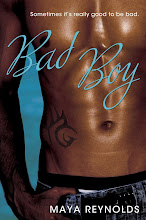
To the left of this blog, I have just posted a copy of the cover of Bad Boy, which will be released on my birthday next April. Pretty darn exciting.
Monday, November 24, 2008
A Publisher Stops Buying Books
Publishers Weekly issued an Alert this afternoon. Here is an excerpt:
. . . PW has learned that Houghton Mifflin Harcourt has asked its editors to stop buying books.HMH is known as an educational publisher, releasing textbooks, fiction and non-fiction for young people.
Josef Blumenfeld, v-p of communications for HMH, confirmed that the publisher has “temporarily stopped acquiring manuscripts” across its trade and reference divisions. The directive was given verbally to a handful of executives and, according to Blumenfeld, is “not a permanent change”. . .
The action by the highly leveraged HMH may also be as much about the company's need to cut costs in a tight credit market.as about the current economic slowdown.
While Blumenfeld dismissed the severity of the policy, a number of agents said they have never heard of a publisher going so far as to instruct its editors to stop acquiring. “I’ve been in the business a long time and at a couple of houses I worked at, when things were bad, we were asked to cut back,” said agent Jonathon Lazear. “But I’ve never heard of anything so public”. . .
Fun In The Sun
Okay, now you all know that I own a cat--Bob--who is quite a character.
But even Bob has never given me a photo like this one.

But even Bob has never given me a photo like this one.

If You Want To See A Vampire Movie . . .
If you just have to see a vampire film during Thanksgiving week, I am hearing that there is another movie out there worth seeing.
The Swedish film, Let the Right One In , is about a shy twelve-year-old boy named Oskar who is being bullied by his schoolmates. He is befriended by the new girl his age who moves in next store. As the bodies pile up in the neighborhood, Oskar figures out that Eli is a vampire. But she is also his friend.
Swedish subtitles virtually guarantee I will be seeing this film by myself. I have only been able to find one theatre in Dallas where it is showing (the Angelika), and will probably leave work early one day this week to see it.
Sunday, November 23, 2008
Reviewing Twilight
Last night at 12:15, I took a bite from the Twilight apple. It was a great time to see a blockbuster. Hardly anyone in the theatre--my local cineplex sold less than fifty tickets for the after-midnight show.
My fellow filmgoers were clearly not fans of the book. Laughter and hooting were the order of the day as each cheesy special effect debuted on screen. More than one ticket-holder left before the film ended.
Things to Like About Twilight
- Kristen Stewart--the young actress who plays Bella approaches her role very seriously. She is not playing the heroine campily.
- The atmosphere of the locale. Forks, Washington is supposedly the gloomiest, wettest place in the continental U.S. It makes for a wonderful setting.
- Robert Pattinson (the hero, Edward Cullen) looks both handsome and scary. Aesthetically, he makes a great vampire.
- Cam Gigandet makes a good scary vampire villain.
- Director Catherine Hardwicke opted for action rather than endless scenes of dialogue (read here: purple prose) from the book.
Things to Dislike About Twilight
- The cheesy makeup. While Pattinson looks the part, they have him made up in thick white pancake with lip rouge. There were times he looked as though he were auditioning for the Emcee in Cabaret. And when his "father," Carlisle Cullen makes his first appearance in the same dead white makeup and bleached blonde hair, the audience laughed hysterically.
- The cheesy special effects. This movie had the potential to become a blockbuster. As my middle brother said yesterday, "The teenage girls will go because of the romance. The teenage boys will go because of the teenage girls." You'd think the producers could have spent enough money to make the special effects look decent. When Edward reveals himself in sunlight to Bella, the audience went wild with laughter.
- The setup for the inevitable sequels. Most of the first hour was a string of introductions to secondary characters who played little to no role in the rest of the film.
- The god-awful dialogue:
Edward Cullen: And so the lion fell in love with the lamb.
Isabella Swan: What a stupid lamb.
Edward Cullen: What a sick, masochistic lion.
It helps if you are a teenage girl. It helps a lot if you have already read the book.
Alternatively, it helps if you have a sense of humor. If you ever choked while laughing and watching reruns of the first vampire soap opera Dark Shadows, you may enjoy the film. Otherwise, find another movie.
Saturday, November 22, 2008
The Last Great Healer
Someone on one of the loops I visit asked the question yesterday if we were afraid of the Grim Reaper.
I don’t think of Death as the Grim Reaper. I think of Death as the Last Great Healer. This is why.
I was a volunteer for Dallas’ Suicide and Crisis Center for several years. Later, while working on my Social Work graduate degree, I spent three years working the deep night shift on the 24/7 crisis line run by Dallas County’s mental health authority.
Over time, I talked to a fair number of people who were terminally ill and who had difficulty sleeping at night. Some were in pain, some had slept most of the day and could not sleep at night, and some just did not want to waste a moment of their precious remaining time in sleep.
Almost to a person, they expressed the same thing. They were not afraid of dying. However, they found the process very, very lonely. All of them wanted to talk about dying, but were surrounded by people who refused to allow them to do so. They complained of being told, “Don’t be silly. You’re not going to die.” or “Let’s not talk about depressing things.”
So, I was the place they would call--some daily for five minutes, others weekly for thirty minutes, and one or two just when the need struck. I listened and asked the questions they needed to answer. Many of them left instructions for their family to call to let me know when they died.
When dying is the biggest thing you have left, you need to be able to share it.
Death is the Last Great Healer. Some physicians and most braggarts see Death as an enemy to be defeated or stared down. However, for many in the last days of their life, Death is a friend to be greeted with open arms. When you have outlived the ones you love, when the pain is unbearable, when you are weary, Death can be a welcome alternative.
I am grateful for the lessons I learned during the years I worked that late night line. In the time since, I have tried to be present for those people in my life who are terminally ill. I do not turn away from their need to talk about it.
The last lines of the movie To Kill a Mockingbird include the following:
“Neighbors bring food with death...
and flowers with sickness...
and little things in between.”
I believe if we are there for the people we love during their lives, we need to walk beside them during that last journey.
Friday, November 21, 2008
Trouble at B&N
From today's Shelf Awareness:
The article indicated that these results were below the markets expectations. The company's CEO blamed a drop in customer traffic and in spending.
Sales at Barnes & Noble in the third quarter ended November 1 fell 4.4% to $1.1 billion, and the net loss was $18.4 million compared to a net gain of $4.4 million in the same period in 2007. Sales at stores open at least a year fell 7.4%. Sales at B&N.com rose 2% to $109 million.
The company also lowered predictions for the fourth quarter, saying it expects comp-store sales to decline 6%-9% and for the full year to drop 5%-6%.
The article indicated that these results were below the markets expectations. The company's CEO blamed a drop in customer traffic and in spending.
Thursday, November 20, 2008
The Mad Hatter
Like most children, I was delighted by Lewis Carroll's Alice's Adventures in Wonderland.
I don’t know if I am happy or terrified at the news that Tim Burton is making a film of the book.
One thing I do know. There is probably no one better able to play the role of the Mad Hatter than Johnny Depp.

I don’t know if I am happy or terrified at the news that Tim Burton is making a film of the book.
One thing I do know. There is probably no one better able to play the role of the Mad Hatter than Johnny Depp.

Wednesday, November 19, 2008
The National Book Awards
Last Wednesday, I wrote about one of the nominees for the National Book Award for fiction: Peter Matthiessen’s Shadow Country.
I explained that Shadow Country was a controversial entry because it was a rewritten compilation of three of his previous novels presented as one novel. The three novels--Killing Mister Watson, Lost Man's River and Bone by Bone--“creates a vivid portrait of the untamed southwest Florida of the late 19th and early 20th centuries” according to Publishers Weekly.
On Wednesday night, at a black-tie dinner at Cipriani’s Wall Street in Manhattan, Mr. Matthiessen won the National Book Award for fiction.
Mr. Matthiessen had previously won the National Book Award for non-fiction in 1979 for his book The Snow Leopard. That book was the story of his two-month journey in 1973 to Crystal Mountain on the Tibetan Plateau of the Himalayas.
The winner of this year’s prize for non-fiction went to Annette Gordon-Reed for The Hemingses of Monticello: An American Family. According to The New York Times, the book is “a sweeping, prodigiously researched biography of three generations of a slave family owned by Thomas Jefferson.”
The Times said:
Ms. Gordon-Reed, who celebrated her 50th birthday on the night of the awards, was the first African-American author to win the prize for nonfiction since Orlando Patterson won for “Freedom” in 1991. “I can’t say what a wonderful November this has been,” she said. “It’s sort of wonderful to have the book come out at this time. People ask me if I planned it this way; I didn’t. All of America — we’re on a great journey now and I look forward to the years to come.”
Tuesday, November 18, 2008
Yang to Leave Yahoo
Yahoo has confirmed that CEO Jerry Yang will be leaving his post as soon as the Board of Directors finds his replacement. He will remain at the company he founded in 1994 and on the board.
Today's Time reported:
Today's Time reported:
The announcement that Jerry Yang will step down as CEO of Yahoo! was welcome news to investors still seething that the founder turned down an acquisition offer from Microsoft earlier this year worth some $46 billion. (After Yang demanded $4 more per share than Microsoft's offer, the software giant walked away.) Yahoo! is in trouble — its stock price has fallen to around $11 from $29 in February 2008 and it's way behind Google and others in the fast-moving Internet innovation game. (The stock rallied slightly upon news of Yang's departure.)
Monday, November 17, 2008
if:book London
Back in 2006, I did two posts on an interesting initiative. On
April 7 here, I quoted from the mission statement of The Institute for the Future of the Book (IF:B):
Guys, that is just the beginning. In the very near future, you will be able to read a digital book in a social networking environment. People will be able to comment on the material being read in real time. The author and fans will be able to converse digitally as the readers progress through the book.
When this happens, reading will cease to be the solitary occupation it is today. Hardcover and paperback books will be too expensive for any but the wealthiest among us. The rest of us will make do with a digital experience rather than fork out our hard-earned case to secure lodgings.
Read the entire article here.
April 7 here, I quoted from the mission statement of The Institute for the Future of the Book (IF:B):
Starting with the assumption that the locus of intellectual discourse is shifting from printed page to networked screen, the primary goal of the Institute for the Future of the Book is to explore, understand and influence this shift. The Institute is a project of the Annenberg Center for Communication at the University of Southern California and is based in Brooklyn, New York.A couple of months later, on June 11 here, I explained the project that IF:B calls Sophie:
Sophie is no less than a plan to reinvent the book. Not satisfied with an electronic book that can be read on a computer screen, Sophie is a social engineering experiment as well. Recognizing the success of such websites as My Space, Sophie is an attempt to create documents that could live and breathe on the Internet and where readers could interact with each other and with the author.Now, more than two years later, I read in Monday’s TheBookseller.com about a similar initiative in Great Britain:
A project has been launched to build an online "networked book" around responses to the work of 19th century poet-illustrator William Blake.Here is the mission for if:book London:
Songs of Imagination and Digitisation has been developed by literary think tank if:book London and is being funded by the Arts Council. The final product will be available online, for free, in the New Year.
- to investigate the evolution of intellectual discourse as it shifts from printed pages to networked screensI am frequently amused by the Luddites among us, those people who swear up and down they will NEVER read an e-book. As if that was the end of the technology.
- to explore the creative potential of new media for readers and writers
Guys, that is just the beginning. In the very near future, you will be able to read a digital book in a social networking environment. People will be able to comment on the material being read in real time. The author and fans will be able to converse digitally as the readers progress through the book.
When this happens, reading will cease to be the solitary occupation it is today. Hardcover and paperback books will be too expensive for any but the wealthiest among us. The rest of us will make do with a digital experience rather than fork out our hard-earned case to secure lodgings.
Read the entire article here.
Sunday, November 16, 2008
A Quantum of Solace Brought None
Almost exactly a year ago, I reviewed Casino Royale, the first of three James Bond films to star Daniel Craig, the latest actor to play Agent 007.
I loved that film, which moved 180 degrees away from the silliness that had characterized the last ten or twelve Bond movies. I thought Ian Fleming would be pleased with the Craig portrayal, which showed Bond as the ruthless hitman Fleming had envisioned.
Now, twelve months later, along comes Quantum of Solace, a movie inspired by a Fleming short story although the story’s title is all that is used.
This is the 25th James Bond movie, and all I found myself thinking was how the filmmakers had been influenced (read here: completely intimidated) by the Bourne franchise. Quantum is obviously trying to live up to Bourne. It uses those same frenetic action scenes in which you can hardly tell what is going on.
The film is intended to be a sequel of Casino Royale, and it begins immediately after the end of the first film with a heart-stopping car race. The action scenes are distracting, but not enough to cover the fact that there is no plot to speak of.
Craig is the best thing in the film. He manages to convey Bond’s grief and rage over Vesper’s death (at the conclusion of Casino Royale). He is even more brutal than in the first film.
The problem for me was that this movie lacked the heart, the intelligence and the humor of Casino Royale. I have no doubt teenage boys will enjoy it. However, Quantum had nothing to offer me. Where the former Bond films irritated me with their silliness, this movie irritated me with its pointlessness.
The latest Bond Girl is Olga Kurylenko, whom I found wooden and uninteresting. Far more intriguing to me was Gemma Arterton, who reminded me of a young Geena Davis and who was saddled with the improbable name of Strawberry Fields.
Thankfully, it was short--the shortest Bond film ever. Where I saw Casino Royale more than once, I walked out of the theatre without a glance back at Quantum of Solace.
Saturday, November 15, 2008
The Importance of Critique Partners
I have often mentioned my critique partners on this website. However, I do not believe I have talked about the extent to which CPs can help a writer.
I have been fortunate to have a group of great CPs. I am not someone who believes you must have critique partners who write in your own genre--although I will admit I always try to have at least one CP who writes in my genre.
CPs can do so much more than just read over your manuscript. They can provide a supportive network as well as a shoulder to cry on when you are having difficulties writing. Just this weekend (since I could not email anyone with the electricity down), I talked to my CPs in South Carolina and in Texas.
Linda, who lives in South Carolina, did yeoman’s labor for me on Bad Boy. She read and re-read chapters on short notice without complaint. When we talked today, she gave me a writing tip she had picked up from RWA:
Meanwhile, a couple of my writing buddies and I exchange weekly goals every Sunday night--to keep us honest and on track with our writing careers.
I could not write if I did not have my band of trusted writing pals at my side. I treasure each and every one of them.
I have been fortunate to have a group of great CPs. I am not someone who believes you must have critique partners who write in your own genre--although I will admit I always try to have at least one CP who writes in my genre.
CPs can do so much more than just read over your manuscript. They can provide a supportive network as well as a shoulder to cry on when you are having difficulties writing. Just this weekend (since I could not email anyone with the electricity down), I talked to my CPs in South Carolina and in Texas.
Linda, who lives in South Carolina, did yeoman’s labor for me on Bad Boy. She read and re-read chapters on short notice without complaint. When we talked today, she gave me a writing tip she had picked up from RWA:
To help you locate passive language in your manuscript, run a search for instances of the word “by.” By doing so you will uncover sentences with passive phrasing. For instance--I also phoned my CP, Red, who lives here in Texas although several hundred miles from me. She and I talked for an hour this weekend, brainstorming ideas for our next novels. We are both interested in writing a paranormal, and it was fun to bounce ideas off each other.
“She was bit by the dog”
Could be better said--
“The dog bit her”
Meanwhile, a couple of my writing buddies and I exchange weekly goals every Sunday night--to keep us honest and on track with our writing careers.
I could not write if I did not have my band of trusted writing pals at my side. I treasure each and every one of them.
Friday, November 14, 2008
More on the Harry Potter Lawsuit
Sorry for the delay in posting. My electricity went down not once, but twice, this weekend. I have mentioned before that I live in a forest. Whenever there are high winds, I can count on losing my electric service.
Back on September 9, I did a post here on the outcome of the lawsuit which Warner Brothers brought against RDR Books for copyright infringement of the Harry Potter books. RDR had sought to publish a Lexicon, a sort of dictionary of all things Potter. The court ruled against the publisher.
Last Thursday, Publishers Weekly announced:
Stay tuned . . .
Back on September 9, I did a post here on the outcome of the lawsuit which Warner Brothers brought against RDR Books for copyright infringement of the Harry Potter books. RDR had sought to publish a Lexicon, a sort of dictionary of all things Potter. The court ruled against the publisher.
Last Thursday, Publishers Weekly announced:
Lawyers for RDR Books have filed an appeal to the United States Court of Appeals regarding Judge Robert P. Patterson’s ruling in J.K. Rowling and Warner Bros.’s copyright infringement suit against the publisher.RDR filed the appeal on November 7. The Stanford Law School Center for Internet and Society will be lending its support to RDR. Shortly after the court’s decision, Anthony Falzone, the Executive Director of the Stanford Fair Use project, had this to say on the website:
Finally, remember that avada kedavra--the killing curse--is not always fatal. One wizard survived it. Three times. And it was he who cast the spell (and won't be named here) that ultimately suffered for it. Maybe someday the Lexicon will be known as The Book That Lived.
Stay tuned . . .
Thursday, November 13, 2008
The 2nd Annual Amazon Breakthrough Novel
Today Amazon announced the Second Annual Amazon Breakthrough Novel Award Competition.
Amazon posted an explanation of how the contest works:
Amazon posted an explanation of how the contest works:
Enter your unpublished, English-language, fiction manuscript [by sending it here] beginning February 2, 2009. Entries will be accepted until February 8, 2009 or until 10,000 entries have been received, whichever comes first. The contest consists of four judging phases by expert reviewers, publishing professionals, and Amazon.com customers. The winner will be announced on May 22, 2009.So get going, writers. Here's the link to the press release. Here are the contest rules.
Initial Round: Expert reviewers from Amazon select 2,000 submissions from the 10,000 initial entries based each novel's "pitch." The 2,000 entries are then rated and receive two excerpt reviews from Amazon Editors and Amazon Vine Reviewers.
The field narrows to 500 entries...
Quarterfinals: Excerpts of the 500 are displayed on Amazon.com along with the reviews from the previous judging round. Publisher's Weekly now reads, rates, and reviews the 500 remaining full manuscripts.
The field narrows to 100...
Semifinals: Penguin Group (USA) reads and ranks the 100 semifinalists, taking into consideration the reviews from the two previous judging rounds.
Penguin chooses three novels to move to the final round of judging...
Finals: The three remaining manuscripts receive reviews from industry experts, including authors Sue Grafton and Sue Monk Kidd. Amazon.com customers select the Grand Prize Winner for 2009.
Wednesday, November 12, 2008
The Writing Life
Tuesday’s New York Times had a great article about author Peter Matthiessen, a nominee for this year’s National Book Award for fiction. Mr. Matthiessen’s entry into the competition--Shadow Country--was controversial because it was actually a rewritten compilation of three of his previous novels presented as one novel. Some questioned whether the book should have been eligible to enter the competition.
The Times interviewed Harold Augenbraum, the executive director of the National Book Foundation. Mr. Augenbraum “explained that the foundation ruled twice, in effect, on the book’s eligibility — once when Shadow Country was submitted, and again when the panel of judges asked for guidelines, without mentioning a specific title. ‘We allow collections of previously published material,’ he said. ‘Collected poems, collected essays, short-story collections — books like that. We don’t allow reprints, but we didn’t consider this a reprint. There’s a lot of new writing here’.”
The following is from Publishers Weekly's review of Shadow Country:
Read the New York Times article here.
The winners of the National Book Award will be announced next Wednesday in New York.
The Times interviewed Harold Augenbraum, the executive director of the National Book Foundation. Mr. Augenbraum “explained that the foundation ruled twice, in effect, on the book’s eligibility — once when Shadow Country was submitted, and again when the panel of judges asked for guidelines, without mentioning a specific title. ‘We allow collections of previously published material,’ he said. ‘Collected poems, collected essays, short-story collections — books like that. We don’t allow reprints, but we didn’t consider this a reprint. There’s a lot of new writing here’.”
The following is from Publishers Weekly's review of Shadow Country:
Florida sugarcane farmer and infamous murderer . . . Edgar J. Watson is brought to life through marvelous eyewitness accounts and journal entries from friends, family and enemies alike. Book One (formerly Killing Mister Watson) creates a vivid portrait of the untamed southwest Florida of the late 19th and early 20th centuries, and recounts Watson's life . . . beginning with his arrival in south Florida and replaying key events leading up to his being gunned down in the swamps.My favorite part of the New York Times article was when it discussed Matthiessen's early life as a writer: “. . . as a fiction writer, he said, he ‘couldn’t cut the mustard.’ He had a wife and a family and wasn’t making any money. His agent at the time was the legendarily hard-bitten Bernice Baumgarten, wife of the novelist James Gould Cozzens, who sent back his first novel with the note: ‘Dear Peter: James Fenimore Cooper wrote this book 150 years ago, only he wrote it better’.”
Watson . . . is roundly despised and feared, so much so that parents frighten their children into obedience by threatening a visit from Watson. The second book takes place several decades after Watson's murder and relates the travails of Watson's son, Lucius . . . as he investigates the contradictory claims and rumors (like that of a Watson Pay Day, when Watson would murder his farmhands rather than pay them) . . .
The final piece is perhaps the best, taking the form of Watson's chilling memoir. Recounting his life, from the years of paternal abuse right up until his jaw-dropping perspective on the day of his death . . . When Watson delivers his final line, it's as close as most will come to witnessing a murder.
Read the New York Times article here.
The winners of the National Book Award will be announced next Wednesday in New York.
Tuesday, November 11, 2008
Worry About Holiday Sales
I got an email from my agent today, directing me to an article in yesterday’s New York Times titled “Booksellers and Publishers Nervous As Holiday Season Approaches.”
The spirit of the article can be summed up in this paragraph--
There is not a great deal of optimism about the forthcoming Holiday season although one publisher pointed out bravely that books make a lovely gift.
Read the article here.
The spirit of the article can be summed up in this paragraph--
Like many businesses across the retail sector, the publishing industry has been hit by a raft of doom and gloom in the past few weeks. Leonard S. Riggio, chairman and largest shareholder of Barnes & Noble, said in an internal memorandum predicting a dreadful holiday shopping season, as first reported in The Wall Street Journal last week, that “never in all my years as a bookseller have I seen a retail climate as poor as the one we are in.”Like the rest of the country, the publishing industry is feeling the effects of the economy. Operating income for HarperCollins dropped 92% from $36 million to $3 million for the first quarter this year versus last year. Doubleday had a 10% staff cut.
There is not a great deal of optimism about the forthcoming Holiday season although one publisher pointed out bravely that books make a lovely gift.
Read the article here.
Monday, November 10, 2008
Settlement in the Google Copyright Lawsuits
I started this blog in September, 2005, the same month that the Authors Guild filed a class action lawsuit against Google for copyright infringement. A month later, five publishers also filed suit because of Google's plan to photocopy the world's books.
In the three years since, I have published multiple posts railing against the stupidity of these groups in taking such action. Read one of the early posts here from November 12, 2005.
Most recently, I wrote about the lawsuits on April 25th of this year here. In that post, I talked about a lengthy article Jeffrey Toobin had written for The New Yorker. Here is a quote from that article:
Google is happy to settle. By settling, Google gets to go back to scanning books and, at the same time, creates a precedent that will help prevent new competitors from springing up.
The likelihood that any company will be able to afford to pay scanning costs as well as pay publishers a licensing fee is very slim.
Two weeks ago, on October 28th, Google reached agreement with both the publishers and authors.
According to The New York Times here, under the terms of the agreement:
[Sigh]
In the three years since, I have published multiple posts railing against the stupidity of these groups in taking such action. Read one of the early posts here from November 12, 2005.
Most recently, I wrote about the lawsuits on April 25th of this year here. In that post, I talked about a lengthy article Jeffrey Toobin had written for The New Yorker. Here is a quote from that article:
. . . most people involved in the dispute believe that a settlement is likely. “The suits that have been filed are a business negotiation that happens to be going on in the courts . . .”I pointed out that settlement of the Google suit would have enormous consequences for the publishing industry.
But a settlement that serves the parties’ interests does not necessarily benefit the public. “It’s clearly in both sides’ interest to settle,” Lawrence Lessig, a professor at Stanford Law School, said . . . Google wants to be able to get this done, and get permission to resume scanning copyrighted material at all the libraries. For the publishers, if Google gives them anything at all, it creates a practical precedent, if not a legal precedent, that no one has the right to scan this material without their consent. That’s a win for them. The problem is that even though a settlement would be good for Google and good for the publishers, it would be bad for everyone else.”
Google is happy to settle. By settling, Google gets to go back to scanning books and, at the same time, creates a precedent that will help prevent new competitors from springing up.
“If Google says to the publishers, ‘We’ll pay,’ that means that everyone else who wants to get into this business will have to say, ‘We’ll pay,’ ” Lessig said. “The publishers will get more than the law entitles them to, because Google needs to get this case behind it. And the settlement will create a huge barrier for any new entrants in this field.”So, now, any future competitor to Google Book Search will not only have to take on the enormous expense of scanning the world's books, but also agree to pay the publishers for a listing in a giant card catalog. A giant card catalog that benefits those publishers (and their authors) by drawing attention to their books.
The likelihood that any company will be able to afford to pay scanning costs as well as pay publishers a licensing fee is very slim.
Two weeks ago, on October 28th, Google reached agreement with both the publishers and authors.
According to The New York Times here, under the terms of the agreement:
- Google pays $125 million to settle the two lawsuits
- Google will show up to 20 percent of the text at no charge. Users will be able to pay a fee that will permit them to read the entire book online
- Google will take 37% of the revenue from these fees, leaving 63% for the publishers and authors of the books involved
- Google will share ad revenue for any ads on the pages of the scanned books and sharethe revenue with the publishers and authors using the same 37%/63% split
- A portion of the $125 million settlement will go to establishing a digital book registry to administer this new system and to resolve any existing claims (and legal costs) by publishers and authors
A year before this settlement, on October 30, 2007, I pointed to a small detail hidden away in the fine print of Google's agreement with the world's libraries:
In exchange for providing free digital copies to libraries, it demands that those institutions not open their doors to Google's competitors in the search engine business.This from the company whose motto is, “Don’t be evil.”
[Sigh]
Subscribe to:
Posts (Atom)