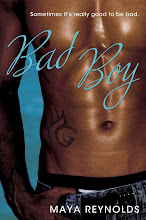
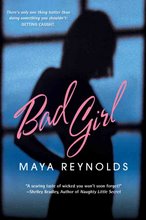
I need your indulgence for a few minutes because I just gotta share this.
The Penguin fall catalogs are out and Bad Girl is listed under the NAL releases. The link to the catalog is here, and my book is on page 36 of the pdf.
How cool is that?
The catalogs are what booksellers and libraries use to order their fall stock.
And, if that weren't enough, the foreign edition placeholders are beginning to pop up on Amazon.com. You can see the French translation here, the German one here, and the Japanese one here.
Back when my agent Jacky was marketing the manuscript, she told me that Penguin has the best foreign rights department of all the publishing houses. If you'll go to page 82 of the catalog pdf, you'll see a list of the subrights agents they use around the world.
Sunday, April 22, 2007


Saturday, April 21, 2007
Interview With Karen Kelley

Welcome to Karen Kelley, author of the recently released “Close Encounters of the Sexy Kind.”
Tell us the storyline of your new novel, Karen.
"Close Encounters of the Sexy Kind" is a romantic comedy. Mala lives on the perfect planet, Nerak, but she longs for something more. After watching a documentary from her grandmother's travels, Debbie Does The Sheriff, she knows she has to find a sheriff of her own. Beam Me Up, Hottie! She finds exactly what she's looking for in Sheriff Mason McKinley, and probably a whole lot more than she expected!
This was such a fun book to write with the pesky tabloid reporters, The Elders and of course, Barton. I fell in love with Barton who is Mala's robot companion unit.
You’re well known for your contemporary romances. Isn’t a fantasy a bit of a departure for you? What made you write one?
I love writing contemporary romances but I guess I just wanted something more. I’ve always been a big fan of paranormal/fantasy. I decided to send a proposal to my editor that had a lot more comedy and the heroine was an alien. Kate absolutely loved it.
Describe Mala. What was it about her that made you want to tell her story?
Mala is searching for something more. I think I can relate to her a lot and hope other women will, too. I used to work as a nurse. It was a good job. I absolutely loved my co-workers. I should’ve been satisfied—right? I wasn’t. I wanted more. I realized the only way I was going to have more was to pursue my dream. No one could do it for me. Mala felt the same way. She went in search of something more.
Mason sounds very, very sexy. Why is he drawn to Mala?
What can I say—I love a sexy hero. I write for myself as much as I do for the reader and I want my sexy hero! LOL Mason is intrigued and fascinated by Mala. She’s different, she’s exasperating and oh, no! he’s falling in love with her!
Your books are always such a fun read. Do you enjoy writing them?
I have a blast writing my books! Sometimes they can give me a bit of a headache when a scene just isn’t working, but for the most part, yes, I do have a lot of fun. Kate once asked if I sit in front of my computer laughing most of the time. I’d never really thought about it but you know, I do. I love writing romantic comedy.
I’ve read and enjoyed your previous books. Is “Close Encounters of the Sexy Kind” as light-hearted as your other books?
It has a lot more comedy in it. Friends and other writers have always said comedy was my strength so with "Close Encounters of the Sexy Kind" I decided I wouldn’t hold back and just see what happens. So far, the reviews have been fantastic---"Romantic Times" gave it a 4 1/2 Top Pick! I couldn’t be more pleased.
Do you think you’ll write more paranormal romances?
Definitely! I have Kia’s story (Mala’s cousin) coming out in February of 2008. She’s a warrior who’s determined to bring her cousin home. I also have "The Morgue The Merrier" out in September of this year. This is an anthology with Rosemary Laurey and Dianne Castell. I’ll have two stories in that one.
Also in September of this year I’ll have "Double Dating with the Dead" about a skeptic, a psychic and two sex–starved ghosts stuck in a vacant hotel. In October of this year, I’ll revisit a character from "Southern Comfort," Bailey—the hero’s sister---in an anthology with Lori Foster and Dianne Castell, "I’m Your Santa." That’s a straight contemporary comedy.
What are you working on now?
Another romantic comedy, single title, with a ghost. I just signed another contract with Kensington for three more Bravas so for the next year I’m going to be busy.
How long does it usually take you to write a novel?
It depends on how tight my deadline is. Usually four months works best for me.
A lot of my readers are writers, too. Do you have any advice for aspiring writers?
Don’t let anyone take away your dream. Early on, I told my mother I wanted to be a writer. She said I wasn’t smart enough to be a writer. I believed her. I didn’t write for ten years. Oh, the dream was still there but I pushed it way back. One day my son found the beginning of that first story that I just couldn’t throw away. He said it was really good and asked why I had stopped writing. I didn’t have a good answer.
I started writing that day and I never let anyone take away my dream again. It still took six years before I sold, but when I did, my mother told me the reason she’d told me I wasn’t smart enough was so that I wouldn’t be hurt. She passed away two months before my first book came out.
I now have six books and two anthologies in print, three books and two anthologies coming out soon, and I just contracted for three more single titles.
So as far as advice goes—if you have a dream, keep working toward it, and don’t ever let anyone tell you that you can’t do something.
Great advice, Karen. I hope you'll come back again in September to talk about "Double Dating."
Thanks for giving us your time.
I read "Close Encounters of the Sexy Kind" in less than 24 hours. It's a fun, fun read. Do yourself a favor and pick up a copy this weekend. You won't regret it. Visit Karen's website here or buy "Close Encounters" here.
Friday, April 20, 2007
Google, DoubleClick and New Privacy Issues
On April 13th, Google announced it would acquire DoubleClick Inc. for $3.1 billion. DoubleClick is a developer and provider of digital marketing services.
There was an article in the Los Angeles Times four days later saying, "Google Inc.'s purchase of DoubleClick Inc. would create the world's single largest repository of details about people's behavior online, an unnerving prospect for some privacy experts."
Google's associate general counsel admitted that the integration of the two companies' "non-personally identifiable data" was exactly why the company wanted to purchase DoubleClick.
The story explained that "Google dominates the market for selling text ads that appear next to search results, while DoubleClick has the largest independent system for placing banner ads." DoubleClick is also the largest profiler of users' Internet habits. Its customer base includes Microsoft, General Motors, Coca-Cola and Motorola.
Google has already admitted that it keeps all search results.
DoubleClick uses cookies to track users as they travel from website to website and records what advertisements users view and select while browsing. The information is employed to make certain that the same person doesn't see the same ad again and again while surfing the web. DoubleClick keeps the user's surfing history for two years.
Beginning in 2000, DoubleClick faced multiple lawsuits around the country alleging privacy violations. According to C/Net News in January, 2000, a "California woman filed a suit . . . against DoubleClick, accusing the Web advertising firm of unlawfully obtaining and selling consumers' private information."
An article in InformationWeek in August, 2002 said:
The agreement struck between DoubleClick and 10 states requires the company to explain on Web sites how it tracks and profiles Web surfers' usage data. DoubleClick leaves "cookie" files on computers that visit a Web site using its services. That lets DoubleClick track users' Web travels, create profiles based on that activity, and deliver online ads that match the profiles.
DoubleClick, which has a business relationship with InformationWeek, didn't admit wrongdoing in the agreement, but it must pay $450,000 to the states to cover their investigative costs and consumer education. States joining New York in the settlement are Arizona, California, Connecticut, Massachusetts, Michigan, New Jersey, New Mexico, Vermont, and Washington. In May [2002], DoubleClick paid $1.8 million and enacted new disclosure rules to settle an action brought by the Federal Trade Commission.
Microsoft and AT&T have asked the Federal Trade Commission to review the proposed purchase of DoubleClick by Google, saying there may be antitrust issues because the buy would reduce competition in online advertising.
I suspect privacy issues are going to be hot topics over the next few years.
Like every other American, I want to feel safe in my home and outside of it. I've applauded the apprehension of criminals as the result of the proliferation of cameras on our streets and in public places.
At the same time, I am concerned that commercial corporations are building giant databases of consumers' information.
The current administration has already demonstrated a blithe disregard for both privacy issues and the Constitution in its war against terror.
However, they haven't stopped there. I did a series of three posts in January, 2006, starting here, titled "Alberto, Google and the Right to Privacy" about the lawsuit that the Gonzales Justice Department pursued in its attempt to access data from Google's database. Their intentions were pure--to stop child pornography--but the way they went about it was almost criminally stupid. It's instructive that every other search engine the Justice Department approached--Yahoo, MSN and AOL--turned over the requested information without a fight. That does NOT bode well for consumers' privacy rights. Google was the only search engine that fought the request. And Google won (see here).
In this case, Google was on the side of the angels, and I applaud them for fighting encroachment by the Justice Department.
However, the fact remains that Google will soon have an even larger, richer database by virtue of the DoubleClick purchase.
While I appreciate Google's motto of "Don't Be Evil," I'm not comfortable depending on corporate goodwill to protect my privacy rights. We need a public forum in which to address these concerns on an ongoing basis.
There was an article in the Los Angeles Times four days later saying, "Google Inc.'s purchase of DoubleClick Inc. would create the world's single largest repository of details about people's behavior online, an unnerving prospect for some privacy experts."
Google's associate general counsel admitted that the integration of the two companies' "non-personally identifiable data" was exactly why the company wanted to purchase DoubleClick.
The story explained that "Google dominates the market for selling text ads that appear next to search results, while DoubleClick has the largest independent system for placing banner ads." DoubleClick is also the largest profiler of users' Internet habits. Its customer base includes Microsoft, General Motors, Coca-Cola and Motorola.
Google has already admitted that it keeps all search results.
DoubleClick uses cookies to track users as they travel from website to website and records what advertisements users view and select while browsing. The information is employed to make certain that the same person doesn't see the same ad again and again while surfing the web. DoubleClick keeps the user's surfing history for two years.
Beginning in 2000, DoubleClick faced multiple lawsuits around the country alleging privacy violations. According to C/Net News in January, 2000, a "California woman filed a suit . . . against DoubleClick, accusing the Web advertising firm of unlawfully obtaining and selling consumers' private information."
An article in InformationWeek in August, 2002 said:
The agreement struck between DoubleClick and 10 states requires the company to explain on Web sites how it tracks and profiles Web surfers' usage data. DoubleClick leaves "cookie" files on computers that visit a Web site using its services. That lets DoubleClick track users' Web travels, create profiles based on that activity, and deliver online ads that match the profiles.
DoubleClick, which has a business relationship with InformationWeek, didn't admit wrongdoing in the agreement, but it must pay $450,000 to the states to cover their investigative costs and consumer education. States joining New York in the settlement are Arizona, California, Connecticut, Massachusetts, Michigan, New Jersey, New Mexico, Vermont, and Washington. In May [2002], DoubleClick paid $1.8 million and enacted new disclosure rules to settle an action brought by the Federal Trade Commission.
Microsoft and AT&T have asked the Federal Trade Commission to review the proposed purchase of DoubleClick by Google, saying there may be antitrust issues because the buy would reduce competition in online advertising.
I suspect privacy issues are going to be hot topics over the next few years.
Like every other American, I want to feel safe in my home and outside of it. I've applauded the apprehension of criminals as the result of the proliferation of cameras on our streets and in public places.
At the same time, I am concerned that commercial corporations are building giant databases of consumers' information.
The current administration has already demonstrated a blithe disregard for both privacy issues and the Constitution in its war against terror.
However, they haven't stopped there. I did a series of three posts in January, 2006, starting here, titled "Alberto, Google and the Right to Privacy" about the lawsuit that the Gonzales Justice Department pursued in its attempt to access data from Google's database. Their intentions were pure--to stop child pornography--but the way they went about it was almost criminally stupid. It's instructive that every other search engine the Justice Department approached--Yahoo, MSN and AOL--turned over the requested information without a fight. That does NOT bode well for consumers' privacy rights. Google was the only search engine that fought the request. And Google won (see here).
In this case, Google was on the side of the angels, and I applaud them for fighting encroachment by the Justice Department.
However, the fact remains that Google will soon have an even larger, richer database by virtue of the DoubleClick purchase.
While I appreciate Google's motto of "Don't Be Evil," I'm not comfortable depending on corporate goodwill to protect my privacy rights. We need a public forum in which to address these concerns on an ongoing basis.
Thursday, April 19, 2007
Two Notes Of Interest
Earlier this month, I promised an interview with Karen Kelley, the very successful, award-winning author of contemporary, sexy, funny novels.
Karen will be here Saturday talking about her latest book, Close Encounters of the Sexy Kind. Don't miss it.
Also, for our UK readers, a comment in Nathan Bransford's blog reminds me to point to a link on the right side of this site. The link is to Fifth Estate, the HarperCollins UK blog. I've been reading it since October of last year when I wrote a blog that mentioned it here.
You can find Fifth Estate here.
Today's a two-post day. Keep reading below.
Karen will be here Saturday talking about her latest book, Close Encounters of the Sexy Kind. Don't miss it.
Also, for our UK readers, a comment in Nathan Bransford's blog reminds me to point to a link on the right side of this site. The link is to Fifth Estate, the HarperCollins UK blog. I've been reading it since October of last year when I wrote a blog that mentioned it here.
You can find Fifth Estate here.
Today's a two-post day. Keep reading below.
An E-Reader Whose Time Has Come? Maybe
Tuesday night was ugly, but I finished proofing my proofs yesterday morning around 6:30. As I write this, they're in a FedEx box on their way to 375 Hudson Street in New York.
--------------------------------------
Over the last two years, I've periodically talked about my belief that all that's needed for the e-book market to explode is the appearance of a viable e-reader that users will embrace the way music lovers did the iPod.
Last week, in my post of April 12 here, I declared myself vindicated when Dr. Mark Nelson, PhD and MBA, from the National Association of College Stores said: "Once an effective e-reader is invented and interface problems are solved, "e-readers will take off as fast as iPods did."
As new e-reading devices have been launched, I've reported on each.
On September 28, 2006, Sony announced the release of its long-awaited Reader (see it here). At that time, I pointed out that the proprietary nature of the Reader's format was a serious problem. The Reader could only read books downloaded from the CONNECT site. I said I thought Sony's best market for the Reader would be people who were already reading e-books--customers who are now downloading from online publishers like Ellora's Cave or from retail sites like Fictionwise. To my mind, asking customers to fork over $349 and then insist that they buy their books from one site was terribly short-sighted. Shades of Microsoft's closed source approach.
A few weeks earlier, on September 13, 2006, I'd talked about Amazon's planned e-reader, the Kindle. Engadget.com offered readers their first view of the Kindle here.
Engadget reported the Kindle was 4.9" by 7.5" by .7", making it slightly larger than Sony's Reader. Its weight was 10.2 ounces, making it slightly heavier than the eReader.
In 2005, Amazon purchased a French company called Mobipocket that produces a universal reader, which permits the downloading of all formats. Reports were that the Kindle would contain this cross-platform technology, making it capable of working on all devices (PCs, laptops, PDAs and cell phones) and in all formats.
Wednesday's Publishers Weekly (PW) reported on the buzz at the London Book Fair over the forthcoming release of the Amazon reading device.
The PW article didn't call the new Amazon reader by the name Kindle. Instead they reported Amazon has been giving U.S. and U.K. publishers a preview of its new reader. Victoria Barnsley, the HarperCollins UK CEO, mentioned the reader at Tuesday's seminar on green publishing.
According to publishers who have seen the player, the reader is a step up from the Sony Reader . . . The screen quality is reportedly as sharp as Sony, but the Amazon device has better functionality, and, as should be expected from the e-tailer, a first rate e-commerce option. Amazon is expected to release the reader this spring, although the exact timing may depend on how fast it can develop a critical mass of titles. (PW)
PW also reported the price is "expected to be above $400."
Wednesday's edition of Publishers Lunch also mentioned the buzz about the Amazon reader. Michael Cader reported that:
[P]ublishers are working away on creating files for Amazon's Mobipocket format, as Penguin CEO John Makinson noted the Amazon demand is 'part of what is driving' the company's current digitization efforts . . . Makinson says the short-term goal for Amazon is that 'something close to ninety percent of NYT bestsellers should be in e-book format' the day of the release of the print book.
Perhaps the Amazon reader is the one the market has been waiting for.
Stay tuned.
--------------------------------------
Over the last two years, I've periodically talked about my belief that all that's needed for the e-book market to explode is the appearance of a viable e-reader that users will embrace the way music lovers did the iPod.
Last week, in my post of April 12 here, I declared myself vindicated when Dr. Mark Nelson, PhD and MBA, from the National Association of College Stores said: "Once an effective e-reader is invented and interface problems are solved, "e-readers will take off as fast as iPods did."
As new e-reading devices have been launched, I've reported on each.
On September 28, 2006, Sony announced the release of its long-awaited Reader (see it here). At that time, I pointed out that the proprietary nature of the Reader's format was a serious problem. The Reader could only read books downloaded from the CONNECT site. I said I thought Sony's best market for the Reader would be people who were already reading e-books--customers who are now downloading from online publishers like Ellora's Cave or from retail sites like Fictionwise. To my mind, asking customers to fork over $349 and then insist that they buy their books from one site was terribly short-sighted. Shades of Microsoft's closed source approach.
A few weeks earlier, on September 13, 2006, I'd talked about Amazon's planned e-reader, the Kindle. Engadget.com offered readers their first view of the Kindle here.
Engadget reported the Kindle was 4.9" by 7.5" by .7", making it slightly larger than Sony's Reader. Its weight was 10.2 ounces, making it slightly heavier than the eReader.
In 2005, Amazon purchased a French company called Mobipocket that produces a universal reader, which permits the downloading of all formats. Reports were that the Kindle would contain this cross-platform technology, making it capable of working on all devices (PCs, laptops, PDAs and cell phones) and in all formats.
Wednesday's Publishers Weekly (PW) reported on the buzz at the London Book Fair over the forthcoming release of the Amazon reading device.
The PW article didn't call the new Amazon reader by the name Kindle. Instead they reported Amazon has been giving U.S. and U.K. publishers a preview of its new reader. Victoria Barnsley, the HarperCollins UK CEO, mentioned the reader at Tuesday's seminar on green publishing.
According to publishers who have seen the player, the reader is a step up from the Sony Reader . . . The screen quality is reportedly as sharp as Sony, but the Amazon device has better functionality, and, as should be expected from the e-tailer, a first rate e-commerce option. Amazon is expected to release the reader this spring, although the exact timing may depend on how fast it can develop a critical mass of titles. (PW)
PW also reported the price is "expected to be above $400."
Wednesday's edition of Publishers Lunch also mentioned the buzz about the Amazon reader. Michael Cader reported that:
[P]ublishers are working away on creating files for Amazon's Mobipocket format, as Penguin CEO John Makinson noted the Amazon demand is 'part of what is driving' the company's current digitization efforts . . . Makinson says the short-term goal for Amazon is that 'something close to ninety percent of NYT bestsellers should be in e-book format' the day of the release of the print book.
Perhaps the Amazon reader is the one the market has been waiting for.
Stay tuned.
Wednesday, April 18, 2007
Destination: Procrastination
This is going to be a very short post because I've backed myself into a corner.
I received my proofs for Bad Girl on my birthday, April 7, with a request that they be returned by April 19th.
Dirty little secret: I ALWAYS do things at the last minute. Not because I procrastinate, but because I always have a stack of things needing to be done, and I work on the thing needing my attention right now.
Oh, that's the definition of "procrastinate," isn't it? [grin]
Anyway, I wasn't worried about the proofs because--by now--my editor and I had done a round, and the copyeditor and I had done another round. I figured there wouldn't be that much to address.
Boy, was I wrong.
I sat down last night and managed to complete half the job (in seven hours). I still have to finish the other half tonight so I can drop the pages off at FedEx in the morning.
So, I'm going to leave you all with an item from Publishers Weekly:
Bookstore sales tumbled 6.5% in February . . . according to estimates released this morning [April 16] from the U.S. Census Bureau. With the 1.4% decline in January, bookstore sales for the two first months of 2007 were down 3.1% . . . Sales for all of retail were up only 1.5% in February and up 3.9% in the two-month period.
I'll be back in business tomorrow.
I received my proofs for Bad Girl on my birthday, April 7, with a request that they be returned by April 19th.
Dirty little secret: I ALWAYS do things at the last minute. Not because I procrastinate, but because I always have a stack of things needing to be done, and I work on the thing needing my attention right now.
Oh, that's the definition of "procrastinate," isn't it? [grin]
Anyway, I wasn't worried about the proofs because--by now--my editor and I had done a round, and the copyeditor and I had done another round. I figured there wouldn't be that much to address.
Boy, was I wrong.
I sat down last night and managed to complete half the job (in seven hours). I still have to finish the other half tonight so I can drop the pages off at FedEx in the morning.
So, I'm going to leave you all with an item from Publishers Weekly:
Bookstore sales tumbled 6.5% in February . . . according to estimates released this morning [April 16] from the U.S. Census Bureau. With the 1.4% decline in January, bookstore sales for the two first months of 2007 were down 3.1% . . . Sales for all of retail were up only 1.5% in February and up 3.9% in the two-month period.
I'll be back in business tomorrow.
Tuesday, April 17, 2007
Another Take On The Future Of Books
Michael, a British reader of this blog, sent me an email yesterday morning, directing me to the BBC "Start the Week" program that ran at 9:00 AM Monday. He said guest Margaret Atwood had been asked about the future of the book.
I have enormous respect for Margaret Atwood, her talent, her courage, and her honesty. I was grateful for Michael's email and happy to tune in to the program while I ate my lunch.
Ms. Atwood directed her attention to the question of why computers would not replace books. She had a list of reasons: You can't comfortably take a computer into the bathtub or bed, it's neurologically harder on your brain to absorb material presented on a screen than it is on paper (the definition isn't as crisp), computers don't lend themselves to contemplation, and it's hard to manuever from page to page on a screen.
She did acknowledge computers are "very, very useful to students doing research," and admitted that mankind loves to play with new toys, but pointed out that you can burn books if you're cold.
I thoroughly enjoyed listening to the program and would never have the temerity to challenge Ms. Atwood's position.
Instead, if I could, I would change the way we look at the question. I don't think it's an issue of either/or. Rather, I think we are lucky to be in a period when our choices are greatly expanded.
We can choose to see a movie in the theater, on Pay-for-View, on DVD, or on our computers. Even though I don't subscribe to cable television, I download cable programs all the time--some for free and some for $1.99. And I read books in print, through library downloads or via online purchases.
No method of service delivery has innate superiority over another. The important thing is that people READ. How they read doesn't matter a whit; it's silly and a bit pretentious to pretend otherwise.
Ms. Atwood's age (67) and distinguished career explain her affinity for the printed book. Let's face it, anyone who grew up loving to read is happiest with a book in hand. But I can think of a few good reasons why we might welcome e-books in the future:
• Convenience—It’s easier to carry an e-book reading device with a dozen books uploaded to it when traveling on business or vacation than to carry the actual hard copies of the same books.
• Storage—A memory stick can contain hundreds of books—books that don’t take up space and that don’t require dusting, or boxing and a strong back to move.
• Ecology—Electronic books don’t require cutting down forests of trees or using enormous energy to process and manufacture printed material.
• Ease of updates—Electronic textbooks and encyclopedias can be updated quickly and easily.
• Economics—Electronic books are cheaper to publish and don’t require warehousing or shipping expenses.
• Freedom of expression—Electronic transfer of books or physical transfer of memory sticks makes it easier to smuggle banned material past repressive regimes to those anxious to read it.
Instead of taking an either/or approach, let's celebrate the fact that we have choices and put our energy into helping literacy programs expand reading to people and places who don't have our privileges.
Thanks again to Michael for a very interesting program.
I have enormous respect for Margaret Atwood, her talent, her courage, and her honesty. I was grateful for Michael's email and happy to tune in to the program while I ate my lunch.
Ms. Atwood directed her attention to the question of why computers would not replace books. She had a list of reasons: You can't comfortably take a computer into the bathtub or bed, it's neurologically harder on your brain to absorb material presented on a screen than it is on paper (the definition isn't as crisp), computers don't lend themselves to contemplation, and it's hard to manuever from page to page on a screen.
She did acknowledge computers are "very, very useful to students doing research," and admitted that mankind loves to play with new toys, but pointed out that you can burn books if you're cold.
I thoroughly enjoyed listening to the program and would never have the temerity to challenge Ms. Atwood's position.
Instead, if I could, I would change the way we look at the question. I don't think it's an issue of either/or. Rather, I think we are lucky to be in a period when our choices are greatly expanded.
We can choose to see a movie in the theater, on Pay-for-View, on DVD, or on our computers. Even though I don't subscribe to cable television, I download cable programs all the time--some for free and some for $1.99. And I read books in print, through library downloads or via online purchases.
No method of service delivery has innate superiority over another. The important thing is that people READ. How they read doesn't matter a whit; it's silly and a bit pretentious to pretend otherwise.
Ms. Atwood's age (67) and distinguished career explain her affinity for the printed book. Let's face it, anyone who grew up loving to read is happiest with a book in hand. But I can think of a few good reasons why we might welcome e-books in the future:
• Convenience—It’s easier to carry an e-book reading device with a dozen books uploaded to it when traveling on business or vacation than to carry the actual hard copies of the same books.
• Storage—A memory stick can contain hundreds of books—books that don’t take up space and that don’t require dusting, or boxing and a strong back to move.
• Ecology—Electronic books don’t require cutting down forests of trees or using enormous energy to process and manufacture printed material.
• Ease of updates—Electronic textbooks and encyclopedias can be updated quickly and easily.
• Economics—Electronic books are cheaper to publish and don’t require warehousing or shipping expenses.
• Freedom of expression—Electronic transfer of books or physical transfer of memory sticks makes it easier to smuggle banned material past repressive regimes to those anxious to read it.
Instead of taking an either/or approach, let's celebrate the fact that we have choices and put our energy into helping literacy programs expand reading to people and places who don't have our privileges.
Thanks again to Michael for a very interesting program.
Monday, April 16, 2007
Literary Criticism On Such A Starlit Night
In recent years, the two genres that have interested me the most have been erotic romance and urban fantasy. It was Laurell K. Hamilton who bridged the gap between the two genres for me. I began reading her Anita Blake novels back in 1995. I followed gamely along as LKH gradually moved from straight urban fantasy into erotic romance and then from erotic romance to erotica. By now, she's published the fourteenth in her Anita Blake saga and, IMHO, the stories are little more than a series of sex scenes strung together without any visible plot.
Over the weekend, I finished Jim Butcher's White Night, the ninth in the Dresden Files.
White Night was such a satisfying read that it started me thinking about the contrast between the two long-running series.
I had a busy weekend. On Sunday, I met friends for brunch at Hattie's, one of my favorite restaurants (I love their pecan-crusted catfish), got my hair cut, visited the garden nursery and worked in the yard. All the while, in the back of my brain, I was trying to decide what it was about White Night that made it such a good book. While I was pulling weeds, it finally dawned on me.
With many authors who have a successful series, they write as though their jobs are halfway done before they even start a new episode in the series. They use a few often-repeated adjectives to describe long-running characters and then simply dream up new adventures for those characters. The writer makes the assumption that the reader knows the characters and that nothing more is left to be said about them. So the books become increasingly plot-driven rather than character-driven.
Jim Butcher is not doing that; he's not just phoning his manu-
scripts in. Every new book builds upon the last and explores new territory in his fantasy world. He gives equal attention to plot and character.
To quickly summarize the plot of White Night, here's Publishers Weekly's description:
At the start of Butcher's superlative ninth Dresden Files novel, . . . hardboiled wizard detective Harry Dresden learns that someone is killing Chicago's minor wizards. Joined by his police friend, Sergeant Murphy, and his Amazonian apprentice, Molly Carpenter, Harry discovers that his brother, Thomas, is a prime suspect.
Two things I noted: (1) The action is absolutely nonstop, and (2) Even while creating more and more fantastic creatures and enlarging an already huge cast, Butcher continues to peel back layers of each character. He reveals more of their history, writing them in shades of gray rather than simply in black or white, as good or evil. He constantly creates difficult choices and new moral challenges for his characters. He does an absolutely masterful job.
Interestingly enough, his skimpiest character sketch remains one of the most important players--a character introduced in the very first novel--Sergeant Karrin Murphy of the Special Investigations Department of the Chicago Police. In my eyes, Murphy is little more than a place-holder reading "Dresden's sidekick." I know, I know. Butcher introduced her ex-husband and family in a previous book. But compared to the self-awareness of other more richly developed Butcher characters, Murphy is a stick figure.
While there is clearly sexual tension between Murphy and Dresden, I *almost* get the impression that Butcher is afraid to bring the two together for fear of where he would go after that. It's to the point that Dresden comments in this novel that he's been celibate for four years. Eeek!
Each Dresden File character has its own Goal/Motivation/
Conflict. And just about the time you think you understand him/her, Butcher throws a curve ball at you. In this novel, he did it with the Fallen Angel Lasciel, the gangster Johnny Marcone, the West Coast Warden Carlos Ramirez, and Dresden's brother Thomas. He even added dimensions to Dresden's dog, Mouse.
As I've said before, while I still look forward to LKH's Merry Gentry series, I've lost interest in the Anita Blake series. My epiphany on Sunday helped me to understand why.
I believe that LKH wrote herself into a corner with two aspects of the Anita Blake character: (1) Early on in the series, LKH emphasized Anita's strong moral code, which prevented the character from hopping into bed with the sexy vampires and werewolves surrounding her, and (2) LKH got caught in a trap of giving more and more power to Anita in each new book in order for her to overcome her enemies. Eventually, that upward spiral had nowhere else to go. Anita became more powerful than the supernatural creatures around her.
LKH was stuck. How to explain a sudden reversal in Anita's moral code? It was so out of character for her to sleep around. Remember that tiresome inner dialogue Anita held with herself about sleeping with both Richard and Jean Claude? It went on for several novels.
At the same time, how to create new villains with more power than Anita, who now had her necromancer skills, vampire strength and shape-shifter abilities?
That's when LKH came up with the plot device she called the "ardeur," the paranormal passion that demanded Anita have daily sex. In one fell swoop, Anita is now helpless in the face of this sexual need and also free to have sex with whomever she likes whenever she likes--because, of course, the girl can't help it. The ardeur offered a window out of the corner LKH had painted herself into: allowing Anita to sleep around and giving her a weakness she cannot overcome.
The ardeur felt like a cheat to me when it was introduced, and now, endless novels later, the contrivance has become boring and repetitive. I never finished the last couple of Anita Blake novels. For me, that's huge. Once I'm a quarter of a way into a novel, I will generally read even a bad book to the end, figuring I can learn something from where the writer went wrong. But I was so irritated with the last few Anita Blake novels, I couldn't even continue.
Sex without feeling is little more than masturbation, both on the page and in real life. I expect more from a relationship than that, whether the relationship is fictional or real. Anita's bed-hopping has no feeling attached to it and has long since ceased to be either a novelty or . . . provocative.
In contrast, LKH's Merry Gentry series established sexual freedom as a characteristic of her faeries from the very first novel. If you could not accept the casual sex, this was not the series for you. The faeries' sexuality was part of their "other-ness," and was at the same time both alien and integral to their characters. And it freed LKH to explore the emotional lives of her characters apart from their sexuality--which was a novelty. Merry's vulnerabilities, both physically and emotionally, are very much a part of who she is. The next book in the series is due out around Halloween, and I look forward to it.
Just some things to think about when you are plotting a series.
Over the weekend, I finished Jim Butcher's White Night, the ninth in the Dresden Files.
White Night was such a satisfying read that it started me thinking about the contrast between the two long-running series.
I had a busy weekend. On Sunday, I met friends for brunch at Hattie's, one of my favorite restaurants (I love their pecan-crusted catfish), got my hair cut, visited the garden nursery and worked in the yard. All the while, in the back of my brain, I was trying to decide what it was about White Night that made it such a good book. While I was pulling weeds, it finally dawned on me.
With many authors who have a successful series, they write as though their jobs are halfway done before they even start a new episode in the series. They use a few often-repeated adjectives to describe long-running characters and then simply dream up new adventures for those characters. The writer makes the assumption that the reader knows the characters and that nothing more is left to be said about them. So the books become increasingly plot-driven rather than character-driven.
Jim Butcher is not doing that; he's not just phoning his manu-
scripts in. Every new book builds upon the last and explores new territory in his fantasy world. He gives equal attention to plot and character.
To quickly summarize the plot of White Night, here's Publishers Weekly's description:
At the start of Butcher's superlative ninth Dresden Files novel, . . . hardboiled wizard detective Harry Dresden learns that someone is killing Chicago's minor wizards. Joined by his police friend, Sergeant Murphy, and his Amazonian apprentice, Molly Carpenter, Harry discovers that his brother, Thomas, is a prime suspect.
Two things I noted: (1) The action is absolutely nonstop, and (2) Even while creating more and more fantastic creatures and enlarging an already huge cast, Butcher continues to peel back layers of each character. He reveals more of their history, writing them in shades of gray rather than simply in black or white, as good or evil. He constantly creates difficult choices and new moral challenges for his characters. He does an absolutely masterful job.
Interestingly enough, his skimpiest character sketch remains one of the most important players--a character introduced in the very first novel--Sergeant Karrin Murphy of the Special Investigations Department of the Chicago Police. In my eyes, Murphy is little more than a place-holder reading "Dresden's sidekick." I know, I know. Butcher introduced her ex-husband and family in a previous book. But compared to the self-awareness of other more richly developed Butcher characters, Murphy is a stick figure.
While there is clearly sexual tension between Murphy and Dresden, I *almost* get the impression that Butcher is afraid to bring the two together for fear of where he would go after that. It's to the point that Dresden comments in this novel that he's been celibate for four years. Eeek!
Each Dresden File character has its own Goal/Motivation/
Conflict. And just about the time you think you understand him/her, Butcher throws a curve ball at you. In this novel, he did it with the Fallen Angel Lasciel, the gangster Johnny Marcone, the West Coast Warden Carlos Ramirez, and Dresden's brother Thomas. He even added dimensions to Dresden's dog, Mouse.
As I've said before, while I still look forward to LKH's Merry Gentry series, I've lost interest in the Anita Blake series. My epiphany on Sunday helped me to understand why.
I believe that LKH wrote herself into a corner with two aspects of the Anita Blake character: (1) Early on in the series, LKH emphasized Anita's strong moral code, which prevented the character from hopping into bed with the sexy vampires and werewolves surrounding her, and (2) LKH got caught in a trap of giving more and more power to Anita in each new book in order for her to overcome her enemies. Eventually, that upward spiral had nowhere else to go. Anita became more powerful than the supernatural creatures around her.
LKH was stuck. How to explain a sudden reversal in Anita's moral code? It was so out of character for her to sleep around. Remember that tiresome inner dialogue Anita held with herself about sleeping with both Richard and Jean Claude? It went on for several novels.
At the same time, how to create new villains with more power than Anita, who now had her necromancer skills, vampire strength and shape-shifter abilities?
That's when LKH came up with the plot device she called the "ardeur," the paranormal passion that demanded Anita have daily sex. In one fell swoop, Anita is now helpless in the face of this sexual need and also free to have sex with whomever she likes whenever she likes--because, of course, the girl can't help it. The ardeur offered a window out of the corner LKH had painted herself into: allowing Anita to sleep around and giving her a weakness she cannot overcome.
The ardeur felt like a cheat to me when it was introduced, and now, endless novels later, the contrivance has become boring and repetitive. I never finished the last couple of Anita Blake novels. For me, that's huge. Once I'm a quarter of a way into a novel, I will generally read even a bad book to the end, figuring I can learn something from where the writer went wrong. But I was so irritated with the last few Anita Blake novels, I couldn't even continue.
Sex without feeling is little more than masturbation, both on the page and in real life. I expect more from a relationship than that, whether the relationship is fictional or real. Anita's bed-hopping has no feeling attached to it and has long since ceased to be either a novelty or . . . provocative.
In contrast, LKH's Merry Gentry series established sexual freedom as a characteristic of her faeries from the very first novel. If you could not accept the casual sex, this was not the series for you. The faeries' sexuality was part of their "other-ness," and was at the same time both alien and integral to their characters. And it freed LKH to explore the emotional lives of her characters apart from their sexuality--which was a novelty. Merry's vulnerabilities, both physically and emotionally, are very much a part of who she is. The next book in the series is due out around Halloween, and I look forward to it.
Just some things to think about when you are plotting a series.
Sunday, April 15, 2007
Another Cautionary Tale
I had lunch this week with a fellow writer. We were comparing notes and gossip when she brought up a name I hadn't heard in a while: Dara Joy. And it occurred to me that although most romance readers and writers recognize the name, others may not be as familiar with her story.
Dara Joy exploded on the romance scene in mid-1996 with a story that appeared in an anthology titled Lovescape. She quickly followed that debut with another story in an anthology called The Night Before Christmas and with her first novel, Knight of a Trillion Stars, a futuristic. Readers loved her very hot romances, and Dara took pride in the fact that she wrote in multiple genres. Rejar was a time travel, High Energy was a contemporary and Tonight or Never was an historical. She rapidly built a strong fan base of devoted readers, won a number of awards and began appearing on best-seller lists.
All of Dara's books were released by Dorchester, an independent mass market publisher, through their Leisure and Love Spell imprints. By 2000, Dara Joy had released two anthologies and six full-length romances. That's when things began to go wrong.
According to Dorchester, which actually posted their side of the story on their website here, "In 1996, Dara signed the contract, promising us three books in 1998 and 1999. But we never got them. The deadlines were extended to 2000, 2001, and 2002; but we still never received her books."
Dara's contract also had a options clause requiring her to submit her next romance to Dorchester. According to Dorchester, she sold her next book to William Morris where it was published in 2001 as the hardback Ritual of Proof. Dara claimed it was a sci-fi novel.
At this point, let me add a personal note. By 2000, erotic romance had revived my interest in the romance genre, and I was actively searching for any erotic romances I could find. I had read Knight of a Trillion Stars and judged it to be an okay romance. But I really liked the second novel in her "Matrix of Destiny" series, Rejar. Because of Rejar, I was willing to spring for the full-priced hardback of Ritual of Proof.
Ritual of Proof was actually very risky for a romance writer. It turns the male/female stereotypes on their ear. On the moon Forus, women are the dominant sex. Marquelle Green Tamryn is a noblewoman who offers a marriage price for virgin Jorland Reynard, whom she wishes to make her name-bearer. Green is the sexual aggressor while Jorland tries to show his independence from a system that represses (and coddles) males, who are relegated to breeding or to giving pleasure.
I liked the book a lot, if just for the quirky premise and satirical tone. However, I loaned it to half of dozen friends who were completely turned off by a woman as the dominant partner. As an aside, Ellora's Cave editors often say that they are not interested in novels featuring dominant women.
Aside from all that, I think Dara was kidding herself if she thought she was going to pass this book off as a sci-fi novel. Sci-fi is generally thought to be an Earth-based genre. Even when the protagonists never set foot on planet Earth, the science and culture of Earth are the foundation upon which a sci-fi is built.
Ritual of Proof gives lip service to Earth. There are a number of references to indicate that the colonists on Forus originally came from Earth. However, the novel is pure fantasy. There is no Earth-based science.
Of course, Dorchester noticed. And then sued.
In the explanation posted on the Dorchester website on 2/10/05, the publishing house said:
We know this has been going on for a long time, and we don't like litigation. It is expensive, time-consuming and in the end, no one really wins. So why are we doing this? Because the fact remains that Dara still has not given us the three books she agreed to write when she first signed her contract and misled us in categorizing Ritual of Proof as a science-fiction novel, solely to avoid submitting it to Dorchester and to gain more advance money from another publisher.
Naturally, Dara did not agree. She posted her side of the story on her website. Tellingly, her version was titled "Dara vs. Goliath." She referred to the contretemps over Ritual of Proof only in an oblique way. She said:
I must make perfectly clear that I did not initiate this lawsuit. It was my inquiries into unreported editions and unreported royalties that impelled Dorchester to file a lawsuit against me as a means to bleed yet more work out of me without having to account for their misdeeds.
Initially, Dara's fans were sympathetic and supportive. They mostly wanted to see the Dorchester lawsuit settled so that Dara could get back to turning out her novels. Harper Torch released the paperback version of Ritual of Proof in June, 2001. There was a long dry spell in which fans only heard sporadic mention of the lawsuit. In the summer of 2004, an American attorney by the name of Keith Halpern posted an ad on a public forum in Australia, looking for proof that her books were or were not available in that country.
Then, in 2004, Dara surfaced again, this time to announce that she was self-publishing the novel That Familiar Touch. Loyal fans flocked to buy the book; its cover had been designed by Dara herself. You can see the cover and read an excerpt here.
Fans were divided on That Familiar Touch. Although many disliked the cover, some loved the book while others hated it. Its Amazon.com reviews averaged out to a 3 1/2 with half the reviews giving it a 5 and the other half giving it a 1 or a 2. My reading of the excerpt left me with the impression it was very poorly edited and its tone and structure seemed to be written for a YA audience.
The real problem came last year with Dara's second self-pubbed title: The Amazing Tales of Wildcat Arrows. You can see the cover and read an excerpt here.
While you could order the book from Amazon.com, Dara's webmaster Cory was responsible for fulfilling all the orders. And, in some cases, it took over a year for fans to receive their copies. Cory gave Hurricane Katrina as an excuse and then a death in the family. There were so many angry readers who believed they were being gypped out of their money, that a website grew up here for them to share their anger and their complaints.
To make matters worse, when the books were finally received, there was almost universal agreement that both the cover and the writing were sub-standard. Here are a couple of comments from Amazon.com:
The hero looks like . . . some other trailer park trash and he has some photo shopped goofy looking head gear that is quite retarded looking.
What has happened to Dara Joy - she disappears forever and then resurfaces with a slew of extraordinarily over priced and POORLY, POORLY (just sucks) books!!!!
The average of the 17 reviews on Amazon for Wildcat Arrows is one star--a remarkable drop from her first full-length book where 152 reviews averaged out to 4 1/2 stars.
There have been rumors that Dara's home in Massachusetts has gone into foreclosure.
I don't know who's right and who's wrong in the lawsuits. What I do know is that an author MUST know what she is agreeing to when she signs a contract with a publisher and MUST be prepared to live up to that agreement.
Writing may be an art, but publishing is a business.
Dara Joy exploded on the romance scene in mid-1996 with a story that appeared in an anthology titled Lovescape. She quickly followed that debut with another story in an anthology called The Night Before Christmas and with her first novel, Knight of a Trillion Stars, a futuristic. Readers loved her very hot romances, and Dara took pride in the fact that she wrote in multiple genres. Rejar was a time travel, High Energy was a contemporary and Tonight or Never was an historical. She rapidly built a strong fan base of devoted readers, won a number of awards and began appearing on best-seller lists.
All of Dara's books were released by Dorchester, an independent mass market publisher, through their Leisure and Love Spell imprints. By 2000, Dara Joy had released two anthologies and six full-length romances. That's when things began to go wrong.
According to Dorchester, which actually posted their side of the story on their website here, "In 1996, Dara signed the contract, promising us three books in 1998 and 1999. But we never got them. The deadlines were extended to 2000, 2001, and 2002; but we still never received her books."
Dara's contract also had a options clause requiring her to submit her next romance to Dorchester. According to Dorchester, she sold her next book to William Morris where it was published in 2001 as the hardback Ritual of Proof. Dara claimed it was a sci-fi novel.
At this point, let me add a personal note. By 2000, erotic romance had revived my interest in the romance genre, and I was actively searching for any erotic romances I could find. I had read Knight of a Trillion Stars and judged it to be an okay romance. But I really liked the second novel in her "Matrix of Destiny" series, Rejar. Because of Rejar, I was willing to spring for the full-priced hardback of Ritual of Proof.
Ritual of Proof was actually very risky for a romance writer. It turns the male/female stereotypes on their ear. On the moon Forus, women are the dominant sex. Marquelle Green Tamryn is a noblewoman who offers a marriage price for virgin Jorland Reynard, whom she wishes to make her name-bearer. Green is the sexual aggressor while Jorland tries to show his independence from a system that represses (and coddles) males, who are relegated to breeding or to giving pleasure.
I liked the book a lot, if just for the quirky premise and satirical tone. However, I loaned it to half of dozen friends who were completely turned off by a woman as the dominant partner. As an aside, Ellora's Cave editors often say that they are not interested in novels featuring dominant women.
Aside from all that, I think Dara was kidding herself if she thought she was going to pass this book off as a sci-fi novel. Sci-fi is generally thought to be an Earth-based genre. Even when the protagonists never set foot on planet Earth, the science and culture of Earth are the foundation upon which a sci-fi is built.
Ritual of Proof gives lip service to Earth. There are a number of references to indicate that the colonists on Forus originally came from Earth. However, the novel is pure fantasy. There is no Earth-based science.
Of course, Dorchester noticed. And then sued.
In the explanation posted on the Dorchester website on 2/10/05, the publishing house said:
We know this has been going on for a long time, and we don't like litigation. It is expensive, time-consuming and in the end, no one really wins. So why are we doing this? Because the fact remains that Dara still has not given us the three books she agreed to write when she first signed her contract and misled us in categorizing Ritual of Proof as a science-fiction novel, solely to avoid submitting it to Dorchester and to gain more advance money from another publisher.
Naturally, Dara did not agree. She posted her side of the story on her website. Tellingly, her version was titled "Dara vs. Goliath." She referred to the contretemps over Ritual of Proof only in an oblique way. She said:
I must make perfectly clear that I did not initiate this lawsuit. It was my inquiries into unreported editions and unreported royalties that impelled Dorchester to file a lawsuit against me as a means to bleed yet more work out of me without having to account for their misdeeds.
Initially, Dara's fans were sympathetic and supportive. They mostly wanted to see the Dorchester lawsuit settled so that Dara could get back to turning out her novels. Harper Torch released the paperback version of Ritual of Proof in June, 2001. There was a long dry spell in which fans only heard sporadic mention of the lawsuit. In the summer of 2004, an American attorney by the name of Keith Halpern posted an ad on a public forum in Australia, looking for proof that her books were or were not available in that country.
Then, in 2004, Dara surfaced again, this time to announce that she was self-publishing the novel That Familiar Touch. Loyal fans flocked to buy the book; its cover had been designed by Dara herself. You can see the cover and read an excerpt here.
Fans were divided on That Familiar Touch. Although many disliked the cover, some loved the book while others hated it. Its Amazon.com reviews averaged out to a 3 1/2 with half the reviews giving it a 5 and the other half giving it a 1 or a 2. My reading of the excerpt left me with the impression it was very poorly edited and its tone and structure seemed to be written for a YA audience.
The real problem came last year with Dara's second self-pubbed title: The Amazing Tales of Wildcat Arrows. You can see the cover and read an excerpt here.
While you could order the book from Amazon.com, Dara's webmaster Cory was responsible for fulfilling all the orders. And, in some cases, it took over a year for fans to receive their copies. Cory gave Hurricane Katrina as an excuse and then a death in the family. There were so many angry readers who believed they were being gypped out of their money, that a website grew up here for them to share their anger and their complaints.
To make matters worse, when the books were finally received, there was almost universal agreement that both the cover and the writing were sub-standard. Here are a couple of comments from Amazon.com:
The hero looks like . . . some other trailer park trash and he has some photo shopped goofy looking head gear that is quite retarded looking.
What has happened to Dara Joy - she disappears forever and then resurfaces with a slew of extraordinarily over priced and POORLY, POORLY (just sucks) books!!!!
The average of the 17 reviews on Amazon for Wildcat Arrows is one star--a remarkable drop from her first full-length book where 152 reviews averaged out to 4 1/2 stars.
There have been rumors that Dara's home in Massachusetts has gone into foreclosure.
I don't know who's right and who's wrong in the lawsuits. What I do know is that an author MUST know what she is agreeing to when she signs a contract with a publisher and MUST be prepared to live up to that agreement.
Writing may be an art, but publishing is a business.
Saturday, April 14, 2007
Friday Night Lights
Okay, I know I haven't finished the thread I started Thursday night, and I promise to do so . . . just not today.
It's Saturday, and I have places to go and things to do. Plus I had a hairy experience last night that postponed the blog I'd been working on.
It was about 8:30 PM, and I was taking a break from the computer. I'd gone into my bedroom, spread out on the bed and switched on the bedside lamp. A huge thunderstorm had blown in from the west, and there were tornado warnings everywhere. All local television programming had been pre-empted for news of the storm. Bobbin was locked in the guest bedroom, in time-out for some misdeed, and Dinah was hiding from the storm under my poster bed. I'd left Tribble asleep in my study, stretched out alongside my laptop.
It was cozy lying in a room in a small pool of light with all the thunder and lightning going on outside. I was tucked under the comforter, happy as a butterfly safe in her cocoon. I was midway through a book I was enjoying (White Nights by Jim Butcher). Short of hot and cold running men, what more could a girl want? I drifted off to into a contented sleep.
Somewhere in my dreams, I distinctly heard a loud popping sound, but since it wasn't a threatening noise, I didn't rouse.
The first thing I remember is Tribble dancing along my chest, trilling at me to wake up. This was so unusual that I snapped awake, thinking I had a burglar. Instead I smelled burning.
I leaped out of bed and went running for the front of the house, thinking I must have left something on the stove. While I was still trying to decide whether to look for the fire or the fire extinguisher first, my sleep-fogged brain cleared, and I realized there wasn't anything on the stove cooking. Also, I could tell the burning smell was decreasing the farther I went from the bedroom. I swung around and ran back into the bedroom.
Nothing looked out of place except Tribble who was standing on my pillow staring at the table lamp on my nightstand. I approached the lamp and ducked my head to look under the shade.
The black hard plastic light switch that operates the three-way lamp was bent parallel to the lampstand. I realized it had MELTED.
Checking the impulse to feel the lamp, I bent over instead and touched the wall above the wall socket. It was cool to the touch. I touched the plastic part of the socket. It was cool, too. I grabbed the lamp's cord and yanked it out of the wall.
Once the lamp was unplugged, I reached up to touch the metal socket on the lamp where the light bulb screws in and burned my fingers. The freaking lamp was on fire from the inside.
Now I need to tell you that I slept or joked through most of my science classes in school. I roused for genetics, ecology and zoology, but physical science and chemistry bored me to tears. The result of this spotty education was that I wasn't sure what had caused the fire, or whether there was still any danger.
The ceramic base of the lamp was still cool, so I picked it up and carried it out to my patio.
When I returned, my bedroom smelled awful, with that terrible, frighteningly acrid, burnt odor. I couldn't tell if there was a fire inside my house walls, but I had an ugly memory to scare me. About five years ago, a neighbor on my block who'd done his own electrical remodeling woke up to a fire inside his walls. He caught it before it spread too far, but the firemen hacked two of his walls to bits with axes in order to put the blaze out.
My bedroom walls still felt cool to the touch. Could lightning have done this? I phoned a neighbor to ask if he'd heard a lightning strike. He said it was more likely that my lamp had a short in it. He told me a story of a friend whose house burned down from a short in a ceiling fan. I have no doubt he was trying to comfort me, but I gotta say, it didn't work.
I was too wired (no pun) to write or go to bed. I spent the next three hours talking to family and friends and making a fuss over Tribble, who may have saved my life and my house.
It was a friend who reminded me that Bobbin had awakened me last spring with another disaster. I checked my blogs (as good as a diary) and realized that on Wednesday, April 19, 2006, Bobbin had awakened me when my water heater broke during another thunderstorm, and my house flooded.
Watchcats. What a concept. I wonder if they have a division of labor: Bobbin watches water, Tribble fields fire, maybe Dinah busts burglars.
I'll tell you one thing: I'm going to be damn careful in the two weeks immediately following my birthday next year.
It's Saturday, and I have places to go and things to do. Plus I had a hairy experience last night that postponed the blog I'd been working on.
It was about 8:30 PM, and I was taking a break from the computer. I'd gone into my bedroom, spread out on the bed and switched on the bedside lamp. A huge thunderstorm had blown in from the west, and there were tornado warnings everywhere. All local television programming had been pre-empted for news of the storm. Bobbin was locked in the guest bedroom, in time-out for some misdeed, and Dinah was hiding from the storm under my poster bed. I'd left Tribble asleep in my study, stretched out alongside my laptop.
It was cozy lying in a room in a small pool of light with all the thunder and lightning going on outside. I was tucked under the comforter, happy as a butterfly safe in her cocoon. I was midway through a book I was enjoying (White Nights by Jim Butcher). Short of hot and cold running men, what more could a girl want? I drifted off to into a contented sleep.
Somewhere in my dreams, I distinctly heard a loud popping sound, but since it wasn't a threatening noise, I didn't rouse.
The first thing I remember is Tribble dancing along my chest, trilling at me to wake up. This was so unusual that I snapped awake, thinking I had a burglar. Instead I smelled burning.
I leaped out of bed and went running for the front of the house, thinking I must have left something on the stove. While I was still trying to decide whether to look for the fire or the fire extinguisher first, my sleep-fogged brain cleared, and I realized there wasn't anything on the stove cooking. Also, I could tell the burning smell was decreasing the farther I went from the bedroom. I swung around and ran back into the bedroom.
Nothing looked out of place except Tribble who was standing on my pillow staring at the table lamp on my nightstand. I approached the lamp and ducked my head to look under the shade.
The black hard plastic light switch that operates the three-way lamp was bent parallel to the lampstand. I realized it had MELTED.
Checking the impulse to feel the lamp, I bent over instead and touched the wall above the wall socket. It was cool to the touch. I touched the plastic part of the socket. It was cool, too. I grabbed the lamp's cord and yanked it out of the wall.
Once the lamp was unplugged, I reached up to touch the metal socket on the lamp where the light bulb screws in and burned my fingers. The freaking lamp was on fire from the inside.
Now I need to tell you that I slept or joked through most of my science classes in school. I roused for genetics, ecology and zoology, but physical science and chemistry bored me to tears. The result of this spotty education was that I wasn't sure what had caused the fire, or whether there was still any danger.
The ceramic base of the lamp was still cool, so I picked it up and carried it out to my patio.
When I returned, my bedroom smelled awful, with that terrible, frighteningly acrid, burnt odor. I couldn't tell if there was a fire inside my house walls, but I had an ugly memory to scare me. About five years ago, a neighbor on my block who'd done his own electrical remodeling woke up to a fire inside his walls. He caught it before it spread too far, but the firemen hacked two of his walls to bits with axes in order to put the blaze out.
My bedroom walls still felt cool to the touch. Could lightning have done this? I phoned a neighbor to ask if he'd heard a lightning strike. He said it was more likely that my lamp had a short in it. He told me a story of a friend whose house burned down from a short in a ceiling fan. I have no doubt he was trying to comfort me, but I gotta say, it didn't work.
I was too wired (no pun) to write or go to bed. I spent the next three hours talking to family and friends and making a fuss over Tribble, who may have saved my life and my house.
It was a friend who reminded me that Bobbin had awakened me last spring with another disaster. I checked my blogs (as good as a diary) and realized that on Wednesday, April 19, 2006, Bobbin had awakened me when my water heater broke during another thunderstorm, and my house flooded.
Watchcats. What a concept. I wonder if they have a division of labor: Bobbin watches water, Tribble fields fire, maybe Dinah busts burglars.
I'll tell you one thing: I'm going to be damn careful in the two weeks immediately following my birthday next year.
Friday, April 13, 2007
Who's Your Book Daddy?
A two-post day.
Jerome Weeks was the long-time book critic for the Dallas Morning News. He now has a blog called Book/Daddy on which he still provides terrific book reviews. You can read his blog here.
The following came from his post for Wednesday:
Lesson in map reading
1. Go to Google.
2. Click on "Maps."
3. Click on "Get directions."
4. Type "New York" in the "start address" box (the one on the left).
5. Type "London" in the "end address" box (the one on the right).
6. Scroll down to step #23.
7. Then check out step #24. After all that effort in #23, you wouldn't want to miss the EO5.
I'm offering you a smile as a talisman against Friday, the 13th.
And, while you're over there at Book/Daddy, check out Weeks' review of Jon Clinch's first novel, Finn here. I was on my way to a class yesterday morning, wearing my trusty Sony S2 walkman, when I heard Weeks giving that review on NPR.
Finn takes Twain's Huck Finn and expands on the novel, telling the story of Huck's father Pap.
One of the most interesting things about Finn is that Clinch postulates Huck was a child of mixed race, the son of a racist and an escaped slave.
There have been academics who have argued for this interpretation of Huck's racial make-up for years based on his speech patterns in Twain's books. However, this is the first fictional exploration of the subject.
Weeks' on-air review also makes the argument that all of our finest arts, including jazz and rock, began as blended, mixed race efforts.
Have a good day.
Jerome Weeks was the long-time book critic for the Dallas Morning News. He now has a blog called Book/Daddy on which he still provides terrific book reviews. You can read his blog here.
The following came from his post for Wednesday:
Lesson in map reading
1. Go to Google.
2. Click on "Maps."
3. Click on "Get directions."
4. Type "New York" in the "start address" box (the one on the left).
5. Type "London" in the "end address" box (the one on the right).
6. Scroll down to step #23.
7. Then check out step #24. After all that effort in #23, you wouldn't want to miss the EO5.
I'm offering you a smile as a talisman against Friday, the 13th
And, while you're over there at Book/Daddy, check out Weeks' review of Jon Clinch's first novel, Finn here. I was on my way to a class yesterday morning, wearing my trusty Sony S2 walkman, when I heard Weeks giving that review on NPR.
Finn takes Twain's Huck Finn and expands on the novel, telling the story of Huck's father Pap.
One of the most interesting things about Finn is that Clinch postulates Huck was a child of mixed race, the son of a racist and an escaped slave.
There have been academics who have argued for this interpretation of Huck's racial make-up for years based on his speech patterns in Twain's books. However, this is the first fictional exploration of the subject.
Weeks' on-air review also makes the argument that all of our finest arts, including jazz and rock, began as blended, mixed race efforts.
Have a good day.
The Digitization of Britain
Okay, I know I promised a follow-up to yesterday's post, but I lied. We'll have to save that post for this weekend.
Why? Because I left the notes I made over lunch at the University, and I'm too lazy to recreate them from scratch. AND because I have the latest release in Jim Butcher's Harry Dresden series. Only my great love for you has me posting to this blog instead of curling up with White Night. If you're not familiar with Jim Butcher, go here. The Dresden Files are now a television series on the Sci-Fi Channel.
So, at the last minute, I'm punting with another story.
About a month ago, Publishers Weekly (PW) had a lengthy article titled "The Road to the Digital Future," focussing on Britain's response to the digital marketplace. The article said:
Legal and academic publishing is thoroughly digitized
. . . and e-books have been appearing since 2001. But while the digital audio market is showing distinct signs of life, there is no serious market for e-books and won't be until a decent reader comes along.
More and more British are signing up for broadband service and Internet shopping. Internet purchases in 2006 rose by more than 50%, accounting for 10% of all U.K. retail sales. (PW)
And now we come to the part of the story that interested me. The UK has more than 60 million mobile phones--approximately one per person. And the Brits are using those mobile phones to link to the Internet. In December, almost 16 million people connected to the Internet using their mobile phones. (PW)
My second ever post to this blog dated September 15, 2005, here, asked the question "Can 70 Million Japanese Be Wrong?" I explained that the Japanese were very comfortable reading novels on their cell phones.
Taking a cue from the Japanese, British publishers are moving toward digital downloads of books on mobile phones.
According to the London Times Online (LTO), a British company, ICUE, now offers "the capability to transfer books into mobile phone-friendly content."
The Times said, "Electronic books (eBooks) have been more popular in the US than in Britain but demand has been stifled by the lack of an eBook equivalent to the iPod."
Penguin, Random House, HarperCollins and Mills & Boon have all signed up with ICUE.
The UK publishing director for Harlequin Mills & Boon Ltd. said ". . . it's women who like reading on phones, and romantic fiction that's rising to the top." She also said, "When you are using your mobile phone, nobody knows what you are doing, whether you are texting a friend or playing a game." (LTO)
The Wikipedia entry for ICUE says:
The technology takes the form of a Java application which is downloaded to the user handset via cellular wireless networks. Once downloaded, the user can acess all books on their mobile phone at any time, with or without wireless network coverage. The program can be accessed for free by texting ICUE to 64888 from a mobile phone on a United Kingdom network (other country networks will follow).
The first Mills & Boon novels will be available for download next month. M&B is expected to release 8 Modern Romance titles and 20 MIRA titles. The Modern Romances will cost L1.99 each while the MIRA novels will cost L4.99.
One of the most interesting things in The London Times article was a statement by the ICUE co-founder: "Teenagers prefer reading one word at a time, but most adults prefer the horizontal scrolling style." ICUE books can be read in four different ways: with autocue-style text moving from right to left, a scrollable text block moving up and down, single words in quick succession or a full page of text.
The world, it is a-changin'.
Why? Because I left the notes I made over lunch at the University, and I'm too lazy to recreate them from scratch. AND because I have the latest release in Jim Butcher's Harry Dresden series. Only my great love for you has me posting to this blog instead of curling up with White Night. If you're not familiar with Jim Butcher, go here. The Dresden Files are now a television series on the Sci-Fi Channel.
So, at the last minute, I'm punting with another story.
About a month ago, Publishers Weekly (PW) had a lengthy article titled "The Road to the Digital Future," focussing on Britain's response to the digital marketplace. The article said:
Legal and academic publishing is thoroughly digitized
. . . and e-books have been appearing since 2001. But while the digital audio market is showing distinct signs of life, there is no serious market for e-books and won't be until a decent reader comes along.
More and more British are signing up for broadband service and Internet shopping. Internet purchases in 2006 rose by more than 50%, accounting for 10% of all U.K. retail sales. (PW)
And now we come to the part of the story that interested me. The UK has more than 60 million mobile phones--approximately one per person. And the Brits are using those mobile phones to link to the Internet. In December, almost 16 million people connected to the Internet using their mobile phones. (PW)
My second ever post to this blog dated September 15, 2005, here, asked the question "Can 70 Million Japanese Be Wrong?" I explained that the Japanese were very comfortable reading novels on their cell phones.
Taking a cue from the Japanese, British publishers are moving toward digital downloads of books on mobile phones.
According to the London Times Online (LTO), a British company, ICUE, now offers "the capability to transfer books into mobile phone-friendly content."
The Times said, "Electronic books (eBooks) have been more popular in the US than in Britain but demand has been stifled by the lack of an eBook equivalent to the iPod."
Penguin, Random House, HarperCollins and Mills & Boon have all signed up with ICUE.
The UK publishing director for Harlequin Mills & Boon Ltd. said ". . . it's women who like reading on phones, and romantic fiction that's rising to the top." She also said, "When you are using your mobile phone, nobody knows what you are doing, whether you are texting a friend or playing a game." (LTO)
The Wikipedia entry for ICUE says:
The technology takes the form of a Java application which is downloaded to the user handset via cellular wireless networks. Once downloaded, the user can acess all books on their mobile phone at any time, with or without wireless network coverage. The program can be accessed for free by texting ICUE to 64888 from a mobile phone on a United Kingdom network (other country networks will follow).
The first Mills & Boon novels will be available for download next month. M&B is expected to release 8 Modern Romance titles and 20 MIRA titles. The Modern Romances will cost L1.99 each while the MIRA novels will cost L4.99.
One of the most interesting things in The London Times article was a statement by the ICUE co-founder: "Teenagers prefer reading one word at a time, but most adults prefer the horizontal scrolling style." ICUE books can be read in four different ways: with autocue-style text moving from right to left, a scrollable text block moving up and down, single words in quick succession or a full page of text.
The world, it is a-changin'.
Thursday, April 12, 2007
The NACS Looks To The Future
Anyone who reads this blog knows that I'm not shy about expressing my opinions.
As near as I can tell, the first time I made a prediction about electronic books was last year in a post dated April 6, 2006 here:
I've been exchanging emails with another writer. She questioned me on the future of e-books. I said that, while e-books have been gradually gaining in acceptance, I thought the tipping point would occur when a viable e-book reading device came on the market.
In the year since I wrote that comment, I have repeated it multiple times. I've taken flack for it from members of EPIC (Electronically Published Internet Connection) who claim there are already many decent e-reading devices on the market. I've pointed out that I'd said I was waiting for a "viable" e-reader. By viable, I mean easy to read, easy to use AND affordable.
Last month, on March 7, 2007, here, I said:
While I have not yet e-published, it's not because I don't believe or respect the industry. I think e-publishing and a form of self-publishing (not the vanity press industry that exists at present) will be the wave of the future. I continue to believe that, once an e-reader seizes the reading public's fascination the way the iPod did for music lovers, e-publishing will explode.
A digitized industry doesn't really rely on the publisher any more, does it? It would be very easy for a group of writers and artists to band together to produce their own works (United Artists, anyone?). In the future, there is the very real possibility that publishers will find themselves being edged out of the equation, once writers figure a way to insure a consistency of quality that readers can trust.
While this blog is mostly concerned with commercial fiction and non-fiction, I've occasionally posted on another very important segment of the publishing industry: textbooks.
Last month, from March 23rd to 27th, booksellers from over a thousand college stores and more than 700 exhibitors met in Orlando for the collegiate retailing industry's largest trade show. The event is sponsored by the National Association of College Stores (NACS), the trade association for the industry.
Dr. Mark Nelson, PhD and MBA, works for the NACS (pronounced "knacks") as their "digital content strategist."
Tuesday's Shelf Awareness reported on comments Nelson made in Orlando during an overview of digital content issues. Here is an excerpt:
Once an effective e-reader is invented and interface problems are solved, "e-readers will take off as fast as iPods did," . . . the iPod model is "very relevant. In three years, iPod penetration of college freshmen has gone from 0% to 50%". [Incidentally Apple announced yesterday that it has sold 100 million iPods since the product's introduction in November 2001.]
Another excerpt from Shelf Awareness:
Although many college booksellers fear being bypassed by publishers selling digital texts to students, in some ways "publishers are the group most at risk," Nelson said. In the digital world, there is no certainty about who will own content or who will handle distribution, he continued. For example, faculty may self-publish, he said.
Oh, the sweet taste of vindication.
I listened to comments that Nelson made in a podcast. He talked about the way technology is changing education. More and more states, 80% of them now, are investing in online learning environments--often based on the model of video gaming. Michigan is the first state to require all students be exposed to virtual learning prior to graduation. Substitutes to traditional textbooks and printed course material are emerging.
Tomorrow we'll talk about some of these forward-looking initiatives.
As near as I can tell, the first time I made a prediction about electronic books was last year in a post dated April 6, 2006 here:
I've been exchanging emails with another writer. She questioned me on the future of e-books. I said that, while e-books have been gradually gaining in acceptance, I thought the tipping point would occur when a viable e-book reading device came on the market.
In the year since I wrote that comment, I have repeated it multiple times. I've taken flack for it from members of EPIC (Electronically Published Internet Connection) who claim there are already many decent e-reading devices on the market. I've pointed out that I'd said I was waiting for a "viable" e-reader. By viable, I mean easy to read, easy to use AND affordable.
Last month, on March 7, 2007, here, I said:
While I have not yet e-published, it's not because I don't believe or respect the industry. I think e-publishing and a form of self-publishing (not the vanity press industry that exists at present) will be the wave of the future. I continue to believe that, once an e-reader seizes the reading public's fascination the way the iPod did for music lovers, e-publishing will explode.
A digitized industry doesn't really rely on the publisher any more, does it? It would be very easy for a group of writers and artists to band together to produce their own works (United Artists, anyone?). In the future, there is the very real possibility that publishers will find themselves being edged out of the equation, once writers figure a way to insure a consistency of quality that readers can trust.
While this blog is mostly concerned with commercial fiction and non-fiction, I've occasionally posted on another very important segment of the publishing industry: textbooks.
Last month, from March 23rd to 27th, booksellers from over a thousand college stores and more than 700 exhibitors met in Orlando for the collegiate retailing industry's largest trade show. The event is sponsored by the National Association of College Stores (NACS), the trade association for the industry.
Dr. Mark Nelson, PhD and MBA, works for the NACS (pronounced "knacks") as their "digital content strategist."
Tuesday's Shelf Awareness reported on comments Nelson made in Orlando during an overview of digital content issues. Here is an excerpt:
Once an effective e-reader is invented and interface problems are solved, "e-readers will take off as fast as iPods did," . . . the iPod model is "very relevant. In three years, iPod penetration of college freshmen has gone from 0% to 50%". [Incidentally Apple announced yesterday that it has sold 100 million iPods since the product's introduction in November 2001.]
Another excerpt from Shelf Awareness:
Although many college booksellers fear being bypassed by publishers selling digital texts to students, in some ways "publishers are the group most at risk," Nelson said. In the digital world, there is no certainty about who will own content or who will handle distribution, he continued. For example, faculty may self-publish, he said.
Oh, the sweet taste of vindication.
I listened to comments that Nelson made in a podcast. He talked about the way technology is changing education. More and more states, 80% of them now, are investing in online learning environments--often based on the model of video gaming. Michigan is the first state to require all students be exposed to virtual learning prior to graduation. Substitutes to traditional textbooks and printed course material are emerging.
Tomorrow we'll talk about some of these forward-looking initiatives.
Wednesday, April 11, 2007
Media Conglomerates Take Different Paths
On March 7, 2007, I did a post here in which I listed the seven mega media companies that are responsible for the majority of book releases each year. First on the list was Bertelsmann AG, which owns Random House, the largest book publisher in the world. Random House owns Ballantine, Del Rey, Bantam Dell, Crown Publishing, Doubleday, and Knopf.
Reuters reported yesterday that Bertelsmann had bought out Time Inc., its partner in Bookspan, their joint-venture that included Book-of-the-Month Club. According to the Wall Street Journal (WSJ), Bertelsmann will pay $150 million for Time's fifty percent share.
In a story on Tuesday morning, the WSJ reported the deal "would leave Bertelsmann as the only major operator of book, music and DVD clubs in the U.S. . . . The acquisition follows Bertelsmann's 2005 purchase of the Columbia House music and DVD clubs for about $400 million. The company bought Random House . . . in 1998."
The interesting thing to me about the WSJ article was the differing paths that the two media companies are taking. Time Warner, the parent of Time Inc., has been divesting itself of its book assets. In February, 2006, Time Warner sold its Time Warner Book Group to the French publisher Hachette Livre (last month the new owner changed the name of the Warner Book Group to Grand Central Publishing). In January, 2007, Time sold eighteen magazines, including Field & Stream and Popular Science to Sweden's Bonnier. The sale of Bookspan "all but ends the world's largest media company's presence in the book business." (WSJ)
On the flip side, Bertelsmann is putting its money on a very old-fashioned business model--the traditional bookclub--at a time when Internet book sales continue to grow.
I was fascinated by the following comment in the WSJ article:
Book and record clubs have shown surprising resilience in the digital age. More than 20 million people in the U.S.--members are typically women in their 40s--continue to subscribe to the clubs despite the popularity of Amazon.com, iTunes and other online platforms For consumers overwhelmed by the sometimes bewildering array of choices on the Internet, the clubs offer simplicity and value.
Michael Cader of Publishers Marketplace had his own take on the WSJ: "In exchange for a head's up on the release, the Journal offers up naive praise of the book club business that would make you think it's actually robust."
My mother used to say, "For every lock, there is a key." Consumer choice remains the largest trend in retail today.
Reuters reported yesterday that Bertelsmann had bought out Time Inc., its partner in Bookspan, their joint-venture that included Book-of-the-Month Club. According to the Wall Street Journal (WSJ), Bertelsmann will pay $150 million for Time's fifty percent share.
In a story on Tuesday morning, the WSJ reported the deal "would leave Bertelsmann as the only major operator of book, music and DVD clubs in the U.S. . . . The acquisition follows Bertelsmann's 2005 purchase of the Columbia House music and DVD clubs for about $400 million. The company bought Random House . . . in 1998."
The interesting thing to me about the WSJ article was the differing paths that the two media companies are taking. Time Warner, the parent of Time Inc., has been divesting itself of its book assets. In February, 2006, Time Warner sold its Time Warner Book Group to the French publisher Hachette Livre (last month the new owner changed the name of the Warner Book Group to Grand Central Publishing). In January, 2007, Time sold eighteen magazines, including Field & Stream and Popular Science to Sweden's Bonnier. The sale of Bookspan "all but ends the world's largest media company's presence in the book business." (WSJ)
On the flip side, Bertelsmann is putting its money on a very old-fashioned business model--the traditional bookclub--at a time when Internet book sales continue to grow.
I was fascinated by the following comment in the WSJ article:
Book and record clubs have shown surprising resilience in the digital age. More than 20 million people in the U.S.--members are typically women in their 40s--continue to subscribe to the clubs despite the popularity of Amazon.com, iTunes and other online platforms For consumers overwhelmed by the sometimes bewildering array of choices on the Internet, the clubs offer simplicity and value.
Michael Cader of Publishers Marketplace had his own take on the WSJ: "In exchange for a head's up on the release, the Journal offers up naive praise of the book club business that would make you think it's actually robust."
My mother used to say, "For every lock, there is a key." Consumer choice remains the largest trend in retail today.
Tuesday, April 10, 2007
Bringing Civility To The Blogosphere
Okay, I'll admit it. After reading yesterday morning's New York Times (NYT), I'm feeling blessed.
I've been blogging for almost twenty months now, and I've been remarkably lucky. Ninety-nine percent of the individuals who read and comment on my blog or who've emailed me are lovely people. People like B.E. and Lainey who drop by to leave friendly, encouraging messages. People like Laura who always gives me something to think about. And friends like Marie, Maria and Sherrill with whom I have frequent off-blog conversations. I look forward to getting to know new visitors like Peter, David and Rob better.
I've had the occasional unpleasant experience. Bloggers who try to improve their search engine numbers by driving traffic to their own websites. And the rare troll who posts a lengthy, bombastic rant. My informal policy has been to simply delete such comments.
The NYT article described the terrible experience of one technology blogger last month:
In an online shouting match that was widely reported, Kathy Sierra . . . reported getting death threats that stemmed in part from a dispute over whether it was acceptable to delete the impolitic comments left by visitors to someone's personal Web site.
Distraught over the threats and manipulated photos of her that were posted on other critical sites--including one that depicted her head next to a noose--Ms. Sierra cancelled a speaking appearance at a trade show and asked the local police for help in finding the source of the threats. She also said that she was considering giving up blogging altogether.
Two Internet legends, Tim O'Reilly and Jimmy Wales, were moved enough by Ms. Sierra's plight that they joined forces to address the problem.
I've mentioned Tim O'Reilly on this blog multiple times. He is the founder of O'Reilly Media and is credited with coining the term "Web 2.0." You can read about him on my post for November 7, 2005 here.
I've also mentioned Jimmy Wales on this blog a number of times. Wales is the genius behind the online encyclopedia Wikipedia. You can read about him here.
Both O'Reilly and Wales are champions of the open source approach.
The two propose "a blogger code of conduct to clean up the quality of online discourse . . . Mr. O'Reilly and Mr. Wales talk about creating several sets of guidelines for conduct and seals of approval represented by logos."
They've talked about setting up a website where bloggers could choose among an array of guidelines for Internet conduct and then post the matching logo to warn visitors to the site of the rules in place. "For example, anonymous writing might be acceptable in one set; in another, it would be discouraged. Under a third set of guidelines, bloggers would pledge to get a second source for any gossip or breaking news they write about."
The idea has already provoked criticism with some people describing this initiative as an effort to destroy free speech. In my opinion, those arguments are specious; in other words, a crock.
Free speech means your right to post your opinion on YOUR blog. Your freedom to speak ends at the tip of MY nose.
You should not be permitted to make terrorist threats against another person or against a group of people. Examples of the first are what happened to Ms. Sierra. Examples of the latter are racist groups or someone who shouts "fire" in a crowded theater.
If you come into my house, I expect a certain code of civility. Otherwise, I'll ask you to leave. The same theory applies to my blog. I wouldn't permit you to nail a political rant to my mailbox or fence; why should I permit you to post one on my blog?
For more, read Tim O'Reilly's post for Sunday here. Check the Most Active box on the right side of the screen.
I've been blogging for almost twenty months now, and I've been remarkably lucky. Ninety-nine percent of the individuals who read and comment on my blog or who've emailed me are lovely people. People like B.E. and Lainey who drop by to leave friendly, encouraging messages. People like Laura who always gives me something to think about. And friends like Marie, Maria and Sherrill with whom I have frequent off-blog conversations. I look forward to getting to know new visitors like Peter, David and Rob better.
I've had the occasional unpleasant experience. Bloggers who try to improve their search engine numbers by driving traffic to their own websites. And the rare troll who posts a lengthy, bombastic rant. My informal policy has been to simply delete such comments.
The NYT article described the terrible experience of one technology blogger last month:
In an online shouting match that was widely reported, Kathy Sierra . . . reported getting death threats that stemmed in part from a dispute over whether it was acceptable to delete the impolitic comments left by visitors to someone's personal Web site.
Distraught over the threats and manipulated photos of her that were posted on other critical sites--including one that depicted her head next to a noose--Ms. Sierra cancelled a speaking appearance at a trade show and asked the local police for help in finding the source of the threats. She also said that she was considering giving up blogging altogether.
Two Internet legends, Tim O'Reilly and Jimmy Wales, were moved enough by Ms. Sierra's plight that they joined forces to address the problem.
I've mentioned Tim O'Reilly on this blog multiple times. He is the founder of O'Reilly Media and is credited with coining the term "Web 2.0." You can read about him on my post for November 7, 2005 here.
I've also mentioned Jimmy Wales on this blog a number of times. Wales is the genius behind the online encyclopedia Wikipedia. You can read about him here.
Both O'Reilly and Wales are champions of the open source approach.
The two propose "a blogger code of conduct to clean up the quality of online discourse . . . Mr. O'Reilly and Mr. Wales talk about creating several sets of guidelines for conduct and seals of approval represented by logos."
They've talked about setting up a website where bloggers could choose among an array of guidelines for Internet conduct and then post the matching logo to warn visitors to the site of the rules in place. "For example, anonymous writing might be acceptable in one set; in another, it would be discouraged. Under a third set of guidelines, bloggers would pledge to get a second source for any gossip or breaking news they write about."
The idea has already provoked criticism with some people describing this initiative as an effort to destroy free speech. In my opinion, those arguments are specious; in other words, a crock.
Free speech means your right to post your opinion on YOUR blog. Your freedom to speak ends at the tip of MY nose.
You should not be permitted to make terrorist threats against another person or against a group of people. Examples of the first are what happened to Ms. Sierra. Examples of the latter are racist groups or someone who shouts "fire" in a crowded theater.
If you come into my house, I expect a certain code of civility. Otherwise, I'll ask you to leave. The same theory applies to my blog. I wouldn't permit you to nail a political rant to my mailbox or fence; why should I permit you to post one on my blog?
For more, read Tim O'Reilly's post for Sunday here. Check the Most Active box on the right side of the screen.
Monday, April 09, 2007
Peeps For Passover
Okay, I'm getting ready to leave for my writers' group. I was just killing a couple of minutes before I have to depart when I came across this.
I'll admit it. I giggled myself silly. So, of course, I wanted to share.
Here it is: Peeps for Passover! Click on this link.
Be sure to take the time to notice all the little details. The goldfish in the river of blood, the peep with clenched teeth and, of course, the peep chewed by the locusts.
I'll be back later to post tonight's blog.
I'll admit it. I giggled myself silly. So, of course, I wanted to share.
Here it is: Peeps for Passover! Click on this link.
Be sure to take the time to notice all the little details. The goldfish in the river of blood, the peep with clenched teeth and, of course, the peep chewed by the locusts.
I'll be back later to post tonight's blog.
Tackling Writer's Block
Yesterday broke the record for the coldest Easter in north Texas history. It was colder on Sunday in Dallas than it had been on Christmas Day. The Easter Bunny froze his butkus off.
**************
Recently, a writer asked for help on an online writer's group. He said he was suffering from severe writer's block. Despite having the time to write, he found himself putting it off out of some kind of deep fear.
I wrote him a note and wanted to share the essence of what I said.
I suspect your expectations of yourself are so high that you fear you'll never be "good enough."
Most of us become writers for the sheer joy of telling a story, for the pleasure of manipulating words into the shapes of our choosing. I can't design or sew, I can't play an instrument, and I can't build a house, but I CAN tell a story. It's one of the things in life that makes me happiest.
Somehow you have to regain the feeling that made you want to be a writer in the first place. One suggestion might be to write something completely different from the genre in which you plan to write. If you think of yourself as an adult writer, tell a child's fairy tale. If you think of yourself as writing thrillers, do an
inspirational short story. Do something for which you have no expectations. Do it just for fun.
This may be blasphemy, but I don't believe in writer's block. I refuse to allow myself to believe in it the way I refuse to believe in the boogey man under the bed. I don't want to give it form and substance.
When I can't write on my current project, I start a new one. If I hit a roadblock on that one, I start another. I think of it as exercising my writer's muscles, in the same way an athlete develops strength and stamina by exercising every day. If he can't run because of a pulled leg muscle, he lifts weights or does stretches.
The athletes I know don't let a day go by without exercising. It's like brushing their teeth; they can't imagine skipping the task. So, I believe, it must be with writers. Write SOMETHING every day. One page, two pages; it doesn't matter. Keep your muscles moving; don't let them tighten up.
Yesterday morning, it was colder than a witch's heart here in north Texas. It freaking snowed on Saturday. I really, really thought about skipping my walk. But I didn't. I walked for three miles in a biting wind. By the time I got home, I couldn't feel my toes.
Today my skin is peeling as if I'd been sunburned. But I got up and walked again, and I sat down and wrote again. Not a lot, but a little.
Let us know how you do. I'm pulling for you.
**************
Recently, a writer asked for help on an online writer's group. He said he was suffering from severe writer's block. Despite having the time to write, he found himself putting it off out of some kind of deep fear.
I wrote him a note and wanted to share the essence of what I said.
I suspect your expectations of yourself are so high that you fear you'll never be "good enough."
Most of us become writers for the sheer joy of telling a story, for the pleasure of manipulating words into the shapes of our choosing. I can't design or sew, I can't play an instrument, and I can't build a house, but I CAN tell a story. It's one of the things in life that makes me happiest.
Somehow you have to regain the feeling that made you want to be a writer in the first place. One suggestion might be to write something completely different from the genre in which you plan to write. If you think of yourself as an adult writer, tell a child's fairy tale. If you think of yourself as writing thrillers, do an
inspirational short story. Do something for which you have no expectations. Do it just for fun.
This may be blasphemy, but I don't believe in writer's block. I refuse to allow myself to believe in it the way I refuse to believe in the boogey man under the bed. I don't want to give it form and substance.
When I can't write on my current project, I start a new one. If I hit a roadblock on that one, I start another. I think of it as exercising my writer's muscles, in the same way an athlete develops strength and stamina by exercising every day. If he can't run because of a pulled leg muscle, he lifts weights or does stretches.
The athletes I know don't let a day go by without exercising. It's like brushing their teeth; they can't imagine skipping the task. So, I believe, it must be with writers. Write SOMETHING every day. One page, two pages; it doesn't matter. Keep your muscles moving; don't let them tighten up.
Yesterday morning, it was colder than a witch's heart here in north Texas. It freaking snowed on Saturday. I really, really thought about skipping my walk. But I didn't. I walked for three miles in a biting wind. By the time I got home, I couldn't feel my toes.
Today my skin is peeling as if I'd been sunburned. But I got up and walked again, and I sat down and wrote again. Not a lot, but a little.
Let us know how you do. I'm pulling for you.
Sunday, April 08, 2007
Blu-Ray Versus HD-DVD
I read an interesting article by Reuters on Friday.
The story dissected the battle over the next generation of DVDs and suggested that "Porn could be the key" to success in the war.
The combatants are HD-DVD and Blu-ray. For those not familiar with the formats, both are high density optical discs that store data and video. Wikipedia says: "HD DVD has a lower disc capacity per layer (15 GB vs 25 GB)" than Blu-ray, which can hold more data. Sony backs Blu-ray while Toshiba backs HD-DVD.
Blu-ray is also supported by Hewlett-Packard, Apple, Dell and Panasonic. "[F]ive Hollywood studios exclusively support Blu-ray Disc: Columbia Pictures, MGM, Disney, Lionsgate and 20th Century Fox (Columbia Pictures and MGM are owned by Sony Pictures)." [Wikipedia]
HD-DVD is also supported by NEC Corporation, Microsoft, and Intel. "Two Hollywood studios exclusively support HD DVD: Universal Studios and the Weinstein Company." [Wikipedia]
Four studios support both formats: Paramount Pictures, DreamWorks, Warner Bros. and New Line Cinema. [Wikipedia]
The Reuters article says: "HD-DVD machines are cheaper but Blu-ray has backing of a majority of the mainstream studios and an advantage in that the format is compatible with the PlayStation 3, the latest version of Sony's popular series of video game consoles."
However, thus far, Blu-ray has blocked the porn industry from manufacturing discs in that format. If the porn industry chooses to throw its weight behind HD-DVD, it may change the balance of power in the battle for hegemony.
The article claims that, thirty years ago, VHS won out over Betamax "in part because of the adult film industry, and now some see blue movies playing a key role again as backers of HD-DVD and Blu-ray maneuver to make their formats the standard."
Stay tuned . . .
The story dissected the battle over the next generation of DVDs and suggested that "Porn could be the key" to success in the war.
The combatants are HD-DVD and Blu-ray. For those not familiar with the formats, both are high density optical discs that store data and video. Wikipedia says: "HD DVD has a lower disc capacity per layer (15 GB vs 25 GB)" than Blu-ray, which can hold more data. Sony backs Blu-ray while Toshiba backs HD-DVD.
Blu-ray is also supported by Hewlett-Packard, Apple, Dell and Panasonic. "[F]ive Hollywood studios exclusively support Blu-ray Disc: Columbia Pictures, MGM, Disney, Lionsgate and 20th Century Fox (Columbia Pictures and MGM are owned by Sony Pictures)." [Wikipedia]
HD-DVD is also supported by NEC Corporation, Microsoft, and Intel. "Two Hollywood studios exclusively support HD DVD: Universal Studios and the Weinstein Company." [Wikipedia]
Four studios support both formats: Paramount Pictures, DreamWorks, Warner Bros. and New Line Cinema. [Wikipedia]
The Reuters article says: "HD-DVD machines are cheaper but Blu-ray has backing of a majority of the mainstream studios and an advantage in that the format is compatible with the PlayStation 3, the latest version of Sony's popular series of video game consoles."
However, thus far, Blu-ray has blocked the porn industry from manufacturing discs in that format. If the porn industry chooses to throw its weight behind HD-DVD, it may change the balance of power in the battle for hegemony.
The article claims that, thirty years ago, VHS won out over Betamax "in part because of the adult film industry, and now some see blue movies playing a key role again as backers of HD-DVD and Blu-ray maneuver to make their formats the standard."
Stay tuned . . .
Saturday, April 07, 2007
Birthday Surprise
My car is in the shop today. Something to do with the oxygen exchange (???)
We'd dropped it off and had breakfast out (I just love eating breakfast out). Upon our return home, I found a package from Penguin sitting on the front step.
It was the proofs for my book!
Talk about timing. It couldn't have come on a better day for me. Doing the happy dance!
We'd dropped it off and had breakfast out (I just love eating breakfast out). Upon our return home, I found a package from Penguin sitting on the front step.
It was the proofs for my book!
Talk about timing. It couldn't have come on a better day for me. Doing the happy dance!
Coming Soon
Almost exactly three years ago, feeling frustrated and confused, I made the decision to join Romance Writers of America. I was conflicted about the decision. I wanted to write suspense, not romance.
I made the decision to join RWA out of a recognition that I needed to learn more about the publishing industry. Although I'd attended meetings of half a dozen writers' groups, I hadn't yet found an organization that offered the kind of education I wanted. This was about a year before agent and editors' blogs started popping up on the Internet.
I've never regretted my decision. Although the membership is more expensive than most ($100 to join, $75 each year thereafter), it's given me my money's worth. RWA is ALL about getting published, and believe me, they're dead serious about it.
There are three RWA chapters within thirty miles of my home. I visited all three while trying to decide which one to join. Like Goldilocks, I decided one was too large for me, one was too small and one was just right.
My chapter has a fair number of published writers, and I've beem overwhelmed by their generosity to their unpublished counterparts. They provide monthly presentations, free critiques, advice and encouragement. Among the kindest is Karen Kelley.
Since 2004, Karen has published eight romances. All of them are sexy, fun romps. She's made me laugh out loud in public more than once. The latest--Close Encounters of the Sexy Kind--came out earlier this week. I've asked Karen to visit us on this blog later this month to talk about her new book, writing and her path to becoming published.
You'll like Karen as much as I do; I promise. You can visit her blog here and buy CEOTSK here.
In the meantime, today is my birthday, and I'm off to celebrate. Catch you later.
I made the decision to join RWA out of a recognition that I needed to learn more about the publishing industry. Although I'd attended meetings of half a dozen writers' groups, I hadn't yet found an organization that offered the kind of education I wanted. This was about a year before agent and editors' blogs started popping up on the Internet.
I've never regretted my decision. Although the membership is more expensive than most ($100 to join, $75 each year thereafter), it's given me my money's worth. RWA is ALL about getting published, and believe me, they're dead serious about it.
There are three RWA chapters within thirty miles of my home. I visited all three while trying to decide which one to join. Like Goldilocks, I decided one was too large for me, one was too small and one was just right.
My chapter has a fair number of published writers, and I've beem overwhelmed by their generosity to their unpublished counterparts. They provide monthly presentations, free critiques, advice and encouragement. Among the kindest is Karen Kelley.
Since 2004, Karen has published eight romances. All of them are sexy, fun romps. She's made me laugh out loud in public more than once. The latest--Close Encounters of the Sexy Kind--came out earlier this week. I've asked Karen to visit us on this blog later this month to talk about her new book, writing and her path to becoming published.
You'll like Karen as much as I do; I promise. You can visit her blog here and buy CEOTSK here.
In the meantime, today is my birthday, and I'm off to celebrate. Catch you later.
Friday, April 06, 2007
So, Who is Clifford Irving?
There's a new film opening next Friday that I'm looking forward to seeing. The Hoax is a fictionalized re-telling of a real event, an event I know about because I once met the man who pulled the actual hoax off.
In 1970, Clifford Irving was an accomplished forty-year-old writer who'd published three novels and a biography about an art forger. While his books had garnered some critical acclaim, he was dead broke. The fact that he was on his fourth marriage (and seeing a mistress, too) might have had something to do with the state of his finances.
Perhaps inspired by Elmyr de Hory, the art forger whose story he'd told, Irving hit upon an audacious scheme: he decided to write the story of Howard Hughes, the wealthy and by-that-time legendary recluse. However, instead of simply writing an unauthorized biography, Irving decided to write Hughes' autobiography--by forging letters and faking interview transcripts in which Hughes told his own life story.
There was only one small catch: Hughes was still alive at the time.
I know. It sounds crazy. But Irving reasoned that Hughes, who was by then considered a total nut job and who had not been seen in public for over a decade, would never come out of hiding to denounce the book. And, even if he did, who would believe him?
Irving approached his publisher, McGraw-Hill (M-H), and told them that Hughes had liked his earlier biography of the forger and wanted Irving's assistance in writing an autobiography. The writer showed the M-H editors three letters he had forged in which Hughes proposed the project. Hughes supposedly agreed to multiple interviews with Irving.
McGraw-Hill eventually paid a $765,000 advance, giving $100,000 to Irving and the rest in a check payable to Howard Hughes. Irving's wife Edith deposited the Hughes' check into a Swiss bank using the name H.R. Hughes for Helga R. Hughes.
Irving stressed to his publishers that Hughes wanted the project to remain top secret. [grin]
Irving had enlisted the help of an author friend, Richard Suskind, in his planned hoax. Their research was meticulous. They actually got hold of the unpublished memoirs of Hughes' ex-business manager, which they used to add verisimilitude to their book.
Meanwhile, M-H was doing its due diligence on the "autobiography." They had a handwriting analyst confirm the authenticity of the letters Irving had forged (he must have learned a thing or two doing that earlier biography on the art forger). They announced the release of the book for March, 1972.
By now, people who knew Hughes were beginning to question the autobiography. Irving used Hughes' well-known penchant for secrecy to his advantage, claiming that the recluse hadn't told anyone about the project. Mike Wallace interviewed Irving. Later, according to Wikipedia, Wallace said his camera crew pegged Irving as a total phony, but he, Wallace, was taken in.
On 1/7/72, Hughes held a telephone conference in which he publicly denounced the forthcoming book. Amazingly, Irving held his ground, claiming the voice on the phone wasn't Hughes. But things were beginning to unravel.
Hughes filed suit against McGraw-Hill and Irving. The authorities followed up on the advance deposited in that Swiss account. Finally, on 1/28/72, Edith and Clifford Irving confessed their fraud. Irving and Suskind were sentenced to prison. Irving served seventeen months while Suskind served six and Irving's wife spent a year in a Swiss jail for fraud.
The story doesn't stop there. After his release from prison, Irving got divorced again, but continued to write. He penned several best sellers, including a 1988 book called Daddy's Girl, a true crime about a wealthy Houston couple murdered in their bed. Their daughter and her boyfriend were convicted for the crime.
In the mid-eighties, I had my first brush with someone I recognized as a true sociopath--an amoral person without any sense of conscience at all. The experience made an enormous impression on me; I felt I had stumbled upon evil, and it frightened me deeply. For a number of years, I read everything I could find on psychopathology, including true crime books. Eventually that interest led to my becoming a psychiatric social worker. In the short term, however, I came across Irving's Daddy's Girl, which I found to be very well written.
On April 26, 1988, I attended a luncheon offered by the Friends of the Dallas Public Library, at which Clifford Irving--flacking the newly released Daddy's Girl--spoke. His subject was "Today's Journalism--Tomorrow's History: Fact or Fiction."
Not surprisingly, Irving was glib and charming and spoke openly of the Hughes hoax. He had, by that time, written his own story, aptly titled The Hoax. IMDB lists it as the source material for the current film. I was amused to see that they listed it as a "novel" as opposed to "memoir." That's probably a fitting epitaph for Irving who is today seventy-seven and living in Aspen.
I checked my bookshelves tonight. I still have my autographed copy of Daddy's Girl. And I'm looking forward to The Hoax's opening next Friday.
Postscript: Turns out the film is opening today. Since my birthday is tomorrow, we're starting the celebration early by going to see the film this afternoon at 2:45.
In 1970, Clifford Irving was an accomplished forty-year-old writer who'd published three novels and a biography about an art forger. While his books had garnered some critical acclaim, he was dead broke. The fact that he was on his fourth marriage (and seeing a mistress, too) might have had something to do with the state of his finances.
Perhaps inspired by Elmyr de Hory, the art forger whose story he'd told, Irving hit upon an audacious scheme: he decided to write the story of Howard Hughes, the wealthy and by-that-time legendary recluse. However, instead of simply writing an unauthorized biography, Irving decided to write Hughes' autobiography--by forging letters and faking interview transcripts in which Hughes told his own life story.
There was only one small catch: Hughes was still alive at the time.
I know. It sounds crazy. But Irving reasoned that Hughes, who was by then considered a total nut job and who had not been seen in public for over a decade, would never come out of hiding to denounce the book. And, even if he did, who would believe him?
Irving approached his publisher, McGraw-Hill (M-H), and told them that Hughes had liked his earlier biography of the forger and wanted Irving's assistance in writing an autobiography. The writer showed the M-H editors three letters he had forged in which Hughes proposed the project. Hughes supposedly agreed to multiple interviews with Irving.
McGraw-Hill eventually paid a $765,000 advance, giving $100,000 to Irving and the rest in a check payable to Howard Hughes. Irving's wife Edith deposited the Hughes' check into a Swiss bank using the name H.R. Hughes for Helga R. Hughes.
Irving stressed to his publishers that Hughes wanted the project to remain top secret. [grin]
Irving had enlisted the help of an author friend, Richard Suskind, in his planned hoax. Their research was meticulous. They actually got hold of the unpublished memoirs of Hughes' ex-business manager, which they used to add verisimilitude to their book.
Meanwhile, M-H was doing its due diligence on the "autobiography." They had a handwriting analyst confirm the authenticity of the letters Irving had forged (he must have learned a thing or two doing that earlier biography on the art forger). They announced the release of the book for March, 1972.
By now, people who knew Hughes were beginning to question the autobiography. Irving used Hughes' well-known penchant for secrecy to his advantage, claiming that the recluse hadn't told anyone about the project. Mike Wallace interviewed Irving. Later, according to Wikipedia, Wallace said his camera crew pegged Irving as a total phony, but he, Wallace, was taken in.
On 1/7/72, Hughes held a telephone conference in which he publicly denounced the forthcoming book. Amazingly, Irving held his ground, claiming the voice on the phone wasn't Hughes. But things were beginning to unravel.
Hughes filed suit against McGraw-Hill and Irving. The authorities followed up on the advance deposited in that Swiss account. Finally, on 1/28/72, Edith and Clifford Irving confessed their fraud. Irving and Suskind were sentenced to prison. Irving served seventeen months while Suskind served six and Irving's wife spent a year in a Swiss jail for fraud.
The story doesn't stop there. After his release from prison, Irving got divorced again, but continued to write. He penned several best sellers, including a 1988 book called Daddy's Girl, a true crime about a wealthy Houston couple murdered in their bed. Their daughter and her boyfriend were convicted for the crime.
In the mid-eighties, I had my first brush with someone I recognized as a true sociopath--an amoral person without any sense of conscience at all. The experience made an enormous impression on me; I felt I had stumbled upon evil, and it frightened me deeply. For a number of years, I read everything I could find on psychopathology, including true crime books. Eventually that interest led to my becoming a psychiatric social worker. In the short term, however, I came across Irving's Daddy's Girl, which I found to be very well written.
On April 26, 1988, I attended a luncheon offered by the Friends of the Dallas Public Library, at which Clifford Irving--flacking the newly released Daddy's Girl--spoke. His subject was "Today's Journalism--Tomorrow's History: Fact or Fiction."
Not surprisingly, Irving was glib and charming and spoke openly of the Hughes hoax. He had, by that time, written his own story, aptly titled The Hoax. IMDB lists it as the source material for the current film. I was amused to see that they listed it as a "novel" as opposed to "memoir." That's probably a fitting epitaph for Irving who is today seventy-seven and living in Aspen.
I checked my bookshelves tonight. I still have my autographed copy of Daddy's Girl. And I'm looking forward to The Hoax's opening next Friday.
Postscript: Turns out the film is opening today. Since my birthday is tomorrow, we're starting the celebration early by going to see the film this afternoon at 2:45.
Thursday, April 05, 2007
How To Bury A Book & the Ten Greatest Books
Jeanne Laws brought an interesting article by Stephen King to my attention today. It's in the April 6th issue of Entertainment Weekly.
The article was a combination book review, commentary and rant. I'm going to summarize all three for you here:
BOOK REVIEW: King describes a new novel titled Fieldwork by Mischa Berlinski and published by Farrar, Straus and Giroux. In his own words, "Under the drab title and the drab cover, there's a story that cooks like a mother." He also says: "It has an exotic locale, mystery, and a narrative voice full of humor and sadness . . . It's a Russian doll of a read, filled with stories within stories."
COMMENTARY: King's chief problem is the current "elitist twaddle" that insists "there's a difference between 'literature' and 'popular fiction'." He believes that publishing houses are shooting themselves in the foot by giving great books lousy titles and even lousier covers. "Fieldwork's cover is a green smear (probably jungle) and a gray smear (probably sky). It communicates nothing."
RANT: King asks why publishing houses don't SELL their books. He suspects it may be because the publishers believe readers "are too dumb to enjoy a killer novel like Fieldwork. If so, shame on them for their elitism." He suggests that Fieldwork should have been given a cover that showed the heroine "embracing her lover or dancing" with a native tribe.
I grinned as I read King's article. One of my pet peeves are people with a superior attitude who say, "I never read genre fiction." These are usually the same folk who say, "I never watch television." Oh, give me a break.
I read the way I approach life: I like lots of variety in both. I read for information, for entertainment, for inspiration, for education, and for the sheer love of it. I read horror, sci-fi, paranormal, romance, mystery, the classics and the newer literary fiction with equal gusto.
Why do we have to be intellectual snobs? I was amused early last month when The Guardian Unlimited printed a book review on a new paperback titled The Top Ten. The book lists the top ten greatest works of fiction as compiled by J. Peder Zane, the book review editor of the Raleigh News and Observer. Zane contacted "125 leading writers" to ask what they thought were the ten greatest works of literature of all time.
You can almost hear the writer of The Guardian sniff as he says: "This is an American paperback with (mainly) American correspondents whose personal libraries have a natural North American bias, plus a distinct affection for the novels of Kazuo Ishiguro."
Here's the list, obviously top-heavy with North American writers:
Top 10 of all time according to Zane
1. Anna Karenina by Leo Tolstoy
2. Madame Bovary by Gustave Flaubert
3. War and Peace by Leo Tolstoy
4. Lolita by Vladimir Nabokov
5. The Adventures of Huckleberry Finn by Mark Twain
6. Hamlet by William Shakespeare
7. The Great Gatsby by F. Scott Fitzgerald
8. In Search of Lost Time by Marcel Proust
9. The Stories of Anton Chekhov
10. Middlemarch by George Eliot
To be fair, I'm sure the Zane's book includes all the choices of the 125 writers so the penchant for "North American" novels is probably more pronounced in their other picks.
All the same, I think King is right. A good story is a good story, no matter the genre (or even the nationality of the writer). Readers who love romance will like Gatsby. Readers who love adventures can appreciate Huck Finn. If publishers sell readers short, they're hurting themselves (and their authors).
The article was a combination book review, commentary and rant. I'm going to summarize all three for you here:
BOOK REVIEW: King describes a new novel titled Fieldwork by Mischa Berlinski and published by Farrar, Straus and Giroux. In his own words, "Under the drab title and the drab cover, there's a story that cooks like a mother." He also says: "It has an exotic locale, mystery, and a narrative voice full of humor and sadness . . . It's a Russian doll of a read, filled with stories within stories."
COMMENTARY: King's chief problem is the current "elitist twaddle" that insists "there's a difference between 'literature' and 'popular fiction'." He believes that publishing houses are shooting themselves in the foot by giving great books lousy titles and even lousier covers. "Fieldwork's cover is a green smear (probably jungle) and a gray smear (probably sky). It communicates nothing."
RANT: King asks why publishing houses don't SELL their books. He suspects it may be because the publishers believe readers "are too dumb to enjoy a killer novel like Fieldwork. If so, shame on them for their elitism." He suggests that Fieldwork should have been given a cover that showed the heroine "embracing her lover or dancing" with a native tribe.
I grinned as I read King's article. One of my pet peeves are people with a superior attitude who say, "I never read genre fiction." These are usually the same folk who say, "I never watch television." Oh, give me a break.
I read the way I approach life: I like lots of variety in both. I read for information, for entertainment, for inspiration, for education, and for the sheer love of it. I read horror, sci-fi, paranormal, romance, mystery, the classics and the newer literary fiction with equal gusto.
Why do we have to be intellectual snobs? I was amused early last month when The Guardian Unlimited printed a book review on a new paperback titled The Top Ten. The book lists the top ten greatest works of fiction as compiled by J. Peder Zane, the book review editor of the Raleigh News and Observer. Zane contacted "125 leading writers" to ask what they thought were the ten greatest works of literature of all time.
You can almost hear the writer of The Guardian sniff as he says: "This is an American paperback with (mainly) American correspondents whose personal libraries have a natural North American bias, plus a distinct affection for the novels of Kazuo Ishiguro."
Here's the list, obviously top-heavy with North American writers:
Top 10 of all time according to Zane
1. Anna Karenina by Leo Tolstoy
2. Madame Bovary by Gustave Flaubert
3. War and Peace by Leo Tolstoy
4. Lolita by Vladimir Nabokov
5. The Adventures of Huckleberry Finn by Mark Twain
6. Hamlet by William Shakespeare
7. The Great Gatsby by F. Scott Fitzgerald
8. In Search of Lost Time by Marcel Proust
9. The Stories of Anton Chekhov
10. Middlemarch by George Eliot
To be fair, I'm sure the Zane's book includes all the choices of the 125 writers so the penchant for "North American" novels is probably more pronounced in their other picks.
All the same, I think King is right. A good story is a good story, no matter the genre (or even the nationality of the writer). Readers who love romance will like Gatsby. Readers who love adventures can appreciate Huck Finn. If publishers sell readers short, they're hurting themselves (and their authors).
Wednesday, April 04, 2007
Another Publishing Scam
Publishers Weekly (PW) had two articles in the last week about a scam directed toward booksellers.
Last Thursday, PW reported on a Seattle bookstore owner who recently took an order over the phone for two copies of a book titled The Shortcut: 20 Stories to Get You from Here to There. The customer, who identified himself as Michael Evers, provided a credit card number.
The Shortcut's publisher is Author Identity Press, a vanity press.
The bookseller placed the order through Ingram, the wholesale distributor. The two non-returnable books arrived, followed by the news that the credit card wasn't real.
The bookstore owner was so annoyed by the scam that he posted the story on the Independent Mystery Booksellers Association listserv to warn his peers. One after another, booksellers in different states came forward to admit being ripped off by a man giving the same name and ordering the same book.
This is where it gets interesting. The twenty short stories in the book are a mix of public domain works by well-known authors such as Edgar Allan Poe, Mark Twain and Charles Dickens along with stories by novice writers.
PW reports that the name the phony customer gave, Michael Evers, "is the name of the main character in a suspense novel called The Palace of Wisdom: A Rock and Roll Fable by Kevin A. Fabiano, printed by another in-demand publisher, Publish-America. Fabiano, whose Web site http://kevinfabiano.com says he's a New York lawyer, is also one of the contributing authors to The Shortcut."
I guess that's one way to sell your self-pubbed book.
Last Thursday, PW reported on a Seattle bookstore owner who recently took an order over the phone for two copies of a book titled The Shortcut: 20 Stories to Get You from Here to There. The customer, who identified himself as Michael Evers, provided a credit card number.
The Shortcut's publisher is Author Identity Press, a vanity press.
The bookseller placed the order through Ingram, the wholesale distributor. The two non-returnable books arrived, followed by the news that the credit card wasn't real.
The bookstore owner was so annoyed by the scam that he posted the story on the Independent Mystery Booksellers Association listserv to warn his peers. One after another, booksellers in different states came forward to admit being ripped off by a man giving the same name and ordering the same book.
This is where it gets interesting. The twenty short stories in the book are a mix of public domain works by well-known authors such as Edgar Allan Poe, Mark Twain and Charles Dickens along with stories by novice writers.
PW reports that the name the phony customer gave, Michael Evers, "is the name of the main character in a suspense novel called The Palace of Wisdom: A Rock and Roll Fable by Kevin A. Fabiano, printed by another in-demand publisher, Publish-America. Fabiano, whose Web site http://kevinfabiano.com says he's a New York lawyer, is also one of the contributing authors to The Shortcut."
I guess that's one way to sell your self-pubbed book.
How I Spent My Adulthood
Texas is a place of such extremes--
I've met the kindest, most open-hearted people I've ever known here as well as some of the most judgmental, closed-minded bigots I've ever encountered.
Because of their steadfast belief in God, Texans have occasionally been led astray by silk-tongued carpetbaggers twisting the Lord's Word while making empty promises. But, because of their faith, those same Christians willingly extend forgiveness and offer their trust again.
More extremes--
This morning I spent nearly thirty minutes driving along the highways outside of Dallas, enchanted by the hills covered in blue. If you've never seen a field of bluebonnets after the rain, you've missed one of nature's miracles.
Ironically, tonight I spent another thirty minutes piling blankets and pillows in the central hall of my house while I listened to reports of potential tornadoes ten miles to the west.
Texas--it befuddles, delights, terrifies and bewitches me. I wouldn't live anywhere else.
I've met the kindest, most open-hearted people I've ever known here as well as some of the most judgmental, closed-minded bigots I've ever encountered.
Because of their steadfast belief in God, Texans have occasionally been led astray by silk-tongued carpetbaggers twisting the Lord's Word while making empty promises. But, because of their faith, those same Christians willingly extend forgiveness and offer their trust again.
More extremes--
This morning I spent nearly thirty minutes driving along the highways outside of Dallas, enchanted by the hills covered in blue. If you've never seen a field of bluebonnets after the rain, you've missed one of nature's miracles.
Ironically, tonight I spent another thirty minutes piling blankets and pillows in the central hall of my house while I listened to reports of potential tornadoes ten miles to the west.
Texas--it befuddles, delights, terrifies and bewitches me. I wouldn't live anywhere else.
Tuesday, April 03, 2007
Of Apple, EMI and Matzo Balls
Years ago, I dated a Jewish law student. His mother was a widow, and he was an only child.
Needless to say, the mom was not thrilled with the Italian/Irish goyeh her son brought home, and she didn't hesitate to say so. I'm ashamed to admit I dug my heels in and dated him far longer than I would have--just to spite her.
Now, years later, I remember her with fondness, simply because . . . under her beady eye, I learned to make Jewish chicken soup (the secret ingredient is parsnips but, only for flavor. Don't eat them) and matzo ball soup.
I mention this now because, last night, in honor of Passover, I made matzo ball soup.
I've experimented with this recipe over the years. I've come to believe that the two keys to a perfect matzo ball are: (1) after you've prepared your dough, put the bowl containing it in the refrigerator to cool for at least thirty minutes before shaping the balls, and (2) when you drop the matzo balls into the chicken soup, be sure to close the pot lid tightly shut, and DO NOT open it for thirty minutes. Otherwise your matzo balls may fall apart.
***************
How weird is this? In yesterday's blog, I wrote: ". . . take a look at the upheaval in the recording industry. IMHO, until now, music executives seem to be trying to hold back the tide instead of figuring out how to adapt to a changing landscape."
Hours after writing that, I heard that the EMI record label had announced they would be dropping the copy protection software on their online music and selling their songs online through Apple's iTunes music store.
Wow! This is a complete about-face for a major player in the music industry.
If you haven't been keeping track of the music business, let me first direct you to two posts I did in September here and here.
Back to today's announcement. The New York Times said:
Steve Jobs, the chief executive of Apple, who shared the stage with Mr. Nicoli [EMI's CEO] for the announcement, predicted that half of the songs available on iTunes would be sold without restrictions by the end of the year. None of the other three major record labels, which with EMI account for 70 percent of songs sold today, have said how they might react.
Singles without the copy protection software AND with higher fidelity will sell for $1.29 each instead of the current $.99. Full albums without the copy protection and with the higher fidelity will sell for the same price as the current low-fidelity copy protected copies.
In case you're wondering, the other three mega players in the industry are Universal, Warner and Sony BMG.
Apple unveiled its iTunes music store in April, 2003. Since then, despite the music labels pushing for variable pricing, Steve Jobs has stood firm with the uniform pricing for singles. Back when the store opened, C/Net News reported:
The songs cost 99 cents each to download, with no subscription fee, and include the most liberal copying rights of any online service to date. Jobs has been an outspoken opponent of so-called digital rights management (DRM) in the past, arguing that limitations on digital music will undermine the market for legitimate content.
Consumers have long complained about the DRM software, and Apple has finally succeeded in breaking through the copy protection wall.
There's a risk involved here for Apple. The New York Times says: "By selling music without copy restrictions, online consumers would be able to shop at different online music outlets, of which there are hundreds around the world; those with iPods will not be limited to the iTunes store."
Jobs argues that "Our success will come only if we offer the best and easiest music store and the best and easiest music player."
I applaud both Jobs and EMI for recognizing that something had to change in the music industry.
Let's hope the publishing industry is paying attention.
Needless to say, the mom was not thrilled with the Italian/Irish goyeh her son brought home, and she didn't hesitate to say so. I'm ashamed to admit I dug my heels in and dated him far longer than I would have--just to spite her.
Now, years later, I remember her with fondness, simply because . . . under her beady eye, I learned to make Jewish chicken soup (the secret ingredient is parsnips but, only for flavor. Don't eat them) and matzo ball soup.
I mention this now because, last night, in honor of Passover, I made matzo ball soup.
I've experimented with this recipe over the years. I've come to believe that the two keys to a perfect matzo ball are: (1) after you've prepared your dough, put the bowl containing it in the refrigerator to cool for at least thirty minutes before shaping the balls, and (2) when you drop the matzo balls into the chicken soup, be sure to close the pot lid tightly shut, and DO NOT open it for thirty minutes. Otherwise your matzo balls may fall apart.
***************
How weird is this? In yesterday's blog, I wrote: ". . . take a look at the upheaval in the recording industry. IMHO, until now, music executives seem to be trying to hold back the tide instead of figuring out how to adapt to a changing landscape."
Hours after writing that, I heard that the EMI record label had announced they would be dropping the copy protection software on their online music and selling their songs online through Apple's iTunes music store.
Wow! This is a complete about-face for a major player in the music industry.
If you haven't been keeping track of the music business, let me first direct you to two posts I did in September here and here.
Back to today's announcement. The New York Times said:
Steve Jobs, the chief executive of Apple, who shared the stage with Mr. Nicoli [EMI's CEO] for the announcement, predicted that half of the songs available on iTunes would be sold without restrictions by the end of the year. None of the other three major record labels, which with EMI account for 70 percent of songs sold today, have said how they might react.
Singles without the copy protection software AND with higher fidelity will sell for $1.29 each instead of the current $.99. Full albums without the copy protection and with the higher fidelity will sell for the same price as the current low-fidelity copy protected copies.
In case you're wondering, the other three mega players in the industry are Universal, Warner and Sony BMG.
Apple unveiled its iTunes music store in April, 2003. Since then, despite the music labels pushing for variable pricing, Steve Jobs has stood firm with the uniform pricing for singles. Back when the store opened, C/Net News reported:
The songs cost 99 cents each to download, with no subscription fee, and include the most liberal copying rights of any online service to date. Jobs has been an outspoken opponent of so-called digital rights management (DRM) in the past, arguing that limitations on digital music will undermine the market for legitimate content.
Consumers have long complained about the DRM software, and Apple has finally succeeded in breaking through the copy protection wall.
There's a risk involved here for Apple. The New York Times says: "By selling music without copy restrictions, online consumers would be able to shop at different online music outlets, of which there are hundreds around the world; those with iPods will not be limited to the iTunes store."
Jobs argues that "Our success will come only if we offer the best and easiest music store and the best and easiest music player."
I applaud both Jobs and EMI for recognizing that something had to change in the music industry.
Let's hope the publishing industry is paying attention.
Monday, April 02, 2007
Revisiting the Used Book Controversy
Well, it happened again. I torqued a reader of a blog by a comment I made to her post.
It all started with Nathan Bransford's post for Wednesday,
March 28, titled "You Tell Me: Brick and Mortar or Plastic and Silicon." Nathan asked for predictions for the future of bookstores.
One enthusiastic reader talked about her recent venture into the rare book business. She ended her post by saying: "So you other writers, save some start-up bread, quit the day job, and open a used bookstore already. You won't regret it."
Here is a portion of my response:
While I appreciate your joy in your used bookstore, understand that the proliferation of secondhand bookstores is viewed with dread by most writers, who fear such operations are cutting into their revenue. Writers are, of course, only paid on the sales of NEW books. The writers' fear seems to be that the purchase of a used book *may* prevent the purchase of a new book.
I think the flip side of that is that used books are often the place that writers can pick up new readers. A reader who is unwilling to risk $25 on a new book may very well be willing to spend $12 for that same book. And, if the bookseller deals in rare books as you do, that sale is unlikely to take dollars away from anyone but your own competition.
Everyone is balancing on a thin wire. Publishers worry about the cash flow problems created by the "returns" system and about answering to their corporate parents. Bookstores worry about the thin margins created when big box stores or internet operations deeply discount the best-sellers. New writers worry that both publishers and bookstores will be unwilling to give them a chance since best-selling authors are less risky investments.
I actually think that, as bricks-and-mortar chains like B&N and Borders seek new ways of boosting revenue, they might look into selling used books alongside the new books. In my opinion, that is a better move than selling unvetted self-published books, which Borders appears to be considering.
The rare book dealer was apparently so outraged by my comment that she didn't read it carefully. Here are portions of her response to me:
Maya, do you think that authors view used and rare bookstores as competition for THEIR profit? Really? I've never heard that. Not once. Not anywhere.
I hazard to contradict you and say that real writers don't think that. At all. Ask any published author if they'd rather see their used or remaindered books destroyed rather than turning on a new reader. Because that is the real choice here: garbage or new reader . . .
Is this common in other parts of the country? Maya's post seemed to imply that used bookstores can be veritable warehouses for self-published "books". Sorry, but this is a foreign concept to me.
Although, as a writer myself, I say let the self-published go right ahead and throw their good money after their bad writing. That's their right. And continued power to them, because they make you and me look all the wiser. Darwinism. It's evolution, baby.
That said, the used and rare bookstores I know ALL promote real authors exclusively. We frigging HAND-SELL their books, giving those authors new readers on a silver (albeit dented and somewhat dog-eared) platter . . .
Just out of curiousity, do you view thrift stores as bottom feeders on the apparel industry? Or aluminum recyclers as sycophants on the beverage industry? How about used cars? Is that wrong too, is it hurting the auto industry irreparably?
I just don't get your beef at all. Why aim a shot at used bookstores and not at every single person who lists their already-read books online and resells them? Those people aren't a stablizing force in their communities as I am . . .
Because I made a pittance off a book that was never going to see penny one of any further profit, reprint or otherwise, anyway? Whatever. Go back to Borders, then. And stay there; you might as well, because surely none of their profit does. Whereas ALL of mine, little as it is, stays right here. So put that in your conglomerate owned big-box, book-buying pipe and smoke on it.
The rare book dealer, was obviously so incensed by my comment that she neither read it carefully nor understood it. Of course, the fact that she had never heard of such an argument before has no bearing at all on the subject.
I've been so busy this past week that I missed following up on this post. Nathan jumped in to assure her that this really WAS a serious issue.
The rare book dealer obviously was taking this matter very personally. While slightly more courteous to Nathan than she had been to me, she still had difficulty understanding the problems involved.
I posted a very late response:
As Nathan says, this IS an issue. Important enough that the Book Industry Study Group did a huge study on it about 18 months ago. Their findings indicated that, in 2004, about one out of every twelve books sold is a used book. They projected that, within five years, the number is expected to be one out of eleven.
The Associated Press said in 9/05 that "this is a troubling trend when sales of new works are essentially flat; [and] authors and publishers receive no royalties from used buys."
Nathan is exactly right. Readers once had to drive from one used bookstore to another to find a book because inventories weren't computerized. Nowadays, buying a used book takes seconds on the Internet.
This kind of debate is what happens as technology changes the dynamics of an entire industry. If you doubt me, just take a look at the upheaval in the recording industry. IMHO, until now, music executives seem to be trying to hold back the tide instead of figuring out how to adapt to a changing landscape.
The Internet is revolutionizing publishing. The industry needs to make changes. In addition to issues like the growth of used book sales, publishing MUST address the practice of permitting retailers to return unsold books for credit. This is adversely affecting publishers' cash flow and is hurting new novelists' chances for getting published. If publishers and bookstores don't adapt by creating a system fair to everyone at all levels of the food chain, they risk seeing their profits cut even more and their business shifting to the virtual world even more rapidly as writers seek other venues in which to share their work.
It all started with Nathan Bransford's post for Wednesday,
March 28, titled "You Tell Me: Brick and Mortar or Plastic and Silicon." Nathan asked for predictions for the future of bookstores.
One enthusiastic reader talked about her recent venture into the rare book business. She ended her post by saying: "So you other writers, save some start-up bread, quit the day job, and open a used bookstore already. You won't regret it."
Here is a portion of my response:
While I appreciate your joy in your used bookstore, understand that the proliferation of secondhand bookstores is viewed with dread by most writers, who fear such operations are cutting into their revenue. Writers are, of course, only paid on the sales of NEW books. The writers' fear seems to be that the purchase of a used book *may* prevent the purchase of a new book.
I think the flip side of that is that used books are often the place that writers can pick up new readers. A reader who is unwilling to risk $25 on a new book may very well be willing to spend $12 for that same book. And, if the bookseller deals in rare books as you do, that sale is unlikely to take dollars away from anyone but your own competition.
Everyone is balancing on a thin wire. Publishers worry about the cash flow problems created by the "returns" system and about answering to their corporate parents. Bookstores worry about the thin margins created when big box stores or internet operations deeply discount the best-sellers. New writers worry that both publishers and bookstores will be unwilling to give them a chance since best-selling authors are less risky investments.
I actually think that, as bricks-and-mortar chains like B&N and Borders seek new ways of boosting revenue, they might look into selling used books alongside the new books. In my opinion, that is a better move than selling unvetted self-published books, which Borders appears to be considering.
The rare book dealer was apparently so outraged by my comment that she didn't read it carefully. Here are portions of her response to me:
Maya, do you think that authors view used and rare bookstores as competition for THEIR profit? Really? I've never heard that. Not once. Not anywhere.
I hazard to contradict you and say that real writers don't think that. At all. Ask any published author if they'd rather see their used or remaindered books destroyed rather than turning on a new reader. Because that is the real choice here: garbage or new reader . . .
Is this common in other parts of the country? Maya's post seemed to imply that used bookstores can be veritable warehouses for self-published "books". Sorry, but this is a foreign concept to me.
Although, as a writer myself, I say let the self-published go right ahead and throw their good money after their bad writing. That's their right. And continued power to them, because they make you and me look all the wiser. Darwinism. It's evolution, baby.
That said, the used and rare bookstores I know ALL promote real authors exclusively. We frigging HAND-SELL their books, giving those authors new readers on a silver (albeit dented and somewhat dog-eared) platter . . .
Just out of curiousity, do you view thrift stores as bottom feeders on the apparel industry? Or aluminum recyclers as sycophants on the beverage industry? How about used cars? Is that wrong too, is it hurting the auto industry irreparably?
I just don't get your beef at all. Why aim a shot at used bookstores and not at every single person who lists their already-read books online and resells them? Those people aren't a stablizing force in their communities as I am . . .
Because I made a pittance off a book that was never going to see penny one of any further profit, reprint or otherwise, anyway? Whatever. Go back to Borders, then. And stay there; you might as well, because surely none of their profit does. Whereas ALL of mine, little as it is, stays right here. So put that in your conglomerate owned big-box, book-buying pipe and smoke on it.
The rare book dealer, was obviously so incensed by my comment that she neither read it carefully nor understood it. Of course, the fact that she had never heard of such an argument before has no bearing at all on the subject.
I've been so busy this past week that I missed following up on this post. Nathan jumped in to assure her that this really WAS a serious issue.
The rare book dealer obviously was taking this matter very personally. While slightly more courteous to Nathan than she had been to me, she still had difficulty understanding the problems involved.
I posted a very late response:
As Nathan says, this IS an issue. Important enough that the Book Industry Study Group did a huge study on it about 18 months ago. Their findings indicated that, in 2004, about one out of every twelve books sold is a used book. They projected that, within five years, the number is expected to be one out of eleven.
The Associated Press said in 9/05 that "this is a troubling trend when sales of new works are essentially flat; [and] authors and publishers receive no royalties from used buys."
Nathan is exactly right. Readers once had to drive from one used bookstore to another to find a book because inventories weren't computerized. Nowadays, buying a used book takes seconds on the Internet.
This kind of debate is what happens as technology changes the dynamics of an entire industry. If you doubt me, just take a look at the upheaval in the recording industry. IMHO, until now, music executives seem to be trying to hold back the tide instead of figuring out how to adapt to a changing landscape.
The Internet is revolutionizing publishing. The industry needs to make changes. In addition to issues like the growth of used book sales, publishing MUST address the practice of permitting retailers to return unsold books for credit. This is adversely affecting publishers' cash flow and is hurting new novelists' chances for getting published. If publishers and bookstores don't adapt by creating a system fair to everyone at all levels of the food chain, they risk seeing their profits cut even more and their business shifting to the virtual world even more rapidly as writers seek other venues in which to share their work.
Sunday, April 01, 2007
King of the Jungle
In the spring, a man's thoughts turn to baseball. A woman's thoughts turn to getting into her summer bathing suit.
I decided this week that it was time to go on a diet. Because I wanted company in my misery, I decided Bobbin, my fifteen-pound cat, needed to join me in this effort to lose weight.
Unfortunately, Bob did not agree with my negative assessment of his physique.
This week has been pure hell.
Bob is accustomed to eating his meals and then polishing off the food in Dinah and Tribble's dishes, too. My first order of business was to segregate him in another room during meals so he couldn't reach their food.
I discovered, if I waited until Dinah and Tribble were finished with their own dishes and then exchanged their plates, the novelty of another flavor of catfood encouraged them to clean the plates. Since Tribble is over twenty, ensuring that she continues to be interested in eating is a priority for me.
Back when I was doing crisis interventions with families, I often explained that, as some family members opted to make more healthy decisions, the most dysfunctional members would often behave outrageously in an effort to bring the others back into the fold. In other words: it gets a lot worse before it can get better.
Of course, Bob has been outraged to find no additional food when he is released from his imprisonment in the guest room. My unreasonable behavior has forced him to forage in his own house.
He has shown amazing dexterity when it comes to breaking into containers where I store dry catfood and people food. I have come home to find glass shattered on the floor where he managed to knock containers off counters. I have found bags of food torn open on the floor of the pantry. For the first time ever, I've found my trash torn open and strewed across the kitchen.
While I'm impressed by his resourcefulness, Bob's behavior has only reinforced my determination that both he and I need to lose weight.
Since focussing on protein and avoiding carbs is my diet of choice, I've been eating a lot of chicken and beef. Yesterday, I spent the day finishing up my judging duties in an erotic romance contest. Around noon, I grilled a small boneless rib steak on my George Foreman countertop grill. I had just put the medium rare steak on a plate when my cell rang in another room. I ran to grab the phone.
You know what happened, of course.
When I returned to the kitchen, my perfect little steak was nowhere to be seen. I stared at the plate in disbelief. Then I screamed, "Bob!" and began to look for him.
I checked his favorite hiding places--under my nightstand, in the guestroom, in my bathtub, on top of the seven-foot bookshelves in my study--nothing! I expanded my search pattern, checking the unusual places.
I found the little bastard in the formal dining room, under the table on the CREAM-COLORED carpet with a dripping piece of MEDIUM RARE steak. What's worse, instead of running in fear, he continued to lick his prize, staring at me with defiant eyes--like it was all MY fault he was driven to these extremes.
Despite my anger and the $6 piece of ruined beef, I found myself wanting to laugh. Here he was, a housecat, huddled over that rib steak like he was a lion on the Serengeti, protecting the carcass of a downed gazelle. When I reached for the slab of meat, he actually hooked his claws into it and hissed at me.
I scooped him up and carried him down the hall toward the guest bedroom sans boeuf, of course. I dumped him in time-out where he stewed for the remainder of the afternoon while I tried to get the greasy blood stains out of my carpet.
Poor Bobbin. Being dragged kicking and screaming toward growth.
I decided this week that it was time to go on a diet. Because I wanted company in my misery, I decided Bobbin, my fifteen-pound cat, needed to join me in this effort to lose weight.
Unfortunately, Bob did not agree with my negative assessment of his physique.
This week has been pure hell.
Bob is accustomed to eating his meals and then polishing off the food in Dinah and Tribble's dishes, too. My first order of business was to segregate him in another room during meals so he couldn't reach their food.
I discovered, if I waited until Dinah and Tribble were finished with their own dishes and then exchanged their plates, the novelty of another flavor of catfood encouraged them to clean the plates. Since Tribble is over twenty, ensuring that she continues to be interested in eating is a priority for me.
Back when I was doing crisis interventions with families, I often explained that, as some family members opted to make more healthy decisions, the most dysfunctional members would often behave outrageously in an effort to bring the others back into the fold. In other words: it gets a lot worse before it can get better.
Of course, Bob has been outraged to find no additional food when he is released from his imprisonment in the guest room. My unreasonable behavior has forced him to forage in his own house.
He has shown amazing dexterity when it comes to breaking into containers where I store dry catfood and people food. I have come home to find glass shattered on the floor where he managed to knock containers off counters. I have found bags of food torn open on the floor of the pantry. For the first time ever, I've found my trash torn open and strewed across the kitchen.
While I'm impressed by his resourcefulness, Bob's behavior has only reinforced my determination that both he and I need to lose weight.
Since focussing on protein and avoiding carbs is my diet of choice, I've been eating a lot of chicken and beef. Yesterday, I spent the day finishing up my judging duties in an erotic romance contest. Around noon, I grilled a small boneless rib steak on my George Foreman countertop grill. I had just put the medium rare steak on a plate when my cell rang in another room. I ran to grab the phone.
You know what happened, of course.
When I returned to the kitchen, my perfect little steak was nowhere to be seen. I stared at the plate in disbelief. Then I screamed, "Bob!" and began to look for him.
I checked his favorite hiding places--under my nightstand, in the guestroom, in my bathtub, on top of the seven-foot bookshelves in my study--nothing! I expanded my search pattern, checking the unusual places.
I found the little bastard in the formal dining room, under the table on the CREAM-COLORED carpet with a dripping piece of MEDIUM RARE steak. What's worse, instead of running in fear, he continued to lick his prize, staring at me with defiant eyes--like it was all MY fault he was driven to these extremes.
Despite my anger and the $6 piece of ruined beef, I found myself wanting to laugh. Here he was, a housecat, huddled over that rib steak like he was a lion on the Serengeti, protecting the carcass of a downed gazelle. When I reached for the slab of meat, he actually hooked his claws into it and hissed at me.
I scooped him up and carried him down the hall toward the guest bedroom sans boeuf, of course. I dumped him in time-out where he stewed for the remainder of the afternoon while I tried to get the greasy blood stains out of my carpet.
Poor Bobbin. Being dragged kicking and screaming toward growth.
Saturday, March 31, 2007
A Film Without a Rating?
I still have three contest entries to read and judge so this is going to be quick.
The Los Angeles Times (LAT) had a brief story on Friday about the upcoming horror film, Captivity. According to http://www.imdb.com, a man and a woman wake up captives of a kidnapper, intent upon driving them insane.
The Motion Picture Association of America (MPAA) decided to slap sanctions on the film following an ad campaign launched by the film's makers, After Dark Films. "The sanctions come after ads depicting kidnapping and murder that the MPAA said were inappropriate were placed on billboards in Los Angeles and on cabs in New York." (LAT)
The film is scheduled to be released on May 18. However, the MPAA has said it will not rate the film for thirty days AND it will require approval of every advertisement and every poster location. The LAT says this move was unprecedented.
The film makers could choose to release the movie without a rating, but this may have an impact on the number of theatres willing to show the movie.
To decide for yourself, here's a link to the billboards that the MPAA found so offensive.
The Los Angeles Times (LAT) had a brief story on Friday about the upcoming horror film, Captivity. According to http://www.imdb.com, a man and a woman wake up captives of a kidnapper, intent upon driving them insane.
The Motion Picture Association of America (MPAA) decided to slap sanctions on the film following an ad campaign launched by the film's makers, After Dark Films. "The sanctions come after ads depicting kidnapping and murder that the MPAA said were inappropriate were placed on billboards in Los Angeles and on cabs in New York." (LAT)
The film is scheduled to be released on May 18. However, the MPAA has said it will not rate the film for thirty days AND it will require approval of every advertisement and every poster location. The LAT says this move was unprecedented.
The film makers could choose to release the movie without a rating, but this may have an impact on the number of theatres willing to show the movie.
To decide for yourself, here's a link to the billboards that the MPAA found so offensive.
Friday, March 30, 2007
Predictions for the New World
Nathan Bransford posed an interesting question on his blog Wednesday. Prompted by the changes Borders was implementing, he asked which way the industry was headed.
The comments that followed fell into predictable categories: those waxing eloquent about the experience of visiting a bookstore, those who admit that they find the convenience of on-line shopping a plus, a few who acknowledge immediacy is important and the occasional mention of price. Several people commented that bookstores would always survive because they provide customer service.
Here are my predictions together with my reasons:
1) The niche market specializing in mysteries, sci-fi, children's books, etc. will move entirely to the Internet. Why? Geography and economics. Even when the store is located in a large city, where presumably there are enough customers interested in that niche, the buyer must travel to one location. There he finds that the store, burdened by bricks-and-mortar overhead, cannot match the deep discounts offered elsewhere by retailers doing larger volume business.
It makes more business sense for that bookseller to operate online from his home with much lower overhead and where his customers are only a click away. He can still offer his expertise and service, but now he isn't competing on price or geographic convenience. He's offering a home to the niche buyers. If he's smart, he'll provide an online community for those niche buyers (widely separated by space) to chat about books and authors
ad nauseum.
2) The big box stores like Wal-Mart will continue to skim the cream off the top by offering best-sellers at deep discounts. These stores can make a profit on a very narrow margin because of the enormous volume of their sales.
Wal-Mart is engaged in an aggressive expansion program, putting a store within a mile or two of every American consumer. Rather than expanding booksales to more English mid-list books, I predict Wal-Mart will concentrate on providing best-sellers in foreign languages--whatever language is predominate in the local population that immediately surrounds a specific store (Hispanic, Indian, Asian).
3) The large bookchains are going to have to re-invent themselves. People who sing the praises of browsing are not necessarily people who purchase books. They may buy a cappuccino while reading the latest issue of Vogue, but that doesn't necessarily translate into book sales.
I predict the large chains will begin to focus on book-related events for which a customer must pay--either by joining an exclusive club or by straight ticket sales. I'd probably be willing to pay $35 to $45 for a guaranteed seat to hear Lee Child or Jim Butcher speak, including an autographed copy of their newest releases.
Community will be the key word here. While I talked about virtual communities for niche markets above, here the focus will be on real communities for broader markets. The chains could help set up bookclubs or writing groups and provide space for those groups to meet. Writers would be willing to pay for workshops.
Eventually, the chain bookstores will move into the used market (as e-books grow in popularity).
4) The universe of electronic books will continue to grow, but that growth will be directly related to newer generations of e-reading devices coming on the market. As those devices become more sophisticated and less expensive, this market will explode.
Check back with me in two years, and we'll see how close I came to the mark.
The comments that followed fell into predictable categories: those waxing eloquent about the experience of visiting a bookstore, those who admit that they find the convenience of on-line shopping a plus, a few who acknowledge immediacy is important and the occasional mention of price. Several people commented that bookstores would always survive because they provide customer service.
Here are my predictions together with my reasons:
1) The niche market specializing in mysteries, sci-fi, children's books, etc. will move entirely to the Internet. Why? Geography and economics. Even when the store is located in a large city, where presumably there are enough customers interested in that niche, the buyer must travel to one location. There he finds that the store, burdened by bricks-and-mortar overhead, cannot match the deep discounts offered elsewhere by retailers doing larger volume business.
It makes more business sense for that bookseller to operate online from his home with much lower overhead and where his customers are only a click away. He can still offer his expertise and service, but now he isn't competing on price or geographic convenience. He's offering a home to the niche buyers. If he's smart, he'll provide an online community for those niche buyers (widely separated by space) to chat about books and authors
ad nauseum.
2) The big box stores like Wal-Mart will continue to skim the cream off the top by offering best-sellers at deep discounts. These stores can make a profit on a very narrow margin because of the enormous volume of their sales.
Wal-Mart is engaged in an aggressive expansion program, putting a store within a mile or two of every American consumer. Rather than expanding booksales to more English mid-list books, I predict Wal-Mart will concentrate on providing best-sellers in foreign languages--whatever language is predominate in the local population that immediately surrounds a specific store (Hispanic, Indian, Asian).
3) The large bookchains are going to have to re-invent themselves. People who sing the praises of browsing are not necessarily people who purchase books. They may buy a cappuccino while reading the latest issue of Vogue, but that doesn't necessarily translate into book sales.
I predict the large chains will begin to focus on book-related events for which a customer must pay--either by joining an exclusive club or by straight ticket sales. I'd probably be willing to pay $35 to $45 for a guaranteed seat to hear Lee Child or Jim Butcher speak, including an autographed copy of their newest releases.
Community will be the key word here. While I talked about virtual communities for niche markets above, here the focus will be on real communities for broader markets. The chains could help set up bookclubs or writing groups and provide space for those groups to meet. Writers would be willing to pay for workshops.
Eventually, the chain bookstores will move into the used market (as e-books grow in popularity).
4) The universe of electronic books will continue to grow, but that growth will be directly related to newer generations of e-reading devices coming on the market. As those devices become more sophisticated and less expensive, this market will explode.
Check back with me in two years, and we'll see how close I came to the mark.
Thursday, March 29, 2007
Name Change
Last year, Times Warner sold their Warner Books operation to French publisher, Hachette Livre.
This week, Hachette Livre announced a name change for their new American acquisition. Warner Books will now be known as Grand Central Publishing. That name reflects their new address near the famous New York station.
This week, Hachette Livre announced a name change for their new American acquisition. Warner Books will now be known as Grand Central Publishing. That name reflects their new address near the famous New York station.
Subscribe to:
Posts (Atom)