A drama began in a Los Angeles courtroom on Friday with the opening statements in a lawsuit, a lawsuit that pits a best-selling novelist against the production company that brought one of his books to the big screen.
The novelist--Clive Cussler--claims that the production company--Crusader Entertainment--destroyed his hope of ever getting another film deal because of the terrible adaption they did of his novel Sahara.
For their part--Crusader Entertainment--owned by billionaire Phil Anschutz, claims that Cussler lied about the number of books he sold in order to lure them into a two-book $20 million deal.
Crusader says that Cussler told them his books sales were approximately 100 million when the real number was under 50 million. Cussler's attorney says the 100 million figure included remaindered and used books. Today's Publishers Lunch remarked sarcastically, "Not to mention library checkouts."
Both parties have filed cross lawsuits in what promises to be a contentious trial, one that emphasizes the huge chasm between novelists and filmmakers. On December 8th, LATimes.com (LAT) did a lengthy story on the problems plaguing the making of the film, which featured Cussler's adventurous hero, Dirk Pitt.
The Times says that Phil Anschutz "not only agreed to pay $10 million per book for rights to the . . . adventure novels, he gave author Clive Cussler extraordinary creative control over Sahara . . . Cussler had final say over the director and lead actors . . . as well as wide discretion over the script . . . By ceding so much authority to a novelist, Anschutz broke a fundamental rule in the film business: Keep the author out of the screenwriting process."
According to Anschutz, Cussler used his veto power to turn down multiple versions of the script, demanding that the production company use the script Cussler himself had written.
Here is a list of the script doctors Crusader Entertainment hired to try to satisfy Cussler's creative vision along with some of their previous credits:
Thomas D. Donnelly & Joshua Oppenheimer (A Sound of Thunder)
David S. Ward (The Sting and Sleepless in Seattle)
James V. Hart (Hook and Francis Ford Coppola's Dracula)
Josh Friedman (War of the Worlds and The Black Dahlia)
Breck Eisner (oldest son of Michael Eisner)
Thomas D. Donnelly & Joshua Oppenheimer (Yes, they were rehired)
Douglas Cook and David Weisberg (The Rock and Double Jeopardy)
John Richards (Nurse Betty)
"In all, Anschutz's firm spent about $4 million on writers, many of whom produced scripts that Cussler deemed inferior." (LAT)
Filming finally started in November, 2003 in London. Cussler "blasted Sahara during a national tour to promote a new Pitt novel. He predicted that the film would be a 'disaster' and warned Pitt fans that the screenplay was 'awful.'" (LAT)
When Sahara opened, it earned $69 million in total U.S. box office receipts. According to Variety, the film lost approximately $60 million. Anschutz estimates his losses at about $105 million.
I'll keep you posted on how the trial goes.
Tuesday, February 06, 2007


Monday, February 05, 2007
Worrisome Contract Clauses
I'm still catching up on the blogs and websites I routinely read each week, but which I missed while my laptop was out of commission.
Today, I read several days worth of Pub Rants by Kristin Nelson. She had a very interesting two-part post on Tuesday and Friday in which she talked about the various clauses that writers need to watch out for in publishers' contracts.
Every contract has a section titled "Author's Warranty," in which the writer asserts that s/he wrote the manuscript in question, that s/he owns the rights free and clear, and that there was no plagiarism involved.
Kristin says recently a sentence has been popping up under the Warranty section. It is often overlooked by writers not familiar with contract language. Kristin describes it here:
“Subject to the terms above, the Author agrees that in no event will the Author publish or authorize publication of any other book-length work of which the Author is credited under his/her own name as an author, contributor or collaborator until six months after the publication of the book under this agreement.”
In essence, the publisher is blocking the writer from publishing another novel for a lengthy period AFTER publication of the manuscript in question.
This is known as a non-compete clause, but it can put a crimp into an author's career by preventing him/her from releasing another book for a period of time.
I am frequently asked whether I think authors need agents. My answer is always a resounding, "Yes." My attorney took a look at my publisher's contract and told me she was glad I had an agent because the language in the contract was so specific to the publishing field that she would be afraid to give me advice.
If you are offered a contract by a publisher, be sure to have a professional vet it for you. If you don't have an agent, find a lawyer who is familiar with the publishing industry.
Kristin's blog can be found here.
Today, I read several days worth of Pub Rants by Kristin Nelson. She had a very interesting two-part post on Tuesday and Friday in which she talked about the various clauses that writers need to watch out for in publishers' contracts.
Every contract has a section titled "Author's Warranty," in which the writer asserts that s/he wrote the manuscript in question, that s/he owns the rights free and clear, and that there was no plagiarism involved.
Kristin says recently a sentence has been popping up under the Warranty section. It is often overlooked by writers not familiar with contract language. Kristin describes it here:
“Subject to the terms above, the Author agrees that in no event will the Author publish or authorize publication of any other book-length work of which the Author is credited under his/her own name as an author, contributor or collaborator until six months after the publication of the book under this agreement.”
In essence, the publisher is blocking the writer from publishing another novel for a lengthy period AFTER publication of the manuscript in question.
This is known as a non-compete clause, but it can put a crimp into an author's career by preventing him/her from releasing another book for a period of time.
I am frequently asked whether I think authors need agents. My answer is always a resounding, "Yes." My attorney took a look at my publisher's contract and told me she was glad I had an agent because the language in the contract was so specific to the publishing field that she would be afraid to give me advice.
If you are offered a contract by a publisher, be sure to have a professional vet it for you. If you don't have an agent, find a lawyer who is familiar with the publishing industry.
Kristin's blog can be found here.
Sunday, February 04, 2007
The Value of Conflict
Today I'd like to discuss conflict.
My dictionary defines conflict as the collision of interests or ideas. More than that, however, conflict is the fuel that powers a novel.
By now, you realize that, as a writer, you must make certain all your characters have clearly identified goals and motivations. Conflict occurs when these various interests clash.
You are likely to have both internal and external conflicts. Internal conflicts happen when a character struggles against his own conscience or judgment. External conflicts happen when the character clashes with other characters or with obstacles in his path.
Usually the more conflict, the more exciting the story. Think about the opening minutes of the film, Raiders of the Lost Ark. Indiana Jones' immediate goal is to obtain a statue of a golden idol. Each impediment he meets is a form of conflict. In less than five minutes, he encounters booby traps, a rolling boulder, and a screaming horde of natives intent on killing him. The viewer barely has time to recover from one incident when another occurs.
A common error among newbie romance writers is to mistake arguments between the hero and heroine as conflict. Screaming, throwing things and slamming doors does not constitute conflict. For there to be a real conflict between characters, there must be a clash of either goals or belief systems. Noise does not equal conflict.
I was in a critique group once with a writer who could not understand why her manuscripts kept getting rejected. No matter how often her CPs told her that her stories lacked conflict, she refused to accept the critiques. She would repeatedly say, "There's conflict on every page."
Unfortunately, there wasn't. There were arguments based on misunderstandings and bad temper, but no REAL conflict. Even introduction of internal conflict--fear of intimacy, unwillingness to trust because of past pain, reluctance to be disloyal to a friend by becoming involved with his ex--would have made a difference. However, she refused to listen. I don't know if she ever sold a manuscript.
Having an antagonist whose interests are directly opposed to your protagonist's can create a large conflict that will run the course of the manuscript. However, short-term conflicts can help with pacing. Remember Indiana Jones? You can use that model to speed up your pacing. Keep throwing obstacles in the path of your protagonist. As s/he resolves one, throw another out there. Doing so will keep your reader involved and keep the plot moving along.
Have fun!
My dictionary defines conflict as the collision of interests or ideas. More than that, however, conflict is the fuel that powers a novel.
By now, you realize that, as a writer, you must make certain all your characters have clearly identified goals and motivations. Conflict occurs when these various interests clash.
You are likely to have both internal and external conflicts. Internal conflicts happen when a character struggles against his own conscience or judgment. External conflicts happen when the character clashes with other characters or with obstacles in his path.
Usually the more conflict, the more exciting the story. Think about the opening minutes of the film, Raiders of the Lost Ark. Indiana Jones' immediate goal is to obtain a statue of a golden idol. Each impediment he meets is a form of conflict. In less than five minutes, he encounters booby traps, a rolling boulder, and a screaming horde of natives intent on killing him. The viewer barely has time to recover from one incident when another occurs.
A common error among newbie romance writers is to mistake arguments between the hero and heroine as conflict. Screaming, throwing things and slamming doors does not constitute conflict. For there to be a real conflict between characters, there must be a clash of either goals or belief systems. Noise does not equal conflict.
I was in a critique group once with a writer who could not understand why her manuscripts kept getting rejected. No matter how often her CPs told her that her stories lacked conflict, she refused to accept the critiques. She would repeatedly say, "There's conflict on every page."
Unfortunately, there wasn't. There were arguments based on misunderstandings and bad temper, but no REAL conflict. Even introduction of internal conflict--fear of intimacy, unwillingness to trust because of past pain, reluctance to be disloyal to a friend by becoming involved with his ex--would have made a difference. However, she refused to listen. I don't know if she ever sold a manuscript.
Having an antagonist whose interests are directly opposed to your protagonist's can create a large conflict that will run the course of the manuscript. However, short-term conflicts can help with pacing. Remember Indiana Jones? You can use that model to speed up your pacing. Keep throwing obstacles in the path of your protagonist. As s/he resolves one, throw another out there. Doing so will keep your reader involved and keep the plot moving along.
Have fun!
Friday, February 02, 2007
To Edit Or Not to Edit
For the last twelve hours, I've been enjoying myself with my repaired laptop by cruising the Internet. I've dropped in on the half dozen writers' loops I belong to and caught up on the discussions. Something jumped out at me that warranted mention.
A newbie member of a loop posted an excerpt of his work. It was riddled with errors. A more experienced writer suggested he needed to pay attention to his spelling, punctuation and grammar. The newbie responded with an airy, "I don't worry about that stuff. That's for my editor to take care of."
I could just imagine the more experienced writers shaking their heads at his naivete. Why? Because things like grammar DO matter.
Agents and editors look for good writing. A manuscript filled with errors will annoy and distract them from the writing.
How can you claim to be a writer when you are ignoring the basics of the craft? It's like going on an interview with a torn shirt, uncut hair and a dirty face. Sure, you may be charming enough to convince someone to hire you. But the odds are stacked against you.
Gone are the days--if they ever existed--where hordes of editing minions sit around waiting to pore over your manuscript and fix your every mistake. Unless you're already a proven commodity in the publishing industry, you need to put your best foot forward in writing in the same way you would during an interview anywhere else.
NOTE: Please check the list of Agents and Editors to the right. I've added two new agent links: Nathan Bransford and Lori Perkins. Be sure to check them out.
A newbie member of a loop posted an excerpt of his work. It was riddled with errors. A more experienced writer suggested he needed to pay attention to his spelling, punctuation and grammar. The newbie responded with an airy, "I don't worry about that stuff. That's for my editor to take care of."
I could just imagine the more experienced writers shaking their heads at his naivete. Why? Because things like grammar DO matter.
Agents and editors look for good writing. A manuscript filled with errors will annoy and distract them from the writing.
How can you claim to be a writer when you are ignoring the basics of the craft? It's like going on an interview with a torn shirt, uncut hair and a dirty face. Sure, you may be charming enough to convince someone to hire you. But the odds are stacked against you.
Gone are the days--if they ever existed--where hordes of editing minions sit around waiting to pore over your manuscript and fix your every mistake. Unless you're already a proven commodity in the publishing industry, you need to put your best foot forward in writing in the same way you would during an interview anywhere else.
NOTE: Please check the list of Agents and Editors to the right. I've added two new agent links: Nathan Bransford and Lori Perkins. Be sure to check them out.
She's Back! She's Back!!
I'm so excited. After a week of frustration and high anxiety, my laptop is safely home. She's back to her old self.
My friend J had promised to take me shopping this weekend for a new laptop. I'd agreed to go, but my heart wasn't in it. My little laptop had held on through my rewrites and edits, and it waited to give up the ghost until my editor accepted the complete manuscript. J knows me really well. When I explained all that, he simply said, "And, after the machine made such a valiant effort, you can't just abandon it." Like I said, he knows me really well.
Anyway, this is a celebratory post. I'll be back later.
My friend J had promised to take me shopping this weekend for a new laptop. I'd agreed to go, but my heart wasn't in it. My little laptop had held on through my rewrites and edits, and it waited to give up the ghost until my editor accepted the complete manuscript. J knows me really well. When I explained all that, he simply said, "And, after the machine made such a valiant effort, you can't just abandon it." Like I said, he knows me really well.
Anyway, this is a celebratory post. I'll be back later.
A Look At Romance
I'm still without my laptop. I was suffering serious withdrawal Wednesday night and got a day pass for the laptop from the computer hospital. I took it home overnight, thinking familiar surroundings might help it to feel better. It was really sad. Poor little thing is no longer overheating, but it was moving very slowly and processing sluggishly. I kept it company overnight, but returned it to the hospital in the morning.
Since I'm not cruising the Internet this week, I'm grateful to friends for bringing stories to my attention. Marie Tuhart pointed me in the direction of the new Harlequin Romance Report.
For the last few years, Harlequin has been publishing an annual survey of attitudes about love and romance in Canada and the U.S. The new report is available for download on the Harlequin site.
This year's survey polled more than 3,000 men and women in Canada and the United States. Below are some highlights copied directly from the Romance Report 2007:
**The vast majority of men (92%) and women (94%) consider themselves at least somewhat romantic
**Almost two-thirds of men (64%) wish there was more romance in their lives. However, women are even more likely than men to yearn for more romance (72%)
**More than a quarter of U.S. adults (27%) consider enjoying the independence of being single to be important. As one would expect, single adults are more likely than their married counterparts to tout the importance of enjoying single life (43% single/never married vs. 8% married).
**More than one in ten men (16%) and women (16%) have broken up with someone by e-mail, text message or instant message.
**Almost two in three men (63%) and women (64%) have posted a profile at an online dating site.
**More than half of men (55%) have sent a sexually explicit e-mail, text message or instant message to someone. Women weren't that far off, with 47% having done the same.
**About one in three men (36%) and women (33%) have had cyber-sex (e.g. a sexually explicit conversation or video/photo exchange) with their significant other.
Just some food for thought.
Since I'm not cruising the Internet this week, I'm grateful to friends for bringing stories to my attention. Marie Tuhart pointed me in the direction of the new Harlequin Romance Report.
For the last few years, Harlequin has been publishing an annual survey of attitudes about love and romance in Canada and the U.S. The new report is available for download on the Harlequin site.
This year's survey polled more than 3,000 men and women in Canada and the United States. Below are some highlights copied directly from the Romance Report 2007:
**The vast majority of men (92%) and women (94%) consider themselves at least somewhat romantic
**Almost two-thirds of men (64%) wish there was more romance in their lives. However, women are even more likely than men to yearn for more romance (72%)
**More than a quarter of U.S. adults (27%) consider enjoying the independence of being single to be important. As one would expect, single adults are more likely than their married counterparts to tout the importance of enjoying single life (43% single/never married vs. 8% married).
**More than one in ten men (16%) and women (16%) have broken up with someone by e-mail, text message or instant message.
**Almost two in three men (63%) and women (64%) have posted a profile at an online dating site.
**More than half of men (55%) have sent a sexually explicit e-mail, text message or instant message to someone. Women weren't that far off, with 47% having done the same.
**About one in three men (36%) and women (33%) have had cyber-sex (e.g. a sexually explicit conversation or video/photo exchange) with their significant other.
Just some food for thought.
Thursday, February 01, 2007
Goodbye, Sweet Molly
I lost a friend yesterday. Even though we'd never met, and she wouldn't have recognized my name, her death left me mourning her as I would the passing of a friend.
Her name was Molly Ivins and, for the last thirty-five years, she'd been a liberal political columnist, journalist and author. Her favorite beat was the state of Texas which, according to the New York Times, she'd called "reactionary, cantankerous and hilarious,' . . . its Legislature was 'reporter heaven.' When the Legislature is set to convene, she warned her readers, 'every village is about to lose its idiot'.”
Although Molly was born in California, she grew up in Texas and rarely strayed far from the state for very long. She spent a brief time in the North earning her reporter's credentials but, when she was twenty-six, she came back to Texas to help jumpstart the civil rights movement here. Last fall, she commented in an interview that the state wasn't noticeably grateful for her return. She was hired to be the managing editor of the Texas Observer, the closest thing to an alternative paper this state has. There she developed her folksy brand of political commentary, which was at turns caustic and loving. She's the one who first dubbed George W. Bush "shrub" and "Dubya."
Molly went after the corrupt Texas Legislature (she called it "The Lege") with a vengeance and built quite a following for her straightforward, devastating wit. In 1976, she was lured away from Texas by the New York Times. She scared the hell out of their editors who couldn't decide what to do with her. They finally shipped her off to be their Rocky Mountain Bureau Chief (she claimed there were no other NYT employees out there in Colorado) and, in 1982, she was fired for calling an annual chicken kill by a N.M. community a "gang pluck."
Not deterred, Molly returned to Texas to go to work for the Dallas Times Herald. That's where I discovered her columns. I was still trying to adapt to life in Texas, and reading her columns helped give me some perspective about the state and its people. I eventually came to realize that, yes, Dallas can be pretentious, but it is also the biggest small town in the world, with all of the advantages of a world class city as well as the advantages of a small town. The people are warm and good-hearted in addition to being very proud and conservative.
Today's New York Times reported that, in order to lure her back to Texas, the Times Herald "promised to let her write whatever she wanted. When she declared of a congressman, 'If his I.Q. slips any lower, we’ll have to water him twice a day,' many readers were appalled, and several advertisers boycotted the paper. In her defense, her editors rented billboards that read: 'Molly Ivins Can’t Say That, Can She?' The slogan became the title of the first of her six books."
Molly died yesterday at age sixty-two of the breast cancer she had been fighting since 1999. Her death came only four months after that of former Texas governor Ann Richards and marks the passing of yet another great old Texas broad. Both Molly and Ann were women who began their public lives in a era when women were still mostly housewives, teachers and nurses. They lived to see enormous change in our culture and to help influence that change.
Today is a little gloomier because it is the beginning of a world without Molly Ivins. Raise a glass in toast to her tonight.
Her name was Molly Ivins and, for the last thirty-five years, she'd been a liberal political columnist, journalist and author. Her favorite beat was the state of Texas which, according to the New York Times, she'd called "reactionary, cantankerous and hilarious,' . . . its Legislature was 'reporter heaven.' When the Legislature is set to convene, she warned her readers, 'every village is about to lose its idiot'.”
Although Molly was born in California, she grew up in Texas and rarely strayed far from the state for very long. She spent a brief time in the North earning her reporter's credentials but, when she was twenty-six, she came back to Texas to help jumpstart the civil rights movement here. Last fall, she commented in an interview that the state wasn't noticeably grateful for her return. She was hired to be the managing editor of the Texas Observer, the closest thing to an alternative paper this state has. There she developed her folksy brand of political commentary, which was at turns caustic and loving. She's the one who first dubbed George W. Bush "shrub" and "Dubya."
Molly went after the corrupt Texas Legislature (she called it "The Lege") with a vengeance and built quite a following for her straightforward, devastating wit. In 1976, she was lured away from Texas by the New York Times. She scared the hell out of their editors who couldn't decide what to do with her. They finally shipped her off to be their Rocky Mountain Bureau Chief (she claimed there were no other NYT employees out there in Colorado) and, in 1982, she was fired for calling an annual chicken kill by a N.M. community a "gang pluck."
Not deterred, Molly returned to Texas to go to work for the Dallas Times Herald. That's where I discovered her columns. I was still trying to adapt to life in Texas, and reading her columns helped give me some perspective about the state and its people. I eventually came to realize that, yes, Dallas can be pretentious, but it is also the biggest small town in the world, with all of the advantages of a world class city as well as the advantages of a small town. The people are warm and good-hearted in addition to being very proud and conservative.
Today's New York Times reported that, in order to lure her back to Texas, the Times Herald "promised to let her write whatever she wanted. When she declared of a congressman, 'If his I.Q. slips any lower, we’ll have to water him twice a day,' many readers were appalled, and several advertisers boycotted the paper. In her defense, her editors rented billboards that read: 'Molly Ivins Can’t Say That, Can She?' The slogan became the title of the first of her six books."
Molly died yesterday at age sixty-two of the breast cancer she had been fighting since 1999. Her death came only four months after that of former Texas governor Ann Richards and marks the passing of yet another great old Texas broad. Both Molly and Ann were women who began their public lives in a era when women were still mostly housewives, teachers and nurses. They lived to see enormous change in our culture and to help influence that change.
Today is a little gloomier because it is the beginning of a world without Molly Ivins. Raise a glass in toast to her tonight.
Wednesday, January 31, 2007
The Frankenstein School of Writing
This will be a very quick post. I'm having computer problems. Apparently a second fan has gone out inside my laptop (I replaced the large fan about six weeks ago). The laptop is in the computer hospital, and I'm suffering withdrawal symptoms, looking for friendly computers to use.
I've been doing critiques over the last week, trying to pay back all those kind people who did quick critiques for me on Bad Girl.
One thing I noticed that was consistent across all four critiques I've just done is what I call "animated body parts."
By animated body parts, I mean sentences which seem to separate those body parts from the character, giving them free will. By now almost everyone is familiar with the rule that you should not describe eyes as traveling, wandering, raking, whatever. If you want to imply that someone scrutinized a character, please don't say, "His eyes searched her, looking for . . ." It's kind of creepy in addition to being poor sentence construction. Instead, say "His searching gaze looked for . . ."
What surprised me, however, is the number of times I read sentences giving independent life to body parts like feet or hands in sentences like "His feet crossed the room." What about the rest of his body????
I know in my own writing this kind of thing happens when I'm trying to avoid reusing pronouns like "he" and "she" over and over. However, it gives rise to the Frankenstein school of writing. You become Dr. Frankenstein, giving life to body parts.
Hopefully, I'll pick up my repaired laptop today and be back in business this evening. Wish me well.
I've been doing critiques over the last week, trying to pay back all those kind people who did quick critiques for me on Bad Girl.
One thing I noticed that was consistent across all four critiques I've just done is what I call "animated body parts."
By animated body parts, I mean sentences which seem to separate those body parts from the character, giving them free will. By now almost everyone is familiar with the rule that you should not describe eyes as traveling, wandering, raking, whatever. If you want to imply that someone scrutinized a character, please don't say, "His eyes searched her, looking for . . ." It's kind of creepy in addition to being poor sentence construction. Instead, say "His searching gaze looked for . . ."
What surprised me, however, is the number of times I read sentences giving independent life to body parts like feet or hands in sentences like "His feet crossed the room." What about the rest of his body????
I know in my own writing this kind of thing happens when I'm trying to avoid reusing pronouns like "he" and "she" over and over. However, it gives rise to the Frankenstein school of writing. You become Dr. Frankenstein, giving life to body parts.
Hopefully, I'll pick up my repaired laptop today and be back in business this evening. Wish me well.
Tuesday, January 30, 2007
Fox Raises the Ante for Copyright Infringement
On January 18th, Twentieth Century Fox subpoenaed YouTube in order to discover the identity of a user who posted pirated copies of the television shows "24" and "The Simpsons" on the popular video-sharing website.
According to the subpoena, the user--who goes by the name "ECOtotal"--uploaded the "24" season premiere prior to its network broadcast and also uploaded a dozen episodes of "The Simpsons." The same episodes were also uploaded on another video-sharing site, LiveDigital. Fox subpoenaed LiveDigital, too.
I've referred to the Digital Millennium Copyright Act (DMCA) before on this blog, but this a good time to bring it up again. The DMCA was passed by the U.S. Senate in October, 1998, and was intended to expand the penalties for copyright infringement on the Internet. According to Wikipedia, the new law went beyond copyright protection by criminalizing production of techology intended to circumvent copyright protection.
Title II of the DMCA, "the Online Copyright Infringement Liability Limitation Act ('OCILLA') creates a safe harbor for online service providers . . . against copyright liability if they adhere to and qualify for certain prescribed safe harbor guidelines and promptly block access to allegedly infringing material (or remove such material from their systems) if they receive a notification claiming infringement from a copyright holder or the copyright holder's agent." (Wikipedia) In other words, as long as your ISP takes down material after receiving a notice that the copyright holder has not granted permission for the post, the ISP is safe from liability.
The Wall Street Journal reported: "This isn't the first time the Twentieth Century Fox has had a piracy issue involving YouTube; a young user was identified in a case in which a Family Guy episode was posted on YouTube ahead of its premiere. However, in this recent case, Fox noted in the subpoena it has been unable to discover through its own investigation the identity of the subscriber."
In the meantime, Google, the new owner of YouTube, has its own plans for the video-sharing website. Friday's USA Today had a story in which it reported that Google has now added videos from YouTube into the Google search index.
"By including YouTube videos in Google's video search, "It will dramatically increase vido viewing on the Web . . . People will start finding lots of videos they never even knew existed." (USA Today)
The story quoted an analyst saying, "Most of us search for text and websites now, but eventually, we'll be getting to video, and Google is making sure they become the go-to place for video."
In the past, Google has been very responsive to copyright owners who complain about their material being used unlawfully on the Internet. They even have self-service tools to permit copyright holders to remove material themselves.
However, Google is trying a new strategy with these video clips. They are encouraging copyright holders to recognize the promotional value of their clips being played on YouTube. The "copyright holders could instead profit from their wider exposure by posting ads and making money off their huge viewership on YouTube." (USA Today)
In case you haven't recognized it, the argument is the same one Google is using in talks with authors and publishers who object to Google Search's wholesale copying of books.
It will be interesting to see if the video owners respond differently than the print publishers and writers.
According to the subpoena, the user--who goes by the name "ECOtotal"--uploaded the "24" season premiere prior to its network broadcast and also uploaded a dozen episodes of "The Simpsons." The same episodes were also uploaded on another video-sharing site, LiveDigital. Fox subpoenaed LiveDigital, too.
I've referred to the Digital Millennium Copyright Act (DMCA) before on this blog, but this a good time to bring it up again. The DMCA was passed by the U.S. Senate in October, 1998, and was intended to expand the penalties for copyright infringement on the Internet. According to Wikipedia, the new law went beyond copyright protection by criminalizing production of techology intended to circumvent copyright protection.
Title II of the DMCA, "the Online Copyright Infringement Liability Limitation Act ('OCILLA') creates a safe harbor for online service providers . . . against copyright liability if they adhere to and qualify for certain prescribed safe harbor guidelines and promptly block access to allegedly infringing material (or remove such material from their systems) if they receive a notification claiming infringement from a copyright holder or the copyright holder's agent." (Wikipedia) In other words, as long as your ISP takes down material after receiving a notice that the copyright holder has not granted permission for the post, the ISP is safe from liability.
The Wall Street Journal reported: "This isn't the first time the Twentieth Century Fox has had a piracy issue involving YouTube; a young user was identified in a case in which a Family Guy episode was posted on YouTube ahead of its premiere. However, in this recent case, Fox noted in the subpoena it has been unable to discover through its own investigation the identity of the subscriber."
In the meantime, Google, the new owner of YouTube, has its own plans for the video-sharing website. Friday's USA Today had a story in which it reported that Google has now added videos from YouTube into the Google search index.
"By including YouTube videos in Google's video search, "It will dramatically increase vido viewing on the Web . . . People will start finding lots of videos they never even knew existed." (USA Today)
The story quoted an analyst saying, "Most of us search for text and websites now, but eventually, we'll be getting to video, and Google is making sure they become the go-to place for video."
In the past, Google has been very responsive to copyright owners who complain about their material being used unlawfully on the Internet. They even have self-service tools to permit copyright holders to remove material themselves.
However, Google is trying a new strategy with these video clips. They are encouraging copyright holders to recognize the promotional value of their clips being played on YouTube. The "copyright holders could instead profit from their wider exposure by posting ads and making money off their huge viewership on YouTube." (USA Today)
In case you haven't recognized it, the argument is the same one Google is using in talks with authors and publishers who object to Google Search's wholesale copying of books.
It will be interesting to see if the video owners respond differently than the print publishers and writers.
Monday, January 29, 2007
My Paean to Studio 60
Okay, I just have to say this. I'm one of the few, the proud, the only people who love NBC's "Studio 60 on the Sunset Strip."
I was sitting here working on tonight's blog while watching the program. I laughed so hard at the end of tonight's show that Tribble (my 20-plus-year-old cat) left my study in a huff.
In case you weren't watching tonight's episode, there's a deadly viper loose in the old theater where the SNL-like show films. The director doesn't want anyone to know so he agreed to bring in a ferret to go into the pipes after the viper. Now the ferret is lost, and the distraught director has given the go-ahead to bring in a coyote to go after the ferret. The question remains as to who or what is going to go in after the coyote.
Meanwhile, the show's executive producer is locked out on the theater's roof with the female network head. Of course, he's terrified of snakes, and she's pregnant. Wanna bet where the viper is going to make an appearance next week?
I was sitting here working on tonight's blog while watching the program. I laughed so hard at the end of tonight's show that Tribble (my 20-plus-year-old cat) left my study in a huff.
In case you weren't watching tonight's episode, there's a deadly viper loose in the old theater where the SNL-like show films. The director doesn't want anyone to know so he agreed to bring in a ferret to go into the pipes after the viper. Now the ferret is lost, and the distraught director has given the go-ahead to bring in a coyote to go after the ferret. The question remains as to who or what is going to go in after the coyote.
Meanwhile, the show's executive producer is locked out on the theater's roof with the female network head. Of course, he's terrified of snakes, and she's pregnant. Wanna bet where the viper is going to make an appearance next week?
Are You Adventure-Prone?
As part of my continuing education as a writer, I try to read at least one author's biography or autobiography a quarter. In the fall, I read a biography of Agatha Christie. This month, I've been reading a memoir by John Howard Griffin.
You may not recognize Griffin's name, but I'll bet you've heard of his 1961 book, Black Like Me. A white journalist born in Dallas, Griffin darkened his skin and spent six weeks traveling through the American segregated south, passing as a black man. His critically acclaimed non-fiction book discussed race relations and social justice in America.
Griffin wrote other books. The one I'm reading now is called Scattered Shadows. He fought in World War II and sustained a head injury that left him blind for a ten-year period from 1947 to 1957. Scattered Shadows is his memoir of that time.
Although I'm not yet finished with the book, I can strongly recommend it. I was particularly moved by his prologue, which is titled "Adventure-Prone." I'm going to quote a short passage that will give you a sense of the whole:
The greatest background education for a writer--and too often the most neglected--is experience. By this I do not mean a wild dashing about from place to place or having love affair after love affair. I mean the ability to make experience out of everything that happens to you.
Experience for the writer is in many ways an attitude of mind. It is the ability to feel adventure in the smallest things in life, a walk in the rain if you like. It is this sense of adventure which many young writers lack, and yet I am sure it can be developed . . . There are few other vocations that list such a high percentage of those who are adventure-prone. Almost all writers--from Dante to Moliere to Hemingway--are capable of tremendous intellectual adventure. They give the impression of living grandly, even when isolated in a lonely room over a work desk. We think of them as people to whom things happen.
An adventure-prone person is not simply someone assaulted by a set of adventurous circumstances. Rather, he or she is one who perceives the possibility for adventure where others do not. It appears to be a matter of conditioning, a conscious technique that can be acquired.
In the past, my family and friends have frequently complained that I can turn a simple event into a big deal, implying that I'm prone to exaggeration. My feelings have often been wounded because they didn't get as excited by what had happened as I did.
I've decided that, henceforth, I will not be deterred by my loved ones' editorials of my "adventures." I will embrace this trait as my simply being adventure-prone.
I grant you permission to do the same.
You may not recognize Griffin's name, but I'll bet you've heard of his 1961 book, Black Like Me. A white journalist born in Dallas, Griffin darkened his skin and spent six weeks traveling through the American segregated south, passing as a black man. His critically acclaimed non-fiction book discussed race relations and social justice in America.
Griffin wrote other books. The one I'm reading now is called Scattered Shadows. He fought in World War II and sustained a head injury that left him blind for a ten-year period from 1947 to 1957. Scattered Shadows is his memoir of that time.
Although I'm not yet finished with the book, I can strongly recommend it. I was particularly moved by his prologue, which is titled "Adventure-Prone." I'm going to quote a short passage that will give you a sense of the whole:
The greatest background education for a writer--and too often the most neglected--is experience. By this I do not mean a wild dashing about from place to place or having love affair after love affair. I mean the ability to make experience out of everything that happens to you.
Experience for the writer is in many ways an attitude of mind. It is the ability to feel adventure in the smallest things in life, a walk in the rain if you like. It is this sense of adventure which many young writers lack, and yet I am sure it can be developed . . . There are few other vocations that list such a high percentage of those who are adventure-prone. Almost all writers--from Dante to Moliere to Hemingway--are capable of tremendous intellectual adventure. They give the impression of living grandly, even when isolated in a lonely room over a work desk. We think of them as people to whom things happen.
An adventure-prone person is not simply someone assaulted by a set of adventurous circumstances. Rather, he or she is one who perceives the possibility for adventure where others do not. It appears to be a matter of conditioning, a conscious technique that can be acquired.
In the past, my family and friends have frequently complained that I can turn a simple event into a big deal, implying that I'm prone to exaggeration. My feelings have often been wounded because they didn't get as excited by what had happened as I did.
I've decided that, henceforth, I will not be deterred by my loved ones' editorials of my "adventures." I will embrace this trait as my simply being adventure-prone.
I grant you permission to do the same.
Sunday, January 28, 2007
Prepare For The Storm
First bit of news today. My friend Samantha Storm's new novella is out at New Concepts Publishing. Murder, Mayhem and Mistletoe just got a four-angel review from Fallen Angels' Reviews:
"Murder, Mayhem and Mistletoe" by Samantha Storm is a fascinating story that I thought was a breath of fresh air. The characters in this tale were surprisingly well detailed and full of charisma for such a short story. The antics of some of the party guests had me laughing out loud as I pictured them in their drunken party state, and the mystery surrounding the boss’s death added just the right amount of anticipation to the story. 4 Angels. Reviewed by: Tammy
Read the rest of the review here.
Join the hilarious sexy romp and find out who 'did it', or who's doing who!
And check out Samantha's other books at her website here.
"Murder, Mayhem and Mistletoe" by Samantha Storm is a fascinating story that I thought was a breath of fresh air. The characters in this tale were surprisingly well detailed and full of charisma for such a short story. The antics of some of the party guests had me laughing out loud as I pictured them in their drunken party state, and the mystery surrounding the boss’s death added just the right amount of anticipation to the story. 4 Angels. Reviewed by: Tammy
Read the rest of the review here.
Join the hilarious sexy romp and find out who 'did it', or who's doing who!
And check out Samantha's other books at her website here.
Wind and Tornado
Saturday was a strange day: it started out oddly, but ended on a lovely note.
Friday night at midnight, I was working at my laptop when I suddenly realized there was a commotion outside. I opened my front door to find dozens of cars lining both sides of the street. A young man was getting out of a SUV in front of my house. I called out to him to ask what was going on. He said that there was a party down the block, and did I mind if he parked on the edge of my property. I told him that was fine, as long as they kept the commotion down to a dull roar. I came back inside and didn't think anything more of it.
The party went on until 3:00 AM, I'm told. There were over forty cars parked on the street, and some seventy people at the party. I never noticed anything again, but the police were called and came out three times. The last time, they shut the party down. At least some of the party-goers must have thought I was the one to call them since apparently I was the only neighbor who had spoken to them.
My next door neighbor called me this afternoon to ask if I realized that someone had beaten in my mailbox. I hadn't heard or noticed it (when I'm working at my computer, I'm really out of it). My neighbor K, looking out for me as he always does, confronted the people who gave the party and demanded that they replace the box (the wooden post was fine). The party hosts obeyed, and I now have a shiny new mailbox complete with street numbers.
I had an early dinner with friends this evening. We discussed the Academy Award nominations, which led to someone demanding that we each name our three favorite movies. My friends mocked my choices:
Inherit the Wind (1960) with Spencer Tracy, a fictionalized version of the Scopes Monkey Trial
The Lion in Winter (1968) with Peter O'Toole and Katharine Hepburn, the story of Henry II and his queen, Eleanor of Aquitaine, and their three sons
Aliens (1986) with Sigourney Weaver, the sci-fi sequel to Alien
I have seen each of these movies at least twenty times and own copies of all of them.
On the way home around 8:30 PM, I remembered that PBS was supposed to re-run a special I've talked about before on this blog (See March 28, 2006). The special was Sweet Tornado: Margo Jones and the American Theatre.
Margo Jones was the stage director who launched the regional theater movement in the U.S. I know her as the person who rescued the play Inherit the Wind after it had been turned down by eight Broadway producers. The play had been written to protest McCarthyism and the dangers of trying to silence free speech and thought.
When no one else would stage the play, Margo Jones staged it in Dallas, the buckle of the Bible Belt; home of "tapeworms, ignorance, and bigotry" according to its critics. The play was a critical success and subsequently went on to be a Broadway hit and the film I mentioned earlier. Spencer Tracy was nominated for a Best Actor Academy Award.
I switched on PBS the minute I arrived home and found they were broadcasting the movie Inherit the Wind before airing Sweet Tornado. I sat down on the floor in the den, mesmerized.
I still shiver at a line from the play: An idea is a greater monument than a cathedral, and the advance of man's knowledge is a greater miracle than all the sticks turned to snakes or the parting of the waters.
Afterward, I watched Sweet Tornado, which is based on the letters written by Jones and playwright Tennessee Williams. His words about Jones form her epitaph:
She had the quickest sympathies and the warmest affection of anyone I've ever known in my life . . . she had true gallantry of spirit and enormous courage.
What a lovely way to be remembered.
Friday night at midnight, I was working at my laptop when I suddenly realized there was a commotion outside. I opened my front door to find dozens of cars lining both sides of the street. A young man was getting out of a SUV in front of my house. I called out to him to ask what was going on. He said that there was a party down the block, and did I mind if he parked on the edge of my property. I told him that was fine, as long as they kept the commotion down to a dull roar. I came back inside and didn't think anything more of it.
The party went on until 3:00 AM, I'm told. There were over forty cars parked on the street, and some seventy people at the party. I never noticed anything again, but the police were called and came out three times. The last time, they shut the party down. At least some of the party-goers must have thought I was the one to call them since apparently I was the only neighbor who had spoken to them.
My next door neighbor called me this afternoon to ask if I realized that someone had beaten in my mailbox. I hadn't heard or noticed it (when I'm working at my computer, I'm really out of it). My neighbor K, looking out for me as he always does, confronted the people who gave the party and demanded that they replace the box (the wooden post was fine). The party hosts obeyed, and I now have a shiny new mailbox complete with street numbers.
I had an early dinner with friends this evening. We discussed the Academy Award nominations, which led to someone demanding that we each name our three favorite movies. My friends mocked my choices:
Inherit the Wind (1960) with Spencer Tracy, a fictionalized version of the Scopes Monkey Trial
The Lion in Winter (1968) with Peter O'Toole and Katharine Hepburn, the story of Henry II and his queen, Eleanor of Aquitaine, and their three sons
Aliens (1986) with Sigourney Weaver, the sci-fi sequel to Alien
I have seen each of these movies at least twenty times and own copies of all of them.
On the way home around 8:30 PM, I remembered that PBS was supposed to re-run a special I've talked about before on this blog (See March 28, 2006). The special was Sweet Tornado: Margo Jones and the American Theatre.
Margo Jones was the stage director who launched the regional theater movement in the U.S. I know her as the person who rescued the play Inherit the Wind after it had been turned down by eight Broadway producers. The play had been written to protest McCarthyism and the dangers of trying to silence free speech and thought.
When no one else would stage the play, Margo Jones staged it in Dallas, the buckle of the Bible Belt; home of "tapeworms, ignorance, and bigotry" according to its critics. The play was a critical success and subsequently went on to be a Broadway hit and the film I mentioned earlier. Spencer Tracy was nominated for a Best Actor Academy Award.
I switched on PBS the minute I arrived home and found they were broadcasting the movie Inherit the Wind before airing Sweet Tornado. I sat down on the floor in the den, mesmerized.
I still shiver at a line from the play: An idea is a greater monument than a cathedral, and the advance of man's knowledge is a greater miracle than all the sticks turned to snakes or the parting of the waters.
Afterward, I watched Sweet Tornado, which is based on the letters written by Jones and playwright Tennessee Williams. His words about Jones form her epitaph:
She had the quickest sympathies and the warmest affection of anyone I've ever known in my life . . . she had true gallantry of spirit and enormous courage.
What a lovely way to be remembered.
Saturday, January 27, 2007
For Marie
It's been a long week, and I'm feeling a little blue. A good friend's father is back in the hospital--again. This is the latest in a series of health scares, emergency rooms and in-patient stays. Of long days waiting for the results of tests, and of fast food meals while running to or from the hospital.
As I was thinking about my friend, it occurred to me that I've never seen her face. You see, we met online in a writing class almost exactly two years ago. She lives in California, and I live in Texas. But we've developed a strong bond that I cherish.
That particular online class was just magic. When it ended, no one wanted to walk away. Twenty-five of us decided to form our own online support group. Using Yahoo groups, we became The Brazen Hussies. It would be many months before I recognized that moment for the blessing it was.
From that small beginning, some warm and deep friendships have developed. We "talk" to each other on line (both in the group and individually) nearly every day. And I've actually talked on the phone to one or two of them as well.
Writing is a lonely business. Of necessity, it's done by yourself--even when you have a writing partner. When you surface from your manuscript, it helps to have someone with whom you can talk about the day's work.
Over the last two years, I've come to rely on my writing friends for support, encouragement, advice, and sometimes just an ear to listen. I've celebrated their successes and mourned their momentary setbacks with them, and they have offered the same gifts to me.
I've talked in this blog about the need to find critique partners and the need to find professional groups. It's also very important to find writer friends. People with whom you can share your fears, your hopes and your rejection letters. People who will understand. My loved ones try to understand, but they just can't. Even the brother who is a columnist doesn't really understand.
On this day when my friend Marie is once again struggling to care for her father, I send love and thanks and prayers her way. Take care, my friend.
As I was thinking about my friend, it occurred to me that I've never seen her face. You see, we met online in a writing class almost exactly two years ago. She lives in California, and I live in Texas. But we've developed a strong bond that I cherish.
That particular online class was just magic. When it ended, no one wanted to walk away. Twenty-five of us decided to form our own online support group. Using Yahoo groups, we became The Brazen Hussies. It would be many months before I recognized that moment for the blessing it was.
From that small beginning, some warm and deep friendships have developed. We "talk" to each other on line (both in the group and individually) nearly every day. And I've actually talked on the phone to one or two of them as well.
Writing is a lonely business. Of necessity, it's done by yourself--even when you have a writing partner. When you surface from your manuscript, it helps to have someone with whom you can talk about the day's work.
Over the last two years, I've come to rely on my writing friends for support, encouragement, advice, and sometimes just an ear to listen. I've celebrated their successes and mourned their momentary setbacks with them, and they have offered the same gifts to me.
I've talked in this blog about the need to find critique partners and the need to find professional groups. It's also very important to find writer friends. People with whom you can share your fears, your hopes and your rejection letters. People who will understand. My loved ones try to understand, but they just can't. Even the brother who is a columnist doesn't really understand.
On this day when my friend Marie is once again struggling to care for her father, I send love and thanks and prayers her way. Take care, my friend.
Friday, January 26, 2007
What About David Versus The Blogger?
Serendipity's a wonderful thing. I wrote a post yesterday about the impact activist bloggers are having on the media. In that post, I indicated some uneasiness with the lack of controls governing the blogosphere.
Even so, it was hard to get too worked up over Spocko's campaign against the crude and offensive material being broadcast by KSFO-AM out of San Francisco. In that confrontation, Spocko was clearly the underdog hero pitted against Disney's ABC Radio. The corporation's legal team demanded that Spocko cease-and-desist his diatribes against KSFO, proclaiming their client's right to free speech while ignoring the blogger's First Amendment right to free speech. When it's David against Goliath, it's pretty easy to champion the resourceful little guy.
But here's where serendipity enters the picture. This morning's Dallas Morning News had another story about an activist blogger; this time, pitting himself against a small company.
The News reported on a chocolatier based in Plano, Texas, and the anonymous blogger who posted a series of ten blogs, complaining that the chocolates the company produced are not worth the cost.
The chocolatier, Noka Chocolate, has only five employees and a 1,400 square foot space in a strip shopping mall. Its owners are a young Canadian couple who set up operations in their one-bedroom apartment three years ago. They produce very exclusive, top-of-the-line chocolates sold in Neiman Marcus. "The chocolates – which were given to VIP guests at the Bellagio Hotel and Casino in December and served at NBC Universal's pre-Emmy party in August – are clearly some of the most expensive in the world."
Just two pieces of Noka's truffles in a specially designed box cost $45.
Beginning on December 9th, an anonymous blogger, who calls himself Scott and who operates out of a blog called DallasFood.org, began a series of blogs in which he criticized the company for its prices and process. The negative posts attracted an audience and at least one of Noka's regular clients cancelled an order as a result.
"'It's a cautionary tale to a certain extent,' said Robert Cox, president of the Media Bloggers Association, based in New Rochelle, N.Y. 'Any company who's reading about this could find themselves in Noka's position. ... Getting negative blog buzz, it could be a disaster.'"
Scott refused to identify himself, to give his age, or to speak by phone with the reporter doing the story.
I have a serious problem with this. Because of his refusal to answer questions, there is no way to tell if Scott has some kind of private agenda. Is he a competitor of Noka? Does he have a grudge against either Noah Houghton or his wife Katrina Merrem? Ten posts attacking one little company seems like overkill to me. This young couple has been working for three years to build their business when suddenly--out of nowhere--comes some ANONYMOUS person slamming their product, their company and their future.
This is precisely why I expressed uneasiness at the close of my post yesterday. When the case involves a small, independent blogger and a large corporation behaving badly, you can feel sympathy/empathy for the blogger. However, when the case involves a struggling young business, it's suddenly much easier to see the danger posed by a blogger taking potshots from behind a screen of anonymity.
There is no greater advocate of free speech, or of privacy rights, than me. But my freedom to speak should not permit me to harm another without some form of due process.
Up until now, everyone has been focussed on First Amendment rights to free speech. Perhaps any argument on this subject should also include Sixth Amendment rights. Remember the Sixth Amendment? It provides for the accused to have the right to confront the witnesses against him.
In 1998, the U.S. Congress passed the DMCA (Digital Millennium Copyright Act). Over the coming year, that act is likely to come under scrutiny as the publishing industry's pending lawsuits against Google come to trial. I, for one, hope that those lawsuits will provide an opportunity to review the DMCA. That law allows a person to contact an ISP to demand the removal of posted copyrighted material. IMHO, the law should be expanded so that when someone hiding behind anonymity posts potentially harmful material on the Internet, the alleged victim should be able to demand that either the material be removed or the poster identify himself as the author so any hidden agendas be identified.
Wikipedia was forced to change its operating protocol to identify anyone posting a new entry for precisely this reason.
That's just one woman's opinion.
Even so, it was hard to get too worked up over Spocko's campaign against the crude and offensive material being broadcast by KSFO-AM out of San Francisco. In that confrontation, Spocko was clearly the underdog hero pitted against Disney's ABC Radio. The corporation's legal team demanded that Spocko cease-and-desist his diatribes against KSFO, proclaiming their client's right to free speech while ignoring the blogger's First Amendment right to free speech. When it's David against Goliath, it's pretty easy to champion the resourceful little guy.
But here's where serendipity enters the picture. This morning's Dallas Morning News had another story about an activist blogger; this time, pitting himself against a small company.
The News reported on a chocolatier based in Plano, Texas, and the anonymous blogger who posted a series of ten blogs, complaining that the chocolates the company produced are not worth the cost.
The chocolatier, Noka Chocolate, has only five employees and a 1,400 square foot space in a strip shopping mall. Its owners are a young Canadian couple who set up operations in their one-bedroom apartment three years ago. They produce very exclusive, top-of-the-line chocolates sold in Neiman Marcus. "The chocolates – which were given to VIP guests at the Bellagio Hotel and Casino in December and served at NBC Universal's pre-Emmy party in August – are clearly some of the most expensive in the world."
Just two pieces of Noka's truffles in a specially designed box cost $45.
Beginning on December 9th, an anonymous blogger, who calls himself Scott and who operates out of a blog called DallasFood.org, began a series of blogs in which he criticized the company for its prices and process. The negative posts attracted an audience and at least one of Noka's regular clients cancelled an order as a result.
"'It's a cautionary tale to a certain extent,' said Robert Cox, president of the Media Bloggers Association, based in New Rochelle, N.Y. 'Any company who's reading about this could find themselves in Noka's position. ... Getting negative blog buzz, it could be a disaster.'"
Scott refused to identify himself, to give his age, or to speak by phone with the reporter doing the story.
I have a serious problem with this. Because of his refusal to answer questions, there is no way to tell if Scott has some kind of private agenda. Is he a competitor of Noka? Does he have a grudge against either Noah Houghton or his wife Katrina Merrem? Ten posts attacking one little company seems like overkill to me. This young couple has been working for three years to build their business when suddenly--out of nowhere--comes some ANONYMOUS person slamming their product, their company and their future.
This is precisely why I expressed uneasiness at the close of my post yesterday. When the case involves a small, independent blogger and a large corporation behaving badly, you can feel sympathy/empathy for the blogger. However, when the case involves a struggling young business, it's suddenly much easier to see the danger posed by a blogger taking potshots from behind a screen of anonymity.
There is no greater advocate of free speech, or of privacy rights, than me. But my freedom to speak should not permit me to harm another without some form of due process.
Up until now, everyone has been focussed on First Amendment rights to free speech. Perhaps any argument on this subject should also include Sixth Amendment rights. Remember the Sixth Amendment? It provides for the accused to have the right to confront the witnesses against him.
In 1998, the U.S. Congress passed the DMCA (Digital Millennium Copyright Act). Over the coming year, that act is likely to come under scrutiny as the publishing industry's pending lawsuits against Google come to trial. I, for one, hope that those lawsuits will provide an opportunity to review the DMCA. That law allows a person to contact an ISP to demand the removal of posted copyrighted material. IMHO, the law should be expanded so that when someone hiding behind anonymity posts potentially harmful material on the Internet, the alleged victim should be able to demand that either the material be removed or the poster identify himself as the author so any hidden agendas be identified.
Wikipedia was forced to change its operating protocol to identify anyone posting a new entry for precisely this reason.
That's just one woman's opinion.
Thursday, January 25, 2007
David/s vs. Goliath?
The face of media is changing. In January 14th's post, I talked about how bloggers are seeking validation as serious journalists.
My youngest brother is a columnist for one of the 25 largest papers in the United States (btw, in case you're wondering, the top three are USA Today, The Wall Street Journal and The New York Times). Because of this, he and I often discuss journalism and journalists.
The industry has many rules under which it operates. A few of the hard and fast ones are: (1) Always get confirmation of a story (which usually means at least two sources); (2) Report both sides of a story; (3) Reporters report; only columnists or editorial editors are permitted to offer opinions.
Most bloggers have not yet embraced any limits on their activities. In fact, they seem to delight in pushing the envelope. In my January 14th post, I quoted the Washington Post's interview with Thomas Kunkel, dean of the University of Maryland's journalism school: "'The Internet today is like the American West in the 1880s. It's wild, it's crazy and everybody's got a gun . . . There are no rules yet.'"
An example of what I'm talking is occurring in San Francisco. KSFO-AM is a conservative talk radio station in that city. It is an affiliate of ABC Radio, which in turn is a division of the Walt Disney Company.
You can imagine what it's like to be a conservative voice in the middle of a liberal city in the middle of a very blue state. According to Wikipedia: the KSFO-AM "early morning schedule since 1997 has included a trio of humorous, hardline, and vitriolic conservatives, Lee Rodgers, Melanie Morgan and Officer Vic." Like many radio personalities, they go for the exaggerated comment, the sound bite that will attract attention.
One blogger took offense. More than that, he decided to take action. In 2005, a blogger who goes by the online name Spocko began recording the show and posting portions of that audio on his website. He encouraged readers to contact the station's advertisers to complain about the content being offered by KSFO.
Among the examples: On October 25, 2006, Lee Rodgers said, "Indonesia is really just another enemy Muslim nation…You keep screwing around with stuff like this, we're going to kill a bunch of you. Millions of you." (Wikipedia)
MediaChannel.org posted an excerpt of Spocko's letter to AT&T:
Thanks to radio hosts from KSFO your brand is being associated with torturing and killing people.
Would your marketing people be happy to hear your commercial ran after Lee Rogers said this about a black man in Lincoln, Nebraska?
“Now you start with the Sear’s Diehard the battery cables connected to his testi*les and you entertain him with that for awhile and then you blow his bleeping head off. ” (Audio link)
You should know the person calling for the execution and torture of the black man in that clip READS THE AT&T commercials on the air. Right now on KSFO Lee Rogers is THE VOICE of AT&T to the SF Bay area. (Audio Link)
It should come as no surprise that AT&T pulled out as an advertiser of KSFO.
Other bloggers and blog readers picked up on Spocko's campaign and began to do the same thing. More advertisers, including Bank of America, Netflix, Visa and MasterCard, also dropped their spots on KSFO. Naturally, this caught the attention of KSFO's owner, ABC Radio.
According to Wikipedia, "On December 22, 2006, Spocko received a 'cease-and-desist' letter from ABC lawyers, insisting that he remove [the] audio clips of KSFO radio hosts [and] claiming that he had violated copyright law. Spocko refused, claiming he was within the legal definitions of the fair use doctrine. On January 2, 2007 his Internet service provider, 1&1 Internet, took down his website."
The blogosphere rallied around Spocko, who quickly found another Internet provider and resumed posting here. According to USA Today, "more than 500 blogs posted the audio clips and asked viewers to forward them to advertisers" in what was described as a "blogswarm."
The Electronic Frontier Foundation, a non-profit advocate of Internet free speech, offered Spocko free representation. In response to ABC Radio's complaints that Spocko was violating its radio hosts' First Amendment right to free speech, Matt Zimmerman spoke for EFF in a January 12 post on their website:
As ABC's lawyers know, the brief audio clips posted on Spocko’s blog are classic examples of protected fair use, the right to use copyrighted materials for purposes of commentary, parody, education, or artistic expression . . . While such radio personalities certainly have a right to air their views, the First Amendment says nothing about a right to advertiser-subsidized speech. Even if advertisers choose to pull their ads because Spocko has a more convincing argument -- even if advertiser revenue dries up completely and shows are cancelled -- it doesn't necessarily follow that anyone's free speech rights have being violated.
The Internet has provided a new voice to millions of ordinary citizens, giving them a chance to fight back against the growing centralization of media. Increasingly today, bloggers act as watchdogs, voicing alternate opinions to the ones expressed in traditional media. I will confess a slight uneasiness over the lack of any rules governing the blogosphere, but I expect this will shake out over time.
Oh, one more thing. Disney has announced the sale of 22 radio stations (including KSFO) to Citadel Broadcasting. The sale is expected to close by the end of this year.
My youngest brother is a columnist for one of the 25 largest papers in the United States (btw, in case you're wondering, the top three are USA Today, The Wall Street Journal and The New York Times). Because of this, he and I often discuss journalism and journalists.
The industry has many rules under which it operates. A few of the hard and fast ones are: (1) Always get confirmation of a story (which usually means at least two sources); (2) Report both sides of a story; (3) Reporters report; only columnists or editorial editors are permitted to offer opinions.
Most bloggers have not yet embraced any limits on their activities. In fact, they seem to delight in pushing the envelope. In my January 14th post, I quoted the Washington Post's interview with Thomas Kunkel, dean of the University of Maryland's journalism school: "'The Internet today is like the American West in the 1880s. It's wild, it's crazy and everybody's got a gun . . . There are no rules yet.'"
An example of what I'm talking is occurring in San Francisco. KSFO-AM is a conservative talk radio station in that city. It is an affiliate of ABC Radio, which in turn is a division of the Walt Disney Company.
You can imagine what it's like to be a conservative voice in the middle of a liberal city in the middle of a very blue state. According to Wikipedia: the KSFO-AM "early morning schedule since 1997 has included a trio of humorous, hardline, and vitriolic conservatives, Lee Rodgers, Melanie Morgan and Officer Vic." Like many radio personalities, they go for the exaggerated comment, the sound bite that will attract attention.
One blogger took offense. More than that, he decided to take action. In 2005, a blogger who goes by the online name Spocko began recording the show and posting portions of that audio on his website. He encouraged readers to contact the station's advertisers to complain about the content being offered by KSFO.
Among the examples: On October 25, 2006, Lee Rodgers said, "Indonesia is really just another enemy Muslim nation…You keep screwing around with stuff like this, we're going to kill a bunch of you. Millions of you." (Wikipedia)
MediaChannel.org posted an excerpt of Spocko's letter to AT&T:
Thanks to radio hosts from KSFO your brand is being associated with torturing and killing people.
Would your marketing people be happy to hear your commercial ran after Lee Rogers said this about a black man in Lincoln, Nebraska?
“Now you start with the Sear’s Diehard the battery cables connected to his testi*les and you entertain him with that for awhile and then you blow his bleeping head off. ” (Audio link)
You should know the person calling for the execution and torture of the black man in that clip READS THE AT&T commercials on the air. Right now on KSFO Lee Rogers is THE VOICE of AT&T to the SF Bay area. (Audio Link)
It should come as no surprise that AT&T pulled out as an advertiser of KSFO.
Other bloggers and blog readers picked up on Spocko's campaign and began to do the same thing. More advertisers, including Bank of America, Netflix, Visa and MasterCard, also dropped their spots on KSFO. Naturally, this caught the attention of KSFO's owner, ABC Radio.
According to Wikipedia, "On December 22, 2006, Spocko received a 'cease-and-desist' letter from ABC lawyers, insisting that he remove [the] audio clips of KSFO radio hosts [and] claiming that he had violated copyright law. Spocko refused, claiming he was within the legal definitions of the fair use doctrine. On January 2, 2007 his Internet service provider, 1&1 Internet, took down his website."
The blogosphere rallied around Spocko, who quickly found another Internet provider and resumed posting here. According to USA Today, "more than 500 blogs posted the audio clips and asked viewers to forward them to advertisers" in what was described as a "blogswarm."
The Electronic Frontier Foundation, a non-profit advocate of Internet free speech, offered Spocko free representation. In response to ABC Radio's complaints that Spocko was violating its radio hosts' First Amendment right to free speech, Matt Zimmerman spoke for EFF in a January 12 post on their website:
As ABC's lawyers know, the brief audio clips posted on Spocko’s blog are classic examples of protected fair use, the right to use copyrighted materials for purposes of commentary, parody, education, or artistic expression . . . While such radio personalities certainly have a right to air their views, the First Amendment says nothing about a right to advertiser-subsidized speech. Even if advertisers choose to pull their ads because Spocko has a more convincing argument -- even if advertiser revenue dries up completely and shows are cancelled -- it doesn't necessarily follow that anyone's free speech rights have being violated.
The Internet has provided a new voice to millions of ordinary citizens, giving them a chance to fight back against the growing centralization of media. Increasingly today, bloggers act as watchdogs, voicing alternate opinions to the ones expressed in traditional media. I will confess a slight uneasiness over the lack of any rules governing the blogosphere, but I expect this will shake out over time.
Oh, one more thing. Disney has announced the sale of 22 radio stations (including KSFO) to Citadel Broadcasting. The sale is expected to close by the end of this year.
Wednesday, January 24, 2007
Publication Date and Back Cover Copy
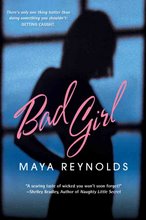
Well, I finally have a publication date for Bad Girl: September, 2007.
And I finally have the back cover copy. Here it is:
Feeling a little naughty? You should.
It was shy social worker Sandy Davis's favorite after-dark hobby, and only vice-spying on neighbors during their most uninhibited moments. Night after night, through each different window, into each anonymous dark bedroom came the stuff of Sandy 's wildest fantasies. Peeping didn't hurt anyone. It was just a game. No one ever had to know. Then one night came a phone call...
"You've been a bad girl."
He calls himself Justice. He has a pastime too. Watching Sandy watch others. He has the pictures to prove it. Now it's his turn to play-by making Sandy pay the price in exchange for holding on to her naughty little secret. As the sensual dance between two strangers begins, so does Sandy 's fear that she's moving closer to the edge of extreme desire-and inescapable danger.
Nice, huh?
I'm so excited.
And I finally have the back cover copy. Here it is:
Feeling a little naughty? You should.
It was shy social worker Sandy Davis's favorite after-dark hobby, and only vice-spying on neighbors during their most uninhibited moments. Night after night, through each different window, into each anonymous dark bedroom came the stuff of Sandy 's wildest fantasies. Peeping didn't hurt anyone. It was just a game. No one ever had to know. Then one night came a phone call...
"You've been a bad girl."
He calls himself Justice. He has a pastime too. Watching Sandy watch others. He has the pictures to prove it. Now it's his turn to play-by making Sandy pay the price in exchange for holding on to her naughty little secret. As the sensual dance between two strangers begins, so does Sandy 's fear that she's moving closer to the edge of extreme desire-and inescapable danger.
Nice, huh?
I'm so excited.
Tuesday, January 23, 2007
Do You Have Manuscript Fatigue?
At 12:16 this morning, I shipped off what I hope were my final edits. Then I fell into bed and slept like the dead for six hours.
Something I don't think I've ever seen addressed by a writer is what I'm going to call "manuscript fatigue." It was a serious problem for me during the editing process.
I began what eventually became my novel Bad Girl in February, 2005. At the time, I was taking an online erotic romance class from Ellora's Cave author, Jan Springer.
As a sidenote, I met some of my closest writer friends in that class: Jeanne Laws, Marie Tuhart and Sherrill Quinn. As the result of that class, a group of 25 of us formed our own support group, which we call the Brazen Hussies. When we took that class, I think only one of our members (besides Jan) was published. In the two years since, at least six of us are either published or under contract, and 22 of us are still members of the Hussies.
In order to participate in the class, I started the story that I called You've Been A Bad Girl--my first erotic romance. Jan and my classmates offered suggestions and, over the course of the next few months, I polished the first chapter. I entered it in the "Just Erotic Romance Reviews" contest where, in July, 2005, Raelene Gorlinsky, the editor of Ellora's Cave, awarded it second prize and asked for a full. I was shocked, delighted and terrified because I only had three chapters done. Between July and August, I finished the 40,000-word novella and shipped it off.
Taking the advice of my published friends, I continued working on my next manuscript and tried not to obsess about that full mss sitting over at EC. After three months, in early November, I emailed EC and asked if they'd reached a decision. I was told they couldn't find the manuscript and to resubmit it. With trepidation, I did. I was beginning to question my decision to seek publication online because, by then, I was actively seeking an agent for my erotic romances.
Six weeks later, I was in discussions with the agent with whom I would sign a contract. By then, I really was regreting my decision to resubmit to EC (An aside: To this day, I've never heard back from them on that mss). My new agent was enthusiastic about You've Been A Bad Girl, and she assured me it would sell. She was right. By July, 2006, we were reviewing a contract from NAL. The publisher wanted to purchase the book for publication in trade paper on the condition I expanded it from 40,000 words to a minimum of 65,000 words.
So, here I was--a year after finishing the novella--rewriting it as a novel.
My new editor at NAL has been a dream. She okayed my proposed outline without a single question and has been encouraging and enthusiastic about the reworked manuscript. Last month, I shipped off what was now being called Bad Girl.
Early this month, I got the manuscript back with edits. Every one of those suggested edits was on target. I was surprised to find half a dozen places where I'd slipped into "telling" instead of "showing." I'm such an advocate of "showing" that I couldn't believe I'd missed those "telling" places. I started the editing process.
That's when I discovered I had manuscript fatigue. After nearly two years, I was tired of this book. I had other characters talking to me, and it was surpisingly difficult to get back into my hero and heroine's POV. I started by going from edit to edit, only reading those pages where my editor had penciled in a correction. In a couple of places, she had asked for an "additional romantic moment." But I found difficulty concentrating on the plot; I had other plots fighting for my attention. Sandy and Zeke were almost strangers to me now.
After weeks of fighting through the first hundred pages--flipping from edit to edit--I went back to the beginning and did what I should have done in the first place. I re-read the entire manuscript. In doing so, I rediscovered the magic that had helped me write the novella to begin with. I really loved Sandy and Zeke. More importantly, I cared about them.
It had taken two weeks to edit the first hundred pages. It took a little over two days to make the changes in the remaining two hundred pages once I was back in Sandy and Zeke's heads. I couldn't believe it. And I learned an important lesson.
You can't shortcut the process. I had avoided reading the entire manuscript again, thinking it would take too much time. As a result, I wasted days and days by trying to write from the outside
--instead of from inside my characters' minds. And it didn't work. I'd been what my mother calls penny wise and pound foolish.
When I got home last night, I curled up on my bed with a cat in my lap and re-read the manuscript one last time. I was thrilled with the final product. The edits made it shine. And, suddenly, I'm enthusiastic to tell Leah's story.
Leah was a minor character in the first draft. My editor liked Sandy and Zeke so much that she encouraged me to expand Leah's role so that I could do a second novel using the characters I'd created in the first--just telling a new story.
When I finished the expansion, I couldn't focus on Leah. I was tired. Last night, for the first time, Leah began speaking to me--telling me about Kadeem. And I can see him in my mind's eye. He looks a lot like the character of Derek Morgan from the televison show Criminal Minds.
I can't wait to start.
Something I don't think I've ever seen addressed by a writer is what I'm going to call "manuscript fatigue." It was a serious problem for me during the editing process.
I began what eventually became my novel Bad Girl in February, 2005. At the time, I was taking an online erotic romance class from Ellora's Cave author, Jan Springer.
As a sidenote, I met some of my closest writer friends in that class: Jeanne Laws, Marie Tuhart and Sherrill Quinn. As the result of that class, a group of 25 of us formed our own support group, which we call the Brazen Hussies. When we took that class, I think only one of our members (besides Jan) was published. In the two years since, at least six of us are either published or under contract, and 22 of us are still members of the Hussies.
In order to participate in the class, I started the story that I called You've Been A Bad Girl--my first erotic romance. Jan and my classmates offered suggestions and, over the course of the next few months, I polished the first chapter. I entered it in the "Just Erotic Romance Reviews" contest where, in July, 2005, Raelene Gorlinsky, the editor of Ellora's Cave, awarded it second prize and asked for a full. I was shocked, delighted and terrified because I only had three chapters done. Between July and August, I finished the 40,000-word novella and shipped it off.
Taking the advice of my published friends, I continued working on my next manuscript and tried not to obsess about that full mss sitting over at EC. After three months, in early November, I emailed EC and asked if they'd reached a decision. I was told they couldn't find the manuscript and to resubmit it. With trepidation, I did. I was beginning to question my decision to seek publication online because, by then, I was actively seeking an agent for my erotic romances.
Six weeks later, I was in discussions with the agent with whom I would sign a contract. By then, I really was regreting my decision to resubmit to EC (An aside: To this day, I've never heard back from them on that mss). My new agent was enthusiastic about You've Been A Bad Girl, and she assured me it would sell. She was right. By July, 2006, we were reviewing a contract from NAL. The publisher wanted to purchase the book for publication in trade paper on the condition I expanded it from 40,000 words to a minimum of 65,000 words.
So, here I was--a year after finishing the novella--rewriting it as a novel.
My new editor at NAL has been a dream. She okayed my proposed outline without a single question and has been encouraging and enthusiastic about the reworked manuscript. Last month, I shipped off what was now being called Bad Girl.
Early this month, I got the manuscript back with edits. Every one of those suggested edits was on target. I was surprised to find half a dozen places where I'd slipped into "telling" instead of "showing." I'm such an advocate of "showing" that I couldn't believe I'd missed those "telling" places. I started the editing process.
That's when I discovered I had manuscript fatigue. After nearly two years, I was tired of this book. I had other characters talking to me, and it was surpisingly difficult to get back into my hero and heroine's POV. I started by going from edit to edit, only reading those pages where my editor had penciled in a correction. In a couple of places, she had asked for an "additional romantic moment." But I found difficulty concentrating on the plot; I had other plots fighting for my attention. Sandy and Zeke were almost strangers to me now.
After weeks of fighting through the first hundred pages--flipping from edit to edit--I went back to the beginning and did what I should have done in the first place. I re-read the entire manuscript. In doing so, I rediscovered the magic that had helped me write the novella to begin with. I really loved Sandy and Zeke. More importantly, I cared about them.
It had taken two weeks to edit the first hundred pages. It took a little over two days to make the changes in the remaining two hundred pages once I was back in Sandy and Zeke's heads. I couldn't believe it. And I learned an important lesson.
You can't shortcut the process. I had avoided reading the entire manuscript again, thinking it would take too much time. As a result, I wasted days and days by trying to write from the outside
--instead of from inside my characters' minds. And it didn't work. I'd been what my mother calls penny wise and pound foolish.
When I got home last night, I curled up on my bed with a cat in my lap and re-read the manuscript one last time. I was thrilled with the final product. The edits made it shine. And, suddenly, I'm enthusiastic to tell Leah's story.
Leah was a minor character in the first draft. My editor liked Sandy and Zeke so much that she encouraged me to expand Leah's role so that I could do a second novel using the characters I'd created in the first--just telling a new story.
When I finished the expansion, I couldn't focus on Leah. I was tired. Last night, for the first time, Leah began speaking to me--telling me about Kadeem. And I can see him in my mind's eye. He looks a lot like the character of Derek Morgan from the televison show Criminal Minds.
I can't wait to start.
Sunday, January 21, 2007
Marketing Your Published Book
Yesterday, my friend Maria and I attended a presentation by a writer talking about ways that authors can market their books. Since the speaker had a background in marketing and advertising, I was very interested in hearing what he had to say.
One thing struck me. He was primarily talking from the point of view of his experience as a non-fiction writer who had published through a small regional press. While there were some things that translated well to fiction writing, there was a lot that didn't.
He explained that, as he was writing his book, he identified what he called a focus study group--twenty-four people around the country who were willing to read his manuscript and comment. After they'd read the entire book, he sent them a questionnaire, asking their opinion (whether they liked it, found it humorous, found it interesting, would recommend it, or would buy it as a gift). He compiled the twenty-one responses and included them in his query presentation. He said the publisher that signed him was bowled over by this focus study.
I found myself thinking, "Okay, that's a critique group. A large critique group, but certainly not a large enough group to constitute a valid study statistically." While I can see that a non-fiction publisher might find this "focus study" interesting, I can't imagine an agent or fiction publisher being moved by twenty-one people who liked a book any more than they are by comments that "everyone who reads my book loves it."
He did not seek representation by an agent and did not seem to think it necessary. While I absolutely agree one can be published without an agent, it's becoming increasingly difficult for a fiction writer to break into the New York print houses without one.
What I did find most interesting were his tips on how to do a booksigning. He offered the following:
1) Make sure you have a contact at the bookstore ahead of time with whom you can check to be sure copies of your book have been ordered.
2) Set your table up near an entrance. Be sure to have a tabletop sign with your book's cover.
3) Make sure you engage the customers walking in.
4) Dress in an interesting--but not weird--manner.
5) Ask a question--any question--to engage the customer. Then LISTEN.
6) DO NOT keep bookmarks or postcards advertising your book on the table. It will allow the customer to say, "I'll take this and think about buying your book" instead of actually purchasing the book.
7) Hold out a book and say, "To whom may I autograph this?" He says invariably the customer will give a name, and you've made the sale.
He said that the national average for books sold per signing is 4.5 books. (Eek!) Using the techniques listed above, he said he averages 3.5 per hour.
His suggestions for a signing are very similar to those offered by Joe Konrath. As I draw closer and closer to publication, I find myself eager for marketing ideas.
One thing struck me. He was primarily talking from the point of view of his experience as a non-fiction writer who had published through a small regional press. While there were some things that translated well to fiction writing, there was a lot that didn't.
He explained that, as he was writing his book, he identified what he called a focus study group--twenty-four people around the country who were willing to read his manuscript and comment. After they'd read the entire book, he sent them a questionnaire, asking their opinion (whether they liked it, found it humorous, found it interesting, would recommend it, or would buy it as a gift). He compiled the twenty-one responses and included them in his query presentation. He said the publisher that signed him was bowled over by this focus study.
I found myself thinking, "Okay, that's a critique group. A large critique group, but certainly not a large enough group to constitute a valid study statistically." While I can see that a non-fiction publisher might find this "focus study" interesting, I can't imagine an agent or fiction publisher being moved by twenty-one people who liked a book any more than they are by comments that "everyone who reads my book loves it."
He did not seek representation by an agent and did not seem to think it necessary. While I absolutely agree one can be published without an agent, it's becoming increasingly difficult for a fiction writer to break into the New York print houses without one.
What I did find most interesting were his tips on how to do a booksigning. He offered the following:
1) Make sure you have a contact at the bookstore ahead of time with whom you can check to be sure copies of your book have been ordered.
2) Set your table up near an entrance. Be sure to have a tabletop sign with your book's cover.
3) Make sure you engage the customers walking in.
4) Dress in an interesting--but not weird--manner.
5) Ask a question--any question--to engage the customer. Then LISTEN.
6) DO NOT keep bookmarks or postcards advertising your book on the table. It will allow the customer to say, "I'll take this and think about buying your book" instead of actually purchasing the book.
7) Hold out a book and say, "To whom may I autograph this?" He says invariably the customer will give a name, and you've made the sale.
He said that the national average for books sold per signing is 4.5 books. (Eek!) Using the techniques listed above, he said he averages 3.5 per hour.
His suggestions for a signing are very similar to those offered by Joe Konrath. As I draw closer and closer to publication, I find myself eager for marketing ideas.
MySpace and News Corporation Sued
On Thursday, CNET reported that families in New York, Pennsylvania, South Carolina and Texas have filed civil suits against MySpace.com and News Corporation. The lawsuits allege "negligence, recklessness, fraud, and negligent misrepresentation on the part of the companies" that resulted in the solicitation and sexual assault of their daughters by adults on the social networking site.
In the South Carolina case, two girls aged 14 and 15 were lured into meeting two adult males who gave them alcohol and drugs before sexually assaulting them. The perpetrators are awaiting trial.
Criminal charges have been filed in all of the cases with the perpetrators sentenced, already imprisoned or awaiting trial.
MySpace.com did not comment for the story beyond an announcement that it plans to release Zephyr, monitoring software intended to help parents oversee their children's activities on the website.
MySpace has taken steps to try to protect minors and has assisted law enforcement in tracking and capturing sexual predators. However, the parents in all these civil suits obviously think more should have been done.
In the South Carolina case, two girls aged 14 and 15 were lured into meeting two adult males who gave them alcohol and drugs before sexually assaulting them. The perpetrators are awaiting trial.
Criminal charges have been filed in all of the cases with the perpetrators sentenced, already imprisoned or awaiting trial.
MySpace.com did not comment for the story beyond an announcement that it plans to release Zephyr, monitoring software intended to help parents oversee their children's activities on the website.
MySpace has taken steps to try to protect minors and has assisted law enforcement in tracking and capturing sexual predators. However, the parents in all these civil suits obviously think more should have been done.
Subscribe to:
Posts (Atom)