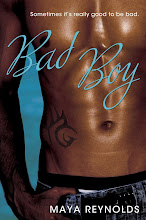
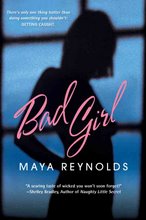
Over the past year in this blog, I've focused on my journey as a writer: from rough drafts to finished manuscript to agent to snagging a publishing contract.
I've tried to stress the importance of thinking ahead and planning for each step along the way. However, even when I tried to plan, some things took me by surprise.
I'm going to recreate here a list of things to think about--in roughly the order you need to address them. Some items were on my original list; some have been added as I encountered them:
1) Write and FINISH a Manuscript--This, of course, is the most important step. Although 81% of the population believes they can write a book, the vast majority never actually finish a manuscript.
2) Find a Critique Group--I waited too long to do this. Ideally, you should start this step while your book is still a work-in-progress. Having critique partners you can trust is essential.
3) Network in Your Genre--Again, I waited too long to do this step. I did not begin this until my manuscript was finished. I believe you should start networking while you are still writing your manuscript. Find at least one organization that specializes in your genre. I waited until my manuscript was finished to join RWA and Sisters-in-Crime.
4) Take Classes, Either Online or In Person--I have not attended conferences, but I have been a regular in online classes. There are many, many classes offered online for as little as $15. I found them very helpful in honing my skills.
5) Pseudonym--If you plan to use a pseudonym, select it early. Be sure to Google it and see what comes up when you enter it in a search. I made an error here. I selected Maya because of my respect for Maya Angelou. However, I didn't check on Maya together in combination with Reynolds. It turns out that Maya Angelou holds the lifetime Reynolds Chair at Wake Forest University. That guaranteed that entering "Maya Reynolds" will pull up the name of Maya Angelou as the first entries in any search. It has taken me most of a year to improve my standings in the various search engines.
6) Begin Early To Take Notes on Agents and Publishers--It is never too soon to start taking notes on the agents and publishers associated with your genre. Check those names against writers' websites such as Preditors and Editors or Writer Beware. That way, by the time you are ready to begin your query letters, you'll have a qualified list.
7) Think About What You're Willing To Do In Terms of Marketing--Start by investing in business cards for yourself. At a minimum, you'll need a website. However, a static website address is not enough. You need a way to drive traffic to your site. To this end, I decided to try my hand at blogging. I blogged anonymously for some time before moving to this site and beginning to blog under the name Maya Reynolds. By the time my first book comes out in print I will have been blogging for nearly two years. If you blog, you need to think about how often you will be willing to post. A post once a month is probably not very helpful. Commit to posting at least twice a week. Some writers I know have opened sites on MySpace or other social networking sites.
8) Think Ahead To Your First Conversation With Prospective Agents--Make a list of the questions you'll ask and the things you need to know. One important point is whether a prospective agent does a lot of manuscript editing or not. My agent is a former editor. I trust her eye and her skills. However, many agents have no interest in editing at all. Which do you prefer? How often can you expect to hear from the agent? If s/he will only contact you when they have news, will that satisfy you?
9) Think Ahead To Your Contracts--Hopefully, you will have two contracts: one with your agent and another with your publisher. You can trust your agent to help you with your publisher's contract, but who will help you with your agent contract? I was fortunate enough to have a lawyer friend willing to vet my contract for me. You can find sample contracts online. One that I found particularly helpful was on the EPIC (Electronic Publishing Internet Connection) website.
10) Think Ahead To Your Copyright--Are you going to want your copyright in your own name or in your pseudonym? If you want it in your pseudonym, you'll need to be ready for that, establishing your pseudonym legally as your business' name.
11) Think About An Address for Fans--Of course, you'll have an email address, but what about those fans who might not be connected to the Internet? Do you want a P.O. Box? Do you want mail to go to your agent and be forwarded to you? I do NOT recommend giving out your home address. There are a lot of wackos out there.
12) As You Get Closer, Think More About Marketing--Will you do giveaways? Will you do contests? Do you want a publicist? Have you located a company to print bookmarks and other tokens to hand out?
Hope this list will be helpful to you.
Best wishes.
Monday, October 16, 2006


Sunday, October 15, 2006
A Weekend Review of The Departed
After months of drought in Texas, we celebrated this weekend with two days of steady rainfall. I celebrated losing my week's sore throat by going to see the new film, The Departed, Martin Scorsese's latest.
Scorsese, an Italian-American, was born in New York and is well known for exploring the neighborhoods and underbelly of Little Italy. In The Departed, he focuses his cinematic eye on South Boston and a working class neighborhood populated by Irish Americans.
The Departed is a byzantine film--at once both devious and intricate. There are moments of humor and moments of incredibly brutal violence. This is not a movie for the squeamish; it abounds in racism, strong language and violence.
The linchpin of the film is Jack Nicholson as mob boss Frank Costello. Nicholson has a field day with the role. One minute he's paternalistic, offering a young boy groceries for his granny. The next, he's leering at a young girl, asking if she's had her first period yet.
Scorsese does a terrific job of painting South Boston--"Southie" to its inhabitants--who eye the cops with the same distrust they offer the mobsters.
The Massachusetts State Police are at war with the Irish gang led by Costello. Martin Sheen and Mark Wahlberg play two State cops with the special investigative unit who are determined to bring down Costello. To this end, they pick a young cadet (Leonardo DiCaprio) from a family of career criminals and convince him to go undercover in order to infiltrate Costello's mob. To create his cover, the cadet, Billy Costigan, is kicked out of the police, serves time in jail and returns to Southie to hook up with his idiot cousin doing drug deals. It isn't long before Costigan catches Costello's eye and is recruited.
Nicholson's Costello rules over his fiefdom with an alert eye. Years before, he co-opted a Southie boy named Colin Sullivan (Matt Damon). At Costello's urging, Sullivan joined the state police where he became a member of the special investigative unit serving under Captain Ellerby (Alex Baldwin). As Costello's mole, Sullivan feeds his gangster mentor information on potential raids.
It takes more than a year for the state police and Costello to realize they each have an enemy mole in their ranks. Both respond the same way, demanding that "their" moles find their opposite numbers.
This is the heart of the film: the character studies of these two young men. Both are very bright and motivated, but both are skilled liars operating under tremendous pressure. That pressure takes its toll: Sullivan has impotency issues, and Costigan is having panic attacks.
The corrupt Sullivan is thinking ahead to a political career; the golden dome of the State House is a frequent symbol. The pure-hearted Costigan has a much more modest goal: staying alive. Costigan is both fascinated and repulsed by his own temper and easy ability to slip into violence.
As the two young men become aware of each other's existence--although not their identities--they unwittingly cross paths. Sullivan is dating a young psychiatrist (Vera Farmiga) that Costigan is seeing as a part of the conditions of his parole.
Nicholson chews up the scenery (no surprise). Damon gives a strong performance, but I thought DiCaprio's was much more layered. Sheen and Baldwin are steady workhorses. The real surprise to me was Mark Wahlberg, who does a bravura turn as the foul-mouthed second-in-command of the Staties.
This is an excellent film and one which I intend to see again soon. I won't be surprised to see it garner multiple Oscar nominations. The soundtrack--which alternates between rock and opera--is simply fabulous. I hope Scorsese gets another Oscar nod as the director. Maybe the sixth time will be the charm.
Saturday, October 14, 2006
Is It A Stereotype Or An Archetype?
I got into an interesting debate with a fellow writer on Thursday night.
He was talking about plot-driven authors, and he gave as examples John Grisham, Tom Clancy and Stephen King. I countered, saying that--while I agree Grisham and Clancy are very much plot-driven writers--I think of King as being character-driven.
His response was interesting. He agreed that King wrote characters that readers cared about passionately, but complained that King often had stereotypical characters. As examples, he pointed to two characters in Carrie: the hyper-religious mother and the pretty but bitchy high school coed.
That answer struck a chord with me. I responded that an indication of King's genius as a writer is his ability to take a stereotype and turn it into a rich and complex character.
After all, what are stereotypes? They are our social reality. Everyone knows people who fit into one or another stereotype: the short but belligerant man; the always pregnant earth mother; the over-controlling but distant father.
The interesting thing is that if we change the word we use; if we say "archetype" instead of "stereotype," the dialogue changes, too. The word "archetype" just doesn't have the negative connotations that "stereotype" does.
I checked the definition of "archetype" in Wikipedia and found this:
In the analysis of personality, the term archetype is often broadly used to refer to: (1) a stereotype--personality type observed multiple times, especially an oversimplification of such a type; or (2) an epitome
--personality type exemplifed, especially the "greatest" such example.
In the hands of a skilled writer, a character becomes an archetype, a rich, complex individual who fascinates us and helps us to understand his/her motivations. When written by a less skilled writer, the same character becomes a stereotype--a stick figure with bones but no flesh.
I think it's a compliment to King to say that he takes a stereotypical character and enlarges it to the point that we become emotionally involved with the story and the character.
Archetypes are meaningful because they do reflect universal truths that we instinctively recognize. Stereotypes irritate us because we realize that a person is being reduced to a caricature.
Are you writing stereotypes or archetypes?
Friday, October 13, 2006
Taking A Look At Social Networking
Google's $1.65 billion purchase of YouTube turned a spotlight on social networking.
I went looking for a practical definition of social networking today. The one I liked best came from PCMag.com:
"A Web site that provides a virtual community for people interested in a subject . . . Either by invitation only or open to the general public, the term "social networking site" is the 21st century term for "virtual community," a group of people who use the Internet to communicate with each other about anything and everything."
According to Wikipedia, the term "social network" was coined back in 1954. It's interesting to note, at that time, the maximum size of a social network was estimated to be around 150 people, with the average size around 124.
Wikipedia says the first social networking website, Classmates.com, started in 1995, some forty years later.
The top four social networking websites in May, 2006, according to Nielsen/NetRatings were MySpace, Blogger, Classmates Online and YouTube respectively.
In August, 2006, Compete.com claimed that YouTube had overtaken the #2 slot, pushing Blogger and Classmates to #3 and #4 respectively. Compete.com listed Facebook.com as #5.
I reported in a previous blog that, in July, 2005, Rupert Murdoch's company
--News Corporation--purchased MySpace for $650 million. At that time, the BBC estimated that MySpace was the "fifth most-viewed internet domain in the US" (in terms of page views). By all accounts, MySpace is the #1 social networking site at this time with nearly 100 million members.
Google's announcement on Monday of its proposed purchase of YouTube gives the Internet giant the #2 and #3 social networking sites (YouTube and Blogger).
Last month, rumors began to surface that Yahoo was in acquisition talks with Facebook. Charlene Li, a technology researcher for Forrester, said that Yahoo needed to "jumpstart their social networking initiatives--and an acquisition is the fastest way to do it to counter the growth of MySpace and YouTube."
Facebook was begun at Harvard in February, 2004, by a student and began by offering photos and contact information. Other features were quickly added allowing users to customize their individual pages and to communicate with each other. The service rapidly spread to other colleges and universities. By August, 2005, Facebook was logging nine million U.S. visitors a month. And these users are a coveted demographic: young people.
The Wall Street Journal reported on October 12th, that "while discussions are continuing, no purchase of the closely held Facebook social-networking site is imminent . . . a deal is unlikely unless Yahoo increases its roughly $1 billion offer or changing business conditions made Facebook's management more inclined to sell."
I predict that if Yahoo continues to drag its feet, another suitor--goaded by Google's juggernaut approach--will come forward to purchase Facebook. The company has already been in talks with Microsoft and Viacom.
Thursday, October 12, 2006
The Future of the Novel
This is one of those days when I have so many choices of things to talk about that I don't know where to begin.
For a change of pace, let's look at the new issue of Slate, the online magazine (www.slate.com). They're calling this edition "Fall Fiction Week." There are half a dozen reviews and commentaries on fiction.
One of the more intriguing articles is titled "The Novel, 2.0." Slate introduces it: "Slate has invited novelists Walter Kirn and Gary Shteyngart to discuss a question that's been on our minds: What is the role of fiction in the age of the Internet? By 'Internet' we mean not just the web itself but also the notion of constant connectivity . . . So, we've asked our critics to address the following questions: Does the new age of connectivity have any ramifications for the novel? Has human experience been altered?"
The article is written in the form of a series of letters between the two novelists.
Kirn writes: "I'm thrown by this new world, both as a novelist and as a person . . . I read somewhere once in the 1960s fiction writers were troubled by the notion that life was becoming stranger and more sensational than made-up stories could ever hope to be. Our new problem--more profound, I think--is that life no longer resembles a story. Events intersect but don't progress. People interact but don't make contact. Settings shift but don't necessarily change."
Shteyngart responds: "In this fragmented, distracted, levitating new world, no wonder you and I are unsure of our place as writers of fiction. According to a recent poll, 81 percent of Americans think they have a book in them. (Of course, few of these citizens actually feel compelled to read someone else's novel.) And if you put together the daydreams, misrepresentations, regrets, jeremiads, nostalgic reminisces, and so on that an average educated American now types into her computer's Outlook program during the course of a year, you will most certainly get a 250-page volume . . . The questions may well be: Who has the patience and inclination to read these (often lengthy) works, when so many Americans are already involved in their own electronic, Wikipedian journeys?"
As I read the comments both novelists made, I found myself thinking two things. First, that the novel will never disappear. There will always be a market for novel-length stories in which readers can lose themselves. I do, however, think that the delivery mediums will continue to evolve so that we will have more choices for HOW we read novels. These will include portable readers, cell phones, audio readers and computers. It's inevitable; we are moving toward a paperless society because of expense, immediacy and ecology.
My second thought was that novellas, short stories and flash fiction will continue to grow in popularity. In a world in which we do things in short bursts of time, the options for fiction will expand to include fiction that can also be read (or listened to) quickly and without a great investment of time.
I don't see these trends as a negative. I see them as an expansion of choice necessary to adapt to the faster-paced lives we are living. Everything happens more quickly now. No one is ever really unreachable or inaccessible.
This connected lifestyle creates a different set of problems (how to relax, how to communicate without the benefit of body language), but I don't see it as the End of Civilization as we know it. It's a natural part of evolution.
It will be interesting to see what happens over the next decade. Let's hope we're all around to watch it occur.
Wednesday, October 11, 2006
An Internet Menage a Trois
After sleeping for most of the last eighteen hours--trying to shake whatever bug bit me--I'm ready to tackle the latest gossip about the Internet love triangle between Google, its new lover YouTube and its old lover MySpace. There was a lot of ink devoted to this subject while I was sleeping.
To recap for those who are just joining us: Two months ago, Google signed a $900 million deal with MySpace (a division of News Corp). In exchange for their cash infusion, Google would get to provide advertising and search to MySpace and other News Corp sites. Both sides seemed happy with their new partnership.
Then, on Friday, word began to leak out that Google was courting YouTube, MySpace's biggest competitor in the online video market. Not only that, on Monday, Google announced its intent to purchase YouTube for $1.65 billion (yes, that's billon, not a typo).
It makes one's head whirl. How would MySpace respond?
Well, according to the October 11th Wall Street Journal (WSJ), "Google Chief Executive Eric Schmidt and Advertising Sales Vice President Tim Armstrong are expected to meet this week in Los Angeles with News Corp. executives, including Chairman Rupert Murdoch, to discuss new ways of working together. One possibility is to expand Google's recently signed ad deal with social-networking site MySpace to include video advertising on the Web."
A menage a trois. How exciting.
Like all menages, this one has its kinks and turns. I reported yesterday that the News Corp's COO estimated that 60%-70% of YouTube’s traffic comes from MySpace. In theory, MySpace could redirect that traffic away from YouTube.
The WSJ article included a paragraph on this: "News Corp. executives over the weekend discussed cutting off the MySpace links to YouTube, according to a person close to the situation. YouTube says that less than 20% of video views on its site come from MySpace."
I'm guessing the truth is somewhere in between those twenty percent and sixty-plus percent numbers. And I agree with the WSJ: "It isn't clear whether News Corp. is still contemplating those threats. But a lot is riding on the outcome of Google's discussion with News Corp. executives this week."
I hear a bed calling. I'll talk about this some more tomorrow when--hopefully
--I'll be feeling more like my healthy, not fevered self.
In case you're wondering, the black-and-white kitten is currently residing in my guest bathroom, where she'll remain until she displays an interest in her new litter box. Thus far, I've refused to name the tiny thing although I've been calling her "Piglet" because of her prodigious appetite.
Tuesday, October 10, 2006
When It Rains . . .
Woke up this morning with a raging sore throat, headache, fever and an extra cat.
Despite the fact that it was raining out, my two cats woke me at 7:00 AM wanting to go out. I felt too awful to argue so I let them out onto the covered porch and tumbled back into bed.
Bob woke me up again at 8:30, sitting on the sill of my bedroom window, howling. When I went to see what his problem was, he had a black and white female kitten with him. I'm guessing he decided to take advantage of my weakened state to sneak a friend in. I liked him better when he was bringing home dead rats and squirrels.
I refused to let anyone in. I put food out for everyone and went back to bed.
It's now 3:00 PM, and my headache is gone, but the kitten is sitting on a cushion on the back patio, looking very much at home.
I DO NOT NEED ANOTHER CAT.
Going back to bed. Maybe she'll be gone when I wake up again.
More on the Google/YouTube Deal
Okay, I'm back home again and cruising the news sites for information on the Google buyout of YouTube. Lots of interesting angles to consider.
Turns out the $1.65 billion price tag is all in stock. TechCrunch reported on a conference call Google hosted Monday afternoon about the deal. When asked why the deal was done in stock, Google's chief counsel responded that the stock deal made it tax-free to YouTube's stockholders.
Both sides stressed the similarity between the two companies' cultures. As an aside, Google's founders are thirty-three years old and the YouTube founders are about six years younger. In talking about cultural similarities, Chad Hurley (one of YouTube's founders) said that Google's ad platform will dovetail perfectly with YouTube's video-sharing site.
According to the Associated Press, "The two companies even share a common financial bond: Sequoia Capital, an early Google investor that owns a roughly 30 percent stake in YouTube. Menlo Park-based Sequoia remains a major Google shareholder and retains a seat on the company's board — factors that might have helped the deal come together after just a week of negotiation."
Questions remain. Two months ago, Google signed a $900 million deal with MySpace (owned by Rupert Murdoch's News Corporation) to provide advertising and search to MySpace and other News Corp sites.
This morning, Mark Cuban suggested that "if Google went to Youtube, like they did Myspace and said they would pay them a minimum of hundreds of millions of dollars a year in exchange for letting Google sell text and video ads on Youtube, as long as there were performance requirements it would make perfect sense for Google." Cuban did not believe Google should purchase YouTube outright because of the downside of potential copyright infringement cases. Clearly Google didn't take his advice.
Of course, YouTube has been racing around like a whirling dervish trying to make deals with some of the largest of the content providers who have been complaining about copyright infringement. Last month YouTube struck a deal with Warner Music. USA Today reported Tuesday morning that YouTube made "deals with CBS and two major music labels . . . Universal Music Group and Sony BMG Music Entertainment."
More issues: MySpace and YouTube regard each other as competitors. According to Hitwise, at the end of a recent three-week period, YouTube accounted for 27% of daily market share based on visits. MySpace Videos accounted for 13% while Google had a jump to nearly 8% and Yahoo's Video Search was about 3%.
You gotta wonder what Google is telling MySpace/News Corp.
According to the Multichannel News, last month, News Corp's COO "estimated that 60%-70% of YouTube’s traffic comes from MySpace." He said that while "MySpace’s video efforts are small at the moment, that could change" and that News Corp was considering "creating a video component to its MySpace social-networking Web site that could rival the wildly popular YouTube."
TechCrunch's Michael Arrington points out that MySpace could deal YouTube a heavy blow by cutting off direct access from MySpace to YouTube. In addition, Fox (another division of News Corp) is "the owner of much of the copyrighted material contained on YouTube."
And we still have hundreds of other content providers who have copyright claims against YouTube. TechCrunch says, "some estimates suggest that up to 80% of YouTube’s traffic is generated from copyright infringing content."
Don't you think Google's deep pockets will be attractive to any content owner who finds his/her material being used on YouTube without permission?
Has Google made a bold leap to seize control of the video online market, or do they have a tiger by the tail?
Stay tuned.
Monday, October 09, 2006
A Deal Is Struck!
I'm leaving for my critique group in ten minutes so this is a quick post.
Google did buy YouTube today for 1.65 billion dollars. This will give an enormous audience to Google and move them to the head of the video-online market.
YouTube is averaging 60 million new videos added a day and 100 million hits a day to view those videos.
The deal was sealed just hours after YouTube announced settlement talks with several music companies, most notably Universal, that have been complaining of copyright infringement by YouTube's users.
One wonders if the Google deal was predicated on the settlements.
More later.
A Darkly Daring Delight
I had planned to do a post on another subject tonight, but the rewrites on my urban fantasy are buzzing along at warp speed, and I don't want to lose my momentum. So I'm offering something else for today, and I'll plan to get back to serious blogging tomorrow.
First, I need to say "thank you" to Miss Snark. She's been recommending Darkly Dreaming Dexter (DDD) by Jeff Lindsay for over a year. The cutesy title had turned me off when it was released (I had the same reaction to Janet Evanovich's brightly colored book covers for her Stephanie Plum series--Evanovich was already on #9 before I read #1). However, after Miss Snark's recommendation, I picked DDD up to examine in the bookstore.
And found myself irritated by the first page.
For those of you who don't know, Dexter Morgan, the protagonist, is a serial killer. That, in and of itself, didn't faze me; I have a bookcase devoted to serial killer novels. What turned me off was that the book begins by talking about "the moon" and "the Need." Both are themes that have been done to death by other writers. Thomas Harris used them to great effect in his early Hannibal Lector novels.
If that weren't enough, try this line on for size: "And the Need was very strong now, very careful cold coiled creeping crackly cocked and ready, very strong, very much ready now--and still it waited and watched, and it made me wait and watch."
I never made it past the alliteration. I put the book down and moved on.
But Miss Snark continued to mention the damn thing in her blog. And, then, Showtime announced a new cable show based on the book. It became like a mosquito bite, annoying but not enough so that I was moved to scratch the itch.
Finally, one night recently, when I was in serious need of a distraction from a recalcitrant manuscript, I picked DDD up again and bought it. And read it in two sittings.
This is not a novel for the faint of heart. I would call it a hard-edged mystery. There are gruesome murders described in great detail.
In contrast to the bloody details, Lindsay writes in a humorous and playful voice although--occasionally--his penchant for alliteration has Dexter sounding like a drag queen on cocaine (at one point, Dexter describes himself as "dear diligent Dexter").
Dexter was orphaned at an early age and adopted by a police officer and his family. When the neighborhood pets began to go missing, Harry, his foster father, was the first to put the pieces together and realize that Dexter was "different." Rather than institutionalize the teen, Harry urged Dexter to channel his energies for good. The result is that Dexter Morgan, now an adult, works as a blood splatter expert for the Miami police department and kills serial killers on the side. When DDD opens, Dexter already has thirty-six notches on his belt.
The book begins with Dexter stalking a pedophile priest (yes, I know, another overdone novel element). The book didn't actually grab me until Page 15. This was the passage that did it:
"Whatever made me the way I am left me hollow, empty inside, unable to feel. It doesn't seem like a big deal. I'm quite sure most people fake an awful lot of everyday human contact. I just fake all of it. I fake it very well, and the feelings are never there."
This was a textbook description of the sociopath as first explained by Dr. Hervey Cleckley in his milestone book, The Mask of Sanity.
Lindsay gets other details right, too. While coldly logical, Dexter's homicidal impulse is initially sated after a kill, but inevitably returns, demanding satisfaction. His approach to murder is very ritualistic, and he takes souvenirs from each kill (a single drop of blood on a slide) so he can relive them later.
The hook for the first novel is a series of prostitute murders in Miami. Dexter is awed by the killer's craft and cannot decide whether he wants to meet the murderer to compare notes or to eliminate him. As the murders continue, Dexter begins to worry that he himself is doing them, that he is unraveling and will soon fall apart. Control is everything to Dexter, and the prospect of being out of control is terrifying. Here he is in his own words again describing why he is a blood spatter specialist:
"I don't do my job to catch the bad guys. Why would I want to do that? No, I do my job to make order out of chaos. To force the nasty blood stains to behave properly, and then go away. Others may use my work to catch criminals; that's fine by me, but it doesn't matter."
If you like mysteries, have a strong stomach and a quirky sense of humor, this is the book for you.
Sunday, October 08, 2006
The Copyright Wars
Friday's Los Angeles Times (LAT) had some interesting tidbits about the upcoming copyright lawsuits facing Google.
Readers will recall that Google has been sued by groups of publishers and authors, demanding that the company stop its policy of copying books without permission. Google insists that, despite the copying of complete texts, their search engine does not permit the public to see more than "snippets" of the books.
According to the LAT, "Google Inc. will subpoena information from Yahoo, Inc., Microsoft Corp. and Amazon.com Inc. to help fight copyright lawsuits over its book-scanning project." Google has filed papers with the U.S. District Court in New York, requesting information on similar projects from its competitors. Google is asking for "book lists, costs, estimated sales, dealings with publishers and possible benefit or harm to copyright
owners . . . Google, which doesn't disclose how many books it has scanned, also wants to know the titles, authors, and copyright status of books already offered through competitor's book projects, the [court] documents said."
Not satisfied with this info, Google is also demanding data from HarperCollins, Holtzbrinck, Random House and the Association of American Publishers (AAP).
Gosh, wonder why they need all that to defend themselves in a lawsuit?
Google has been the most aggressive in its book scanning initiative, taking the position that they would copy first and then expect authors and publishers who did not want to take part in the program to opt out. The spokeswoman for the AAP says the Association believes that current copyright law demands that Google get permission before copying.
Microsoft and Yahoo are part of a competing project called the Open Content Alliance (see my blog for November 6, 2005). An OCA spokesman said that their "plan is to scan as many out-of-print books as possible, then work up the chain toward books under copyright." Less than a week later, Google announced that they would concentrate the efforts of Google Print on books not under copyright to begin with.
Amazon's Search Inside program is configured a little differently. Search Inside permits users to see up to five pages of a book enrolled in the program. However, publishers must enroll in the program and submit the books they want included.
Some publishers are beginning to do their own digital copying, which permits them to control how much of their content they give to Amazon, permitting search of most of the books, but withholding essential pieces.
Unlike many writers, I do not share the fear of Google's copying program. See my blogs for October 27 and November 24, 2005 for more information on this. I am a huge fan of Amazon's Search Inside program and use it frequently to help me decide whether to purchase a book. The upside of a program like Google's or Amazon's is that books will remain available for purchase through POD technology long after they have been removed from bookstore shelves.
I anticipate both sides in these lawsuits will hammer out an accommodation that will permit the optimization of the written word in the new digital age.
Saturday, October 07, 2006
Google & YouTube: A Match Made In Cyberspace
Both The New York Times (NYT) and The Wall Street Journal (WSJ) have articles on the big news about Google and YouTube.
The NYT had an article on Friday saying "Google is in serious talks to acquire YouTube, the wildly successful online video-sharing Web site, for 1.6 billion in cash and stock, people involved in the negotiations said."
YouTube was started by Chad Hurley, Steve Chen and a third friend last year in a Menlo Park, California garage. Hurley is now the CEO while Chen is the chief technology officer. The company claims that users currently view videos on its site more than 100 million times a day. It is clearly the dominant player in U.S. online video-sites, with 46% of all visits to such sites (WSJ).
"Combining Google's huge advertiser base and proven key-word approach with YouTube's huge inventory of tagged content and their engaged audience could be a very lucrative combination if they can pull it off," one industry observer said (WSJ).
At the same time, a purchase by Google would raise serious copyright issues since proprietary video and music is frequently co-opted by YouTube users creating their own video contributions. YouTube currently has a policy of removing videos when someone makes an infringement claim. The CEO of the Universal Music Group, the world's largest recorded music company, has previously complained that YouTube and MySpace "owe us tens of millions of dollars" because of infringements according to the WSJ. Reportedly YouTube and Universal are in talks about a possible agreement that would end all such infringement claims.
Google isn't YouTube's only suitor. Internet companies are looking for what the WSJ calls "front doors" where they can "grab users' attention, and try to link them to other services or hit them with marketing messages." Last year, the News Corporation bought social-networking site MySpace for $650 million dollars. Yahoo is supposedly still in talks with another social-networking site, Facebook. Yahoo, Microsoft, Viacom and the News Corporation have all made advances to YouTube, which has yet to show a profit.
The NYT reports that "The negotiations come as all of the established media conglomerates are in a frenzied hunt to acquire hot Internet properties." The WSJ article said that an acquisition of YouTube "would catapult Google to the lead spot in online video at a moment when consumers are rapidly increasing the amount of time they spend viewing video clips online, and Internet video advertising is booming."
Anyone who followed the courtship of AOL last year will understand that expressing interest is a long way from sealing the deal. YouTube reportedly turned down a previous offer for less money from Google. In his USA Today column on Friday, Kevin Maney quoted an unnamed YouTube employee in saying that "interest in YouTube has gone through the roof and it's been 'crazy' there. A 'ton of offers' have been flying in. 'The fact that just one has been singled out is interesting,' this person said, clearly baffled about how this story came to be."
Both YouTube and Google have refused official comment.
Friday, October 06, 2006
Time To Visit The Bookstore
The L.A. Times had a story on Sunday with an interesting premise:
"This fall, the largest number of new titles by brand-name authors in recent memory is hitting bookstores, and the publishing world is asking itself an unusual question: Can there be too many good books?"
The article suggests that publishers are counting on the last quarter to rescue a year described as "financially lackluster." There are an unusually high number of books due for release by bestselling authors. The blockbuster writers include: Isabel, Allende, Margaret Atwood, David Baldacci, Michael Connelly, Michael Crichton, Thomas Harris, Stephen King, Robert Ludlum, James Patterson, Colin Powell, and Thomas Pynchon.
All of these books are scheduled for release before Thanksgiving.
This literary surfeit leaves publishers scrambling to find ways to publicize their authors. The normal goal of snagging a television appearance becomes less likely as the heavy hitters secure the best spots. "So you have to think outside the box," said David Rosenthal, publisher of Simon & Schuster.
"Indeed, publishers are betting that the sheer number of hot titles, many of them from authors with huge fan bases, will generate heavy bookstore traffic and online buying, which benefits all of them." The hope is that the abundance of new books will prompt consumers who were planning to buy only one book to buy two or three instead.
Support your local bookstore. Think of where we would be without them.
More On Embargoed Books
On Wednesday, I talked about Bob Woodward's State of Denial and the fact that The New York Times had managed to get around the embargo on the book to buy it during the week before its release.
Today the New York Times does it again. They have a story on Carly Fiorina's new book--due out next Tuesday.
Fiorina was the chief executive of Hewlitt-Packard from 1999 to 2005. Since HP's problems with spying on its own board members became public, her book has been hotly anticipated.
The Times says: "Her book, “Tough Choices” (Portfolio Hardcover), which is embargoed for release on Tuesday and has been made available to reviewers only if they sign a nondisclosure agreement, was purchased at a bookstore yesterday by a reporter for The New York Times."
Of course, they don't say HOW MUCH they paid to purchase the book during the embargoed period.
Although Fiorina has not had anything to say about the "spying scandal that has rocked the company and resulted in felony charges and firings," the book now reveals that "she had authorized the initial investigation."
In a reprise of Bob Woodward's appearance last week, Fiorina will be interviewed on "Sixty Minutes" this coming Sunday evening.
UPDATE: Since I posted this story, both Publishers Lunch and Publishers Weekly have reported on The New York Times leak. PW had this to say: "Penguin’s Will Weiser said that despite the NYT article, the company is sticking to its Oct. 9 retail embargo; any store found in violation of the embargo will be required to remove the title from its shelves. 'The situation is, right now, we are enforcing the embargo,' Weisser said. Penguin is also not releasing reviewers from any nondisclosure agreements they signed."
Thursday, October 05, 2006
Cuts At Harlequin
Publishers Weekly (PW) reported on Wednesday that Torstar is restructuring Harlequin's workforce. They are expected to eliminate about forty jobs or 4% of their worldwide workforce. Torstar did not describe where the cuts will be taken.
Torstar expects the restructuring will save $3,000,000 (Can).
PW also reported that "For the first half of 2006, operating profit was down 47% on a 6% decline in sales."
Can This Relationship Be Saved?
I'm approaching this post with more ambivalence than usual. That's because I have such mixed feelings about its subject: Stephen King.
The New York Times (NYT) had an article on Wednesday announcing that King has a new novel, Lisey's Story, being released on October 24. This, four years after he reported his plans to retire.
Unlike the literati who have mocked him throughout his thirty-year career, I have the highest respect for both King's genre and talent. IMHO, a well-written horror novel deserves as much praise as any other well-written tale. Otherwise, why else would we be reading Edgar Allan Poe's stories a hundred and fifty years after his death?
I am second to none in my admiration of King's writing. He consistently creates characters who live and breathe for the reader. His skill is such that I was happy to overlook the sometimes slim threads holding the fabric of his plots together. King's vivid imagination, understanding of psychology and sly sense of humor delighted me for years.
I can still remember reading my first King novel, Salem's Lot, with my back pressed into the headboard of my bed, within easy reach of the crucifix hanging on the wall above my head. Although I was young, I found myself re-reading passages, just because I enjoyed the way he phrased them.
Looking back, I can identify three distinct phases in my relationship with King's writing, similar to the phases in any relationship:
Honeymoon: This was the halcyon time. After reading Salem's Lot, I went back to read Carrie. From then on, I read King's books in chronological order. I adored The Shining and Night Shift, both of which are still on my bookshelves. With a single exception, I loved everything he wrote from 1974 to 1981. Although I ignored it, that exception was a warning of things to come.
Unlike most King fans, I hated The Stand. I thought it was bloated, extravagant and over-the-top. I never finished it and can remember telling a friend that King's editor must have been run over by a truck because he certainly wasn't on the job. Robert R. McCammon also addressed the subject of Armageddon, and I thought did a much better job with his book, Swan Song.
However, still in the throes of infatuation, I cut King some slack. I read The Dead Zone and Firestarter with the same non-critical eye I had given to his other early works.
Disillusionment: While I enjoyed Cujo, I had a mild sense of unease. The usually optimistic King seemed influenced by a gloomier muse. Christine and Pet Sematary were also in this darker, less hopeful vein. I have since wondered whether the weight of his celebrity and the pigeon-holing of his work as "just" horror (which he reportedly resented) had anything to do with what I perceived as the mood of disgruntlement running through his work during this period.
While I had been faithful to King up to this point, I now began to flirt with the works of other horror writers. I'm willing to admit that the problem may have been mine. I was admittedly shallow, unwilling to explore the darker neighborhood in which we were now residing. At the same time, the novels King wrote between 1981 and 1985 left me feeling dissatisfied. There was a single bright point. I loved Skeleton Crew. To this day, I re-read some of those stories with real pleasure.
Estrangement: I started It with a great deal of trepidation. Gradually, I relaxed. I remember waking a fellow King fan late one night to read a particularly powerful passage. I was thrilled with the book . . . until the ending. The last chapters made no sense. They were like scenes from a bad LSD trip. I was furious. What had seemed like a wonderful book, had deteriorated into a soggy, incomprehensible mess.
Of course, I know now that It and the subsequent Tommyknockers were written during the height of King's alcohol and drug addiction. All I knew then was outrage. I read only three or four chapters of the Tommyknockers before throwing the book down in annoyance. I felt betrayed--not only by King, but by his editor and publisher. That dreck should never have made it to print. While I've borrowed a couple of his books from friends and the library in the years since reading Tommyknockers, I have not purchased another King book. Nor have I been able to finish any of those borrowed books.
King got help for his substance abuse issues. Unfortunately, it does not appear to me that he's gotten any help for his other problem. Apparently fame innoculates him from serious pruning of his verbiage. IMHO, Bag Of Bones was almost as bloated as The Stand. I don't believe King's editor is editing the novels any longer. The tight, crisp writing I fell in love with has given way to self-indulgent meanderings and lengthy scenes that do not contribute to the storyline. I read about half of Bag of Bones before getting irritated and putting it down.
It's unlikely that I will ever achieve the success King has enjoyed as a writer. As such, I don't have the chops to criticize his body of work. However, I have another--far more important--credential. I am a Reader. As a Reader, I have the right to express my opinion . . . including my disappointment.
Do King and I still have a chance to repair this dysfunctional relationship? I don't know. The NYT article said: "Mr. King wants readers, and critics, to recognize that he isn’t a hack." I hear his pain.
The article also said: "Because he was writing in a woman’s voice, Mr. King asked Nan Graham, the editor in chief at Scribner, to edit the book instead of Chuck Verrill, Mr. King’s longstanding personal editor. Ms. Graham said she helped with pacing and honing the title character."
If he's addressing the pacing issue, he's taking a step toward reconciliation. Maybe I'll take one, too, and buy the book. We'll see.
P.S. This is not my first post on Stephen King. If you are interested, please read my "A Tribute To A Pioneer" dated October 26, 2005.
Wednesday, October 04, 2006
Fool Me Once
What's going on over at The Washington Post? Didn't its editor ever hear that old saw, "Fool me once, shame on you. Fool me twice, shame on me"?
In the Post's case, they are working on "Fool me three times." What's up with that?
I didn't really give the matter any thought until I noticed the "Talk Back" question for the week in Publisher's Weekly. "Talk Back" is PW's chat feature. It poses a question and then asks readers to respond. This week's question: "With State of Denial the latest book to have an embargo broken, in today’s information drenched world is it fair to expect booksellers and media to honor an embargo?"
Backstory: State of Denial is the latest in reporter Bob Woodward's books on the Bush presidency. It was scheduled for publication Monday, October 2. The embargo PW refers to is the long-standing policy of bookstores not to sell a book prior to its publication date--despite the fact that stores often have the books in stock for some time prior to the actual publication date.
Simon & Schuster, the book's publisher, had designed a very elaborate PR strategy. S&S is a division of media giant CBS. According to an article in Saturday's New York Times, "Extensive excerpts [of State of Denial] would appear in The Washington Post, where Mr. Woodward works, on Sunday and Monday. The book would be featured Sunday night on “60 Minutes.” And excerpts would appear Monday in Newsweek, which is also owned by the Washington Post Company."
This planned PR campaign was a perfect example of the clout giant media has. The Washington Post Company would benefit from having its employee's book excerpts appear in both its newspaper and its magazine,Newsweek. CBS would benefit from having Simon & Schuster, a subsidiary, flack its book on its own television show. Perfect examples of synergism.
A little thing happened on the way to the party.
The New York Times.
On Friday, September 29, The New York Times (NYT) scooped everyone with two stories that included both quotes from the as-yet-unpublished book and a rebuttal story with reaction from the White House.
The scoop seemed to take everyone by surprise. S&S moved up the release of the book to Saturday, September 30th. Instead of being happy that the book was generating sales, David Rosenthal, publisher of S&S, snarked to the NYT: "Regardless of sales, he said, a principle was violated because it appeared some booksellers had sold the book to The Times, The Daily News and other outlets even though they had signed affidavits saying they would abide by embargoes. Breaking an embargo, he said, can disrupt a highly structured, coordinated publicity and sales program."
Yeah, he's crying all the way to the bank.
The thing that confuses me is why The Washington Post didn't anticipate this happening. It's not as though it hasn't happened before.
More than once.
On May 31, 2005, Vanity Fair published an article on its website revealing that Deep Throat, Bob Woodward and Carl Bernstein's Watergate source, was really W. Mark Felt, Sr. I admired Woodward for honoring his promise to protect Felt's identity for more than thirty years. At the same time, I'm sure everyone at The Washington Post had to feel miffed at being scooped on the story that they originated and which brought down a presidency.
Fool me once.
Following the revelation of Felt's identity, Woodward decided to capitalize on the story with his book, Secret Man. Simon & Schuster, which also published that book, set the publication date for July 6, 2005.
On June 30, USA Today released an article that listed the secrets in the book. Once again, The Washington Post was forced to play catch-up, chasing after the story written by their own reporter.
Fool me twice.
What I don't understand is--with all this history of leaks and scoops--why The Washington Post didn't anticipate a reprise and develop a backup plan for the release of State of Denial this week.
Yeah, it's all very well and good to blame the booksellers, but . . . come on. Think of the temptation to a teenage clerk if he were offered $500 to hand over a book that would be made available to the public in a few day's time. All he'd have to do is delay logging the sale on a register for a couple of days.
In a digital age, when a newspaper or magazine can go to press in a fraction of the time it once took to release a story, this sort of thing is going to become commonplace. Media executives are going to have to balance the pros of a carefully planned campaign against the cons of being scooped.
And someone is going to have to add another clause to that old adage:
Fool me three times.
Tuesday, October 03, 2006
The Ultimate in Consumer Choice
This story was too interesting to ignore. I read about it in Monday's CNET News.
An independent film, conceived by a group of neighbors in Dutchess County, New York, was quietly released on DVD yesterday. Despite the lack of fanfare, the film may be a harbinger of the future for movies and books.
"The Onyx Project, is meant to be an experiment in nonlinear storytelling for the Digital Age. It tells the tale of Col. Robert Henderson, a U.S. Army Special Forces officer played by David Strathairn, who undertakes a rogue mission (code name Onyx) in Afghanistan that goes terribly wrong."
"Nonlinear storytelling" means that the viewer decides how to experience this film by choosing the scenes to watch at critical junctures. The DVD has almost 400 scenes that add up to five hours of film. According to the website, "Any link a viewer selects connects in a content-specific way to another story-appropriate location in the world. In selecting his or her own sequence of such links, each viewer has a[n] . . . unique experience."
The film is the brainchild of screenwriter and director, Larry Atlas, and his business partner, Douglas K. Smith. The film can only be played using a Windows late model XP personal computer. The partners developed software, which they call NAV for Non-linear Arrayed Video. A look at the playing instructions helps you to understand exactly what the NAV software does:
Click on A, B, C, D, or E to choose different entry points
Click on "lit up" links to select next scene
Click on "Main Panel" to pause or restart
Click on "Back Panel" to return to previous scene
Click on "&" at any time for another set of choices
"One idea behind the venture is that no two viewers may see the movie unfold in the same way, yet its basic facts, characters and message will permeate the experience."
Atlas and Smith tried to market their concept without success. I can understand this. Most directors would be horrified at the idea that a film could be strung together like a Chinese menu (one from column A and two from column B). Atlas and Smith made the film for less than $200,000. The addition of David Strathairn, who was nominated for best actor in 2005 for Good Night, and Good Luck may bring the film additional notice.
Smith and Atlas hope "that future projects built around the software will include documentaries or educational videos with thousands of links that viewers can click to take them wherever their interest may lie."
While the novice filmmakers clearly do not mean for the basic storyline to change--just the order in which the story is told--any film buff who has purchased a DVD with alternate endings can imagine the next generation of such technology. By making choices in how to experience a film, viewers could conceivably create entirely different movies. Where one viewer might want to view a war movie with lots of action scenes, another viewer might want to focus on the emotional lives of the characters and their loved ones.
I suspect this will not be the end of such experimentation. In a world in which consumers are demanding more and more choice, NAV seems a logical next step.
The Onyx Project can be purchased at www.theonyxproject.com for $23.95.
Monday, October 02, 2006
Of Playboys and Snakes
I was going to do a post about Yahoo, but then Miss Snark ran a quiz on her blog. One of the answers reminded me of an incident from my youth. I decided to tell that story instead.
Although I was born in New York and lived in New Jersey as a child, we moved to Florida when I was about eleven. My mother, a city girl, was not happy about the move. She once killed a green garden hose with a rake, convinced it was a snake about to eat my youngest brother. She was so steadfast in her belief that Florida was swarming with poisonous vermin that she instilled in me an unhealthy fear of reptiles.
The family that lived next door had a college professor father, a RN mother and three small children. They also owned a six- or seven-foot boa constrictor. I don't remember the snake's name, but in our family lore, it became Snake with a capital "S".
Snake went missing one spring. They looked in all the usual places (behind the refrigerator, under the dryer and in and around the hot water pipes). No boa. After a couple of months, everyone assumed that the reptile had managed to escape into the great Florida swamplands.
The family periodically asked me to babysit. They didn't pay very well, but the father had a subscription to Playboy that more than made up for the low wages. By the time I was fourteen, I had even begun to understand the cartoons.
One Friday night, about twelve weeks after the snake had gone missing, I was babysitting next door. The kids were all in bed, and I had just settled down in the den for a couple of hours of quality time with Mr. Hefner. I was curled up on one end of the sofa with a stack of magazines when Snake came up from under a cushion at the opposite end of the couch.
I don't even remember leaving the house. I didn't give a thought to the three tots asleep in their little beds. I didn't stop running (or screaming) until I threw myself into my father's arms in my own house.
Daddy led me back next door where he ascertained that Snake was still (mostly) in the sofa. He didn't mention the Playboy magazines scattered all over the sofa and floor. He closed off the den and told me to stay in the kitchen until the family returned home. I didn't want to stay, but he reminded me I had accepted the job and had a responsibility.
I spent the next three hours sitting next to the phone, waiting for the parents to return so I could go home to be grounded for reading Playboy.
Daddy never mentioned the magazines.
I don't think I ever babysat for that family again either.
After I responded to Miss Snark's quiz tonight, she commented on one of my answers (It is appropriate to scream when a client is getting ready to sit upon a chair occupied by a reptile). I told her the tale of Snake. Her reply included this: "Have you seen Snakes on a Plane? I'm guessing not. (snicker!)"
The funny thing is that I couldn't wait to go see Snakes on a Plane. The afternoon it opened, I dragged a friend to see it. Even did a review on this blog (see August 19th). I suspect that staying in that house guarding those children that awful night helped me to gain a sense of mastery over my fear. At any rate, I haven't killed any garden hoses since then.
Sunday, October 01, 2006
Let's Revisit Copyright
I'm going to revisit copyright briefly today.
For some reason copyright seems to confuse writers more than almost any other subject. I spent the month of April, 2006, doing a series of posts on the subject. You can find them in my archives.
This morning I read an email on a loop in which a writer asked if anyone had encountered problems with a publisher who was interested in a manuscript but was expressing concern because the work had been previously copyrighted.
I read that post twice trying to understand what the writer was asking. It made no sense to me. I finally decided the writer was confusing copyright and copyright REGISTRATION. So we're going to revisit the issue yet again. Please remember that I am not an attorney. The information I am giving here is the result of my own practical knowledge. If you have a copyright issue, you should consult a lawyer.
In my post of April 3, 2006, I said that copyright is the protection afforded by a country to its artists (including literary, performance, dramatic, musical, architectural and visual arts) for the original works they create. These works can be both published and unpublished. In the United States, the copyright protection begins the moment the artist puts the work into tangible form (manuscript, canvas, film, musical score, computer program, architectural plans, whatever).
Pay special attention to that last sentence. The minute you put your work into a fixed form, your copyright protection begins. That means, as you type your manuscript, you are copyrighted.
What confuses people is that this was not always the case. At one time, copyright was tied to publication. A lot of people still believe that it is. However, the copyright laws were overhauled several time in the last century. Under the new laws, you are covered from the moment you put the work into tangible form.
Copyright registration is a different matter. Registration is the process of legally establishing a public record of your copyright. It is voluntary. However, in the U.S., it is necessary before you can file a copyright infringement case in a court. That's a powerful inducement. Remember: we have both civil courts and criminal courts. Someone who deliberately infringes your copyright can be found guilty in a criminal court for doing so (without your filing a copyright registration). You can be awarded actual damages as a result of that deliberate infringement. However, you cannot file a suit for copyright infringement and collect punitive damages without that registration.
Think of it this way. When you own a house, you have a deed, your legal proof of ownership. If you decide to rent that house out, you give your tenant a lease. That lease does NOT give ownership of your house to the tenant. It merely establishes the tenant's right to use the property for a specified purpose, for a specified period of time, in exchange for a specified amount of money. As long as that lease is in effect, you--the owner--cannot move more people into the house, even though you still own the property. You have granted your tenant the exclusive right to use that property for a certain period of time. When that lease expires, you are free to rent the house to another tenant.
A publishing contract works in a similar way. You retain your ownership (copyright) to the work in question. But the contract is like a lease, permitting the publisher to use the work for a specific purpose for a specific period of time in exchange for a specific consideration. The publisher does NOT own the copyright. When the contract expires, the publisher's right to use your manuscript also expires, and you are then free to contract with someone else.
Does that help? If not, the U.S. government has a great website for copyright questions. Go to: http://www.copyright.gov/.
Subscribe to:
Posts (Atom)