Sarah Palin--yes, the real one--guested on Saturday Night Live last night. She played in the opening sketch and again in the news sketch at the mid-point of the show.
Go here to see the video of the opening skit.
See you tomorrow.
Sunday, October 19, 2008


Wednesday, October 15, 2008
Trend Versus Fad
I'm not ready to come back to blogging quite yet, but I've been thinking about this subject quite a bit lately and decided to post about it.
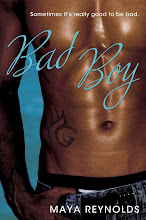
Now that I've got a little distance from the process of writing Bad Boy, my second novel for NAL (a division of Penguin), I want to talk about changing markets. While my genre is erotic romance, I believe the concept is universal to genre fiction.
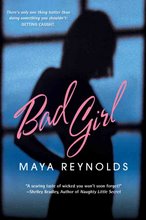
It's been three years since I wrote Bad Girl and more than a year since its publication. I began writing Bad Boy during the holidays last year--about two and a half years after writing the first in the series.
In that period of time it seemed to me that erotic romance had experienced a significant shift. When I first began writing erotic romance--and when I was one of the founders of Passionate Ink, the erotic romance chapter for RWA--there was a distinct difference between erotica and erotic romance.
The distance between the two has shrunk considerably in the thirty months since. What I would have once considered erotica is now generally accepted in erotic romance.
In other words, the erotic romance market has become much more graphic and much more hard-edged. The result is that the novel I would have written a year ago was not the novel which will be published next spring.
We always hear the advice given to writers to read widely in their genre and to know their market.
The thing is, markets are not static creatures. They evolve and change. This means that writers must pay attention to that evolution.
We also hear not to chase markets by trying to write something that is popular at this moment. I'm beginning to thank this is dangerous advice because it may result in a writer confusing a sea change with a popular trend.
I'd be interested to hear from other writers . . . and readers.
Now that I've got a little distance from the process of writing Bad Boy, my second novel for NAL (a division of Penguin), I want to talk about changing markets. While my genre is erotic romance, I believe the concept is universal to genre fiction.
It's been three years since I wrote Bad Girl and more than a year since its publication. I began writing Bad Boy during the holidays last year--about two and a half years after writing the first in the series.
In that period of time it seemed to me that erotic romance had experienced a significant shift. When I first began writing erotic romance--and when I was one of the founders of Passionate Ink, the erotic romance chapter for RWA--there was a distinct difference between erotica and erotic romance.
The distance between the two has shrunk considerably in the thirty months since. What I would have once considered erotica is now generally accepted in erotic romance.
In other words, the erotic romance market has become much more graphic and much more hard-edged. The result is that the novel I would have written a year ago was not the novel which will be published next spring.
We always hear the advice given to writers to read widely in their genre and to know their market.
The thing is, markets are not static creatures. They evolve and change. This means that writers must pay attention to that evolution.
We also hear not to chase markets by trying to write something that is popular at this moment. I'm beginning to thank this is dangerous advice because it may result in a writer confusing a sea change with a popular trend.
I'd be interested to hear from other writers . . . and readers.
Monday, October 06, 2008
Taking a Break
On October 6, I accepted a new assignment at work. I will be the process owner for my department's billing--an important issue in an unstable economy.
For this reason, I am going to have to take a two-week break from blogging while I get up to speed. I may be able to come back sooner, but for now I'm going to say that I will be off-line until October 20.
See you then.
For this reason, I am going to have to take a two-week break from blogging while I get up to speed. I may be able to come back sooner, but for now I'm going to say that I will be off-line until October 20.
See you then.
Sunday, October 05, 2008
Tina Fey Is Taking Up Residence on SNL
Once again, as a public service to my friends overseas, here's a link to last night's SNL with Tina Fey as Governor Sarah Palin and Queen Latifah as Gwen Ifill, the moderator of Thursday night's vice presidental debate.
Enjoy!!
I'll be back later today.
P.S. Thanks to Laura and Stephen who provided a link for overseas viewers here.
Enjoy!!
I'll be back later today.
P.S. Thanks to Laura and Stephen who provided a link for overseas viewers here.
Saturday, October 04, 2008
The Daily Coyote Revisited
I'm celebrating! I just got an email from agent Jonathan Lyons, telling me I came in third in his triva contest on Wednesday (tied for second, but three hours later than the other contestant--who's being competitive? ).
So today, I'm taking a break from posting and referring you to one of my absolute favorite blogs.
I first posted about The Daily Coyote on last December 1st. Shreve Stockton, a woman who fell in love with Wyoming during a cross-country trip, now lives there with a tomcat named Eli, a border collie cross puppy named Chloe and the coyote she adopted last year and named Charlie.
It's been a tough year. No vet would innoculate Charlie, and he almost died from Parvo.
The early photos of Charlie, who was ten days old when she adopted him, frequently make me go "awww."
Here is the "awww" one for this week. Be sure to scroll down to the second photo.
Here is one of my favorites from when Charlie was a baby. And another.
Here's one with Charlie stalking Eli the cat.
Here's one that reminds you Charlie is a coyote, not a dog.
Here's one that reminds you of the ever-changing beauty of this great land.
And, finally, one that gives you hope for peace among all the races here.
Shreve has a book coming out in early December on her first year with Charlie.
So today, I'm taking a break from posting and referring you to one of my absolute favorite blogs.
I first posted about The Daily Coyote on last December 1st. Shreve Stockton, a woman who fell in love with Wyoming during a cross-country trip, now lives there with a tomcat named Eli, a border collie cross puppy named Chloe and the coyote she adopted last year and named Charlie.
It's been a tough year. No vet would innoculate Charlie, and he almost died from Parvo.
The early photos of Charlie, who was ten days old when she adopted him, frequently make me go "awww."
Here is the "awww" one for this week. Be sure to scroll down to the second photo.
Here is one of my favorites from when Charlie was a baby. And another.
Here's one with Charlie stalking Eli the cat.
Here's one that reminds you Charlie is a coyote, not a dog.
Here's one that reminds you of the ever-changing beauty of this great land.
And, finally, one that gives you hope for peace among all the races here.
Shreve has a book coming out in early December on her first year with Charlie.
Friday, October 03, 2008
Update 3 on The Jewel of Medina
From today's Shelf Awareness:
[U.S. publisher] Beaufort Books has moved up the publication date for Sherry Jones's The Jewel of Medina . . . a fictional account of the love story between Mohammad and his favorite wife, A'isha, to next Monday, October 6.
Top Ten Best Paid Authors
The October 1st edition of Forbes magazine has an article titled "The World's Best Paid Authors."
For the period from June 1, 2007 to June 1, 2008, here's the list of the top ten best paid authors:
For the period from June 1, 2007 to June 1, 2008, here's the list of the top ten best paid authors:
1. J.K. Rowling -- $300 million
2. James Patterson -- $50 million
3. Stephen King -- $45 million
4. Tom Clancy -- $35 million
5. Danielle Steel -- $30 million
6. John Grisham -- $25 million
6. Dean Koontz -- $25 million
8. Ken Follett -- $20 million
9. Janet Evanovich -- $17 million
10. Nicholas Sparks -- $16 million
Thursday, October 02, 2008
Dead Tired But Happy
Okay, here's the deal. Jonathan Lyons just exposed my most intractable trait.
I am unbelievably competitive.
How competitive you ask? I only play one or two online games/puzzles. However, once the timer goes past my best score, I stop the game. There's no point in continuing, you see. I've already lost.
Why am I revealing this personal failing at this particular moment?
At 11:00 PM last night, I was winding down for the day. I'd already taken out my contacts and was about fifteen minutes from bed. I checked my favorite blogs . . . among these being Jonathan Lyons of Lyons Literary.
And . . . there . . . the man had a trivia quiz.
How many questions would you expect? Ten? Twenty? Twenty-five?
Nooooo. Jonathan and his wife--sadistic little souls that they are--came up with THIRTY-FIVE trivia questions.
Did I go to bed? Nooooo. I stayed up until 2:00 AM, playing the quiz.
It wouldn't have been so bad if they were all straight-forward trivia. But there was question #24. I'll let you all read it for yourselves.
It is now 2:00 AM, and I am about to CRAWL into bed after spending more than an hour on question #24. Grrrr.
No other post for today, kiddies.
Go here to play Jonathan's twisted little teaser.
I am unbelievably competitive.
How competitive you ask? I only play one or two online games/puzzles. However, once the timer goes past my best score, I stop the game. There's no point in continuing, you see. I've already lost.
Why am I revealing this personal failing at this particular moment?
At 11:00 PM last night, I was winding down for the day. I'd already taken out my contacts and was about fifteen minutes from bed. I checked my favorite blogs . . . among these being Jonathan Lyons of Lyons Literary.
And . . . there . . . the man had a trivia quiz.
How many questions would you expect? Ten? Twenty? Twenty-five?
Nooooo. Jonathan and his wife--sadistic little souls that they are--came up with THIRTY-FIVE trivia questions.
Did I go to bed? Nooooo. I stayed up until 2:00 AM, playing the quiz.
It wouldn't have been so bad if they were all straight-forward trivia. But there was question #24. I'll let you all read it for yourselves.
It is now 2:00 AM, and I am about to CRAWL into bed after spending more than an hour on question #24. Grrrr.
No other post for today, kiddies.
Go here to play Jonathan's twisted little teaser.
Wednesday, October 01, 2008
The U.S. House Passes A Libel Tourism Law
The Association of American Publishers issued a press release on Monday:
The Association of American Publishers cheered the passage of legislation by the U.S. House of Representatives late Saturday that would make it harder for “libel tourists” to threaten American authors and publishers with foreign libel suits aimed at undermining their First Amendment rights.
The bill, H.R. 6146, . . . would prohibit U.S. courts from recognizing a foreign defamation judgment “based upon a publication concerning a public figure or a matter of public concern” unless the court determines that the foreign judgment satisfies the free speech and free press protections guaranteed by the First Amendment. H.R. 6146 is substantially similar to the Libel Terrorism Protection Act adopted earlier this year by New York State. The Senate has yet to take action on libel tourism legislation . . .
AAP President and CEO Pat Schroeder expressed thanks on behalf of the publishing industry to members of Congress for focusing attention on the serious problem of libel tourism . . . “Libel tourism is an insidious threat. It seeks to intimidate and silence American authors and deprive us of vital information on issues of public concern. I hope we can build on H.R. 6146 with hearings in the new Congress that will shine a light into this dark corner,” . . .
Tuesday, September 30, 2008
Update 2 on The Jewel of Medina
On Tuesday night, MSNBC had an update on The Jewel of Medina. They directed readers to the Wednesday morning edition of The Bookseller.
The Bookseller reported that the UK's Gibson Square publishing house has put the October 15th release of the controversial book on hold. Alan Jessop of Compass, Gibson's Squares sales agent was quoted by The Bookseller, speaking about Martin Rynja, the managing director of Gibson Square, whose home and office were the target of an Islamic terrorist attack this weekend:
Publishers Weekly (PW) interviewed Eric Kampmann, president of Beaufort Books, The Jewel of Medina’s U.S. publisher. Kampmann has already begun shipping the first run of 50,000 books. PW reported:
The Bookseller reported on UK bookstores:
The Bookseller reported that the UK's Gibson Square publishing house has put the October 15th release of the controversial book on hold. Alan Jessop of Compass, Gibson's Squares sales agent was quoted by The Bookseller, speaking about Martin Rynja, the managing director of Gibson Square, whose home and office were the target of an Islamic terrorist attack this weekend:
"He is in good spirits, but has put publication in suspended animation while he reflects and takes advice on what the best foot forward is."You can read about the thwarted firebombing here.
Publishers Weekly (PW) interviewed Eric Kampmann, president of Beaufort Books, The Jewel of Medina’s U.S. publisher. Kampmann has already begun shipping the first run of 50,000 books. PW reported:
. . . given the events in the U.K., [Kampmann] said he is now being “super cautious.” He has been in touch with the FBI and New York City police and is considering hiring a security firm to protect Beaufort and Midpoint’s New York offices. Through early Monday, Kampmann said he has received no threats over the book. The New York office was closed Monday, Kampamm said, since his executive staff was already at an offsite meeting. “We are being vigilant,” . . .Kampmann expects the books to be in stores by the end of the week.
The Bookseller reported on UK bookstores:
But booksellers spoken to by The Bookseller said their were unbowed by the letter-bomb and the threats from some extremists of further violence. Michael Jones, books category manager at Borders UK, said: "We haven't changed anything about what we're doing. We will be going ahead and selling it." Amazon.co.uk also said it would be selling the title, while Blackwell's maintained its stance that it would let individual bookshop managers decide.
Monday, September 29, 2008
Writing Can't Be Taught
Last Wednesday's Washington Post had an article titled "A Guide to Prose, Fully Punctuated." It's an interview with Francine Prose, novelist and former teacher of creative writing.
She argues that writing can't be taught (despite the fact that she spent twenty years trying to do so).
The article is sprinkled with advice to writers. My favorite was: "You don't need to know much when you begin."
In context, the comment refers to the fact that you don't need to know everything about your characters or your plot when you start a novel--not that you don't need to know the basics of writing.
I liked this, of course, because it mirrors my approach to writing [grin].
You can read the entire article here.
She argues that writing can't be taught (despite the fact that she spent twenty years trying to do so).
The article is sprinkled with advice to writers. My favorite was: "You don't need to know much when you begin."
In context, the comment refers to the fact that you don't need to know everything about your characters or your plot when you start a novel--not that you don't need to know the basics of writing.
I liked this, of course, because it mirrors my approach to writing [grin].
You can read the entire article here.
I Need a Favor, Please
My niece has entered her six-month-old in a contest to be the face of Learning Curve Toys.
Do me a favor and vote for Trevor here.
All votes appreciated.
Thanks!!!
Maya
Do me a favor and vote for Trevor here.
All votes appreciated.
Thanks!!!
Maya
A Second SNL Skit Looking At Sarah Palin
For my friends overseas like Stephen and Mike, I'm offering a link here to the second SNL opening skit featuring Tina Fey and Amy Poehler as Sarah Palin and Katie Couric.
Enjoy, guys!!!
Enjoy, guys!!!
Sunday, September 28, 2008
Terrorism Follows The Jewel of Medina
The Sunday Times of London reported today that Scotland Yard interrupted a plot by Islamic terrorists to firebomb the north London offices (and home) of the Dutch publisher who agreed to release The Jewel of Medina after Random House backed out of its contract.
If you are not familiar with the controversy surrounding The Jewel of Medina, read my previous posts of August 13th and September 7th.
On September 24th, I did a post saying that Martin Rynja the managing director of Gibson Square, the publisher that had secured the UK rights to The Jewel of Medina, had announced he was doubling his initial print run from 10,000 because of the enormous interest in the book.
Today's Sunday Times reported:
Apparently undercover police followed the gang and observed them pushing a firebomb through the mail slot of Rynja's "£2.5m town house in Islington's Lonsdale Square" (The Guardian). Police and firefighters broke down the front door and put out the small fire.
Rynja is reportedly under police guard.
At the time I read the story in the Sunday Times, there were only three comments below it. A British Muslim had commented:
There have been numerous fictional and artistic treatments of Jesus and Moses and leaders of other religions such as the Church of the Latter Day Saints. Not all of these portraits have been flattering.
To my knowledge, no terrorist attacks resulted from any of them.
I respect all of the religions of the world, and Muslims of good faith have my sympathy and support during this difficult time in the world we share. I have nothing but disdain for those who twist and pervert the teachings of the Prophet Mohammed. I hope the authorities will capture and prosecute Islamic terrorists in exactly the same way they prosecute any other terrorist.
If you are not familiar with the controversy surrounding The Jewel of Medina, read my previous posts of August 13th and September 7th.
On September 24th, I did a post saying that Martin Rynja the managing director of Gibson Square, the publisher that had secured the UK rights to The Jewel of Medina, had announced he was doubling his initial print run from 10,000 because of the enormous interest in the book.
Today's Sunday Times reported:
. . . the Met [London's Metropolitan Police] appears to have received a tip-off that the British publisher . . . could be the target of an attack.The British newspaper The Guardian reported, ". . . police told Rynja late on Friday night to leave his property."
A Met spokesman said three men had been arrested in “a preplanned intelligence-led operation” at about 2.25am on Saturday.
Two of the suspects were arrested in the street outside Rynja’s four-storey townhouse in Lonsdale Square, Islington, while the third was stopped by officers in an armed vehicle near Angel Tube station.
Apparently undercover police followed the gang and observed them pushing a firebomb through the mail slot of Rynja's "£2.5m town house in Islington's Lonsdale Square" (The Guardian). Police and firefighters broke down the front door and put out the small fire.
Rynja is reportedly under police guard.
At the time I read the story in the Sunday Times, there were only three comments below it. A British Muslim had commented:
. . . I will be offended if something controversial is written about Mohammed PBUH, as much as I would be about Jesus or Moses (May peace be upon them). This is not just about free speech, it is about respecting other religions.I refrained from adding my own comment, deciding that this blog was a better place for my opinion:
There have been numerous fictional and artistic treatments of Jesus and Moses and leaders of other religions such as the Church of the Latter Day Saints. Not all of these portraits have been flattering.
To my knowledge, no terrorist attacks resulted from any of them.
I respect all of the religions of the world, and Muslims of good faith have my sympathy and support during this difficult time in the world we share. I have nothing but disdain for those who twist and pervert the teachings of the Prophet Mohammed. I hope the authorities will capture and prosecute Islamic terrorists in exactly the same way they prosecute any other terrorist.
Saturday, September 27, 2008
Tolkien Estate Versus New Line Cinema
On Friday, a Los Angeles Superior Court judge barred the family of J.R.R. Tolkien from punitive damages in their lawsuit against New Line Cinema for failure to pay royalties on the Lord of the Rings film trilogy. However, Judge Ann I. Jones did clear the way for the heirs to continue their $150 million fraud suit against the studio.
Almost everyone has heard the term "Hollywood accounting," which refers to the creative accounting film studios use to turn a box office blockbuster into a financial disaster on paper.
When this happens, those writers or actors who accepted a deal for net profit percentage points are left out in the cold because--on paper--the film lost money so there was no net profit. The January 22, 1990 edition of Time magazine had this to say about net percentage points:
Writer and satirist Art Buchwald wrote a screen treatment for a story about an African king who was overthrown while visiting the U.S. His 1983 contract stated that, if a film was made "based upon" his treatment, he would receive $265,000 and 19% of the net profit. When Paramount released Coming to America in 1988 and claimed the story of an African king who comes to the U.S. was written by its star, Eddie Murphy, Buchwald and his partner Alain Bernheim sued.
Buchwald's lawsuit was in two parts. First he had to sue for breach of contract, claiming the studio had used his treatment. In January, 1990, a Los Angeles judge ruled that Paramount had indeed used Buchwald's treatment and awarded him $250,000.
In the second phase of the trial, Paramount claimed that, although they'd had $350 million in box office receipts, the film lost money. The court found that the studio's accounting practices were "unconscionable." Paramount offered a settlement for $900,000. Buchwald accepted the deal despite the fact that he'd spent more than $2 million litigating the case.
So how does Hollywood pull off a stunt like turning a box office success into a losing proposition?
Generally a studio spins off subsidiaries to handle production, marketing and distribution. Those entities charge the parent company huge fees for their services, eating up more than 50% of the gross profits of a film as overhead charges. In the case of the Coming to America film, Time magazine said:
Back to the Tolkien lawsuit. In February, Tolkien's son and daughter, Christopher Tolkien and Priscilla Tolkien, who had created a charity titled The Tolkien Trust after their father's death, sued New Line Cinema.
The Tolkien heirs, together with Tolkien's publisher HarperCollins, sued New Line for failing to pay royalties on the Lord of the Ring trilogy and to obtain a court order to prevent New Line from its plan to produce two movies based on The Hobbit.
In May, the London Times interviewed Christopher Tolkien, now 83 years old:
The trial is scheduled to begin next October.
Almost everyone has heard the term "Hollywood accounting," which refers to the creative accounting film studios use to turn a box office blockbuster into a financial disaster on paper.
When this happens, those writers or actors who accepted a deal for net profit percentage points are left out in the cold because--on paper--the film lost money so there was no net profit. The January 22, 1990 edition of Time magazine had this to say about net percentage points:
Hollywood's megastars demand a slice of the gross because they know that most films will never pay any earnings to holders of net-profit percentages, which [actor Eddie] Murphy has derided as "monkey points."Probably the most well-known case of a writer suing a studio that used creative accounting was the Buchwald v. Paramount case in 1990.
Writer and satirist Art Buchwald wrote a screen treatment for a story about an African king who was overthrown while visiting the U.S. His 1983 contract stated that, if a film was made "based upon" his treatment, he would receive $265,000 and 19% of the net profit. When Paramount released Coming to America in 1988 and claimed the story of an African king who comes to the U.S. was written by its star, Eddie Murphy, Buchwald and his partner Alain Bernheim sued.
Buchwald's lawsuit was in two parts. First he had to sue for breach of contract, claiming the studio had used his treatment. In January, 1990, a Los Angeles judge ruled that Paramount had indeed used Buchwald's treatment and awarded him $250,000.
In the second phase of the trial, Paramount claimed that, although they'd had $350 million in box office receipts, the film lost money. The court found that the studio's accounting practices were "unconscionable." Paramount offered a settlement for $900,000. Buchwald accepted the deal despite the fact that he'd spent more than $2 million litigating the case.
So how does Hollywood pull off a stunt like turning a box office success into a losing proposition?
Generally a studio spins off subsidiaries to handle production, marketing and distribution. Those entities charge the parent company huge fees for their services, eating up more than 50% of the gross profits of a film as overhead charges. In the case of the Coming to America film, Time magazine said:
. . . half was kept by theaters showing the film. The rest went for shooting the picture (one cost estimate: $40 million), distribution fees charged by Paramount ($50 million), studio overhead ($5 million), film prints and promotion ($15 million), Murphy's salary ($8 million) and other expenses.Writers would be well-advised to demand gross percentage points (before expenses are subtracted) rather than net percentage points (after expenses are taken out). Remember what Eddie Murphy implied: You're a monkey if you accept net percentage points.
Back to the Tolkien lawsuit. In February, Tolkien's son and daughter, Christopher Tolkien and Priscilla Tolkien, who had created a charity titled The Tolkien Trust after their father's death, sued New Line Cinema.
The Tolkien heirs, together with Tolkien's publisher HarperCollins, sued New Line for failing to pay royalties on the Lord of the Ring trilogy and to obtain a court order to prevent New Line from its plan to produce two movies based on The Hobbit.
In May, the London Times interviewed Christopher Tolkien, now 83 years old:
The Trustees claim that they and HarperCollins, the publishers, are owed $150m by New Line Cinema under a deal for a 7.5% share of profits that was signed in 1969, when his father reluctantly sold film rights to pay a tax bill.The Associated Press reported:
. . . the lawsuit claims New Line sent millions of dollars to Time Warner Inc.'s AOL, improperly claiming they were for advertising expenses. The lawsuit also claims the studio built production offices and facilities in New Zealand and listed them as expenses for the "Lord of the Rings" films, although the heirs claim they are now being used for other New Line projects.The AP also stated:
New Line's attorneys successfully argued that Tolkien's heirs had to demonstrate a "public wrong" under New York law — which governs the contracts — to claim punitive damages if they win at trial. [Judge] Jones ruled that the heirs' grievance "is clearly seeking to vindicate private wrongs."So, while the heirs cannot sue for punitive damages, they can still sue for their actual losses incurred by the failure of New Line to pay them as stipulated in their contract.
The trial is scheduled to begin next October.
Friday, September 26, 2008
Booksigning Advice
My good friend and critique partner, Maria Zannini, has a terrific post today about booksignings with lots of good advice. She has links from four great writers on the subject. Of course, because she's my friend, she included links to my posts, too.
Go here to read everything you ever wanted to know about booksignings.
Go here to read everything you ever wanted to know about booksignings.
Thursday, September 25, 2008
Whither Goes Borders?
Back on April 10, here, I summarized the actions Borders was taking to stay alive.
Included among those steps, Pershing Square Capital Management had offered a $42.5 million senior secured loan with a 9.8% interest rate. As a part of that deal, Publishers Weekly (PW) reported Pershing also "agreed to acquire Borders's Australian, New Zealand, Singapore and Paperchase subsidiaries for $125 million if Borders cannot find another buyer at a better price."
That help didn't come for free. Borders granted Pershing Square 9.55 million warrants to purchase company stock for $7 a share for up to six and a half years. If you don't understand how warrants work, go to my post of March 20 here.
However, if (1) Borders did take advantage of the backup purchase offer or if (2) a "definitive agreement relating to a change-of-control of the company is not signed by October 1, 2008," (according to Publishers Weekly) or if (3) the company terminates the strategic alternatives process, Borders must issue another 5.15 million warrants to Pershing Square.
That October 1 deadline is only five days away.
Friday's Wall Street Journal reports:
This puts Pershing Square and its founder William Ackman in a powerful position vis-a-vis Borders.
Last year, Seeking Alpha had this to say about Ackman:
Included among those steps, Pershing Square Capital Management had offered a $42.5 million senior secured loan with a 9.8% interest rate. As a part of that deal, Publishers Weekly (PW) reported Pershing also "agreed to acquire Borders's Australian, New Zealand, Singapore and Paperchase subsidiaries for $125 million if Borders cannot find another buyer at a better price."
That help didn't come for free. Borders granted Pershing Square 9.55 million warrants to purchase company stock for $7 a share for up to six and a half years. If you don't understand how warrants work, go to my post of March 20 here.
However, if (1) Borders did take advantage of the backup purchase offer or if (2) a "definitive agreement relating to a change-of-control of the company is not signed by October 1, 2008," (according to Publishers Weekly) or if (3) the company terminates the strategic alternatives process, Borders must issue another 5.15 million warrants to Pershing Square.
That October 1 deadline is only five days away.
Friday's Wall Street Journal reports:
Borders had hoped to have a deal in place by the end of the month, but the market turmoil and growing uncertainty about the retail sector have all but dashed those hopes, according to one person close to the company.Shelf Awareness says: "Pershing Square is likely to obtain the warrants, which price the company's shares at $7 each, roughly its current price."
This puts Pershing Square and its founder William Ackman in a powerful position vis-a-vis Borders.
Last year, Seeking Alpha had this to say about Ackman:
William Ackman is an aggressive activist value investor who heads Pershing Square Capital Management, a $1.6+ billion hedge fund. Ackman takes large long positions in a concentrated portfolio of companies, then often pressures management to extract value for shareholders.In effect, Borders is standing on the edge of a chasm staring across at Ackman who may force them to take action they have not yet been ready to face.
Wednesday, September 24, 2008
Update on The Jewel of Medina
On September 7, I reported that independent publisher Gibson Square had secured the UK rights for Sherry Jones' controversial novel The Jewel of Medina.
If you're not familiar with The Jewel of Medina, go here to read my first post on the novel.
Today's The Bookseller reports that, with almost month to go before the October 15th release, Gibson Square is doubling its initial print run. The publisher had originally planned for a print run of 10,000, but has already taken more than 8,000 pre-orders for the novel:
If you're not familiar with The Jewel of Medina, go here to read my first post on the novel.
Today's The Bookseller reports that, with almost month to go before the October 15th release, Gibson Square is doubling its initial print run. The publisher had originally planned for a print run of 10,000, but has already taken more than 8,000 pre-orders for the novel:
It decided to review the number in light of pre-orders both here and in the US. Martin Rynja, m.d of Gibson Square, said he was keen to push the print run further if possible. “We are trying to keep up with the Americans,” he said. "The first step was 10,000 and we were comfortable with that. We have been gathering orders from Europe and places as far away as India, and as a result we have doubled the print run. It’s very exciting."
Tuesday, September 23, 2008
New Business Models From iRex
On Saturday a week ago, I posted here about iRex, the Dutch company that produces the iLiad e-reader.
Yesterday Engadget reported that iRex has unveiled its Digital Reader 1000 with a 10.2 inch screen. The 1000 brings back the higher iRex prices, too. A reader will set you back $649; a reader/writer is $749. And "the big daddy 1000SW -- with WiFi, Bluetooth and that 3G data connectivity" is priced at $849.
iRex is hoping to capture the business market. At those prices, it's not likely to grab the casual reader.
Yesterday Engadget reported that iRex has unveiled its Digital Reader 1000 with a 10.2 inch screen. The 1000 brings back the higher iRex prices, too. A reader will set you back $649; a reader/writer is $749. And "the big daddy 1000SW -- with WiFi, Bluetooth and that 3G data connectivity" is priced at $849.
iRex is hoping to capture the business market. At those prices, it's not likely to grab the casual reader.
Monday, September 22, 2008
A Modern Day Faerie Tale
I haven't forgotten that I promised a follow-up to my post of Friday. I need a couple of more days until things settle a bit around here. I'm doing a presentation at work tomorrow for about thirty-five people, and I'm not quite prepared for it yet.
I spent a lot of time in waiting rooms over the last few days. I used the time to read an urban fantasy by Melissa Marr titled Wicked Lovely. Melissa is represented by agent Rachel Vater who mentioned the book on her blog, which is how I came to pick up a Young Adult novel.
Wicked Lovely is a creative take on the fairy kingdom. I'm always interested in world building. Two other urban fantasy writers who have built intricate Faerie worlds are Laurell K. Hamilton and Jim Butcher.
Although I gave up on Laurell K. Hamilton's Anita Blake vampire series about six books ago, I still eagerly await her Merry Gentry series. The seventh book in Merry's series, Swallowing Darkness, is due out in early November.
LKH divides the fairy kingdoms into the Seelie and Unseelie courts, and Merry Gentry is the child born of both courts--her mother was High Seelie while her father was the brother of the Queen of the Unseelie Court.
Jim Butcher talks about the Summer and Winter Courts of the Sidhe. If I remember correctly, the two books of his that focus on Faerie are Summer Knight and Small Favor.
My understanding of Melissa Marr's world building from reading the first in the series is that she divides her faerie kingdom into three parts: the Summer Court, the Winter Court and the Dark Court. Faeries share the mortal world, unseen, playful--and often wicked.
Wicked Lovely is Aislinn Foy's story. Aislinn, called Ash, is a high school student who has always been able to see faeries although they don't know it. From an early age, Ash's grandmother taught her that her safety depended upon the faeries never realizing she can both see and hear them.
Keenan is the King of the Summer Court and son of Beira, Queen of the Winter Court. Centuries ago, the King of the Dark Court helped Beira bind Keenan's powers. He will only be free when he finds his Summer Queen. For nine centuries, he has been asking mortal girls to risk their lives in a test to see if they are the Summer Queen. None has succeeded. Each loser is condemned to become the Winter Girl, isolated and cold, until she can hand off her title to the next loser. As Beira's cold overtakes the earth, Keenan is becoming increasingly desperate to find his queen.
Early in the novel, Keenan focuses his hopes on Ash, who is both terrified and determined not to give up her mortal life--or her mortal friend, Seth. The unknown factor in the unusual triangle of Keenan-Ash-Seth is Donia, the current Winter Girl.
Wicked Lovely was released by HarperTeen, an imprint of HarperCollins. Wicked Lovely was the RWA 2008 RITA winner for Young Adult Romance.
I thoroughly enjoyed the novel, which is a very quick read. The two female leads, Ash and Donia, are engaging, independent and quick-thinking. Of the two male leads, Keenan's character is the better drawn. Impulsive, a bit arrogant and desperate, he feels guilt over Donia's fate, but is himself trapped in a world not of his making.
Seth is a cipher, noble and devoted to Ash. I would have liked to understand him better. He felt like a place holder to me rather than a fully-drawn character.
Beira, the Winter Queen, is a one-note character, much like the Wicked Witch of the East in the Wizard of Oz. Her role is menacing and her purposes, evil.
The King of the Dark Court is only hinted at, but I believe he plays the major role in Marr's second novel, Ink Exchange. I'll be picking that one up soon.
I spent a lot of time in waiting rooms over the last few days. I used the time to read an urban fantasy by Melissa Marr titled Wicked Lovely. Melissa is represented by agent Rachel Vater who mentioned the book on her blog, which is how I came to pick up a Young Adult novel.
Wicked Lovely is a creative take on the fairy kingdom. I'm always interested in world building. Two other urban fantasy writers who have built intricate Faerie worlds are Laurell K. Hamilton and Jim Butcher.
Although I gave up on Laurell K. Hamilton's Anita Blake vampire series about six books ago, I still eagerly await her Merry Gentry series. The seventh book in Merry's series, Swallowing Darkness, is due out in early November.
LKH divides the fairy kingdoms into the Seelie and Unseelie courts, and Merry Gentry is the child born of both courts--her mother was High Seelie while her father was the brother of the Queen of the Unseelie Court.
Jim Butcher talks about the Summer and Winter Courts of the Sidhe. If I remember correctly, the two books of his that focus on Faerie are Summer Knight and Small Favor.
My understanding of Melissa Marr's world building from reading the first in the series is that she divides her faerie kingdom into three parts: the Summer Court, the Winter Court and the Dark Court. Faeries share the mortal world, unseen, playful--and often wicked.
Wicked Lovely is Aislinn Foy's story. Aislinn, called Ash, is a high school student who has always been able to see faeries although they don't know it. From an early age, Ash's grandmother taught her that her safety depended upon the faeries never realizing she can both see and hear them.
Keenan is the King of the Summer Court and son of Beira, Queen of the Winter Court. Centuries ago, the King of the Dark Court helped Beira bind Keenan's powers. He will only be free when he finds his Summer Queen. For nine centuries, he has been asking mortal girls to risk their lives in a test to see if they are the Summer Queen. None has succeeded. Each loser is condemned to become the Winter Girl, isolated and cold, until she can hand off her title to the next loser. As Beira's cold overtakes the earth, Keenan is becoming increasingly desperate to find his queen.
Early in the novel, Keenan focuses his hopes on Ash, who is both terrified and determined not to give up her mortal life--or her mortal friend, Seth. The unknown factor in the unusual triangle of Keenan-Ash-Seth is Donia, the current Winter Girl.
Wicked Lovely was released by HarperTeen, an imprint of HarperCollins. Wicked Lovely was the RWA 2008 RITA winner for Young Adult Romance.
I thoroughly enjoyed the novel, which is a very quick read. The two female leads, Ash and Donia, are engaging, independent and quick-thinking. Of the two male leads, Keenan's character is the better drawn. Impulsive, a bit arrogant and desperate, he feels guilt over Donia's fate, but is himself trapped in a world not of his making.
Seth is a cipher, noble and devoted to Ash. I would have liked to understand him better. He felt like a place holder to me rather than a fully-drawn character.
Beira, the Winter Queen, is a one-note character, much like the Wicked Witch of the East in the Wizard of Oz. Her role is menacing and her purposes, evil.
The King of the Dark Court is only hinted at, but I believe he plays the major role in Marr's second novel, Ink Exchange. I'll be picking that one up soon.
Subscribe to:
Posts (Atom)