Friday, January 09, 2009

Popular Culture and Copyrights

I've been blogging for over three years now and, during that time, I've addressed the issue of copyright more than once. Dating back to 2005, I've quoted Lawrence Lessig, a Stanford law professor and columnist for Wired. I most recently mentioned him in a post here.

Lessig has now written a non-fiction book called Remix which promises to show "how we harm our children--and almost anyone else who creates, enjoys or sell any art form--with a restrictive copyright system driven by corporate interests" as well as offering solutions through what he calls a "hybrid economy."

I'm about a quarter of the way through the book and thought I'd do a post on it.

Lessig approaches the subject from the perspective of culture. He talks about two types of culture. The first is a RO (read only) culture in which members simply consume culture. Examples of this would be listening to music, watching a movie or reading a book. "With each, we're not expected to do much more than simply consume."

The second type of culture is a RW (read/write) culture where the members "add to the culture they read by creating and re-creating the culture around them. They do this re-creating using the same tools the professional uses..."

An analog technology lends itself to a RO culture.
In analog technology, "...first, any (consumer-generated) copy was inferior to the original; and second, the technologies to enable a consumer to copy an RO token were extremely rare. No doubt there were recording studios aplenty in Nashville and Motown. But for the ordinary consumer, RO tokens were to be played, not manipulated. And while they might legally be shared, every lending meant at least a temporary loss for the lender. If you borrowed my LPs, I didn't have them. If you used my record player to play Bach, I couldn't listen to Mozart.
Lessig points out that the producers of the content being marketed did not regard the limitations of analog technology as flaws. "For this nature limited the opportunity for consumers to compete with producers (by "sharing").

Of course, digital technology turned the RO culture on its ear. Consumers could now manipulate content.
"...digital technology removed the constraints that had bound culture to particular analog tokens of RO culture ... When the content industry recognized this change, it was terrified. Digital tokens of RO culture would no longer conspire with the content industry to protect that industry's business model."
One of the things that digital technology has created is an expectation that we should have access on demand.
More and more, even to old folks like me, it seems astonishing to remember a time when to watch a television show, you had to synchronize your schedule to the schedule of the broadcaster. Absurd that if you missed an episode, that was it."

The expectation of access on demand builds slowly, and it builds differently across generations. But at a certain point, perfect access (meaning the ability to get whatever you want whenever you want it) will seem obvious. And when it seems obvious, anything that resists that expectation will seem ridiculous.

Ridiculous, in turn, makes many of us willing to break the rules that restrict access. Even the good become pirates in a world where the rules seem absurd.
Lessig sees the demand for universal access growing and suggests that there will be three possible models: (1) devices that simply provide access; (2) devices that meter access like a jukebox does, "deducting a fee for every download or play"; or (3) devices that police the access like a guard at the gate, monitoring the content being accessed and blocking access without the proper credentials.

Lessig suspects that much more content will be offered for free (the first model) while "digital technologies will continue to resist models that depend upon the heavy policing" (the third model).

Stay tuned for more as I continue to read this excellent book.

Thursday, January 08, 2009

B&N Reports On Holiday Sales

A two-post morning.

From today's Shelf Awareness:
Sales at Barnes & Noble fell 5.2% to $1.1 billion in the nine weeks ended January 3 and sales at stores open at least a year fell 7.7%. At Barnes&Noble.com sales fell 11% during the period.."
From the press release:
Barnes & Noble experienced diminished traffic, and as a result, diminished sales, due to the unprecedented fall-off of retail shopping during the last quarter of the year. After a slow start to the holiday season, our store performance improved and we were able to post comparable store sales increases during the last two weeks of the season, enabling us to meet our sales guidance for the period to date. As a result, if sales trends continue, we expect full-year earnings per share to be in a range of $1.30 to $1.60, in-line with previously issued guidance.

The company currently has approximately $275 million of cash on hand and no borrowings under its $850 million Revolving Credit facility. The company’s inventory levels are appropriate given the current sales environment and, as a result, the company expects to end the year with no debt and a strong balance sheet.

My Relative Importance in the Family

Okay, I'm just going to say it.

Every once in a while, you need to be humbled . . . reminded of your place in the universe relative to others.

For the past two years, I have been telling my three brothers that it was time to move Mom out of her Florida home to a safer place. Initially, I suggested she come live with me. As she has gotten much worse, I began talking about a nursing home.

My brothers have been united in their agreement that they did not want to take her out of familiar surroundings. Mom would never agree to a stranger entering her home so that choice was out. My concerns that she might burn the house down or fall and break a hip fell on deaf ears.

By default, her dog Dancer has become her caretaker. He is fiercely loyal and has run the house for several years. He wakes her and tells her when it is time to eat or to go to bed. Caring for him has kept her in a routine. She has to take a shower and dress in order to walk him (actually he walked her).

Recently, Dancer refused to go for walks with Mom any longer. It was as though he was saying, "Uh, no. No more. I'm not taking this responsibility any longer. You guys need to do something because I ain't taking her outside this house any more."

And my brothers listened. Now because the DOG says she needs to be moved, they're taking action. Everything I said for the last couple of years was completely ignored, but they listened to the DOG!!!

Grrrrr . . .

Wednesday, January 07, 2009

What's in Store for Borders

Another author asked me today if I thought Borders would survive.

Here is what I told her:
Borders is in an awkward place. They lost a lot of time and ground to B&N. Here is a list of just some of the mistakes they made:

1) They missed their early chance to go digital by ceding their online presence to Amazon.com in April, 2001 because they didn't want to pay the freight required to set up their own online presence. When they finally woke up and took the website back from Amazon two years ago, they had a lot of catching up to do. B&N already had a well-established online presence.

2) They didn't get into a loyalty program when B&N did. B&N started their "rewards" program in 2000. Borders waited until 2/2006. To make up time, they didn't charge for their loyalty program like B&N does. They took a huge hit during the Christmas season in 2006 when customers cashed in their rewards all at once.

3) Borders has made a decision to reduce the amount of stock on its shelves. The typical B&N has 125K to 150K books. Borders is downgrading to around 85K. Say you could travel in one direction to Borders and in the other direction to B&N. B&N has more inventory than Borders. Borders only discounts the best-sellers. B&N's loyalty program discounts all books in the store. Which direction are you going to drive?

4) B&N has a viable public domain printing operation. In most of their stores, the first couple of aisles of books are reprints of public domain books printed by B&N. No royalty expenses; just printing costs. Borders is choosing to go in a different direction. They are releasing exclusive and proprietary books to which they've obtained the rights.

Borders has a long road ahead of them. B&N is bigger, stronger, better funded, and more established. Borders can't hope to compete with either B&N or Amazon on the same turf.

Borders' only hope, IMHO, is to reinvent itself in a unique way so that they are not playing someone else's game. I've said for some time that I thought one of the changes we would see in publishing was unusual agreements and arrangements.

Last month, Borders was the first retailer to agree to a "no returns" contract with HarperStudio. In exchange for a deeper discount on initial orders of books published by HarperStudio--58% to 63% off the cover price, instead of the usual 48%--Borders won’t return any unsold books to HarperStudio.

If they are creative and innovative, they may survive--but not as a smaller version of B&N. They will need to become something completely different.

Tuesday, January 06, 2009

More on Borders and B&N

Tuesday's Wall Street Journal has an article on the change in management at Borders Group here.

Jeffrey Trachtenberg reported that Ron Marshall, the new CEO, started by making reassuring phone calls to publishers:
The shake-up at Borders, the nation's second-largest national bookstore chain, comes as book publishing and retailing are undergoing major changes, driven by readers who are buying more books online and, in some cases, switching to digital e-books.
Even so, the change in management at Borders helped the stock price while a major investment in Barnes and Noble, the #1 bookstore chain, helped to stabilize that stock. Publishers Lunch had this to say on Tuesday:
The stock of both Borders and Barnes & Noble rose significantly in yesterday's trading. BN was boosted by the disclosure of the big stake taken in the company's stock by activist investor Ron Burkle, after which genius Goldman Sachs Matthew Fassler upgraded his rating from sell to neutral. Borders rose following the news of the management shakeup, and has continued to climb this morning.
Burkle has purchased a 8.3% chunk of B&N.

Stay tuned for more . . .

Monday, January 05, 2009

Borders Changes Management

A little over two years ago, I reported here on George Jones, the new CEO at Borders Group.

Today, Borders issued a press release announcing it is replacing Jones with Ron Marshall, founder of the private equity firm, Wildridge Capital Management.

The press released points out that, unlike Jones, Marshall has a "specific bookstore background." He held a "senior management position . . ." with the "Dart Group Corporation's Crown Books division and Barnes & Noble college bookstores."

Larry Pollock, chairman of the Borders Group Board of Directors, had this to say:
"Progress has been made by Borders Group over recent quarters within the challenging economy to reduce debt, improve cash flow, cut expenses, enhance inventory productivity and improve margins, but it is imperative that the company more aggressively attack these initiatives to address its long-term future . . ."
Publishers Lunch reported:
In the same announcement, Borders reports sales for the nine-week holiday period of $869 million, down 11.7 percent from a year ago . . . Same-store sales at the company's superstores declined 14.4 percent (and 13.6 percent overall . . .
Publishers Weekly reported:
One focus of Marshall's will be avoiding a delisting from the New York Stock Exchange. Last week, the company was notified that because its stock has been trading at below $1 over the last 30 days, it may be delisted from the NYSE. Borders has about six months to improve its stock price or face delisting.
Read the press release here.

Friday, January 02, 2009

Publishers Cinching Their Belts

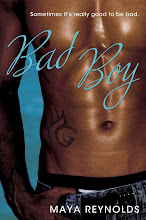
A belated Friday post. My final proofs for Bad Boy need to be FedEx'd back to NAL by Monday.

There was a lengthy article in Sunday's New York Times on the "New Austerity" in publishing.

The story details staff cuts and a move to holding sales conferences by Webcam instead of at glitzy resorts. The famed long lunches are being moved from expensive restaurants to more modest venues.
Book sales have deteriorated since the beginning of October, falling about 7 percent compared with the same period the previous year, according to Nielsen BookScan, which tracks about 70 percent of sales. That slide is driving much of the immediate cutbacks, but the publishing industry is also being convulsed by longer-term trends, including a shift toward digital reading and competition from an array of entertainment options like video games and online social networking.
What does this mean for writers?

According to the article, "smaller advances and fewer books being acquired.'

Read the article here.

Thursday, January 01, 2009

The Process of Writing

I hope you had a good first day of 2009. I did. I made sure to eat black-eyed peas, an old Southern tradition that insures good luck throughout the coming year.

Wishing all of you the best of luck in the new year.

I have a friend who is a talented painter. We had dinner recently and, after eating, we sat with glasses of liqueur and talked about our respective processes. To my surprise, I found that we shared a number of similarities.

When M gets ready to do a landscape, she begins by blocking out the prominent features--like mountains and buildings--to insure that she gets the perspective right. Once she has the larger attributes distributed across the canvas, she goes back to begin filling in the detail. Her final step is to add the light and shade. She contends that it is this step that separates the amateurs from the professionals, and that lighting and shade can make or break a landscape.

I was interested because I essentially follow the same process in my writing; only I do it chapter by chapter. This is largely because I am a pantser, writing by the seat of my pants. I get an idea for a story, sit down and begin writing without knowing much more than how the plot will begin and how it will end.

My usual process is to begin the story, but not to curb my tendency to wander off into backstory. I allow each of the characters to natter on as much as they like about their pasts. I don't try to curb them for two reasons: (1) It's how I warm up to a story, and (2) This is how I learn who the characters are.

Plus I plan to lop all this backstory off when I get to that first moment of action so I can afford to be indulgent.

Once I get to the moment of action, the real novel begins. I start by describing the action in the old journalistic tradition: who, what, when, where and why. I do this primarily through dialogue, which is probably my strongest skill as a writer.

When I have finished "blocking" out the prominent features of my chapter, I go back and begin filling in the detail. This usually means some narrative (often taken from that backstory--but only a line or two at a time) and some description. When I am writing that first run through above, I don't stop to describe the setting. During my second pass, I fill in a bit of detail to help anchor the reader as to time and place.

One of my critique partners, Linda, does such a great job with descriptions that I have learned an enormous amount from her. She uses wonderful metaphors and odd word pairings to describe her settings and her characters. This is usually where I add a touch of light humor.

My last pass on a chapter will be to fill in the emotional color. What are the characters thinking and feeling? This is the hardest part of the job for me. I do it mostly through internal dialogue to keep from drifting from "showing" into "telling." Without emotional color, your readers fail to connect to your characters. Too much and the story becomes soppy. Another of my critique partners does it so naturally that I envy her skill. When she critiques my chapters, she puts her finger right on the places where I need to flesh out the emotional story more.

I find that many newbie writers get so busy with their narrative and description of action and settings that they completely ignore the emotional side of the story. In my romances, I try to include both the hero and heroine's POV (in different scenes, of course). If you can get inside your characters' heads, you can listen to their reactions and express them on the page for your reader. Like my painter friend said about lighting and shading, emotional color can make or break your novel.

During each of my three passes over each chapter, I re-read and clean up the language and grammar. The result is, when I reach the end of the novel, I have very little more to do in terms of editing. That is, of course, until my editor and copy editor get their hands on the manuscript.

I am not suggesting that every writer needs to do three passes on a chapter. Every writer needs to find his/her way through their story. But ignore action, dialogue, narrative or emotional color at your own risk.

Happy writing in 2009.

Wednesday, December 31, 2008

Happy New Year!!

Happy New Year to my friends and readers everywhere.

I hope the coming year will bring you much health, happiness, success and love.

Start tomorrow the way you intend to live the rest of your life.

Much love,

Maya

Tuesday, December 30, 2008

The Long, Slow Journey

I had a plan for a post today that I have scuttled in favor of a more personal commentary.

My mother celebrated her birthday a week ago today. She never liked to admit her age, and I won't reveal it here.

She's a tiny thing, only about a hundred pounds. For as long as I can remember, she has been filled with a kind of frenetic energy. For most of my life, that energy was directed toward fighting dirt. She was a formidable housekeeper, constantly cleaning floors, blinds, counters, driveway and sidewalks.

Daddy died ten years ago. She had never spent a night alone in her life to that point. She'd grown up in a boisterous Irish family and left home to marry my Italian father. They'd had five children, four of whom grew to adulthood.

Mom only had a high school education, but she was a prodigious reader. She read to all her children and hauled us weekly to the library in a little red wagon which she pulled up and down the hills of Atlantic Highlands, New Jersey. We would fill it with books and she would then lug it home again. She took enormous pride in the fact that her four children all graduated from college.

She didn't learn to drive until I was nineteen years old.

When Daddy died, I dragged Mom to the pound to find a dog. She would not get out of the car, but finally entered the building because of her fear that I would simply adopt a dog for her if she didn't come in (she was right).

I looked for small dogs--thinking of a toy poodle or chihuahua--but while I was busy, she fell in love with a trembling, thin whippet. She announced, "His name is Dancer." That whippet grew into an enormous blessing.

For the first five years after Daddy's death, she lived a comfortable, although somewhat restricted, life--reading, talking with her three sisters on the phone, taking Dancer for rides in the car and playing with her four grandchildren. She had the remarkable ability (and willingness) to take whatever role a child required of her in play.

For the past five years, she has been failing--not in body, but in mind. I knew she had Alzheimer's long before the doctors gave her a formal diagnosis. My brothers argued she should stay in the Florida home she'd inhabited for forty-five years; I wanted her in a safer environment. I asked her to come live with me in Dallas; she refused. My youngest brother assured me that, when the time came, she could live with him and his family in Florida.

That time has come and passed. Mom's short-term memory is completely gone. I'm sure she's afraid, but she is expressing that fear in rage--anger at the people who are sneaking into the house to steal her scissors, her wireless phone or her earrings. Her paranoia is so enormous, we could never move a companion into the house with her.

Dancer has become her caretaker. He wakes her in the morning, they take a walk together, he leads her home. For dinner, she makes them each a frozen dinner in the microwave (he often cons her into giving him a second one by pretending she didn't feed him) and he lets her know when it is time to go to bed. He protects her fiercely.

My youngest brother assumed the bulk of the burden of caring for her--taking her shopping, paying her bills, calling her every night. I call her every morning, and we talk for twenty minutes as I drive to work.

Over the past weeks, I realized my brother was struggling. We talk frequently, and I could hear the strain in his voice. Mom accused him of stealing money from her checking account. He had to buy three new pairs of scissors in as many weeks because "people keep coming in to steal them." He is a sports columnist. She calls him while he is at work or on the road to rage and then hang up on him.

I suggested that, after my surgery in early February, once I was up and about, Mom might come to stay with me for two weeks so he could have a break. I suggested I might try to convince her to move into a nursing home nearby me. I no longer believe she can live with me. I would be afraid she would wander away while I was at work.

My brother and I have talked weekly (and sometimes daily) this month. No matter what I said, he would not budge from his plan of moving Mom into his home. I reminded him of the burden he would be putting upon his wife and children, and suggested he talk to his wife.

Today he called. He and his wife had had a long talk. My sister-in-law, who is a wonderful woman who has treated Mom with great love, had been honest with him. Like me, her greatest fear is that Mom will wander off and get lost and not be found. Or fall into their enclosed swimming pool.

He acknowledged it is time to think about a nursing home.

My middle brother will go along with the decision. The issue will be my oldest brother who refuses to see how bad things are . . . and, of course, Mom herself who will see this as an enormous betrayal. I insisted that all of us tell her as a group so my youngest brother does not bear the burden . . . or the guilt.

I am very sad tonight.

Friday, December 26, 2008

Applying the Boston Matrix, Part II

Business first. You all have probably noticed that I have stopped blogging on the weekends. Life is just too complicated right now so I have moved to a Monday through Friday schedule. Sorry I have not mentioned it previously, but it was hard for me to accept that I was not going to be able to get back on a seven-day-a-week schedule.

On Friday, I described the Boston Matrix, a tool investment analysts use to assess a company's product lines. Lynne Connolly (a writer with a MBA) mentioned the matrix on Christmas Day. I thought she was on target and want to use it in addressing the larger publishing industry.

Let's start with Harlequin, a company that is doing a spectacular job of reinventing itself after a couple of rough years.

For decades, Harlequin's book clubs were their cash cows. Women could select the feature that would best jumpstart their fantasies--alpha heroes, exotic locations, thriller plots--and Harlequin would send them half a dozen books in an imprint offering that feature every single month. While some critics denigrated the books for being too formulaic, Harlequin understood that--like men--women have specific fantasies. The individual imprints allowed them to step right into their own fantasy without a lot of buildup.

Those same women liked the shorter category-length novel. A category romance is usually about 55,000 words, which--if you don't have a lot of extra time in which to read--works well.

Harlequin initially fought several world-changing trends in romance reading. The advent of the Internet meant that women could now download specific books whenever they wanted to read rather than waiting to receive six books that were selected for them by the publisher (plus an expensive shipping fee). The on-line publishers offered varying book lengths from novella to full-length. And, finally, women could now buy erotic romance on-line.

After a couple of really ugly years financially, Harlequin began pouring money into the matrix's question marks. They set up a digital warehouse and became the first major publisher to have ALL their front list available on-line. They invested in manga. They began experimenting with different lengths and differing levels of sensuality. They also began testing different modes of delivery.

In other words, while maintaining their cash cow (the book clubs), they began investing in the next star AND divesting themselves of their dogs.

Later this week, we will apply the matrix elsewhere in publishing.

Applying the Boston Matrix to Publishing

Lynne Connolly is a UK writer I both like and admire a great deal. She writes terrific novels and is an academic with wide interests.

In a post on a writing group yesterday, Lynne made reference to the BCG Matrix (also called the Boston Matrix) to describe the publishing industry.

Years ago, I worked as a broker for Smith Barney. The Boston Matrix was often invoked to assess companies. I had not thought of it in years, but immediately decided to do a couple of posts, tying it more specifically to the publishing industry. I asked Lynne for permission to mention her name and to quote her here. Gracious, as always, she agreed.

So, today we'll talk about the matrix itself. In the next post, we'll apply it to publishing.

First, let me describe the concept. It was originally created by Bruce Henderson of the Boston Consulting Group back in the '70s to assist companies in analyzing their product lines.

To help explain the theory behind it, here is a graphic version of the matrix from Value Based Management.Net.


As you can see from the above graph, Henderson set his matrix on an X and Y axis. The vertical axis (X) is low-to-high business growth. The horizontal axis (Y) is high-to-low market share. When analyzing a company, Henderson used a scatter graph to show the relative size of each of the four boxes.

The matrix assesses all product lines and assigns them to one of four categories:

1) The Cash Cows: These products are the foundation on which most successful companies rest. If you are fortunate enough to have a product line that is a cash cow, you occupy a large share of your market. Your cash cows produce profits over and above their expense, and you can "milk" them for the money your company needs.

Note, however, that while the cash cows dominate their market, they have little expectation of growth. For this reason, you try to keep your spending on them as low as you can.

2) The Dogs: Like cash cows, dogs have a low expectation of growth. However, unlike the cash cows, dogs also own a very small piece of the market. With luck, they break even.

As a business owner, you want to do more than break even. Dogs hurt you because they are bringing down your ROA (return on assets) while not producing much--if any--benefit. These are the product lines you look to sell off or close entirely.

3) The Question Marks: The question marks are the polar opposite of the cash cows. They have low market share, but a large expectation of growth. These are the new product lines which a company spends huge R&D (research and development) dollars to build. The hope, of course, is that this gamble will pay off and that the market share will grow, justifying the investment and that the product line will convert from a question mark to a star.

This is the danger area over which a company must keep close watch. If the expected growth does not occur, the product line should be discontinued. Careful decision-making is essential. When do you pull the plug, and how long should you continue throwing money at a product line?

4) The Stars: This is the holy grail that every company seeks. The stars are both high growth, meaning a fast-growing industry, and high market share. Think of them as the up-and-comers. The business pins its hopes on these, investing money in them with the expectation that they will become the next cash cow.

In response to a comment from a member of our writing loop who said publishers need to begin focusing only on best-selling authors, Lynne responded, "If you're familiar with the BCG growth-share matrix, . . . Concentrate on one area only and the risk model becomes overbalanced, together with the company's long term prospects and the company tips over when that particular bubble bursts."

She is exactly right. Eventually cash cows grow old and die. The company must continuously breed new calves that can develop first into stars and then--hopefully--into the cash cows of tomorrow.

Think about this and we'll talk more in the next post.

Please go here to see Lynne's website.

Please go here to read more about the matrix at Value Based Management.Net

Thursday, December 25, 2008

Happy Holidays

Hello, my dears.

I hope Santa was good to you.

More importantly, I hope you shared moments of grace and gratitude with those you love.

I was reminded this morning of how fortunate I am--even though at the moment I'm limping (another tumble on wet bricks last Thursday, the second fall I've taken in three months. This time, however, the doctor gave me an excuse--my center of gravity has shifted). So even that was a blessing. I don't need to feel quite as klutzy as two falls in twelve weeks would imply.

I am unbelievably blessed. I have people I love and who love me. I have work I find satisfying and for which I have some talent. I have an avocation--my writing--that engages both my mind and my heart.

I was thrilled by the outcome of last month's U.S. election. The first sentence of Obama's speech in Chicago inspired me as nothing has in the last eight years:
"If there is anyone out there who still doubts that America is a place where all things are possible; who still wonders if the dream of our founders is alive in our time; who still questions the power of our democracy, tonight is your answer."
Of course, there is lots of uncertainly--both for us as citizens of the world and for me personally. Our economic situation is dicey, the political situation remains uneasy and many face tonight hungry, cold and without shelter.

I face surgery in the new year, but I have no reason to believe it won't be successful. I'm grateful medical science is confident it can help me.

No matter what your circumstance, I hope you are warm and safe and fed tonight. And I hope you have a reason to be optimistic as you face another year.

I wish for each of you health, happiness and hope.

With love,

Maya

Wednesday, December 24, 2008

e-Books Getting Noticed

Today's New York Times had an article titled, "Turning Page, E-Books Start To Take Hold."

The tone of the article can be summed up in this quote by Steve Haber, president of Sony’s digital reading division:
The perception is that e-books have been around for ten years and haven't done anything . . . But it's happening now. This is really starting to take off.
The Times credits Amazon's Kindle e-reader, which is a wireless device, and Oprah Winfey's endorsement of the Kindle in October for the recent strong interest.

Amazon lowered the price of the Kindle to $359 and sells many of the books available for the device--even best-sellers--for $9.99.

In contrast, the latest model of Sony's device, the Reader 700, costs $400. While it has a touch screen and a reading light, it is not wireless.

The article says,
Many Kindle buyers appear to be outside the usual gadget-hound demographic. Almost as many women as men are buying it, . . . and the device is most popular among 55- to 64-year-olds . . .

Nobody know how much consumer habits will shift. Some of the most committed bibliophiles maintain an almost fetishistic devotion to the physical book. But the technology may have more appeal for particular kinds of people, like those who are the heaviest readers.
The Times suggests that Apple's iPhone may also provide a huge boost to e-books as iPhone users are buying almost as many digital books as the Sony Reader owners are.

Both Sony and Amazon are expected to debut new models of their devices next year.

More e-reading devices are expected to be introduced soon. Plastic Logic out of California is almost ready to test its 8.5 x 11" reader which it hopes to sell in 2010.

Polymer Vision out of the Netherlands has a BlackBerry-sized device with a 5" roll-up screen that can be unfurled to read.

Foxit Software is expected to introduce a cheaper reader at $230 in early 2009.

E Ink hopes to introduce color screens in 2010.

Read the article here.

Tuesday, December 23, 2008

Okay, Now This Is Just Bizarre

On December 14th, the London Times did an exposé on working conditions at Amazon’s warehouse in Bedfordshire by sending a reporter undercover to work as a temp during the Holiday rush.

I thought they stretched to make some of their points so did not bother reporting on it. As an example:
Managers warned employees that surveillance cameras monitored their every move, and even though most came from eastern European countries, they were told to speak to each other only in English if anyone else was nearby.
These days, most companies have surveillance cameras and, to me, it is discourteous to speak in a foreign language if one of your group does not speak the language. [shrug]

Anyway, if you want to read the article, go here.

The truly bizarre part of the story was reported in yesterday’s Publishers Weekly.

The Sunday Times claims that Jeff Bezos (Amazon’s CEO) reportedly decided that it would be great if the employees working at that warehouse did a joint photo in which they dropped their pants and did a mass mooning.

According to the Times:
“They were sending the supervisors to try to persuade people on a one-to-one basis. It’s ludicrous and a lot of the staff are upset about it.” More than 200 staff were eventually photographed – but waving to the camera instead of mooning.”
The follow-up article is here.

Monday, December 22, 2008

e Data Pro is Rude and Unprofessional

In the last month, I have noticed an increasing number of comments posted on my blog by someone calling herself Anesha.

Each comment is identical:
Hi Nice Blog.We are specializes in the implementation and management of high-volume, complex projects for data conversion services india. Using XML as a document representation format is of great benefit, and applies across industries.
She--if in fact she exists--is flacking a company in India called
e Data Pro.

Like most bloggers, I get these annoying ads from time to time. I could move to moderating posts to prevent them, but prefer not to do so. Usually I just delete the messages. But e Data Pro is becoming even more aggressive so I am fighting back.

Here’s my message to them:

Hey, Guys. You are obviously trying to get cheap advertising. It is backfiring. Your English is poor, and you are coming off as extremely unprofessional and rude. This morning, I have removed another three posts from you.

I am hoping that this blog post will now surface whenever someone looks you up in Google and have the reverse effect you are hoping for. I do not know about the quality of your service, but your English is atrocious, and your ethics are questionable. I sent a private email to you once asking you to stop. Instead I got even more posts. Therefore, I am going public.

I encourage other bloggers to send them messages as well. Here’s their email address: inquiry@e-datapro.net

P.S. I am quite satisfied with my small world protest. My post is now the second entry on Google--right after e Data Pro's home page.

I really don't want to ruin their business. If they go ninety days without spamming me, I will take my post down.

Update--January 2nd--Okay, I got another comment from e Data Pro this morning. Attached to my blog post for 12/19/05. I am updating this comment in the hopes of moving my post about e Data Pro from second place in Google's searches to first place.

An Agent’s Stats for 2008

Every December I look forward to agent Kristin Nelson’s post in which she gives her agency’s statistics for the year.

Yesterday, she did the post for 2008 here.

Here are a few of those stats:

  • 35,000 estimated queries read and responded to

  • 88 full manuscripts requested

  • 2 new clients signed

  • 21 books sold

Compare these to her stats from 2007:

  • 30,000--estimated queries read and responded to

  • 74--full manuscripts requested

  • 8--new clients signed

  • 22--books sold

Just for fun, I averaged the stats to see how 2008 compared to 2007.

In 2007, Kristin read an average of 82 queries every single day of the year or 577 a week. This year, she averaged 96 every day or 673 a week.

In 2007, she read 405 queries for every full manuscript she requested. In 2008, she read 398 queries for every full manuscript she requested.

Is it any wonder that we keep telling unpublished writers to polish, polish and polish some more their manuscripts and queries? More than 99% of queries do not result in a request for a full. Your manuscript must be the absolute best it can be before you send it out into the world to fend for itself.

Friday, December 19, 2008

It Happened Again

It happened to me again. A newbie writer wrote me from out of the blue. After we exchanged a few emails, he said he was piling up rejections and did not know why. I offered him a possible resource for critique partners. After a couple of more emails, I offered to take a look at his first five pages. I asked him to tell me his genre and his target market.

I was blunt, saying that I would not pull my punches. I also told him that author Catherine Spangler had critiqued me when I was where he was and, while it was brutal, it was the best thing that ever happened to me. He asked me to please be brutal.

He ignored my request for his genre and target market--twice. I read his first five pages anyway. In my critique, I told him his writing was solid, but that there were still issues. I made eight points. Published writers, agents and editors will recognize the kind of things I said:

1) The manuscript started with a dream inside a prologue.

2) Too many strange, long weird words and names.

3) Sprinkling in unnecessary capitalizations.

4) Flat action. The action scenes included long sentences meant to describe fast action.

5) Attribution tags that included “cooed,” “quavered” and “twittered.”

And finally three logic issues I had with the story.

I just read his response. He either responded with his reasons for why he did everything, or he said things like “Hmmmm” to the flat action, or “Well, in English class I was taught to avoid 'said' as much as possible. Which is it?” to the attribution tags.

But the coup de grace was this: I had offered to answer any questions he had about my critique. He responded, “Sure, I'll come to you when I need help...you seem like a good mentor anyway.”

Anyway? Even though I gave you a crummy critique?

This is a public service message: There is only one correct response to a free critique: “Thank you so much for taking the time.”

Even if you do not agree with the critique given, it is inappropriate and rude to argue or defend your manuscript. Throw away the critique if you do not agree with it, but do not come back with counter-arguments. Telling me what the language is does not change the fact that you are using strange, weird words too frequently and will turn readers off.

This is EXACTLY why agents refuse to give more pointed comments in their rejection letters. The newbie invariably assumes they can explain away the comments.

You have just been told why your manuscript is being rejected. Either decide to take the advice or do not. However, have the courtesy to say “thank you” and stop there. It is okay to ask for clarification. It is not okay to say “Well, I was told . . . Which is it?”

End of rant.

Thursday, December 18, 2008

What Did Jesus Ever Do To James Frey?

Just when I was hopeful that James Frey would finally disappear from the literary scene forever, yesterday's Publishers Weekly had to report that James Frey plans to write about Jesus performing gay marriages. Here's an excerpt:
"Talking to online magazine The Rumpus.net, Frey said he had just finished an outline for the book, and was about to start writing it. 'It's the third book of the Bible, called The Final Testament of the Holy Bible,' he told interviewer and fellow author Stephen Elliott. 'My idea of what the Messiah would be like if he were walking the streets of New York today. What would he believe? What
would he preach? How would he live? With who?'

"Frey said his version would see Jesus living with a prostitute. 'It doesn't matter how or who you love. I don't believe the messiah would condemn gay men and women,' he said. Judas, meanwhile, would be the same as he was two thousand years ago,' a 'selfish man who thinks of himself before the good of humanity, who values money more than love'."
Gag me with a spoon. This guy could set back the gay rights movement twenty years. It was bad enough when Anne Rice wrote Jesus' autobiography. Now this. Why pick on Jesus during the Christmas Season?

If you are fortunate enough to not remember James Frey, go here or here

Wednesday, December 17, 2008

UK Booksales Down

From yesterday's Publishers Lunch:
Weekly sales figures from Nielsen BookScan show book sales expenditures in the UK via tracked outlets declined 10.5 percent compared to the same week a year ago, ending December 13. Unit sales fell less, by 5.4 percent, with discounting pushing down the average selling price.

More On HarperStudio

Bob Miller, president and publisher of HarperStudio, had this to say in The Wall Street Journal about his imprint’s deal with Borders:
Returns have never made sense in our business, and with the recent economic downturn, publishers and booksellers are more open than before to experimently wth models that might decrease waste and increase profit.

HarperStudio and Borders Reach Agreement

Yesterday, the big publishing news was that Borders has agreed to take HarperStudio books on a nonreturnable basis.

You may recall that I blogged about HarperStudio, a new imprint of HarperCollins back in early April here.

At the time, The New York Times said:
The new unit is HarperCollins’s effort to address what its executives see as some of the more vexing issues of the book industry. “The idea is, ‘Let’s take all the things that we think are wrong with this business and try to change them,’ ” said Mr. Miller, 51 [HarperStudio’s president and publisher]. “It really seemed to require a start-up from scratch because it will be very experimental.”
The Wall Street Journal also wrote about the proposed imprint:
The new venture is aimed at improving the economics of book publishing, which has long been hobbled by the need to pay for space in stores and take back unsold books from retailers at full price.
Yesterday’s Wall Street Journal reported on the news from HarperStudio and Borders:
Under the terms of the deal, the nation's second-largest bookstore chain by revenue will get a deeper discount on initial orders of books published by the new imprint of News Corp.'s HarperCollins Publishers -- 58% to 63% off the cover price, instead of the usual 48%. In exchange Borders won’t return any unsold books to HarperStudio, instead probably discounting them in the store.
In April, I did a post on the practice of book returns. Read it here.

Now it remains to be seen whether Miller can do anything about the large advances.

Stay tuned . . .

Tuesday, December 16, 2008

Macmillan Announces Cuts

Publishers Weekly issued an alert yesterday afternoon. Here it is in part:
Macmillan Publishing has eliminated 64 positions across both its college and trade imprints as well as Scientific American magazine. The cuts, which range across all aspects of the company, involve just under 4% of Macmillan’s U.S. workforce. As part of the restructuring, the company is forming a new unified children’s publishing division that will bring all of its imprints under one umbrella, said Macmillan head John Sargent . . .

“We looked at the realities of the business and felt we could operate more efficiently by centralizing some processes,” Sargent said. He said reducing the size of the Macmillan list “is not part of the plan” . . .

The cuts come one week after Macmillan announced that it was freezing salaries for all employees earning over $50,000.

Monday, December 15, 2008

Frost/Nixon

When I was younger, my passion was ancient history. It wasn't until I hit middle-age that I became interested in the modern political landscape.

I've been eagerly awaiting the arrival of the new film Frost/Nixon at the theatre. The subject matter intrigued me. And Frank Langella's one of my favorite actors. His portrayal of Dracula was my favorite until Gary Oldman came along to win my vote as the best film Dracula. Here's Langella from 1979.

I got up at 5:00 AM yesterday to be certain I would finish writing my 2,500 word goal in time to get to the movies.

It turned out that Frost/Nixon is only playing in one theatre in Dallas. I had already taken a poll of my friends, and no one was interested in seeing that film yesterday so I went alone.

It is a terrific movie. As I understand the facts, they took some artistic license (there is a late night phone call that never happened), but I've seen the real Frost/Nixon tapes and that footage was pretty accurate.

I was most interested in watching the portrayal of Frost, whom real newsmen regarded as a dilettante intruding on their territory. He put himself at huge financial risk by essentially buying Nixon's participation in the series of four interviews. None of the networks would agree to carry the series because he had paid so much for them (sour grapes). No one expected him to wrest an apology to the American people out of the former president either.

Nixon was a cagey opponent and walked all over Frost for most of the interviews. It wasn't until Frost broadsided him with evidence from White House tapes that had previously gone unnoticed by the media that the former president cracked. It is really great theatre.

If you get a chance, go see the film. It has been nominated for five Golden Globes, including best actor and best film of the year. I am betting Langella will get an Oscar nomination, too.

Thursday, December 11, 2008

It's Regan's Turn To Be Sued

Remember Judith Regan?

I mentioned her in multiple posts from November, 2006 to November, 2007.

Regan was the publisher who put together the deal for If I Did It, O.J. Simpson's book, along with proposing a Fox television show to promote the book. The public outcry over that book and TV special was so great that News Corporation's HarperCollins cancelled both plans and subsequently fired Regan. Read my post on the firing here in January, 2007 and a second post three weeks later about HarperCollins dismantling Regan's imprint here.

Ten months later, Regan filed a $100 million lawsuit against her former employers at HarperCollins.

The introduction to the lawsuit said, "This action arises from a deliberate smear campaign orchestrated by one of the world's largest media conglomerates for the sole purpose of destroying one woman's credibility and reputation. This campaign was necessary to support News Corp.'s political agenda, which has long centered on protecting Rudy Giuliani's presidential ambitions."

That got MY attention.

Publishers Lunch reported yesterday that Regan had settled the lawsuit for $10.75 million.

The figure came to light when Regan’s lawyers, Dreier LLP, sued HER for not paying her legal fees after the settlement.

This from Bloomberg.com:
In March, Regan was sued by her former lawyers who accused her of firing them to avoid paying fees from a settlement with Rupert Murdoch’s News Corp. Regan’s lawyers declined to confirm or deny the settlement amount in Dreier’s court filing.

In its complaint filed in New York Supreme Court in Manhattan, the Dreier law firm alleged Regan retained it to represent her in February 2007 and agreed to pay 25 percent of any money she recovered as a result of a judgment or settlement.
Reuters reports:
Now, Dreier LLP and Redniss and Associates LLC are accusing Regan of not paying $42,560 in [legal] fees [plus their share of the settlement]. . .

The law firms are also suing Bertram Fields, the lawyer Regan hired to settle the lawsuit.
Stay tuned . . .

Wednesday, December 10, 2008

Whoo-Hoo

Tracy, my editor, emailed me today to say that the foreign rights division of Penguin had sold the rights to Bad Boy in Spain for 25% more than they sold Bad Girl.

Squee!!!

Is the World Unfair to Writers?

Timothy Egan is a writer. For eighteen years he wrote for the New York Times. In 2001, he and a team of NYT reporters won the Pulitzer Prize for their series, "How Race is Lived in America." In 2004, his first novel, The Winemaker's Daughter was released by Alfred A. Knopf. In 2006, he won the National Book Award for his non-fiction book, The Worst Hard Time: The Untold Story of Those Who Survived the Great American Dust Bowl.

I say all this to establish Mr. Egan's bona fides as a writer.

In 2004, when his first novel was published, Mr. Egan (who lives in Seattle with his family), gave an interview to the Seattle Post-Intelligencer, which quoted him talking about writing fiction:
"Writing a novel is a life dream that I have had since third grade, so having one published is such a relief for me," Egan says. "It's been an amazing creative experience. It's not like non-fiction, where you have to connect all the dots. This is magic. You create characters and they go off on their own and it's absolutely exhilarating. I've had some really depressing times in journalism over the last five or six years and this novel has been my escape, my fantasy world."
Yeah, he's a writer, all right.

On Saturday, Mr. Egan filled in for Maureen Dowd, doing an op-ed for the New York Times titled "Typing Without a Clue."

In that column, Mr. Egan addresses the issue of celebrities who write books and garner enormous advances in the process.

We know the names. Joe the Plumber. Sarah Palin. People who have never written before and who barely manage to be coherent. Mr. Egan describes writers who have actually earned that title:
Most of the writers I know work every day, in obscurity and close to poverty, trying to say one thing well and true. Day in, day out, they labor to find their voice, to learn their trade, to understand nuance and pace. And then, facing a sea of rejections, they hear about something like Barbara Bush’s dog getting a book deal.
Sour grapes or righteous anger?

This line made me wince:
The idea that someone who stumbled into a sound bite can be published, and charge $24.95 for said words, makes so many real writers think the world is unfair.
Until that line, I was right there with him. But then he lost me.

Of course, the world is unfair. Where has he been living?

Following the recent terrorist attack in India, I saw a photo of the lovely thirteen-year-old girl who was shot down during her first visit to India with her father. Killed by ignorant boys not much older than she was who had been filled with a catechism of hate masquerading as religion.

How can anyone even pretend the world is fair? Much less have an expectation that it will be?

The best we can do is to be kind to each other and keep our own little corner of the universe clean and orderly. And every once in a while, we get to celebrate when some poor soul who didn't deserve to be hurt gets his little piece of justice. Or when someone who was on the wrong path steps off that road and looks back in the right direction.

I am so grateful every time the good guys win.

When I was younger, I used to pray for all the things I wanted in life. These days, I recognize how blessed I am. Instead of asking for things, I try to give thanks for those times when an impersonal universe resets the scales and offers some measure of justice.

I said a small prayer of thanks last night when I saw this story here on my ABC affiliate.

Read Mr. Egan's op-ed here.

And thanks to jesever who brought the op-ed to my attention.

Tuesday, December 09, 2008

Grove Press Revisited

On Saturday, Newsweek published a story about Barney Rosset, whose tiny publishing house--Grove Press--brought some of the most famous--and infamous--books of the last century to the United States.

My favorite quote from the article is this:
When talking about the major obscenity trials of the mid-19th century, Norman Mailer once said, "There's a wonderful moment when you go from oppression to freedom, there in the middle, when one's still oppressed but one's achieved the first freedoms. By the time you get over to complete freedom you begin to look back almost nostalgically on the days of oppression, because in those days you were ready to become a martyr, you had a sense of importance, you could take yourself seriously, and you were fighting the good fight."
That quote says a lot about Barney Rosset.

Rosset spent as much of his time fighting legal battles over his releases as he did in publishing them. He led a legal battle to permit Grove Press to publish the uncensored edition of Lady Chatterley's Lover. Following that success, he fought all the way to the Supreme Court for the right to publish and distribute Henry Miller's novel, Tropic of Cancer.

The article is well worth reading. Go here to read it.

Monday, December 08, 2008

The Lexicon Will Finally Be Released

In early September, I reported here that J.K. Rowling and her publisher had won the lawsuit against RDR Books who had wanted to publish The Harry Potter Lexicon.

In mid-November, I posted this from Publishers Weekly:
Lawyers for RDR Books have filed an appeal to the United States Court of Appeals regarding Judge Robert P. Patterson’s ruling in J.K. Rowling and Warner Bros.’s copyright infringement suit against the publisher.
Friday's Publishers Marketplace reported that RDR Books has withdrawn their appeal and:
The publisher and author have done the sensible thing--rewrite the book, using Judge Patterson's decision as "rule book." They will issue the revised Lexicon in January, with the new subtitle, An Unauthorized Guide to Harry Potter Fiction and Related Materials.
The Muskegon Chronicle reports:
"We think it's a better book in many ways because it has a lot more analysis," said Roger D. Rapaport of Muskegon, whose RDR Books is publishing The Lexicon. "He's [author Steven Vander Ark] done an amazing amount of new work."
The book will be released in the U.S. and England on January 12 and will retail for $24.95.

Thursday, November 27, 2008

Christmas Shopping? Buy Books

You have probably seen all the bad news around recent bookstore sales.

One of the things you can do to help the publishing industry is to give books as Christmas gifts.

To start you off on the right path, the New York Times had a list of the 100 Notable Books of 2008. Go here and start shopping.

Wednesday, November 26, 2008

A Reunion

I am feeling very sentimental.

There is a video posted on the Featured News section of Yahoo's main page that I want to share with you.

Go here to view it.

People who do not know cats talk about how remote and standoffish they are. That has not been my experience. My current roommate, Bob the Cat, comes flying down the street when he hears my car coming. The minute I take a seat, he is in my arms.

When the lion wraps his paw around John's leg, it reminded me of how often Bob does that. He also nestles his head between my shoulder and neck and licks me with his little sandpaper tongue until I have to say “Enough!”

That head-butting activity that the lion engages in is the feline way of scent-marking the people he loves. Every cat I have ever known has done the same thing.

Standoffish, indeed!

Tuesday, November 25, 2008

Returning to Duty

Sorry to have been AWOL for a couple of days. My new job has been eating my lunch.

Although the University is closed for two days for the Thanks-
giving holiday, I will be working on Friday in order to bank some time for when I have my surgery in January. Right now, I am thinking the scheduled date will be be January 23. The doctors say I will be at home for at least a month, more likely six weeks.

To the left of this blog, I have just posted a copy of the cover of Bad Boy, which will be released on my birthday next April. Pretty darn exciting.

Monday, November 24, 2008

A Publisher Stops Buying Books

Publishers Weekly issued an Alert this afternoon. Here is an excerpt:
. . . PW has learned that Houghton Mifflin Harcourt has asked its editors to stop buying books.

Josef Blumenfeld, v-p of communications for HMH, confirmed that the publisher has “temporarily stopped acquiring manuscripts” across its trade and reference divisions. The directive was given verbally to a handful of executives and, according to Blumenfeld, is “not a permanent change”. . .

The action by the highly leveraged HMH may also be as much about the company's need to cut costs in a tight credit market.as about the current economic slowdown.

While Blumenfeld dismissed the severity of the policy, a number of agents said they have never heard of a publisher going so far as to instruct its editors to stop acquiring. “I’ve been in the business a long time and at a couple of houses I worked at, when things were bad, we were asked to cut back,” said agent Jonathon Lazear. “But I’ve never heard of anything so public”. . .
HMH is known as an educational publisher, releasing textbooks, fiction and non-fiction for young people.

Fun In The Sun

Okay, now you all know that I own a cat--Bob--who is quite a character.

But even Bob has never given me a photo like this one.

If You Want To See A Vampire Movie . . .

If you just have to see a vampire film during Thanksgiving week, I am hearing that there is another movie out there worth seeing.

The Swedish film, Let the Right One In , is about a shy twelve-year-old boy named Oskar who is being bullied by his schoolmates. He is befriended by the new girl his age who moves in next store. As the bodies pile up in the neighborhood, Oskar figures out that Eli is a vampire. But she is also his friend.

Swedish subtitles virtually guarantee I will be seeing this film by myself. I have only been able to find one theatre in Dallas where it is showing (the Angelika), and will probably leave work early one day this week to see it.

Sunday, November 23, 2008

Reviewing Twilight

Last night at 12:15, I took a bite from the Twilight apple. It was a great time to see a blockbuster. Hardly anyone in the theatre--my local cineplex sold less than fifty tickets for the after-midnight show.

My fellow filmgoers were clearly not fans of the book. Laughter and hooting were the order of the day as each cheesy special effect debuted on screen. More than one ticket-holder left before the film ended.

Things to Like About Twilight

  • Kristen Stewart--the young actress who plays Bella approaches her role very seriously. She is not playing the heroine campily.
  • The atmosphere of the locale. Forks, Washington is supposedly the gloomiest, wettest place in the continental U.S. It makes for a wonderful setting.
  • Robert Pattinson (the hero, Edward Cullen) looks both handsome and scary. Aesthetically, he makes a great vampire.
  • Cam Gigandet makes a good scary vampire villain.
  • Director Catherine Hardwicke opted for action rather than endless scenes of dialogue (read here: purple prose) from the book.

Things to Dislike About Twilight

  • The cheesy makeup. While Pattinson looks the part, they have him made up in thick white pancake with lip rouge. There were times he looked as though he were auditioning for the Emcee in Cabaret. And when his "father," Carlisle Cullen makes his first appearance in the same dead white makeup and bleached blonde hair, the audience laughed hysterically.
  • The cheesy special effects. This movie had the potential to become a blockbuster. As my middle brother said yesterday, "The teenage girls will go because of the romance. The teenage boys will go because of the teenage girls." You'd think the producers could have spent enough money to make the special effects look decent. When Edward reveals himself in sunlight to Bella, the audience went wild with laughter.
  • The setup for the inevitable sequels. Most of the first hour was a string of introductions to secondary characters who played little to no role in the rest of the film.
  • The god-awful dialogue:
    Edward Cullen: And so the lion fell in love with the lamb.
    Isabella Swan: What a stupid lamb.
    Edward Cullen: What a sick, masochistic lion.

It helps if you are a teenage girl. It helps a lot if you have already read the book.

Alternatively, it helps if you have a sense of humor. If you ever choked while laughing and watching reruns of the first vampire soap opera Dark Shadows, you may enjoy the film. Otherwise, find another movie.

Saturday, November 22, 2008

The Last Great Healer

Someone on one of the loops I visit asked the question yesterday if we were afraid of the Grim Reaper.

I don’t think of Death as the Grim Reaper. I think of Death as the Last Great Healer. This is why.

I was a volunteer for Dallas’ Suicide and Crisis Center for several years. Later, while working on my Social Work graduate degree, I spent three years working the deep night shift on the 24/7 crisis line run by Dallas County’s mental health authority.

Over time, I talked to a fair number of people who were terminally ill and who had difficulty sleeping at night. Some were in pain, some had slept most of the day and could not sleep at night, and some just did not want to waste a moment of their precious remaining time in sleep.

Almost to a person, they expressed the same thing. They were not afraid of dying. However, they found the process very, very lonely. All of them wanted to talk about dying, but were surrounded by people who refused to allow them to do so. They complained of being told, “Don’t be silly. You’re not going to die.” or “Let’s not talk about depressing things.”

So, I was the place they would call--some daily for five minutes, others weekly for thirty minutes, and one or two just when the need struck. I listened and asked the questions they needed to answer. Many of them left instructions for their family to call to let me know when they died.

When dying is the biggest thing you have left, you need to be able to share it.

Death is the Last Great Healer. Some physicians and most braggarts see Death as an enemy to be defeated or stared down. However, for many in the last days of their life, Death is a friend to be greeted with open arms. When you have outlived the ones you love, when the pain is unbearable, when you are weary, Death can be a welcome alternative.

I am grateful for the lessons I learned during the years I worked that late night line. In the time since, I have tried to be present for those people in my life who are terminally ill. I do not turn away from their need to talk about it.

The last lines of the movie To Kill a Mockingbird include the following:

“Neighbors bring food with death...
and flowers with sickness...
and little things in between.”


I believe if we are there for the people we love during their lives, we need to walk beside them during that last journey.

Friday, November 21, 2008

Trouble at B&N

From today's Shelf Awareness:
Sales at Barnes & Noble in the third quarter ended November 1 fell 4.4% to $1.1 billion, and the net loss was $18.4 million compared to a net gain of $4.4 million in the same period in 2007. Sales at stores open at least a year fell 7.4%. Sales at B&N.com rose 2% to $109 million.

The company also lowered predictions for the fourth quarter, saying it expects comp-store sales to decline 6%-9% and for the full year to drop 5%-6%.

The article indicated that these results were below the markets expectations. The company's CEO blamed a drop in customer traffic and in spending.

Thursday, November 20, 2008

The Mad Hatter

Like most children, I was delighted by Lewis Carroll's Alice's Adventures in Wonderland.

I don’t know if I am happy or terrified at the news that Tim Burton is making a film of the book.

One thing I do know. There is probably no one better able to play the role of the Mad Hatter than Johnny Depp.

Wednesday, November 19, 2008

The National Book Awards

Last Wednesday, I wrote about one of the nominees for the National Book Award for fiction: Peter Matthiessen’s Shadow Country.

I explained that Shadow Country was a controversial entry because it was a rewritten compilation of three of his previous novels presented as one novel. The three novels--Killing Mister Watson, Lost Man's River and Bone by Bone--“creates a vivid portrait of the untamed southwest Florida of the late 19th and early 20th centuries” according to Publishers Weekly.

On Wednesday night, at a black-tie dinner at Cipriani’s Wall Street in Manhattan, Mr. Matthiessen won the National Book Award for fiction.

Mr. Matthiessen had previously won the National Book Award for non-fiction in 1979 for his book The Snow Leopard. That book was the story of his two-month journey in 1973 to Crystal Mountain on the Tibetan Plateau of the Himalayas.

The winner of this year’s prize for non-fiction went to Annette Gordon-Reed for The Hemingses of Monticello: An American Family. According to The New York Times, the book is “a sweeping, prodigiously researched biography of three generations of a slave family owned by Thomas Jefferson.”

The Times said:
Ms. Gordon-Reed, who celebrated her 50th birthday on the night of the awards, was the first African-American author to win the prize for nonfiction since Orlando Patterson won for “Freedom” in 1991. “I can’t say what a wonderful November this has been,” she said. “It’s sort of wonderful to have the book come out at this time. People ask me if I planned it this way; I didn’t. All of America — we’re on a great journey now and I look forward to the years to come.”

Tuesday, November 18, 2008

Yang to Leave Yahoo

Yahoo has confirmed that CEO Jerry Yang will be leaving his post as soon as the Board of Directors finds his replacement. He will remain at the company he founded in 1994 and on the board.

Today's Time reported:
The announcement that Jerry Yang will step down as CEO of Yahoo! was welcome news to investors still seething that the founder turned down an acquisition offer from Microsoft earlier this year worth some $46 billion. (After Yang demanded $4 more per share than Microsoft's offer, the software giant walked away.) Yahoo! is in trouble — its stock price has fallen to around $11 from $29 in February 2008 and it's way behind Google and others in the fast-moving Internet innovation game. (The stock rallied slightly upon news of Yang's departure.)

Monday, November 17, 2008

if:book London

Back in 2006, I did two posts on an interesting initiative. On
April 7 here, I quoted from the mission statement of The Institute for the Future of the Book (IF:B):
Starting with the assumption that the locus of intellectual discourse is shifting from printed page to networked screen, the primary goal of the Institute for the Future of the Book is to explore, understand and influence this shift. The Institute is a project of the Annenberg Center for Communication at the University of Southern California and is based in Brooklyn, New York.
A couple of months later, on June 11 here, I explained the project that IF:B calls Sophie:
Sophie is no less than a plan to reinvent the book. Not satisfied with an electronic book that can be read on a computer screen, Sophie is a social engineering experiment as well. Recognizing the success of such websites as My Space, Sophie is an attempt to create documents that could live and breathe on the Internet and where readers could interact with each other and with the author.
Now, more than two years later, I read in Monday’s TheBookseller.com about a similar initiative in Great Britain:
A project has been launched to build an online "networked book" around responses to the work of 19th century poet-illustrator William Blake.

Songs of Imagination and Digitisation has been developed by literary think tank if:book London and is being funded by the Arts Council. The final product will be available online, for free, in the New Year.
Here is the mission for if:book London:
- to investigate the evolution of intellectual discourse as it shifts from printed pages to networked screens

- to explore the creative potential of new media for readers and writers
I am frequently amused by the Luddites among us, those people who swear up and down they will NEVER read an e-book. As if that was the end of the technology.

Guys, that is just the beginning. In the very near future, you will be able to read a digital book in a social networking environment. People will be able to comment on the material being read in real time. The author and fans will be able to converse digitally as the readers progress through the book.

When this happens, reading will cease to be the solitary occupation it is today. Hardcover and paperback books will be too expensive for any but the wealthiest among us. The rest of us will make do with a digital experience rather than fork out our hard-earned case to secure lodgings.

Read the entire article here.

Sunday, November 16, 2008

A Quantum of Solace Brought None

Almost exactly a year ago, I reviewed Casino Royale, the first of three James Bond films to star Daniel Craig, the latest actor to play Agent 007.

I loved that film, which moved 180 degrees away from the silliness that had characterized the last ten or twelve Bond movies. I thought Ian Fleming would be pleased with the Craig portrayal, which showed Bond as the ruthless hitman Fleming had envisioned.

Now, twelve months later, along comes Quantum of Solace, a movie inspired by a Fleming short story although the story’s title is all that is used.

This is the 25th James Bond movie, and all I found myself thinking was how the filmmakers had been influenced (read here: completely intimidated) by the Bourne franchise. Quantum is obviously trying to live up to Bourne. It uses those same frenetic action scenes in which you can hardly tell what is going on.

The film is intended to be a sequel of Casino Royale, and it begins immediately after the end of the first film with a heart-stopping car race. The action scenes are distracting, but not enough to cover the fact that there is no plot to speak of.

Craig is the best thing in the film. He manages to convey Bond’s grief and rage over Vesper’s death (at the conclusion of Casino Royale). He is even more brutal than in the first film.

The problem for me was that this movie lacked the heart, the intelligence and the humor of Casino Royale. I have no doubt teenage boys will enjoy it. However, Quantum had nothing to offer me. Where the former Bond films irritated me with their silliness, this movie irritated me with its pointlessness.

The latest Bond Girl is Olga Kurylenko, whom I found wooden and uninteresting. Far more intriguing to me was Gemma Arterton, who reminded me of a young Geena Davis and who was saddled with the improbable name of Strawberry Fields.

Thankfully, it was short--the shortest Bond film ever. Where I saw Casino Royale more than once, I walked out of the theatre without a glance back at Quantum of Solace.

Saturday, November 15, 2008

The Importance of Critique Partners

I have often mentioned my critique partners on this website. However, I do not believe I have talked about the extent to which CPs can help a writer.

I have been fortunate to have a group of great CPs. I am not someone who believes you must have critique partners who write in your own genre--although I will admit I always try to have at least one CP who writes in my genre.

CPs can do so much more than just read over your manuscript. They can provide a supportive network as well as a shoulder to cry on when you are having difficulties writing. Just this weekend (since I could not email anyone with the electricity down), I talked to my CPs in South Carolina and in Texas.

Linda, who lives in South Carolina, did yeoman’s labor for me on Bad Boy. She read and re-read chapters on short notice without complaint. When we talked today, she gave me a writing tip she had picked up from RWA:
To help you locate passive language in your manuscript, run a search for instances of the word “by.” By doing so you will uncover sentences with passive phrasing. For instance--

“She was bit by the dog”

Could be better said--

“The dog bit her”
I also phoned my CP, Red, who lives here in Texas although several hundred miles from me. She and I talked for an hour this weekend, brainstorming ideas for our next novels. We are both interested in writing a paranormal, and it was fun to bounce ideas off each other.

Meanwhile, a couple of my writing buddies and I exchange weekly goals every Sunday night--to keep us honest and on track with our writing careers.

I could not write if I did not have my band of trusted writing pals at my side. I treasure each and every one of them.

Friday, November 14, 2008

More on the Harry Potter Lawsuit

Sorry for the delay in posting. My electricity went down not once, but twice, this weekend. I have mentioned before that I live in a forest. Whenever there are high winds, I can count on losing my electric service.

Back on September 9, I did a post here on the outcome of the lawsuit which Warner Brothers brought against RDR Books for copyright infringement of the Harry Potter books. RDR had sought to publish a Lexicon, a sort of dictionary of all things Potter. The court ruled against the publisher.

Last Thursday, Publishers Weekly announced:
Lawyers for RDR Books have filed an appeal to the United States Court of Appeals regarding Judge Robert P. Patterson’s ruling in J.K. Rowling and Warner Bros.’s copyright infringement suit against the publisher.
RDR filed the appeal on November 7. The Stanford Law School Center for Internet and Society will be lending its support to RDR. Shortly after the court’s decision, Anthony Falzone, the Executive Director of the Stanford Fair Use project, had this to say on the website:
Finally, remember that avada kedavra--the killing curse--is not always fatal. One wizard survived it. Three times. And it was he who cast the spell (and won't be named here) that ultimately suffered for it. Maybe someday the Lexicon will be known as The Book That Lived.

Stay tuned . . .

Thursday, November 13, 2008

The 2nd Annual Amazon Breakthrough Novel

Today Amazon announced the Second Annual Amazon Breakthrough Novel Award Competition.

Amazon posted an explanation of how the contest works:
Enter your unpublished, English-language, fiction manuscript [by sending it here] beginning February 2, 2009. Entries will be accepted until February 8, 2009 or until 10,000 entries have been received, whichever comes first. The contest consists of four judging phases by expert reviewers, publishing professionals, and Amazon.com customers. The winner will be announced on May 22, 2009.

Initial Round: Expert reviewers from Amazon select 2,000 submissions from the 10,000 initial entries based each novel's "pitch." The 2,000 entries are then rated and receive two excerpt reviews from Amazon Editors and Amazon Vine Reviewers.

The field narrows to 500 entries...

Quarterfinals: Excerpts of the 500 are displayed on Amazon.com along with the reviews from the previous judging round. Publisher's Weekly now reads, rates, and reviews the 500 remaining full manuscripts.

The field narrows to 100...

Semifinals: Penguin Group (USA) reads and ranks the 100 semifinalists, taking into consideration the reviews from the two previous judging rounds.

Penguin chooses three novels to move to the final round of judging...

Finals: The three remaining manuscripts receive reviews from industry experts, including authors Sue Grafton and Sue Monk Kidd. Amazon.com customers select the Grand Prize Winner for 2009.
So get going, writers. Here's the link to the press release. Here are the contest rules.

Wednesday, November 12, 2008

The Writing Life

Tuesday’s New York Times had a great article about author Peter Matthiessen, a nominee for this year’s National Book Award for fiction. Mr. Matthiessen’s entry into the competition--Shadow Country--was controversial because it was actually a rewritten compilation of three of his previous novels presented as one novel. Some questioned whether the book should have been eligible to enter the competition.

The Times interviewed Harold Augenbraum, the executive director of the National Book Foundation. Mr. Augenbraum “explained that the foundation ruled twice, in effect, on the book’s eligibility — once when Shadow Country was submitted, and again when the panel of judges asked for guidelines, without mentioning a specific title. ‘We allow collections of previously published material,’ he said. ‘Collected poems, collected essays, short-story collections — books like that. We don’t allow reprints, but we didn’t consider this a reprint. There’s a lot of new writing here’.”

The following is from Publishers Weekly's review of Shadow Country:
Florida sugarcane farmer and infamous murderer . . . Edgar J. Watson is brought to life through marvelous eyewitness accounts and journal entries from friends, family and enemies alike. Book One (formerly Killing Mister Watson) creates a vivid portrait of the untamed southwest Florida of the late 19th and early 20th centuries, and recounts Watson's life . . . beginning with his arrival in south Florida and replaying key events leading up to his being gunned down in the swamps.

Watson . . . is roundly despised and feared, so much so that parents frighten their children into obedience by threatening a visit from Watson. The second book takes place several decades after Watson's murder and relates the travails of Watson's son, Lucius . . . as he investigates the contradictory claims and rumors (like that of a Watson Pay Day, when Watson would murder his farmhands rather than pay them) . . .

The final piece is perhaps the best, taking the form of Watson's chilling memoir. Recounting his life, from the years of paternal abuse right up until his jaw-dropping perspective on the day of his death . . . When Watson delivers his final line, it's as close as most will come to witnessing a murder.
My favorite part of the New York Times article was when it discussed Matthiessen's early life as a writer: “. . . as a fiction writer, he said, he ‘couldn’t cut the mustard.’ He had a wife and a family and wasn’t making any money. His agent at the time was the legendarily hard-bitten Bernice Baumgarten, wife of the novelist James Gould Cozzens, who sent back his first novel with the note: ‘Dear Peter: James Fenimore Cooper wrote this book 150 years ago, only he wrote it better’.”

Read the New York Times article here.

The winners of the National Book Award will be announced next Wednesday in New York.

Tuesday, November 11, 2008

Worry About Holiday Sales

I got an email from my agent today, directing me to an article in yesterday’s New York Times titled “Booksellers and Publishers Nervous As Holiday Season Approaches.”

The spirit of the article can be summed up in this paragraph--
Like many businesses across the retail sector, the publishing industry has been hit by a raft of doom and gloom in the past few weeks. Leonard S. Riggio, chairman and largest shareholder of Barnes & Noble, said in an internal memorandum predicting a dreadful holiday shopping season, as first reported in The Wall Street Journal last week, that “never in all my years as a bookseller have I seen a retail climate as poor as the one we are in.”
Like the rest of the country, the publishing industry is feeling the effects of the economy. Operating income for HarperCollins dropped 92% from $36 million to $3 million for the first quarter this year versus last year. Doubleday had a 10% staff cut.

There is not a great deal of optimism about the forthcoming Holiday season although one publisher pointed out bravely that books make a lovely gift.

Read the article here.

Monday, November 10, 2008

Settlement in the Google Copyright Lawsuits

I started this blog in September, 2005, the same month that the Authors Guild filed a class action lawsuit against Google for copyright infringement. A month later, five publishers also filed suit because of Google's plan to photocopy the world's books.

In the three years since, I have published multiple posts railing against the stupidity of these groups in taking such action. Read one of the early posts here from November 12, 2005.

Most recently, I wrote about the lawsuits on April 25th of this year here. In that post, I talked about a lengthy article Jeffrey Toobin had written for The New Yorker. Here is a quote from that article:

. . . most people involved in the dispute believe that a settlement is likely. “The suits that have been filed are a business negotiation that happens to be going on in the courts . . .”

But a settlement that serves the parties’ interests does not necessarily benefit the public. “It’s clearly in both sides’ interest to settle,” Lawrence Lessig, a professor at Stanford Law School, said . . . Google wants to be able to get this done, and get permission to resume scanning copyrighted material at all the libraries. For the publishers, if Google gives them anything at all, it creates a practical precedent, if not a legal precedent, that no one has the right to scan this material without their consent. That’s a win for them. The problem is that even though a settlement would be good for Google and good for the publishers, it would be bad for everyone else.”
I pointed out that settlement of the Google suit would have enormous consequences for the publishing industry.

Google is happy to settle. By settling, Google gets to go back to scanning books and, at the same time, creates a precedent that will help prevent new competitors from springing up.

“If Google says to the publishers, ‘We’ll pay,’ that means that everyone else who wants to get into this business will have to say, ‘We’ll pay,’ ” Lessig said. “The publishers will get more than the law entitles them to, because Google needs to get this case behind it. And the settlement will create a huge barrier for any new entrants in this field.”
So, now, any future competitor to Google Book Search will not only have to take on the enormous expense of scanning the world's books, but also agree to pay the publishers for a listing in a giant card catalog. A giant card catalog that benefits those publishers (and their authors) by drawing attention to their books.

The likelihood that any company will be able to afford to pay scanning costs as well as pay publishers a licensing fee is very slim.

Two weeks ago, on October 28th, Google reached agreement with both the publishers and authors.

According to The New York Times here, under the terms of the agreement:
  • Google pays $125 million to settle the two lawsuits
  • Google will show up to 20 percent of the text at no charge. Users will be able to pay a fee that will permit them to read the entire book online
  • Google will take 37% of the revenue from these fees, leaving 63% for the publishers and authors of the books involved
  • Google will share ad revenue for any ads on the pages of the scanned books and sharethe revenue with the publishers and authors using the same 37%/63% split
  • A portion of the $125 million settlement will go to establishing a digital book registry to administer this new system and to resolve any existing claims (and legal costs) by publishers and authors

A year before this settlement, on October 30, 2007, I pointed to a small detail hidden away in the fine print of Google's agreement with the world's libraries:

In exchange for providing free digital copies to libraries, it demands that those institutions not open their doors to Google's competitors in the search engine business.

This from the company whose motto is, “Don’t be evil.”

[Sigh]

Sunday, November 09, 2008

More Trouble At Borders?

On Friday, GalleyCat wrote about receiving "a copy of a 'special alert' sent from a major book distributor specializing in independent publishers to its clients, warning them that Borders, whose financial difficulties are widely recognized, 'now tell us that they will not be paying us for two months due to anticipated excessive returns,' a situation the company views with understandable concern."

To read the entire GalleyCat post, go here.

Publishers Marketplace identified the distributor as IPG (Independent Publishers Group). In the Friday edition of Publishers Lunch, they said that IPG "clients were told that for new shipments to Borders, the distributor will guarantee only the actual printing cost of those books, for as long as 'there are serious concerns about Borders viability'."

Publishers Lunch also quoted the president of IPG, Mark Suchomel, saying that "'almost all of the clients' have instructed the company to continue shipping orders to Borders. He notes that . . . in this case, 'we're just asking the publishers to take some of the risk with us'."

Blogger Edward Champion published the letter from IPG to publishers. Here is a portion of that letter:
To put some numbers on this concept: a $14.95 paperback should cost about $1.50 a copy to print. But IPG bills Borders $7.48 for that copy (a 50 percent discount). That is a difference of $5.98 or almost four times the printing cost.

Given these considerations, IPG must now ask its client publishers to choose one of two options in regard to future Borders orders for their books. Publishers must either:
  • Instruct IPG not to ship their titles to Borders
  • Accept the provision that IPG, for Borders business only, will guarantee payment only for the publishers’ historical printing cost of books that are not paid for, rather than for the whole amount of any unpaid invoices
To read Champion's entire blog, go here.

The UK's The Bookseller reported on Friday:
. . . Suchomel said 90% of responses received since the memo had been issued were positive, with its publishers wishing to continue trading with Borders. “For Borders it will be very little change,” he added.

A spokeswoman for Borders US declined to comment on the memo, which had not been seen by the company. However, she said: "We continue to pay our vendors and to receive product from them for our stores. We are pleased with the progress we are making in working with the publishers and improving our inventory productivity as it will make our business healthier for the long term future."
The Bookseller also indicated that IPG "distributes books for 300 trade publishers in the US . . ."

You can read The Bookseller article here.

Saturday, November 08, 2008

When A Myth Meets A Genre

I often tell newbie writers that, for their first manuscript, they should write the book of their heart.

By that, I mean the story they are dying to tell.

The reason I say this is that writing your first book all the way to *The End* can be hard to do. Many writers end up on the shoals of the dreaded sagging middle.

But, if you write a story that means something to you, you are more likely to battle past the problems and see the project through to completion.

Over the years prior to 2003, I started a dozen novels without ever finishing more than fifty or sixty pages of any one--if I even got that far. I sold lots of short stories, but could not manage a longer-length project.

It was not until I decided to write about one of my passions--Greek mythology--that I was able to write (and finish) a 102K-word novel. I started it in late 2002 and finished it in 2003.

I've always loved Greek myths. When I was a teenager, instead of telling my younger brothers fairy tales at bedtime, I told them myths.

Unfortunately, I had ZERO understanding of genre when I wrote that manuscript. Therefore, I wrote a fantasy/mystery/
humorous/romance based on Greek mythology. [grin]

I sent a chapter of the finished manuscript to the one editor whom I knew would just love it. She sent me back a very nice personalized letter, suggesting I send her other material but turning my query down.

I was flabbergasted. I sent it to a dozen agents and was repeatedly told while they loved the voice, they couldn't figure out where to market the manuscript. I sent it to more editors, who asked to see my next work AFTER I took a look at the kind of books they were publishing.

At that point, I decided maybe it might be a good idea to study the book industry and individual markets. I learned a lot over the next year and subsequently wrote an erotic romance that got me an agent and a publishing contract in 2006.

My agent asked to see what else I had written. I sent her that first f/m/h/r. Predictably, she said she couldn't figure out what to do with it.

Over the last couple of years, I've periodically taken that first manuscript out and polished it some more--just because I can now see all my newbie errors.

Last week, out of the blue, my agent called and asked me to send the proposal for it to her. Not wanting to get my hopes up, I sent it without questions, merely saying I would really like for that manuscript to find a good home.

I don't expect anything to come of it, but it did remind me to tell you to write the book of your heart.

Friday, November 07, 2008

September Book Sales

Thursday’s Shelf Awareness reported on September book sales. “. . . net sales decreased 2% to $1.062 billion for 80 publishers that reported to the Association of American Publishers. Net sales for the year through September have fallen 1.5% to $7.718 billion.”

The AAP report compares September, 2008 to September, 2007. Among the categories that Shelf Awareness reported:

E-books jumped 77.8% to $5.1 million from last year to the same month this year.
Audiobooks decreased 12.3% to $18.7 million.

Adult hardcover fell 29.8% to $173.3 million.
Adult paperback decreased 8.6% to $134.7 million.
Adult mass market dropped 8.3% to $67.4 million.

Children's/YA hardcover increased 41.9% to $119.8 million.
Children's/YA paperback declined 19.1% to $51.5 million.

Religious books fell 11.8% to $76.8 million

Publishers Weekly reported on the same numbers:

The children’s hardcover segment provided some good news, with sales jumping almost 42% led by shipments of Brisingr, If You Give a Cat a Cupcake and Disney High School Musical 3 Junior Novel; all three had first printings of over 1 million. Children’s paperback sales were down 19.1%.

The strong performance of e-books continued in September, with the 13 publishers that report sales totaling revenue of $5.1 million, a 77.8% increase over last September.

Thursday, November 06, 2008

One More Time

Sorry to be AWOL for a bit. Some of you will recall that I warned it might happen periodically. This having two full-time careers (writing and my university job) sometimes gets a bit overwhelming.

I’m back, and tomorrow we will get back to normal.

For today, I want to point you toward an editorial written by Tom Friedman--yes, he who believes in a flat world. I will start you off here--
And so it came to pass that on Nov. 4, 2008, shortly after 11 p.m. Eastern time, the American Civil War ended, as a black man — Barack Hussein Obama — won enough electoral votes to become president of the United States.

A civil war that, in many ways, began at Bull Run, Virginia, on July 21, 1861, ended 147 years later via a ballot box in the very same state. For nothing more symbolically illustrated the final chapter of America’s Civil War than the fact that the Commonwealth of Virginia — the state that once exalted slavery and whose secession from the Union in 1861 gave the Confederacy both strategic weight and its commanding general — voted Democratic, thus assuring that Barack Obama would become the 44th president of the United States.

This moment was necessary, for despite a century of civil rights legislation, judicial interventions and social activism — despite Brown v. Board of Education, Martin Luther King’s I-have-a-dream crusade and the 1964 Civil Rights Act — the Civil War could never truly be said to have ended until America’s white majority actually elected an African-American as president.

That is what happened Tuesday night and that is why we awake this morning to a different country. The struggle for equal rights is far from over, but we start afresh now from a whole new baseline. Let every child and every citizen and every new immigrant know that from this day forward everything really is possible in America.

How did Obama pull it off?
To finish the editorial, go here.