Saturday, March 14, 2009

Social Networking For Books

On March 3, I posted quotes from Robert Stein, the director of the Institute for the Future of the Book and a Senior Fellow at the London School of Economics. One of the things he said in his presentation at the TOC [Tools of Change] Conference was his new definition of a book:
"A book is a place where readers, and sometimes authors, can congregate."
Stein believes that, in the future, reading will be a social experience. He further believes the principal role of publishers in the future will be to build and nurture vibrant communities for authors and their readers.

I was reminded of Stein when reading Thursday's The Bookseller this morning. Jayne Ramage, co-owner of The Watermill Bookshop, talked about her children's reading groups.

Of course, this isn't a new idea. I can remember taking my six-year-old niece to a reading group at a bookstore twenty years ago.

Ramage acknowledges those early efforts here:
Initiatives of this kind will be familiar to other booksellers, but it has been incorporating them into an ongoing programme, with an active membership, that has given the Watermill's reading groups a unique character. Over three years the programme has mushroomed into several groups, attended by 50 children weekly.
The Watermill groups are also targeted to a wider range of children, including older kids.
Nor does it end there as we find that titles studied by a group of five or six children can go on to achieve amazing sales through word of mouth. Finally, be passionate,­ it rubs off!
This is a case of a bookseller utilizing a primitive form of social networking. Publishers and booksellers should use the power of the Internet to do a more sophisticated version, incorporating an enhanced ebook initiative.

See you on Monday.

Pet Store Gets Unexpected Delivery

Okay, this Wednesday news story from Yahoo just appealed to my dark side:

Employees of a Pennsylvania pet store expecting a shipment of tropical fish and salt water got a man's dead body instead. Mark Arabia owns the Pets Plus store in northeast Philadelphia, where the mix-up was discovered Tuesday. He says he learned the body was that of a 65-year-old San Diego-area man who died of early onset Alzheimer's disease.

The body was supposed to go to a research laboratory in Allentown, a 70-mile drive away.

US Airways Inc. released a statement saying the air cargo problem was caused by a "verbal miscommunication . . .

Friday, March 13, 2009

AuthorHouse: The Newest "Indie Publisher"???

I had another subject planned for this morning's post, but saw an item in yesterday's Publishers Lunch that changed my mind.

IMHO, the self-publishing industry includes some of the most creative marketing in publishing. Every few years, the industry changes its designation.

This habit probably started in an effort to get away from the derogatory "vanity press" moniker. In the past three years, the self-publishing industry has co-opted the POD (print-on-demand) technology to call themselves "POD publishers." Recently they tested out "hybrid publishing."

The latest is inspired. AuthorHouse--home of iUniverse and Xlibris--issued a press release yesterday in which they renamed themselves as an "indie publisher."

Here's the press release:

Author Solutions Leads 'The Next Indie Revolution'

Indie Book Publishing, Like Indie Film and Music, Makes the Dream Available to Everyone

BLOOMINGTON, Ind., March 12 /PRNewswire/ -- Author Solutions (ASI), the world leader in indie book publishing - the fastest-growing segment of book publishing, has released a white paper outlining "the next indie revolution" - indie book publishing. The white paper:

  • compares the emergence of indie book publishing with that of indie films and indie music.
  • summarizes the advantages available to authors who publish with an indie book publisher.
  • outlines the new criteria for determining a book's quality - letting the reader decide.

EDITOR'S NOTE: ASI's white paper about the indie book publishing revolution is available . . . [here]

"While traditional publishing has been struggling, indie book publishing is expanding at an astonishing rate. As the leader of the new indie revolution, ASI is telling every author that you can publish your book now - no more rejections, no more obstacles - publish your book and get it out to the marketplace," said Keith Ogorek, ASI vice president of marketing.

ASI, through its leading self publishing imprints AuthorHouse, iUniverse, Xlibris, and Wordclay, brought to market more than 19,000 titles in 2008 - six times the number of titles published by leading consumer publisher Random House. The 12 percent increase in titles published year-over-year resulted in ASI brands bringing to market about one out of every 20 new U.S. book titles in 2008.

For more information about Author Solutions, to download ASI's white paper about the next indie revolution or to begin publishing a book today, log on to authorsolutions.com, or call 877-655-1722.

Thursday, March 12, 2009

From Vampyres to Nazis

USA Today has an interesting article titled "Nazi Novel Gets Few "Kindly' Reviews, But Debate Fuels Sales."

The debate is over The Kindly Ones by Jonathan Littell. The book was first released in France in 2006 where it garnered a prestigious book award and sold 700,000 copies. It has now been released by HarperCollins in the United States. The publisher reportedly paid a million dollars for the rights.

USA Today says the book "is narrated by a remorseless former Nazi SS officer who's gay, incestuous and possibly matricidal."

Ohhh! Get me to Barnes & Noble.

Not.

In a book review posted last Wednesday here, Entertainment Weekly described The Kindly Ones this way before giving it a B-:
Littell maneuvers his character Zelig-like past a rogues' gallery of Nazis, culminating in a trip to Hitler's bunker. It's like Dante's Inferno written by Reich historian.
The publishing world has been a little schizo in reviewing the book. The New York Times said here:
Reviews in Britain, where the book was published last week, have been . . . divided. In The Times of London, Anthony Beevor deemed it “a great work of literary fiction,” while in The Sunday Times, Peter Kemp described it as “bloatedly inept.”
And then the New York Times said something that prompted this post:
For now, the publisher and booksellers are hopeful that the strong reviews — in either direction — will spur rather than deter sales.
I can only speak for myself. Positive or negative movie and book reviews rarely influence my decision to sample either a film or a book. The description of the work can prompt me one way or the other, but I mostly ignore the professional reviewer's opinion of that work. When it comes to reviews, I am far more inclined to trust a friend whose reading tastes I know than a stranger in a magazine or newspaper.

And, apparently I'm not alone. Many newspapers and periodicals have cut back on their book review sections because readers are turning more and more frequently to the blogosphere for such opinions.

At nearly 1,000 pages, The Kindly Ones is not likely to tempt me to invest the time or effort. Had the protagonist been someone more likeable, I'd be more inclined to check it out. Then I would have been interested in exploring the dichotomy of my distaste for his job and my sympathy for the character.

USA Today said:
After a negative New York Times review cited the novel as "an example of the occasional perversity of French taste," its Amazon sales ranking soared from No. 1,700 to No. 55. Karten says, "A lot of people must have wanted to read it for themselves."

Wednesday, March 11, 2009

The Vampyre Finishing School

Like most people who love to read, I have a TBR (to be read) pile of books. Actually, I have several stacks of TBR books.

During the time I was off for surgery, I made a significant dent in that pile. This was a good thing because I received a LOT of books as gifts during that month.

Among the books I received were four YA novels. Because I dearly love the friend who gave them to me, I managed to suppress my wince when I opened the gift bag: young adult vampire novels. FOUR young adult vampire novels.

While I love the paranormal genre, I gotta say I'm pretty burned out on vampire stories. Of course, I still purchase favorite authors like Jim Butcher, Patricia Briggs and Kim Harrison, but I'm not in the market for new vamp novels.

My friend assured me I would love the House of Night teen series by P.C. and Kristin Cast. I thanked her and, when she left, put the stack of mass market books on my nightstand with the other gifts.

The following night, at 3:00 in the morning, I couldn't sleep. As wonderful as the staff of Presbyterian Hospital was, I hate hospitals. In desperation, I picked up the first of those YA books: Marked.

Two and a half hours later, when the nurse came in to take my vitals, I finished the book. During the time I was reading it, I was totally absorbed in the story.

The book is written by a mother/daughter team. P.C. Cast, a Tulsa author, called upon her daughter Kristin to provide the authentic voice of the first person narrator, Zoey Redbird, a teenager who has been singled out by the Vampyre goddess Nyx to become a follower. Here's the copy from the back cover:
Enter the dark, magical world of The House of Night, a world very much like our own, except here vampyres have always existed. Sixteen-year-old Zoey Redbird has just been Marked as a fledgling vampyre and joins the House of Night, a school where she will train to become an adult vampire. That is, if she makes it through the Change--and not all of those who are Marked do. It sucks to begin a new life, especially away from her friends, and on top of that, Zoey is no average fledgling. She has been chosen as special by the vampyre Goddess Nyx. Zoey discovers she has amazing powers, but along with her powers come bloodlust and an unfortunate ability to Imprint her human ex-boyfriend.
Part of the charm of the series is the terrific dialogue and ever-present humor. In the fifth book (a hardcover titled Hunted released yesterday), Zoey and her vampyre friends are hiding from a fallen angel in the dark and scary tunnels built beneath downtown Tulsa during Prohibition. Here's a sample of the dialogue:
"Hey . . . How did you guys get this stuff down here?" I asked Stevie Rae. "Not that I'm trying to be mean, but this bed and your table and fridges and other things are a serious improvement over the dirty rags and other grossness I saw down here a month or so ago."

She gave me her cute Stevie Rae smile and said, "That's mostly thanks to Aphrodite."

"Aphrodite?" I asked, lifting my brows and staring at her along with everyone else.

"She bought this stuff."

"I stayed down here for two days. Did you expect me to live in a hovel? Not hardly. Have credit cards, will decorate. I think that's on my family crest along with a very dry martini," she said. "There's a Pottery Barn in Utica Square right down the street. They deliver. So does Home Depot, which is also not far from here, although I wasn't aware of that until one of the red freaks [a new breed of vampyre fledglings with red markings instead of the traditional blue] enlightened me because I do not shop at appliance stores."

"Home Depot and Pottery Barn delivered down here?" Erik said.

"Well, not technically," Stevie Rae said. "But they do deliver to the Tribune Lofts which are practically next door. And with a little, uh, friendly persuasion they brought the stuff here and then totally forgot once they left. So, ta-da! New stuff."

"I still don't understand. How could the humans have been persuaded to come down here?" Darius said.

I sighed. "Something you should know about red vampyres. . . They have a mind-control thing they can do with humans."

"That sounds a lot meaner than it is," Stevie Rae assured Darius quickly. "I just tweaked the delivery guys' memories. I didn't mind-control them. We don't go in for using our powers to be all hateful and stuff."

"They can control the minds of humans. They cannot bear direct sunlight. Their powers of recovery are excellent. They need to commune with the earth to feel truly comfortable," Darius said. "Am I leaving anything else out?"

"Yeah," Aphrodite said. "They bite."
And, yes, I purchased the new hardcover released yesterday.

According to yesterday's USA Today:
Mother and daughter writing team P.C. and Kristin Cast will set out on their first national book tour next week promoting Hunted, Book 5 in their increasingly successful House of Night teen vampire series, and the first published in hardcover.

Tuesday, March 10, 2009

Article on e-Books From The RAND Corp.

The RAND Corporation, founded in 1948, is one of the most well-known think tanks in the world. It's title comes from Research AND Development. According to Wikipedia, more than thirty Nobel Prize winners have been affiliated with the RAND Corporation over the years.

The think tank introduces itself this way:
The RAND Corporation is a nonprofit research organization providing objective analysis and effective solutions that address the challenges facing the public and private sectors around the world.
The RAND Corporation recently released a copy of one of its journal articles titled "Innovation and the Future of e-Books" by John W. Warren.

According to RAND's staff bio:
John W. Warren is Director of Marketing, Publications, at the RAND Corporation . . . John has nearly two decades of experience in the publishing industry, with special focus on marketing and digital publishing.
Here is an excerpt from the abstract for the journal article:
This paper examines three examples of innovative e-books in order to illustrate the potential and pitfalls of electronic publications. The first is a history e-text that includes 1,700 primary-source documents—such as Presidential memos, reports, and even audio and video clips—linked from footnotes, providing a treasure trove of research material to readers. The second is a novella in hypertext form. The third example examines digital textbooks that include multimedia, assessment, and other digital tools. Each of these cases demonstrates creative approaches, business models, and methods of review that point to the enhanced, interactive, interlinked future of the e-book.
Read the entire article here.

Monday, March 09, 2009

More Cuts At Borders

Friday's Publishers Weekly reported that Borders, which had previously had two rounds of cuts to administrative staff, has now announced they will cut 742 positions, or 3% of its staff, in their superstores and their Waldenbook stores.
Most of the superstore cuts came at the manager and supervisor levels, although the company said it was retaining all general manager spots. Sales managers, inventory managers, training supervisors and merchandisers were among the jobs eliminated.

At its 385 Walden outlets, 63 positions were eliminated in a variety of management and supervisory roles, although no general manager spots were cut.
Ironically, we stopped at a Borders at about 8:00 PM on the way home from dinner Friday night, and I was shocked at how busy the store was. There were people in every aisle (especially sci-fi and fantasy) and four people in front of me on the line to check out.

#queryfail

On Thursday, literary agents and editors had fun with a Twitter thread in which they described query letters they'd rejected.

Agent Colleen Lindsay (of The Swivet) started the #queryfail thread, but others quickly picked up on it.

Here are my twelve favorite tweets in the thread:
Don't send me your manuscript and tell me to start reading at page 312 because that's "where it gets good."

"I know you don't represent children's literature, but I hope you'll make an exception in my case."

"My heroine just mustard her courage."

"My book is about a friendship based upon mutual vomiting practices in high school."

"THis is not representative of my best work."

"My book is the first in an imagined autobiography of my tragedy."

"I'm actually interested in making a lot of money off my writing. Please let me know if there is money to be made in this field"

"I've queried more than 50 agents and have gotten nowhere and now I'm querying you."

"It’s about unicorns. They’re the protagonists."

"While enjoying the pleasures of Bob and his truck, Johnny confronts his own sanity."

"I dont have any new material to share so Im attaching an already contracted novella"

"I am writing a book. What is the going rate for literary agents?"

Go here to read the entire thread. However, be forewarned. There are a hundred pages in the thread as of this writing.

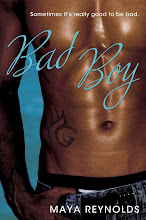
Excerpt from BAD BOY

Although she couldn’t make out the words, the hushed conversation below her on the stairs aroused Leah's journalistic instincts. She moved quietly down the stairwell. When she was ten steps above the two men, she cleared her throat.

“Hey, Zeke, I’m not interrupting anything, am I?”

The two men had been so intent on their conversation, they hadn’t heard her approach, and they looked up, startled.

Leah drew closer. As her gaze rested on Zeke’s companion, her breath caught in her throat. Damn, he’s hot.

The stranger looked Latino; he had a dusky complexion and high, sharp cheekbones. A thin scar ran down his left cheek from temple to jaw. That’s a knife scar, a tiny voice inside her brain whispered.

His black hair was combed straight back from his forehead, and he had a five o’clock shadow that made him look disreputable and a little dangerous.

Great! A bad boy. Just my type. While Leah’s brain screamed warnings, her pussy twitched with approval. After all, it had been over three hundred days. And he looked so damn sexy.

Although she had difficulty judging his height from her position, he appeared to be as tall as Zeke, which would make him at least six-feet-two.

A black T-shirt and dark jeans emphasized his broad pecs, tight stomach and narrow hips. Tattoos decorated the muscles on both arms.

Mr. Sex-on-a-Stick stared at her, his gaze intense, penetrating and . . . hungry.

The breath she had been holding since first seeing him whooshed out in a soft exhalation.

Hold it together, girl. Don’t drool right in front of him. Embarrassed by her thoughts, she glanced at Sandy’s husband.

Zeke frowned, not pleased by her sudden appear-
ance. “Leah, this is Quin,” he offered in a grudging tone, giving the name a Hispanic pronunciation so that it sounded more like “Queen” than the English Quinn.

Leah moved closer. “Hi. I’m Le—”

The stranger interrupted. “Leah Reece. I know. I read your column in Heat. Your picture runs above it.”

His voice was dark and husky. But he didn’t seem to be trying to match her face with the head shot from her e-zine. His gaze roamed up and down her body, and he didn’t appear to care that she knew it.

Leah felt warmth flood her cheeks, but she refused to look away. Instead, she challenged him, staring boldly at the bulge at the juncture between his legs. “I’m so glad to hear you read Heat,” she said. “I hope you enjoy it.”

She raised her gaze to his face, and his smile turned her legs to rubber. Gleaming white teeth raised his sexiness quotient from a ten to a fifteen . . . minimum. She grabbed the banister with one hand.

Quin smirked as if he understood his impact on her. “I enjoy Heat, all right. You’ve got a great imagination.”

She swallowed to clear the lump clogging her throat. When she was certain her voice was under control, she said, “Oh, all that imagination isn’t mine. The credit goes to the writers and editors.”

He quirked one eyebrow. “I said I read your column, not your whole magazine. After I finish with you, I’m not interested in anyone else.”

The innuendo rocked her. She moistened her suddenly dry lips with the tip of her tongue. Realizing the gesture might signal nerves—something she’d be damned if she’d show him—Leah transformed the act into a come-on. Slowly and deliberately, she licked her lips like a cat tasting cream.

His eyes darkened and his torso stiffened, making him stand a tad straighter.

Her turn to smile. A direct hit.

He shifted his feet, spreading his legs a bit farther apart, as though his jeans were suddenly too tight.

She flicked another glance at the juncture between his legs. Let’s see how Mr. Macho likes being treated like a sex object.

Now that she’d made her point, she looked at the man beside him. “Where do you know Quin from, Zeke?”

Zeke opened his mouth, then hesitated. “I . . . he . . . ah . . .” His voice trailed off.

Surprised, Leah narrowed her eyes. Zeke Prada was one of the most self-assured men she knew. She’d never seen him at a loss for words before.

Quin broke the silence. “He’s trying to tell you that he’s the cop who arrested me.” His voice was neutral, carrying no anger.

“Arrested you! For what?”

Quin’s lips twitched with amusement. “Ask him. He’ll tell you all about it.” He nodded toward Zeke. “Catch you later, man.” Looking back at Leah, he smiled again, a lazy, sensual smile that made her stomach leap.

“I’m sure we’ll see each other again, Princess. I’ll look forward to it.” Touching his right hand to his forehead, he offered her a small salute before he opened the door and stepped out of the stairwell.

Cocky bastard. Leah grinned at her unintended pun, but watched him leave with regret.

Saturday, March 07, 2009

Experience on Twitter

I have a confession to make: FaceBook and MySpace just aggravate me. Too much work for too little return.

Hoping that Twitter would suit me better, I joined that social networking site last July. But, after two posts, I walked away from it, too.

In early February, I decided to give Twitter another try . . . and to take the time to figure out how to make it work for me.

Some information may be helpful to people thinking about joining Twitter. First, your posts are limited to 140 characters, about two sentences. I find it a useful limit.

Second, Twitter is asynchronous, meaning that messages are posted, but not necessarily read by people at the same time they are posted.

Third, it is useful to remember that information spreads virally on Twitter, using the disease propagation model I described yesterday here. Information spreads on Twitter like a cold, passed from one person to the next via personal contact.

Twitter has its own language, which is cute enough to give you a sugar overload. A message is called a Tweet. When one person picks up on another's message and spreads it to others, it is called ReTweeting (abbreviation RT).

A retweeted message will be in this model:

RT @MyBestFriend She says to read Mike Shatzkin's blog. Here's the URL.

When you join Twitter, you have both a "following" and "followers." Your following are those persons whose posts you read. Your followers are those persons who read your posts.

When I abandoned Twitter last year it was because of the massive overload of messages I was receiving. This time around, the sheer volume of messages forced me to look for an app to help manage the flood. I took Mike Hyatt's recommendation and downloaded TweetDeck, which allows you to sort your followers into groups. I created about six groups for My Friends, Fellow Authors, Publishing Insiders, News and Info, etc.

Now I only glance down the complete list of messages about once a day. The rest of the time, I go directly to my groups where I have far fewer messages that I can scan in less than a minute, mark them as read and erase them.

I've learned to try and mix up the kind of tweets I post: I offer information/news in some and personal impressions in others.

In less than a month, I've picked up 117 Twitter followers. I can also see about a 10% to 12% increase in traffic to my blog.

Twitter now has a search feature and a trends feature. You can see the top ten subjects being followed on Twitter at any one moment.

I am quite happy with my Twitter experience. I get quick messages from people I like, I get up-to-date news very quickly and . . . to top it off . . . I got a great Lentil Rice Pilaf recipe from Gina Black. Thanks, Gina. Made the recipe last night with brown rice. It was fabulous!!

Taking Sunday off. See you on Monday.

Friday, March 06, 2009

What We Can Learn From Newspapers

Shelf Awareness (SA) advertises itself as "daily enlightment for the book trade." It is primarily a newsletter for booksellers and people like me who are interested in what booksellers are experiencing.

Yesterday, SA showcased both sides in the free ebook debate. You need to subscribe here to read it.

In one corner, the Chief Operating Officer of a bookstore described Thomas Nelson's new NelsonFree program as "offering the trifecta, the compass that will guide the market."

On the other side, an author said:
Nelson's offer of free e-books as a bonus to the purchase of a book is like a carcinogenic snack. It undermines the established logic of pricing . . .

Surely book publishers can learn from the newspaper industry's bad tactical decision to offer their content free online. When a large sector of their paying content consumers went online, the newspapers tried in vain to assess an online subscriber fee. Consumers don't like paying for what had been free.
IMHO, the author completely missed what the newspaper industry's dilemma taught us.

Newspapers were slow to respond to the digital age. And the vacuum they created was quickly filled by lots of new players.

Newspapers report the news. Newspaper publishers were able to keep the price of the daily paper low because they were supported by advertising dollars.

Readers migrated online NOT because news was free; they migrated because the news they found there was more immediate and up-to-date than what a daily newspaper could offer. When I used to open my newspaper at 6:00 AM, I was reading the news as of six hours earlier. Today when I open my laptop at 6:00 AM, I am reading what has happened in the last hour.

Of course, once the readers shifted their locus, those advertising dollars followed them online.

I've told this story before. Last month, following my surgery, I was not permitted to drive. Since my friends and loved ones all work for a living and were not available to chauffeur me around during the day, I decided to advertise for a driver. At 9:00 AM on a Monday morning, I went online and, within fifteen minutes had posted my ad on Craig's List. Within three hours, I'd had 33 responses. That SAME afternoon, I took a test ride with the college student whose email I selected from the group of responses.

There is no way my local newspaper could have competed with that immediacy.

As I mentioned earlier, to compound the problem, lots of new players came on the scene. The news reporting industry decentralized as individuals began to jump in with their first-person accounts bolstered by cell phone photos of events in progress. Social networks like Twitter are only too happy to pass along news as it occurs.

Way back in April, 2006, I did a post called "Are You Infected" here. The point of that post was to talk about the viral fashion in which information is communicated on the Internet. I likened it to the spread of disease described in Bernoulli's disease propagation model:
Bernoulli postulated that an epidemic begins with an infected host. The host comes in contact with other persons. Those persons will either be susceptible to the disease or resistant to it. Those who are susceptible become infected; those who are resistant do not. The newly infected persons then go off to interact with a new generation of people, and the process is repeated again and again, spreading the disease.
Again, it's tough for an industry that depends on correspondents getting to the location in order to report the news to compete with that immediate local "reporter" who speaks the language, knows the people, has his own cell phone camera and a social network only too happy to "publish" his news and spread it.

A couple of weeks ago here, I quoted an op/ed on the newspaper industry that said the "challenge for papers today is to determine what content readers will value enough to pay for it online."

If newspapers cannot compete on reporting the news, maybe they should sell different content . . . in-depth analysis, popular columnists, etc.

Newspapers ignored (or more accurately, "dithered over") the growing crisis they faced for too long. My personal belief is they were so confident of their "professional" status winning out against "amateurs" that they didn't take action. By the time they began to shift their focus, they were already fighting a losing battle.

If you want a parallel to the book publishing world, that unwitting arrogance is where you need to look. The Big Six publishers are so confident of their dominance in the industry, that they are failing to adapt to consumer's changing habits fast enough or dramatically enough. Unless they begin to "hear" their customers and meet those customers' needs, they are going to find competitors popping up all over the place, willing to offer what they refuse to give.

There are publishers who are adapting. I've written about Thomas Nelson and Harlequin previously. Although on the surface they are very different (Nelson is the world's largest Christian publisher and Harlequin is the best-known romance publisher), they share some similarities. First, they own a specific corner of the market, their niche, if you will. But they've also shown a remarkable willingness to think outside the box--trying new initiatives and abandoning industry truisms. And, finally, they listen to their customers and pay attention to what they learn.

I had a friend who opened a store about ten years ago. When I had the time, I'd go over to help him. I quickly noticed a worrying dynamic. Customers would come in, asking for a specific item, and he would try to convince them to buy what he had in stock . . . which was MUCH more expensive. Over several weeks, a lot of potential customers asked again and again for the same item. When I asked why he didn't put in a supply of what they kept asking for, he told me that HIS product was a much better one.

Six months later, he closed the shop.

More on Looking to the Future

On Saturday, I reported here that Amazon had backed down from the debate over the text-to-speech feature of their Kindle 2.

While I'm not a fan of Amazon, I agreed with them that t-t-s was legal. I thought the Authors Guild stance was regressive. Back on February 13, I said:
If history has taught us anything, it is that technology cannot be stopped . . . . IMHO, the Authors Guild does writers no favors by encouraging them to cling to a model that is ultimately doomed to failure . . . Writers need to learn to straddle both worlds--print and e-books--and to move forward with their readers, not against them.
Two bloggers I respect agreed with me.

On Sunday, Seth Godin, an author, had a post here titled "Beware of Trade Guilds Maintaining the Status Quo." Godin said:
Whenever a trade association raises the barricades and tries to lobby their way into maintaining the status quo, they are doing their members a disservice. Instead of spending time and insight and effort reinventing what they do and organizing for a better future, the members are lulled into a sense of security that somehow, somehow, the future will be just like today.

The key takeaway isn't that the lobbying doesn't work (though it usually doesn't). The problem is that the lobbying takes your attention away from the changes you can actually control and implement.
The following day, Monday, Michael Hyatt, a publisher, said here:
As Amazon itself has argued, no audio is recorded. In principle, it is no different than me handing my book to a friend and asking him to read it aloud to me. Nothing is recorded. Nothing is performed . . . From my point-of-view, this feature is actually an added value that serves to make reading more accessible by more people in more situations.
Of course, a few days later, Mike and his company Thomas Nelson put their money where their opinions were, announcing NelsonFree, an initiative in which they will offer the physical book, the audio book and the ebook . . . all for the same price.

It's an exciting time in the publishing world.

Thursday, March 05, 2009

Breaking News: B&N Acquires Fictionwise

Teleread offered a scoop this morning:
Fictionwise has been acquired by Barnes & Noble in a stock deal today . . . Fictionwise will still be managed by its current team as an independent entity under Barnes & Noble. Scott said that Barnes & Noble was fully behind Fictionwise’s philosophy of “platform neutrality and eReader everywhere”.
Go here to read the whole story.

Random House To Offer Free EBooks

Random House, the world's largest trade publisher, issued a press release yesterday, announcing its new Suvudu Free First Book Library.

The initiative will offer fantasy and sci-fi readers access to free ebooks of the first book in a series, hoping to entice them into purchasing later releases in the series and build the author's fan base.

The press release said:
The books will be made available through Random House’s science fiction/fantasy portal, Suvudu.com, as well as on other content services, including Scribd.com and the Stanza ebook reader application for the iPhone.
The first five free books are:
“His Majesty’s Dragon” by Naomi Novik
“Assassin’s Apprentice” by Robin Hobb
“Settling Accounts: Return Engagement” by Harry Turtledove
“Red Mars” by Kim Stanley Robinson
“Blood Engines” by T.A. Pratt
Go here to access the Suvudu First Book Library.

Wednesday, March 04, 2009

Amazon Strikes Again

Serendipity all over again.

Hours after my post about the Iceberg Reader app for the iPhone, I heard a news report on ABC that Amazon is offering a free Kindle application for the iPhone and iTouch.

The New York Times has the article today:
The move comes a week after Amazon started shipping the updated version of its Kindle reading device. It signals that the company may be more interested in becoming the pre-eminent retailer of e-books than in being the top manufacturer of reading devices . . .

With the announcement, Amazon appears to be hedging its bets.

Analysts had also thought Amazon was closely following the template Apple had created with the iPod and trying to dominate the market with a ubiquitous, must-have consumer electronics device. Now it appears Amazon is more interested in selling as many e-books as possible on its site, and collecting the royalties, while strengthening its ties with customers, many of whom will buy other products from Amazon if they start buying e-books.
The article has a consultant indicating that Amazon is smarter than everyone thought.

Not only smarter; more ambitious.

Go here to read the New York Times article.

Seeing The Iceberg eReader In Action

I decided to stick with my "future of the book" theme again today.

I want to revisit ScrollMotion, an app developer who made news back in December with their iPhone ebook application, the Iceberg Reader. The company had landed deals with half the Big Six publishing houses and were talking to the rest.

The New York Times reported here on December 23:
Scroll Motion, announced this week that it would begin selling e-books for the iPhone from major publishers like Simon & Schuster, Random House and Penguin.
Wired wrote about the Iceberg Reader here on December 22:
Having these big names is a big step forward for iTunes itself in becoming an e-book shop and the iPhone in becoming a legitimate e-book reader and competitor to products like the Kindle and the Sony E-Reader . . .

Each book is a separate application using Scroll Motion's new reader technology called Iceberg and is wrapped only in the FairPlay iTunes DRM, putting Apple directly into the e-book business by allowing them to pick up a certain percentage of each sale.
I first mentioned the company in my blog of January 16th here.

To be honest, I kind of blew the Iceberg reader off when Publishers Weekly said here on December 23:
Like the Kindle, books can be downloaded wirelessly, though unlike the Kindle which sells most titles for $9.99 or less, prices for the Iceberg-formatted books are the same or more as retail list -- $27.50 for the Paolini [Brisingr], $23.95 for the Kneale [When We Were Romans], $12.99 for the Westerfeld [Extras] ($2 more than the paperback).
Yesterday Publishers Lunch reminded me of the Iceberg Reader when they said about it:
. . . a new app [from ScrollMotion] shows what makes this technology different from popular text readers from Stanza, eReader and Shortcovers: the graphics. They have adapted James Patterson's graphic novel DANIEL X into a paid iTunes app that "plays" the book more like a video (and gets around the lack of Flash for iPhone/iPod Touch).
Here's a link to the promotional video on YouTube.

The video is impressive . . . even if pricing the ebook higher than the paperback is absurd.

Tuesday, March 03, 2009

Announcing NelsonFree

Still on the subject of the future of the book: Got a tweet from Michael Hyatt of Thomas Nelson, the world's largest Christian publisher.

He said: "We just announced, 'NelsonFree,' a program that allows readers to receive content in multiple formats for one price."

Publishers Weekly (PW) has an article on NelsonFree:
Thomas Nelson announced today the launch of NelsonFree, a program that allows readers to receive content in multiple formats—physical book, audiobook and e-book—without making multiple purchases. With NelsonFree, the price of the hardcover book includes both the audio download and the e-book . . .

Joel Miller, v-p and publisher, business and culture, said Nelson currently has plans to release a dozen format-free books in this and related categories, and will monitor consumer response to determine whether or not it adds more titles. He also said Nelson will not raise the price of hardcovers in the NelsonFree program . . .

Nelson president and CEO Michael S. Hyatt said, “I believe that the industry is shifting and we, as publishers, need to explore new methods of getting our content into the hands of customers.”
Thomas Nelson continues to impress me with their forward thinking approach to the business of publishing.

Go here to read the entire PW article.

Another Post On The Future of Books

I seem to have a theme going here today: the future of books.

Check out Mike Shatzkin's blog for this morning. Titled "Enhanced EBooks, Part I," it's addressed to authors. I also found this comment interesting:
I also want to stress that I’m thinking this through in here from the perspective of the general trade publisher: one not yet focused on niches and one whose brand is not a consumer brand. I don’t expect houses like Wiley, O’Reilly, or Harlequin to see as much of a gap between what is said here and their present practices as those houses that dominate the bestseller lists and have the most high profile authors.
Mike presents three ideas relating to the cost of ebooks, the pricing of ebooks and what an ebook is.

Go here to read the entire post.

Checking In On The Future of the Book

Almost three years ago on April 7, 2006, I did a post on the Institute for the Future of the Book (IF:B). Since then, I've done two more posts on the IF:B.

The Institute is a project of the Annenberg Center for Communication at the University of Southern California and is based in Brooklyn and in London. The Institute is funded by the MacArthur and Mellon Foundations.

The mission of the IF:B includes this statement:
Starting with the assumption that the locus of intellectual discourse is shifting from printed page to networked screen, the primary goal of the Institute for the Future of the Book is to explore, understand and influence this shift.
The IF:B called its project Sophie.

Sophie was a social engineering experiment, an attempt to create documents that could live and breathe on the Internet, where readers could interact with each other and with the author. Publishers Lunch said Sophie "will make it easier to create electronic books that incorporate today's technologies to 'present a reading environment' and 'enable readers and writers to have conversations inside of books.'"

Last month, I did a post saying how sorry I was not to be at the O'Reilly Tools of Change conference in New York. Suzanne Axtell of O'Reilly Media made a comment to that post giving the link to video clips from the conference.

I was hugely grateful to Suzanne for the link. Since that time, I've been having a great time watching the video clips.

Today I'd like to talk about the presentation given by Robert Stein, the director of the Institute for the Future of the Book and a Senior Fellow at the London School of Economics.

Stein begins by saying that he started the Institute five years ago "to basically think about how publishing would evolve in the digital era."

He describes the evolution of his understanding over the past thirty years of what a book is and describes his breakthrough moment. That moment came when he stopped focussing on the physical form of the book and--instead--focussed on how the book is used.

Stein points out that, when he began thinking about this around 1980 after a demonstration at MIT, he began to call books "user-driven media." He recognized that the reader was in complete control of the sequencing and the pacing of how and when the book's material was accessed. This made books unique when compared to movies, television and radio--what Stein started to call "producer-driven media."

He realized:
". . . when the micro-processors got involved that these traditionally producer-driven media would be transformed into user-driven media."
Stein began "publishing" books on CD-ROM, DVDs and floppy discs.

When the Internet came along, Stein had to again separate his understanding of the book from the physical object itself. His new definition became:
"Books are what humans use to move ideas around in time and space and that the locus of that effort would shift from pages to screens."
Eventually when he started the IF:B, he came to understand that--more important than people getting data and content off the network--would be connecting those people to each other on the network.

The IF:B experimented with authors posting their research online as they write, permitting interested readers to read along and comment as they read. Associate Professor Mitchell Stevens of NYU and Associate Professor McKenzie Wark, author of Gamer Theory, were the first two experiments. Stein calls this process "public reading" and says it completely changes the boundaries of a classroom, essentially liberating students from the physical boundaries of their class, permitting them to comment wherever they are.

Stein's latest definition of a book is:
"A book is a place where readers, and sometimes authors, can congregate."
Then Stein said my favorite thing of his entire talk: He believes an old-school author's commitment has been to engage with a subject matter on behalf of future readers. But a new-school author makes a commitment to engage with readers in the context of a particular subject.

Stein believes that, in the future, reading will be a social experience. He further believes the principal role of publishers in the future will be to build and nurture vibrant communities for authors and their readers.

See Stein's presentation for yourself here.

Monday, March 02, 2009

Revisiting the Class Action Suit Against Amazon

All the interest in Amazon backing down on the text-to-speech initiative (boy, don't you know the folks at Audible.com had a thing or two to say to their boss Jeff Bezos?) reminded me to do an update on the class action lawsuit filed by Booklocker.com against Amazon.

This goes back to last year when Amazon informed publishers who used print-on-demand technology (POD) that they would need to use Amazon's BookSurge POD unit if they wanted to sell their books directly on Amazon.com. You can read my post from last March here.

Two months later, on May 19, 2008, BookLocker.com filed a federal class action lawsuit against Amazon.com in the U.S. District Court of Maine, claiming improper conduct on the part of Amazon. The lawsuit alleged:
Amazon’s improper conduct has presented Plaintiff and members of the Class with an untenable choice: either continue to lose business due to the improper restriction of the Direct Amazon Sales Channel or be forced into signing with BookSurge.
Earlier this month, on February 10, BookLocker's attorneys filed an amended complaint to address issues the judge raised and to reiterate their request for a jury.

I found the new complaint much more direct in its language:
Plaintiff BookLocker.com, Inc. (“BookLocker” or “Plaintiff”), on its own behalf and on behalf of the class defined herein, brings this antitrust action to obtain injunctive and monetary relief against Amazon.com, Inc. (“Amazon”) with regard to an anticompetitive tying arrangement that violates section 1 of the Sherman Act, 15 U.S.C. § 1 . . .

Amazon’s practice of requiring POD publishers to use BookSurge’s printing services in order for Amazon to sell those books through the Bookstore constitutes an illegal tying arrangement that has caused, and will continue to cause, damage to Plaintiff and the Class. Specifically, Amazon’s unlawful tying arrangement prevents POD publishing companies, such as Plaintiff, from selecting a printing service on a competitive basis, but rather coerces publishing companies into using BookSurge’s printing services, even though those services are both more expensive and result in an inferior product than the printing services offered by BookSurge’s competitors.
Last spring I took a lot of grief from other authors and bloggers because of my extreme negative reaction to this move by Amazon. A common response was that this was only going to affect the small POD publishers and why should anyone else care?

I tried to point out in a post here that I saw this initiative as the first of a series of moves Amazon would take in what I believe is a much larger scheme to dominate the publishing industry.

Two weeks after that post, Tim O'Reilly wrote the following on his blog here:
Amazon has seemingly embarked on a number of strategies to lock-in both consumers and publishers.

It is a free-market economy, and competition is the name of the game. But as Amazon's market power increases, it needs to be mindful of whether its moves, even those that may be good for the company in the short term, are ultimately destructive of the ecosystem on which they depend.
I'll be watching this lawsuit with enormous interest.