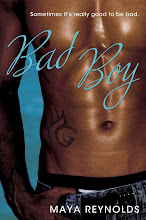
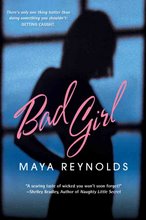
Just a note. The "Bad Girl" contest ended last night at midnight.
I'm still reading the submissions. I'll post the winner on Monday.
Thanks to everyone who entered.
Hugs,
Maya
Saturday, March 04, 2006


Friday, March 03, 2006
The Wal-Mart Effect--Part IV
This is the fourth in a series of blogs on the new book "The Wal-Mart Effect" by Charles Fishman.
I explained in previous posts that Wal-Mart's entire empire is built on providing products at the lowest possible cost. They are relentless in their push for lower prices. Vendors are constantly asked to produce merchandise at lower prices, even if it means producing a lower-quality item or taking a plant overseas to get the benefit of cheaper labor and less-restrictive laws.
Fishman devotes an entire chapter to "The Man Who Said No to Wal-Mart."
The man in question was Jim Wier. Three years ago, Wier was then the CEO of the parent company of Snapper Lawn Mowers and, according to Fishman, he "politely but firmly pulled all Snapper products from Wal-Mart...a move that instantly cut Snapper's sales by almost 20 percent."
At the time Wier made the decision, Snapper already had a contract with Wal-Mart. Wier came into the picture when his company, Simplicity, purchased Snapper. He understood why the former Snapper management had signed a deal with Wal-Mart. He described it thus: "'The Wal-Mart volume...Once you get hooked on the volume, it's like getting hooked on cocaine, You've created a monster for yourself.'"
But Wier was looking to the future of Snapper. The company had the reputation of making a well-built quality product. This was exactly the reason why Wal-Mart wanted Snapper to produce Wal-Mart's flagship lawn mower brand. At the time, Wal-Mart already had six lawn mowers priced under $200 while Snapper's cheapest lawn mower cost $350. Staying in bed with Wal-Mart meant that Snapper would have to find ways to cut costs: strategies like using cheaper materials and building overseas factories.
Wier was concerned at several levels. Eighty percent of Snapper's products were being sold by a network of ten thousand independent dealers. How were they going to feel if Snapper undercut them by selling a cheaper product through Wal-Mart? How were the clients of the independent dealers going to feel? "Why should I pay $350 for this Snapper mower when I can buy a Snapper mower at Wal-Mart for $150 less?"
The CEO was also worried that selling through Wal-Mart would tarnish the Snapper image. He is quoted saying, "'They wanted to do the same thing with our products that they do with everyone's. They want more product at a lesser price. To achieve that, after a while, you do start taking some of the quality and the features out.'" A $200 lawn mower just wouldn't perform the way that the $350 mower would.
Fishman says, Wier "looked into a future of supplying Snapper lawn mowers and snowblowers to Wal-Mart, and saw a whirlpool of lower prices, collapsing profitability, offshore manufacturing, and the gradual but irresistible corrosion of the very qualities for which Snapper was known...[He] looked into the future and saw a death spiral. So he pulled out."
But that decision was only the start. Now Snapper had to be able to produce their quality lawn mower in the most efficient manner possible in order to remain viable in the market. To keep making their mowers in the U.S., Snapper installed robots and lasers and computer-controlled equipment. They measure the productivity of their factory workers "every hour, every day, every month, every year."
Fishman says, "The Snapper lawn mower factory hums with discipline and focus and urgency. It operates, literally, in Wal-Mart time. It must. It lives in the Wal-Mart ecosystem." But Wier and his successors found a way to create quality products in a U.S. factory and still remain competitive. All because Jim Wier is the man who said no to Wal-Mart.
I explained in previous posts that Wal-Mart's entire empire is built on providing products at the lowest possible cost. They are relentless in their push for lower prices. Vendors are constantly asked to produce merchandise at lower prices, even if it means producing a lower-quality item or taking a plant overseas to get the benefit of cheaper labor and less-restrictive laws.
Fishman devotes an entire chapter to "The Man Who Said No to Wal-Mart."
The man in question was Jim Wier. Three years ago, Wier was then the CEO of the parent company of Snapper Lawn Mowers and, according to Fishman, he "politely but firmly pulled all Snapper products from Wal-Mart...a move that instantly cut Snapper's sales by almost 20 percent."
At the time Wier made the decision, Snapper already had a contract with Wal-Mart. Wier came into the picture when his company, Simplicity, purchased Snapper. He understood why the former Snapper management had signed a deal with Wal-Mart. He described it thus: "'The Wal-Mart volume...Once you get hooked on the volume, it's like getting hooked on cocaine, You've created a monster for yourself.'"
But Wier was looking to the future of Snapper. The company had the reputation of making a well-built quality product. This was exactly the reason why Wal-Mart wanted Snapper to produce Wal-Mart's flagship lawn mower brand. At the time, Wal-Mart already had six lawn mowers priced under $200 while Snapper's cheapest lawn mower cost $350. Staying in bed with Wal-Mart meant that Snapper would have to find ways to cut costs: strategies like using cheaper materials and building overseas factories.
Wier was concerned at several levels. Eighty percent of Snapper's products were being sold by a network of ten thousand independent dealers. How were they going to feel if Snapper undercut them by selling a cheaper product through Wal-Mart? How were the clients of the independent dealers going to feel? "Why should I pay $350 for this Snapper mower when I can buy a Snapper mower at Wal-Mart for $150 less?"
The CEO was also worried that selling through Wal-Mart would tarnish the Snapper image. He is quoted saying, "'They wanted to do the same thing with our products that they do with everyone's. They want more product at a lesser price. To achieve that, after a while, you do start taking some of the quality and the features out.'" A $200 lawn mower just wouldn't perform the way that the $350 mower would.
Fishman says, Wier "looked into a future of supplying Snapper lawn mowers and snowblowers to Wal-Mart, and saw a whirlpool of lower prices, collapsing profitability, offshore manufacturing, and the gradual but irresistible corrosion of the very qualities for which Snapper was known...[He] looked into the future and saw a death spiral. So he pulled out."
But that decision was only the start. Now Snapper had to be able to produce their quality lawn mower in the most efficient manner possible in order to remain viable in the market. To keep making their mowers in the U.S., Snapper installed robots and lasers and computer-controlled equipment. They measure the productivity of their factory workers "every hour, every day, every month, every year."
Fishman says, "The Snapper lawn mower factory hums with discipline and focus and urgency. It operates, literally, in Wal-Mart time. It must. It lives in the Wal-Mart ecosystem." But Wier and his successors found a way to create quality products in a U.S. factory and still remain competitive. All because Jim Wier is the man who said no to Wal-Mart.
Thursday, March 02, 2006
Book Packaging and Work-for-Hire Writing
I'm going to depart from my planned blog on "The Wal-Mart Effect" to talk about something else that came up today.
Miss Snark had a blog entitled "Work for Hire Versus Advances." A woman suggested that writers would do better to sell their work for a flat fee instead of continuing to operate on the "advance and then royalty" system. I agree with Miss Snark that this premise is nonsense. However, I was a little surprised by the number of people who did not seem to be aware of the "work for hire" world of book packagers. And, even more, the misperceptions about that world.
For those of you not familiar with the term, book packaging refers to those companies that provide a variety of contractual publishing services. If requested to do so, a book packager can provide a writer, editor, artist and even printer in order to bring a book to market.
Jenna Glatzer wrote an article on the subject of book packaging for Writer's Digest Magazine. You can read that article, which is reprinted at www.underdown.org/packaging/htm. She describes book packaging as the "quiet underbelly of the publishing world, [that]...remains an unsaturated market for ambitious freelance writers."
She says that there are "two main reasons for a publishing house to hire a packager: labor-intensive books, and series books." Essentially, some publishers choose to outsource these two types of tasks.
Glatzer also talks about Edward Stratemeyer, describing him as the father of book packaging. Stratemeyer was the genius behind some of the most famous series of books for young people, penned by ghostwriters under his direction. Here is a list of just a few of the series produced by the Stratemeyer Syndicate:
Bobbsey Twins (72 volumes, 1904-1979) Laura Lee Hope (pseudonym)
Hardy Boys (190 volumes, 1927-2005) Franklin W. Dixon (pseudonym)
Nancy Drew (175 volumes, 1930-2003) Carolyn Keene (pseudonym)
Tom Swift (40 volumes, 1910-1941) Victor Appleton (pseudonym)
According to Wikipedia, "Stratemeyer pioneered the technique of producing long-running, consistent series of books using a team of freelance authors to write standardized novels, which were published under a pen name owned by his company. Through his Stratemeyer Syndicate, Stratemeyer produced short plot summaries for the novels in each series, which he sent to other writers who completed the story, writing a specified number of pages and chapters."
Although the Stratemeyer Syndicate was among the most successful companies to use ghostwriters to produce books for young people, it was far from the only one. The "Goosebumps" series of horror novellas created by R. L. Stine included sixty-two books published from 1992 to 1997. Many of the later ones were ghostwritten by work-for-hire writers.
Francine Pascal created the "Sweet Valley High" series, which she also farmed out to several ghostwriters. The series began in 1984 and finished in 1998 with over 150 books credited to Pascal.
The advantage of work-for-hire is that it produces revenue for a writer in exchange for completing a specific project, often from an outline. The writer's name is not on the project and the writer forfeits all future rights to the project. However, the income can be very welcome in an uncertain publishing environment. There are writers who supplement their "creative" careers by doing work-for-hire on the side.
Just for fun, I googled "book packagers" and pulled up 251,000 entries in less than a second. There's a whole other world for writers out there, folks.
Miss Snark had a blog entitled "Work for Hire Versus Advances." A woman suggested that writers would do better to sell their work for a flat fee instead of continuing to operate on the "advance and then royalty" system. I agree with Miss Snark that this premise is nonsense. However, I was a little surprised by the number of people who did not seem to be aware of the "work for hire" world of book packagers. And, even more, the misperceptions about that world.
For those of you not familiar with the term, book packaging refers to those companies that provide a variety of contractual publishing services. If requested to do so, a book packager can provide a writer, editor, artist and even printer in order to bring a book to market.
Jenna Glatzer wrote an article on the subject of book packaging for Writer's Digest Magazine. You can read that article, which is reprinted at www.underdown.org/packaging/htm. She describes book packaging as the "quiet underbelly of the publishing world, [that]...remains an unsaturated market for ambitious freelance writers."
She says that there are "two main reasons for a publishing house to hire a packager: labor-intensive books, and series books." Essentially, some publishers choose to outsource these two types of tasks.
Glatzer also talks about Edward Stratemeyer, describing him as the father of book packaging. Stratemeyer was the genius behind some of the most famous series of books for young people, penned by ghostwriters under his direction. Here is a list of just a few of the series produced by the Stratemeyer Syndicate:
Bobbsey Twins (72 volumes, 1904-1979) Laura Lee Hope (pseudonym)
Hardy Boys (190 volumes, 1927-2005) Franklin W. Dixon (pseudonym)
Nancy Drew (175 volumes, 1930-2003) Carolyn Keene (pseudonym)
Tom Swift (40 volumes, 1910-1941) Victor Appleton (pseudonym)
According to Wikipedia, "Stratemeyer pioneered the technique of producing long-running, consistent series of books using a team of freelance authors to write standardized novels, which were published under a pen name owned by his company. Through his Stratemeyer Syndicate, Stratemeyer produced short plot summaries for the novels in each series, which he sent to other writers who completed the story, writing a specified number of pages and chapters."
Although the Stratemeyer Syndicate was among the most successful companies to use ghostwriters to produce books for young people, it was far from the only one. The "Goosebumps" series of horror novellas created by R. L. Stine included sixty-two books published from 1992 to 1997. Many of the later ones were ghostwritten by work-for-hire writers.
Francine Pascal created the "Sweet Valley High" series, which she also farmed out to several ghostwriters. The series began in 1984 and finished in 1998 with over 150 books credited to Pascal.
The advantage of work-for-hire is that it produces revenue for a writer in exchange for completing a specific project, often from an outline. The writer's name is not on the project and the writer forfeits all future rights to the project. However, the income can be very welcome in an uncertain publishing environment. There are writers who supplement their "creative" careers by doing work-for-hire on the side.
Just for fun, I googled "book packagers" and pulled up 251,000 entries in less than a second. There's a whole other world for writers out there, folks.
Wednesday, March 01, 2006
How to Write a Sequel
I wrote last night about the delicate balance an author faces when trying to write the second (or later) books in a series. Each book must be able to stand alone, but--at the same time--build on what has gone before.
I approached a solution from two angles: (1) I reviewed two of the series that I enjoy (J.D. Robb's Eve Dallas and Robert B. Parker's Spenser) and (2) I emailed the first three chapters of my sequel to friends who haven't yet read the first book in the series.
Interestingly enough, the results were the same from both approaches. In looking at the two long-running series, I found brief explanatory mentions when characters were re-introduced and only passing comments to backstory. These rarely occurred in the first chapter in which the action for the new story was being set up.
My friends actually complained that they wanted more backstory. Then, when I offered it to them, they complained that I was giving too much detail. So, it appears that what is needed are very brief references that help to explain the relationship of characters to each other without a lot of detail.
Okay, back to the drawing board.
I approached a solution from two angles: (1) I reviewed two of the series that I enjoy (J.D. Robb's Eve Dallas and Robert B. Parker's Spenser) and (2) I emailed the first three chapters of my sequel to friends who haven't yet read the first book in the series.
Interestingly enough, the results were the same from both approaches. In looking at the two long-running series, I found brief explanatory mentions when characters were re-introduced and only passing comments to backstory. These rarely occurred in the first chapter in which the action for the new story was being set up.
My friends actually complained that they wanted more backstory. Then, when I offered it to them, they complained that I was giving too much detail. So, it appears that what is needed are very brief references that help to explain the relationship of characters to each other without a lot of detail.
Okay, back to the drawing board.
Tuesday, February 28, 2006
A New and Different Writing Challenge
During February, I've been working on the sequel to my paranormal novel "Witch Vampire?". And, I've encountered a new writing challenge--one I've not met before.
As I've said in previous blogs, I am a "pantser," meaning I write by the seat of my pants. I will frequently be inspired to start a story by an idea for a single scene or by a specific mental image. Usually, I will start by trying to translate that scene/image to paper and only then build the story around it. Sometimes it works; sometimes it doesn't.
Because I am essentially thinking the story out as I write it, I have a terrible habit of dumping a huge amount of backstory into my first chapters. By backstory, I'm talking about what happens before the story starts; the history of the characters, their backgrounds. And, as any writer worth her salt knows, backstory slows down the action and forward motion. It is also narrative that can bore a reader to tears.
Through a lot of trial and error, I've learned not to fight my own writing style. I allow myself to write the backstory. The exercise helps to warm me up to the novel and to jumpstart me. However, once I'm finished with the book, I go back and cut out the entire backstory. I then feed it into the novel in bits and pieces throughout the whole book--a line here and a sentence there.
Back to my current dilemma. I'm in the beginning chapters of "Witch Vampire 2" (working title). It's going remarkably well--probably because I already know my characters and don't need to work out their goals and motivations. I'm entirely focused on their conflicts. That means I don't have a backstory to write. It's already established in my mind.
Now, here's the rub: In addition to being the second in a series, this book must be able to stand alone. That means that someone picking it up for the first time has to be able to understand and enjoy it.
So, after training myself NOT to put backstory in the early chapters, I now find myself having to give enough backstory to help ground the reader. It's a delicate balance and one I'm not sure I'm handling very well right now.
After several years of writing challenges, it came as a bit of a surprise to have a new one rise up from out of nowhere.
I think I'll spend some time re-reading the series that I like to see how other writers handle this.
As I've said in previous blogs, I am a "pantser," meaning I write by the seat of my pants. I will frequently be inspired to start a story by an idea for a single scene or by a specific mental image. Usually, I will start by trying to translate that scene/image to paper and only then build the story around it. Sometimes it works; sometimes it doesn't.
Because I am essentially thinking the story out as I write it, I have a terrible habit of dumping a huge amount of backstory into my first chapters. By backstory, I'm talking about what happens before the story starts; the history of the characters, their backgrounds. And, as any writer worth her salt knows, backstory slows down the action and forward motion. It is also narrative that can bore a reader to tears.
Through a lot of trial and error, I've learned not to fight my own writing style. I allow myself to write the backstory. The exercise helps to warm me up to the novel and to jumpstart me. However, once I'm finished with the book, I go back and cut out the entire backstory. I then feed it into the novel in bits and pieces throughout the whole book--a line here and a sentence there.
Back to my current dilemma. I'm in the beginning chapters of "Witch Vampire 2" (working title). It's going remarkably well--probably because I already know my characters and don't need to work out their goals and motivations. I'm entirely focused on their conflicts. That means I don't have a backstory to write. It's already established in my mind.
Now, here's the rub: In addition to being the second in a series, this book must be able to stand alone. That means that someone picking it up for the first time has to be able to understand and enjoy it.
So, after training myself NOT to put backstory in the early chapters, I now find myself having to give enough backstory to help ground the reader. It's a delicate balance and one I'm not sure I'm handling very well right now.
After several years of writing challenges, it came as a bit of a surprise to have a new one rise up from out of nowhere.
I think I'll spend some time re-reading the series that I like to see how other writers handle this.
Monday, February 27, 2006
The Latest on Google Book Search
This post is a little later than I'd planned. I got home from my critique group with my back aching. Too much time spent today sitting in front of the computer and then a whole evening in a chair at the meeting.
I decided to take an 11:00 PM walk around my block to work the kinks out. It was a beautiful night. Just enough light to be able to see to walk. Not enough light to interfere with star watching.
When I first moved into this neighborhood, I used to see coyotes on a pretty regular basis. However, civilization has been encroaching on their habitat. It's probably been six months since I've seen one.
Tonight, I turned a corner and stopped. Not ten feet away, a coyote was standing, watching me. He was standing so still I might have missed him except for the fact that his eyes glinted in the light from a corner streetlamp. He was about the size of a German Shepherd, but looked scarily dangerous.
I used to walk with my border collie, but she died last March. Now I walk with a thick walking stick. Fortunately, neither the coyote nor I was interested in a confrontation. I just kept going, but kept an eye on him. He never moved. It was both frightening and thrilling to be so close to wildlife.
As promised, tonight's blog is about Google's Book Search and the continuing struggle with two lawsuits filed against it by groups of authors and publishers.
Google's Book Search is not very different from Amazon's Search Inside program. It permits an Internet user to read approximately five pages of a specific book to gain a sense of what the book is about. Like Amazon, if the book is available for sale, Google provides access to information on how to buy the entire book.
Google has gotten crossways with the groups suing it because of Google's plan to scan all kinds of books for the Book Search program, without getting permission to do so ahead of time. This has raised issues of copyright.
I am not going to spend time going over all the details of this matter. I've blogged on it nearly a dozen times since October. If you're interested in all the nitty-gritty, here are the dates and titles of those posts:
10/20 Google is being sued again
10/27 Let's look at what Google is really talking about
11/4 Big days in publishing news
11/6 Another team is suiting up
11/11 More on the copyright issue
11/12 Even more on Google Print and copyrights
11/13 Copyright, copyright
11/19 Latest Google news
11/21 I'm not an apologist for Google--I swear
11/24 A unique perspective on Google's Library Project
12/11 Looking at copyrights from another angle
Last fall, two groups sued Google in Federal District Court in New York. Those cases have not come to trial yet. However, a recent court decision across the country in California may raise problems for Google.
Saturday's New York Times reported on a recent federal decision by Judge A. Howard Matz of the District Court for the Central District of California. In that case, the judge ruled that "Google's use of thumbnail-sized reproductions in its image search program violated the copyright of Perfect 10, a publisher of X-rated magazines and Web sites, because it undermined that company's ability to license those images for sale to mobile phone users." (NYT)
Google is already at a disadvantage. It's no accident that the two groups of publishers and authors suing it are doing so in New York. There have been precedents set in that court which might not be favorable to Google.
The California case is not a direct precedent for the Book Search lawsuits. However, the judge did make a statement that "the public benefits of Google's search engine does not necessarily outweigh the rights of copyright holders." (NYT)
Google is, of course, putting the best face on the decision. They insist that the Perfect 10 case will not impact the other services which Google offers.
It will be interesting to see if this decision makes Google more agreeable to a compromise regarding its original and wide-ranging plan for Book Search. Google is already battling the U.S. Justice Department with respect to privacy rights. They may decide that they are spending too many dollars in courtrooms.
As that New York court date approaches, we'll probably hear more.
I decided to take an 11:00 PM walk around my block to work the kinks out. It was a beautiful night. Just enough light to be able to see to walk. Not enough light to interfere with star watching.
When I first moved into this neighborhood, I used to see coyotes on a pretty regular basis. However, civilization has been encroaching on their habitat. It's probably been six months since I've seen one.
Tonight, I turned a corner and stopped. Not ten feet away, a coyote was standing, watching me. He was standing so still I might have missed him except for the fact that his eyes glinted in the light from a corner streetlamp. He was about the size of a German Shepherd, but looked scarily dangerous.
I used to walk with my border collie, but she died last March. Now I walk with a thick walking stick. Fortunately, neither the coyote nor I was interested in a confrontation. I just kept going, but kept an eye on him. He never moved. It was both frightening and thrilling to be so close to wildlife.
As promised, tonight's blog is about Google's Book Search and the continuing struggle with two lawsuits filed against it by groups of authors and publishers.
Google's Book Search is not very different from Amazon's Search Inside program. It permits an Internet user to read approximately five pages of a specific book to gain a sense of what the book is about. Like Amazon, if the book is available for sale, Google provides access to information on how to buy the entire book.
Google has gotten crossways with the groups suing it because of Google's plan to scan all kinds of books for the Book Search program, without getting permission to do so ahead of time. This has raised issues of copyright.
I am not going to spend time going over all the details of this matter. I've blogged on it nearly a dozen times since October. If you're interested in all the nitty-gritty, here are the dates and titles of those posts:
10/20 Google is being sued again
10/27 Let's look at what Google is really talking about
11/4 Big days in publishing news
11/6 Another team is suiting up
11/11 More on the copyright issue
11/12 Even more on Google Print and copyrights
11/13 Copyright, copyright
11/19 Latest Google news
11/21 I'm not an apologist for Google--I swear
11/24 A unique perspective on Google's Library Project
12/11 Looking at copyrights from another angle
Last fall, two groups sued Google in Federal District Court in New York. Those cases have not come to trial yet. However, a recent court decision across the country in California may raise problems for Google.
Saturday's New York Times reported on a recent federal decision by Judge A. Howard Matz of the District Court for the Central District of California. In that case, the judge ruled that "Google's use of thumbnail-sized reproductions in its image search program violated the copyright of Perfect 10, a publisher of X-rated magazines and Web sites, because it undermined that company's ability to license those images for sale to mobile phone users." (NYT)
Google is already at a disadvantage. It's no accident that the two groups of publishers and authors suing it are doing so in New York. There have been precedents set in that court which might not be favorable to Google.
The California case is not a direct precedent for the Book Search lawsuits. However, the judge did make a statement that "the public benefits of Google's search engine does not necessarily outweigh the rights of copyright holders." (NYT)
Google is, of course, putting the best face on the decision. They insist that the Perfect 10 case will not impact the other services which Google offers.
It will be interesting to see if this decision makes Google more agreeable to a compromise regarding its original and wide-ranging plan for Book Search. Google is already battling the U.S. Justice Department with respect to privacy rights. They may decide that they are spending too many dollars in courtrooms.
As that New York court date approaches, we'll probably hear more.
Bob Strikes Again
I'm off to my critique group. Will be back later tonight to blog about Google Print.
In the meantime, I've finally accepted that I need to buy childproof locks for my cabinets.
Bobbin, my kitten, has been working on opening the cabinets for nearly a year. Sometime in the last few days, he finally figured out that--if he stood on his hind legs as tall as he could and slid his open claws into the seam at the top of the cabinet door--he could pop the cabinet open.
It was cute at first to walk through the house and have to close every cabinet in the kitchen, two bathrooms and the den.
Today, when I found that he had gotten into five bags of cat treats (bought on sale) and torn them to shreds, it was less charming.
Grrrrrr.
In the meantime, I've finally accepted that I need to buy childproof locks for my cabinets.
Bobbin, my kitten, has been working on opening the cabinets for nearly a year. Sometime in the last few days, he finally figured out that--if he stood on his hind legs as tall as he could and slid his open claws into the seam at the top of the cabinet door--he could pop the cabinet open.
It was cute at first to walk through the house and have to close every cabinet in the kitchen, two bathrooms and the den.
Today, when I found that he had gotten into five bags of cat treats (bought on sale) and torn them to shreds, it was less charming.
Grrrrrr.
Sunday, February 26, 2006
Sunday Plans Gone Awry
My plan was to blog about Google Book Search and the pending lawsuit it faces from authors and publishers today but, like all good plans, it went awry.
Today was simply beautiful outside in north Texas--sunny, warm, spring-like. I gave in to temptation and visited Calloway's, my local nursery. Bought lavender bushes and alyssum. Also purchased catnip seeds, a decision I will probably live to regret.
Came home and spent a happy hour working in the garden and listening to NPR on my headset.
I'm saying all this to warn you that I've got a very bad case of spring fever. Right now, I have all my gardening books spread out on the floor and I'm planning my spring and summer beds. It's really hard to concentrate on Google and lawsuits when you're thinking of bergamot and patchouli. Yes, I love fragrant plants.
Since it IS Sunday, a day of rest, I'm cutting myself a break and promising that tomorrow I'll blog on Google. Tonight I'm offering up my picks for the Academy Awards, which will be given out next Sunday night.
Those of you who read this blog regularly will recall that, on 12/30, I gave my list for the films that I thought should have been nominated for best picture. Missed it by one. Capote was nominated instead of my choice, Match Point. I still think the Academy was wrong on that one.
Anyway, for what it's worth, here are my choices--using the Academy's own list of categories. I won't bore you by reprinting my entire ballot:
Performance by an Actor in a Leading Role: Philip Seymour Hoffman (Capote)
Performance by an Actor in a Supporting Role: George Clooney (Syriana)
Performance by an Actress in a Leading Role: Felicity Huffman (Transamerica)
Performance by an Actress in a Supporting Role: Amy Adams (Junebug)
Best Animated Feature Film: Wallace & Gromit in the Curse of the Were-Rabbit
Achievement in Art Direction: King Kong
Achievement in Cinematography: The New World
Achievement in Costume Design: Memoirs of a Geisha
Achievement in Directing: Ang Lee (Brokeback Mountain)
Best Documentary Feature: Enron: The Smartest Guys in the Room
Best Motion Picture: Crash
Go to: http://www.oscar.com/nominees/print.html and print off your own ballot. Then we can watch the awards show together next week and see how we did.
Later.
Today was simply beautiful outside in north Texas--sunny, warm, spring-like. I gave in to temptation and visited Calloway's, my local nursery. Bought lavender bushes and alyssum. Also purchased catnip seeds, a decision I will probably live to regret.
Came home and spent a happy hour working in the garden and listening to NPR on my headset.
I'm saying all this to warn you that I've got a very bad case of spring fever. Right now, I have all my gardening books spread out on the floor and I'm planning my spring and summer beds. It's really hard to concentrate on Google and lawsuits when you're thinking of bergamot and patchouli. Yes, I love fragrant plants.
Since it IS Sunday, a day of rest, I'm cutting myself a break and promising that tomorrow I'll blog on Google. Tonight I'm offering up my picks for the Academy Awards, which will be given out next Sunday night.
Those of you who read this blog regularly will recall that, on 12/30, I gave my list for the films that I thought should have been nominated for best picture. Missed it by one. Capote was nominated instead of my choice, Match Point. I still think the Academy was wrong on that one.
Anyway, for what it's worth, here are my choices--using the Academy's own list of categories. I won't bore you by reprinting my entire ballot:
Performance by an Actor in a Leading Role: Philip Seymour Hoffman (Capote)
Performance by an Actor in a Supporting Role: George Clooney (Syriana)
Performance by an Actress in a Leading Role: Felicity Huffman (Transamerica)
Performance by an Actress in a Supporting Role: Amy Adams (Junebug)
Best Animated Feature Film: Wallace & Gromit in the Curse of the Were-Rabbit
Achievement in Art Direction: King Kong
Achievement in Cinematography: The New World
Achievement in Costume Design: Memoirs of a Geisha
Achievement in Directing: Ang Lee (Brokeback Mountain)
Best Documentary Feature: Enron: The Smartest Guys in the Room
Best Motion Picture: Crash
Go to: http://www.oscar.com/nominees/print.html and print off your own ballot. Then we can watch the awards show together next week and see how we did.
Later.
Update on the Bad Girl Contest
I'll have a second post later this evening, but I just had to comment on the entries to the contest I announced on Thursday.
I've been astounded at the creativity offered up in the suggestions for a "bad girl." We've had gender-bending ideas, all kinds of suggestions for "bad" professions and even one that put the proposed heroine into Wal-Mart!!
Thanks for all the great ideas everyone. I'm loving it.
Keep them coming. The contest doesn't end until this Friday, March 3.
The prize will be a $25 gift certificate to either Amazon or Barnes & Noble (winner's choice) plus the opportunity to name the hero and heroine in that story.
Hugs,
Maya
I've been astounded at the creativity offered up in the suggestions for a "bad girl." We've had gender-bending ideas, all kinds of suggestions for "bad" professions and even one that put the proposed heroine into Wal-Mart!!
Thanks for all the great ideas everyone. I'm loving it.
Keep them coming. The contest doesn't end until this Friday, March 3.
The prize will be a $25 gift certificate to either Amazon or Barnes & Noble (winner's choice) plus the opportunity to name the hero and heroine in that story.
Hugs,
Maya
Saturday, February 25, 2006
Erotic Romance Gets Attention
There were so many things that happened while I was taking my break from blogging. Every day, I found articles and things of interest that I wanted to blog about. I was surprised at how hard it was to keep from running to the laptop. Of course--during the almost four days that I was without my laptop--it wasn't a problem. :)
USA Today had an article on Monday, 2/20. Its title was, "Romance Novels For Women Get Frankly Sexual."
Now, if you've been reading this blog for any length of time, you're not surprised by this trend. As I've said in the past, I was one of the founding members of Passionate Ink, RWA's erotic romance chapter. We started with a group of 25 writers last May and, by July, had over 300 members and were approved for RWA chapter status.
I like reading erotic romance and I like writing erotic romance.
According to the article, "Kensington introduced its erotica line, Aphrodisia, in January. Harlequin's Spice imprint hits stores in May, and HarperCollins will publish the first two titles in its Avon Red line in June. Berkley was a pioneer with its Heat line last May."
My biggest complaint with the article was its shaky grasp of the definitions. It seemed to lump all such books in a generic definition of "erotica." I'm used to this. I have a friend who insists on describing my books as "porn." I've learned to just grit my teeth and ignore her.
Serious readers of the genre know there are distinct differences between porn, erotica and erotic romance. I'm listing the Passionate Ink definitions below:
Porn: stories written for the express purpose of causing sexual titillation. Plot, character development, and romance are NOT primary to these stories. They are designed to sexually arouse the reader and nothing else.
Erotica: stories written about the sexual journey of the characters and how this impacts them as individuals. Emotion and character growth are important facets of a true erotic story. However, erotica is NOT designed to show the development of a romantic relationship, although it’s not prohibited if the author chooses to explore romance. Happily Ever Afters are NOT an intrinsic part of erotica, though they can be included.
Erotic Romance: stories written about the development of a romantic relationship through sexual interaction. The sex is an inherent part of the story, character growth, and relationship development, and couldn’t be removed without damaging the storyline. Happily Ever After is a REQUIREMENT to be an erotic romance.
I like erotic romances for several reasons: (1) There are no tired formulas or predictable plot lines the way there are in so many romances; (2) The genre is wide open: you can have a thriller, a paranormal, a contemporary or a mixture of all three; (3) The heroines are take-charge instead of passive wimps and (4) There are no silly euphemisms like "pulsing manhood."
So, even though USA Today wasn't careful with their definitions, I welcome the article.
USA Today had an article on Monday, 2/20. Its title was, "Romance Novels For Women Get Frankly Sexual."
Now, if you've been reading this blog for any length of time, you're not surprised by this trend. As I've said in the past, I was one of the founding members of Passionate Ink, RWA's erotic romance chapter. We started with a group of 25 writers last May and, by July, had over 300 members and were approved for RWA chapter status.
I like reading erotic romance and I like writing erotic romance.
According to the article, "Kensington introduced its erotica line, Aphrodisia, in January. Harlequin's Spice imprint hits stores in May, and HarperCollins will publish the first two titles in its Avon Red line in June. Berkley was a pioneer with its Heat line last May."
My biggest complaint with the article was its shaky grasp of the definitions. It seemed to lump all such books in a generic definition of "erotica." I'm used to this. I have a friend who insists on describing my books as "porn." I've learned to just grit my teeth and ignore her.
Serious readers of the genre know there are distinct differences between porn, erotica and erotic romance. I'm listing the Passionate Ink definitions below:
Porn: stories written for the express purpose of causing sexual titillation. Plot, character development, and romance are NOT primary to these stories. They are designed to sexually arouse the reader and nothing else.
Erotica: stories written about the sexual journey of the characters and how this impacts them as individuals. Emotion and character growth are important facets of a true erotic story. However, erotica is NOT designed to show the development of a romantic relationship, although it’s not prohibited if the author chooses to explore romance. Happily Ever Afters are NOT an intrinsic part of erotica, though they can be included.
Erotic Romance: stories written about the development of a romantic relationship through sexual interaction. The sex is an inherent part of the story, character growth, and relationship development, and couldn’t be removed without damaging the storyline. Happily Ever After is a REQUIREMENT to be an erotic romance.
I like erotic romances for several reasons: (1) There are no tired formulas or predictable plot lines the way there are in so many romances; (2) The genre is wide open: you can have a thriller, a paranormal, a contemporary or a mixture of all three; (3) The heroines are take-charge instead of passive wimps and (4) There are no silly euphemisms like "pulsing manhood."
So, even though USA Today wasn't careful with their definitions, I welcome the article.
Friday, February 24, 2006
How to Pitch at a Conference
As most of you know, I read Miss Snark's blog daily. I find her advice practical and no-nonsense. Today she referred readers to Anna Genoese's blog from yesterday.
Anna Genoese is an editor over at Tor, a division of Holtzbrinck, which also owns St. Martin's Press and Macmillan. Tor publishes sci-fi and fantasy, including paranormal romance.
Anna's blog was devoted to helping writers make a pitch. For those of you who are not familiar with the term, Anna defines a pitch as "a five to fifteen minute (usually ten, actually) meeting with an editor (or agent), during which you 'pitch' your project--and yourself." This is generally done at a conference.
She went into great detail as to what she expects during that ten minutes. She wants to know everything and suggests you organize your pitch "like this: title, status, subgenre, word count, style, brief description of the plot including character motivation." She even gives EXAMPLES.
Anna also talks at length about making a personal connection. She emphasizes that she wants to work with enthusiastic and professional people who can "represent themselves and their publishing companies in a positive light."
On another loop this week, we talked about whether to bring your manuscript to a pitch session. Anna addresses this as well. She says she does not want to be handed anything although she stresses that other editors might feel differently. (It is, however, a safe bet that no editor at a conference is going to want to be handed seven inches of loose manuscript).
One thing she said that was very interesting to me because it is counter-intuitive to everything you hear: Do not focus on pitching a series. The reason she gives is that if she hates your first book, she is not going to be interested in hearing about other books in a series.
When asked about her top ten things not to do at a conference, her answer is simple: Don't be an idiot. Included among idiot things: confronting an editor in a bathroom (Ugh!), being rude to other people, expecting editors to remember you from a past submission or a conference several years before, asking to be slotted into the editor's pitch schedule and being pushy.
I've added Anna's blog address to the list at the right. DO go take a look at this posting. It is invaluable advice.
Anna Genoese is an editor over at Tor, a division of Holtzbrinck, which also owns St. Martin's Press and Macmillan. Tor publishes sci-fi and fantasy, including paranormal romance.
Anna's blog was devoted to helping writers make a pitch. For those of you who are not familiar with the term, Anna defines a pitch as "a five to fifteen minute (usually ten, actually) meeting with an editor (or agent), during which you 'pitch' your project--and yourself." This is generally done at a conference.
She went into great detail as to what she expects during that ten minutes. She wants to know everything and suggests you organize your pitch "like this: title, status, subgenre, word count, style, brief description of the plot including character motivation." She even gives EXAMPLES.
Anna also talks at length about making a personal connection. She emphasizes that she wants to work with enthusiastic and professional people who can "represent themselves and their publishing companies in a positive light."
On another loop this week, we talked about whether to bring your manuscript to a pitch session. Anna addresses this as well. She says she does not want to be handed anything although she stresses that other editors might feel differently. (It is, however, a safe bet that no editor at a conference is going to want to be handed seven inches of loose manuscript).
One thing she said that was very interesting to me because it is counter-intuitive to everything you hear: Do not focus on pitching a series. The reason she gives is that if she hates your first book, she is not going to be interested in hearing about other books in a series.
When asked about her top ten things not to do at a conference, her answer is simple: Don't be an idiot. Included among idiot things: confronting an editor in a bathroom (Ugh!), being rude to other people, expecting editors to remember you from a past submission or a conference several years before, asking to be slotted into the editor's pitch schedule and being pushy.
I've added Anna's blog address to the list at the right. DO go take a look at this posting. It is invaluable advice.
Thursday, February 23, 2006
The Wal-Mart Effect--Part III
This is the third in a series of blogs on Charles Fishman's book, "The Wal-Mart Effect."
This book is utterly fascinating. It talks about the unintended consequences of a company as large and as powerful as Wal-Mart.
For instance, Wal-Mart aggressively promotes itself as creating new jobs for Americans. This, according to Fishman, is absolutely true. He points out that, from 1997 to 2004, the United States added 670,000 new retail jobs. Of that amount, Wal-Mart created 480,000--over 70% of all new retail jobs. That's an amazing statistic and, by itself, would lead one to think that Wal-Mart is helping Americans by creating new jobs in this country.
Fishman takes his investigation to a deeper level. "Most of what Wal-Mart sells us are consumables, things we use up in the course of daily life and need to replace: toothpaste, paper towels, laundry detergent, medicine, groceries. When Wal-Mart opens a new supercenter, people don't buy more Tylenol or Tide or Special K just because it's cheaper at Wal-Mart. They just shift where they buy those staples; much of Wal-Mart's growing U.S. business comes at the expense of other retailers."
How many of us have seen smaller operations close down when Wal-Mart moves into town? Every time a grocery store or a K-Mart closes its doors, people lose jobs. In order to understand the Wal-Mart effect, we cannot just count the jobs Wal-Mart brings. We have to consider the jobs that are lost as a result, too.
Additionally, Wal-Mart, in its relentless push to lower prices, asks its suppliers to consider moving their factories overseas. Many suppliers--fearful of losing Wal-Mart's business--comply. Fishman points out that, "during the last seven years, a remarkable milestone has passed all but unnoticed: in 2003, for the first time in modern U.S. history, the number of Americans working in retail (14.9 million) was greater than the number of Americans working in factories (14.5 million). We have more people working in stores than we do making the merchandise to put in them."
Of course, Wal-Mart is not the first or the only company encouraging manufacturing jobs to leave this country. Bottom line, labor is so much cheaper overseas that many corporations are taking this route.
Fishman investigated corporations which took Wal-Mart's suggestion to move their plants out-of-the-country. He also talked to the man who refused the suggestion. The next time we talk about this subject, we'll look at "The Man Who Said No To Wal-Mart" and why he did so.
This book is utterly fascinating. It talks about the unintended consequences of a company as large and as powerful as Wal-Mart.
For instance, Wal-Mart aggressively promotes itself as creating new jobs for Americans. This, according to Fishman, is absolutely true. He points out that, from 1997 to 2004, the United States added 670,000 new retail jobs. Of that amount, Wal-Mart created 480,000--over 70% of all new retail jobs. That's an amazing statistic and, by itself, would lead one to think that Wal-Mart is helping Americans by creating new jobs in this country.
Fishman takes his investigation to a deeper level. "Most of what Wal-Mart sells us are consumables, things we use up in the course of daily life and need to replace: toothpaste, paper towels, laundry detergent, medicine, groceries. When Wal-Mart opens a new supercenter, people don't buy more Tylenol or Tide or Special K just because it's cheaper at Wal-Mart. They just shift where they buy those staples; much of Wal-Mart's growing U.S. business comes at the expense of other retailers."
How many of us have seen smaller operations close down when Wal-Mart moves into town? Every time a grocery store or a K-Mart closes its doors, people lose jobs. In order to understand the Wal-Mart effect, we cannot just count the jobs Wal-Mart brings. We have to consider the jobs that are lost as a result, too.
Additionally, Wal-Mart, in its relentless push to lower prices, asks its suppliers to consider moving their factories overseas. Many suppliers--fearful of losing Wal-Mart's business--comply. Fishman points out that, "during the last seven years, a remarkable milestone has passed all but unnoticed: in 2003, for the first time in modern U.S. history, the number of Americans working in retail (14.9 million) was greater than the number of Americans working in factories (14.5 million). We have more people working in stores than we do making the merchandise to put in them."
Of course, Wal-Mart is not the first or the only company encouraging manufacturing jobs to leave this country. Bottom line, labor is so much cheaper overseas that many corporations are taking this route.
Fishman investigated corporations which took Wal-Mart's suggestion to move their plants out-of-the-country. He also talked to the man who refused the suggestion. The next time we talk about this subject, we'll look at "The Man Who Said No To Wal-Mart" and why he did so.
A Two-Blog Day--And a Contest!!!
I'm so glad to be back blogging that we'll have two posts today. The Wal-Mart one will be this evening.
In the meantime--I received an email from my agent a little while ago. Another publishing house has asked to see "You've Been a Bad Girl" along with "Witch Vampire?"--which they had already requested two weeks ago.
YBABG was my very first attempt at an erotic romance and probably my favorite story to date. It was just so much darn fun to write. I'm fond of WV? for a different reason--I fell in love with a secondary character, Ric--a vampire known as The Reckoner. I'm now writing Ric and Abby's story.
Jacky is interested in more "bad girl" stories. It's a little tricky to develop a bad girl character who is sympathetic at the same time.
I'm open to suggestions on plotlines for bad girls. As an example, Sandy (the heroine in YBABG) was a very nice elementary school teacher who was spying on her neighbors with a telescope. She got caught in the act by the hero.
If it's viable, your suggestion would be used in a short story--hopefully a very hot romance. What I need is an idea for a "bad girl" who can still be sympathetic to the reader.
Email your ideas to me at mayareynoldswriter@sbcglobal.net. You can send more than one. The winner will get a prize--as soon as I think of a suitable prize :)
Cutoff date is next Friday--March 3.
Think of this as writing without the angst. You come up with the concept, and I'll execute it. Heck, I'll even let you name the hero and heroine. When it sells, you can give the book as a gift to your sweetie ;)
Start percolating.
In the meantime--I received an email from my agent a little while ago. Another publishing house has asked to see "You've Been a Bad Girl" along with "Witch Vampire?"--which they had already requested two weeks ago.
YBABG was my very first attempt at an erotic romance and probably my favorite story to date. It was just so much darn fun to write. I'm fond of WV? for a different reason--I fell in love with a secondary character, Ric--a vampire known as The Reckoner. I'm now writing Ric and Abby's story.
Jacky is interested in more "bad girl" stories. It's a little tricky to develop a bad girl character who is sympathetic at the same time.
I'm open to suggestions on plotlines for bad girls. As an example, Sandy (the heroine in YBABG) was a very nice elementary school teacher who was spying on her neighbors with a telescope. She got caught in the act by the hero.
If it's viable, your suggestion would be used in a short story--hopefully a very hot romance. What I need is an idea for a "bad girl" who can still be sympathetic to the reader.
Email your ideas to me at mayareynoldswriter@sbcglobal.net. You can send more than one. The winner will get a prize--as soon as I think of a suitable prize :)
Cutoff date is next Friday--March 3.
Think of this as writing without the angst. You come up with the concept, and I'll execute it. Heck, I'll even let you name the hero and heroine. When it sells, you can give the book as a gift to your sweetie ;)
Start percolating.
Tuesday, February 21, 2006
I'm Back!
I'm back. Refreshed and ready to go.
You know it's been a good vacation when you find yourself ready to get back to work.
I've always believed I had a guardian angel because things just have a way of working out for me. I announced my vacation from blogging on Sunday and, less than 48 hours later, my laptop keyboard went out.
To be completely truthful, it didn't just go out on its own. It had a little help. The glass of water I spilled on it probably had something to do with it.
I called Toshiba and, after the technician and I worked out our language differences, he suggested that I wait 24 hours to see if the keyboard "came back." Of course, every 15 minutes for the next day, I came over and tried a key or two.
Turned out the tech was mostly right. All the keys came back with the exception of the space bar. I never realized how critical a space bar is to conversation online.
I had a very stressful time until I was able to get the laptop fixed. Ended up blowing off Toshiba and taking the computer to a little Laotian guy down the street who popped the keyboard out of a new computer and put it in mine instead of waiting to order a keyboard the way the local Toshiba rep insisted on doing.
Now I have a wonderful new keyboard that is actually a lot more responsive than the old one had been.
Hope everyone has been doing well in my absence. I think I'll offer the next in our series of blogs on Wal-Mart for Thursday.
See you then.
Hugs,
Maya
You know it's been a good vacation when you find yourself ready to get back to work.
I've always believed I had a guardian angel because things just have a way of working out for me. I announced my vacation from blogging on Sunday and, less than 48 hours later, my laptop keyboard went out.
To be completely truthful, it didn't just go out on its own. It had a little help. The glass of water I spilled on it probably had something to do with it.
I called Toshiba and, after the technician and I worked out our language differences, he suggested that I wait 24 hours to see if the keyboard "came back." Of course, every 15 minutes for the next day, I came over and tried a key or two.
Turned out the tech was mostly right. All the keys came back with the exception of the space bar. I never realized how critical a space bar is to conversation online.
I had a very stressful time until I was able to get the laptop fixed. Ended up blowing off Toshiba and taking the computer to a little Laotian guy down the street who popped the keyboard out of a new computer and put it in mine instead of waiting to order a keyboard the way the local Toshiba rep insisted on doing.
Now I have a wonderful new keyboard that is actually a lot more responsive than the old one had been.
Hope everyone has been doing well in my absence. I think I'll offer the next in our series of blogs on Wal-Mart for Thursday.
See you then.
Hugs,
Maya
Sunday, February 12, 2006
Going Fishing . . . Or Writing . . . Or . . .
A friend pointed out that I have blogged every day for six months.
That was all I needed to announce a ten-day vacation. I will be back Wednesday, February 22.
Have fun while I'm gone, kiddies.
Maya
That was all I needed to announce a ten-day vacation. I will be back Wednesday, February 22.
Have fun while I'm gone, kiddies.
Maya
Saturday, February 11, 2006
Wanna Play?
Today is Saturday, and I'm in the mood for playing games.
One of the things I really enjoy is the UK Daily Telegraph's Sudoku puzzle. Fridays and Sundays, the puzzle is diabolical, and those are my favorites.
Go to http://www.sudoku.org.uk/daily.asp where today's puzzle is waiting for you. I promise you; you don't need to do any math. It's a logic problem that you solve by the process of elimination.
The rules are simple: You have nine grids made up of nine spaces each. Every grid uses the numbers one through nine, but only once. In addition, you can only use the numbers one through nine ONCE in any row or any column.
I'll start you off on today's puzzle.
Print the puzzle and you'll see that the spaces have been identified, using horizontal numbers and vertical letters. So the "4" in the first space is in A-1 and A-3 contains a "7".
Look at the top three horizontal grids. You'll see that the number "5" is used by grid 2 in the second line (B-6) and by grid 3 in the third line (C-8). Since each number can ONLY be used once in any row or column, that means that the "5" will have to go in the first row in grid 1. Since spaces A-1 and A-3 are already filled, the "5" will have to go in A-2. See how easy it is?
I'll show you another example. Let's do the first three VERTICAL grids this time. Our old friend "7" is in A-3. Look at the grid below where the "7" is in E-2. Remember each row and column can only have any number one time. That means that in the bottom left hand grid, the "7" HAS to be in the first vertical row. Since G-1 and J-1 are filled, the "7" HAS to go in H-1.
Let's try a different strategy. Look at the column identified by the number 2. We now have six answers already filled in for that column. The only empty spaces are D-2, F-2 and J-2. If we look at the answers we already have in column 2, we know that we are missing the numbers "2", "6" and "9" because, of course, every column and every row must contain the numbers one through nine. We can't put the "2" in D-2 because row D already has a "2" in D-7. We can't put the "2" in J-2 because there's already a "2" in that row in J-9. So, by default, the "2" must go in F-2.
That leaves only the spaces D-2 and J-2 empty in row 2 and the numbers "6" and "9" needing homes. Again, by default, since J-5 has a "6", the "6" in our column 2 MUST go in D-2. That leaves the "9" to go in J-2.
One last boost for you: Let fill in ALL the numbers in the bottom left-hand grid. We already have six numbers filled in. All we need are a "1", "2" and "8." Remember our strategy for the first three grids? Look at the bottom middle grid where the "8" is in the second row (H-4). The "8" is in the last row for the bottom right grid (J-7). Of necessity, the "8" MUST go in the top row in the bottom left-hand grid (G-3). That leaves only the numbers "1" and "2" left to be filled in. They have to go in either H-3 or J-3. Since row J already has a "2" in J-9, we know that our "2" MUST go in "H-3. That leaves our "1" to go in J-3.
Easy, isn't it? Have fun. You have until 6 PM CST tomorrow night when the Daily Telegraph changes the puzzle again. If you finish before then, you can email your answers to the Daily Telegraph and they'll confirm whether you got it right. If you get stuck, email me and I'll try to help you out--if I can. I started the puzzle with you so I haven't finished it yet either, but hope to do so before I go to bed tonight.
Enjoy the rest of your weekend.
Warm regards,
Maya
One of the things I really enjoy is the UK Daily Telegraph's Sudoku puzzle. Fridays and Sundays, the puzzle is diabolical, and those are my favorites.
Go to http://www.sudoku.org.uk/daily.asp where today's puzzle is waiting for you. I promise you; you don't need to do any math. It's a logic problem that you solve by the process of elimination.
The rules are simple: You have nine grids made up of nine spaces each. Every grid uses the numbers one through nine, but only once. In addition, you can only use the numbers one through nine ONCE in any row or any column.
I'll start you off on today's puzzle.
Print the puzzle and you'll see that the spaces have been identified, using horizontal numbers and vertical letters. So the "4" in the first space is in A-1 and A-3 contains a "7".
Look at the top three horizontal grids. You'll see that the number "5" is used by grid 2 in the second line (B-6) and by grid 3 in the third line (C-8). Since each number can ONLY be used once in any row or column, that means that the "5" will have to go in the first row in grid 1. Since spaces A-1 and A-3 are already filled, the "5" will have to go in A-2. See how easy it is?
I'll show you another example. Let's do the first three VERTICAL grids this time. Our old friend "7" is in A-3. Look at the grid below where the "7" is in E-2. Remember each row and column can only have any number one time. That means that in the bottom left hand grid, the "7" HAS to be in the first vertical row. Since G-1 and J-1 are filled, the "7" HAS to go in H-1.
Let's try a different strategy. Look at the column identified by the number 2. We now have six answers already filled in for that column. The only empty spaces are D-2, F-2 and J-2. If we look at the answers we already have in column 2, we know that we are missing the numbers "2", "6" and "9" because, of course, every column and every row must contain the numbers one through nine. We can't put the "2" in D-2 because row D already has a "2" in D-7. We can't put the "2" in J-2 because there's already a "2" in that row in J-9. So, by default, the "2" must go in F-2.
That leaves only the spaces D-2 and J-2 empty in row 2 and the numbers "6" and "9" needing homes. Again, by default, since J-5 has a "6", the "6" in our column 2 MUST go in D-2. That leaves the "9" to go in J-2.
One last boost for you: Let fill in ALL the numbers in the bottom left-hand grid. We already have six numbers filled in. All we need are a "1", "2" and "8." Remember our strategy for the first three grids? Look at the bottom middle grid where the "8" is in the second row (H-4). The "8" is in the last row for the bottom right grid (J-7). Of necessity, the "8" MUST go in the top row in the bottom left-hand grid (G-3). That leaves only the numbers "1" and "2" left to be filled in. They have to go in either H-3 or J-3. Since row J already has a "2" in J-9, we know that our "2" MUST go in "H-3. That leaves our "1" to go in J-3.
Easy, isn't it? Have fun. You have until 6 PM CST tomorrow night when the Daily Telegraph changes the puzzle again. If you finish before then, you can email your answers to the Daily Telegraph and they'll confirm whether you got it right. If you get stuck, email me and I'll try to help you out--if I can. I started the puzzle with you so I haven't finished it yet either, but hope to do so before I go to bed tonight.
Enjoy the rest of your weekend.
Warm regards,
Maya
Friday, February 10, 2006
Reality Sets In
Those of you who follow my blog know that I signed a contract with literary agent Jacky Sach last month.
The relationship has been a joy thus far. Jacky is a former editor, and she went through my manuscripts with a careful eye, offering great suggestions for changes. She emails me weekly with updates, questions and suggestions.
Yesterday's exchange scared the peawadding out of me. We had talked in the past about the possibility of a sequel to "Witch Vampire?" my full-length paranormal erotic romance. Now that we've finished the edits, she has begun to send the manuscript out. She prodded me yesterday, saying that any publisher who purchases the novel will want more of the same and that I needed to focus on that sequel.
While I have a vague idea of what I'd like to do in a second novel, the sequel hasn't been on my front burner. Let me tell you, our conversation yesterday changed that dynamic. I am very focussed right now.
I've always treated writing as a business, but this does change how I approach my daily worklife. I need to get that novel up and running very quickly.
The good news is that I have my characters already: Ric and Abby. I introduced them in the first book. What I need now is the plotline in which they will operate.
Sorry, Hallie and Miles, you'll have to wait a bit longer for your story to be told.
The relationship has been a joy thus far. Jacky is a former editor, and she went through my manuscripts with a careful eye, offering great suggestions for changes. She emails me weekly with updates, questions and suggestions.
Yesterday's exchange scared the peawadding out of me. We had talked in the past about the possibility of a sequel to "Witch Vampire?" my full-length paranormal erotic romance. Now that we've finished the edits, she has begun to send the manuscript out. She prodded me yesterday, saying that any publisher who purchases the novel will want more of the same and that I needed to focus on that sequel.
While I have a vague idea of what I'd like to do in a second novel, the sequel hasn't been on my front burner. Let me tell you, our conversation yesterday changed that dynamic. I am very focussed right now.
I've always treated writing as a business, but this does change how I approach my daily worklife. I need to get that novel up and running very quickly.
The good news is that I have my characters already: Ric and Abby. I introduced them in the first book. What I need now is the plotline in which they will operate.
Sorry, Hallie and Miles, you'll have to wait a bit longer for your story to be told.
Thursday, February 09, 2006
The Wal-Mart Effect--Part II
This is the second in a planned series of blogs on Wal-Mart. This series is prompted by the new book, "The Wal-Mart Effect" by Charles Fishman, but will include other sources of data along with my personal observations. I'm presently in Chapter Four of Mr. Fishman's book, about a third of the way through it.
On February 5, in my first blog on the subject, I quoted Fishman saying that in 2005, ninety percent of Americans lived within fifteen miles of a Wal-Mart.
Yesterday, the Associated Press reported that "Wal-Mart Stores, Inc. plans to open more than 1,500 stores in the United States in the coming years, on top of nearly 3,200 it already operates . . . Wal-Mart opened 69 new stores and Sam's Clubs in January [2006], a company record for one month."
The growth of this company is simply phenomenal.
One of the things that has struck me thus far in reading Fishman's book is how quintessentially American the values were on which Sam Walton founded his company in 1962. Fishman says Walton believed "[s]ell stuff that people need every day just a little cheaper than everyone else, sell it at that low price all the time, and customers will flock to you." This single core value of controlling costs is what has made Wal-Mart what it is today.
Fishman quotes a contemporary of Walton as describing the founder thus: "'Sam was a workaholic. He wanted to be the best at whatever he did. He was not driven by money, but by competition. Sam was one of the most competitive tennis players I've ever met. He could be playing a one-legged man in a wheelchair, and he would show no mercy.'"
No wonder Wal-Mart provokes such conflicting feelings in Americans despite the hordes of naysayers who criticize it. The company is a reflection of its founder--and all those virtues that America holds so dear.
Key to understanding the company is Mr. Fishman's contention that "Wal-Mart has outgrown its culture, it has outgrown its personality, but it has not yet come to terms with that new reality."
The author is absolutely on target. It is impossible to reconcile Sam Walton's dream with the reality that is Wal-Mart today. I keep finding myself wondering how Mr. Walton would have countered the criticisms that his company engaged in practices such as locking employees in the stores overnight in order to prevent them from stealing (while claiming the reason for the lockdown was to protect employees in high-crime neighborhoods). Although Wal-Mart management claimed these were outdated charges, the New York Times did a story on 1/18/04--only two years ago--in which employees claimed the practice had continued until very recently. Of course, Walton was still alive when an overnight stocker, who had collapsed, died in a Wal-Mart in Savannah, Georgia in 1988 when paramedics couldn't reach the man because the doors were locked, and no one was available with a key to let them in.
Then there were the studies indicating that Wal-Mart female store managers earned $16,400 a year less than their male counterparts, which led to a federal judge ruling in 2004 that the women employees could go forward with a class action lawsuit claiming wage and promotion discrimination.
That "control costs" mantra is a two-edged sword when it is wielded in an indiscriminate (or discriminatory) fashion.
Blogger is getting ready to shut down the system for an outage. We'll talk more next week in Part III . . .
On February 5, in my first blog on the subject, I quoted Fishman saying that in 2005, ninety percent of Americans lived within fifteen miles of a Wal-Mart.
Yesterday, the Associated Press reported that "Wal-Mart Stores, Inc. plans to open more than 1,500 stores in the United States in the coming years, on top of nearly 3,200 it already operates . . . Wal-Mart opened 69 new stores and Sam's Clubs in January [2006], a company record for one month."
The growth of this company is simply phenomenal.
One of the things that has struck me thus far in reading Fishman's book is how quintessentially American the values were on which Sam Walton founded his company in 1962. Fishman says Walton believed "[s]ell stuff that people need every day just a little cheaper than everyone else, sell it at that low price all the time, and customers will flock to you." This single core value of controlling costs is what has made Wal-Mart what it is today.
Fishman quotes a contemporary of Walton as describing the founder thus: "'Sam was a workaholic. He wanted to be the best at whatever he did. He was not driven by money, but by competition. Sam was one of the most competitive tennis players I've ever met. He could be playing a one-legged man in a wheelchair, and he would show no mercy.'"
No wonder Wal-Mart provokes such conflicting feelings in Americans despite the hordes of naysayers who criticize it. The company is a reflection of its founder--and all those virtues that America holds so dear.
Key to understanding the company is Mr. Fishman's contention that "Wal-Mart has outgrown its culture, it has outgrown its personality, but it has not yet come to terms with that new reality."
The author is absolutely on target. It is impossible to reconcile Sam Walton's dream with the reality that is Wal-Mart today. I keep finding myself wondering how Mr. Walton would have countered the criticisms that his company engaged in practices such as locking employees in the stores overnight in order to prevent them from stealing (while claiming the reason for the lockdown was to protect employees in high-crime neighborhoods). Although Wal-Mart management claimed these were outdated charges, the New York Times did a story on 1/18/04--only two years ago--in which employees claimed the practice had continued until very recently. Of course, Walton was still alive when an overnight stocker, who had collapsed, died in a Wal-Mart in Savannah, Georgia in 1988 when paramedics couldn't reach the man because the doors were locked, and no one was available with a key to let them in.
Then there were the studies indicating that Wal-Mart female store managers earned $16,400 a year less than their male counterparts, which led to a federal judge ruling in 2004 that the women employees could go forward with a class action lawsuit claiming wage and promotion discrimination.
That "control costs" mantra is a two-edged sword when it is wielded in an indiscriminate (or discriminatory) fashion.
Blogger is getting ready to shut down the system for an outage. We'll talk more next week in Part III . . .
Wednesday, February 08, 2006
Pay Attention to Proposed Internet Changes
Earlier this week, news began to leak about two email providers' plans to charge companies the electronic equivalent of a postage stamp to deliver their email.
America Online (AOL) and Yahoo are both "about to start using a system that gives preferential treatment to messages from companies that pay from 1/4 of a cent to a penny each to have them delivered." (NY Times)
The proposed change does not apply to ordinary email exchanges. The new system will create another class of email by which businesses that send massive numbers of emails can pay to "raise" their profile so that their messages go directly to your in-box and bypass the spam filter.
According to the New York Times, "AOL and Yahoo will still accept email from senders who have not paid, but the paid messages will be given special treatment."
AOL is trying to put a customer-friendly spin on the proposed change. "'The last time I checked, the postal service has a very similar system to provide different options,' said Nicholas Graham, an AOL spokesman. He pointed to services like certified mail, 'where you really do get assurance that if what you send is important to you, it will be delivered, and delivered in a way that is different from other mail.'" (NY Times)
Of course, AOL skims over the fact that this new deal will net it and Yahoo millions.
AOL and Yahoo have both signed agreements with Goodmail Systems, an email certification specialist. According to Internet News, "[e]very message that is sent through the Goodmail Certified Email service is embedded with a cryptographically secure token. These tokens must be detected by participating service providers before the message can be delivered to a recipient's inbox identified as a Certified Email message."
Goodmail charges between 1/4 and one cent per message depending upon the volume of messages a business is sending. Goodmail then gives more than half the amount collected back to the email provider (AOL or Yahoo). They also claim that they are only delivering mail to recipients who have a relationship with the business in question.
As I understand it, this isn't quite a done deal. And the reason why is something every Internet user needs to pay attention to.
Telco companies such as AT&T and Verizon believe that Internet providers who use a large amount of bandwidth should have to pay the telco companies for this usage. They propose a "tiered" system whereby heavy users pay a premium for their bandwidth. Meanwhile, the Senate Commerce Committee has already convened hearings on "legislation calling for so-called 'Net Neutrality' that would prevent Internet service providers from prioritizing their traffic in this way." (Red Herring)
I'll talk more about the hearings in the days to come. Tonight I need to get ready for my talk tomorrow morning at a local high school on "the career of a writer."
Tomorrow's blog will be the second in a series about Wal-Mart. We'll get back to Net Neutrality later.
America Online (AOL) and Yahoo are both "about to start using a system that gives preferential treatment to messages from companies that pay from 1/4 of a cent to a penny each to have them delivered." (NY Times)
The proposed change does not apply to ordinary email exchanges. The new system will create another class of email by which businesses that send massive numbers of emails can pay to "raise" their profile so that their messages go directly to your in-box and bypass the spam filter.
According to the New York Times, "AOL and Yahoo will still accept email from senders who have not paid, but the paid messages will be given special treatment."
AOL is trying to put a customer-friendly spin on the proposed change. "'The last time I checked, the postal service has a very similar system to provide different options,' said Nicholas Graham, an AOL spokesman. He pointed to services like certified mail, 'where you really do get assurance that if what you send is important to you, it will be delivered, and delivered in a way that is different from other mail.'" (NY Times)
Of course, AOL skims over the fact that this new deal will net it and Yahoo millions.
AOL and Yahoo have both signed agreements with Goodmail Systems, an email certification specialist. According to Internet News, "[e]very message that is sent through the Goodmail Certified Email service is embedded with a cryptographically secure token. These tokens must be detected by participating service providers before the message can be delivered to a recipient's inbox identified as a Certified Email message."
Goodmail charges between 1/4 and one cent per message depending upon the volume of messages a business is sending. Goodmail then gives more than half the amount collected back to the email provider (AOL or Yahoo). They also claim that they are only delivering mail to recipients who have a relationship with the business in question.
As I understand it, this isn't quite a done deal. And the reason why is something every Internet user needs to pay attention to.
Telco companies such as AT&T and Verizon believe that Internet providers who use a large amount of bandwidth should have to pay the telco companies for this usage. They propose a "tiered" system whereby heavy users pay a premium for their bandwidth. Meanwhile, the Senate Commerce Committee has already convened hearings on "legislation calling for so-called 'Net Neutrality' that would prevent Internet service providers from prioritizing their traffic in this way." (Red Herring)
I'll talk more about the hearings in the days to come. Tonight I need to get ready for my talk tomorrow morning at a local high school on "the career of a writer."
Tomorrow's blog will be the second in a series about Wal-Mart. We'll get back to Net Neutrality later.
Tuesday, February 07, 2006
Google Goes After BMW Germany
In January, Matt Cutts, a Google software engineer, posted on his blog (www.mattcutts.com/blog/) that, in 2006, "I expect Google to pay a lot more attention to spam in other languages, whether it be German, French, Italian, Spanish, Chinese, or any other language. For example, I have no patience for keyword-stuffed doorway pages that do Java Script redirects, no matter what the language."
Matt was talking about the attempts on the part of some foreign websites to fool the Google web crawlers. Web crawlers are the automated programs that search content on the Internet in order to index and rank the material. Companies routinely employ search engine optimizers (SEO) to help them raise their website's score in Google's PageRank system. A SEO specialist who employs unfair techniques is called a black-hat guy.
Matt was complaining about the websites that insert a "doorway" page intended to artificially boost its popularity ranking with Google. When the web crawlers arrive, they scan this doorway page which contains "blocks of text with repeated key search words." (C/Net News) However, if a human client visits the site, s/he would be automatically redirected by Java Script from the doorway to another more attractive page with pictures and less text.
Apparently Google was serious about these efforts because, on Saturday, Cutts reported "[t]his week our webspam team continued ramping up our anti-spam efforts by removing BMW.de from our index, and Ricoh.de will be removed soon for similar reasons."
To show you what we're talking about, I copied several lines from the BMW doorway page below. Imagine a page covered in text like this:
"Sie suchen einen BMW Neuwagen? Unsere Suche nach BMW Handlern in lhrer Nahe bietet schnellen Zugriff auf BMW-Autohauser in lhrer Nahe, wo Sie sich die BMW Neuwagen in aller Ruhe und Ausfuhrlichkeit ansehen konnen. BMW Neuwagen - Sie erhalten von uns Adresse, Telefon und Website der BMW-Handler in lhrer Nahe. Suchen Sie uber Postleitzahl, Stadt oder Name des BMW-Partners. BMW Neuwagen - in jeder Abteilung
Notice that the word "neuwagen" (German for "new car") is repeated four times in as many lines. This is a blatant attempt to improve BMW.de's Google ranking for new cars. Matt says, "[t]hat's a violation of our webmaster quality guidelines, specifically the principle of 'Don't deceive your users or present different content to search engines than you display to users."
According to yesterday's C/Net News, "[t]o regain Google listing status . . . BMW.de will have to remove the Java Script that redirects users around the site in this fashion and then send a reinclusion request to Google's Webspam team, which Cutts leads. BMW.de has already removed some of the redirect pages."
Matt's blog also indicated that he was going to want details on WHO created the doorway pages and assurances that such pages won't reappear on the sites.
I thought this story about black-hat techniques was an ideal way to introduce tomorrow's blog -- about Yahoo and AOL's plans to charge businesses for guaranteed delivery of their spam.
Stay tuned . . .
Matt was talking about the attempts on the part of some foreign websites to fool the Google web crawlers. Web crawlers are the automated programs that search content on the Internet in order to index and rank the material. Companies routinely employ search engine optimizers (SEO) to help them raise their website's score in Google's PageRank system. A SEO specialist who employs unfair techniques is called a black-hat guy.
Matt was complaining about the websites that insert a "doorway" page intended to artificially boost its popularity ranking with Google. When the web crawlers arrive, they scan this doorway page which contains "blocks of text with repeated key search words." (C/Net News) However, if a human client visits the site, s/he would be automatically redirected by Java Script from the doorway to another more attractive page with pictures and less text.
Apparently Google was serious about these efforts because, on Saturday, Cutts reported "[t]his week our webspam team continued ramping up our anti-spam efforts by removing BMW.de from our index, and Ricoh.de will be removed soon for similar reasons."
To show you what we're talking about, I copied several lines from the BMW doorway page below. Imagine a page covered in text like this:
"Sie suchen einen BMW Neuwagen? Unsere Suche nach BMW Handlern in lhrer Nahe bietet schnellen Zugriff auf BMW-Autohauser in lhrer Nahe, wo Sie sich die BMW Neuwagen in aller Ruhe und Ausfuhrlichkeit ansehen konnen. BMW Neuwagen - Sie erhalten von uns Adresse, Telefon und Website der BMW-Handler in lhrer Nahe. Suchen Sie uber Postleitzahl, Stadt oder Name des BMW-Partners. BMW Neuwagen - in jeder Abteilung
Notice that the word "neuwagen" (German for "new car") is repeated four times in as many lines. This is a blatant attempt to improve BMW.de's Google ranking for new cars. Matt says, "[t]hat's a violation of our webmaster quality guidelines, specifically the principle of 'Don't deceive your users or present different content to search engines than you display to users."
According to yesterday's C/Net News, "[t]o regain Google listing status . . . BMW.de will have to remove the Java Script that redirects users around the site in this fashion and then send a reinclusion request to Google's Webspam team, which Cutts leads. BMW.de has already removed some of the redirect pages."
Matt's blog also indicated that he was going to want details on WHO created the doorway pages and assurances that such pages won't reappear on the sites.
I thought this story about black-hat techniques was an ideal way to introduce tomorrow's blog -- about Yahoo and AOL's plans to charge businesses for guaranteed delivery of their spam.
Stay tuned . . .
Subscribe to:
Comments (Atom)