Sorry to have been gone for so long. My day job just had to take precedence.
Today is my first day off since we rolled out our new software. I've been napping and catching up on Internet news.
Just for fun: check out this year's contestants for the Stuck at the Prom annual duct tape competition. The rules require that two people create prom attire from colored duct tape and then attend the prom wearing their original creations. The ten 2009 finalists have now been selected, and you can vote once a day for the ones you believe should win from now until July 2.
Each half of the winning couple for the year receive a $3,000 scholarshop; each half of the second place couple win a $2,000 scholarship; and each half of the third place couple receive a $1,000 scholarship.
Here is the page to vote on the finalists for this year. I'm voting for #36, #87 and #179.
Tuesday, June 30, 2009


Monday, June 01, 2009
Sacha Baron Cohen's Latest Stunt
Sorry I've been out of touch. My university rolled out a new software program this morning at 6:00, and I'm the project manager for my department.
Back to work now, but here's a link to the video You Tube keeps taking down. I didn't see the MTV Movie Awards last night, but Sacha Baron Cohen's stunt is all over the news this morning.
Cohen flew into the awards dressed as "the dove of peace" in feathers and a jockstrap. A "malfunction" caused him to land facedown in rapper Eminem's lap. His bare bottom was in the startled Eminem's face. The rapper's posse quickly seized Cohen and pulled him off their boss, but Eminem and his entourage immediately stormed out.
I found the video on a UK You Tube website here. Don't know how long it will last before Viacom forces them to take it down.
Back to work now, but here's a link to the video You Tube keeps taking down. I didn't see the MTV Movie Awards last night, but Sacha Baron Cohen's stunt is all over the news this morning.
Cohen flew into the awards dressed as "the dove of peace" in feathers and a jockstrap. A "malfunction" caused him to land facedown in rapper Eminem's lap. His bare bottom was in the startled Eminem's face. The rapper's posse quickly seized Cohen and pulled him off their boss, but Eminem and his entourage immediately stormed out.
I found the video on a UK You Tube website here. Don't know how long it will last before Viacom forces them to take it down.
Wednesday, May 27, 2009
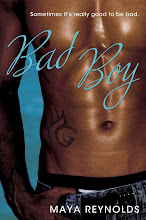
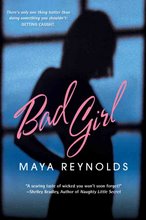
Summertime Reading
Tuesday, May 26, 2009
Borders Has a Tough First Quarter
The Borders Group has reported first quarter results.
Bad news: Sales fell 12.1% to $641.5 million, creating a net loss of $86 million.
Good news: The operating loss for the quarter was only $15.9 million, an improvement over the analysts' estimates of more than $29 million.
Shelf Awareness reports: "because the loss was lower than expected, Borders shares rose 12.8% to $2.90 a share in after-hours trading, according to Reuters."
The number of Borders stores remains flat at 515--they neither opened nor closed any stores during the quarter. Sales at their superstores fell 13.5% while sales at the regular stores fell 10.7%.
Things were very different over at Waldenbooks. Borders closed 11 Waldenbooks locations during the first quarter, 100 over the past year. That leaves 376 stores still open. Total Waldenbook sales fell 19.9% while comparable store sales (those still open in the first quarter) fell 5.5%.
Ron Marshall, Borders CEO, said:
Bad news: Sales fell 12.1% to $641.5 million, creating a net loss of $86 million.
Good news: The operating loss for the quarter was only $15.9 million, an improvement over the analysts' estimates of more than $29 million.
Shelf Awareness reports: "because the loss was lower than expected, Borders shares rose 12.8% to $2.90 a share in after-hours trading, according to Reuters."
The number of Borders stores remains flat at 515--they neither opened nor closed any stores during the quarter. Sales at their superstores fell 13.5% while sales at the regular stores fell 10.7%.
Things were very different over at Waldenbooks. Borders closed 11 Waldenbooks locations during the first quarter, 100 over the past year. That leaves 376 stores still open. Total Waldenbook sales fell 19.9% while comparable store sales (those still open in the first quarter) fell 5.5%.
Ron Marshall, Borders CEO, said:
Make no mistake about it, we have much more work to do and will continue to maintain our financial discipline. At the same time, we know that we cannot save our way to prosperity. Our long-term success will come from doing a much better job of driving sales and that's where our focus is right now.
Monday, May 25, 2009
A Day To Give Thanks and Praise
As you barbeque or play baseball or visit with family and friends today, spare a few minutes to give thanks to all the military members who gave their lives so we can live in freedom.
And then give thanks to all those who stand in harm's way today around the world so that we could eat barbeque, play baseball and visit with family and friends in peace. Say a prayer that they will remain safe and eventually return home to their own family and friends.
I certainly will.
And then give thanks to all those who stand in harm's way today around the world so that we could eat barbeque, play baseball and visit with family and friends in peace. Say a prayer that they will remain safe and eventually return home to their own family and friends.
I certainly will.
Sunday, May 24, 2009
Star Trek
I'll admit to having had some ambivalence about the new Star Trek movie. While I've never attended a Star Trek convention or laid claim to the title of "Trekkie," I've harbored a surprising reverence for the original television series.
Watching the original series (TOS) again and again has been something of a family tradition. My three brothers and I rarely agree, but all of us loved TOS. Years after we were all grown, a favorite triva game was to do a round-robin, naming all the episodes. As each of us failed to name one, we lost our turn and dropped out of the game.
I never watched any of the numerous television spinoffs of TOS. I did go to see Movies 1, 2, and 4, but then swore off the films, too. It was just too painful to watch my favorite characters growing old, bald and fat.
The fourth film debuted in 1986, so it's been twenty-three years since I've developed any new Star Trek memories. But I was happy to have the reruns. Just for fun, as I wrote this, I cruised the regular network channels and discovered The Devil in the Dark was playing on Channel 52 in Dallas. That episode from the first season was one of my favorites: with the mother Horta fighting to protect her eggs from miners.
Today we went to see the new Star Trek movie. To my complete surprise, I loved it! The film is bold and imaginative while still great fun and respectful of the original canon. The young cast is superb, especially Zachary Quinto as Spock and Simon Pegg as Scotty.
My favorite parts were those paying homage to the original series and to the early movies (one of the best parts was the telling of how cadet Kirk beat the Kobayashi Maru test devised for Starfleet recruits and first described in the second movie The Wrath of Khan.
Among the other fun moments:
Watching the original series (TOS) again and again has been something of a family tradition. My three brothers and I rarely agree, but all of us loved TOS. Years after we were all grown, a favorite triva game was to do a round-robin, naming all the episodes. As each of us failed to name one, we lost our turn and dropped out of the game.
I never watched any of the numerous television spinoffs of TOS. I did go to see Movies 1, 2, and 4, but then swore off the films, too. It was just too painful to watch my favorite characters growing old, bald and fat.
The fourth film debuted in 1986, so it's been twenty-three years since I've developed any new Star Trek memories. But I was happy to have the reruns. Just for fun, as I wrote this, I cruised the regular network channels and discovered The Devil in the Dark was playing on Channel 52 in Dallas. That episode from the first season was one of my favorites: with the mother Horta fighting to protect her eggs from miners.
Today we went to see the new Star Trek movie. To my complete surprise, I loved it! The film is bold and imaginative while still great fun and respectful of the original canon. The young cast is superb, especially Zachary Quinto as Spock and Simon Pegg as Scotty.
My favorite parts were those paying homage to the original series and to the early movies (one of the best parts was the telling of how cadet Kirk beat the Kobayashi Maru test devised for Starfleet recruits and first described in the second movie The Wrath of Khan.
Among the other fun moments:
- How McCoy got the nickname "Bones."
- A nod to Sulu's love of fencing (mentioned in the first season episode of TOS called Shore Leave)
- The trilling of a tribble in the background when we meet Scotty on a Starfleet base.
Run to your nearest theatre to see Star Trek. I promise you won't regret it.
Saturday, May 23, 2009
Good News About Good Friends
Stephen Parrish was one of the first people to ever find this blog. He and I have been on-line friends for nearly four years now. He is funny, kind and incredibly empathic. All terrific qualities in a writer.
It will probably appear in tomorrow night's weekly summary of deals over at Publishers Lunch, but agent Janet Reid noticed the early posting. Read this and smile:
It couldn't happen to a nicer guy . . . or a better writer.
Visit Stephen's wonderful blog here.
Congratulations, my friend!
It will probably appear in tomorrow night's weekly summary of deals over at Publishers Lunch, but agent Janet Reid noticed the early posting. Read this and smile:
FICTION: MYSTERY/CRIME
Stephen Parrish's ADAMANT STONE, a fast-paced story involving a cartographer and jewel thief who join forces to recover legendary, lost jewels and solve an ancient mystery, to Brian Farrey at Midnight Ink, in a nice deal (World).
It couldn't happen to a nicer guy . . . or a better writer.
Visit Stephen's wonderful blog here.
Congratulations, my friend!
Friday, May 22, 2009
Prom Time
Prom time. The brunette on the right is my niece, my middle brother's only chick. L is as sweet as she is lovely. The blonde on the left is one of her best friends.


Wednesday, May 20, 2009
Kindle's New Deluxe Model
Following the announcement two weeks ago of the new big screen Kindle--the Kindle DX with a screen two and a half times as large as the previous models and a $489 price tag--Amazon indicated its plans to move into the textbook market in a big way.
The New York Times reported:
Amazon's current deal with 37 newspapers has created some ill will. The revenue-sharing split is 70/30 with Amazon keeping the 70%.
The announcement of the Kindle DX drew a large amount of attention . . . and some parodies, too. My favorite is here.
To read the New York Times article on the Kindle DX, go here.
The New York Times reported:
Amazon said it had reached agreements with three major textbook publishers to make their books available in the Kindle store: Pearson Education, Cengage Learning and Wiley Higher Education. It said six colleges and universities — Pace, Arizona State, Case Western Reserve, Princeton, Reed College and the University of Virginia — would begin testing the device with students later this year.Amazon is also launching a pilot project with the New York Times, the Boston Globe and the Washington Post to offer the newspapers at a reduced price for a long-term subscription--but only where the actual physical newspaper is not available to subscribers.
Amazon's current deal with 37 newspapers has created some ill will. The revenue-sharing split is 70/30 with Amazon keeping the 70%.
The announcement of the Kindle DX drew a large amount of attention . . . and some parodies, too. My favorite is here.
To read the New York Times article on the Kindle DX, go here.
Tuesday, May 19, 2009
The Number of On Demand Books Soar
R.R. Bowker, the official U.S. ISBN agency, has released preliminary statistics on the number of books in print in the United States in 2008. More than 75,000 publishers provided data.
According to Publishers Weekly, title output by traditional methods in 2008 fell 3% to 275,232. However, "the number of on-demand and short run titles soared 132%, to 285,394. The on-demand and short run segment is the method typically used by self-publishers as well as online publishers. With the decline in the number of traditional books released last year and the jump in on-demand, the number of on-demand titles topped those of traditional books for the first time. Taken together, total output rose 38%, to 560,626 titles."
Shelf Awareness reported:
According to Publishers Weekly, title output by traditional methods in 2008 fell 3% to 275,232. However, "the number of on-demand and short run titles soared 132%, to 285,394. The on-demand and short run segment is the method typically used by self-publishers as well as online publishers. With the decline in the number of traditional books released last year and the jump in on-demand, the number of on-demand titles topped those of traditional books for the first time. Taken together, total output rose 38%, to 560,626 titles."
Shelf Awareness reported:
Phenomenal growth in the on-demand books sector was reflected in Bowker's projections that 285,394 on-demand books were produced last year, a 132% increase over 2007's 123,276 titles and 462% above 2006 levels.
Bowker reported that the top five categories for U.S. book production in 2008 were fiction (47,541 new titles), juvenile (29,438), sociology/economics (24,423), religion (16,847) and science (13,555).
Monday, May 18, 2009
Scribd Launches New Venture
Two months ago, I did my first post on Scribd here, which I described as:
A few weeks later, I did another post here when Scribd came under attack. J.K. Rowling and other published authors had accused Scribd of posting their copyrighted material without permission. Scribd said it immediately took down such material when posted without permission upon receipt of a notice. While this approach keeps it in compliance with the DMCA (Digital Millennium Copyright Act, I said the onus should be on Scribd to prove they are good citizens of the publishing world by taking an active role in avoiding copyright infringement rather than standing by passively and allowing well-known books to be posted to their site.
Sunday's Publishers Weekly had an article describing the launch of the new Scribd Store in which publishers or individual authors could post their works for sale.
a document-sharing website with more than 50 million monthly users. Anyone can post a document to the site and, according to Wikipedia, Scribd is "the world's largest library of user-generated documents."In that post I explained that several major publishers had agreed to offer both teaser excerpts and some full-length novels on Scribd free of charge.
A few weeks later, I did another post here when Scribd came under attack. J.K. Rowling and other published authors had accused Scribd of posting their copyrighted material without permission. Scribd said it immediately took down such material when posted without permission upon receipt of a notice. While this approach keeps it in compliance with the DMCA (Digital Millennium Copyright Act, I said the onus should be on Scribd to prove they are good citizens of the publishing world by taking an active role in avoiding copyright infringement rather than standing by passively and allowing well-known books to be posted to their site.
Sunday's Publishers Weekly had an article describing the launch of the new Scribd Store in which publishers or individual authors could post their works for sale.
The Scribd Store offers a generous revenue sharing agreement with sellers getting 80% of revenue. Publishers and authors also have complete control over price and packaging—they set the price, or set no price at all, and can dictate what to sell, whether entire documents, chapters, even pages. They can also dictate reading options—for example, allowing for works to be viewed on Scribd only, or enabling PDF downloads, PDF downloads with DRM, or ePub downloads. Sellers can also offer downloads to mobile phones and devices.Go here to check out the new Scribd Store.
Friday, May 15, 2009
Famous Lines That Were Never Said
On Monday, we'll get back to the business of publishing. However for today, the UK's Guardian had a great article on the famous movie (and television) lines that were never actually said the way they are repeated in our culture.
Here are the top ten lines the way they are remembered. I'm not going to give the film or show. You should all be able to name those. But can you give the line as it was actually said?
1) "Luke, I am your father"
2) "Mirror, mirror on the wall, who is the fairest of them all?"
3) "Do you feel lucky, punk?"
4) "Play it again, Sam."
5) "Hello, Clarice."
6) "Beam me up, Scotty."
7) "Frankly, Scarlett, I don't give a damn."
8) "If you build it, they will come."
9) "I don't think we're in Kansas anymore, Toto."
10) "Mrs. Robinson, are you trying to seduce me?"
For the answers, go to Access Hollywood here.
Here are the top ten lines the way they are remembered. I'm not going to give the film or show. You should all be able to name those. But can you give the line as it was actually said?
1) "Luke, I am your father"
2) "Mirror, mirror on the wall, who is the fairest of them all?"
3) "Do you feel lucky, punk?"
4) "Play it again, Sam."
5) "Hello, Clarice."
6) "Beam me up, Scotty."
7) "Frankly, Scarlett, I don't give a damn."
8) "If you build it, they will come."
9) "I don't think we're in Kansas anymore, Toto."
10) "Mrs. Robinson, are you trying to seduce me?"
For the answers, go to Access Hollywood here.
Thursday, May 14, 2009
With a Little Help From My Friends.
Sorry for being AWOL. I'll try to catch up with the missing posts.
Here's one that delighted me from the Animal All Star site. It's the story of a baby squirrel trying to climb a wall that was jussst too high for him. Go here to watch the video.
Here's one that delighted me from the Animal All Star site. It's the story of a baby squirrel trying to climb a wall that was jussst too high for him. Go here to watch the video.
Wednesday, May 13, 2009
Booksales for March
The Census Bureau's numbers on booksales for March are out. According to Shelf Awareness, bookstore sales are "much healthier than general retail sales this year." These numbers don't include used books, ebooks or mail orders.
During March, bookstore sales fell 1.3%. Year to date, bookstore sales dropped 4.1%. By comparison, for the month of March, total retail sales dropped 12%. YTD, total retail sales are down 11.6%.
Publishers Weekly reported:
During March, bookstore sales fell 1.3%. Year to date, bookstore sales dropped 4.1%. By comparison, for the month of March, total retail sales dropped 12%. YTD, total retail sales are down 11.6%.
Publishers Weekly reported:
The Census Bureau revised bookstore estimates for January and February, with new figures showing a 1.7% drop in January sales and a 11.3% plunge in February, making February the worst month for bookstore sales since the downturn began last fall.
Tuesday, May 12, 2009
Now States Are Getting Into the Act
On April 30, I reported that the Justice Department is reviewing the Google settlement.
Then on Friday, Reuters reported:
Read the Reuters' story here.
Then on Friday, Reuters reported:
State attorneys general are looking into a proposed settlement Google Inc reached with author and publisher groups allowing the Internet company to digitize millions of books . . .And, of course, the court still has to ratify the deal.
Read the Reuters' story here.
Online Piracy of Books Growing as a Problem
Yesterday's New York Times had an article about book piracy on the web.
Go here to read the article.
John Wiley & Sons, a textbook publisher that also issues the “Dummies” series, employs three full-time staff members to trawl for unauthorized copies. Gary M. Rinck, general counsel, said that in the last month, the company had sent notices on more than 5,000 titles — five times more than a year ago — asking various sites to take down digital versions of Wiley’s books.Fabulous quote from Cory Doctorow, who gives away e-books of some of his books: “. . . my problem isn’t piracy . . . It’s obscurity.”
Go here to read the article.
Monday, May 11, 2009
Pros and Cons of the Google Settlement
I did a presentation for the DFW Writers Conference at 2:30 PM on May 3 on trends in publishing. Among the handouts I provided was one on the Google settlement, giving the pros and cons. I'm reproducing it here:
Pros
- Google will act as a giant card catalog, putting information at the fingertips of people all over the world. This is no small issue when you consider that it will improve undeveloped nations’ access to books.
- Readers doing a search will be able to read sample pages of a book online and have a link immediately available for an online purchase of the book in question.
- Authors whose books are still under copyright, but out-of-print will now have a way to earn royalties, which they previously did not. The Internet offers both unlimited shelf space and unlimited time for the book to stay alive. Books out of copyright and almost forgotten will have an opportunity to be read again by new generations of readers.
- Public libraries and school libraries will be able to purchase an institutional license to permit them to offer full access to the books scanned. Authors will receive royalties from these license sales.
- A Books Rights Registry will be created with settlement funds to track down copyright holders.
Cons
- Google required all libraries that joined the Google Book Search project to sign an agreement promising not to make their books available for copying to other search engines. This creates a search engine monopoly that could have serious consequences if Google forgets its motto “to do no evil.”
- This settlement puts an even larger financial barrier in front of any new search engine coming along to challenge Google. I believe the plaintiffs in this lawsuit did not think this through carefully enough.
- What’s to stop Google from unfairly pricing its search engine or the institutional licenses?
- Google ends up with complete control over the “orphan” books for which no rightsholder has been located.
- Not only does this impact other search engines; it also impacts other booksellers and distributors.
- Prior to this agreement, Google only offered snippets of works. The agreement permits readers to access up to 20% of any work.
Tomorrow we'll talk more about the settlement. Both the Justice Department and state attorneys general are now looking into it.
Friday, May 08, 2009
Two of the Big Six Report Results
Both HarperCollins and Simon & Schuster reported ugly financial results this week.
On Wednesday, Publishers Weekly reported on HarperCollins:
On Wednesday, Publishers Weekly reported on HarperCollins:
A $30 million charge tied to corporate restructuring drove HarperCollins into the red in the third-quarter and nine-month periods ended March 31. With the charge, HC had an operating loss of $38 million in the third quarter compared to income of $29 million in the third quarter of fiscal 2008.Talking about HarperCollins, Publishers Lunch reported:
Sales at HarperCollins dropped by nearly 20 percent in their fiscal third quarter through the end of March, falling by $59 million to $243 million for the period . . . The drop in sales is only modestly better than the 25 percent drop-off last quarter.Publishers Weekly had this to say about Simon & Schuster:
Late Thursday afternoon Simon & Schuster parent company CBS announced that the publishing house had an operating loss of $2.1 million compared to operating income of $14.6 million in last year’s first period. Sales declined 19.8%, to $161.7 million . . . S&S CEO Carolyn Reidy said results were “somewhat worse than our original expectations.”Publishers Lunch reported on Simon & Schuster, too:
CEO Carolyn Reidy says that the quarter started poorly and then improved. "In our first quarter we usually have strong carryover sales from the fall." But "consumers stopped buying" and "our strong fall titles collapsed at the end of the year . . . It really wasn't until the middle of March that we started seeing some liveliness in our sales."
Though improving, Reidy says "the market hasn't completely recovered," . . . and the "backlist is still soft." But "our children's list is stronger" and the "teen portion in particular has shown remarkable strength in this market."
Thursday, May 07, 2009
News Roundup
Lots of news out there today.
From Publishers Weekly:
From Publishers Weekly:
The New York Law School is launching a Web site dedicated to the Google Book Search settlement that will include discussion forums, a comprehensive archive of settlement documents and related commentary, and a tool for users to insert their own analyses and commentary on individual paragraphs of the proposed settlement. The project, dubbed “the Public Index,” is part of the Public Interest Book Search Initiative overseen by NYLS professor James Grimmelmann, an expert who has written extensively about the deal. The effort will be staffed by NYLS students and is being underwritten with a grant from Google competitor Microsoft.The Quill & Quire reports:
. . . Kunati Books – an Ontario-based company that won acclaim in 2007 as ForeWord Magazine’s Publisher of the Year – has not been paying its authors. Furthermore, publisher Derek Armstrong . . . has been unresponsive to authors’ phone calls and e-mails, and has failed to provide the financial statements due them. According to several Kunati authors . . . no one in the Kunati stable – which includes more than 20 authors – has been paid in the last nine months.Publishers Lunch directed me toward an article in the UK's Daily Mail on Stephen King:
. . . as is revealed in a fascinating new biography, he [King] spent most of the Eighties on an extended drug and alcohol binge which so fogged his mind that even today he cannot remember working on many of the books he wrote during that period.The book is Haunted Heart: The Biography of Stephen King by Lisa Rogak. Read the Mail Online article here.
Wednesday, May 06, 2009
Harlequin's First Quarter Results
Torstar, parent of Harlequin, released its first quarter results for the period ending 3/31/09 today.
Publishers Lunch said:
Publishers Lunch said:
While Torstar's newspaper business suffers heavily from the advertising slump, sales at the company's Torstar unit have remained strong, boosted further by the weak Canadian dollar.The press release said:
"Harlequin delivered an excellent quarter of growth while our newspaper businesses confronted lower advertising revenues as a result of the recession," said Robert Prichard, President and CEO of Torstar Corporation. "Harlequin has made a strong start and is on course for another solid year. Despite the global recession, Harlequin's overall performance remains strong with digital revenue growth offsetting some print declines in Japan and the U.K."
Harlequin's revenue from book publishing was $124.5 million [CAN] in the first quarter, which was up $14.8 million from the same period in 2008.
In looking more closely at that revenue increase, only $3.3 was an actual increase in sales while $11.5 million came from foreign exchange rates (the Canadian dollar is weaker than it was). The revenue from the three divisions of the company broke down this way:
- North America Retail -- up $2.2 million
- North America Direct-To-Consumer -- down $1.4 million
- Overseas -- up $2.5 million
When it came to profits, Harlequin was up $2.2 million for the first quarter, excluding the foreign exchange rate impact.
- North America Retail -- down $0.3 million
- North America Direct-To-Consumer -- flat
- Overseas -- up $2.5 million.
Harlequin continues to move away from its staid past as it repositions itself in the digital world. About thirteen months ago, the company announced it would distribute digital manga on Japanese cell phone and Internet sites through the SoftBank Group, a provider of cell phone service in Japan. While Harlequin continues to publish p-book copies of manga in Japan, this move was intended to capture the large audience of Japanese who read on their cell phones during commutes.
At the beginning of this year, the Anime News Network reported that Harlequin was launching "Monthly Harlequin, a new Japanese magazine of one-shot manga stories 'in the style of overseas romance novels'." The first edition had four standalone stories.
When I went to the "Interim Management Discussion and Analysis," Torstar had this to say about Harlequin:
Overseas revenues and operating profit were both up $2.5 million in the first quarter of 2009. The agreement in Japan with SoftBank Creative Corp . . . to distribute digital manga (comic) content on cell phones and Internet distribution sites . . . was the primary contributor of improved results in the quarter. An offset to the success of digital publishing in Japan was a decrease in sales of printed books, primarily series titles.Publishers Weekly summed up the company's prospects:
While several countries reported modest year over year gains, the U.K. operation experienced a continuing decline in their direct mail business and lower retail series sales. At the end of the quarter, the U.K. operation announced the closure of their direct-to-consumer warehouse and the intent to outsource the fulfillment for that business.
Looking at the rest of 2009, Torstar said it expects Harlequin to have growth for the full year, but not at the rate posted in the first quarter. The publisher has largely avoided any negative impact from the worldwide recession, and results for the year should also gain from a weaker Canadian dollar.
Subscribe to:
Posts (Atom)