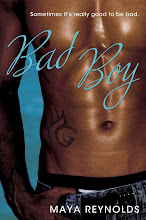
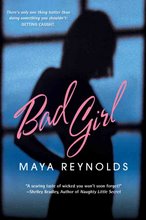
Two interesting blog posts to recommend. First is Kassia Krozser's follow-up to her post about the implosion of Quartet. On Monday here, Kassia talked about the business model for digital publishing.
And in his post for Tuesday here, agent Nathan Bransford asked "Will Authors of the Future Need Publishers?"
Nathan’s question is one I've struggled with. Here’s an excerpt from my post of March 7, 2007:
A digitized industry doesn't really rely on the publisher any more, does it? It would be very easy for a group of writers and artists to band together to produce their own works (United Artists, anyone?). In the future, there is the very real possibility that publishers will find themselves being edged out of the equation . . .
At the same time, Kassia said something that resonated with me: “[the digital business] model has been evolving for well over a decade, and will continue to evolve.”
Along with Nathan’s question of “Will Authors of the Future Need Publishers?” I think we need to ask two other questions:
1) What role will the Internet giants play in the evolving publishing landscape?
2) What will the book look like in the future?
Back on May 20, 2007, I said on my blog:
The large [publishing] houses face competition on two fronts: from the Internet giants and from the e-publishing industry. When I say Internet giants, I'm talking about Google, Amazon.com, Yahoo, eBay and Microsoft. Of the five, I suspect the biggest direct competition will come from either Google or Amazon.com. My money is on Amazon.
It's no secret that Amazon is trying to become the dominant force in publishing. I've talked about its vertical integration before (go here if you want to read more about vertical integration). However, in its rush to achieve hegemony in the publishing world, I believe Amazon may have planted some very noxious weeds in its garden.
Amazon is working both sides of the street: acting as a publisher/distributor through its BookSurge unit while offering retail services on its website. The company slaps self-published books up on its website next to traditionally-published books. Unless a customer is savvy, he can find himself the proud owner of a really awful book (I'm not saying all self-published books are terrible, just the majority of them).
In his blog, Nathan pointed out that traditional publishers serve an important role, acting as the gatekeepers for the publishing industry, assuring consistency of quality as well as distribution channels. As a rule, a reader can purchase a book from a bookstore with the confidence that a professional has vetted it and deemed it worthy of publication.
Amazon's BookSurge acts as a POD press to small publishers and as a vanity press for self-pubbed writers. In its latter role, BookSurge will publish any manuscript that comes accompanied by a check. Like all vanity presses, its quality control mechanisms relate to the production values of the physical product, not the manuscript’s content.
And therein lies Amazon’s problem. The company talks about customer service, but customers need to remember caveat emptor when it comes to buying books on Amazon’s website.
And what about Google? Google’s ambition to copy every book in the world could lead to its becoming the biggest bookstore in the world.
Thus far, Google has stuck to its plan to remain the largest search engine in the world. Copying the world’s books is a strategy to strengthen Google's search engine business. The company provides links to buy the books it displays. It remains to be seen whether Google has larger ambitions in the publishing world.
And the future of the book? Today reading is primarily a solitary experience, even for those people in book clubs who join together after the fact to discuss a book they've read. I think Robert Stein is on the right track in describing the book's future. Stein is a senior fellow at the London School of Economics and director of the Institute for the Future of the Book. He believes that in the future reading will become more of a social experience.
In the very near future, people will be able to read a digital book in a social networking environment. They'll be able to comment on the material being read in real time. And the author and fans will be able to converse digitally as the readers progress through the book.
Think about a thousand teenagers reading the next Twilight in a virtual reading room with the author available to talk about the characters and plot.
Today's traditional publishers expend a huge amount of money and time producing the physical product. Their marketing efforts are geared primarily toward the creation of their seasonal catalogs and in promoting their best-selling authors and a few up-and-comers.
In a digital environment, the production and distribution of a (virtual) book is less expensive and a much simpler process. I suspect a publishing house's marketing expertise will become far more important as well as its main draw in attracting authors.
Think of it as a different form of gatekeeping. Instead of holding the keys to production of a book, publishers might be the experts in growing readership for an author.
Check out the concept of the salon here. Amazon is trying to do a digital version of a salon by offering readers places to gather to discuss books. THAT's what publishers should be focused on; not Amazon's $9.99 price point for ebooks.
Thursday, September 17, 2009


Wednesday, September 16, 2009
The Lost Symbol's First Day of Sales
Reuters reports:
The Lost Symbol, published by Doubleday Books, had a first print run of five million copies.
Barnes & Noble, Inc. (NYSE: BKS), the world`s largest bookseller, announced today The Lost Symbol by Dan Brown has broken all previous one day sales for adult fiction in the first 24 hours of its release at its retail stores and online at Barnes & Noble.com (www.bn.com). The company also said that the eBook edition of The Lost Symbol is now the number one title in its eBookstore.The Ventura County Star of Camarillo, California reported:
At Borders in Oxnard, inventory supervisor Elisha Ellsworth said that “normally we get 20 to 30 copies if it’s a big new title. For this one we got 300.” The store opened at 9 a.m. rather than 10, Ellsworth said, but “it was a smaller turnout than we expected.”The UK's Telegraph reports:
The Kindle edition of Dan Brown’s The Lost Symbol . . . has become the top-selling item on Amazon.com. The e-reader edition is outselling the hardback copy of the novel, which had previously become the sixth best selling book of 2009 on pre-publication orders alone.The Telegraph points out that the Kindle edition costs $9.99 while the hardback version of The Lost Symbol on Amazon is selling for $16.17. The newspaper wonders out loud if "the book is heralding a new era in publishing" because of the robust e-book sales.
The Lost Symbol, published by Doubleday Books, had a first print run of five million copies.
Tuesday, September 15, 2009
Another New Amazon Policy?
On Friday, GalleyCat reported that Diamond Book Distributors sent an email to the publishers it works with, saying:
According to GalleyCat, the email from the book distributor also said that Amazon wants to have the Search Inside feature operational for new titles "3-4 weeks before publication--sooner, if possible."
The UK's The Bookseller had this to say:
I wouldn't be surprised to learn this is the case. Back in early May, I said on this blog: "Amazon has already made it plain that they are willing to use their considerable clout to demand EVEN MORE advantageous terms than they are already getting."
Go here to read the GalleyCat article.
Go here to read The Bookseller article.
"Going forward, Amazon will require all titles on their site to participate in the Search Inside the Book (SITB) program,"Avid readers are familiar with Search Inside, which allows someone interested in a book to search for specific words or to browse several pages.
According to GalleyCat, the email from the book distributor also said that Amazon wants to have the Search Inside feature operational for new titles "3-4 weeks before publication--sooner, if possible."
The UK's The Bookseller had this to say:
The move will enable Amazon.com to aggressively grow its repository of digital content as it seeks to combat the growing threat it feels from Google's book-scanning programme.GalleyCat made a point of saying it had not yet been able to confirm that this was, in fact, Amazon's new policy.
I wouldn't be surprised to learn this is the case. Back in early May, I said on this blog: "Amazon has already made it plain that they are willing to use their considerable clout to demand EVEN MORE advantageous terms than they are already getting."
Go here to read the GalleyCat article.
Go here to read The Bookseller article.
Monday, September 14, 2009
Quartet's Experience Can Teach Us All
On Saturday I reported on the closing of Quartet Press. I also directed readers to Kassia Krozser's excellent post here explaining what she took from her foray into the world of digital publishing.
Kassia had some really good advice for the publishing industry. I'm going to focus on three parts of her message today:
1) Don't look to traditional publishers to lead the way into the future.
Kassia's right. The New York houses start from a position of trying to support (and protect) their print business. The big six tried to justify pricing both the ebook and trade paper versions at the same price. And in one embarrassing case, a publisher released the ebook with a price that was higher than the trade paper cost.
2) Publishers need to start listening to their customers.
New York keeps pointing to their low ebook sales as proof that digital publishing will never amount to anything. I look at this as a chicken-and-egg argument. New York's unrealistic pricing model has put a stranglehold on ebooks and kept the digital market from growing.
If you expect readers to pay $15 for an ebook simply because that's the price of the p-book (physical book), of course, you'll never see any growth in the market. Readers are not stupid. They're voting with their wallets and saying, "Give us a break. We know you have lesser costs when you release an ebook. You've eliminated the printing and binding of a physical book, plus the costs of warehousing and the physical distribution AND the costs of returns on unsold stock and pulping those bound books. Get real about your pricing."
3) Kassia's own words are powerful: "Publishers cannot expect the digital marketplace to conform to their business as usual . . . (You cannot view) ebooks and digital distribution through a physical lens."
- Confirmation bias: the tendency to select information that supports the individual's preconceived notions and to avoid information that contradicts those existing beliefs
- Conservatism bias: the tendency to be conservative, to wait and see before making a change. A refusal to acknowledge both technical and social change even to one's detriment
- Illusion of Control: the tendency of people to believe they can control outcomes over which they have no control
- Status Quo bias: the tendency of people to want things to stay as they are, to not change
3) Stop angsting about Amazon's $9.99 price point for ebooks. Rather than worry about the price in a vacuum, focus on figuring out what your real costs are.
Kassia suggests that publishers throw away their assumptions and, instead of building a financial model from the top-down, try to build one from the bottom-up.
Again, publishers need to go back to her advice to throw away traditional assumptions and start fresh. Wake up and look around you. In a green world, printing and shipping and warehousing and returning and pulping--the Dead Tree Model--wastes energy and costs you too much.
Yes, there are always going to be readers who prefer a p-book. That's the beauty of print-on-demand (POD), digital technology and contraptions like the Espresso Book Machine. A book is only printed when an order is in hand. And with digital files, that book can be sold for an indefinite period of time--not just the brief period of time books currently get to sit on store shelves.
I can think of no better way to end this post than to quote Kassia's own words:
"The ability to move fast and change with the business is key. The ability to think beyond 'that’s how we’ve always done it' is essential. The importance of focusing on talent and creativity is critical. But the most important thing of all is this: your customers are talking to you. Listen."If you're not in the habit of reading her blog, you should be.
Saturday, September 12, 2009
Quartet Press To Close Before Opening
In June, Publishers Lunch reported Kassia Kroszer, Kirk Biglione, and Kat Meyer had announced they were joining forces to launch "Quartet Press, a 'fledgling digi-publisher' accepting submissions for its romance line Quench! starting this fall. Their books will be available without DRM."
In July, PL reported "SVP and publisher at The Taunton Press Don Linn is leaving that post to join digital publishing start-up Quartet Press, overseeing finance, administration and general management."
And, in August, PL announced Angela James had left Samhain Publishing to join Quartet Press as editorial director.
On Wednesday, PL reported that Quartet Press has decided to discontinue operations.
Kassia Kroszer, who blogs on Booksquare, talks about the decision to close the e-publisher before opening on a post here
I strongly recommend reading Kassia's post. It has a lot to say about the state of publishing. I'll have more to say about this on Monday. I'm taking Sunday off.
In July, PL reported "SVP and publisher at The Taunton Press Don Linn is leaving that post to join digital publishing start-up Quartet Press, overseeing finance, administration and general management."
And, in August, PL announced Angela James had left Samhain Publishing to join Quartet Press as editorial director.
On Wednesday, PL reported that Quartet Press has decided to discontinue operations.
Kassia Kroszer, who blogs on Booksquare, talks about the decision to close the e-publisher before opening on a post here
I strongly recommend reading Kassia's post. It has a lot to say about the state of publishing. I'll have more to say about this on Monday. I'm taking Sunday off.
Friday, September 11, 2009
Judge Rules on the Seinfeld Plagiarism Suit
Yesterday U.S. District Judge Laura Taylor Swain threw out the lawsuit Missy Chase Lapine brought against Jessica Seinfeld. Ms. Lapine alleged that Jerry Seinfeld's wife had plagiarized her cookbook.
Lapine's book--The Sneaky Chef: Simple Strategies for Hiding Healthy Foods in Kids’ Favorite Meals--was released April 4, 2007 by Running Press. Seinfeld's book--Deceptively Delicious: Simple Secrets to Get Your Kids Eating Good Food was released almost exactly six months later on October 5, 2007 by HarperCollins.
Both cookbooks became best-sellers, with sales probably helped by all the media fuss created by the lawsuit.
The Associated Press had this to say:
Seinfeld appeared on the David Letterman show about a year ago and spoke of the lawsuit. He said that his wife was being accused of a "Watergate-style break-in at HarperCollins" (Lapine's publisher).
Seinfeld went on to say, ". . . we're sorry that she is--you know--angry and hysterical and because she's a three-name woman, which is what concerns me. She has three names and--you know--if you read history, many of the three-named people do become assassins . . . Mark David Chapman."
You can listen to the segment on Letterman here.
Of course, the judge might have refused to hear the libel charge because she has a conflict of interest, also being a "three-name woman."
This morning's Publishers Lunch reported:
Lapine's book--The Sneaky Chef: Simple Strategies for Hiding Healthy Foods in Kids’ Favorite Meals--was released April 4, 2007 by Running Press. Seinfeld's book--Deceptively Delicious: Simple Secrets to Get Your Kids Eating Good Food was released almost exactly six months later on October 5, 2007 by HarperCollins.
Both cookbooks became best-sellers, with sales probably helped by all the media fuss created by the lawsuit.
The Associated Press had this to say:
She (Judge Swain) called Lapine's book "a dry, rather text-heavy work" done predominantly in black, gray and shades of brownish-orange. She said Seinfeld's book was "bright and cheerful, full of different colors and various patterns." Consumers who looked at each book were unlikely to be confused, the judge said, tossing out trademark infringement claims.Judge Swain refused to address Lapine's charge of libel (sic) against Jerry Seinfeld. She referred Lapine to the New York State Court to pursue that claim.
Seinfeld appeared on the David Letterman show about a year ago and spoke of the lawsuit. He said that his wife was being accused of a "Watergate-style break-in at HarperCollins" (Lapine's publisher).
Seinfeld went on to say, ". . . we're sorry that she is--you know--angry and hysterical and because she's a three-name woman, which is what concerns me. She has three names and--you know--if you read history, many of the three-named people do become assassins . . . Mark David Chapman."
You can listen to the segment on Letterman here.
Of course, the judge might have refused to hear the libel charge because she has a conflict of interest, also being a "three-name woman."
This morning's Publishers Lunch reported:
Lapine's lawyer Howard Miller tells the AP they will indeed refile those charges: "The claims against Jerry Seinfeld for defamation are still fully alive. Miller says that "claims against HarperCollins that the publisher misappropriated information from Lapine's book when it rejected her proposal in February and May 2006" will also continue.To read the background on this case, go to my post of 10/21/07 here.
Thursday, September 10, 2009
Tolkien Estate Settles L-O-T-R Trilogy Lawsuit
Almost a year ago, on September 27, 2008, I did a post in which I talked about "Hollywood accounting," the practice of using creative bookkeeping to turn a blockbuster film into a loss on paper.
That post was prompted by a ruling in the lawsuit brought by the family of J.R.R. Tolkien and HarperCollins against New Line Cinema for failure to pay royalties on the Lord of the Rings film trilogy. A Los Angeles Superior Court judge barred the family from suing for punitive damages in that lawsuit while clearing the way for the heirs to continue their $150 million fraud suit against the studio.
On Tuesday, New Line Cinema settled that lawsuit with the Tolkien Estate and HarperCollins. According to the Los Angeles Times:
Go here and here to read the two articles in the Los Angeles Times about the settlement.
That post was prompted by a ruling in the lawsuit brought by the family of J.R.R. Tolkien and HarperCollins against New Line Cinema for failure to pay royalties on the Lord of the Rings film trilogy. A Los Angeles Superior Court judge barred the family from suing for punitive damages in that lawsuit while clearing the way for the heirs to continue their $150 million fraud suit against the studio.
On Tuesday, New Line Cinema settled that lawsuit with the Tolkien Estate and HarperCollins. According to the Los Angeles Times:
The suit sought to block production of "The Hobbit" films until those claims were resolved. The three films, which were released in 2001, 2002 and 2003, amassed close to $3 billion in worldwide ticket sales. Terms of the settlement were not disclosed.Both sides expressed pleasure over the settlement. A follow-up story in the L.A. Times yesterday had this to say:
The lawsuit . . . was settled in the nick of time. Not only were the plaintiffs scheduled to go to trial Oct. 19, but the two "Hobbit" movies are slated to go into production next year with director Guillermo del Toro and producer Peter Jackson.Go here to read my post from last year, explaining the background to this lawsuit and what writers need to know about "Hollywood accounting."
Go here and here to read the two articles in the Los Angeles Times about the settlement.
Wednesday, September 09, 2009
Disney To Acquire Marvel Entertainment
Last Monday, the Walt Disney Company announced it will buy Marvel Entertainment for $4 billion dollars. This will give Disney all those famous Marvel Comics' superheroes.
Disney went to some lengths to assure everyone that they did not plan to make drastic changes in the leadership of Marvel Entertainment. They stressed their faith in the Marvel creative team.
Among the details reported by Comic Book Resources:
Disney went to some lengths to assure everyone that they did not plan to make drastic changes in the leadership of Marvel Entertainment. They stressed their faith in the Marvel creative team.
Among the details reported by Comic Book Resources:
- Existing licensing and distribution deals should remain where they are.
- Disney said the deal was attractive not just because they’re buying great characters, stories and brand, but about working with people who know these characters best and how best to work with them in other media.
- With respect to Paramount’s distribution deal with Marvel and the Iron Man franchise, Disney has every intention to respect the deal that’s in place, but noted that it’s in their best interest, overtime, to become the sole distributor of Marvel films.
- Disney said this deal is expected to benefit Marvel’s retail efforts, being able to leverage Disney’s shelf space and relationships with major chains and distributors.
Go here to read more details from Comic Book Resources.
Color Me Green (With Envy)
Okay, before we do anything else today, we must pay homage to Neil Gaiman's home library housed in his basement.
Go here to drool.
Go here to drool.
Tuesday, September 08, 2009
Urban Fantasy, Anyone?
I've mentioned before that my pleasure reading these days is mostly confined to urban fantasy.
I recently finished Thicker Than Water, the fourth in Mike Carey's Felix Castor novels.
Carey's books are darkly witty and entertaining; so much so that I forgive him his major flaw: uneven pacing. I'm curious as to whether the fact that Carey began his writing career as a graphic novel writer rather than as a prose novelist has anything to do with the pacing issue.
By the way, Carey is an award-winning graphic novelist. He wrote Lucifer and Hellblazer and is the current writer on Marvel's X-Men and Ultimate Fantastic Four.
In Thicker Than Water, Castor's past catches up with him when a bully from his childhood is found murdered in the front seat of a car with Castor's name in blood on the windshield.
Here's some sample dialogue. In Chapter 11, Castor is ambushed by a zombie on an elevated train station. The zombie picks him up and throws him down toward the tracks in the path of an oncoming train. However, the zombie's timing is off, and Castor hits the roof of the first car, bouncing off into the high grasses, which break his fall. Chapter 12 begins with Castor in the hospital visiting with Nicky Heath, a friendly computer hacker who is also a zombie.
I had to order Thicker Than Water from the UK, but it was well worth it. If you love urban fantasy, try to scare up one of the four Felix Castor novels. Thicker Than Water is my favorite. I just ordered The Naming of the Beasts, the fifth novel which came out last week in the UK, from a bookshop in Southport, England. Paid $19 for a new paperback to be shipped to Texas.
And some people believe I can't commit!
I recently finished Thicker Than Water, the fourth in Mike Carey's Felix Castor novels.
Carey's books are darkly witty and entertaining; so much so that I forgive him his major flaw: uneven pacing. I'm curious as to whether the fact that Carey began his writing career as a graphic novel writer rather than as a prose novelist has anything to do with the pacing issue.
By the way, Carey is an award-winning graphic novelist. He wrote Lucifer and Hellblazer and is the current writer on Marvel's X-Men and Ultimate Fantastic Four.
In Thicker Than Water, Castor's past catches up with him when a bully from his childhood is found murdered in the front seat of a car with Castor's name in blood on the windshield.
Here's some sample dialogue. In Chapter 11, Castor is ambushed by a zombie on an elevated train station. The zombie picks him up and throws him down toward the tracks in the path of an oncoming train. However, the zombie's timing is off, and Castor hits the roof of the first car, bouncing off into the high grasses, which break his fall. Chapter 12 begins with Castor in the hospital visiting with Nicky Heath, a friendly computer hacker who is also a zombie.
"You any good at syllogisms?" I countered.Okay, I'll admit my humor can be adolescent on occasion, but I loved that "Socrates is my bitch" line.
"Socrates is my bitch."
"Then work it out. Everyone in a hospital eats hospital food. Everyone in a hospital is sick. Conclusion?"
"Right. I heard it was even worse than the shit they give you in prison."
"Makes sense. In prison, most people are strong enough to fight back."
I had to order Thicker Than Water from the UK, but it was well worth it. If you love urban fantasy, try to scare up one of the four Felix Castor novels. Thicker Than Water is my favorite. I just ordered The Naming of the Beasts, the fifth novel which came out last week in the UK, from a bookshop in Southport, England. Paid $19 for a new paperback to be shipped to Texas.
And some people believe I can't commit!
Monday, September 07, 2009
More On A Literary Scam
In yesterday's post, I reported that the Florida Attorney General is going after Writer's Literary Agency and its numerous offshoots, which include:
WRITER'S LITERARY & PUBLISHING SERVICES
THE NEW YORK LITERARY AGENCY
THE CHILDREN'S LITERARY AGENCY
POETS LITERARY AGENCY
THE CHRISTIAN LITERARY AGENCY
WRITER'S LITERARY SCREENPLAY AGENCY
RAPID PUBLISHING-SCREENWRITER911, INC.
RAPID PUBLISHING, INC.
THE GLOBAL BOOK AGENCY
AMERICAN ENTERPRISES GROUP, LLC
AMERICAN ENTERPRISES GROUP, INC.
I read the actual lawsuit filed by the Attorney General, and it should be handed out to all newbie writers as a part of a manual on how to avoid being scammed.
Here are the relevant pages:
MONEY SHOULD FLOW TO THE WRITER, NOT FROM THE WRITER.
WRITER'S LITERARY & PUBLISHING SERVICES
THE NEW YORK LITERARY AGENCY
THE CHILDREN'S LITERARY AGENCY
POETS LITERARY AGENCY
THE CHRISTIAN LITERARY AGENCY
WRITER'S LITERARY SCREENPLAY AGENCY
RAPID PUBLISHING-SCREENWRITER911, INC.
RAPID PUBLISHING, INC.
THE GLOBAL BOOK AGENCY
AMERICAN ENTERPRISES GROUP, LLC
AMERICAN ENTERPRISES GROUP, INC.
I read the actual lawsuit filed by the Attorney General, and it should be handed out to all newbie writers as a part of a manual on how to avoid being scammed.
Here are the relevant pages:
"Each of DEFENDANTS’ websites advertised “NO UP FRONT FEES OR COSTS”. According to the websites, aspiring authors, the prospective customers, would, at no cost, submit manuscripts for review by the representatives of the numerous business entities, all of which were created by DEFENDANT ROBERT M. FLETCHER.Newbie writers need to remember:
"The websites misled the consumer to believe he, or she, would receive a legitimate evaluation of whether the submitted manuscript was qualified for publication. Following the submission of a manuscript by a consumer to one of the corporate Defendants, or one of the other unregistered companies under which DEFENDANT FLETCHER conducted business, an email response was immediately sent out to the consumer by a representative of one of FLETCHER’S many businesses, advising the consumer (in glowing terms)that the manuscript was, indeed, appropriate for publication and (that the DEFENDANTS were thrilled) to enter into a contract with the consumer to assist in the consumer’s efforts to achieve publication of the consumer’s manuscript.
"This proposed contract included a proposal for a critique review by a “trusted” affiliated agency for between $50 and $90 to assure the best reception by publishers. No disclosure was made to the consumer that the “trusted” affiliated agency was, in fact, another business owned, and run by, DEFENDANT FLETCHER.
"Once this critique was completed, the suggestion for a new author edit (to fully polish the work) soon followed for between $99 and $169 (which would allegedly consist of a cursory review of the first 30 pages, or 3 chapters). Again, no mention to the consumer that this edit was by another FLETCHER affiliate.
"Upon the new author edit being completed, the “Look for Now” database at another additional cost was suggested to “boost” the chances of a sale. If the manuscript was for children, an offer for illustrations by another “trusted” affiliated agency for a “reduced” price was made. Again, an undisclosed FLETCHER business.
"These added expenses were soon followed by a suggestion for website building for another $129. Again, no mention that this “trusted” affiliate handling the website building was another FLETCHER connection.
"Finally, the advice followed that (despite the brilliant manuscript) the initial attempts to seek publication had been unsuccessful and recommending the “aggressive agent” program for another additional payment.
"Eventually, the aspiring authors would realize they had been the victims of a scam, or tire of the constant requests for more money, with no results, and either end the contract, or stop communicating with the DEFENDANTS to whom the money had been sent.
"Usually each prospective author was good for about $600.00 and DEFENDANT ROBERT FLETCHER, was turning over about 500 consumers every six months, or receiving approximately $600,000 per year for no legitimate efforts to provide the consumers the help they paid for, leaving only frustration and disappointment for aspiring authors once they realized their money was paid, not to a legitimate literary agency, but a scam."
MONEY SHOULD FLOW TO THE WRITER, NOT FROM THE WRITER.
Sunday, September 06, 2009
Florida AG Goes After Writer's Literary Agency
While scanning the publishing news tonight, I came across an item that warmed the cockles of my heart: a press release from the Attorney General of Florida. Here are portions of it:
You can read those posts here:
Part I
Part II
Way to go, Florida!!!!
"Attorney General Bill McCollum today announced that his office filed a lawsuit against a Boca Raton company that allegedly preyed on aspiring authors. According to the Attorney General’s lawsuit, Writer’s Literary Agency and owner Robert Fletcher used more than 20 websites and related companies to collect funds from potential authors, but misled victims about fees, costs, and promised results.In the summer of 2007, I did a two-part post on this blog titled "Spotting a Literary Scam." At the end of Part I, I invited readers to review the Writer's Literary Agency and decide whether or not it was a scam.
".. . . Potential writers paid anywhere from $89 for an initial critique to over $600 for various services including editing and marketing of a manuscript to publishers . . .
"Investigators determined Fletcher expanded into the field of publishing within the past year. Fletcher admitted to having no background as a literary agent and to using at least 10 aliases in his businesses.
"The lawsuit seeks injunctive relief against Robert Fletcher and his associates, as well as his many businesses, prohibiting further business activities in the field of literary agencies or publishers. The Attorney General is also seeking full restitution on behalf of all victimized consumers, civil penalties of $10,000 for each violation of the Florida Unfair and Deceptive Trade Practices Act, and reimbursement for fees and costs related to the investigation."
You can read those posts here:
Part I
Part II
Way to go, Florida!!!!
Thursday, September 03, 2009
Appeals Court Reviewing "Catcher" Decision
Back on July 8, here, I reported that a federal judge granted a preliminary injunction barring the unauthorized sequel to Catcher in the Rye, titled 60 Years Later: Coming Through the Rye, from being published in the U.S.
Swedish author Fredrik Colting used the pseudonym J.D. California in promoting his unauthorized "sequel." He appealed the July injunction, and yesterday the Second U.S. Circuit Court of Appeals in New York held a hearing on the matter.
Regular readers of this blog will already be familiar with U.S. Copyright law's Fair Use test. The test has four factors which determine whether the use of another artist's work qualifies as fair use. The four factors are:
During the J.K. Rowling infringement case, I cited an article by attorney Jonathan Band titled "Educational Fair Use Today," which argued that, even when a work is derivative, "repurposing" it or "or placing it in a new context may be sufficient to render a use transformative."
The lawyer for Colting was quoted in an Associated Press article saying his client's new work was "highly transformative with enormous amounts of commentary and criticism."
According to the AP story, the Catcher in the Rye case will also address another point:
Go here to read the Associated Press article, which includes one of the judges' comments on the quality of the new book.
Stay tuned . . .
Swedish author Fredrik Colting used the pseudonym J.D. California in promoting his unauthorized "sequel." He appealed the July injunction, and yesterday the Second U.S. Circuit Court of Appeals in New York held a hearing on the matter.
Regular readers of this blog will already be familiar with U.S. Copyright law's Fair Use test. The test has four factors which determine whether the use of another artist's work qualifies as fair use. The four factors are:
(1) the purpose and character of the use, including whether such use is of a commercial nature or is for nonprofit educational purposes;Please note #2 of the four factors above, which refers to the "nature" of the original copyrighted work. If the artist creating a derivative work "transforms" the original work into something new and different, he has a better chance of winning a fair use case.
(2) the nature of the copyrighted work;
(3) the amount and substantiality of the portion used in relation to the copyrighted work as a whole; and
(4) the effect of the use upon the potential market for or value of the copyrighted work.
During the J.K. Rowling infringement case, I cited an article by attorney Jonathan Band titled "Educational Fair Use Today," which argued that, even when a work is derivative, "repurposing" it or "or placing it in a new context may be sufficient to render a use transformative."
The lawyer for Colting was quoted in an Associated Press article saying his client's new work was "highly transformative with enormous amounts of commentary and criticism."
According to the AP story, the Catcher in the Rye case will also address another point:
The three-judge panel of the 2nd U.S. Circuit Court of Appeals expressed doubts about whether a lower-court judge heard enough evidence before blocking the U.S. publication this summer of "60 Years Later: Coming Through the Rye."Salinger's attorney's argument focuses on #4 of the four factors. She believes Colting's work would impact her client's ability to publish his own sequel to Catcher.
Go here to read the Associated Press article, which includes one of the judges' comments on the quality of the new book.
Stay tuned . . .
Wednesday, September 02, 2009
USA Today Fall Book Picks
USA Today's five book critics each made a list of the five books they are dying to read this fall.
Here are the 25 titles from authors who include well-known names like King, Kingsolver and Stoker:
Deirdre Donahue picked:
1. Women, Work & the Art of Savoir Faire: Business Sense & Sensibility
By Mireille Guiliano; release date Oct. 13.
2. The Zombie Survival Guide: Recorded Attacks
By Max Brooks; release date Oct. 6.
3.When Everything Changed: The Amazing Journey of American Women From 1960 to the Present
By Gail Collins; release date Oct. 14.
4. Cockroach
By Rawi Hage; release date Oct. 12.
5. The Possibility of Everything
By Hope Edelman; release date Sept. 15.
Jocelyn McClurg picked:
1. How to Be a Movie Star: Elizabeth Taylor in Hollywood
By William J. Mann; release date Oct. 21.
2. Prospect Park West
By Amy Sohn; already in stores.
3. Stardust
By Joseph Kanon; release date Sept. 29.
4. Anne Frank: The Book, The Life, The Afterlife
By Francine Prose; release date Sept. 29.
5. The Lacuna
By Barbara Kingsolver; release date Nov. 3.
Carol Memmott picked:
1. Cleaving: A Story of Marriage, Meat, and ObsessionBy Julie Powell; release date Dec. 1.
2. Sense and Sensibility and Sea Monsters
By Jane Austen and Ben H. Winters; release date Sept. 15.
3. Under the Dome
By Stephen King; release date Nov. 11.
4. Eating Animals
By Jonathan Safran Foer; release date Nov. 2.
5. Dracula the Undead: The Sequel to the Original Classic
By Dacre Stoker and Ian Holt; release date Oct. 13.
Bob Minzesheimer picked:
1. Where Men Win Glory: The Odyssey of Pat Tillman
By Jon Krakauer; release date Sept. 15.
2. Spooner
By Pete Dexter; release date Sept. 24.
3. Half Broke Horses: A True-Life Novel
By Jeannette Walls; release date Oct. 6.
4. The Big Burn: Teddy Roosevelt and the Fire that Saved America
By Timothy Egan; release date Oct. 19.
5. Lit
By Mary Karr; release date Nov. 3.
Craig Wilson picked:
1. The Time of My Life
By Patrick Swayze and Lisa Niemi; release date Sept. 29.
2. Barack and Michelle: Portrait of an American Marriage
By Christopher Andersen; release date Sept. 22.
3. The Queen Mother
By William Shawcross; release date Oct. 20.
4. Pop: The Genius of Andy Warhol
By Tony Scherman and David Dalton; release date Oct. 27.
5. Making Mischief: A Maurice Sendak Appreciation
By Gregory Maguire; release date Sept. 15.
If a title interested you and you want to read the blurb on the book or find the publisher and price, go here to read the entire article.
Here are the 25 titles from authors who include well-known names like King, Kingsolver and Stoker:
Deirdre Donahue picked:
1. Women, Work & the Art of Savoir Faire: Business Sense & Sensibility
By Mireille Guiliano; release date Oct. 13.
2. The Zombie Survival Guide: Recorded Attacks
By Max Brooks; release date Oct. 6.
3.When Everything Changed: The Amazing Journey of American Women From 1960 to the Present
By Gail Collins; release date Oct. 14.
4. Cockroach
By Rawi Hage; release date Oct. 12.
5. The Possibility of Everything
By Hope Edelman; release date Sept. 15.
Jocelyn McClurg picked:
1. How to Be a Movie Star: Elizabeth Taylor in Hollywood
By William J. Mann; release date Oct. 21.
2. Prospect Park West
By Amy Sohn; already in stores.
3. Stardust
By Joseph Kanon; release date Sept. 29.
4. Anne Frank: The Book, The Life, The Afterlife
By Francine Prose; release date Sept. 29.
5. The Lacuna
By Barbara Kingsolver; release date Nov. 3.
Carol Memmott picked:
1. Cleaving: A Story of Marriage, Meat, and ObsessionBy Julie Powell; release date Dec. 1.
2. Sense and Sensibility and Sea Monsters
By Jane Austen and Ben H. Winters; release date Sept. 15.
3. Under the Dome
By Stephen King; release date Nov. 11.
4. Eating Animals
By Jonathan Safran Foer; release date Nov. 2.
5. Dracula the Undead: The Sequel to the Original Classic
By Dacre Stoker and Ian Holt; release date Oct. 13.
Bob Minzesheimer picked:
1. Where Men Win Glory: The Odyssey of Pat Tillman
By Jon Krakauer; release date Sept. 15.
2. Spooner
By Pete Dexter; release date Sept. 24.
3. Half Broke Horses: A True-Life Novel
By Jeannette Walls; release date Oct. 6.
4. The Big Burn: Teddy Roosevelt and the Fire that Saved America
By Timothy Egan; release date Oct. 19.
5. Lit
By Mary Karr; release date Nov. 3.
Craig Wilson picked:
1. The Time of My Life
By Patrick Swayze and Lisa Niemi; release date Sept. 29.
2. Barack and Michelle: Portrait of an American Marriage
By Christopher Andersen; release date Sept. 22.
3. The Queen Mother
By William Shawcross; release date Oct. 20.
4. Pop: The Genius of Andy Warhol
By Tony Scherman and David Dalton; release date Oct. 27.
5. Making Mischief: A Maurice Sendak Appreciation
By Gregory Maguire; release date Sept. 15.
If a title interested you and you want to read the blurb on the book or find the publisher and price, go here to read the entire article.
Tuesday, September 01, 2009
Grant Thornton Predicts the Future of Retail
For the past month, I've been totally consumed with the task of closing the old fiscal year out at my university department.
Today starts the new fiscal year, and I'm glad to be back. I've missed blogging.
Let's start off slow.
Last Wednesday, Grant Thornton (as in the audit, tax and advisory service guys) was quoted in the Chicago Sun-Times saying that "as many as 10,000 retail stores will close nationwide this year, led by clothing stores, electronics and food-and-beverage stores, and department stores, in that order . . ."
Of course, I was mostly interested in what they had to say about bookstores. Here it is:
Today starts the new fiscal year, and I'm glad to be back. I've missed blogging.
Let's start off slow.
Last Wednesday, Grant Thornton (as in the audit, tax and advisory service guys) was quoted in the Chicago Sun-Times saying that "as many as 10,000 retail stores will close nationwide this year, led by clothing stores, electronics and food-and-beverage stores, and department stores, in that order . . ."
Of course, I was mostly interested in what they had to say about bookstores. Here it is:
Though bookstores represented only a fraction of the total, their closings are forecast to jump 500 percent from last year, to 400 stores.Help the economy. Buy a book.
Friday, August 21, 2009
Monday, August 10, 2009
Auditor Concerned About Borders UK
Saturday's The Bookseller had an article in which the accounting firm Ernst & Young raises "concerns" over whether Borders UK will be able to continue trading:
. . . auditor Ernst & Young drew a series of concerns about Borders UK's long term ability to trade. These included the competitiveness of the high street bookselling trade plus a difficulty in predicting sales performance. A "significant" quarterly rent cost, was also highlighted, that led the majority of the chain's landlords to renegotiate to monthly payments, as well as uncertainty surrounding the continuing support of suppliers and the availability of credit insurance.Last month, the 7/15 edition of Publishers Marketplace reported:
While still denying that Borders UK is even up for sale and insisting that Clearwater Corporate Finance has been hired only to help "seek out funding opportunities," it looks like the ailing chain may have a buyer, or at least a company ready to take it off their hands. The Independent reports that the private equity arm of restructuring company Hilco, Valco Capital Partners, "plans to acquire the entire shareholding of Borders UK and take the company forward."Go here to read The Bookseller article.
Friday, August 07, 2009
The Best Film Quotes
I enjoy watching Charlie Gibson on the ABC Evening News. I'm not often home in time to see the early news, but when I am, Charlie's my man.
Yesterday evening, he mentioned that Budd Schulberg, the screenwriter for On the Waterfront, died Wednesday at the age of 95.
Charlie quoted the lines Marlon Brando made famous: "You don't understand! I coulda had class. I coulda been a contender. I could've been somebody, instead of a bum, which is what I am."
He said that the American Film Institute listed those lines as third in the one hundred best movie quotes.
Of course, this pushed me to write my own list of the top ten movie quotes of all time.
I had a bit of difficulty because MY favorite lines were not necessarily the ones that I thought should be on the top ten list. Here are the ones I thought would be on the top ten list. I have numbered them in the order that I expected them to appear. In parentheses after the quote is the name of the film and the ranking that AFI attributed to them:
1) Frankly, my dear, I don't give a damn. (Gone With the Wind #1)
2) Play it. Play it again, Sam. (Note: I misquoted: It should be "Play it, Sam. Play 'As Time Goes By'." Casablanca #28)
3) Here's looking at you, kid. (Casablanca #5)
4) I have always depended on the kindness of strangers. (A Streetcar Named Desire #75)
5) Toto, I've got a feeling we're not in Kansas any more. (The Wizard of Oz #4)
6) Go ahead. Make my day. (Note: I thought it was Dirty Harry, but it was Sudden Impact #6)
7) I ate his liver with some fava beans and a nice chianti. (The Silence of the Lambs #21)
8) It was beauty that killed the beast. (King Kong #84)
9) Houston, we have a problem. (Apollo 13 #50)
10) I see dead people (The Sixth Sense #44)
In addition to the ones above, here are my own personal favorites together with the number given (or no number if they didn't make the list):
2) I'm going to make him an offer he can't refuse (The Godfather)
11) What we've got here is failure to communicate. (Cool Hand Luke)
19) I'm as mad as hell, and I'm not going to take this any more! (Network)
36) Badges? We ain't got no badges! We don't need no badges! I don't have to show you any stinking badges! (The Treasure of the Sierra Madre)
47) Shane! Shane! Come back! (Shane)
-- Pfc. William Santiago is dead, and that is a tragedy. But he is dead because he had no code. He is dead because he had no honor, and God was watching. (A Few Good Men)
-- Get away from her, you bitch! (Aliens)
-- I've seen things you people wouldn't believe . . . All those moments will be lost in time... like tears in rain... Time to die. (Blade Runner)
-- I came across time for you, Sarah. I love you. I always have. (The Terminator)
-- Jean Louise. Jean Louise, stand up. Your father's passing. (To Kill a Mockingbird)
But, for me, the single film which has the best lines in all of movie history will always be The Lion in Winter. Here are my five favorites:
-- In a world where carpenters get resurrected, everything is possible.
-- I even made poor Louis take me on Crusade. How's that for blasphemy. I dressed my maids as Amazons and rode bare-breasted halfway to Damascus. Louis had a seizure and I damn near died of windburn... but the troops were dazzled.
-- My life, when it is written, will read better than it lived. Henry Fitz-Empress, first Plantagenet, a king at twenty-one, the ablest soldier of an able time. He led men well, he cared for justice when he could and ruled, for thirty years, a state as great as Charlemagne's. He married out of love, a woman out of legend. Not in Alexandria, or Rome, or Camelot has there been such a queen.
-- I'm villifying you for God's sake - pay attention!
-- Well, that's the way deals are made. We've got him if we want him. He'll sell us all, you know... but only if he thinks we think he won't.
To read the entire list of 100 best quotes, go here.
Yesterday evening, he mentioned that Budd Schulberg, the screenwriter for On the Waterfront, died Wednesday at the age of 95.
Charlie quoted the lines Marlon Brando made famous: "You don't understand! I coulda had class. I coulda been a contender. I could've been somebody, instead of a bum, which is what I am."
He said that the American Film Institute listed those lines as third in the one hundred best movie quotes.
Of course, this pushed me to write my own list of the top ten movie quotes of all time.
I had a bit of difficulty because MY favorite lines were not necessarily the ones that I thought should be on the top ten list. Here are the ones I thought would be on the top ten list. I have numbered them in the order that I expected them to appear. In parentheses after the quote is the name of the film and the ranking that AFI attributed to them:
1) Frankly, my dear, I don't give a damn. (Gone With the Wind #1)
2) Play it. Play it again, Sam. (Note: I misquoted: It should be "Play it, Sam. Play 'As Time Goes By'." Casablanca #28)
3) Here's looking at you, kid. (Casablanca #5)
4) I have always depended on the kindness of strangers. (A Streetcar Named Desire #75)
5) Toto, I've got a feeling we're not in Kansas any more. (The Wizard of Oz #4)
6) Go ahead. Make my day. (Note: I thought it was Dirty Harry, but it was Sudden Impact #6)
7) I ate his liver with some fava beans and a nice chianti. (The Silence of the Lambs #21)
8) It was beauty that killed the beast. (King Kong #84)
9) Houston, we have a problem. (Apollo 13 #50)
10) I see dead people (The Sixth Sense #44)
In addition to the ones above, here are my own personal favorites together with the number given (or no number if they didn't make the list):
2) I'm going to make him an offer he can't refuse (The Godfather)
11) What we've got here is failure to communicate. (Cool Hand Luke)
19) I'm as mad as hell, and I'm not going to take this any more! (Network)
36) Badges? We ain't got no badges! We don't need no badges! I don't have to show you any stinking badges! (The Treasure of the Sierra Madre)
47) Shane! Shane! Come back! (Shane)
-- Pfc. William Santiago is dead, and that is a tragedy. But he is dead because he had no code. He is dead because he had no honor, and God was watching. (A Few Good Men)
-- Get away from her, you bitch! (Aliens)
-- I've seen things you people wouldn't believe . . . All those moments will be lost in time... like tears in rain... Time to die. (Blade Runner)
-- I came across time for you, Sarah. I love you. I always have. (The Terminator)
-- Jean Louise. Jean Louise, stand up. Your father's passing. (To Kill a Mockingbird)
But, for me, the single film which has the best lines in all of movie history will always be The Lion in Winter. Here are my five favorites:
-- In a world where carpenters get resurrected, everything is possible.
-- I even made poor Louis take me on Crusade. How's that for blasphemy. I dressed my maids as Amazons and rode bare-breasted halfway to Damascus. Louis had a seizure and I damn near died of windburn... but the troops were dazzled.
-- My life, when it is written, will read better than it lived. Henry Fitz-Empress, first Plantagenet, a king at twenty-one, the ablest soldier of an able time. He led men well, he cared for justice when he could and ruled, for thirty years, a state as great as Charlemagne's. He married out of love, a woman out of legend. Not in Alexandria, or Rome, or Camelot has there been such a queen.
-- I'm villifying you for God's sake - pay attention!
-- Well, that's the way deals are made. We've got him if we want him. He'll sell us all, you know... but only if he thinks we think he won't.
To read the entire list of 100 best quotes, go here.
Thursday, August 06, 2009
Writing, Feeling . . . and Living
This week, on one of the loops I belong to, a multi-published writer spoke very frankly about the recent breakup of his marriage. He talked about his bewilderment and pain in a straightforward, unashamed manner.
I was reminded of the first time I read Stephen King's On Writing. King's honest commentary on issues I couldn't imagine talking about in public, much less in print, horrified me. I especially remember his openness about his bouts of impotency. And I can recall thinking if I were his wife, I'd kill him.
In the years since, I've come to recognize that talking about the human condition is what writers do. Which means we have to learn to maneuver in the Land of Feelings.
I've said multiple times on this blog that I believe the purpose of all genre fiction is to evoke emotion in the reader . . . different emotions depending on the different genres.
I now have a corollary to go with that proposition: If the purpose of all genre fiction is to evoke emotion in the reader, the writer must become comfortable talking about emotions.
Eleanor Roosevelt said: "Great minds talk about ideas, average minds talk about events, small minds talk about people."
While I admire that lofty sentiment, I'm not sure it applies equally to all writers. Maybe it is applicable to writers of non-fiction, but I'm pretty sure it doesn't apply to writers of fiction--either literary or genre. We talk about people and events all the time.
I am finishing what I hope, God willing, will be the second third of my life. In the first third, I was a scared kid, just trying to stay safe. I was pretty much raw emotion; it took everything I had to hold myself together. I was like a pinball, batted back and forth between fear and anger.
Then I careened to the opposite end of the pinball machine. For about half of the second third of my life, I lived inside my head. Everything was an intellectual debate. I shied away from revealing my feelings, or being open about emotion. My anger morphed into competitiveness. While it was good for my career, it did nothing for me as an individual.
When I read my written work from those years, I find it incredibly sterile. It's no wonder nothing sold. Quite frankly, it was boring, without life.
Fortunately, with therapy and a change of career (it's funny how we find what we need), I learned to become both more open and more honest about what I was feeling. And, while I didn't realize it at the time, my writing began to integrate both ideas and emotion.
Now I'm on the cusp of the last third of my life. My goal as a writer
--and as a person--is to try to find a balance between ideas and emotion.
Intellectualism uninformed by feeling no longer holds any attraction for me. Nor does uncontrolled emotion. Increasingly, I'm seeking to slough off negativity and to surround myself with people who are passionate: passionate about their work, their lives and the ones they love. Hell, I've got a limited amount of time left. Why spend it with people who do nothing but complain or criticize?
I guess the message here is to look at your writing . . . and your life. Are you painting a fully nuanced landscape, with all the colors your palette has to offer? If you are only using the colors from one end of the spectrum, won't your finished product be mono-
chromatic? And are you willing to settle for that?
Try painting with different colors today.
I was reminded of the first time I read Stephen King's On Writing. King's honest commentary on issues I couldn't imagine talking about in public, much less in print, horrified me. I especially remember his openness about his bouts of impotency. And I can recall thinking if I were his wife, I'd kill him.
In the years since, I've come to recognize that talking about the human condition is what writers do. Which means we have to learn to maneuver in the Land of Feelings.
I've said multiple times on this blog that I believe the purpose of all genre fiction is to evoke emotion in the reader . . . different emotions depending on the different genres.
I now have a corollary to go with that proposition: If the purpose of all genre fiction is to evoke emotion in the reader, the writer must become comfortable talking about emotions.
Eleanor Roosevelt said: "Great minds talk about ideas, average minds talk about events, small minds talk about people."
While I admire that lofty sentiment, I'm not sure it applies equally to all writers. Maybe it is applicable to writers of non-fiction, but I'm pretty sure it doesn't apply to writers of fiction--either literary or genre. We talk about people and events all the time.
I am finishing what I hope, God willing, will be the second third of my life. In the first third, I was a scared kid, just trying to stay safe. I was pretty much raw emotion; it took everything I had to hold myself together. I was like a pinball, batted back and forth between fear and anger.
Then I careened to the opposite end of the pinball machine. For about half of the second third of my life, I lived inside my head. Everything was an intellectual debate. I shied away from revealing my feelings, or being open about emotion. My anger morphed into competitiveness. While it was good for my career, it did nothing for me as an individual.
When I read my written work from those years, I find it incredibly sterile. It's no wonder nothing sold. Quite frankly, it was boring, without life.
Fortunately, with therapy and a change of career (it's funny how we find what we need), I learned to become both more open and more honest about what I was feeling. And, while I didn't realize it at the time, my writing began to integrate both ideas and emotion.
Now I'm on the cusp of the last third of my life. My goal as a writer
--and as a person--is to try to find a balance between ideas and emotion.
Intellectualism uninformed by feeling no longer holds any attraction for me. Nor does uncontrolled emotion. Increasingly, I'm seeking to slough off negativity and to surround myself with people who are passionate: passionate about their work, their lives and the ones they love. Hell, I've got a limited amount of time left. Why spend it with people who do nothing but complain or criticize?
I guess the message here is to look at your writing . . . and your life. Are you painting a fully nuanced landscape, with all the colors your palette has to offer? If you are only using the colors from one end of the spectrum, won't your finished product be mono-
chromatic? And are you willing to settle for that?
Try painting with different colors today.
Friday, July 31, 2009
The New Report on the Publishing Industry
Bowker, the company that issues ISBN numbers in the U.S., issued a press release on Tuesday.
The company was touting its "2008 U.S. Book Consumer Demographics and Buying Behaviors Annual Report." According to the release, the report is "the first complete consumer-based research report with detailed analysis of who is buying books and what motivates them to make their purchases."
Here's the information on the report's price:
Not.
The company was touting its "2008 U.S. Book Consumer Demographics and Buying Behaviors Annual Report." According to the release, the report is "the first complete consumer-based research report with detailed analysis of who is buying books and what motivates them to make their purchases."
The report also includes first quarter 2009 trends, documenting that mass merchandisers picked up market share while bookstores had the largest decline.As an example of the kind of info contained in the report, Bowker offered this:
-- 57% of book buyers are women yet women purchase 65% of the books sold in the U.S.Intrigued?
-- Mystery books are the most popular genre for book club sales, with 17% of all purchases of mystery books coming directly from book clubs
-- Generation X consumers buy more books online than any other demographic group, with 30% of them buying their books through the Internet
-- 21% of book buyers said they became aware of a book through some sort of online promotion or ad
-- Women made the majority of the purchases in the paperback, hardcover and audio-book segments, but men accounted for 55% of e-book purchases
Here's the information on the report's price:
The report can be ordered now by visiting www.bookconsumer.com. Pricing starts at $999 for a single-use PDF or print copy, but the company is offering a 10% discount for orders by July 31, 2009. In addition, members of the news media are entitled to a 50% discount if they are interested in purchasing the report.Yeah, I'll be lining up for my copy.
Not.
Thursday, July 30, 2009
What's Up With Yahoo and Microsoft?
The Yahoo! deal with Microsoft was on everyone's lips yesterday.
To recap, after Yahoo turned down numerous attempts by Microsoft to take over the company in 2008, the two Internet giants found they could agree to a deal in 2009 in which both focussed their gunsights on Google. Another case of "The enemy of my enemy is my friend."
The partnership--if approved by Federal regulators--will last for ten years. Yahoo is giving up control of its own search engine, which will now be powered by Microsoft. Yahoo will provide the sales force for the new partnership.
Microsoft is giving 88% of the ad revenue from the search engine partnership to Yahoo for the first five years of the deal.
Let's examine the pluses and minuses of this partnership.
FOR ADVERTISERS: According to the recent comScore press release here during the month of June, 2009, Google dominated the search engine market with nearly 65% of the business. Yahoo had about 20% of the market and Microsoft's new search engine Bing had 8%.
Neither Yahoo nor Microsoft alone has enough traffic to lure advertisers away from Google. However, with their combined 28% of the market and all the publicity about Bing, the partnership offers customers reasons to split their advertising budget between Google and Bing.
FOR MICROSOFT: This is not only about "search." Google threatens the core of Microsoft's cash businesses by developing apps that are web-based and either free or very cheap. Microsoft is built on the concept of proprietary PC-based applications.
By making a deal with Yahoo, Microsoft is counting on diverting advertising dollars away from Google, hopefully weakening its rival.
Microsoft also gains access to Yahoo's search technology and search results. One of the things about search is that the more searches a company does, the more it learns about consumers, which helps it to refine and improve its algorithms.
FOR YAHOO: The company makes a partner of Microsoft, which was threatening a hostile takeover just a year ago. The deal also allows Yahoo to cut huge costs, trading those for a 12% reduction in search revenue. Yahoo can now focus on developing content for its sites, which will continue to run billboard ads.
Google will probably try to convince regulators that the Microsoft/Yahoo partnership poses an antitrust threat and should not be approved.
Stay tuned . . .
To recap, after Yahoo turned down numerous attempts by Microsoft to take over the company in 2008, the two Internet giants found they could agree to a deal in 2009 in which both focussed their gunsights on Google. Another case of "The enemy of my enemy is my friend."
The partnership--if approved by Federal regulators--will last for ten years. Yahoo is giving up control of its own search engine, which will now be powered by Microsoft. Yahoo will provide the sales force for the new partnership.
Microsoft is giving 88% of the ad revenue from the search engine partnership to Yahoo for the first five years of the deal.
Let's examine the pluses and minuses of this partnership.
FOR ADVERTISERS: According to the recent comScore press release here during the month of June, 2009, Google dominated the search engine market with nearly 65% of the business. Yahoo had about 20% of the market and Microsoft's new search engine Bing had 8%.
Neither Yahoo nor Microsoft alone has enough traffic to lure advertisers away from Google. However, with their combined 28% of the market and all the publicity about Bing, the partnership offers customers reasons to split their advertising budget between Google and Bing.
FOR MICROSOFT: This is not only about "search." Google threatens the core of Microsoft's cash businesses by developing apps that are web-based and either free or very cheap. Microsoft is built on the concept of proprietary PC-based applications.
By making a deal with Yahoo, Microsoft is counting on diverting advertising dollars away from Google, hopefully weakening its rival.
Microsoft also gains access to Yahoo's search technology and search results. One of the things about search is that the more searches a company does, the more it learns about consumers, which helps it to refine and improve its algorithms.
FOR YAHOO: The company makes a partner of Microsoft, which was threatening a hostile takeover just a year ago. The deal also allows Yahoo to cut huge costs, trading those for a 12% reduction in search revenue. Yahoo can now focus on developing content for its sites, which will continue to run billboard ads.
Google will probably try to convince regulators that the Microsoft/Yahoo partnership poses an antitrust threat and should not be approved.
Stay tuned . . .
Wednesday, July 29, 2009
Now This Is a Wedding!
By now, you've probably seen this wedding procession half a dozen times. It's had over 11 million hits on YouTube.
This blog has many purposes. Among those is maintaining a record of the things I want to be able to access again quickly in the future.
The fact that I smile every time I watch this video makes it a good enough reason to post it here.
Have a happy day.
This blog has many purposes. Among those is maintaining a record of the things I want to be able to access again quickly in the future.
The fact that I smile every time I watch this video makes it a good enough reason to post it here.
Have a happy day.
For Urban Fantasy Readers
In January, 2008, I recommended a debut novelist by the name of Mike Carey here.
As I said in that post, Mike Carey is an award-winning graphic novel writer. The Devil You Know was his first novel in an urban fantasy series starring Felix Castor, a free-lance exorcist living in London.
I liked The Devil You Know well enough that I purchased the second in the series, Vicious Circle, from a bookseller in England.
What with my hospitalization in February and the release of my Bad Boy in April, I completely missed the release of Carey's third book in the Castor series, Thicker Than Water, in early March.
I just happened to see a notice last week of the release of Castor Book #4 on July 23. Titled Dead Men's Boots, it's in hardcover. I immediately decided I wanted both Book #3 and Book #4.
Unfortunately neither Borders nor B&N had a copy. I could have tried Amazon, but instead I visited Abe Books online. I found both novels . . . once again in Great Britain.
It's an indication of how badly I wanted the books that I paid to have them shipped from overseas. I placed my order on 7/19 and the first one, a new paperback of Dead Men's Boots, arrived last night.
Here's the blurb:
As I said in that post, Mike Carey is an award-winning graphic novel writer. The Devil You Know was his first novel in an urban fantasy series starring Felix Castor, a free-lance exorcist living in London.
I liked The Devil You Know well enough that I purchased the second in the series, Vicious Circle, from a bookseller in England.
What with my hospitalization in February and the release of my Bad Boy in April, I completely missed the release of Carey's third book in the Castor series, Thicker Than Water, in early March.
I just happened to see a notice last week of the release of Castor Book #4 on July 23. Titled Dead Men's Boots, it's in hardcover. I immediately decided I wanted both Book #3 and Book #4.
Unfortunately neither Borders nor B&N had a copy. I could have tried Amazon, but instead I visited Abe Books online. I found both novels . . . once again in Great Britain.
It's an indication of how badly I wanted the books that I paid to have them shipped from overseas. I placed my order on 7/19 and the first one, a new paperback of Dead Men's Boots, arrived last night.
Here's the blurb:
You might think that helping a friend's widow stop a lawyer from stealing her husband's corpse would be just about the strangest thing on your To Do list. But life is rarely that simple for Felix Castor.
A brutal murder in King's Cross bears all the hallmarks of a long-dead American serial killer, and it takes more good sense than Castor possesses not to get involved. He's also fighting a legal battle over the body--if not the soul--of his possessed friend, Rafi, and can't shake the feeling that his three problems might be related.
With the help of the succubus Juliet and paranoid zombie data-fence Nicky Heath, Castor just might have a chance of fitting the pieces together before someone drops him down a lift shaft or rips his throat out.
Or not . . .
Tuesday, July 28, 2009
The Brave New World of Amazon
Today's LA Times had an op/ed piece on "Amazon's Troubling Reach."
The article points out that Amazon has had two "major" issues in the last three months. The first problem occurred during Holy Week when Amazon "accidentally" dropped the sales rankings for erotic and gay books (read my blog on the issue here).
The second problem surfaced last week when Amazon deleted copies of George Orwell's 1984 and Animal Farm from readers' Kindles (read my blog on the issue here).
The Times article says:
Ulin ends his op/ed with this thought-provoking reminder:
". . . economics is a slippery territory, defined by self-interest rather than the public good."
Go here to read the entire Times article.
The article points out that Amazon has had two "major" issues in the last three months. The first problem occurred during Holy Week when Amazon "accidentally" dropped the sales rankings for erotic and gay books (read my blog on the issue here).
The second problem surfaced last week when Amazon deleted copies of George Orwell's 1984 and Animal Farm from readers' Kindles (read my blog on the issue here).
The Times article says:
In the wake of the uproar, Amazon announced that it would no longer use its wireless capabilities to erase its readers' e-books, and Amazon Chief Executive Jeff Bezos apologized.In a tip of the hat to one of Orwell's contemporaries, Aldous Huxley, the Times editor David L. Ulin asked this question:
What is this brave new world [Amazon is creating], . . . and are we sure that it's the one we want? . . . The issue . . . isn't that Amazon has erased material from people's Kindles, or de-ranked gay and lesbian writers, but that it can.Readers of this blog know that I stopped purchasing from Amazon and removed the links on this blog to Amazon some time ago. I'm no longer comfortable with the "brave new world" Amazon promises . . . any more than I am with the one Wal-Mart offers. I quit purchasing from Wal-Mart over three years ago. Both retailers may be cheap and convenient, but I don't like their policies and refuse to support them with my purchasing dollars.
Ulin ends his op/ed with this thought-provoking reminder:
". . . economics is a slippery territory, defined by self-interest rather than the public good."
Go here to read the entire Times article.
Monday, July 27, 2009
What Will We Do About Mom?
My family is still struggling with The Mom Question. As in, when do we force my mother out of the home she's lived in for more than forty-five years?
My three brothers are united in not wanting to move her until it is absolutely necessary. The dog and I think she passed that point sometime last year, but unfortunately we're outnumbered. So we are doing all kinds of workarounds to make sure she can stay in her home as long as possible.
I call her every morning, and my middle brother calls her every evening. My youngest brother stops by to see her on his way to work very morning. My oldest brother comes up once a week to take her out wherever she wants to go. In the meantime, the dog keeps her on schedule. He wakes her up, leads her to the kitchen when it's time to eat and to the bedroom when it's time to go to bed at night.
It's not perfect, but since she won't move in with me or allow a stranger into her house, it's the best we can do. We've disabled the stove and oven so she only cooks in the microwave.
She is aware that she is losing her memory, and it scares her. We've tried different approaches, but the one that seems to work best is when we tell her she's always been "a little bit off" so why worry about it at this late date? That invariably makes her laugh and relax.
Mom is Irish, and she taught us that humor is the best defense when things go wrong.
Saturday evening my youngest brother called. He asked if I would do him a favor. I said, "Sure" and grabbed a pencil to take instructions.
He said, "It's seven o'clock now. I'm outside Pete's Bar & Grill. Would you please wait an hour and then call a cab. Tell the dispatcher to instruct the driver to go into the bar and look for the man who is the most sh*t-faced drunk. That will be me. Ask him to take me home."
I put my pencil down and said, "Been visiting Mom again, hmmm?"
He: "Took her shopping for shoes. Dear God, what a disaster. It took hours. We finally bought a pair, and I got her into the car to head home. She's sitting there with the new shoebox in her lap, and she says to me, 'It's a shame we couldn't find a pair of shoes. When can we go shopping again'?"
I started to laugh. "Okay, take Sunday off. I'll call her every few hours during the day so you can have a break."
I called Mom in the morning at 9:00, around noon and again Sunday afternoon. At 3:00 PM, she was in a furious tizzy because she couldn't find the scissors in order to cut a piece of masking tape.
Scissors are an ongoing problem. We have bought her no fewer than a dozen pairs in the last few months. They just keep disappearing. No one knows where they go.
I talked her through using a knife to make a small cut in the tape and then ripping it across. Midway through the operation, she asked me, "Why can't I just use the scissors?"
I responded, "Because you can't find the scissors."
She said, "There's two of them right here. An orange pair and a blue pair."
Me: "Mom, you just spent ten minutes yelling at me because you couldn't find the scissors."
She: "Oh, you always exaggerate."
Me: {starting to laugh} "You're trying to make me as crazy as you are, aren't you, old woman?"
She: {laughing, too} "Well, that's pretty darn crazy." {odd noise} "Uh-oh."
Me: "What's wrong?"
She: "The phone just fell off the wall."
Me: "What do you mean; the phone just fell off the wall?"
She: "Well, I was in the living room, and it fell off."
Me: "I thought you were on the cordless."
She: "No, I was on the kitchen phone."
Me: {in disbelief} "You had the phone stretched all the way through the dining room to the living room?"
She: "Mmmm, yes. What do I do now?"
Me: "Good luck to you with that. I'll talk to you soon."
She: "Don't you DARE hang up on me. What do I do?"
We spent the next forty-five minutes as follows:
1) Me trying to talk her through snapping the phone back into place on the wall. No success.
2) Me trying to talk her through unplugging the phone from the wall so she could just use the cordless until my brother gets there in the morning. No success.
3) Me trying to talk her through depressing the receiver and taping it down with the piece of masking tape she'd already cut (prescient, wasn't she?) so she could use the other phone until my brother gets there in the morning. No success.
4) Me trying to convince her she could get by until morning without a phone. Absolutely no success.
5) Me just trying to get the hell off the damn phone. A total failure.
Through most of the conversation, we were both laughing so hard we couldn't speak. I had tears running down my face, and she was coughing, trying to catch her breath after laughing herself hoarse.
I know it won't always be this way. Her rages are growing in intensity and duration. But I'm grateful for the laughter the Lord gave us yesterday.
My three brothers are united in not wanting to move her until it is absolutely necessary. The dog and I think she passed that point sometime last year, but unfortunately we're outnumbered. So we are doing all kinds of workarounds to make sure she can stay in her home as long as possible.
I call her every morning, and my middle brother calls her every evening. My youngest brother stops by to see her on his way to work very morning. My oldest brother comes up once a week to take her out wherever she wants to go. In the meantime, the dog keeps her on schedule. He wakes her up, leads her to the kitchen when it's time to eat and to the bedroom when it's time to go to bed at night.
It's not perfect, but since she won't move in with me or allow a stranger into her house, it's the best we can do. We've disabled the stove and oven so she only cooks in the microwave.
She is aware that she is losing her memory, and it scares her. We've tried different approaches, but the one that seems to work best is when we tell her she's always been "a little bit off" so why worry about it at this late date? That invariably makes her laugh and relax.
Mom is Irish, and she taught us that humor is the best defense when things go wrong.
Saturday evening my youngest brother called. He asked if I would do him a favor. I said, "Sure" and grabbed a pencil to take instructions.
He said, "It's seven o'clock now. I'm outside Pete's Bar & Grill. Would you please wait an hour and then call a cab. Tell the dispatcher to instruct the driver to go into the bar and look for the man who is the most sh*t-faced drunk. That will be me. Ask him to take me home."
I put my pencil down and said, "Been visiting Mom again, hmmm?"
He: "Took her shopping for shoes. Dear God, what a disaster. It took hours. We finally bought a pair, and I got her into the car to head home. She's sitting there with the new shoebox in her lap, and she says to me, 'It's a shame we couldn't find a pair of shoes. When can we go shopping again'?"
I started to laugh. "Okay, take Sunday off. I'll call her every few hours during the day so you can have a break."
I called Mom in the morning at 9:00, around noon and again Sunday afternoon. At 3:00 PM, she was in a furious tizzy because she couldn't find the scissors in order to cut a piece of masking tape.
Scissors are an ongoing problem. We have bought her no fewer than a dozen pairs in the last few months. They just keep disappearing. No one knows where they go.
I talked her through using a knife to make a small cut in the tape and then ripping it across. Midway through the operation, she asked me, "Why can't I just use the scissors?"
I responded, "Because you can't find the scissors."
She said, "There's two of them right here. An orange pair and a blue pair."
Me: "Mom, you just spent ten minutes yelling at me because you couldn't find the scissors."
She: "Oh, you always exaggerate."
Me: {starting to laugh} "You're trying to make me as crazy as you are, aren't you, old woman?"
She: {laughing, too} "Well, that's pretty darn crazy." {odd noise} "Uh-oh."
Me: "What's wrong?"
She: "The phone just fell off the wall."
Me: "What do you mean; the phone just fell off the wall?"
She: "Well, I was in the living room, and it fell off."
Me: "I thought you were on the cordless."
She: "No, I was on the kitchen phone."
Me: {in disbelief} "You had the phone stretched all the way through the dining room to the living room?"
She: "Mmmm, yes. What do I do now?"
Me: "Good luck to you with that. I'll talk to you soon."
She: "Don't you DARE hang up on me. What do I do?"
We spent the next forty-five minutes as follows:
1) Me trying to talk her through snapping the phone back into place on the wall. No success.
2) Me trying to talk her through unplugging the phone from the wall so she could just use the cordless until my brother gets there in the morning. No success.
3) Me trying to talk her through depressing the receiver and taping it down with the piece of masking tape she'd already cut (prescient, wasn't she?) so she could use the other phone until my brother gets there in the morning. No success.
4) Me trying to convince her she could get by until morning without a phone. Absolutely no success.
5) Me just trying to get the hell off the damn phone. A total failure.
Through most of the conversation, we were both laughing so hard we couldn't speak. I had tears running down my face, and she was coughing, trying to catch her breath after laughing herself hoarse.
I know it won't always be this way. Her rages are growing in intensity and duration. But I'm grateful for the laughter the Lord gave us yesterday.
Sunday, July 26, 2009
Why I *Heart* Texas
After you live somewhere a long time, it's easy to forget why you love the place. Yesterday I had some reminders of why I love living in north Texas.
My good friend Maria had a housewarming yesterday. I drove an hour east of the D/FW area where she and her husband Greg have purchased a spacious home on six acres of heavily wooded property.
Maria's new house includes lots of tall windows that overlook the forest surrounding the place. She also has a long, wide screened-in back deck that commands a terrific view of the property. We spent some time sitting in comfortable chairs, looking out at the dense wall of tall pine.
A quarter of a mile away from Maria's new home is a private big cat preserve. Every day at dawn and dusk, the loud roars of the lions disturb the silence. Maria says she was told there has been only one lion that escaped during the past six years. That animal was unfortunately shot when he was found nearby by another neighbor who had small children and was not pleased to look out and see the gigantic beast lounging on her front porch.
The neighbor across the road from Maria has a herd of thirty alpaca, which--now that I think about it--may explain why that lion went AWOL. Maria plans to construct a pond on her six acres and then purchase a few goats.
The group of neighbors had a lively discussion about the continuing problems presented by the local possum and raccoons. Raccoons will wait patiently on the other side of a wired fence for a guinea hen or chicken to come close (Good sense is apparently not a poultry trait). The raccoons then use their strong little paws to drag their hapless victim through the wire mesh. [Ugh]
After I made my goodbyes, I returned home, making a stop along the way at an outlet mall with a Rockport Shoe store. When I got back, I went next door to visit with my own neighbors, Linda and Ken. I wanted Linda, a Spanish teacher, to review a form I had created in both English and Spanish. Spanish verb conjugation is not my strong suit.
Linda asked if I had seen the foxes yet. I had not. My own heavily wooded and hilly neighborhood boasts a stream with numerous caves where coyotes have dens, but I haven't seen a fox out here in over ten years.
I waited until after midnight and then went outdoors. Following Linda's advice, I paused at a spot where I could look down a steep hill to another neighbor's property.
The deck around my neighbor's swimming pool is well-lit. And, sure enough, there were two gray foxes sprawled out in comfort nearby. I made a deliberate waving motion. One noticed me and stood. The other just looked over a shoulder, but didn't bother to get up.
I assume they are a mated pair. If so, we may see the return of the gray fox to our neighborhood. The info below gives an important clue as to why this may be happening. Here's a photo and some info on them, courtesy of the U.S. Fish and Wildlife Service:

My good friend Maria had a housewarming yesterday. I drove an hour east of the D/FW area where she and her husband Greg have purchased a spacious home on six acres of heavily wooded property.
Maria's new house includes lots of tall windows that overlook the forest surrounding the place. She also has a long, wide screened-in back deck that commands a terrific view of the property. We spent some time sitting in comfortable chairs, looking out at the dense wall of tall pine.
A quarter of a mile away from Maria's new home is a private big cat preserve. Every day at dawn and dusk, the loud roars of the lions disturb the silence. Maria says she was told there has been only one lion that escaped during the past six years. That animal was unfortunately shot when he was found nearby by another neighbor who had small children and was not pleased to look out and see the gigantic beast lounging on her front porch.
The neighbor across the road from Maria has a herd of thirty alpaca, which--now that I think about it--may explain why that lion went AWOL. Maria plans to construct a pond on her six acres and then purchase a few goats.
The group of neighbors had a lively discussion about the continuing problems presented by the local possum and raccoons. Raccoons will wait patiently on the other side of a wired fence for a guinea hen or chicken to come close (Good sense is apparently not a poultry trait). The raccoons then use their strong little paws to drag their hapless victim through the wire mesh. [Ugh]
After I made my goodbyes, I returned home, making a stop along the way at an outlet mall with a Rockport Shoe store. When I got back, I went next door to visit with my own neighbors, Linda and Ken. I wanted Linda, a Spanish teacher, to review a form I had created in both English and Spanish. Spanish verb conjugation is not my strong suit.
Linda asked if I had seen the foxes yet. I had not. My own heavily wooded and hilly neighborhood boasts a stream with numerous caves where coyotes have dens, but I haven't seen a fox out here in over ten years.
I waited until after midnight and then went outdoors. Following Linda's advice, I paused at a spot where I could look down a steep hill to another neighbor's property.
The deck around my neighbor's swimming pool is well-lit. And, sure enough, there were two gray foxes sprawled out in comfort nearby. I made a deliberate waving motion. One noticed me and stood. The other just looked over a shoulder, but didn't bother to get up.
I assume they are a mated pair. If so, we may see the return of the gray fox to our neighborhood. The info below gives an important clue as to why this may be happening. Here's a photo and some info on them, courtesy of the U.S. Fish and Wildlife Service:

The gray fox is essentially an inhabitant of wooded areas, particularly mixed hardwood forests . . .
This fox is adept at climbing trees, particularly if they are leaning or have branches within 3 m of the ground, and it is not unusual for it to use this escape device when pursued by hounds.
Contrary to common belief, gray foxes are not strictly animals of the night, but they are much more active then. They have been observed on many occasions in the daytime under conditions that suggested they were foraging. When so encountered, they often move to one side behind a protecting screen of vegetation and wait for the intruder to pass.
Gray foxes usually den in crevices in the rocks, in underground burrows, under rocks, in hollow logs, or in hollow trees . . . In central Texas, a den was found in a hollow live oak with the entrance about 1 m above the ground . . .
The gray fox is omnivorous; the food varies with season and availability. Based upon the stomach contents of 42 foxes from Texas, the winter food consisted chiefly of small mammals (cottontails, cotton rats, pocket gophers, pocket mice), 56%; followed by insects, largely grasshoppers, 23%; and birds (doves, quail, sparrows, blackbirds, towhees), 21% . . . In late summer and fall, persimmons and acorns led with 30%; insects, 26%; small mammals, 16%; birds, 14%; crayfish, 14% . . . Consequently, as judged from these analyses, the usual food habits of the gray fox do not conflict much with man’s economy.
Of some interest is the possible relationship between gray foxes and coyotes. In sections of Texas where coyotes formerly were numerous, the gray fox was scarce; now, after elimination of the coyote, the gray fox has become abundant. Perhaps the coyote tends to hold this fox in check under conditions where they both occupy the same area.
Friday, July 24, 2009
The Myth of the Nice Girl
I had lunch this week with a good friend. While we were catching up, she mentioned a mutual pal of ours whom I'll call Nikki.
The three of us have been friends for almost twenty years despite the fact that our lives have led us in very different directions. Nikki married young, happy to accept her husband's encouragement to remain at home and raise the three beautiful children their marriage produced.
I never cared very much for her husband Harold (Note, that's Harold, not Harry or Hal). You know the type--one of those guys who fancies himself a raconteur, never happy unless he's occupying center stage at any gathering. His humor was always at others' expense, a caustic sniping I found tiresome. But Harold was so tone deaf to social cues that he never noticed his brilliant sarcasm left his audience poised midway between boredom and distaste.
Harold often made Nikki the butt of his jokes. He obviously regarded their marriage certificate as his license to ridicule his wife every chance he got. Her friends tried out the term "emotional abuse" on Nikki, but she didn't want to hear it. She remained steadfastly loyal to her husband.
The first time Harold put his hand on my backside, I stepped away. When his efforts at seduction became less subtle, I explained the pleasure I would take in castrating him with a rusty spoon. He stayed away, but thereafter always made sidebar comments to the effect that I was a "24-karat bitch." I ignored him, but wasn't surprised when rumors of his infidelity began to circulate.
Nikki pretended not to know what everyone else knew . . . right up until the day a little over ten years ago when Harold walked out to move in with his latest mistress.
He demanded an immediate divorce, and Nikki was so used to giving him what he wanted, it never occurred to her to do anything but comply. Her friends pitched in to find an attorney for her, and we provided support when, once the final decree was signed, she fell apart.
Finding a job after fifteen years out of the market was tough, but Nikki had three kids to support. She toughed it out, going on interview after interview, before finally landing a menial job. During the past decade, she worked her way up to a middle management job and, in the last couple of years, began to breathe easier about finances.
Harold never completely disappeared. Since the divorce, he's made all sorts of demands--wanting the kids when it was convenient to him, complaining about having to pay child support, griping about how Nikki took him to the cleaners during their divorce, bullying her into taking out a loan to finish paying for braces for a daughter even though the divorce decree made it his debt. Nikki continued to be gracious, saying she was doing it for the children's sake.
Now he's resurfaced again. During the divorce, they split their modest stock portfolio, with Harold deciding which securities he would take and complaining when Nikki's lawyer insisted on an even dollar split.
Apparently he sold his share of the portfolio to help finance his vacations overseas with his once-mistress, now-wife. Nikki held on to her shares. One security in particular has done very well over the last decade.
Anyway, Harold recently called Nikki to complain that she got the best stocks in the property settlement and to demand that she "make me whole." He went so far as to threaten a lawsuit.
And now we come to the point of this post: Nikki is considering giving him half of the shares in the one security that has more than doubled in value since their divorce.
After the lunch at which I heard the recent gossip, I called Nikki to see if she wanted to talk. She did.
Her friends and family are furious with her for even considering Harold's demand. Her stomach is in an uproar. She hasn't been able to sleep. When she called her former attorney, the woman refused to talk to Harold and made Nikki feel foolish for even worrying about his threat to sue.
I listened, fighting my own urge to say, "What's wrong with you? Just tell him to crawl back into his hole and leave you alone." I know Nikki and how much she hates conflict. She would rather pay him than face any unpleasantness.
I asked her why she thought Harold was calling. She responded, "For two reasons. He is feeling pinched by the bad economy, and he likes to control me."
I asked her why she would entertain his demand. She said, "Because I feel guilty when I'm not nice."
And there's the crux of the matter. Nikki was raised to be a "nice Texas girl." To smile no matter what. If someone peed on her new high heels, she could be relied upon to say, "Oh, don't worry about these old things. I was getting ready to give them to the Salvation Army anyway." It doesn't matter that Harold embarrassed her and ignored the gifts of her heart and her loyalty. SHE NEEDS TO BE A NICE GIRL.
I could tell her pain was genuine. I said: "The decision is yours, not anyone else's."
She acknowledged that and said, "I don't know why I'm not angry at him."
I said, "Of course, you're angry at him, but you never show your anger outwardly. So all that rage is turned inward--you can't sleep and your stomach is in knots."
She was quiet for a moment before saying, "What do you think I should do?"
I responded, "You know what I think, but you're not me. The thing is, if you give in, Harold isn't going to acknowledge you as nice. He's going to pat himself on the back for winning again. But I do think you need to remember your two girls and the message you are giving them if you give in."
We all have our own mythology, the stories we tell ourselves about who we are and why we do what we do. We can choose to remain locked into that myth, or we can write a new ending to the story.
I hope Nikki chooses a different page.
The three of us have been friends for almost twenty years despite the fact that our lives have led us in very different directions. Nikki married young, happy to accept her husband's encouragement to remain at home and raise the three beautiful children their marriage produced.
I never cared very much for her husband Harold (Note, that's Harold, not Harry or Hal). You know the type--one of those guys who fancies himself a raconteur, never happy unless he's occupying center stage at any gathering. His humor was always at others' expense, a caustic sniping I found tiresome. But Harold was so tone deaf to social cues that he never noticed his brilliant sarcasm left his audience poised midway between boredom and distaste.
Harold often made Nikki the butt of his jokes. He obviously regarded their marriage certificate as his license to ridicule his wife every chance he got. Her friends tried out the term "emotional abuse" on Nikki, but she didn't want to hear it. She remained steadfastly loyal to her husband.
The first time Harold put his hand on my backside, I stepped away. When his efforts at seduction became less subtle, I explained the pleasure I would take in castrating him with a rusty spoon. He stayed away, but thereafter always made sidebar comments to the effect that I was a "24-karat bitch." I ignored him, but wasn't surprised when rumors of his infidelity began to circulate.
Nikki pretended not to know what everyone else knew . . . right up until the day a little over ten years ago when Harold walked out to move in with his latest mistress.
He demanded an immediate divorce, and Nikki was so used to giving him what he wanted, it never occurred to her to do anything but comply. Her friends pitched in to find an attorney for her, and we provided support when, once the final decree was signed, she fell apart.
Finding a job after fifteen years out of the market was tough, but Nikki had three kids to support. She toughed it out, going on interview after interview, before finally landing a menial job. During the past decade, she worked her way up to a middle management job and, in the last couple of years, began to breathe easier about finances.
Harold never completely disappeared. Since the divorce, he's made all sorts of demands--wanting the kids when it was convenient to him, complaining about having to pay child support, griping about how Nikki took him to the cleaners during their divorce, bullying her into taking out a loan to finish paying for braces for a daughter even though the divorce decree made it his debt. Nikki continued to be gracious, saying she was doing it for the children's sake.
Now he's resurfaced again. During the divorce, they split their modest stock portfolio, with Harold deciding which securities he would take and complaining when Nikki's lawyer insisted on an even dollar split.
Apparently he sold his share of the portfolio to help finance his vacations overseas with his once-mistress, now-wife. Nikki held on to her shares. One security in particular has done very well over the last decade.
Anyway, Harold recently called Nikki to complain that she got the best stocks in the property settlement and to demand that she "make me whole." He went so far as to threaten a lawsuit.
And now we come to the point of this post: Nikki is considering giving him half of the shares in the one security that has more than doubled in value since their divorce.
After the lunch at which I heard the recent gossip, I called Nikki to see if she wanted to talk. She did.
Her friends and family are furious with her for even considering Harold's demand. Her stomach is in an uproar. She hasn't been able to sleep. When she called her former attorney, the woman refused to talk to Harold and made Nikki feel foolish for even worrying about his threat to sue.
I listened, fighting my own urge to say, "What's wrong with you? Just tell him to crawl back into his hole and leave you alone." I know Nikki and how much she hates conflict. She would rather pay him than face any unpleasantness.
I asked her why she thought Harold was calling. She responded, "For two reasons. He is feeling pinched by the bad economy, and he likes to control me."
I asked her why she would entertain his demand. She said, "Because I feel guilty when I'm not nice."
And there's the crux of the matter. Nikki was raised to be a "nice Texas girl." To smile no matter what. If someone peed on her new high heels, she could be relied upon to say, "Oh, don't worry about these old things. I was getting ready to give them to the Salvation Army anyway." It doesn't matter that Harold embarrassed her and ignored the gifts of her heart and her loyalty. SHE NEEDS TO BE A NICE GIRL.
I could tell her pain was genuine. I said: "The decision is yours, not anyone else's."
She acknowledged that and said, "I don't know why I'm not angry at him."
I said, "Of course, you're angry at him, but you never show your anger outwardly. So all that rage is turned inward--you can't sleep and your stomach is in knots."
She was quiet for a moment before saying, "What do you think I should do?"
I responded, "You know what I think, but you're not me. The thing is, if you give in, Harold isn't going to acknowledge you as nice. He's going to pat himself on the back for winning again. But I do think you need to remember your two girls and the message you are giving them if you give in."
We all have our own mythology, the stories we tell ourselves about who we are and why we do what we do. We can choose to remain locked into that myth, or we can write a new ending to the story.
I hope Nikki chooses a different page.
Thursday, July 23, 2009
When a Text Message Goes Bad
This is pretty interesting. I'm not sure how I missed it earlier.
The story started in December, 2004. Laci Satterfield's six-year-old son persuaded his mother to download a free ringtone from Nextones.com for his phone. Ms. Satterfield, a resident of New York, filled out the signup form to become a member of Nextones, agreeing to receive promotional material from the company. She put her son's initials and phone number on the form, but used her own age and email address, indicating she was over 18.
A year later, just after midnight on January 18, 2006, Satterfield's son received a text message that read: "The next call you take may be your last . . . Join the Stephen King VIP Mobile Club at www.cellthebook.com.RplySTOP2OptOpt.PwdByNexton.”
Simon & Schuster had sent the text message as part of their promotional campaign for Stephen King's novel The Cell. Using a list of 100,000 mobile numbers from Nextones' subscriber list, a marketing company hired by Simon & Schuster sent out the middle-of-the-night promotional message.
Outraged, the New York mom filed a class action suit against Simon & Schuster and their mobile marketing firm, citing the Telephone Consumer Protection Act of 1991, which prohibits such unsolicited calls by an Automatic Telephone Dialing System (ATDS). Ms. Satterfield's suit claimed she had never agreed to receive calls from Simon & Schuster. Additionally, she alleged that a SMS (short message service, another name for a wireless text message) constituted a call.
The Northern District of California ruled in Simon & Schuster's favor, partially because that "PwdByNexton" part of the message indicated the message came from the Nextone brand and partially because the Court felt the equipment used was not a ATDS.
Satterfield's attorneys appealed the decision. And, last month, according to Media Post, the Ninth Circuit Court of Appeals in San Francisco ruled in Satterfield's favor:
Stay tuned for more . . .
The story started in December, 2004. Laci Satterfield's six-year-old son persuaded his mother to download a free ringtone from Nextones.com for his phone. Ms. Satterfield, a resident of New York, filled out the signup form to become a member of Nextones, agreeing to receive promotional material from the company. She put her son's initials and phone number on the form, but used her own age and email address, indicating she was over 18.
A year later, just after midnight on January 18, 2006, Satterfield's son received a text message that read: "The next call you take may be your last . . . Join the Stephen King VIP Mobile Club at www.cellthebook.com.RplySTOP2OptOpt.PwdByNexton.”
Simon & Schuster had sent the text message as part of their promotional campaign for Stephen King's novel The Cell. Using a list of 100,000 mobile numbers from Nextones' subscriber list, a marketing company hired by Simon & Schuster sent out the middle-of-the-night promotional message.
Outraged, the New York mom filed a class action suit against Simon & Schuster and their mobile marketing firm, citing the Telephone Consumer Protection Act of 1991, which prohibits such unsolicited calls by an Automatic Telephone Dialing System (ATDS). Ms. Satterfield's suit claimed she had never agreed to receive calls from Simon & Schuster. Additionally, she alleged that a SMS (short message service, another name for a wireless text message) constituted a call.
The Northern District of California ruled in Simon & Schuster's favor, partially because that "PwdByNexton" part of the message indicated the message came from the Nextone brand and partially because the Court felt the equipment used was not a ATDS.
Satterfield's attorneys appealed the decision. And, last month, according to Media Post, the Ninth Circuit Court of Appeals in San Francisco ruled in Satterfield's favor:
The decision appears to mark the first time that a federal appellate court has said that the telephone law applies to text messages.
The ruling could have far-reaching effects on mobile marketers who send SMS ads, says cyberlawyer Venkat Balasubramani of Seattle. "There's a lot of marketing going on by text message, and now there's another regulatory scheme that marketers and brands have to worry about . . ."
The IP Law Blog says there are three lessons learned from this case:
- Do Not Use An Automatic Telephone Dialing System
- A “Call” Can Also Be A Text Message
- The “Express Consent” Exemption Will Be Narrowly Construed. Ms. Satterfield did not agree to receive promotional messages from Simon & Schuster, only from Nextones.
The case now goes back to the trial court, and MOCO News Net reports:
The suit was brought on behalf of about 60,000 people, each of whom could receive a minimum of $500 and as much as $1,500 each, according to the law firm behind the lawsuit, meaning a total of as much as $90 million could be paid by S&S and the mobile marketing firm behind the campaign, ipsh! (now owned by Omnicom).
Wednesday, July 22, 2009
UofM Offers Reprints of Books on Amazon
I found this item pretty interesting.
On Tuesday, the University of Michigan announced it will begin offering books that are in the public domain (out of copyright) in print-on-demand format through BookSurge. The UofM estimated the initial group of books offered on Amazon will include 400,000 titles and will include books digitized for the university by Google.
BookSurge is the POD firm purchased by Amazon in March, 2005, about the same time Amazon acquired Mobipocket, an e-book software company.
According the UofM's announcement:
The university set up a FAQ site here. Among the more intriguing answers was this:
On Tuesday, the University of Michigan announced it will begin offering books that are in the public domain (out of copyright) in print-on-demand format through BookSurge. The UofM estimated the initial group of books offered on Amazon will include 400,000 titles and will include books digitized for the university by Google.
BookSurge is the POD firm purchased by Amazon in March, 2005, about the same time Amazon acquired Mobipocket, an e-book software company.
According the UofM's announcement:
The agreement gives the public a unique opportunity to buy reprints of a wide range of titles in the U-M Library for as little as a few dollars. As individual copies are sold on Amazon.com, BookSurge will print and bind the books in soft-cover form.The University of Michigan has a two-year, non-exclusive agreement with BookSurge in which the university sets the list price for each title and then shares the revenue with BookSurge.
The university set up a FAQ site here. Among the more intriguing answers was this:
The university has an agreement with Google to . . . [c]reate digital copies of these books. Now the university has an agreement with a unit of Amazon to . . . [s]ell books and other items very efficiently on the Internet. We think both are great partnerships and the companies agree. In addition, the university will eventually share some of its proceeds with Google on the sale of books that were digitized by Google.Wednesday's Publishers Lunch had this to say:
Earlier this year, Cornell University had announced a similar program, making 80,000 out-of-print public domain titles available through Amazon.com through print-on-demand . . . And the University of Pennsylvania library has a partnership with scanning company Kirtas to to make 200,000 public domain books available in a "digitize-on-demand" program.Go here to read the UofM announcement.
Tuesday, July 21, 2009
Amazon Imitating Big Brother?
Last Friday, Amazon stirred controversy once again.
The Amazon Kindle "ships" books to readers across a wireless network. Some of those readers were alarmed to discover that this network flows in two directions.
According to the New York Times, "Amazon remotely deleted some digital editions" of George Orwell's 1984 and Animal Farm from "the Kindle devices of readers who had bought them."
Amazon said:
Amazon later admitted that this move was a poor decision and indicated they would make process changes so that, in the future, books are not deleted from the devices of readers who purchased them.
Anyone familiar with Orwell's 1984 will recognize the irony of having that book removed from readers' Kindles. The book was published in 1949, but depicted Great Britain as part of a futuristic nation called Oceania. The protagonist is Winston Smith, who works for the bureaucratic Ministry of Truth in London in the year 1984.
Smith's job is to revise historical documents to make them comply with the ruling party's version of history. He deletes the names of persona non grata, retouches photographs and rewrites the historical record. Then he drops the original document or book into a chute that leads to an incinerator known as the "memory hole."
The sheer deliciousness of 1984 disappearing from Kindles made me wonder if some lone employee at Amazon actually has a sense of humor.
Charles Slater, one of the readers whose copy was deleted, was quoted in the Times article: “I never imagined that Amazon actually had the right, the authority or even the ability to delete something that I had already purchased.”
The Amazon Kindle "ships" books to readers across a wireless network. Some of those readers were alarmed to discover that this network flows in two directions.
According to the New York Times, "Amazon remotely deleted some digital editions" of George Orwell's 1984 and Animal Farm from "the Kindle devices of readers who had bought them."
Amazon said:
. . . the books were added to the Kindle store by a company that did not have rights to them, using a self-service function. “When we were notified of this by the rights holder, we removed the illegal copies from our systems and from customers’ devices, and refunded customers.”Reportedly the publisher who sold the editions of Orwell's works was MobileReference.
Amazon later admitted that this move was a poor decision and indicated they would make process changes so that, in the future, books are not deleted from the devices of readers who purchased them.
Anyone familiar with Orwell's 1984 will recognize the irony of having that book removed from readers' Kindles. The book was published in 1949, but depicted Great Britain as part of a futuristic nation called Oceania. The protagonist is Winston Smith, who works for the bureaucratic Ministry of Truth in London in the year 1984.
Smith's job is to revise historical documents to make them comply with the ruling party's version of history. He deletes the names of persona non grata, retouches photographs and rewrites the historical record. Then he drops the original document or book into a chute that leads to an incinerator known as the "memory hole."
The sheer deliciousness of 1984 disappearing from Kindles made me wonder if some lone employee at Amazon actually has a sense of humor.
Charles Slater, one of the readers whose copy was deleted, was quoted in the Times article: “I never imagined that Amazon actually had the right, the authority or even the ability to delete something that I had already purchased.”
“It illustrates how few rights you have when you buy an e-book from Amazon,” said Bruce Schneier, chief security technology officer for British Telecom . . . “As a Kindle owner, I’m frustrated. I can’t lend people books and I can’t sell books that I’ve already read, and now it turns out that I can’t even count on still having my books tomorrow.”Go here to read the entire Times article.
Monday, July 20, 2009
B&N Makes a Big Announcement
From Monday's Publishers Marketplace:
Go here to read the B&N announcement.
BN has launched their anticipated ebookstore, offering approximately 200,000 real titles along with 500,000 free public domain titles from Google, "including hundreds of new releases and bestsellers at only $9.99."The announcement, describing B&N as the "world's largest bookseller," also described the launch of "the world's largest eBookstore." It promised that readers would be able:
. . . to buy eBooks and read them on a wide range of platforms, including the iPhone and iPod touch, BlackBerry® smartphones, as well as most Windows® and Mac® laptops or full-sized desktop computers. In addition, Barnes & Noble announced that it will be the exclusive eBookstore provider on the forthcoming and much anticipated Plastic Logic eReader device.I first talked about Plastic Logic in a 9/10/08 post here in which I quoted a New York Times story that described Plastic Logic as an electronic newspaper reader: "a lightweight plastic screen that mimics the look — but not the feel — of a printed newspaper." The device is expected to be released in early 2010.
. . . Plastic Logic’s device, which will be shown at an emerging technology trade show in San Diego, has a screen more than twice as large. The size of a piece of copier paper, it can be continually updated via a wireless link, and can store and display hundreds of pages of newspapers, books and documents.Additional features of the new site from the B&N announcement:
Barnes & Noble’s eBookstore offering its customers seamless access to more than 700,000 titles, including hundreds of new releases and bestsellers at only $9.99, making it the world’s largest selection of eBooks available in one place . . .William J. Lynch, President of BN.com, said: "We want to make eBooks simple, accessible, affordable and convenient for everyone.”
More than a half-million public domain books from Google, which can be downloaded for free . . .
An upgraded version of its eReader application, which was part of the company's Fictionwise acquisition earlier this year. This device-agnostic eBook application supports both wireless and wired access to the new Barnes & Noble eBookstore. Millions of internet-enabled devices are currently supported by eReader, including the nation’s two leading smartphone device families from Apple and BlackBerry®, as well as most Windows® and Mac® laptops or full-sized computers.
The free, full-featured B&N Bookstore app for iPhone and iPod touch users, which is now the #1 downloaded book app in Apple’s App Store.
Go here to read the B&N announcement.
Friday, July 17, 2009
Delaying eBook Releases
The debate on ebooks continues.
On Monday, The Wall Street Journal had an article about Sourcebooks, an independent publisher, which has made the decision to delay the ebook publication of an anticipated best-seller.
Sourcebooks will be issuing 75,000 copies of Bran Hambric: The Farfield Curse, a debut young reader's novel by Kaleb Nation, due to be released on September 9th. That's a significant print run for a debut novel. However, the larger news is that Sourcebooks has decided to delay the ebook release for "at least a half year."
The Journal quoted Dominique Raccah, the CEO of Sourcebooks:
I was reminded of this argument when I dropped by my local B&N last night.
There are only two times (amounting to about 25% of my book-buying dollars) when I purchase a book in hardcover: (1) When it is a non-fiction subject in which I have a special interest, or (2) When it is a favorite novelist of mine whom I want to support. The other 75% of the time, I purchase ebooks or paperback books.
Since I've been published, I'm very aware of the economic realities facing writers. Buying a hardcover of a beloved author is a way I get to read something I'll enjoy and, at the same time, provide support to the author.
I don't take chances on debut authors in hardcover . . . ever. Why should I? I don't feel any loyalty to these authors who have yet to prove themselves to me. And Dominique Raccah is short-sighted if she thinks I'll have to wait around six months for that paperback or ebook. If I'm motivated, with the availability of the Internet, it's easy to find a used copy of the hardbook within a week or two. A used book purchase means no royalties at all to the publisher or author.
Last night, I bypassed two new debut hardcover novels to purchase Greg Iles' The Devil's Punchbowl in hardcover. Iles has earned my loyalty. I first read his Mortal Fear in 1997.
Kassia is exactly right. If publishers don't catch me fast, they run the risk of losing the sale altogether.
The Internet and digitization have opened possibilities for readers. It also changed the power dynamics between publisher and reader. Publishers need to adapt, not take a dog in the manger approach. There are too many books being published each day for any one publisher to hold much sway in the market.
Go here to read the Wall Street Journal article.
Go here to read the first Booksquare post this week on the subject.
Go here to read the Booksquare response by Raccah.
On Monday, The Wall Street Journal had an article about Sourcebooks, an independent publisher, which has made the decision to delay the ebook publication of an anticipated best-seller.
Sourcebooks will be issuing 75,000 copies of Bran Hambric: The Farfield Curse, a debut young reader's novel by Kaleb Nation, due to be released on September 9th. That's a significant print run for a debut novel. However, the larger news is that Sourcebooks has decided to delay the ebook release for "at least a half year."
The Journal quoted Dominique Raccah, the CEO of Sourcebooks:
"It doesn't make sense for a new book to be valued at $9.99 . . . The argument is that the cheaper the book is, the more people will buy it. But hardcover books have an audience, and we shouldn't cannibalize it."On Tuesday, Kassia Krozser had this to say on her Booksquare blog:
They’re worried that ebook sales will negatively impact the potential for this title to hit a bestseller list . . . Apparently, ’tis better to have no sale at all . . .Sarah Rotman Epps, an analyst with Forrester Research agrees with Krozser. Epps is also quoted in the WSJ article:
"Publishers are in denial about the economics of digital content . . . What we've seen in other industries and in the evolution of digital content is that consumers are not willing to pay as much for content that is separated from its physical medium."On Wednesday, the CEO of Sourcebooks visited Krozser's blog to respond directly. Dominique Raccah said:
To me, the decision is analogous to a new release in movie theatres; we don’t expect that movie to be immediately available on DVD . . . isn’t this the same as people (myself included) who say I’ll wait until it comes out in paperback or I’ll wait to see the DVD? And don’t those people sometimes forget and not buy or rent? So yes, there’s a risk that sales will be missed, but isn’t that a risk that has always existed in format choices?I think Kassia was exactly right when she said that it's dangerous for publishers to expect readers to simply accept the publishers' business model.
I was reminded of this argument when I dropped by my local B&N last night.
There are only two times (amounting to about 25% of my book-buying dollars) when I purchase a book in hardcover: (1) When it is a non-fiction subject in which I have a special interest, or (2) When it is a favorite novelist of mine whom I want to support. The other 75% of the time, I purchase ebooks or paperback books.
Since I've been published, I'm very aware of the economic realities facing writers. Buying a hardcover of a beloved author is a way I get to read something I'll enjoy and, at the same time, provide support to the author.
I don't take chances on debut authors in hardcover . . . ever. Why should I? I don't feel any loyalty to these authors who have yet to prove themselves to me. And Dominique Raccah is short-sighted if she thinks I'll have to wait around six months for that paperback or ebook. If I'm motivated, with the availability of the Internet, it's easy to find a used copy of the hardbook within a week or two. A used book purchase means no royalties at all to the publisher or author.
Last night, I bypassed two new debut hardcover novels to purchase Greg Iles' The Devil's Punchbowl in hardcover. Iles has earned my loyalty. I first read his Mortal Fear in 1997.
Kassia is exactly right. If publishers don't catch me fast, they run the risk of losing the sale altogether.
The Internet and digitization have opened possibilities for readers. It also changed the power dynamics between publisher and reader. Publishers need to adapt, not take a dog in the manger approach. There are too many books being published each day for any one publisher to hold much sway in the market.
Go here to read the Wall Street Journal article.
Go here to read the first Booksquare post this week on the subject.
Go here to read the Booksquare response by Raccah.
Thursday, July 16, 2009
Harlequin Turns 60!!!
Yesterday's Shelf Awareness devoted their issue to the 60th anniversary of Harlequin.
Among ways of celebrating, the company is offering 16 romance stories for free on HarlequinCelebrates.com [here], the special 60th anniversary site.Harlequin is celebrating its anniversary by introducing a new imprint: Harlequin Teen.
. . . the new imprint is the publisher's first dedicated to teens. For another, it's different from most other Harlequin lines in that it will feature stand-alone titles (although some authors will have short series).Harlequin is really pushing the e-book connection for Harlequin Teen:
Harlequin Teen plans to publish at least one title monthly, beginning in January, but is launching with several titles in the next few months. Most of the books will appear in trade paperback.
All Harlequin Teen titles will be released simultaneously in print and e-book versions, which will have identical prices. The company has a lot of e-experience and sells e-books to readers on eHarlequin.com. "While our e-book sales are a miniscule part of our overall sales," [Senior Editor Natashya] Wilson said, "they are growing exponentially each year."
Wednesday, July 15, 2009
Amazon To Buy Netflix???
Bloomberg is reporting that the price of Netflix shares jumped on Monday on speculation that Amazon may be planning to buy the mail-order movie service.
A security analyst was quoted in the Bloomberg report saying that Netflix is an "unlikely target for Amazon" because it has distribution centers all over the U.S. Those distribution centers would mean that Amazon would have to collect sales tax in each state where one existed.
Readers of this blog may remember that Amazon ended up suing New York State back in May, 2008 because that state instituted a law the previous month that demanded online retailers collect sales taxes whenever they made a shipment to a resident of New York.
I did a post here in which I disagreed with Jane of Dear Author. Jane was supporting Amazon's stance in the lawsuit. My take on the situation was that:
Actually, the judge threw out two lawsuits--the one by Amazon and another one by Overstock.com.
What's interesting is that just a couple of weeks ago, Forbes reported that Amazon had "notified associates in Rhode Island and Hawaii that the company was no longer working with them . . . because [those] states have passed laws to collect sales taxes on these transactions." Shortly afterward, Amazon also cut off their associates in North Carolina.
So, on the one hand, we have Amazon shutting down those associates in states where such sales taxes are being collected, but, on the other hand, we're hearing that Amazon is thinking about buying a company that has distribution centers all over the country which would trigger such sales taxes.
Neither Netflix nor Amazon would comment on the speculation of a deal.
Stay tuned for more . . .
“There’s heavy call buying and the stock is up on renewed takeover talk, with Amazon being mentioned specifically,” said Fred Ruffy, the senior options strategist at WhatsTrading.com, a New York-based provider of options market analysis.Netflix is the largest mail-order movie service in the United States with more than ten million subscribers.
A security analyst was quoted in the Bloomberg report saying that Netflix is an "unlikely target for Amazon" because it has distribution centers all over the U.S. Those distribution centers would mean that Amazon would have to collect sales tax in each state where one existed.
Readers of this blog may remember that Amazon ended up suing New York State back in May, 2008 because that state instituted a law the previous month that demanded online retailers collect sales taxes whenever they made a shipment to a resident of New York.
I did a post here in which I disagreed with Jane of Dear Author. Jane was supporting Amazon's stance in the lawsuit. My take on the situation was that:
Bookstores located in New York are paying the sales tax. Amazon is not, giving Amazon an unfair competitive advantage. If the bookstores are forced to close due to lagging sales, staff will be laid off, money will be lost to the local economy. The law says if Amazon uses local websites for click-throughs, they need to pay the tax. I think it's right.In January, 2009, Reuters reported that "A New York judge . . . tossed out a lawsuit brought by Amazon.com Inc that challenged the state's right to collect sales tax from out-of-state Internet retailers."
Actually, the judge threw out two lawsuits--the one by Amazon and another one by Overstock.com.
What's interesting is that just a couple of weeks ago, Forbes reported that Amazon had "notified associates in Rhode Island and Hawaii that the company was no longer working with them . . . because [those] states have passed laws to collect sales taxes on these transactions." Shortly afterward, Amazon also cut off their associates in North Carolina.
So, on the one hand, we have Amazon shutting down those associates in states where such sales taxes are being collected, but, on the other hand, we're hearing that Amazon is thinking about buying a company that has distribution centers all over the country which would trigger such sales taxes.
Neither Netflix nor Amazon would comment on the speculation of a deal.
Stay tuned for more . . .
Tuesday, July 14, 2009
On Borrowing a Guest Blogger
After seeing The Hangover on Sunday afternoon, I went to my office to work for a few hours. That few hours ended up with me leaving for home at 10:30 PM.
As I sat at a red light, I looked up into my rear view mirror to see a pair of headlights barreling toward me.
I didn't have time to react (beyond tensing my body, a response I don't recommend) before the car attached to those headlights slammed into my car's rear. Even with my seatbelt on, my body whipsawed forward and back and my left knee hit the dashboard hard enough to knock one of the ashtray-like compartments off its track.
I won't bore you with the details, but the other driver was drunk out of his mind and did not speak English. My competency in Spanish is about on the par of a third-grader who is flunking the semester. I called 9-1-1 and requested a bilingual police officer at the scene . . . and a fire truck since the other driver's car was on fire.
The other driver kept trying to return to "his" car, a bit of a misnomer because it turned out he didn't actually own the car. Again, I won't bore you with the details. But I spent the next TWENTY minutes pulling him away from the merrily blazing Chevy Prism he didn't own.
The front end of his car was completely engulfed in flames by the time the fire department and the police got to the scene. And we had drawn a bit of a crowd, including my university's campus security, who were not amused to realize that the other driver--whose name was Pedro; he refused to give a last name--had no ID or insurance.
When Pedro saw the campus cops arrive, he turned to the firemen and told them in Spanish he was having chest pains. I had to translate for them. The firemen called for the paramedics who quickly determined there was no problem beyond the medical diagnosis of "drunk as a skunk."
It was well after midnight before the police let me leave. They gave Pedro a breathalyzer test and then arrested him for DWI.
I say all this to explain why I am just going to point to a terrific post on Nathan Bransford's blog for today. I'll be back tomorrow.
Nathan's guest blogger is Eric who talks about the book business from the point of view of a sales assistant at a major book publisher. Go here to read it.
As I sat at a red light, I looked up into my rear view mirror to see a pair of headlights barreling toward me.
I didn't have time to react (beyond tensing my body, a response I don't recommend) before the car attached to those headlights slammed into my car's rear. Even with my seatbelt on, my body whipsawed forward and back and my left knee hit the dashboard hard enough to knock one of the ashtray-like compartments off its track.
I won't bore you with the details, but the other driver was drunk out of his mind and did not speak English. My competency in Spanish is about on the par of a third-grader who is flunking the semester. I called 9-1-1 and requested a bilingual police officer at the scene . . . and a fire truck since the other driver's car was on fire.
The other driver kept trying to return to "his" car, a bit of a misnomer because it turned out he didn't actually own the car. Again, I won't bore you with the details. But I spent the next TWENTY minutes pulling him away from the merrily blazing Chevy Prism he didn't own.
The front end of his car was completely engulfed in flames by the time the fire department and the police got to the scene. And we had drawn a bit of a crowd, including my university's campus security, who were not amused to realize that the other driver--whose name was Pedro; he refused to give a last name--had no ID or insurance.
When Pedro saw the campus cops arrive, he turned to the firemen and told them in Spanish he was having chest pains. I had to translate for them. The firemen called for the paramedics who quickly determined there was no problem beyond the medical diagnosis of "drunk as a skunk."
It was well after midnight before the police let me leave. They gave Pedro a breathalyzer test and then arrested him for DWI.
I say all this to explain why I am just going to point to a terrific post on Nathan Bransford's blog for today. I'll be back tomorrow.
Nathan's guest blogger is Eric who talks about the book business from the point of view of a sales assistant at a major book publisher. Go here to read it.
Monday, July 13, 2009
Just Hanging Around
I have a confession to make: I don't usually enjoy comedies--either on television or in the movies. I don't like bathroom humor, and I can't stand slapstick.
If you were to ask my three favorite film comedies, I would say
A Fish Called Wanda, Raising Arizona and Fargo.
So when my friend Ro and I agreed to meet for lunch at 1:00 PM and then go to see the comedy The Hangover, I wasn't overly optimistic.
I was wrong. This film has moved into my pantheon of top comedies . . . after only one viewing.
The story is deceptively simple. Justin Bartha is about to wed Sasha Barrese in two days. He and his two best friends (Bradley Cooper and Ed Helms) decide to spend a night in Las Vegas. His future father-in-law (Jeffrey Tambor) loans Bartha his beloved Mercedes convertible for the trip. The only possible fly in the ointment is that Bartha's future brother-in-law, a loser played by Zach Galifianakis, wants to come along on the trip.
The four set out for Vegas in the sexy car. When they arrive, they check into a villa at Caesar's Palace. The loser B-I-L asks the desk clerk if Caesar ever really lived there.
After showering and dressing in their casual best, the four men set out for a night on the town.
Flash Forward: The next morning, three of the guys wake up in a trashed villa (complete with a couple of scary surprises), no memories of the night before and no trace of the groom. They have a little over 24 hours to retrace their steps, locate the groom and get him back to Los Angeles in time to get married.
The fun is in watching the three groomsmen try to figure out where they've been and what to do about the unexpected extra items they've found in the villa, all the while dodging some bad guys intent on hurting them.
Bradley Cooper plays Phil, a schoolteacher looking for excitement. Ed Helms plays Stu, a dentist getting ready to propose to his waspish girlfriend of three years. Zach Galifianakis is Alan, a social misfit who wants to visit the casinos to win at blackjack by counting cards.
I can't remember when I have laughed as hard. The humor is often coarse, and the language is deplorable, but the laughs just keep coming. The trio encounter a beautiful hooker, an Asian baby with a mobile face, a genuine celebrity, some Chinese thugs, a stolen police car and a variety of residents of Las Vegas from cops to an ER doctor to a wedding chapel operator.
I don't want to say too much about the film because I don't want to spoil it for you. Just take my word for it, and GO see The Hangover.
If you were to ask my three favorite film comedies, I would say
A Fish Called Wanda, Raising Arizona and Fargo.
So when my friend Ro and I agreed to meet for lunch at 1:00 PM and then go to see the comedy The Hangover, I wasn't overly optimistic.
I was wrong. This film has moved into my pantheon of top comedies . . . after only one viewing.
The story is deceptively simple. Justin Bartha is about to wed Sasha Barrese in two days. He and his two best friends (Bradley Cooper and Ed Helms) decide to spend a night in Las Vegas. His future father-in-law (Jeffrey Tambor) loans Bartha his beloved Mercedes convertible for the trip. The only possible fly in the ointment is that Bartha's future brother-in-law, a loser played by Zach Galifianakis, wants to come along on the trip.
The four set out for Vegas in the sexy car. When they arrive, they check into a villa at Caesar's Palace. The loser B-I-L asks the desk clerk if Caesar ever really lived there.
After showering and dressing in their casual best, the four men set out for a night on the town.
Flash Forward: The next morning, three of the guys wake up in a trashed villa (complete with a couple of scary surprises), no memories of the night before and no trace of the groom. They have a little over 24 hours to retrace their steps, locate the groom and get him back to Los Angeles in time to get married.
The fun is in watching the three groomsmen try to figure out where they've been and what to do about the unexpected extra items they've found in the villa, all the while dodging some bad guys intent on hurting them.
Bradley Cooper plays Phil, a schoolteacher looking for excitement. Ed Helms plays Stu, a dentist getting ready to propose to his waspish girlfriend of three years. Zach Galifianakis is Alan, a social misfit who wants to visit the casinos to win at blackjack by counting cards.
I can't remember when I have laughed as hard. The humor is often coarse, and the language is deplorable, but the laughs just keep coming. The trio encounter a beautiful hooker, an Asian baby with a mobile face, a genuine celebrity, some Chinese thugs, a stolen police car and a variety of residents of Las Vegas from cops to an ER doctor to a wedding chapel operator.
I don't want to say too much about the film because I don't want to spoil it for you. Just take my word for it, and GO see The Hangover.
Saturday, July 11, 2009
My Indentured Servitude
During the week, I work at a well-known university. I am responsible for managing nearly a dozen people.
On the weekends, however, I am an unpaid employee to an extremely demanding boss: my cat Bob.
This was forcibly brought home to me this afternoon, when Bob sauntered up to where I sat writing at my laptop, let out one squeak and walked away. I obediently stood and followed him to the French door, which I opened.
Bob stood in the doorway for nearly twenty seconds, staring out at the backyard, before deciding the 100+ temperature outside was not acceptable. He turned and walked down the hall to my study. When I sat back down in my black leather chair, he leaped gracefully into my arms and draped himself across my forearms.
As you might imagine, this made typing difficult. Bob tried various methods to get me to give up working. He licked the back of my right hand, he tapped my cheek with his paw and finally stepped off onto the laptop to glare at me.
I picked him up and tossed him on the floor. He sighed heavily and headed down the hall to my bedroom. I heard him jump up onto the tall mattress.
I had just settled back to work when I heard a disgruntled squeak. I ignored it, hoping he'd settled down to a nap. No such luck. He continued to howl in obvious distress until I got up and walked to the bedroom where he stood, looking up at the ceiling fan. Understanding his intent, I turned the fan on.
He plopped down, and I waited to make sure he was happy before returning to type this post.
I'm looking forward to Monday . . .
On the weekends, however, I am an unpaid employee to an extremely demanding boss: my cat Bob.
This was forcibly brought home to me this afternoon, when Bob sauntered up to where I sat writing at my laptop, let out one squeak and walked away. I obediently stood and followed him to the French door, which I opened.
Bob stood in the doorway for nearly twenty seconds, staring out at the backyard, before deciding the 100+ temperature outside was not acceptable. He turned and walked down the hall to my study. When I sat back down in my black leather chair, he leaped gracefully into my arms and draped himself across my forearms.
As you might imagine, this made typing difficult. Bob tried various methods to get me to give up working. He licked the back of my right hand, he tapped my cheek with his paw and finally stepped off onto the laptop to glare at me.
I picked him up and tossed him on the floor. He sighed heavily and headed down the hall to my bedroom. I heard him jump up onto the tall mattress.
I had just settled back to work when I heard a disgruntled squeak. I ignored it, hoping he'd settled down to a nap. No such luck. He continued to howl in obvious distress until I got up and walked to the bedroom where he stood, looking up at the ceiling fan. Understanding his intent, I turned the fan on.
He plopped down, and I waited to make sure he was happy before returning to type this post.
I'm looking forward to Monday . . .
Thursday, July 09, 2009
The Worst Book Cover Ever
Orbit Books, a sci-fi and fantasy publisher, announced a fun project on Monday: to create the worst book cover ever. This is from their website:
The list of suggested titles is already awesome:
Over the next few weeks we’ll be asking for your help coming up with the most ridiculously bad high-concept SFF book cover in the universe – think Wyvern II: The Wyverning, or Martian Under the Doormat. (We know you can do better) Once we’ve settled on the titles we’ll work out the reading line, the blurbs, and cover elements. And then, with your help, our fearless Orbit US Creative Director Lauren is going to design a cover for it that will present it in all its mad glory.Who could resist?
The list of suggested titles is already awesome:
- He Left Me on Mars
- Vampire Farm III: The Suckling
- Martian in the Mirror
- Speed-Dating on Mars
- Blacksmith's Bane: The Sword of Shadow
- Bloodsucking Elves
- Highway Voodoo Roadkill
- She-Vixen From the Planet of the Death Rats
- Solar Shoe Salesman
- Mars Needs Fairies
If you want to join in the fun and suggest a title, go to the Orbit website here.
Wednesday, July 08, 2009
Ruling in the Rye Case
As expected Judge Deborah Batts granted a preliminary injunction barring the unauthorized sequel to Catcher in the Rye, titled 60 Years Later.
According to Publishers Weekly, the federal judge ruled that the sequel "would harm the market for 'sequels and other derivative works' from Salinger and barred publication of Colting's book in the United States."
The defendant said he would appeal.
This ruling will not impact the release of the book in Europe.
Judge Batts found that while there was "some limited transformative character in 60 Years Later . . . the alleged parodic content is not reasonably perceivable, and the limited non-parodic transformative content is unlikely to overcome the obvious commercial nature of the work.”
According to Publishers Weekly, the federal judge ruled that the sequel "would harm the market for 'sequels and other derivative works' from Salinger and barred publication of Colting's book in the United States."
The defendant said he would appeal.
This ruling will not impact the release of the book in Europe.
Judge Batts found that while there was "some limited transformative character in 60 Years Later . . . the alleged parodic content is not reasonably perceivable, and the limited non-parodic transformative content is unlikely to overcome the obvious commercial nature of the work.”
Tuesday, July 07, 2009
A New e-Reader Comes on the Market
Monday's Publishers Weekly had a story on the launch of yet another e-reading device.
Called the Ditto Book for Digital Interface Total Text Organizer (yuck!), the e-reader sells for $249.
Called the Ditto Book for Digital Interface Total Text Organizer (yuck!), the e-reader sells for $249.
Like the Kindle, The Ditto Book has a 6-inch black & white e-ink screen; long battery life and can read both text and PDF as well as play MP3 sound files. On the other hand, . . . the Ditto Book offers an expandable SD card slot that kicks its memory up to 2 GB of storage.Unlike the Kindle, the Ditto Book is not wireless; users will need to download e-books first to their computer and then to the e-reader.
. . . the Ditto Book supports epub format titles, the industry's open e-publishing format standard and the format in which most e-books will be published going forward.I'm still waiting for the release of the Plastic Logic e-reading device, which is due out in early 2010. According to Wikipedia:
It is intended as a replacement for paper, allowing electronic documents to be transported and read just like paper documents. It will have a thickness of less than 7 mm, a form factor of 8.5" x 11" and a weight of less than 16 oz. It will be capable of displaying MS office documents (Excel, PowerPoint, Word), PDF files and others.
Monday, July 06, 2009
Verdict Expected Soon in Salinger Lawsuit
On June 2, Publishers Lunch reported:
The 90-year-old Salinger lives in Cornish, New Hampshire and continues to be both vigilant and litigious when it comes to his most famous work. According to the U.K.'s Guardian, he sued a man in 1982 for marketing a phony interview with him to national magazines.
Then in 1987, Salinger ended up in the Supreme Court, seeking to try to block publication of an unauthorized biography by well-known writer Ian Hamilton. To prevent Hamilton from quoting from his unpublished letters, Salinger copyrighted the letters. A legal defeat forced Hamilton to rewrite the biography without the letters.
Six years ago, Salinger blocked the British Broadcasting Corporation (BBC) from producing a TV version of The Catcher in the Rye.
When Salinger filed his latest lawsuit, Courthouse News quoted Salinger's attorney, Marcia Paul:
Judge Batts, who is expected to rule very shortly, made it clear that she was leaning toward Salinger's position. Publishers Lunch quoted her: "It would seem that Holden Caulfield is copyrighted."
"J.D. Salinger filed suit in a NY Federal Court against the anonymous author of the forthcoming sequel 60 YEARS LATER: Coming Through the Rye, also naming UK company Windupbird Publishing, Sweden-based Nicotext, and SCB Distributors . . . in the action. The complaint declares, 'the sequel is not a parody and it does not comment upon or criticize the original. It is a rip-off pure and simple'."The new novel has a 76-year-old protagonist who goes by the name of Mr. C and also features Mr. Salinger himself as a character. The anonymous author uses the pseudonym John David California.
The 90-year-old Salinger lives in Cornish, New Hampshire and continues to be both vigilant and litigious when it comes to his most famous work. According to the U.K.'s Guardian, he sued a man in 1982 for marketing a phony interview with him to national magazines.
Then in 1987, Salinger ended up in the Supreme Court, seeking to try to block publication of an unauthorized biography by well-known writer Ian Hamilton. To prevent Hamilton from quoting from his unpublished letters, Salinger copyrighted the letters. A legal defeat forced Hamilton to rewrite the biography without the letters.
Six years ago, Salinger blocked the British Broadcasting Corporation (BBC) from producing a TV version of The Catcher in the Rye.
When Salinger filed his latest lawsuit, Courthouse News quoted Salinger's attorney, Marcia Paul:
"(T)he sequel begins, as does 'Catcher,' with Holden Caulfield('s) departure from an institution (prep school in 'Catcher;' a nursing home in the sequel) and ends with Holden and his sister Phoebe at the carousel in Central Park. In between, Holden hangs out aimlessly in New York for a few days, encountering many of the same people, visiting many of the same settings . . ."Two weeks later, on June 17, U.S. District Judge Deborah Batts temporarily blocked publication of the book, which was billed on its cover as a "sequel to one of our most beloved classics."
Judge Batts, who is expected to rule very shortly, made it clear that she was leaning toward Salinger's position. Publishers Lunch quoted her: "It would seem that Holden Caulfield is copyrighted."
Subscribe to:
Posts (Atom)