Sunday, January 20, 2008

Saturday Is For Play

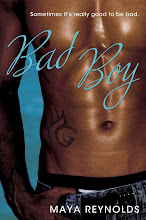
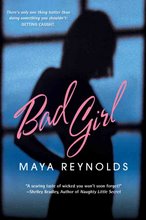
Saturday was the start of a four-day weekend for me. The day was busy because I mixed business and pleasure. I did an online author's chat and later signed stock in a Borders in Uptown Dallas (where Bad Girl is set). I also met my good friend ML for a movie at the Magnolia Theater in Uptown. Afterward, we went across the street to the Taco Diner for Los Cabos salads and two hours of girl talk.

ML and I have been friends for more than twenty years. Around 1990, we both dropped out of the corporate world. She was a VP at a major Dallas bank when she decided to return to school for a degree in design. Shortly afterward I started graduate school for my MSW.

Got home a little while ago to find my friend Colleen here tagged me to reveal six random things about myself, and then to tag six others.

Here are the rules
  • Link to the person that tagged you
  • Post the rules on your blog
  • Share six non-important things/habits/quirks about yourself
  • Tag six random people at the end of your post by linking to their blogs
  • Let each random person know they have been tagged by leaving a comment on their website

So here goes:

1) I can't stand to put my face under water. When swimming, I use the side stroke and back stroke to keep my face out of the water.

2) I have a Beanie Baby collection. It started when my nieces were very small; I purchased the stuffed animals for them. When they outgrew the toys, I started buying them for myself. Now I only keep the ones given out by sports teams as souvenirs during games. I installed shelves around my study about eighteen inches below the ceiling and put the Beanie Babies up there in display cases. Each case contains one Beanie Baby and the ticket to the game at which it was given out.

3) My favorite color is purple. My good friend Maria Zannini, who is a very talented artist, designed a new website wallpaper for me, which prompted the banner at the top of this blog. I'm waiting for my web designer to implement it on my website--a website I've sorely neglected in favor of this blog.

4) I like most people. The only ones I am guaranteed to dislike are those who use sarcasm to be cruel and who, when called on it, claim they were just being humorous. Invariably, I find these people to be mean-spirited in other areas of their lives. I make it a practice to avoid them on principle.

5) My favorite dessert is custard--whether Mexican flan or French creme brulee, I don't care.

6) The strength in my eyes is wildly different. I wear contacts: +1.25 in the right eye and +4.00 in the left.

My turn to tag six people. In alphabetical order they are:

Anti-Wife
David
Maria
Marie
Mike
Sherrill

Saturday, January 19, 2008

Oh, Frabjous Day

I'm wearing my Sony S2 walkman yesterday afternoon and listening to the news when I hear a commercial for the network debut of Dexter, the Showtime hit cable show about a serial killer who works for the Miami Police Department. The commercial said the show's first season would begin airing on CBS in February.

I've talked about Dexter on this blog before. Go here for my first post. I fought reading the debut novel for months. The first page was a cliche and the author's penchant for alliteration made my teeth hurt.

When I finally broke down and bought the first book, it took fifteen pages to convert me into a fan. The book had the same sly, dark humor that makes me love the Coen Brother films.

The series by Jeff Lindsay now has three books: Darkly Dreaming Dexter, Dearly Devoted Dexter and the most recent, Dexter in the Dark.

When Showtime began running a cable series based on the books, I convinced one of my brothers to tape it and mail it to me each month.

After hearing the commercial yesterday, I googled it. Here's what EW.com had to say:

In a significant move designed to further strike-proof its schedule, CBS will begin airing repeats of Showtime's cult hit fave Dexter on Feb. 17. The show just wrapped its second season on the CBS-owned premium cable network. The Eye says it will edit the first season of the series -- a graphic drama starring Michael C. Hall . . . as a forensics expert who moonlights as a serial killer -- for broadcast at 10 p.m. Sundays. By opting to air 12 episodes of Dexter, CBS will become the first broadcast network to program an entire season of a premium cable series.

Oh, frabjous day!!!

Friday, January 18, 2008

Announcement of the Edgar Nominees

The Mystery Writers of America have announced the nominees for the 2008 Edgar Awards. They are:

Best Novel Nominees

  • Christine Falls by Benjamin Black (Henry Holt and Company)
  • Priest by Ken Bruen (St. Martin's Minotaur)
  • The Yiddish Policemen's Union by Michael Chabon (HarperCollins)
  • Soul Patch by Reed Farrel Coleman (Bleak House Books)
  • Down River by John Hart (St. Martin's Minotaur)

Best First Novel By An American Author Nominees

  • Missing Witness by Gordon Campbell (HarperCollins - William Morrow)
  • In the Woods by Tana French (Penguin Group - Viking)
  • Snitch Jacket by Christopher Goffard (The Rookery Press)
  • Head Games by Craig McDonald (Bleak House Books)
  • Pyres by Derek Nikitas (St. Martin's Minotaur)

Best Paperback Original

  • Queenpin by Megan Abbott (Simon & Schuster)
  • Blood of Paradise by David Corbett (Random House - Mortalis)
  • Cruel Poetry by Vicki Hendricks (Serpent's Tail)
  • Robbie's Wife by Russell Hill (Hard Case Crime)
  • Who is Conrad Hirst? by Kevin Wignall (Simon & Schuster)

Best Critical/Biographical

  • The Triumph of the Thriller: How Cops, Crooks and Cannibals Captured Popular Fiction by Patrick Anderson (Random House)
  • A Counter-History of Crime Fiction: Supernatural, Gothic, Sensational by Maurizio Ascari (Palgrave Macmillan)
  • Deviance in Contemporary Crime Fiction by Christiana Gregoriou (Palgrave Macmillan)
  • Arthur Conan Doyle: A Life in Letters by Jon Lellenberg, Daniel Stashower and Charles Foley (The Penguin Press)
  • Chester Gould: A Daughter's Biography of the Creator of Dick Tracy by Jean Gould O'Connell (McFarland & Company)

The awards will be announced at the MWA's 62nd Annual Edgar Awards banquet on Thursday May 1, 2008 at the Grand Hyatt Hotel in New York City.

At that banquet, Bill Pronzini, author of the "Nameless Detective" series will be honored with the 2008 Grand Master Award.

Revisiting the Cookbook Controversy

I've done several posts on the cookbook contretemps between Jessica Seinfeld and Missy Chase Lapine. Both women released cookbooks last year on how to hide vegetables and other healthy ingredients inside family recipes. My first post was here on October 21.

When Lapine sued the Seinfelds for defamation and copyright infringement, I followed up with a post here on January 8th. I also directed readers to The Smoking Gun's website here to read the legal filing.

Yesterday, Publishers Weekly reported that Lapine has signed a deal for a third Sneaky Chef cookbook. "Chase Lapine’s second book with Running Press, The Sneaky Chef: How to Cheat on
your Man in the Kitchen
, comes out in April. This third volume will publish sometime in 2009."

My first thought was, "Good for her." My second thought was, "I wonder if the date has been set for the hearing in the case against the Seinfelds? Wouldn't it be interesting if that hearing date is close to the release of the second book?"

As any reader who followed the lawsuit against Dan Brown last year knows, you can't copyright an idea. Lapine's case for copyright infringement feels really weak. However, I felt differently about the defamation case.

If you want to read a legal expert's opinion of Lapine's chances in court, go here to read Julie Hilden's assessment. Hilden is a First Amendment law expert.

Another Update on the Writers' Strike

The big news is that the Directors Guild of America (DGA) reached a tentative deal with the film and television producers yesterday after less than a week of formal negotiation.

The DGA contract doesn't expire until June 30, 2008.

Reuters reported on the deal, saying "The Directors Guild has a history of reaching swift labor pacts with the studios, but the latest deal has drawn unusually intense scrutiny because of its implications for ending a strike by the Writers Guild of America."

The writers' strike has been going on since November 5, but I reported last month here the talks broke off on December 7th.

In a story in The Wall Street Journal on Wednesday, Writers Guild of America (WGA) officials indicated they planned to review the directors' deal. "The guild leaders said that in examining any deal made by the directors, a key issue will be not just how much money is paid for reuse of movies and TV shows on the Internet, but whether the creation of original work for the Internet comes under the auspices of the guild. Mr. Young [Executive Director of the WGA] said that in the near future, the Internet could become a 'pilot playground' for the testing of new shows, and if the work is created by non-union writers, it could dramatically undercut the union's strength over the long term."

Readers of this blog will remember my post of January 7th here about the new show Quarterlife, which originated on the Internet and then was picked up by NBC. Quarterlife will premiere on February 18th.

Network television shows have been available on the Internet for some time. Quarterlife was the first time a show originating on the Internet has gone the other direction to television.

A week after the talks with the Alliance of Motion Picture and Television Producers (AMPTP) broke down in December, the WGA turned up the heat by announcing it was going to try dealing directly with individual studios and production companies, thereby going around the AMPTP. Since that time, it has struck a number of these deals.

The WGA sustained a blow this past week when the four major television studios canceled more than 65 writer contracts.

The Los Angeles Times reported on Tuesday that this move was acknowledgement "the current television season cannot be salvaged" and "development of net season's crop of new shows also could be in jeopardy."

"For the studios, the terminations were in some part strategic. Payments had not been made on the contracts since November . . . By eliminating the deals now, the studios will no longer be obligated to pay the writers even if the strike ends in the next month or two."

Thursday, January 17, 2008

Warning: Major Whine

There's a great site online called Rules of Thumb. It collects rules of thumb and publishes them in categories. Find it here.

I'm thinking about sending them a suggested rule of thumb: No cast should be worn more than three weeks because, at that point, its smell and general unattractiveness outweighs the therapeutic value.

I'm supposed to wear the cast on my left forearm and hand until the end of the month. I've made an appointment on Monday to have it removed. If the surgeon wants me to wear one until January 31st, he's going to have to put a fresh one on.

I waste minutes every morning scrubbing the damn thing with an old toothbrush. The windchill is in the teens today, but I can't get my coat on over it--OR MY GLOVES. I wake up in the night with the cat licking it. I don't think of myself as fastidious, but this thing is just gross.

Okay, I admit it. I'm a lousy patient. But it's been more than two months since I've seen my left hand. I miss it.

Whine over.

Media Trends

The World Association of Newspapers (WAN) is preparing a scenario planning workshop for this month called "Shaping the Future of the Newspaper."

This week WAN released 66 trends noted by newspaper executives.

If you think about them, there are no surprises on the list. I've written about many of them here. However, seen in aggregate, the list offers a lot to think about.

Remember: these were written with newspapers in mind. I've aggregated and paraphrased:
  • Consumers are becoming accustomed to demanding 24/7 availability of products and services
  • As choices increase, sales must become more targeted to niches, more directed. Mass marketing becomes less important than niche marketing
  • The increased complexity of life has people seeking to simplify their lives
  • Families look different today: there are more single households, older people, unusual mixes of parents and kids
  • Consumer power: Customers are taking control over media on the Internet (blogs, etc.)
  • Paper is starting to talk
  • Viral marketing (word-of-mouth) offers consumers a level of trust
  • The Long Tail Effect: tailoring content to niches. audiences are fragmenting
  • User-generated content offers self-expression and an opportunity for social networking
  • Newspapers may become free
  • We're becoming accustomed to news when and where we want it. RSS feeds allow people to manage their own news feeds
  • GPS technology is permitting localized content
  • Prosumption: the consumer as producer
  • Citizen journalism: consumers want to be more involved
  • Newspapers can offer more in-depth, analytical journalism
  • The trend is toward more visual content than text
  • There's a competition shift. Any company can become another's competitor
  • Customer loyalty is becoming a thing of the past. Customers shift more easily
  • Online-only companies (Google, Yahoo and Microsoft) are becoming competitors to newspapers
  • One-to-one marketing. Google can now identify and pinpoint customers' needs

Wednesday, January 16, 2008

Agent Moves

Sometimes it's easier for writers to get connected with a new agent just starting out or one moving to a new agency. Today's Publishers Lunch mentioned a couple of changes, which I'm listing below:

After four years as an agent with Levine Greenberg Literary Agency, Los Angeles-based Jenoyne Adams has started her own agency, Bliss Literary Agency International. She will focus on middle grade/YA, literary/ethnic-world fiction, and creative nonfiction/women's interest. Levine Greenberg will continue to represent Adams, who is also a novelist, on her own fiction.

At the Stephanie Tade Agency, Dana Bacher has been hired as an agent and subsidiary rights manager. She will represent general fiction and non-fiction, and will develop a new YA and children's book department at the agency. Bacher associate director of subsidiary rights and marketing director, trade books at Rodale.

Memories Of The Nursery

I returned to my in-person critique group on Monday night. It is a community group, open to anyone, and it meets in a bookstore twice a month.

I'd been away for a while--for two reasons. First, I was busy marketing Bad Girl and, second, erotic romance is an inappropriate genre to read out loud in a bookstore. However, since I'm working on a paranormal, I decided to go back.

There were about fifteen people in attendance, four whom I'd not met before. I was introduced to a woman who had written a short story. She's a talented writer, and I'll look forward to hearing more of her work.

Perhaps it was because there were so many new people, perhaps it was because I had been away for a while and was seeing the group with fresh eyes . . . no matter what the reason . . . I found myself reflecting on the hope and bravery embodied in a community writers' group.

It takes enormous courage to join a group of strangers and share your manuscript. I am not at all nervy about speaking in a group or about meeting strangers. However, walking into that group four years ago took everything I had. To sit down among people I didn't know and read my work out loud while shoppers milled around the circle was terrifying. Never mind that those strangers were then invited to share their thoughts on what I'd written.

Looking back, that first reading was both a rite of passage and a covenant of sorts. I had committed to the pursuit and, to mark that commitment, I stood naked in front of the world and declared my intentions. My fear was only matched by my hope.

I learned a lot in that group. I learned to beware of people who attacked me instead of my words. I learned to beware of takers: those who wanted critiques, but who didn't reciprocate. I learned to avoid the narcissists, who regard their work as perfect and anyone who suggests otherwise as the enemy.

I learned "to take it" as my father used to counsel my brothers--to listen to harsh critiques, yet not take them personally. It was about the words, not about me. Contrary to what my heart told me, my work was not me. I found my first small measure of professional distance about my writing in that group.

I learned to give positive feedback as well as negative. I learned to support others as I hoped to be supported. I learned to celebrate my friends' successes and to derive from those successes the hope I needed in order to stay optimistic.

I learned, and I grew.

One of my favorite children's stories is The Velveteen Rabbit. I did not read it as a child. I was an adult trying to cope with disappointment when I first encountered it.

The Velveteen Rabbit is a new toy that is given to a boy for Christmas. Being new and inexperienced, he is shy among the other toys. The only toy that is kind to him is the Skin Horse, the oldest plaything in the nursery.

"What is REAL?" asked the Rabbit one day, when they were lying side by side near the nursery fender . . . "Does it mean having things that buzz inside you and a stick-out handle?"

"Real isn't how you are made," said the Skin Horse. "It's a thing that happens to you. When a child loves you for a long, long time, not just to play with, but REALLY loves you, then you become Real."

"Does it hurt?" asked the Rabbit.

"Sometimes," said the Skin Horse, for he was always truthful. "When you are Real you don't mind being hurt."

"Does it happen all at once, like being wound up," he asked, "or bit by bit?"

"It doesn't happen all at once," said the Skin Horse. "You become. It takes a long time. That's why it doesn't happen often to people who break easily, or have sharp edges, or who have to be carefully kept. Generally, by the time you are Real, most of your hair has been loved off, and your eyes drop out and you get loose in the joints and very shabby. But these things don't matter at all, because once you are Real you can't be ugly, except to people who don't understand."

"I suppose you are real?" said the Rabbit. And then he wished he had not said it, for he thought the Skin Horse might be sensitive. But the Skin Horse only smiled.

"The Boy's Uncle made me Real," he said. "That was a great many years ago; but once you are Real you can't become unreal again. It lasts for always."

Tuesday, January 15, 2008

Oprah Gets Her Own Network

From the Associated Press:

Oprah Winfrey is getting her own TV network.

Discovery Communications and Winfrey announced a deal Tuesday where the Discovery Health network will be turned over to Winfrey next year, becoming OWN - the Oprah Winfrey Network.

The cash-free transaction involved Winfrey turning over her Web site to Discovery, while the communications company makes her chairman of the network, which is currently seen in 68 million homes, said David Zaslav, Discovery Communications chief.

"The focus of the channel will be the focus of Oprah's brand, which is the educate and inspire people to live the best life they can," Zaslav said.

Some of Winfrey's stable of regular contributors could be expected to be part of the programming, he said. Winfrey's current talk show, as well as rights to use of reruns, is spoken for until the end of the 2010-11 season.

Will The Pirate Bay Walk The Plank?

The Wall Street Journal (WSJ) had an interesting article on Friday about a legal case in Sweden.

Swedish prosecutors are preparing to charge the operators of a popular file-sharing service with conspiracy to breach copyright.

The file-sharing site is The Pirate Bay (TPB), and its owners have been thumbing their noses at Hollywood for years. The WSJ claims "...millions of people across the world turn to Pirate Bay whenever they want a free movie, game or piece of software."

According to Wikipedia, TPB began in 2004 and, as of 1/3/08, was ranked 169 in the Alexa ranking list of the world's most-visited internet sites. "The Pirate Bay website allows users to search for and download...files from other users... organized in the categories: Audio, Video, Software applications, Games, and, for registered users only, Pornography."

The Journal reports:

The trial will probably grapple with complex technical issues. One question is the legality of BitTorrent, a computer program that breaks up large files like movies into small pieces so they can be transferred quickly over the Internet.

Although The Pirate Bay maintains an index of BitTorrent files, the files themselves are stored on the computers of other people around the world. Because the copyright files aren't stored on Pirate Bay computers, the site says it isn't breaking the law. Police, prosecutors and entertainment-industry lawyers say the distinction is bogus. The MPAA [Motion Picture Association of America] estimates The Pirate Bay's Web site generates $60,000 a month in advertising revenue.


The Swedish people are clearly on the side of TPB in this legal argument.

The public delights in the group's attitude toward anybody who sends it cease-and-desist letters, which are often published on the Web site along with Pirate Bay's cheeky replies. Some 157,000 movies, songs and other files can be found on the site, according to the MPAA, and 1.5 million people visit it a day...

While the entertainment industry hopes a guilty verdict will deter other Swedes from file sharing, it acknowledges that making more entertainment available for legal download would help.

"New services are being explored," says Geraldine Moloney, a spokeswoman in Europe for the MPAA. "The industry is committed to offering film fans as much choice as possible."(WSJ)

Monday, January 14, 2008

Golden Globe Books

From this morning's Shelf Awareness:

Movies based on books did very nicely at the dimmed Golden Globes yesterday. Among the winners: Antonement, best drama and best original score; No Country for Old Men, best screenplay (Ethan and Joel Coen) and best supporting actor (Javier Bardem); The Diving Bell and the Butterfly, best director (Julian Schnabel) and best foreign language film; and Into the Wild, best original song.

Moral Balance

The New York Times had a fascinating article on Sunday titled "The Moral Instinct." You can read it here.

The article written by Dr. Steven Pinker, a professor of psychology at Harvard, is lengthy and spends a good deal of time discussing the historical and genetic predisposition to morality.

I became very interested when the subject of moral themes came up below:

When anthropologists like Richard Shweder and Alan Fiske survey moral concerns across the globe, they find that a few themes keep popping up from amid the diversity. People everywhere, at least in some circumstances and with certain other folks in mind, think it’s bad to harm others and good to help them. They have a sense of fairness: that one should reciprocate favors, reward benefactors and punish cheaters. They value loyalty to a group, sharing and solidarity among its members and conformity to its norms. They believe that it is right to defer to legitimate authorities and to respect people with high status. And they exalt purity, cleanliness and sanctity while loathing defilement, contamination and carnality.

The exact number of themes depends on whether you’re a lumper or a splitter, but Haidt counts five — harm, fairness, community (or group loyalty), authority and purity — and suggests that they are the primary colors of our moral sense. Not only do they keep reappearing in cross-cultural surveys, but each one tugs on the moral intuitions of people in our own culture.


Pinker suggests that, while the five moral spheres are universal, each culture ranks the spheres according to its own individual value system.

Think of the Japanese fear of nonconformity (community), the holy ablutions and dietary restrictions of Hindus and Orthodox Jews (purity), the outrage at insulting the Prophet among Muslims (authority). In the West, we believe that in business and government, fairness should trump community and try to root out nepotism and cronyism. In other parts of the world this is incomprehensible — what heartless creep would favor a perfect stranger over his own brother?

So, too, do individuals rank the moral spheres according to which they hold most dear.

I never realized until I read this article that my personal value system is skewed heavily in favor of harm and fairness, and that I hold community and authority as much less important.


I imagine a balance scale with purity at the dead center of the platform, and with harm and fairness weighing down one side while authority and community hang in the air on the other side.

It's not that I don't value community. I do. However, my need for fairness and to do no harm far outweighs my concern for either community or authority.

I recalled an argument some years back with a loved one. I said, "You see the world only in shades of black-and-white."

He responded, "And you see it only in gray."

Thinking of that now, I realize my value of fairness (seeing all sides) was competing with his value of authority (rules were broken).

Wouldn't it be wonderful if we could acknowledge another's value system and explain our own without demanding that they accept our values or that we surrender to theirs?

When I was a child, the U.S. was known for tolerance and freedom. Today we talk about imposing our democracy on other nations. What happened?

Sunday, January 13, 2008

Just For Fun

I love ladybugs, and I love Gerber daisies.

Just for fun, here's a jigsaw puzzle with a ladybug perched on a Gerber daisy. It took me 6:25 to finish. See how you do.

Enjoy!

lo

Saturday, January 12, 2008

Urban Fantasy, Anyone?

If I had to pick the genre I choose to read for pleasure right now, it would be urban fantasy. And in the last month, I've read two great books: one by a writer I've read before and the other by a writer new to me.

Iron Kissed is the third in Patricia Briggs' Mercy Thompson books. I've written about the series before here.

And I'm thrilled to report that the books just keep getting better. Moon Called established Briggs' world, and Blood Bound allowed her to explore it, extending the boundaries. Now in Iron Kissed, Briggs has found herself. It is head and shoulders above the first two books--which were already pretty good to begin with.

Iron Kissed begins when the fae call in a favor from Mercy. The coyote walker had borrowed a fairy weapon when she needed it. Now the fae need her help in tracking a serial killer who is slaughtering their kind on the Washington state reservation that the U.S. government established for the fairies.

Mercy's efforts identify the killer but, when he's found missing his head, her friend and mentor is mistakingly arrested for his murder. The fae turn their backs on the accused, deciding to sacrifice him rather than risk humans learning their secrets. It's up to Mercy--and her werewolf friends--to find the real killer and get back a collection of missing fae magical artifacts.

One of the things that pleased me was that Briggs resolved the love triangle between Mercy and the two werewolves in her life. I was getting tired of the dance. I liked the way she handled it.

I was so engrossed in the book, I finished it in 24 hours. Obviously, I wasn't the only one to feel this way because Iron Kissed is #1 on Amazon's Urban Fantasy list. I highly recommend it.

The second urban fantasy I bought was Mike Carey's The Devil You Know. I'll be honest to say that, if I hadn't had a Christmas gift card, I might not have bought the book. I don't generally purchase novels in hardcover by authors with whom I'm not familiar. In this case, I'm glad I did.

Mike Carey is an award-winning graphic novel writer. The Devil You Know is the first novel in a series starring Felix Castor, a free-lance exorcist living in London. Castor, who goes by the nickname "Fix," is hired to rid a small but prestigious archive of a bloody-faced female ghost.

The ad copy for the book says, "Castor accepts a seemingly simple ghost-hunting case at a museum in the shadowy heart of London--just to pay the bills, you understand. But what should have been a perfectly straightforward exorcism is rapidly turning into the Who Can Kill Castor First Show, with demons and ghosts all keen to claim the big prize. That's OK: Castor knows how to deal with the dead. It's the living who piss him off..."

Carey's use of language, humor and imagery blew me away. I found myself re-reading passages just because I liked his phrasing. The book is vaguely reminiscent of Jim Butcher's work--a mystery inside a paranormal.

When I finished the book, I immediately went looking for the sequel. Interestingly enough, the second in the series, Vicious Circle, was published first and in paperback.

That book confirmed my impression of the first. While Carey is an unbelievably skilled writer, he has some issues with pacing. The Devil You Know is better written than Vicious Circle, but both are unevenly paced. Still, his great writing style distracted me in the slower sections, and made it less of a problem.

I recommend The Devil You Know, and will look forward to seeing more of Fix Castor.

Friday, January 11, 2008

Publisher Changes Its Mind

When the Cassie Edwards story was first released by the Associated Press on Wednesday (see my post here), Signet--her publisher--told the AP "She has done nothing wrong."

"The copyright fair-use doctrine permits reasonable borrowing and paraphrasing of another author's words, especially for the purpose of creating something new and original," according to a statement issued by Signet, an imprint of Penguin. "Ms. Edwards' researched historical novels are precisely the kinds of original, creative works that this copyright policy promotes."

Writers on the Internet clearly did not agree. There has been a firestorm of comment on blogs, and most has not been favorable toward Ms. Edwards.

A couple of hours ago, Signet released a new statement:

"Our original comments were based on Signet's review of a limited selection of passages.

"We believe the situation deserves further review. Therefore we will be examining all of Ms. Edwards' books that we publish, and based on the outcome of that review we will take action to handle the matter accordingly. We want to make it known that Signet takes any and all allegations of plagiarism very seriously."


As stated above, Signet is an imprint of Penguin. My publisher, NAL, is also an imprint of Penguin. I am delighted to see the new comment.

From Today's New York Times

In cubicles across the country, lunchtime has become the new prime time, as workers click aside their spreadsheets to watch videos on YouTube, news highlights on CNN.com or other Web offerings.

The trend — part of a broader phenomenon known as video snacking — is turning into a growth business for news and media companies, which are feeding the lunch crowd more fresh content.


Go here to read the entire story.

From Today's Wall Street Journal

Ten weeks into the screenwriters' strike, Weinstein Co. has reached an interim agreement with the Writers Guild of America that will allow the independent studio to restart work on new films, according to Harvey Weinstein, co-chairman.

"It's a done deal," Mr. Weinstein said, adding that he expected it to be signed by this morning. The agreement is similar to the deal announced Monday by the WGA and United Artists Films, the independent studio partly owned by Tom Cruise and his business partner Paula Wagner. The UA deal was the first between the WGA and a film studio since Hollywood writers walked out Nov. 5 after contract negotiations with the major Hollywood studios and television networks broke down.

The Queen Speaks

One of the things I admire most about Nora Roberts, the Queen of Romance, is her honesty. She never equivocates and, when asked, she gives her unvarnished opinion.

Asked about the Cassie Edwards controversy, Queen Nora told the Associated Press (AP):

"Given the side-by-side comparisons I've read, it seems clear Ms. Edwards copied considerable portions of previously published work and used them in her books without attribution to the original source," Roberts wrote in an e-mail to the AP. "By my definition, copying another's work and passing it as your own equals plagiarism. As a writer, a reader and a victim of plagiarism, I feel very strongly on this issue. I'm not a lawyer, but I can't see it as fair use, or fair anything when one writer takes another's work."

The AP followed Nora's comment with: "Both Roberts and Edwards are published by Penguin Group (USA), which on Wednesday defended Edwards, saying: "She has done nothing wrong."

More Publishing Predictions for the New Year

On Wednesday here, I started a discussion of Mike Shatzkin's predictions (made in Monday's Publishers Weekly).

Four of the Shatzin's predictions directly relate to e-publishing. Here's #1:

The popularity of e-books will increase, with titles formatted for Amazon’s Kindle leading the way. Content for the Sony Reader will sell faster than ever, but by this time next year, Kindle-compatible books will be outselling them by more than 2 to 1. And Palm, which has historically been the bestselling format, will have had its best year-on-year increase as well. By year end, nearly every straight-text title published with commercial intent will be available for Kindle; the trick for the other formats will be to make sure they’re included, too. And Kindle pricing will drive the market. But despite the fast growth, e-books will still make up a tiny share of the market—no more than 2% of sales for most titles—and will contribute only a minimal amount to publishers’ bottom lines.

I agree with Shatzkin. Three things will encourage the growth of e-publishing: (1) Technology that makes the e-reading experience more comfortable for consumers. The Kindle represents a technological break-through. While critics decry the unattractive utilitarian look of the Kindle, the one-click purchases, wireless downloads and lengthy retail product list mark it as a major innovation in e-reading devices. (2) The continued movement toward a greener environment. We cannot continue to decimate forests to create books. (3) Corporate greed. E-publishing eliminates printing, shipping, warehousing and the onerous "return for credit" system. Publishing is a business, and electronic publishing saves dollars.

Shatzkin's next prediction on e-publishing was #2:

Sales of books in electronic form to public libraries will continue to grow: Ingram’s MyiLibrary, Follett, NetLibrary and Overdrive are already deep into this business. This opportunity will present a challenge as publishers discover that some older contracts don’t give them the right to make that kind of sale.

I talked about Overdrive's Digital Library Reserve (DLR) platform here on 11/28/05. Through the platform Overdrive offers libraries 24/7 access to the books the library has purchased. I quoted a librarian as saying that patrons are "able to borrow, read and return a book without having to leave their home, and the automatic return feature means no fine."

Prediction #7 said:

Apple, seeing the growth in use of Kindle and Sony Reader, will move to turn the iPhone and iPod into e-book readers. But they will recognize that the problems of loading in content and merchandising books are far more complicated and challenging than doing the same for music. They will solve the problem by teaming up with Ingram’s Lightning Source (for content) and BN.com (for merchandising and to reach the book-buying audience). This combination will enable Apple to challenge the Sony/Borders combination and the Kindle, though Amazon’s device still promises to take significant market share away from print and other e-book formats over time.

Apple has already proved that they can create a sexy, exciting product. Amazon met its technological goals, but the Kindle has not as yet captured the reading public's imagination the way the iPod did for music. If Apple does partner with Lightning Source and B&N, at the same time introducing a modern-looking product with multi-functions, it will be interesting to see what happens to Kindle's market share.

And, finally, prediction #10:

Although overall sales will remain paltry, increased activity by publishers selling direct to consumers from their Web sites, particularly digital downloads, will lead to “read and listen” bundles of e-books and digital audio and other pricing experiments (it is worth noting that the Sony Reader and the Kindle can deliver both text and sound). Other combinations, including book-and-audio and book-and-digital file (the latter tried by Amazon), and even combos of multiple titles, will be offered.

An interesting prediction. I would have thought the movement would be toward chopping the content up into its component parts and then to selling those components. I think fast and easy reads are going to be more popular than bundles of reads.

There are numerous e-publishers popping up online offering original content written specifically for e-reading devices. In addition to the immediacy these e-books offer, the shorter lengths make them attractive to a reader with only a spare hour or two in which to relax.

I think book lengths are shrinking and will continue to shrink. But I do think the sale of books in multiple formats is an attractive idea.

Thursday, January 10, 2008

News Writers Reach Agreement With CBS

The Writers Guild, following through on it threat to seek individual deals, reached agreement yesterday with CBS on a new contract for its news writers and associated staff such as researchers, editors, assistants and graphic writers.

The story was reported by the Los Angeles Times this morning and says:

The four-year contract, which still must be approved by the guild's membership, grants CBS employees two 3.5% raises in the next two years. (Most employees will also receive an additional one-time payment of $3,700.) The union had been seeking a 3% raise each year, as well as retroactive pay, which it did not receive.

But the guild succeeded in getting CBS to drop its efforts to create a two-tiered salary scale that would have meant lower wage increases for local radio employees than for television and network radio staffers. The network also withdrew its demand to merge guild and non-guild newsrooms, the union said.

Wednesday, January 09, 2008

Boy, That Was Fast!

Go here for a news release about Cassie Edwards by the Associated Press at 9:06 PM tonight.

A Dog Named Dancer

A little over nine years ago, my father died. He and my mother had been together from their teens. During their entire marriage, my mother had never spent a night alone--if Daddy was away on business, he left behind a household of kids.

From the time I arrived home for the funeral, my mother followed me around. At night she climbed into bed with me.

Two weeks later, things weren't any better. I'd started sleeping on the couch in order to get Mom used to being alone in the bed. I asked her if she'd like to get a dog or cat. She refused. She started talking about moving to Dallas to be with me--despite the fact that two of my brothers and her youngest granddaughter lived near her home.

One morning in the middle of the third week, I got up and told her we were going out. When we were in the car, she asked where we were headed. I said, "The SPCA to get you a dog."

We argued all the way to the shelter. When we arrived, I got out of the car, but Mom refused to budge. I left her there and walked into the shelter, hoping she'd follow.

I headed to the small dogs room, looking for a toy poodle, Chihuahua or Yorkie. I found a small white poodle that I thought might work. Picking it up, I headed toward the front of the shelter. As I walked past the larger dog room, I heard a familiar voice.

Most of the dogs were two and three to a run. My mother was standing in front of a run with a single dog in it. She was cooing to a trembling, slender, black dog. I walked to her and held out the poodle. She never even looked at me.

I asked, "What do you have there?"

She replied, "His name is Dancer."

I looked around for a name tag. There wasn't one. "How do you know his name?" I asked.

"I just named him," she answered. "He looks like a reindeer."

Although I saw no resemblance between the nervy whippet and a reindeer, I was too grateful to argue.

Since that day, Dancer and my mother have rarely been apart. He gave her the courage to face the world as a single woman. She's had nine good years. As she has aged and begun to forget things, Dancer has taken up the slack. He's the reason Mom gets out of bed in the morning, and he nudges her toward bed a little before nine every night. They adhere to his schedule.

During my most recent visit, I watched her make dinner for them in the microwave--two Lean Cuisines. They ate dinner, and she discarded the trays. About ten minutes later, the now seriously overweight whippet rested his head on her knee and began whining.

"Oh, sweetie," she cried. "Are you ready for dinner?" Before I could stop her, she went to the freezer and took out a new Lean Cuisine. I was hard put to convince her he'd already eaten. Dancer may only have a brain the size of an egg, but he'd obviously figured out how to scam my mother.

It's no longer safe for Mom to live alone at home. We've taken away her car and given her a choice: allow someone to come to the house each day, move into a supervised retirement home or move in with one of the four of us. It's indicative of her situation that my feisty little mother did not argue. She wants to live with me, but has agreed to move in with my youngest brother until winter ends.

My brother is a sports columnist. The Dallas Cowboys are playing the Giants this Sunday at 4:30. If the Cowboys win their game, my brother will be coming to Dallas to cover the Conference Championship on January 20.

My sister-in-law (a saint) is happy to take Mom, but is not thrilled at the idea of adding an elderly woman AND a geriatric whippet to a household including a manic four-year-old, a neurotic cocker spaniel and a fifteen-year-old daughter. My brother has announced, if he comes to Dallas that Sunday, he's bringing Dancer with him on the plane to leave with me.

They've agreed to keep Mom for the next three months. I can't refuse to take the dog, but I hate the idea of separating Mom and Dancer.

I can, however, secretly hope that Dallas doesn't make it to the Championship game.

Shhh. Don't say anything to anyone. I'd be run out of Dallas on a rail.

Weekend at Bernies, Hell's Kitchen Style

Okay, this story has nothing to do with publishing, but I laughed so hard I almost fell off my chair and broke my other hand.

Check out this stupid crooks story in today's New York Times here.

Visiting the Smart Bitches

Yesterday, we talked about the lawsuit Mindy Chase Lapine brought against Jessica Seinfeld. The Smoking Gun now has the court documents available for review here.

Since I'm trying to upgrade this blog and am considering writing posts with a theme, check out the blog here for the Smart Bitches Who Love Trashy Books. Scroll down to the Monday post titled "Cassie Edwards Investigatory Extravaganza: The First Post."

SB Candy and her friend Kate spent Saturday googling erudite phrases from romance novelist Cassie Edwards' books. Turns out they found a fair number of what they describe as "Startling and Eerie Similarities between these Cassie Edwards' novels and certain texts published prior to the Edwards books."

Draw your own conclusions.

Fictionwise Buys eReader.com

The Bookseller.com reported today that e-book retailer Fictionwise has purchased Motricity's eReader.com.

"eReader.com is one of the crown jewels of the e-book world," said Steve Pendergrast, co-founder of Fictionwise. "With this acquisition, Fictionwise breaks into the very top ranks of the eBook retail market."

Fictionwise, an independent seller of e-books can be found here.

The Bookseller.com story reports that eReader.com offers more than 23,000 titles on its website here. The e-books can be read on a variety of handheld devices.

McGraw-Hill Cut 3% Of Its Workforce

Yesterday the McGraw-Hill Companies issued a press release here, announcing "it restructured a limited number of business operations in the fourth quarter of 2007 to fortify the Corporation's long-term growth prospects."

The press release goes on to say:

In the fourth quarter of 2007, the Corporation incurred a restructuring charge of $43.7 million, pre-tax, consisting mostly of employee severance costs related to a workforce reduction of approximately 600 positions across the Corporation. This reduction represents approximately three percent of the Corporation's global workforce.

Fifteen Publishing Trends

I spoke tonight at the Dallas Area Writers Group and made a lot of new friends. My talk ended about 8:30, but it was after 9:00 before I made it to my car.

I really do love these talks. It's always nice to meet new writers. When I was trying to learn the business, I can remember visiting every available discussion on writing anywhere in Dallas and Fort Worth. I schlepped hundreds of miles, seeking helpful info. It's good to be able to give something back now.

Regular readers of this blog will remember that I've often quoted Mike Shatzkin.

Mike is the CEO and founder of Idea Logical, a consulting company. He is a frequently sought speaker, especially on the impact of digitization. A little over seven months ago, he spoke at Book Expo America. That speech can be found here.

Yesterday's Publishers Weekly had an article by Shatzkin here titled 15 Trends To Watch in 2008.

It's going to take some time for me to absorb all his predictions, but I'm going to start here tonight sharing my thoughts.

First, let's look at Shatzkin's comment BEFORE he began making the predictions:

You won’t catch me climbing out onto any billion-dollar limbs as I offer my forecast for book publishing in 2008, but some of the changes I envision do call for fundamental changes in how the business operates. There is an overarching theme to the changes already taking place. Consumer media in the 20th century tended to be horizontal and format-specific. The New York Times and Random House define “horizontal”: they publish across all interests and markets. The Internet will drive 21st-century publishing enterprises to be more like what professional publishing has always been: highly vertical and format-agnostic.

Shatzkin has talked about this subject before. Traditional 20th century media pursued the broadest audience. Network television, daily newspapers and movies all sought to appeal across age, racial and economic boundaries--what we call a horizontal approach.

I've talked about it before, too. The Internet changed our world. Suddenly niche groups--even those widely separated by geography--could connect via the Worldwide Web. See my blog for July 14 here for more on this subject.

When Shatzkin talks about moving toward a more vertical model, he's referring to the hundreds--or thousands--of niche markets. The markets are fragmenting. Consumers have never had so much choice--both in content and in mode of delivery (which he calls format).

Prediction #4 is directly related to this trend:

Publishers will start acquiring specialized Web sites to get content for their books and to target niche audiences. By year-end, every major publisher will need to have an understanding of how to put a value on Web sites, because the old measures—namely, sales and profits—won’t necessarily be relevant and because the acquisitions will be smaller than what the companies would normally consider. The process will be similar to acquiring books, requiring a bit of imagination to see how the deals will pay off.

With an understanding of horizontal and vertical markets, you can see his reasoning for Prediction #4. Publishers seeing the market fragment need to find ways of reaching those niche audiences.

And the fragmentation leads directly to Prediction #11:

Literary agents will begin to experience the same kind of consolidation that has hit other parts of the book business, as the shrinking of advances below the very top tier of authors and the growing need for agents to provide editing, marketing and increasingly detailed rights management make it hard for smaller agencies to bring in enough money to cover their overhead costs.

The top tier of authors with broad appeal will still command large advances. However, a fragmenting market means smaller groups of readers; thus smaller sales and smaller advances.

In the same way that publishers shifted the task of vetting manuscripts to agents, enabling the publishing houses to cut down on salary costs, Shatzkin is predicting publishers will begin to shift other tasks to agents. He suggests that smaller agencies will have financial troubles as the result.

Prediction #12 also naturally follows:

Publishers will rethink the traditional sales conference and begin to move toward a continuous publishing model. This will be a belated recognition of two key facts: national accounts are mostly covered by staff, and the rest of the accounts can be reached quickly and efficiently by e-mail.

The sales conferences that were once so necessary to keep in touch are made redundant (and costly) by the Internet. E-mail is cheaper, more intimate and just as effective.

We'll wait till another day to tackle more predictions.

Tuesday, January 08, 2008

The Seinfelds Sued

On October 21, I did a post here about Jessica Seinfeld's cookbook, which was released on October 5. Questions were being raised about the similarities to a cookbook released on April 4 by lesser known writer, Missy Chase Lapine.

Two of the most talked about similarities were the covers, which each included a mom hiding carrots behind her back and similar recipes, including one that suggested putting avocado in chocolate pudding.

After Lapine's publisher contacted Seinfeld's publisher, Seinfeld's cover was changed so that the carrots were moved to a cutting board.

Both Jessica and her husband, comedian Jerry Seinfeld, strenuously denied any plagiarism. In November, when asked about the controversy during an appearance on The View, Jessica said:

“I can understand why she would have been frustrated. It must have been hard to see how quickly my book took off. I never saw her book, I never saw her recipes, nor, as a person, would I ever do something like I was accused of doing.”

Jerry also leaped to his wife's defense. He appeared on David Letterman's show, calling Lapine a "whacko" who claimed Jessica "stole my mushed up carrots." He went on to say that "She has three names and, you know, if you read history many of the three-named people do become assassins. Mark David Chapman, James Earl Ray."

Throughout the Seinfeld's public commentaries, Lapine remained silent, never issuing a public statement. That silence ended on Monday when Lapine sued both Jessica and Jerry Seinfeld in Manhattan federal court.

Reuters reports:

The suit, filed by cookbook author Missy Chase Lapine, claims Jessica Seinfeld copied her own book that explores how to sneak healthy foods into kids' diets. It also accuses the top comedian of embarking on a "slanderous attack" against Lapine on U.S. national television shows.

Take a look at Seinfeld's appearance on Letterman below and see what you think.


We all know by now that ideas aren't copyrighted. But did Jerry go too far?

A New Wiki In Town

Yesterday was a red letter day in the Wiki world.

Jimmy Wales, the founder of Wikipedia, unveiled his new search engine called Search Wikia here.

The New York Times reported "Like Wikipedia, Mr. Wales plans to rely on a 'wiki' model, a voluntary collaboration of people, to fine-tune the Wikia search engine. . . the service will rank pages based on a relatively simple algorithm. Users will be allowed and encouraged to rate search results for quality and relevance. Wikia will gradually incorporate that feedback in its rankings of Web pages to deliver increasingly useful answers to people's questions."

Unlike Wikipedia, which is run by the non-profit Wikiamedia Foundation, Wikia is a for-profit company, which plans to make money by selling ads. The start-up company has received $14 million, $10 million of which came from Amazon.

Most of the blogs that commented on the debut yesterday seemed a bit disappointed that Wikia wasn't a more sophisticated search engine. But Wales reminded everyone that, when he started Wikipedia in 2001, it only contained a few articles. When asked how long it would take Wikia to get up to speed, Wales was quoted by the IDG News Service saying, "I don't know how long it will take to reach industry-standard quality search results, but I'd say at least two years . . ."

Mr. Wales told the New York Times "I think it is unhealthy for the citizens of the world that so much of our information is controlled by such a small number of players, behind closed doors."

True to Mr. Wales vision, Wikia will be open source with its programming code and data visible to anyone.

At present, the top search engines are: Google, Yahoo, Microsoft and Ask.com. It will be interesting to see whether Internet consumers embrace Wikia.

Monday, January 07, 2008

Top Sci-Fi In the Last 25 Years

Entertainment Weekly has an article on the top 25 sci-fi films and television shows of the past 25 years. I just had a great time scrolling through them.

My top favorites were on the list although not in the order I would have listed them.

You can see EW's list here.

And I've posted videos from my top five below, counting down from #5 to #1.

#5 on my list: E.T. The Extra-Terrestrial (1982): Whose heart didn't break when E.T. and Elliot said good-bye, each touching his heart and saying "ouch"?


#4: The Matrix (1999): This is the scene when Neo and Trinity shoot up the lobby on their way to rescuing Morpheus.


#3 The Terminator (1984): This film started my infatuation with Michael Biehn. This is the scene where Sarah meets both Kyle and The Terminator for the first time in the club Tech-Noir.


#2 Aliens (1986): This film had everything. A kick-ass heroine, a cute kid, an evil Alien Queen AND Michael Biehn. This is my favorite scene in which Ripley utters those immortal words, "Get away from her, you bitch!"


#1 Blade Runner (1982): Every time Ridley Scott issues another director's cut, I buy it. I've got at least five versions of this film by now. This is the scene in which the last replicant allows Deckard to live while dying himself. Rutger Hauer was great as Roy Batty.


What are your favorites?

A Quarterlife Deal

On December 18th, the day I had my hand surgery, the Los Angeles Times reported on an important media event.

"The first television series that originated on the Internet and then got picked up by a major broadcast network, Quarterlife, will premiere on NBC on February 18, the network said Monday."

The series was created by Marshall Herskovitz and Edward Zwick, the creators of thirtysomething, an American television drama that ran on ABC for four seasons, beginning on September 29, 1987. thirtysomething was an Emmy Award winning show about a group of friends in their thirties living in Philadelphia.

Quarterlife--as you might guess from the title--is about a group of friends in their twenties. It began life on the MySpaceTV platform on November 11th. The show runs in eight-minute episodes on MySpace.com and on the Quarterlife.com site. A social networking site is also connected to the show for viewers.

The lead character, a wannabe writer named Dylan Krieger tells the stories through her blog.

Less than a week after the show debuted, the New York Times announced NBC's "first-of-its-kind deal to acquire the talked-about new Internet and social network series Quarterlife for distribution as an hourlong drama series on the NBC network after it has first played" on the Internet.

Network television shows have been available on the Internet for some time. This is the first time a show originating on the Internet has gone the other direction to television.

The writers' strike will not affect the show's debut on NBC in February.

The episodes will always appear on the Internet first.

The New York Times said: "The idea originated more than a year ago when Mr. Herskovitz and his longtime partner, Ed Zwick, decided they had to find a way to create entertainment that would be free of corporate ownership — and creative interference."

Sunday, January 06, 2008

Life In A Wood

I've told you I live in a forest with hills and wild critters, but here's a concrete fact to illustrate what I mean.

There are a lot of oak trees on my property. Several are more than sixty feet high. They drop such a thick carpet of leaves that it's impossible to mulch them with a mower, so every year, I rake. It usually takes me three weekends working almost full time to finish the task.

This year, with a cast on my hand, raking was out of the question. So I hired a crew to rake (and mulch where they could). I purchased a big box of extra large leaf bags for them to use.

When they ran out of leaf bags at #48, they started mulching. They're not finished yet.

First Impression Of the Republican Debate

I watched the debates last night with interest.

For me, probably the biggest disappointment was Mitt Romney. I've always regarded him as a very competent, fairly moderate CEO-type. The duplicity in his responses came as a huge surprise to me.

Romney came to the defense of the pharmaceutical industry, saying:

And don't turn the pharmaceutical companies into the big, bad guys...they're trying to create products to make us well and make us better. And they're doing the work of the free market. And are there excesses? I'm sure there are, and we should go after excesses, but they're an important industry to this country.

But let me note something else. And that is the market will work. And the reason healthcare isn't working like a market right now is you have 47 million people that are saying, "I'm not gonna play. I'm just gonna get free care paid for by everybody else." That doesn't work.

#2, the buyer doesn't have information about what the cost or quality is of different choices they can have.

If you take the government out of it to a much greater extent, you get it work like a market, and we'll rein in costs.


IMHO, to even suggest that the 47 million people without health care are making a deliberate choice not to pay is outrageous. I know. During the years I was writing full-time, I watched my health care insurance go from about $200 a month during the period I was covered by COBRA to well over $500 a month.

People don't carry health care because they simply can't afford it.

Pharmaceutical companies are making obscene profits while the public is having to decide between buying needed medications each month or buying food. Medications are being sold in other countries at a fraction of what they cost here, and Congress continues to protect those higher prices. That's NOT the free market at work. Romney's comments suggest he is pandering to the pharmaceutical industry.

On the Republican side, I thought McCain beat out Romney handily.

While I truly admire McCain as a loyal patriot and a great American, I suspect he is a dyed-in-the-wool conservative presenting as a moderate.

Bottoms Up

Readers of this blog know that I often comment on developments and trends in other industries. I do this because I believe those changes can give us insight into our future.

I'd like to talk for a few minutes about an interesting initiative out in San Francisco.

Back in 2004, SF Mayor Gavin Newsom proposed the creation of a wireless network to provide Internet access to his city. A RFP (Request for Proposal) was issued the following year and, in April 2006, the city announced that a proposal submitted jointly by Google and Earthlink had won the bid.

Sixteen months later, on August 29, 2007, Earthlink announced it was backing out of the contract. The next day, the San Francisco Chronicle reported the following: "The contract, which was three years in the making, had run into snags with the Board of Supervisors, but ultimately it was undone when Atlanta-based EarthLink announced Tuesday that it no longer believed providing citywide Wi-Fi was economically viable for the company."

The day before it backed out, Earthlink announced layoffs of 900 jobs--half its workforce--and its spokesman said the company "was not willing to work in the business model where EarthLink fronts all the money to build, own and operate the network."

Yesterday, an Associated Press story reported that "[a] Silicon Valley startup is promising to blanket San Francisco with free wireless Internet service, reviving a crusade that crumbled last year after two much larger companies, EarthLink Inc. and Google Inc., scrapped their plans to build a high-speed network for Web surfing."

The new initiative is being led by a network equipment manufacturer named Meraki Networks Inc. Google is one of the company's financial backers, which suggests that Google was hedging its bet on Earthlink.

AP's business writer Michael Liedtke says Meraki "hopes to complete the ambitious project within the next year by persuading thousands of San Francisco residents to set up free radio repeaters on their rooftops and in their homes. The 21-month-old company is to announce its plans Friday."

Earthlink's plan was to install transmitters on public property, and its efforts were stymied by bureaucracy and local politics.

Meraki plans to do an end run around these political impediments by going directly to consumers.

PC World says:

The startup . . . believes it will succeed where EarthLink and Google did not: Building Wi-Fi access throughout San Francisco at no cost to the city. It expects to finish by year's end . . .

Meraki is footing the whole bill on this project so it can learn how to roll out such networks for profit elsewhere. The good news, if the plan works, is that it could do so for less than US$5 million, lower than the cost many other municipal wireless projects have run into . . .

Meraki will build the backbone of its network with solar-powered rooftop access points and fill out its coverage with smaller repeaters to sit in windows or on balconies. Both will be designed and built by Meraki and provided free to residents and businesses that agree to house the gear on their property in return for better coverage. All the nodes will be meshed, so Meraki won't have to get wired broadband links everywhere its access points go.


The AP story says:

Since starting its tests about six months ago, Meraki has given away about 500 repeaters — enough to provide high-speed wireless, or Wi-Fi, access to about 40,000 people in San Francisco neighborhoods covering a roughly 2-square-mile area.

After raising an additional $20 million from venture capitalists, Meraki decided it had enough money to set up free Wi-Fi in San Francisco's remaining 47 square miles.

Meraki probably will have to give away 10,000 to 15,000 repeaters . . .


I was intrigued by Meraki's creativity in problem-solving and its grassroots approach to building a network. Instead of a "top down" solution, they opted for a "bottom up" response.

I've talked before about the centralization of publishing over the last forty years. Beginning in the '70s, publishing houses were swallowed by large media companies until today, there are seven media conglomerates that control most of the business. I'm not going to take the time here to go over that history. If you're interested, you can read my post for 3/7/07 here.

With the advent of digital technology and print-on-demand capability, I've predicted that the present centralized system will begin to fragment again. If you want to read more about that, visit my post for 6/25/07 here.

I believe that publishing is going to reinvent itself using a bottoms up approach.

Saturday, January 05, 2008

More on Preditors and Editors

My friend, Sherrill Quinn, pointed out that my novel Bad Girl is also listed on the Preditors and Editors poll as best erotic novel here.

PLEASE VOTE FOR ME.

Thanks.

A Little, Brown Wolf(e)

Publishing is a business. If we needed a reminder of that, the news on Wednesday that Tom Wolfe will be leaving his long-term publisher, Farrar, Straus & Giroux, served the purpose.

Wolfe, now 76, had been with FSG for 42 years--since his first book, The Kandy-Kolored Tangerine-Flake Streamline Baby, was released in 1965.

He's moving to Little, Brown and Co., a division of French publisher Hachette Livre.

So why would a writer suddenly pick up and leave a publisher he'd been with for more than half his life?

The answer can be found in his last book: the novel I Am Charlotte Simmons released in 2004. FSG lost money on the book, which was described by the press as a critical and commercial diappointment. In a blistering review on 11/14/04, The Chicago Sun-Times said:

At 74, Tom Wolfe has become an old fart. The worst kind of old fart, too: a right-wing scold, a moralizing antique, William Bennett in an ice-cream suit . . . It has been a long time since I have brought such high expectations to such a painfully disappointing novel.

In an article this past Wednesday The New York Times explained the numbers this way:

According to Nielsen BookScan, which represents about 70 percent of book sales, “I am Charlotte Simmons” sold 293,000 copies in hardcover and 138,000 copies in paperback. When Farrar, Straus published the novel, it announced a first-print run of 1.5 million hardcover copies. Although such numbers tend to be inflated, a more realistic print run of about 800,000 far outstripped sales of the book. It also far undersold “A Man in Full,” which sold about 1.1 million copies in hardcover.

So, when Wolfe and his agent Lynn Nesbitt came back to the table to negotiate the advance for his upcoming novel, Back to Blood, an exploration of class, race and corruption in Cuban Miami, due to be released next year, FSG balked at ponying up the $5 million advance Wolfe wanted. Jonathan Galassi, publisher of FSG, said, "We just couldn't agree on terms."

Little, Brown was willing to fork over an advance in the range of $7 million so Wolfe et al picked up their marbles and decamped.

As I said at the outset, publishing is a business. If you accept an advance based on anticipated sales, you'd damn well better deliver--no matter how famous you are.

If you need further proof, read this post of mine dated 11/8/05 here.

It's all in the numbers.

New Mystery Imprint

From yesterday's Publishers Weekly:

Soho Press is launching a new mystery imprint this spring called Soho Constable. Set to start publishing in April, the imprint will be releasing mysteries just published across the pond by British house Constable & Robinson. The books, both historical and modern-day mysteries set predominantly in England and Scotland, are by such authors as Barbara Cleverly, R.T. Raichev and Roberta Kray.

Friday, January 04, 2008

New Survey on Consumer Habits

The Hollywood Reporter had an interesting story on December 28th.

During the last week of October, Deloitte & Touche did their second online survey of consumer habits this year. They surveyed 2,081 U.S. consumers.

Eight months earlier (February 23-March 6, 2007), their first survey had indicated 24% of consumers used their cell phones as entertainment devices. The new survey puts that number at 36%.

"The current figure [for cell phones as entertainment devices] soars to 62% among millenials (consumers 13-to-24-years-old) compared with 46% in the previous study . . ." Among the Generation X consumers (25-to41-year-olds), the new figure grew to 47% from 29%.

Approximately 38% of consumers are watching TV shows online, up from 23% in the previous study.

"About 20% of consumers said they are viewing video content on their cell phones daily or almost daily."

One really interesting stat is that 69% of those surveyed indicated they are watching or listening to consumer-generated content.

"Eight-five% of consumers still find TV advertising to have the most impact on their buying habits, but online ads are second best, with 65% of consumers saying they have the most impact, beating out magazines at 63%."

"'I think for advertisers one of the conclusions is you don't make decisions to advertise either on television or the Internet when you want to hit all the demographics, but rather you need to have a multiplatform strategy,' said Ken August, vice chairman and national sector leader for Deloitte & Touche's media and entertainment practice, which commissioned the study. 'It shouldn't be an either or proposition'."

The Preditors and Editors Poll

This blog has been nominated as a helpful resource for writers.

I'd appreciate your votes here:

http://www.critters.org/predpoll/writerinfo.shtml

Thanks!!

Addendum: I just realized you can only vote once in each category. This category includes a number of great agent blogs, including Nathan Bransford and Janet Reid. They deserve your votes more than I do.

It's January Again

{sigh} It's that time of year again. Every January, a new crop of writers decides, "THIS is the year I'm going to see my book in print; even if I have to self-publish it."

In the last two days, I have seen at least six writers offer variations on the above statement.

I've been pretty proud of myself. I haven't made a single negative comment. I've resisted the urge to say, "Don't do it. Don't throw your money away."

After all, it is their money.

The thing that bugs me is that there's always a pattern to these things. A new person shows up on a list, posts for a couple of days and then--out of the blue--suddenly starts extolling the virtues of self-publishing.

If you're not familiar with the terms "sock puppet" or "astroturfing," go here and here.

As far as self-publishing goes, I read a post on Slushpile.net a year ago that resonated with me. Here's an excerpt:

When you self-publish . . . you are essentially going around (the) system. You’re taking your ball, going home, and making up your own game in the backyard. Your game might be fun, it might be valid exercise, it might be the perfect thing for your situation, but it’s not the same way all the other kids play. And to pretend otherwise is to invite scorn and derision.

Many newbie writers believe that having a physical copy of their book is the end goal. Their impatience blinds them to the impediments they'll face:

  • The need for a distributor
  • The need to market (you have to have a way to drive traffic to your site or to your book on Amazon)
  • The refusal of many bookstore chains to accept self-published books for sale even when you have a distributor and accept returns
  • The high costs charged for returns that eat into any profit
  • The negative opinion throughout the industry for self-published books

The would-be writer shells out $2,500 and ends up with a box of unsold books in his car trunk or on a shelf in his garage.

Worse yet, he gives up on his dream of writing. And who knows, if he'd been less impatient, more willing to accept feedback and better able to tolerate rejection, he might have become a published writer by following the traditional path.

Thursday, January 03, 2008

A New Political Prediction

Early yesterday morning, Business Week announced ten likely events for 2008.

The predictions, which can be read here, include pretty safe ones like oil will top $100 a barrel (Duh! What a reach. Oil hit that target less than twelve hours later) and Facebook fatigue (Please, I'm begging you, don't invite me to be your Facebook friend).

But the one I found the most intriguing was this:

New York Mayor Michael Bloomberg will enter the Presidential race in February, after it becomes clear which nominees will get the nod from the major parties. His multiple billions and organization will impress voters—and stun rivals. He'll look like the most viable third-party candidate since Teddy Roosevelt. But Bloomberg will come up short, as he comes in for withering attacks from both Democrats and Republicans. He and Clinton will split more than 50% of the votes, but Arizona's maverick senator, John McCain, will end up the country's next President.

I found this prediction fascinating on so many levels. First, for those of you who are not political junkies, Bloomberg had been a Democrat his entire adult life--until, at about age 59--he switched to the Republican Party in order to run as Mayor of New York. After two terms as Mayor, in last June, he left THAT party and declared himself an Independent, fueling speculation that he wanted to make a run for the presidency and knew the country was shifting away from Bush's party.

Mort Kondracke, Executive Editor of Roll Call, had this to say last April:

Obviously, the historical record of third parties is dismal. Not even ex-President Theodore Roosevelt could win. But, every decade or two, third-party candidacies do serve a purpose. They impel the major parties to take action they might otherwise avoid.

In 2008, all indications are the public wants an end to incessant partisan combat and attention to pressing national problems. If Democrats and Republicans can't deliver, Bloomberg has shown that he can.


On December 13th, the San Jose Mercury News reported:

One major effort, Unity '08, is already gearing up to offer America a viable "third way" presidential campaign. Through a wide open, online convention next June, Unity '08 plans to nominate a true "unity" ticket, headed by a Democrat, Republican or independent presidential candidate, balanced by someone from the other party in the vice presidential slot. Speculation in the press so far has focused on New York City's pragmatic and very effective Mayor Michael Bloomberg, as well as respected former Sen. Sam Nunn, D-Ga., and Sen. Chuck Hagel, R-Neb.

On Sunday, the Los Angeles Times had this story:

New York Mayor Michael R. Bloomberg, a potential independent candidate for president, has scheduled a meeting next week with a dozen leading Democrats and Republicans, who will join him in challenging the major-party contenders to spell out their plans for forming a "government of national unity" to end gridlock in Washington.

Others who will be at the Jan. 7 session at the University of Oklahoma say that if the likely nominees of the two major parties do not pledge to "go beyond tokenism" in building an administration that seeks national consensus, they will be prepared to back Bloomberg or someone else in a third-party presidential campaign.

The meeting will include Democrats Sam Nunn, Charles S. Robb, David L. Boren and Gary Hart, all former senators; and, on the GOP side, Nebraska Sen. Chuck Hagel, former Republican National Committee Chairman Bill Brock, former Sen. John Danforth, and former New Jersey Gov. Christine Todd Whitman.

"It is not a gathering to urge any one person to run for president, or to say there necessarily ought to be an independent option," said the meeting's host, university President Boren. "But if we don't see a refocusing of the campaign on a bipartisan approach, I would feel I would want to encourage an independent candidacy."


If you disregard the period around the Civil War when the two-party system fell apart temporarily, no third party candidate has ever won the U.S. presidency. In modern times, there have been three serious attempts, but no third party winners. Every one of the three tries split the vote of a party, giving the victory to the other.

In the 1912 election, Theodore Roosevelt ran as the "Bull Moose Party" nominee. He won 27.4% of the popular vote. The split in the Republican vote gave Democrat Woodrow Wilson the presidency.

In the 1992 election, Ross Perot, running as an independent, won 18.9% of the popular vote. Conservatives complained he acted as a spoiler for Republicans, giving the election to Bill Clinton.

In the 2000 election, Ralph Nader, running as the Green Party candidate, won 2.7% of the vote. Although the percentage was tiny, it was significant in the tight race between Bush and Gore and gave Bush the edge he needed.

Bloomberg has been both a Democrat and a Republican. He aligns more closely to the social agenda of the Democrats, but is a fiscal conservative like the Republicans. A third party run by him could significantly impact the 2008 election.

Stay tuned . . .

A Different Kind of Holiday Story

It's gotten cold here in North Texas. Not Canada cold or Colorado cold, but Texas cold. It was 24 degrees this morning with a wind chill of 10. And I can't get a coat sleeve over this damn cast.

My two feuding cats--Bob and Dinah--had been locked up inside for several days; each one in his or her own zone of the house.

'Twas the week before Christmas when I started hearing rustling under the floorboards. With everything else I had going on, I chose to ignore it. After all, raccoons and squirrels need to stay warm, too. As long as they stayed in the crawl space, I was willing to live and let live.

Of course, my friends and neighbors were appalled by this laissez faire policy. They offered to set traps for me and all kinds of other gruesome solutions. I steadfastly refused to have my holiday season marred with the sound of traps breaking small animal necks.

Bob and Dinah patrolled daily. I'd watch them stand on their hind legs, slide their claws into the groove of kitchen and bathroom cabinets and pop the doors open so they could check out the interiors. They were so diligent, I was confident the intruders would not enter the house.

Of course, all the biped males in my life pointed out that the critters below were probably chewing through my electrical wiring as we spoke.

During the week after Christmas, I began to doubt the wisdom of my hospitality. My non-paying tenants began climbing inside the walls. They celebrated New Year's Eve playing football in my attic. I lay in bed and listened to them rushing and tackling across the ceiling. Bob sat on top of my headboard all night, waiting for a critter to fall through, while Dinah must have climbed the drapes in my study because she was sitting on top of the valance the next morning.

On New Year's Day, it was warm enough to let the two cats outside. Bob is three years old and a very large, all black cat. Dinah is a one-year-old semi-feral cat, very, very tiny. I doubt she weighs seven pounds yet, but she is fierce.

I wish everyone had their work ethic. One went into the bushes; the other circled the perimeter of the house.

Over the next twelve hours, bodies began accumulating at my various doorsteps. Bob produced one and a half squirrels (I didn't ask about the other half) while Dinah exterminated two rats nearly as big as she is. I'm not sure how she got the bodies to my back patio or to the bottom of the front stairs.

Bob always leaves his kill within a foot of a door. Dinah's are always five or six feet away from a door. Up until now, I've assumed that was a reflection of her ambivalence about living with me. A Freudian conflict. However, in the case of the two rats, I imagined her paraphrasing a Clint Eastwood line, "I don't mind killin' em' for ya, but I'll be damned if I'm gonna sweat over 'em for ya."

I did my part. I provided body bags and removal service. I also circled the house, looking for places where the critters had dug under my foundation. I piled rocks in the holes.

We've now had two nights of blessed silence--not a creature stirring, not even a mouse.

Just goes to show. When you abuse your host's hospitality, you can expect to be evicted.

Where To Find CPs

Where does one find decent critique partners? I have spent plenty of time on the internet, but have not found anything promising.

I don't know where other people find their CPs, but I can tell you where I found mine.

When I first went looking, I joined two organizations: Romance Writers of America (RWA) and Sisters-in-Crime. S-in-C has a subgroup called the Guppies (the Great Unpublished), and the Guppies match people for critiques. I was matched with four other people. Over six months, three of the others dropped out, but two of us remained together and are still CPs more than three years later.

I took an online class and met a number of very supportive newbie writers. Two of them became my CPs two years ago.

A little over a year ago, I joined a large online writing group. Another writer and I clicked, began talking outside the loop and have been exchanging critiques.

Not all of these people exchange with each other, but all exchange with me. I've met two of them in person and have spoken with all of them over the phone.

Three years ago, I was invited to submit an application to join a closed group of five writers looking for a sixth. I provided a sample of my writing and was selected over the other applicants for the vacancy.

At the time, three of the group were much better writers than me, and two were probably not as strong as I was. What I discovered was that the three best were competing to prove who was the cleverest. They were not interested in helping me or my work. After six months of attending frustrating, non-productive (backbiting) sessions, I resigned and joined a public writers' group in the community. None of the writers there were as strong as the group I'd left, but I got better, more sincere critiques from people genuinely interested in helping me.

I'd suggest that you take every opportunity you find to exchange critiques--even if you think the writers are not as good as you are. At worst, you'll meet a lot of nice people and, maybe, just maybe, you'll click with someone.

I've been with three of my CPs more than two years now. We've all grown as writers--and we've all influenced each other.

I believe the key is to find CPs in whom you can develop trust. You need to know that your CPs want only the best for you. When you have that kind of trust, you can listen to the hard messages you need to hear.

Of course, it's a two-way street. You MUST reciprocate in kind. A few months ago, I spent a fair amount of time critiquing something for another writer. Because we seemed to be clicking, I sent him something of mine to review. I got a facile, "Not my genre, but looks well-written." From that response, I couldn't even tell whether he'd read it.

The next time he asked for a critique, I pointed out I had not gotten one back. Instead of hearing what I was saying, he actually referred me to his original response. Hello? He's since asked for another critique. Not going to happen.

Moral of the story: When you find a good CP, treat him/her like gold. If you are a taker and not a giver, the relationship won't last.

Good luck on your search.

Wednesday, January 02, 2008

2007's Best Sellers

From Publishers Weekly:

Whatever Hachette is paying James Patterson, it may not be enough. The prolific author placed six titles among the top 50 sellers, based on Nielsen BookScan sales data through December 16. Patterson helped Hachette place the most books on BookScan's top 50 list; its 11 bestsellers sold a total of 4.8 million copies. Although Scholastic had only three titles on the list, those three—including the year's top seller, Harry Potter and the Deathly Hallows—sold 8.6 million copies.

Simon & Schuster had eight titles among the top 50, led by The Secret; the company's bestsellers sold 6.6 million copies. Seven Penguin titles—selling a total 6.5 million copies—made the top 50. The country's largest trade publisher, Random House, also had seven titles (selling 3.2 million copies) among the top 50; its biggest bestseller, The Road, came in ninth place. The four HarperCollins books on the list totaled sales of 2.5 million copies.

BookScan captures approximately 70% of total book sales.

The Other Side of the Query

After yesterday's post, I got several emails offline from writers expressing the same frustration as the writer I'd talked about--although they were more cautious about expressing their annoyance toward agents directly.

I know I've talked about this before, but it probably bears repeating.

Agents are business entrepreneurs. They cull through the slush pile looking for pearls, which they can then present to the editors they believe might have an interest in them.

I just checked Kristin Nelson's blog here to see if she had published her statistics for 2007 yet. She had.

Here are the ones I was looking for from her post of 12/19/07:

30,000--estimated number of queries read and responded to (and yes, that is up from last year)

74--full manuscripts requested

8--number of new clients

22--books sold

Just think about those numbers for a moment. She read 30,000 queries, asked to see 74 fulls and ended up signing eight new clients. That is simply staggering. That means that, even if she took a two-week vacation, she read 600 queries every week.

That's six hundred queries every week to get one client about every six to seven weeks.

And writers are wanting feedback???? Let's assume she took five minutes to scribble notes on each of those 29,926 queries she rejected. That's 2,494 hours taken away from her real job--and her clients. That's 312 days. Guess what? There are only 260 weekdays in a year (and that's without taking any holidays into account).

I can hear someone muttering it now. She doesn't have to actually scribble a note. She could create a form letter with a list of reasons and just go down it, checking them off. It would take less than a minute.

Disregarding the fact that this would still take 62 days, every good-natured agent who has ever tried to do something like this quickly stopped. Why? Here are just some of the reasons:

  • Some writers see this as an invitation to open a dialogue, writing back--or worse--phoning to discuss the feedback. Feedback which the agent has long since forgotten.
  • Some writers see this as an invitation to edit and resubmit the query. If an agent wants to see something again, s/he will ask for it.
  • Some writers want to argue. A few can become abusive. The whack jobs can even become stalkers.

What some agents do instead is blog. People like Kirstin Nelson, Nathan Bransford and Jacky Sach (of my own agency BookEnds) provide feedback and answer questions on line. Take a look at the list of agents to the right of this blog. Visit their sites and pay attention to what they say.

I can also tell you what I did.

To begin with, I did not send out a barrage of letters all at once. I sent no more than six letters to carefully selected agents. Because I was impatient (and because Miss Snark was and is my god), I sent six pages of manuscript with every query. If I got six rejections, I figured something needed to change, and I sought feedback--from critique partners, from chapter members, and from published authors before sending out the next batch of queries.

Remember that quote often attributed to Einstein: The definition of insanity is doing the same thing over and over again and expecting different results.

If you want to read about my first critique from a published author, go here. I've told the story before on this blog. It isn't a pretty tale.

To make things worse, I hadn't yet gone looking for any critique partners. All I had was feedback from my family and friends. They were all literate and big readers. They'd pumped me up so high, I thought I was gold. I knew my writing was good, and my punctuation, spelling and syntax were excellent.

What I'd forgotten was that I also needed to tell a compelling story. No matter how well you write, the story--not the backstory
--is the thing. Catherine taught me that.

It was brutal, but I needed it. I'd lost perspective. I was like the Emperor with no clothes. I had begun to believe my own press. And Catherine was kind enough to bring me back to reality.

If you ended 2007 with more than twenty-five form rejection letters for one manuscript, think about doing something different in 2008. Remember Einstein.

Take a class, join a professional organization, find critique partners, seek feedback from the published authors in your chapter . . . the list goes on and on.

And let me know how it works out for you.

Here's to a successful 2008.

Tuesday, January 01, 2008

Happy New Year

I love new beginnings. I love picking up a new book and entering a universe where I'll meet new characters.

Maybe that's why I love new years so much. It's a fresh start on a new adventure.

I just finished writing a message to an bitter wannabe writer. He is angry because all he keeps getting are form letter rejections. He blames the publishing industry for being cowardly and calls the agents who've rejected him amateurs. He refuses to compromise his art for anyone and rages that his 600,000-word manuscript is being ignored.

I asked him "why" he writes. His response was eloquent, well-written and a bit schizophrenic (the way all writers tend to be sometimes). He writes for the joy of it, because he can't help himself and because he wants to earn money.

And therein lies the rub. When you're writing for yourself, you can write anything and any way you want. Your vision is what counts.

When you are writing for money, you must be able to adapt to
the vision of the buyer. That means, as a writer, you must produce what publishers are looking for.

I get so tired of reading posts about a repressive and short-sighted publishing industry that crushes artistic endeavors.

The industry isn't trying to crush anyone or anything. It is trying to stay alive.

The only other industry I can think of that takes as much flack is the filming industry. And, in both cases, the public is to blame, not the producers. We vote with our dollars. If we keep watching reality shows and Rambo 15, we'll get more reality shows and Rambos 16 through 22. If we buy crappy books, we'll get more crappy books.

Look at it this way. If you hired a painter to paint your house and agreed to pay him $5,000 to do it, you'd expect he'd paint it the way you wanted. If you asked for cream with black trim, you'd be pretty unhappy to get red-and-white polka dots. His explanation that polka dots were a part of his artistic vision probably wouldn't placate you.

That same principle applies to publishing. If a publisher asks for a 80K to 120K word fantasy, it's going to reject a 600K-word submission--no matter how well-written.

When someone tells me she has a 250K-word manuscript, I can almost guarantee I'll find tons of unnecessary backstory, tedious details about daily activities, and gobs of introspection. Any action will be lost in a sea of endless narrative. Some critics would call this literary fiction {grin}. I'd call it unsaleable.

I urged the writer who'd complained to decide on the purpose of his manuscript. He can write to please himself, or he can write to please his buyer. Hopefully, he's flexible enough to find a compromise that will permit both.

Otherwise on 1/1/09, we'll be having this exact same discussion all over again.