Sunday, July 05, 2009

Revisiting the Palin Resignation

This has been a busy weekend. I had company from Austin so, although I heard about Sarah Palin's resignation as governor, I didn't actually watch the entire nineteen-minute video from her press conference until today.

The edited text of her speech appears on her Facebook page here. The quotes below, including caps for emphasis, are from that text.

Palin took a meandering path to her resignation; she spent nearly eight minutes talking about Alaska's history and touting her accomplishments in office. She only broke from her relentless good cheer twice: First, to take a jab at the media's "slings and arrows" and then to snipe at the "obscene national debt that we're forcing our children to pay because of today's big government spending."

At 7:50, she finally got down to business, complaining about the "political operatives" who descended on Alaska last August, trying to dig up dirt on her. She then offered a laundry list of the reasons for her resignation with very little specific information about what she will do afterward:

1) The Financial Burden: The fifteen "frivolous" ethics complaints against her have cost the State of Alaska $2 million. And "Todd and I are looking at more than half a million dollars in legal bills in order to set the record straight."

2) The Wasted Time: "And one chooses how to react to circumstances. You can choose to engage in things that tear down, or build up. I choose to work very hard on a path for fruitfulness and productivity. I choose NOT to tear down and waste precious time . . . Productive, fulfilled people determine where to put their efforts, choosing to wisely utilize precious time... to BUILD UP . . ."

3) The Enormous Need: "And there is such a need to BUILD up and FIGHT for our state and our country. I choose to FIGHT for it! . . . I'll work for and campaign for those PROUD to be American, and those who are INSPIRED by our ideals and won't deride them."

At that point she announced that, not only would she not be running for reelection, she would be resigning her job as governor--a year early.

This was where she wandered into territory so obviously self-serving that I wondered if the Washington Post cut a piece of the speech from their video here on the press conference. The part in italics is missing from the WP's coverage:
And so as I thought about this announcement that I wouldn't run for re-election and what it means for Alaska, I thought about how much fun some governors have as lame ducks... travel around the state, to the Lower 48 (maybe), overseas on international trade - as so many politicians do. And then I thought - that's what's wrong - many just accept that lame duck status, hit the road, draw the paycheck, and "milk it". I'm not putting Alaska through that - I promised efficiencies and effectiveness! ? That's not how I am wired. I am not wired to operate under the same old "politics as usual." I promised that four years ago - and I meant it.
The last seven minutes of the speech were sort of anti-climatic except for the final sentence: "In the words of General MacArthur said (sic), 'We are not retreating. We are advancing in another direction'."

The press is having a field day trying to figure out what is going on, posting all kinds of reason for her resignation:

1) The most obvious one is that she is prepping for a run at the White House in 2012. I don't buy it as her only reason. Her resume is already thin. Her title as governor of Alaska is her sole credential. Leaving her first term early does not enhance her future prospects as Commander-in-Chief. If you thought SNL made hay with "I can see Russia from my house," just wait for Tina Fey to get her hands on this.

2) The second most advanced reason is that there is a big political scandal about to break that would embarrass her. The FBI has already come out to say there is no federal investigation at this time. Of course, that still leaves a window cracked. Just because the FBI has not opened an investigation, it doesn't mean there aren't any problems on the horizon. A preemptive resignation could help to defuse any resulting media uproar. But I don't know that I believe this one.

3) Rick Sanchez from CNN speculated that she might be pregnant again. This might actually be supported by Palin's own tweet on Twitter: "We'll soon attach info on decision to not seek re-election... this is in Alaska's best interest, my family's happy... it is good, stay tuned."

Do we accept her at her word that she is just fed up with "the politics of personal destruction" and not seeking "a title before one's name"? Her Fourth of July message on Facebook would seem to contradict that notion:
I am now looking ahead and how we can advance this country together with our values of less government intervention, greater energy independence, stronger national security, and much-needed fiscal restraint. I hope you will join me. Now is the time to rebuild and help our nation achieve greatness!
Okay, this is my blog so here's my opinion.

Back on May 18, Publishers Lunch had this tidbit:
Sarah Palin's memoir, "a wonderful, refreshing chance for me to get to tell my story, that a lot of people have asked about, unfiltered," on both her personal and political life, from "her childhood in Alaska and last year's campaign to her political beliefs and her family life, including the pregnancy of her teenage daughter," to Brian Murray at Harper (which will co-publish with Zondervan), with Adam Bellow editing, on an exclusive submission (said to be "first and fervent in pursuing this project" by Barnett), for publication in Spring 2010, by Robert Barnett at Williams & Connolly (world).
I remember thinking when I read the announcement, "Damn, that's a short turnaround for a large publisher."

Since the resignation, there's been speculation about the future of that memoir. Today the Wall Street Journal had a blog by my favorite columnist, Jeffrey A. Trachtenberg, in which he responded to that question:
The answer, say those in the book publishing community, will depend on whether she’s still active in Republican politics. If she is generating headlines while promoting other Republican candidates, chances are that her book will still be of significant interest. Otherwise, the venture could be riskier.
I have no doubt that Sarah's eyes are still fixed on the presidency. However, she has several HUGE problems:

1) Alaska is her base of operations, but the state is no place from which to mount a national campaign for President. She can't just take an afternoon off from her job to campaign in the lower forty-eight states the way other governors have done. She actually acknowledges that in her speech. It's a big deal to fly anywhere from Alaska. She's already had a taste of that during McCain's campaign.

So running for re-election is out. I think she was being absolutely honest when she said yesterday on Facebook: "And once I decided not to run for re-election, my decision was that much easier – I’ve never been one to waste time or resources."

2) I think the financial burden she talked about is real. This is a blue-collar husband and wife with no family wealth to back them. I don't know what kind of an advance she got for her book, but I'm guessing the money is needed. I'm further guessing she probably has a deadline somewhere around Thanksgiving. Even with Adam Bellow, conservative editor and author helping, she's got some tough days ahead.

3) This morning, Thomas M. DeFrank, the Washington Bureau Chief for the New York Daily News talked of an interview he did with Palin last November: "I can report the Alaska governor was engaging, authentic, gracious and appealing . . . Except for energy, however, her grasp of issues was woefully superficial. She was easily the most inarticulate veep candidate I've interviewed while covering 11 presidential campaigns."

That's a serious problem. Before she can be ready for prime time, the girl will need some heavy-duty tutoring in the issues. You might scoff that such a thing is possible, but I live in the state where George W. Bush went from governor to president--something I did not believe possible when he announced his run for the presidency. And let's face it. Both of them are charming, folksy and about as intellectual as my cat Bob.

4) There have been endless comparisons between Palin and Nixon. Both gave speeches in which they withdrew from public life, blaming the media. Today's New York Times pointed out what Nixon did after his resignation: ". . . Nixon used the next six years to quietly refurbish his image, building ties with the conservative wing that was becoming ascendant in the Republican Party, ingratiating himself with Republican senators and candidates for governor by campaigning on their behalf, and becoming better schooled in issues."

Palin is hugely popular in conservative circles. That makes her a big draw for Republican candidates at a time when Republicans need all the help they can get. She can campaign around the country, keep her name out there and build some political capital among legislators, whom she will later be able to call upon to support her.

All four of the above have one common theme: TIME. Palin needs time to finish her book, to study the issues, to travel around the country and to begin to build her own political network. That's the real reason she's resigning.

And call me cynical. I'm betting she and Todd are knocking boots every spare minute they have together. Because a pregnancy will help erase that black stain her resignation put on her record. I expect the announcement of a pregnancy to be forthcoming, and I suspect the reasons she hasn't announced it yet are (1) She may not yet be pregnant, and/or (2) Why give up an opportunity to hit the news waves twice--once by announcing your resignation and again by announcing your pregnancy?

Stay tuned . . .

Here's the first part of that press conference from YouTube and here's the second part of the press conference.

Saturday, July 04, 2009

Happy Birthday, America

My maternal grandfather had three great loves: his family, his piano and his books.

Grandpa was a great reader. Outnumbered by his wife and four daughters, he sought refuge from all that estrogen by escaping into his library. My earliest memories of our visits to his New York apartment always included him with a book in his left hand, his index finger marking his place.

I would ask what he was reading, and sometimes he would actually tell me, which was how I came to know Edward Everett Hale's short story "The Man Without a Country."

I was probably six or seven when Grandpa described the story to me. It made an enormous impression on me. If you have never read it, I recommend it. It was published in 1863 in the Atlantic Monthly.

It's a deceptively simple story. It tells of a U.S. Army lieutenant named Philip Nolan who was tried for treason as an accomplice of Aaron Burr's back in the early days of the United States.

During his sentencing when Nolan is given a chance to assert his loyalty to the U.S., he cries out in anger: "Damn the United States. I wish that I may never hear of the United States again!"

The judge and the officers of the Court, who had all served during the American War of Independence, are horrified by Nolan's thoughtless outcry. The judge, an Army colonel, hands down the sentence: "The Court decides . . . that you never hear the name of the United States again."

For the next fifty-six years, Nolan is transferred from U.S. warship to U.S. warship, condemned never to set foot on American soil again. No officer or enlisted man is permitted to tell him one word about the U.S. Any mention of the United States is redacted from his newspapers, and he is forbidden any book that talks of his former country.

Nolan begins his sentence as an arrogant young fool scoffing at the men who condemned him. However, by the time he dies--more than five decades later--he is a changed man. He has transformed his personal quarters on the ship into a virtual shrine to the country he once renounced.

I re-read that little story every couple of years and, as we celebrate our nation's birthday once again, it seems appropriate to quote from it. The words are Nolan's:
"Youngster, . . if you are ever tempted to say a word or to do a thing that shall put a bar between you and your family, your home, and your country, pray God in his mercy to take you that instant home to His own heaven.

Stick by your family, boy; forget you have a self, while you do everything for them . . . And for your country, boy," and the words rattled in his throat, "and for that flag," and he pointed to the ship, "never dream a dream but of serving her as she bids you, though the service carry you through a thousand hells.

No matter what happens to you, no matter who flatters you or abuses you, never look at another flag, never let a night pass but you pray God to bless that flag. Remember, boy, that behind all these men . . ., behind officers and government, and people even, there is the Country Herself, your Country, and that you belong to her as you belong to your own mother. Stand by her, boy . . .
It was no accident that Hale wrote the story as the country teetered on the brink of Civil War. But as she has for over 230 years, America bled and struggled and survived those dreadful internecine days.

May God bless the United States of America and keep safe the thousands of men and women who protect her daily.

If you want to read the story yourself, go here.

Friday, July 03, 2009

Don't Cry For Sanford, Argentina

Politicians are different. We all accept that. But what exactly sets them apart from the rest of us?

The good ones are able to explain convoluted concepts in simple terms that everyone can understand. To be modestly self-deprecating. And to deliver a zinger of a put-down with good humor and superb timing. In his day, President Lincoln was as much a master of the sound bite as Ronald Reagan would be six score years later.

It takes a healthy ego to first dream of and then plan to occupy the residence at 1600 Pennsylvania Avenue in Washington, D.C. A healthy ego and a single-minded determination.

And how can we be surprised if ... eventually ... those near the top of the political heap begin to believe their own press and start subscribing to the belief that being different entitles them to ignore the rules by which the rest of us operate?

I just looked up the definition of narcissism on the Internet: "self-love; an exceptional interest in and admiration for yourself; a person full of egoism and pride."

That's as good an explanation as any for Governor Mark Sanford's self-serving interviews this week.

First of all, it takes overweening narcissism to offer the media an interview sensational enough that it manages to rise above all the noise surrounding the death of the King of Pop. A lesser ego might have celebrated the fact that Michael Jackson's demise this week had eclipsed the news of his own adulterous affair.

But not Mark Sanford. He set out to give the press a story that would guarantee his place in the spotlight.

In my mind, this spectacular example of poor judgment alone justifies all the calls for Sanford's resignation. Never mind those rumors of financial impropriety.

And then when he's snared the world's attention again, what does the fool do? He sets out to convince us that his affair with Maria Belen Chapur was about more than just sex. As reported in The Philadelphia Inquirer, Sanford had this to say:

"This was a whole lot more than a simple affair, this was a love story ... A forbidden one, a tragic one, but a love story at the end of the day."

Gag me with a spoon.

My first thought upon hearing those words was, "Oh, my God. His poor wife."

Then I got seriously torqued. What is he doing? Trying to paint himself as a modern day Abelard to Chapur's Heloise? How stupid is he? And just how stupid does he think we are?

Not yet finished with his plan to self-destruct, Sanford says "he is trying to fall back in love with his wife, Jenny, even as he grapples with deep feelings for Chapur. 'I owe it too much to my boys and to the last 20 years with Jenny to not try this larger walk of faith'.

"I will be able to die knowing that I had met my soul mate."

Yeah, that's the stuff reconcilations are built on.

And just for good measure, he admits he's had "casual encounters with other women while he was married."

Obviously, it's dawned on him that some woman from his past might decide to capitalize on their time together. This must be the Sanford version of damage control.

There's a world of difference between sweaty sex and genuine affection, between lust and love. Publicly dissing your wife by rubbing her nose in this crap does not qualify you as a romantic idol. You've already embarrassed her and your kids. Quit trying to peel her dignity from her back like the bark from a tree.

"Have I done stupid? I have."

Truer words were never spoken. Now do us all a favor and crawl back under that rock you slithered out from.

I take comfort in the knowledge that his political career is finished. Videotape of him blubbering for the cameras while "Don't Cry for Me, Argentina" plays in the background will make an effective political ad for any future opponents.
Have I said too much?
There's nothing more I can think of to say to you
But all you have to do
Is look at me to know
That every word is true.
[Don't Cry For Me Argentina (Evita)]

The DOJ is Looking Into the Google Settlement

If you visit Scribd, you'll find a copy of a letter from the Department of Justice; specifically, William F. Cavanaugh, Deputy Assistant Attorney General, to Judge Denny Chin of the U.S. District Court (Southern District of New York).

Mr. Cavanaugh is notifying the judge in the Authors Guild v. Google case that the Government is opening an antitrust investigation into the proposed settlement:
The United States writes to inform the Court that it has opened an antitrust investigation into the proposed agreement between Google and representatives of publishers and authors which forms the basis of a proposed settlement of a pending class action in The Authors Guild Inc., et al. v. Google Inc., Civil No. 1:05-CV-8136. The United States has reviewed public comments expressing concern that aspects of the settlement agreement may violate the Sherman Act.
For his part, Judge Chin entered an order dated yesterday in which he said:
The fairness hearing is scheduled for October 7, 2009. The Court intends to conduct the hearing on that date. If the Government wishes to present its views in writing, it must do so by September 18, 2009. The Government may also appear at the hearing to present its views orally.
On May 11, I did a post on the pros and cons of the settlement here.

To see the DOJ's letter and the judge's order, go here.

Thursday, July 02, 2009

Born Free

I've been waiting for next Tuesday for a long time. That's the day that Chris Anderson's new book Free comes out.

You'll remember Anderson. His book The Long Tail was a best-seller during the summer of 2006. I wrote about the upcoming book for the first time on June 10, 2007 here.

I became interested in Anderson's whole concept of product wanting to be free and did a follow-up blog on the subject on February 13, 2008 here.

Finally, on February 27, 2008, I talked about an interview Anderson did with Advertising Age here.

Okay, it's been two years and the wait is finally over. Free hits bookstands next Tuesday, the 7th.

Wednesday, July 01, 2009

NOTE TO SELF

Alice Hoffman is among our most well-known contemporary novelists. She writes beautifully and movingly . . . of relationships, of milestones and of the human condition. She is one of those writers whose wordsmithing is so well done, I read passages out loud to myself--just to enjoy the rhythm and rhyme of her sentences.

Her latest book, her 21st novel for adults, titled The Story Sisters was published on June 2. Boston Globe book critic Roberta Silman reviewed the book on June 28, which is where this story starts.

Silman was complimentary of Hoffman's earlier works. Her review said:
. . . one of my favorite books is her “Illumination Night,’’ which amply displays her gifts of precise prose and the ability to create sympathetic characters.
However, when it came to The Story Sisters, Silman was blunt:
But this new novel lacks the spark of the earlier work. Its vision, characters, and even the prose seem tired. Too much of it is told rather than shown, and the story itself is a strange combination of a coming-of-age novel set on Long Island and a brutal story of the consequences of a childhood trauma . . .
I'm going to stop here and editorialize for a moment.

Writing can be a tough business. For most of us, it is done in lonely rooms, in moments hijacked from the rest of our lives: hours stolen from our families, our leisure time and sometimes even our jobs.

When we finally finish polishing our manuscripts, we run a gauntlet of critiques from our writing partners, agents and finally editors. If the work holds up after that barrage of constructive feedback, we wait endlessly for the book or novella to be released; only to find ourselves facing a new volley of feedback cum criticism from critics and fans alike.

I say all this to indicate that I have some understanding of how Alice Hoffman must have felt upon reading Silman's review. It must have felt like having your son's fifth grade teacher greet you during a parent/teacher meeting with the words: "I taught Jessica two years ago and found her to be an excellent student and a darling child. Bobby, on the other hand, is a bit of a dolt. I can't wait for him to move on to sixth grade."

Imagine the shock, the rage, the desire to respond to such outrageous calumny.

Unfortunately, Alice Hoffman acted on that impulse. She tweeted her outrage on her AliceHof Twitter account. Although the posts are no longer available for viewing, Gawker immortalized them online on Monday morning:
Roberta Silman in the Boston Globe is a moron. How do some people get to review books? And give the plot away.

Writers used to review writers. My second novel was reviewed by Ann Tyler. So who is Roberta Silman?
And Hoffman didn't stop there. In twenty-seven . . . count 'em . . . twenty-seven posts she lambasted Silman, the Boston Globe and the City of Boston, her own hometown.

Just when you thought it couldn't get any worse, she offered up Silman's email address and phone number, suggesting people contact the critic and give her hell.

{Shakes head sadly}

It was like watching a trainwreck. Hoffman tried to rally legions of female supporters to her cause with statements like:
Girls are taught to be gracious and keep their mouths shuts. We don't have to.

And we writers don't have to say nothing when someone tries to destroy us.
{Wince}

That last line brought to mind a character in Hoffman's The Third Angel. Here is how she described him:
Michael Macklin had done some bad things, it was true . . . He put his life on the line in France, and he hadn't even shivered . . . In battle, he'd felt alive. On the run, he felt he had something to run to. He liked danger, he liked the smell of it. He liked the feel of his blood running hot.
The only blessing in this debacle was that Hoffman mistyped Silman's phone number in her exhortation to readers to reach out and touch Silman.

Silman told the L.A. Times' Jacket Copy:
"Aside from your email there have been nine emails to me, all in support of my review and/or my right to review and all apologizing for Alice Hoffman's perplexing behavior . . . I wouldn't change anything about my review. I have written many reviews for The Globe and say what I believe, and, in this case, I praised her earlier work, which was clearly better. I'm sorry Alice could not take pride in the good things I said, and perhaps mull a little on the criticism. That is what I have always tried to do when professional people have criticized my work."
Jacket Copy also printed the following:
Alice Hoffman's statement, which was conveyed by her publicist, Camille McDuffie at Goldberg McDuffie Communications, reads:

I feel this whole situation has been completely blown out of proportion. Of course I was dismayed by Roberta Silman's review which gave away the plot of the novel, and in the heat of the moment I responded strongly and I wish I hadn't. I'm sorry if I offended anyone. Reviewers are entitled to their opinions and that's the name of the game in publishing. I hope my readers understand that I didn't mean to hurt anyone and I'm truly sorry if I did.

Best,
Alice Hoffman
NOTE TO SELF: Don't ever, ever respond to a review. No matter how much it hurts, just walk away.

Read Silman's review here.

Tuesday, June 30, 2009

Stuck at the Prom

Sorry to have been gone for so long. My day job just had to take precedence.

Today is my first day off since we rolled out our new software. I've been napping and catching up on Internet news.

Just for fun: check out this year's contestants for the Stuck at the Prom annual duct tape competition. The rules require that two people create prom attire from colored duct tape and then attend the prom wearing their original creations. The ten 2009 finalists have now been selected, and you can vote once a day for the ones you believe should win from now until July 2.

Each half of the winning couple for the year receive a $3,000 scholarshop; each half of the second place couple win a $2,000 scholarship; and each half of the third place couple receive a $1,000 scholarship.

Here is the page to vote on the finalists for this year. I'm voting for #36, #87 and #179.

Monday, June 01, 2009

Sacha Baron Cohen's Latest Stunt

Sorry I've been out of touch. My university rolled out a new software program this morning at 6:00, and I'm the project manager for my department.

Back to work now, but here's a link to the video You Tube keeps taking down. I didn't see the MTV Movie Awards last night, but Sacha Baron Cohen's stunt is all over the news this morning.

Cohen flew into the awards dressed as "the dove of peace" in feathers and a jockstrap. A "malfunction" caused him to land facedown in rapper Eminem's lap. His bare bottom was in the startled Eminem's face. The rapper's posse quickly seized Cohen and pulled him off their boss, but Eminem and his entourage immediately stormed out.

I found the video on a UK You Tube website here. Don't know how long it will last before Viacom forces them to take it down.

Wednesday, May 27, 2009

Summertime Reading

Check out NPR's summer reading list here.

If--by some chance--you don't find something on that list, try Stephen King's picks for summer here.

I'll be back later today.

Tuesday, May 26, 2009

Borders Has a Tough First Quarter

The Borders Group has reported first quarter results.

Bad news: Sales fell 12.1% to $641.5 million, creating a net loss of $86 million.

Good news: The operating loss for the quarter was only $15.9 million, an improvement over the analysts' estimates of more than $29 million.

Shelf Awareness reports: "because the loss was lower than expected, Borders shares rose 12.8% to $2.90 a share in after-hours trading, according to Reuters."

The number of Borders stores remains flat at 515--they neither opened nor closed any stores during the quarter. Sales at their superstores fell 13.5% while sales at the regular stores fell 10.7%.

Things were very different over at Waldenbooks. Borders closed 11 Waldenbooks locations during the first quarter, 100 over the past year. That leaves 376 stores still open. Total Waldenbook sales fell 19.9% while comparable store sales (those still open in the first quarter) fell 5.5%.

Ron Marshall, Borders CEO, said:
Make no mistake about it, we have much more work to do and will continue to maintain our financial discipline. At the same time, we know that we cannot save our way to prosperity. Our long-term success will come from doing a much better job of driving sales and that's where our focus is right now.

Monday, May 25, 2009

A Day To Give Thanks and Praise

As you barbeque or play baseball or visit with family and friends today, spare a few minutes to give thanks to all the military members who gave their lives so we can live in freedom.

And then give thanks to all those who stand in harm's way today around the world so that we could eat barbeque, play baseball and visit with family and friends in peace. Say a prayer that they will remain safe and eventually return home to their own family and friends.

I certainly will.

Sunday, May 24, 2009

Star Trek

I'll admit to having had some ambivalence about the new Star Trek movie. While I've never attended a Star Trek convention or laid claim to the title of "Trekkie," I've harbored a surprising reverence for the original television series.

Watching the original series (TOS) again and again has been something of a family tradition. My three brothers and I rarely agree, but all of us loved TOS. Years after we were all grown, a favorite triva game was to do a round-robin, naming all the episodes. As each of us failed to name one, we lost our turn and dropped out of the game.

I never watched any of the numerous television spinoffs of TOS. I did go to see Movies 1, 2, and 4, but then swore off the films, too. It was just too painful to watch my favorite characters growing old, bald and fat.

The fourth film debuted in 1986, so it's been twenty-three years since I've developed any new Star Trek memories. But I was happy to have the reruns. Just for fun, as I wrote this, I cruised the regular network channels and discovered The Devil in the Dark was playing on Channel 52 in Dallas. That episode from the first season was one of my favorites: with the mother Horta fighting to protect her eggs from miners.

Today we went to see the new Star Trek movie. To my complete surprise, I loved it! The film is bold and imaginative while still great fun and respectful of the original canon. The young cast is superb, especially Zachary Quinto as Spock and Simon Pegg as Scotty.

My favorite parts were those paying homage to the original series and to the early movies (one of the best parts was the telling of how cadet Kirk beat the Kobayashi Maru test devised for Starfleet recruits and first described in the second movie The Wrath of Khan.

Among the other fun moments:
  • How McCoy got the nickname "Bones."
  • A nod to Sulu's love of fencing (mentioned in the first season episode of TOS called Shore Leave)
  • The trilling of a tribble in the background when we meet Scotty on a Starfleet base.

Run to your nearest theatre to see Star Trek. I promise you won't regret it.

Saturday, May 23, 2009

Good News About Good Friends

Stephen Parrish was one of the first people to ever find this blog. He and I have been on-line friends for nearly four years now. He is funny, kind and incredibly empathic. All terrific qualities in a writer.

It will probably appear in tomorrow night's weekly summary of deals over at Publishers Lunch, but agent Janet Reid noticed the early posting. Read this and smile:

FICTION: MYSTERY/CRIME

Stephen Parrish's ADAMANT STONE, a fast-paced story involving a cartographer and jewel thief who join forces to recover legendary, lost jewels and solve an ancient mystery, to Brian Farrey at Midnight Ink, in a nice deal (World).

It couldn't happen to a nicer guy . . . or a better writer.

Visit Stephen's wonderful blog here.

Congratulations, my friend!

Friday, May 22, 2009

Prom Time

Prom time. The brunette on the right is my niece, my middle brother's only chick. L is as sweet as she is lovely. The blonde on the left is one of her best friends.

Wednesday, May 20, 2009

Kindle's New Deluxe Model

Following the announcement two weeks ago of the new big screen Kindle--the Kindle DX with a screen two and a half times as large as the previous models and a $489 price tag--Amazon indicated its plans to move into the textbook market in a big way.

The New York Times reported:
Amazon said it had reached agreements with three major textbook publishers to make their books available in the Kindle store: Pearson Education, Cengage Learning and Wiley Higher Education. It said six colleges and universities — Pace, Arizona State, Case Western Reserve, Princeton, Reed College and the University of Virginia — would begin testing the device with students later this year.
Amazon is also launching a pilot project with the New York Times, the Boston Globe and the Washington Post to offer the newspapers at a reduced price for a long-term subscription--but only where the actual physical newspaper is not available to subscribers.

Amazon's current deal with 37 newspapers has created some ill will. The revenue-sharing split is 70/30 with Amazon keeping the 70%.

The announcement of the Kindle DX drew a large amount of attention . . . and some parodies, too. My favorite is here.

To read the New York Times article on the Kindle DX, go here.

Tuesday, May 19, 2009

The Number of On Demand Books Soar

R.R. Bowker, the official U.S. ISBN agency, has released preliminary statistics on the number of books in print in the United States in 2008. More than 75,000 publishers provided data.

According to Publishers Weekly, title output by traditional methods in 2008 fell 3% to 275,232. However, "the number of on-demand and short run titles soared 132%, to 285,394. The on-demand and short run segment is the method typically used by self-publishers as well as online publishers. With the decline in the number of traditional books released last year and the jump in on-demand, the number of on-demand titles topped those of traditional books for the first time. Taken together, total output rose 38%, to 560,626 titles."

Shelf Awareness reported:
Phenomenal growth in the on-demand books sector was reflected in Bowker's projections that 285,394 on-demand books were produced last year, a 132% increase over 2007's 123,276 titles and 462% above 2006 levels.

Bowker reported that the top five categories for U.S. book production in 2008 were fiction (47,541 new titles), juvenile (29,438), sociology/economics (24,423), religion (16,847) and science (13,555).

Monday, May 18, 2009

Scribd Launches New Venture

Two months ago, I did my first post on Scribd here, which I described as:
a document-sharing website with more than 50 million monthly users. Anyone can post a document to the site and, according to Wikipedia, Scribd is "the world's largest library of user-generated documents."
In that post I explained that several major publishers had agreed to offer both teaser excerpts and some full-length novels on Scribd free of charge.

A few weeks later, I did another post here when Scribd came under attack. J.K. Rowling and other published authors had accused Scribd of posting their copyrighted material without permission. Scribd said it immediately took down such material when posted without permission upon receipt of a notice. While this approach keeps it in compliance with the DMCA (Digital Millennium Copyright Act, I said the onus should be on Scribd to prove they are good citizens of the publishing world by taking an active role in avoiding copyright infringement rather than standing by passively and allowing well-known books to be posted to their site.

Sunday's Publishers Weekly had an article describing the launch of the new Scribd Store in which publishers or individual authors could post their works for sale.
The Scribd Store offers a generous revenue sharing agreement with sellers getting 80% of revenue. Publishers and authors also have complete control over price and packaging—they set the price, or set no price at all, and can dictate what to sell, whether entire documents, chapters, even pages. They can also dictate reading options—for example, allowing for works to be viewed on Scribd only, or enabling PDF downloads, PDF downloads with DRM, or ePub downloads. Sellers can also offer downloads to mobile phones and devices.
Go here to check out the new Scribd Store.

Friday, May 15, 2009

Famous Lines That Were Never Said

On Monday, we'll get back to the business of publishing. However for today, the UK's Guardian had a great article on the famous movie (and television) lines that were never actually said the way they are repeated in our culture.

Here are the top ten lines the way they are remembered. I'm not going to give the film or show. You should all be able to name those. But can you give the line as it was actually said?

1) "Luke, I am your father"

2) "Mirror, mirror on the wall, who is the fairest of them all?"

3) "Do you feel lucky, punk?"

4) "Play it again, Sam."

5) "Hello, Clarice."

6) "Beam me up, Scotty."

7) "Frankly, Scarlett, I don't give a damn."

8) "If you build it, they will come."

9) "I don't think we're in Kansas anymore, Toto."

10) "Mrs. Robinson, are you trying to seduce me?"

For the answers, go to Access Hollywood here.

Thursday, May 14, 2009

With a Little Help From My Friends.

Sorry for being AWOL. I'll try to catch up with the missing posts.

Here's one that delighted me from the Animal All Star site. It's the story of a baby squirrel trying to climb a wall that was jussst too high for him. Go here to watch the video.

Wednesday, May 13, 2009

Booksales for March

The Census Bureau's numbers on booksales for March are out. According to Shelf Awareness, bookstore sales are "much healthier than general retail sales this year." These numbers don't include used books, ebooks or mail orders.

During March, bookstore sales fell 1.3%. Year to date, bookstore sales dropped 4.1%. By comparison, for the month of March, total retail sales dropped 12%. YTD, total retail sales are down 11.6%.

Publishers Weekly reported:
The Census Bureau revised bookstore estimates for January and February, with new figures showing a 1.7% drop in January sales and a 11.3% plunge in February, making February the worst month for bookstore sales since the downturn began last fall.

Tuesday, May 12, 2009

Now States Are Getting Into the Act

On April 30, I reported that the Justice Department is reviewing the Google settlement.

Then on Friday, Reuters reported:
State attorneys general are looking into a proposed settlement Google Inc reached with author and publisher groups allowing the Internet company to digitize millions of books . . .
And, of course, the court still has to ratify the deal.

Read the Reuters' story here.

Online Piracy of Books Growing as a Problem

Yesterday's New York Times had an article about book piracy on the web.
John Wiley & Sons, a textbook publisher that also issues the “Dummies” series, employs three full-time staff members to trawl for unauthorized copies. Gary M. Rinck, general counsel, said that in the last month, the company had sent notices on more than 5,000 titles — five times more than a year ago — asking various sites to take down digital versions of Wiley’s books.
Fabulous quote from Cory Doctorow, who gives away e-books of some of his books: “. . . my problem isn’t piracy . . . It’s obscurity.”

Go here to read the article.

Monday, May 11, 2009

Pros and Cons of the Google Settlement

I did a presentation for the DFW Writers Conference at 2:30 PM on May 3 on trends in publishing. Among the handouts I provided was one on the Google settlement, giving the pros and cons. I'm reproducing it here:

Pros

  • Google will act as a giant card catalog, putting information at the fingertips of people all over the world. This is no small issue when you consider that it will improve undeveloped nations’ access to books.
  • Readers doing a search will be able to read sample pages of a book online and have a link immediately available for an online purchase of the book in question.
  • Authors whose books are still under copyright, but out-of-print will now have a way to earn royalties, which they previously did not. The Internet offers both unlimited shelf space and unlimited time for the book to stay alive. Books out of copyright and almost forgotten will have an opportunity to be read again by new generations of readers.
  • Public libraries and school libraries will be able to purchase an institutional license to permit them to offer full access to the books scanned. Authors will receive royalties from these license sales.
  • A Books Rights Registry will be created with settlement funds to track down copyright holders.

Cons

  • Google required all libraries that joined the Google Book Search project to sign an agreement promising not to make their books available for copying to other search engines. This creates a search engine monopoly that could have serious consequences if Google forgets its motto “to do no evil.”
  • This settlement puts an even larger financial barrier in front of any new search engine coming along to challenge Google. I believe the plaintiffs in this lawsuit did not think this through carefully enough.
  • What’s to stop Google from unfairly pricing its search engine or the institutional licenses?
  • Google ends up with complete control over the “orphan” books for which no rightsholder has been located.
  • Not only does this impact other search engines; it also impacts other booksellers and distributors.
  • Prior to this agreement, Google only offered snippets of works. The agreement permits readers to access up to 20% of any work.

Tomorrow we'll talk more about the settlement. Both the Justice Department and state attorneys general are now looking into it.

Friday, May 08, 2009

Two of the Big Six Report Results

Both HarperCollins and Simon & Schuster reported ugly financial results this week.

On Wednesday, Publishers Weekly reported on HarperCollins:
A $30 million charge tied to corporate restructuring drove HarperCollins into the red in the third-quarter and nine-month periods ended March 31. With the charge, HC had an operating loss of $38 million in the third quarter compared to income of $29 million in the third quarter of fiscal 2008.
Talking about HarperCollins, Publishers Lunch reported:
Sales at HarperCollins dropped by nearly 20 percent in their fiscal third quarter through the end of March, falling by $59 million to $243 million for the period . . . The drop in sales is only modestly better than the 25 percent drop-off last quarter.
Publishers Weekly had this to say about Simon & Schuster:
Late Thursday afternoon Simon & Schuster parent company CBS announced that the publishing house had an operating loss of $2.1 million compared to operating income of $14.6 million in last year’s first period. Sales declined 19.8%, to $161.7 million . . . S&S CEO Carolyn Reidy said results were “somewhat worse than our original expectations.”
Publishers Lunch reported on Simon & Schuster, too:
CEO Carolyn Reidy says that the quarter started poorly and then improved. "In our first quarter we usually have strong carryover sales from the fall." But "consumers stopped buying" and "our strong fall titles collapsed at the end of the year . . . It really wasn't until the middle of March that we started seeing some liveliness in our sales."

Though improving, Reidy says "the market hasn't completely recovered," . . . and the "backlist is still soft." But "our children's list is stronger" and the "teen portion in particular has shown remarkable strength in this market."

Thursday, May 07, 2009

News Roundup

Lots of news out there today.

From Publishers Weekly:
The New York Law School is launching a Web site dedicated to the Google Book Search settlement that will include discussion forums, a comprehensive archive of settlement documents and related commentary, and a tool for users to insert their own analyses and commentary on individual paragraphs of the proposed settlement. The project, dubbed “the Public Index,” is part of the Public Interest Book Search Initiative overseen by NYLS professor James Grimmelmann, an expert who has written extensively about the deal. The effort will be staffed by NYLS students and is being underwritten with a grant from Google competitor Microsoft.
The Quill & Quire reports:
. . . Kunati Books – an Ontario-based company that won acclaim in 2007 as ForeWord Magazine’s Publisher of the Year – has not been paying its authors. Furthermore, publisher Derek Armstrong . . . has been unresponsive to authors’ phone calls and e-mails, and has failed to provide the financial statements due them. According to several Kunati authors . . . no one in the Kunati stable – which includes more than 20 authors – has been paid in the last nine months.
Publishers Lunch directed me toward an article in the UK's Daily Mail on Stephen King:
. . . as is revealed in a fascinating new biography, he [King] spent most of the Eighties on an extended drug and alcohol binge which so fogged his mind that even today he cannot remember working on many of the books he wrote during that period.
The book is Haunted Heart: The Biography of Stephen King by Lisa Rogak. Read the Mail Online article here.

Wednesday, May 06, 2009

Harlequin's First Quarter Results

Torstar, parent of Harlequin, released its first quarter results for the period ending 3/31/09 today.

Publishers Lunch said:
While Torstar's newspaper business suffers heavily from the advertising slump, sales at the company's Torstar unit have remained strong, boosted further by the weak Canadian dollar.
The press release said:
"Harlequin delivered an excellent quarter of growth while our newspaper businesses confronted lower advertising revenues as a result of the recession," said Robert Prichard, President and CEO of Torstar Corporation. "Harlequin has made a strong start and is on course for another solid year. Despite the global recession, Harlequin's overall performance remains strong with digital revenue growth offsetting some print declines in Japan and the U.K."

Harlequin's revenue from book publishing was $124.5 million [CAN] in the first quarter, which was up $14.8 million from the same period in 2008.

In looking more closely at that revenue increase, only $3.3 was an actual increase in sales while $11.5 million came from foreign exchange rates (the Canadian dollar is weaker than it was). The revenue from the three divisions of the company broke down this way:

  • North America Retail -- up $2.2 million
  • North America Direct-To-Consumer -- down $1.4 million
  • Overseas -- up $2.5 million

When it came to profits, Harlequin was up $2.2 million for the first quarter, excluding the foreign exchange rate impact.

  • North America Retail -- down $0.3 million
  • North America Direct-To-Consumer -- flat
  • Overseas -- up $2.5 million.

Harlequin continues to move away from its staid past as it repositions itself in the digital world. About thirteen months ago, the company announced it would distribute digital manga on Japanese cell phone and Internet sites through the SoftBank Group, a provider of cell phone service in Japan. While Harlequin continues to publish p-book copies of manga in Japan, this move was intended to capture the large audience of Japanese who read on their cell phones during commutes.

At the beginning of this year, the Anime News Network reported that Harlequin was launching "Monthly Harlequin, a new Japanese magazine of one-shot manga stories 'in the style of overseas romance novels'." The first edition had four standalone stories.

When I went to the "Interim Management Discussion and Analysis," Torstar had this to say about Harlequin:

Overseas revenues and operating profit were both up $2.5 million in the first quarter of 2009. The agreement in Japan with SoftBank Creative Corp . . . to distribute digital manga (comic) content on cell phones and Internet distribution sites . . . was the primary contributor of improved results in the quarter. An offset to the success of digital publishing in Japan was a decrease in sales of printed books, primarily series titles.

While several countries reported modest year over year gains, the U.K. operation experienced a continuing decline in their direct mail business and lower retail series sales. At the end of the quarter, the U.K. operation announced the closure of their direct-to-consumer warehouse and the intent to outsource the fulfillment for that business.
Publishers Weekly summed up the company's prospects:
Looking at the rest of 2009, Torstar said it expects Harlequin to have growth for the full year, but not at the rate posted in the first quarter. The publisher has largely avoided any negative impact from the worldwide recession, and results for the year should also gain from a weaker Canadian dollar.

Tuesday, May 05, 2009

Amazon to Hold Press Conference Wednesday

The big news today is that Amazon is scheduled to introduce a new Kindle on Wednesday--one that will have a larger screen to appeal to readers of textbooks and newspapers. This event follows the introduction of the newest version of Kindle just three months ago.

The Wall Street Journal reports that Amazon already has a deal with several textbook publishers to load their textbooks onto the new device. In addition, the WSJ reports:
Beginning this fall, some students at Case Western Reserve University in Cleveland will be given large-screen Kindles with textbooks for chemistry, computer science and a freshman seminar already installed, said Lev Gonick, the school's chief information officer. The university plans to compare the experiences of students who get the Kindles and those who use traditional textbooks, he said.
Five more universities have been lined up to participate in the experiment: Arizona State, Darden School at the University of Virginia, New York's Pace University, Princeton, and Reed in Oregon.

The press conference will be held Wednesday at Pace.

Read the WSJ article here.

Monday, May 04, 2009

The Biggest Threats to Publishing

Thanks to TeleRead here for drawing my attention to a series of blogs on e-book retailers.

It all started with sci-fi writer Orson Scott Card kvetching about Amazon here (after a long intro on storing brown sugar in airtight containers):
. . . with the Kindle and other electronic book systems, nobody has to pay for unsold copies because none are ever printed. Nor does Amazon have to pay for rent or utilities for bookstores all over the country. They have exactly one bookstore, which is online . . . And Amazon is keeping 65 percent of the cover price for themselves. The publisher and author have to figure out how to divide the remaining 35 percent between them – but lots of publishers are giving their authors only their standard royalties.
Mike Shatzkin picked up on the subject here. He makes a point that I made during one of my two talks yesterday at the DFW Writers' Conference: that Google is a search engine, interested in remaining the preeminent force in search. It's doubtful that Google has any interest in becoming a publisher.

Mike went on to say:
I think if I were a big publisher, I would make it clear that the era of 40, 50, 55, 60% off retail for digital downloads is one that must come to an end. I’d lean to a phased reduction and, in the short run, all kinds of support (including additional margin) to help “retailers” . . . and every store served by Ingram and Content Reserve) build their offering and their capability. The big publishers will have extraordinary leverage to recreate the paradigm.
Agent Richard Curtis jumped in here, agreeing with Mike that the risks a physical book retailer assumes are far greater than the risks an e-retailer takes on.

Mike suggests that the print publishers take a stance against e-retailers like Amazon.

I agree with Mike. Amazon has already made it plain that they are willing to use their considerable clout to demand EVEN MORE advantageous terms than they are already getting. Last June, I reported in my blog here that, during annual contract negotiations with Hachette Livre (one of the Big Six of publishing), Amazon had taken the audacious step of removing the "sale" buttons for HL titles on Amazon.uk.com in order to increase pressure on the publisher.

Even before then, in March of 2008 here in the U.S., Amazon had used the same tactics of taking down the "sale" buttons for publishers using POD technology in an effort to force them to use Amazon's proprietary press BookSurge if they wanted their books sold directly by Amazon. You can read about that here.

My admiration for the founders of both Amazon and Google knows no bounds. At the same time, I have enormous concern for their aggressive efforts and the potential for damage they represent to the publishing industry.

Google was happy with the proposed settlement created by that idiotic lawsuit brought against them. If that settlement goes unchallenged, they will have destroyed almost any chance a competitor may have of challenging their hegemony in the world of search engines. I was delighted that the Justice Department decided to review the Google settlement.

I would be equally happy if the Justice Department decided to take a good look at the potential threat from Amazon's vertical integration and its willingness to use one part of its empire to advantage another part.

Friday, May 01, 2009

Hope For Us All

My friend Karen Adams directed me to an op/ed in the New York Times that really made my day.

Titled "Genius: The Modern View," the article is written by David Brooks, a commentator on The Newshour with Jim Lehrer. Here is the encouraging message:
The key factor separating geniuses from the merely accomplished is not a divine spark. It’s not I.Q., a generally bad predictor of success, even in realms like chess. Instead, it’s deliberate practice. Top performers spend more hours (many more hours) rigorously practicing their craft.
Go here to read the entire article.

Thursday, April 30, 2009

And the Winner Is . . .

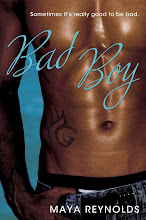
The copy of Bad Boy goes to Darley.

Thanks to everyone who participated.

Regards,

Maya

Justice Dept Looking at Google Settlement

The New York Times had an article on Tuesday, reporting that the Justice Department is looking into the "antitrust implications" of the proposed Google settlement with authors over Google Book Search:
Lawyers for the Justice Department have been in conversations in recent weeks with various groups opposed to the settlement, including the Internet Archive and Consumer Watchdog. More recently, Justice Department lawyers notified the parties to the settlement, including Google, and representatives for the Association of American Publishers and the Authors Guild, that they were looking into various antitrust issues related to the far-reaching agreement.
No one from Google, the Justice Department, the Authors Guild or the Association of American Publishers was available to comment on the story.

Read the entire article here.

Wednesday, April 29, 2009

Giving Away BAD BOY

To celebrate reaching my 500th Twitter follower (it took almost three months), I'm giving away a copy of Bad Boy.

Send me an email at mayareynoldswriter@sbcglobal.com

I'll pick the winner from the emails received. I'm doing it this way so guys don't have to "go public" asking for a romance. [Grin]

Warning: The book is very hot and very graphic.

Tuesday, April 28, 2009

Google Deadline Postponed

From today's Publishers Weekly:
In a surprise move, New York Judge Denny Chin today granted a four-month extension to a group of authors, led by Gail Knight Steinbeck, delaying the May 5 deadline to opt out or object to the Google Book Search settlement to early September. Although the order had not yet been made public at press time, sources confirmed for PW that Chin had granted the extension.
From Publishers Lunch:
The authors' attorneys write that "even assuming perfect notice of the settlement--an assumption that...is not well founded--the two months' notice afforded to authors is woefully inadequate to digest the extraordinarily complex settlement agreement, attempt to gauge its potential and long-term future implications in a vital marketplace, and make a reasoned judgment about whether to opt out, object, or appear at the fairness hearing."

Anatomy of a Royalty Statement

Popular author Lynn Viehl has posted her royalty statement from Penguin on her blog here. Agent Jenny Rappaport posted a companion blog, explaining Lynn's royalty statement here.

I strongly encourage all writers to read both posts.

Thanks to Nathan Bransford for the heads up.

Monday, April 27, 2009

B&N Announces Audiobook MP3 Store

Barnes & Noble issued a press release today:
Barnes & Noble.com (www.bn.com) has launched its Audiobook MP3 Store, featuring audiobook MP3s available for instant download and transfer to iPods, iPhones, MP3 players and other portable devices. The Barnes & Noble.com Audiobook MP3 Store offers easy downloads of more than 10,000 titles across all genres, from new releases and bestsellers to classics and timeless favorites. The average price per download will range between $10 and $20. . . Barnes & Noble.com has partnered with OverDrive to manage the maintenance and distribution of titles in its Audiobook MP3 Store.

Saturday, April 25, 2009

State of Play

We went to see the film State of Play this evening. The movie is a political thriller starring Russell Crowe, Ben Affleck, Helen Mirren and Rachel McAdams.

Crowe plays Cal McAffrey, an old-time investigative journalist working for the Washington Globe. Mirren is his acerbic editor, and McAdams is the young upstart reporter who works on the paper's online blog.

The story has a strong opening: two deaths in Washington D.C. within hours of each other. McAffrey is assigned to cover the murder of a teenage thief who specialized in stealing briefcases and then ransoming them back to the owners. McAdams, as Della Frye, is assigned to the apparent suicide (by falling in front of a train) of a researcher named Sonia working on a probe into a Blackwater-type security company called PointCorp.

Ben Affleck is the up-and-coming congressman leading the investigation into PointCorp. He also happens to be McAffrey's college roommate and the dead researcher's lover.

When news of the affair leaks out, Congressman Collins and his probe lose credibility. He turns to his old friend McAffrey for help in proving that Sonia's death was a murder, not a suicide.

It doesn't take McAffrey long to tie both Sonia and the teenage thief's deaths together. He and Della, the young blogger, team up to figure out what really happened. When the clues seem to lead to the giant corporation PointCorp, both journalists face danger.

State of Play is based on a 2003 British miniseries by the same name. But this American adaptation has an updated subplot--a running commentary on the dying world of print newspapers. The Globe has recently been purchased by a giant media conglomerate, and Helen Mirren is struggling to churn out headlines in order to keep her readership up. When McAffrey complains about the inexperienced Della who seems more interested in gossip than hard news, Mirren snaps, "She's young, she's cheap, and she turns out copy every hour."

Crowe is overweight, scruffy and guilt-ridden (he once had an affair with Congressman Collins' wife played by Robin Penn Wright). It's hard to believe that Crowe and Affleck's characters were ever college roommates. In real life, Affleck is nine years younger. Crowe's poor physical condition only aggravates that difference, making it more obvious.

Affleck is his usual wooden self, which actually works for him in this role. McAdams does a serviceable job, but it is Mirren who steals every scene she is in.

The story is tight and moves fast . . . until the less-than-satisfying ending. I often tell newbie writers to keep throwing obstacles into the protagonist's path. However, I got the impression that, this time, the producers went a bit too far. IMHO, they threw one too many obstacles into McAffrey's way and spoiled an otherwise good film.

The clip that runs over the ending credits is an unashamed love song to the newspaper industry. This elegy shows the edited story working its way through setup, printing and distribution on the Globe's print floor. It is surprisingly effective.

The film was a dab of adhesive short of a "Honk if you love newspapers" bumper sticker, but I was glad to have seen it. It reminded me that the old-time journalists we saw at work in All the President's Men are a dying breed. During Earth Week while we worry about all the species going extinct, we should save some tears for those tough-minded men and women of print newspapers.

Friday, April 24, 2009

Word Counts

Check out this old post from agent Colleen Lindsay's blog on word counts for various genres here.

Thanks to fellow writer Jeanne Lyet Gassman for the tip.

Update On Shortcovers

On January 16th, I posted here about a new e-book app called Shortcovers from Indigo Books, a Canadian company.

The Wall Street Journal described Shortcovers as:
. . . a portal to sampling, buying and reading books, and will have a companion Web site. It will allow readers to get free samples of blogs, magazines and books -- say, the first chapter -- and then buy either the entire work or other individual chapters or sections, which the company calls "shortcovers."
On Thursday, Indigo Books issued a press release:

Specifically, Shortcovers released the following information about its growth and global reach:

  • Users in 160 countries. Top global regions include the United States, Canada, United Kingdom, Australia, India and China
  • More than 100,000 people have tried Shortcovers, and 10,000 registered with the service
  • The average purchase is just under $10 USD
  • The most popular purchases include the Twilight series and Outliers
  • Authors have contributed thousands of books, chapters, short stories and other works directly through Shortcovers.com

Indigo's executive VP reported that they'd expected most downloads to be on the iPhone, but the company had discovered Blackberry and Android users were also downloading Shortcovers' offerings.

Go here to read the entire press release.

Thanks to Publishers Lunch for pointing me to the story.

Thursday, April 23, 2009

On The Nature of Conflict

I did a guest blog for Maria Zannini on Thursday on tips for writing suspense.

One of suggestions I made was to never ease up on your protagonists; to keep dogpiling them.

One of the people who commented complained that she was having a difficult time keeping her heroine and hero angry at each other.

That comment reminded me to say something about the nature of conflict.

Conflict does not equal angry spats between the hero and heroine. Manufacturing reasons to keep your protagonists angry at each other is not the same as having true conflict--obstacles that prevent the two from their "happily ever after."

If you start down that road, you'll find yourself creating misunderstandings that will feel artificial.

Conflict can be either external (events occurring in the plot) or internal (struggles within the protagonist: i.e. an endangered goal or an overwhelming anxiety).

When you're planning your novel, think about who your protagonist is--what are her goals and motivations? What is her greatest fear? What is the biggest obstacle she faces--both in her mind and in the world around her?

I tend to write two parallel storylines in my novels--what I think of as the relationship plot and the suspense plot. If the relationship is going smoothly, I create obstacles occur in the secondary plot. If the secondary plot is humming along, I look for conflict in the inner lives of my protagonists.

Throw genuine obstacles in your protagonists' paths; don't fall back on petty sniping between the hero and heroine. I promise, you won't regret it.

Seven Tips on Writing Suspense

I'll be posting today over at Maria Zannini's blog.

Maria asked me offer some tips on writing a suspense scene so I'm offering seven tips that work for me.

Go here to Maria's blog.

Wednesday, April 22, 2009

The Ten Mistakes Writers Make

I recently discovered the blog of book editor and critic Pat Holt. Someone I trust mentioned the blog in passing.

I wandered around the site a bit and found a post that I think is worth reading. Titled "The Ten Mistakes," the post is about common errors that writers make.

Holt touches on the three most common pieces of advice for writers: (1) Show, don't tell; (2) Information dumps masquerading in the guise of "As you know, Bob" dialogue, and (3) Empty adverbs (ly) words. But she also has other recommendations writers should think about.

Go here to read the post.

Tuesday, April 21, 2009

Shatzkin's Observations on E-Books

Mike Shatzkin is one of the voices I pay attention to in the publishing world. He's been at the London Book Fair (April 20-22) this week.

His Monday post centers around e-books. I found one of the things he said very interesting:
The branding of ebooks is a mess. The publisher brand is being obliterated. You are buying a Kindle ebook or a Stanza ebook or an Iceberg ebook or an eReader ebook and not Random House, HarperCollins, or Hachette. Publishers are apparently just allowing this to happen. This is pretty ironic because most of the same publishers are mistakenly trying to imbue their brands with consumer significance.
I am one of those persons who pays virtually no attention to the publisher brand. The author, the genre, the title, the first page . . . I care about all of them. The publisher, no.

Read Mike's post here.

Interview With Radio Free Bliss

I did my first international interview with Kaz Augustin of Radio Free Bliss.

Go here to listen.

Monday, April 20, 2009

Los Versos del Capitan

In an extremely odd turn, I was drawn into discussions on poetry three times today.

Since I don't believe in coincidence, I'm yielding to the demands of the cosmos.

My shelves are filled with poetry. I love everything from Ogden Nash to Edna St. Vincent Millay. But my favorite poems are by the Chilean poet, Pablo Neruda. He was a diplomat and a leftist politician who supported the Communists. He also wrote passionate love poetry and won the Nobel Prize in 1971, two years before his death.

Here is one of my favorites called Night on the Island:
All night I have slept with you
next to the sea, on the island.
Wild and sweet you were between pleasure and sleep,
between fire and water.

Perhaps very late
our dreams joined
at the top or at the bottom,
up above like branches moved by a common wind,
down below like red roots that touch.

Perhaps your dream
drifted from mine
and through the dark sea
was seeking me
as before,
when you did not yet exist,
when without sighting you
I sailed by your side,
and your eyes sought
what now--bread, wine, love, and anger--
I heap upon you
because you are the cup
that was waiting for the gifts of my life.
I have slept with you
all night long while
the dark earth spins
with the living and the dead,
and on waking suddenly
in the midst of the shadow
my arm encircled your waist.
Neither night nor sleep
could separate us.

I have slept with you
and on waking, your mouth,
come from your dream,
gave me the taste of earth,
of sea water, of seaweed,
of the depths of your life,
and I received your kiss
moistened by the dawn
as if it came to me
from the sea that surrounds us.
That poem and this one--Absence--come from a book titled The Captain's Verses. My copy was translated by Donald D. Walsh and published in 1972:
I have scarcely left you
when you go in me, crystalline,
or trembling,
or uneasy, wounded by me
or overwhelmed with love, as when your eyes
close upon the gift of life
that without cease I give you.

My love,
we have found each other
thirsty and we have
drunk up all the water and the blood,
we found each other
hungry
and we bit each other
as fire bites,
leaving wounds in us.

But wait for me,
keep for me your sweetness,
I will give you too
a rose.

Friday, April 17, 2009

An Interview With Four Agents

Back on February 20 here, I directed readers to an article in Poets & Writers where Jofie Ferrari-Adler interviewed four young editors.

Now in the May/June issue of Poets & Writers, Ferrari-Adler does the same thing again--this time with agents. My friend, Jeanne Lyet Gassman posted about it on a writers' loop on Wednesday. Publishers Lunch mentioned it yesterday.

Here's an exerpt in which agent Maria Massie talks about when she reads a manuscript that grabs her:
MASSIE: . . . It's like you have this moment of clarity and you recognize something that you're so absorbed with. I read a lot of things that are beautifully written where I say to myself, "Oh, this is good," but I'm not bowled over or sucked right in. It's so subjective. I can read something and pass on it and I hear, two days later, that there was a bidding war and it sold for a ton of money, but it just wasn't the thing that I was going to fall in love with.

STEINBERG: And you're okay with that.

MASSIE: You have to be okay with it because it's so subjective. I'm not necessarily going to see what somebody else sees, or read a book the way somebody else reads it. That's one thing that writers who are looking for an agent should always remember: All agents are different. Everyone has different tastes. What I like to read might be different than Anna or Peter or Jim. That's a great thing about what we do--there's so much to choose from. And what you fall in love with is a very personal choice.
Go here to read the interview online.

Thursday, April 16, 2009

Britain's Got Talent

Almost two years ago, I posted a video here from Britain's Got Talent, the UK show on which American Idol was based.

That video was Paul Potts' first performance on Britain's Got Talent. Unless you were in outer space or hibernating in a cave, you've probably seen Paul sing on television. His voice could convince an atheist that God was in His heaven.

This morning, I saw the first performance of another unlikely contestant for Britain's Got Talent. Susan Boyle is a 47-year-old unmarried, unemployed church volunteer living in the small town of Blackburn in Scotland. Her first performance on Britain's Got Talent was Saturday night.

Susan was an unlikely contestant. Here's a portion of the entry on her on Wikipedia:
Boyle is the youngest of nine children and lives in Blackburn with her ten-year-old cat, Pebbles. Boyle suffered oxygen deprivation during birth, resulting in learning disabilities. Her classmates teased her because of this and because of her appearance. She stopped her pursuit of singing to look after her sick mother who died in 2007, at the age of 91. Her performance on Britain’s Got Talent was the first time Boyle had sung after her mother's death.
Before she went out on the stage, Susan announced she wanted to rock the audience. Even though I'd been told her performance was amazing, the early mocking laughter from the audience made me feel anxious for her.

And then she opened her mouth to sing.

There's not much else for me to say. You just need to watch and listen. I've watched this video more than a dozen times, and it never fails to move me. The selection of the song "I Dreamed a Dream" was simply inspired.

Go here to observe Susan on YouTube.

Do Re Mi

I might as well post another video that delighted me. This event occurred at 8 AM on March 23 in the Central Station of Antwerp in Belgium.

According to the video's notes, the stunt included 200 dancers and was "a promotion stunt for a Belgian television program, where they are looking for someone to play the leading role in the musical of The Sound of Music."

Go here to watch it.

Wednesday, April 15, 2009

Atta Girl!

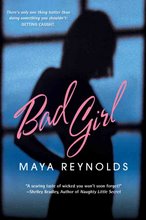
Well, color me happy. Now that Amazon restored its book rankings, my first novel, Bad Girl, is #8 in the Best-Sellers for Single Women's Fiction. And this is nineteen months after its release.

Now it's Bad Boy's turn to show if he has legs.

February Bookstore Sales

From today's Shelf Awareness:
During February, bookstore sales fell 10.8% to $1,021 billion compared to the same period in 2008--down for the first month this year--according to preliminary estimates from the Census Bureau. For the year to date, bookstore sales dropped 3.2% to $3,318 billion.

By comparison, total retail sales in February dropped 12.8% to $273.006 billion compared to the same period a year ago. For the year to date, total retail sales were down 11.2% to $555.083 billion.

Note: under Census Bureau definitions, bookstore sales are of new books and do not include "electronic home shopping, mail-order, or direct sale" or used book sales.

Tuesday, April 14, 2009

An Amazon Source Talks

The Seattle Post-Intelligencer had several articles over the past two days on the Amazon glitch that resulted in more than 50,000 books losing their ranking on the retail site. Here's an excerpt from one:
On Sunday afternoon . . . Amazon.com had upgraded the problem to Sev-1. (Amazon.com breaks down its operational issues in terms of severity levels. Sev-3 means a problem affects a single user. Sev-2 is a problem that affects a company, or a lot of people. Sev-1 is reserved for the most critical operational issues and often are sent up the management chain to the senior vice president
level.). . .

Amazon.com employees are on call 24/7, and many began working on the problem from home. It didn't take much digging to realize that there was a data error.

Amazon managers found that an employee who happened to work in France had filled out a field incorrectly and more than 50,000 items got flipped over to be flagged as "adult," the source said. (Technically, the flag for adult content was flipped from 'false' to 'true.')

Monday, April 13, 2009

A Closer Look at Amazon

My Amazon rankings are back up on Bad Girl and Bad Boy tonight. Apparently their "glitch" is fixed.

I promised to talk more about Amazon today. We're going to quickly trace Amazon's strategy for growth in the publishing world and then talk about its growing willingness to throw its weight around.

Amazon has moved to position itself vertically in the publishing market. Vertical integration means owning pieces of all parts of the chain. Amazon started out as a retailer. Then it moved into wholesaling others' products. And finally into manufacturing (BookSurge). Not content to own a part of the manufacturing business, it is now using its clout to gain further advantages. This is a case where the sum of all parts is worth far more than the individual parts alone.

Amazon owns pieces of all parts of the chain leading to the consumer:

Manufacturer => Wholesaler => Retailer => Consumer

Vertical integration is about cost and control. Companies who vertically integrate are trying to assert greater control over their business. The obvious benefit is that they can capture the profit margins at each step along the chain. They can also make it harder for competitors if they can gain access to a scarce resource.

  • In 2001, Amazon launched its Marketplace, a service that let customers sell used books, CDs, and DVDs alongside new items.
  • In March, 2005, Amazon purchased BookSurge, a print-on-demand company along with Mobipocket, an e-book software company
  • In July, 2005, Amazon purchased CreateSpace, a distributor of on-demand DVDs. CreateSpace has since expanded its service to include on-demand books
  • In May, 2007, Amazon acquired Brilliance Audio, an independent producer of audiobooks based in Grand Haven, Michigan
  • In November, 2007, Amazon launched the Kindle, e-book reader with wireless capacity
  • In February, 2008, Amazon announced it would purchase Audible.com, another producer of audiobooks
  • In August, 2008, Amazon announced it would purchase AbeBooks, a used bookseller, which also gave it a piece of LibraryThing, a social networking website for books. AbeBooks also gave Amazon ownership of Bookfinder.com, a new and used bookseller; Gojaba.com, a rare and out-of-print bookseller; and FillZ, a listing management service.
  • Also in August, 2008, Amazon announced it would acquire Shelfari, another social networking site for readers
  • In March, 2009, Amazon began offering a free Kindle application for the iPhone and iTouch.

Amazon owns a print-on-demand operation, a distributor, an online retail operation for both p-books and e-books, several important retail sites for used or rare books, two audio book operations, produces a wireless e-book reader, and operates several important social networking sites for books.

In late March of last year, Amazon first began to show its willingness to throw its weight around. The Wall Street Journal reported:

Amazon.com Inc., flexing its muscles as a major book retailer, notified publishers who print books on demand that they will have to use its on-demand printing facilities if they want their books directly sold on Amazon's Web site.

The move signals that Amazon is intent on using its position as the premier online bookseller to strengthen its presence in other phases of bookselling and manufacturing.
Two months after Amazon began pushing small U.S. POD publishers around, a battle erupted in the U.K. when Amazon began removing the sell buttons for publishers from its website if the publisher refused to give more favorable terms to the online retailer. Hachette Livre UK, Britain's largest publisher, went public with the fight.The Bookseller reported on it here:
Amazon conducts yearly negotiations with publishers over the discounts it receives. The Hachette tussle comes in the wake of a similar dispute in January, when a number of Bloomsbury titles were temporarily removed from sale through Amazon's main channel.
The negotiations went back into the closet, and Hachette's sell buttons re-appeared.

Three months ago, I posted this from Publishers Weekly:
Amazon.com has notified its publisher and author clients that it plans to cease offering e-books in the Microsoft Reader and Adobe e-book formats. In the future, the online retailer says it plans to offer only e-books in the Kindle format (for wireless download to its Kindle reading device) and the Mobipocket format, both of which are owned by Amazon . . .

Amazon did not specify how long the Adobe PDF and Microsoft formats will continue to be available. . . The company said it will now be urging customers to buy e-books through Mobipocket.
And then, of course, two months ago, the release of the Kindle 2 raised that fuss about the text-to-speech feature. Amazon backed down from that fight.

Last month, Amazon made the news in the UK again. Publishers Weekly reported:
Amazon.co.uk is offering publishers participating in its Advantage scheme an "early payment" option of 15 days, in exchange for an extra 2% on top of the current discount given by publishers.

The catch is that publishers who do not offer the extra discount will see their payments made on Amazon's "standard terms"--effectively 60 days. This means a publisher who sells a book through Amazon in April would not be paid until the end of June. Under the revised terms, a publisher would be paid on 15th May--a full 45 days earlier . . .
Then we come to Easter Week.

Like most bloggers, I don't buy the computer glitch story. And here's why. There's a writer named Craig Seymour who is journalism professor with a PhD. His book on Amazon is All I Could Bare: My Life in the Strip Clubs of Washington, D.C.
His blog is here.

Craig says his sales rankings disappeared back in early February and, when he did a search on Amazon's site, it failed to pull up his book. The only way a reader could locate it was by having URL link. When he pressed Amazon for an explanation, he received the following email message:
"the sales rank was not displayed for the following reasons: The ISBN #1416542051 was classified as an Adult product."
Seymour complained about this on the Internet throughout March without attracting much attention.

My fantasy theory suggests that some fool at Amazon made the individual decision to implement a censorship policy. The idiot first practiced with a few cases like Seymour and then decided to celebrate Holy Week by going hogwild on all kinds of books s/he deemed inappropriate.

I'll admit I'm much more comfortable picturing an individual censor than an entire company focused on corporate comstockery. It frightens me to imagine a corporation with as much power as Amazon attempting to shape the reading habits of its customers.

As I post this, the petition has over 21,000 signatures. Collected in 48 hours. That's a powerful message to a company like Amazon. You may be moving to dominate the publishing industry, but never forget who pays the bills.

Sunday, April 12, 2009

Amazon Says They Had a "Glitch"

From tonight's Publishers Weekly:
A groundswell of outrage, concern and confusion sprang up over the weekend, largely via Twitter, in response to what authors and others believed was a decision by Amazon to remove adult titles from its sales ranking. On Sunday evening, however, an Amazon spokesperson said that a glitch had occurred in its sales ranking feature that was in the process of being fixed. The spokesperson added that there was no new adult policy.
The LA Times also reported on this "glitch":
Responding to our initial post, Amazon Director of Corporate Communications Patty Smith e-mailed Jacket Copy. "There was a glitch with our sales rank feature that is in the process of being fixed," she wrote. "We're working to correct the problem as quickly as possible."

We wanted to know more. We asked for further explanation of the glitch . . .

The reply: Unfortunately, I'm not able to comment further. We're working to resolve the issue, but I don't have any further information.
Read the LA Times article here.

Update On The Amazon Fiasco

I just spoke to someone at the Amazon Customer Service site (800--201-7575) who said that he apologized and a request had been submitted to reverse this new policy. He just kept repeating, "We've heard from other people who feel as you do, and we sincerely apologize."

Of course, they didn't apologize when I called them a year ago to complain about their shoddy treatment of independent and small publishers. They were--and still are--requiring small publishers to use Amazon's proprietary book printer BookSurge to get favorable placement on their website.

Unless we as consumers respond with our wallets to big business' bad behavior, they take no notice.

I'm glad to see readers everywhere uniting to oppose this very sneaky form of censorship.

Amazon Strikes Again

As I've mentioned before, my newest erotic romance, Bad Boy, was released on Tuesday.

One of the addictive things about a book release is checking your Amazon.com sales rankings. When Bad Girl was released, I checked compulsively every hour or two. This time around, I've been limiting myself to a daily check.

On Friday morning, I noticed there were no sales rankings for Bad Boy. Thinking it was a computer blip, I checked Bad Girl, too. Nothing there either.

I figured--it being Good Friday--maybe Amazon was understaffed. My university considers Good Friday (which we call "Spring Break" to be politically correct) a holiday. I decided to wait until Monday when things got back to normal to check again.

Imagine my surprise to learn via Twitter that Amazon has a new policy relating to "adult" books. Mark R. Probst was the first person who had any solid information to offer on his blog:
As I am a publisher and have an Amazon Advantage account through which I supply Amazon with my books, I had a special way to contact them. 24 hours later I had a response:

In consideration of our entire customer base, we exclude "adult" material from appearing in some searches and best seller lists. Since these lists are generated using sales ranks, adult materials must also be excluded from that feature . . .

Ashlyn D
Member Services
Amazon.com Advantage
You can read Mark's entire post here.

By now, the #amazonfail thread on Twitter is over one hundred pages long. You can find it by doing a search for #amazonfail here.

Initially, people thought it was gay and lesbian literature being excluded. Then erotic literature was added to the list. Now classic works of fiction and non-fiction are on the list, including works by James Baldwin, E.M. Forster and Annie Proulx. And a how-to manual on sex for the disabled.

I wonder if Ray Bradbury expected to live to see Fahrenheit 451 in real life.

I'll admit it. It's an effort not to say "I told you so."

There . . . Now that I said it, I can relax.

This initiative should come as no surprise. Amazon has been sending signals of their determination to dominate publishing for a long time now. They have been moving to integrate vertically through their purchases of Abe Books, Audible, BookFinder, BookSurge, Brilliance Audio, FillZ, GoJaba, Library Thing, Mobipocket and Shelfari as well as their development of the Kindle e-reader.

I did a pair of posts last June 7th and 8th here and here, predicting the future. In the second one, I said: "Eventually Amazon will have so much power, they will be able to decide WHAT is worthy of being published."

While Amazon is jumping the schedule I predicted, I have no doubt that their intent is to be the dominant player in the book industry.

In my next post, I'll talk about this some more.

If you want to take a stand now, you can go sign a new petition here. In the time it has taken me to write this post, the number of signatures has doubled.

Thursday, April 09, 2009

My Take On Agents

On Sunday, I did a post on query faux pas, mistakes writers make when submitting a query letter. I included the statement:
. . . it's not a great idea to offer your own review of your unsold manuscript. Don't make grandiose promises that "every reader will love this novel" or "my manuscript is a guaranteed best-seller."
On Thursday, Nathan Bransford directed readers of his blog to a post by Rachelle Gardner here, "Your Queries Say a Lot About You."

Among the things Rachelle says is:
Once they've [the writer] over-sold themselves in the query, I'm less likely to want to work with them. Why?

When a writer oversells themselves in the letter, it gives me an idea of their expectations . . . If their expectations aren't met, it's somehow going to be my fault. If they're thinking "blockbuster bestseller" and their book does anything less than #1 on the NYT list, they're going to be unhappy.
In reading Rachelle's post, I was reminded yet again of the very tough job that agents have.

Don't believe me? Think about taking a job where:
  • You don't eat until you make a sale. Oh, yeah, I can already hear the salespeople in the audience saying, "Hey, I live on commissions, too." But . . . do you have to first identify the product that you will be selling, and then do you have to bear all the up-front costs of selling that product without knowing whether it will ever bring in a dime?
  • Let's remember that agent Kristin Nelson of Pub Rants reported in 2008 she read on average 673 queries a week, looking for the 21 books she actually sold that year (remembering that some of those books probably included second or third books from clients) . Think of the enormous amount of time spent in reading 96 queries each and every day . . . before you can even go out and try to sell it.
  • Rachelle's post reminds us that agents have to be amateur psychologists, able to assess the potential client. Is this going to be a demanding prima donna, or an obsessive "I won't change a word of my magnum opus" type?
  • Writers sometimes forget that agents face rejection, too. An agent falls in love with a manuscript, takes on the writer as a client and then begins querying publishers. While beginning writers are devastated by rejection, that rejection does not usually mean they might not be able to pay the light bill for the month. This is because most writers have another career that they are working at while they wait to sell their books. Agents--on the other hand--have only their career as agents. For them, rejection means no dollars coming in. And at the same time, they have to move on to the next publisher and try to sell that same manuscript that was just rejected. They cannot allow themselves to wallow in self-pity.

Frankly, I did not buy into the whole angst thing over #queryfail recently. When I was looking for an agent, I was lucky enough to find Miss Snark's blog. Every time she reported on what was wrong with a query, I learned something. She was tough, but fair. She taught me to "man up" and "quityerbellyachin."

Publishing is not a business for wimps--either agents or writers. If you can't stand the heat, go into a less tough business. Maybe competitive race car driving or wrestling.

Wednesday, April 08, 2009

Romance Bullish In a Bear Market

Yesterday's New York Times had an article titled "Recession Fuels Readers’ Escapist Urges."
At a time when booksellers are struggling to lure readers, sales of romance novels are outstripping most other categories of books and giving some buoyancy to an otherwise sluggish market . . .

While sales of adult fiction overall were basically flat last year, according to Nielsen Bookscan, which tracks about 70 percent of retail sales, the romance category was up 7 percent after holding fairly steady for the previous four years.
The article quotes Jane Litte from Dear Author saying that, in bad times, a happy ending is "really kind of a relief."

Libraries are seeing an upsurge in readers as the economy limits readers' discretionary dollars.
At Fictionwise, the e-book seller recently acquired by Barnes & Noble, about 50 percent of sales are romance books, said Steve Pendergrast, chief technology officer. “Romance readers tend to be voracious readers,” Mr. Pendergrast said. “The ability to instantly download and start reading is potentially more important to that audience than any other audience.”
To read the entire article, go here.

Tuesday, April 07, 2009

January Book Sales

Shelf Awareness had an article on Monday about January book sales reported each month by the Association of American Publishers.

Book sales rose 3.6% while e-book sales rose 173.6%.

Of course, the e-book sales of $8.8 million are a drop in the bucket compared to book sales of $785 million.

Other interesting stats indicate adult books are suffering while children's books are doing well:

Adult mass markets fell 12% to $56.4 million.
Adult paperbacks dropped 24.7% to $102 million.
Adult hardcovers fell 33.9% to $60.5 million.

Children's/YA hardcovers rose 60% to $54.4 million.
Children's/YA paperbacks climbed 9.3% to $37.4 million.

Audiobooks fell 45.9% to $7.7 million

Monday, April 06, 2009

Helping a Bad Boy Out

Tomorrow is the official release date of Bad Boy. I'd like to help the little guy make his way in the world.

If you're looking for someone to interview or to do a guest blog, email me at mayareynoldswriter@sbcglobal.net

Thanks and regards,

Maya

Author Solutions Gobbles Up Another Rival

Author Solutions, the Mother of Self-Publishing, has just purchased yet another of its rivals.

According to this morning's Publishers Lunch, Author Solutions has purchased Canadian self-publisher Trafford Publishing: "CEO Kevin Weiss tells the WSJ his company will have close to $100 million in sales in 2009."

In addition to Trafford, Author Solutions now owns AuthorHouse, iUniverse, Xlibris and Wordclay. Wikipedia claims AuthorHouse and iUniverse are the #1 and #2 self-publishing operations in the United States. Entrepreneur interviewed Keith Ogorek, Author Solutions' director of marketing here in April last year:
"As a company, Author House will publish about one of every 17 titles in the United States this coming year," Ogorek says. That's about 20,000 titles.

Sunday, April 05, 2009

Query Letter Faux Pas

A couple of times a week on one of my writer loops, newbie writers will ask for feedback on query letters, or else I'll get an email, asking me to vet a query letter.

This week I saw several letters with the same errors in common. I thought I'd mention them here:

1) Using vague language to describe a manuscript. Three of the letters I read this week used generalized terms to describe a novel. Each barely mentioned the actual plot or protagonist.

While the following lines weren't in the queries I read, you'll get the idea: "My manuscript is about the ultimate triumph of mankind." "This is a novel of redemption and loss."

The phrase "The ultimate triumph of mankind" could apply to War of Worlds, Schindler's List, Clash of the Titans or Splendid Solution: Jonas Salk and the Conquest of Polio. It tells the agent or editor nothing about the story.

Cluestick: If I'm trying to sell a novel, I need to describe specifically what the story is about.

You could describe To Kill a Mockingbird as a tale of racial oppression and injustice in the South. However, if I were writing the query, I'd probably talk about the two parallel threads: Scout describing her challenges in growing up in the 1930s at the same time she is observing the adults of Maycomb County, Alabama during a politically explosive trial.

Remember the journalist's "who, what, when, where, why and how." Resist the urge to use nebulous adjectives more suited to a book review.

2) While I'm on the subject of book reviews, it's not a great idea to offer your own review of your unsold manuscript. Don't make grandiose promises that "every reader will love this novel" or "my manuscript is a guaranteed best-seller." Don't describe the reactions of your beta readers or critique partners.

Let the agent/editor make his/her own judgment of the worth of the manuscript.

3) And, finally, resist the temptation to describe your entire family, your job or your educational achievements . . . unless they have specific application to your manuscript. If your five adorable children, Schnauzer and goldfish have no bearing on your manuscript, don't mention them.

Friday, April 03, 2009

MIA

Sorry for being "missing in action." I'm getting ready for the release of BAD BOY. I'll catch up on posts tonight or tomorrow morning early.

Regards,

Maya

Wednesday, April 01, 2009

More Thoughts On Google

Yesterday I posted here about two agents with very different attitudes toward the Google settlement and whether it is a positive move for authors. I promised to offer my view today.

I've been posting about Google Book Search for almost four years and--for most of that time--pointing out the benefits it would offer writers. Back in 2005, I said this:
Now, just think for a minute. Let's say you're a writer who wrote the definitive book on how to cook pork. However, your book has been out of print for years. Then comes next summer, when consumers are avoiding beef (because of high cholesterol and mad cow) and avoiding chicken (because of the avian flu) in favor of the other white meat. A Google search of "pork recipes" turns up your book along with four lines of text with mention of a great recipe. In addition, a link sends the searcher to the only cookbook store that still carries copies of your book. Would you be glad or mad?
About two weeks after I wrote that, Kevin Maney, the technology columnist for USA Today said here:
Publishers and authors had better get on this bandwagon, because the drive toward putting books online is not going away. Yahoo and Microsoft have jumped into book scanning. The book industry needs to get out in front of this and be a part of it — and benefit from it.
I cheered for Google Book Search until October 24, 2007 when I quoted a line from an article in the New York Times:
Libraries that agree to work with Google must agree to a set of terms, which include making the material unavailable to other commercial search services.
Even though I understood Google's desire to block its largest competitor--Microsoft--I was seriously disturbed by this contract clause. I didn't like Google's obviously anti-competitive effort.

In February, 2007, Jeffrey Toobin, a legal analyst for CNN and The New Yorker, wrote a long article here about Google's quest for the universal library. Remember, this was almost two years ago . . . long before the actual announcement of the settlement. Here's a quote from Toobin's article:
. . . a settlement that serves the parties’ interests does not necessarily benefit the public. “It’s clearly in both sides’ interest to settle,” Lawrence Lessig, a professor at Stanford Law School, said . . . Google wants to be able to get this done, and get permission to resume scanning copyrighted material at all the libraries. For the publishers, if Google gives them anything at all, it creates a practical precedent, if not a legal precedent, that no one has the right to scan this material without their consent. That’s a win for them. The problem is that even though a settlement would be good for Google and good for the publishers, it would be bad for everyone else.”
Google was happy to settle. By settling, they got to go back to scanning books and, at the same time, created a precedent that will help prevent competitors from muscling into their territory.
"If Google says to the publishers, ‘We’ll pay,’ that means that everyone else who wants to get into this business will have to say, ‘We’ll pay,’ ” Lessig said. “The publishers will get more than the law entitles them to, because Google needs to get this case behind it. And the settlement will create a huge barrier for any new entrants in this field.”
So, now, any future competitor to Google Book Search will not only have to take on the enormous expense of scanning the world's books, but also agree to pay the publishers for a listing in what amounts to a giant card catalog. A giant card catalog that benefits those publishers (and their authors) by drawing attention to their books . . . even those books that are long out of print.

Writers have traditionally had a very small window in which to sell books before they were removed from the shelves of retailers. After that, an authors' only hope for attracting new readers was through remainder sales or used book sales. And, remember, authors don't earn royalties on used book sales and very little, if any, on remainder sales.

Google's initiative offered authors and publishers an opportunity to breathe new life into out-of-print books. Leave it to the Authors Guild--with its usual retro stance on anything innovative
--to decide to sue Google.

Great move, guys. I haven't seen business acumen like that since GM decided to kill the electric car. And how'd that work out for them?

Sure, in the short term, Google will pay authors for the right to list their books on the search engine, and the publishing industry will sell books that might otherwise never have earned another penny in sales.

But those idiots who sued Google have helped to build a tall wall protecting the search engine from its competitors. It's unlikely that any contender will be able to scale that wall now that they will not only have to pay the cost of scanning books but also have to pay publishers a licensing fee.

IMHO, the public is not served by Amazon and Google's monolithic control over large parts of the publishing industry.